
On this page
Start here
Quick answer
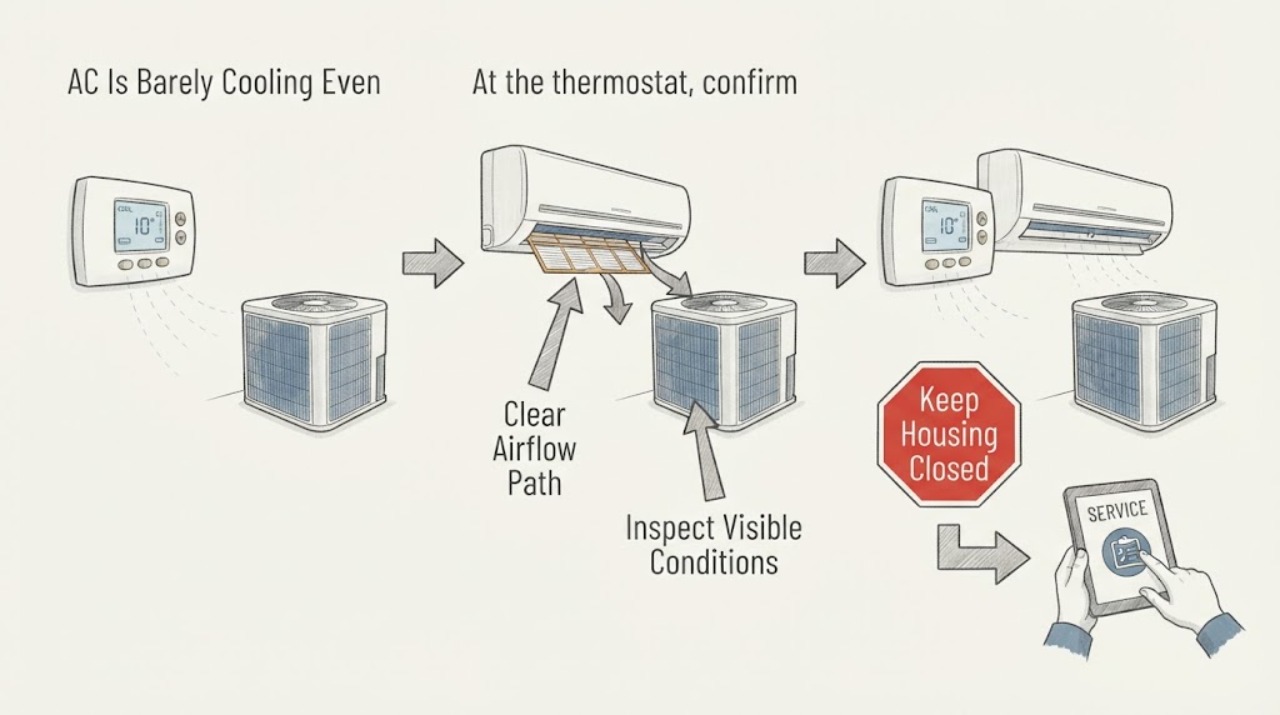
Clean filters do not rule out a thermostat setting, restricted return or supply airflow, an obstructed outdoor unit, a frozen coil, condensate problem, low refrigerant or an electrical fault. Confirm the thermostat is set to COOL at the intended temperature with the fan on AUTO, make sure accessible supply and return grilles are open, and clear leaves or tall grass away from the outdoor unit without opening it. Look for frost or ice on visible refrigerant tubing, water around the indoor unit, repeated short cycling, burning odor or a breaker that trips again. Turn the system off and arrange a qualified HVAC technician for ice, refrigerant, electrical, coil, blower, drain or compressor diagnosis; do not add refrigerant, open panels, probe wiring or scrape ice.
Before you begin
Safety first
- Do not add or release refrigerant, open electrical panels, measure live voltage, bypass controls, scrape coils or ice, dismantle the blower/outdoor unit, or repeatedly reset a breaker. HVAC refrigerant, electrical, coil, compressor and condensate repairs require model-appropriate professional service.
Work through in order
Diagnostic checks
Use only checks that match the exact appliance or system and its official guide.
-
Check 1
At the thermostat, confirm the mode is COOL, the setpoint is below the room temperature, and the fan is AUTO unless the exact system manual says otherwise. Check accessible supply registers and return grilles for closed dampers, furniture or other obstructions; do not remove the air handler cover.
Expected result: The thermostat was in HEAT/OFF or the fan was ON, a setpoint was too high, or airflow is blocked; or the settings and visible grilles are correct but the air remains only slightly cool.
Next step: Correct only the visible setting or obstruction and allow a normal cooling period. If the system still provides weak cooling, continue with the external outdoor and hazard checks rather than repeatedly changing the thermostat.
Stop if: Stop and arrange service if the thermostat is blank, wiring is exposed, the system starts and stops rapidly, or a breaker trips again.
Why this matters
Why: Carrier says incorrect mode, fan setting or temperature programming can make an operating system appear not to cool. Correct settings can explain the symptom, but correct settings move the investigation toward airflow, outdoor unit, condensate or refrigeration service.
-
Check 2
Verify that the filter is the correct size and seated in the airflow direction shown by the equipment or filter frame, even if it looks clean. Check for a blocked return grille or unusually weak airflow at several accessible supply registers; do not substitute a denser filter or open the blower cabinet as a test.
Expected result: The filter is mis-seated, the return or supply path is blocked, airflow is much weaker than normal, or the filter and visible airflow are normal.
Next step: Correct only a clear filter orientation or accessible grille obstruction according to the equipment instructions, then reassess. If airflow remains abnormal or cooling is still weak, request HVAC diagnosis rather than changing filter ratings or opening the unit.
Why this matters
Why: Carrier says filters and airflow affect cooling and can contribute to short cycling or freezing. A clean, correctly installed filter with normal visible airflow makes a simple filter restriction less likely but does not rule out a blower, coil, duct or refrigeration problem.
-
Check 3
With the system off and from outside the equipment, look for leaves, tall grass, sticks or other loose debris blocking the outdoor condenser air inlet. Clear only loose material that can be removed without tools, contact with fins, panels, wiring or the fan; do not hose, dismantle or clean the coil as a generic procedure.
Expected result: The outdoor unit is visibly blocked, or the coil area is clear but the system still runs without cooling adequately.
Next step: Restore power only through the normal controls after the loose obstruction is clear and the area is dry. If cooling remains weak or the fan does not operate normally, keep hands and tools away and arrange professional service.
Why this matters
Why: Trane identifies blocked outdoor cooling coils as a possible cause of poor cooling. Clearing a visible obstruction may improve airflow, but a clear exterior does not establish that the coil, fan, compressor or refrigerant charge is healthy.
-
Check 4
From a safe visible position, look for frost or ice on accessible refrigerant tubing or the indoor coil area, water around the indoor unit or drain pan, a condensate overflow, and repeated short cycling or continuous operation. Do not touch refrigerant tubing, scrape ice, pour chemicals into a drain, or remove panels.
Expected result: There is frost/ice, excess water, a full or overflowing pan, short cycling, or none of these visible conditions.
Next step: Turn the cooling system off and arrange a qualified HVAC inspection when ice, water damage, rapid cycling or abnormal runtime is present. If none is visible, continue only with external observations and contact service if the room does not cool.
Stop if: Stop immediately for water near electrical equipment, a burning smell, smoke, sparking, exposed wiring or an active leak.
Why this matters
Why: Carrier links ice, excess condensate, long or rapid cycling and weak cooling with possible coil, airflow, refrigerant or condensing-unit problems. ENERGY STAR identifies condensate, coil and refrigerant checks as contractor maintenance, so these signs do not support a DIY component diagnosis.
-
Check 5
Record the thermostat mode and setpoint, indoor and outdoor unit behavior, airflow change, visible ice or water, runtime/short-cycling pattern, breaker behavior and recent maintenance. Arrange a qualified HVAC technician when clean filters and external checks do not restore cooling, or whenever refrigerant, electrical, coil, blower, drain or compressor work may be involved.
Expected result: The system still cools only very slightly, a safety symptom is present, or an external setting/obstruction correction restores normal cooling.
Next step: For unresolved or hazardous symptoms, turn the system off as needed and provide the technician the recorded pattern. Do not add refrigerant, reset a recurring breaker, bypass controls or order a part from the symptom alone.
Why this matters
Why: A persistent weak-cooling symptom after the safe checks needs system-level diagnosis; it does not identify low refrigerant, a capacitor, compressor, fan, coil or duct fault by itself. A restored response after an external correction supports that correction but does not certify the equipment.
Use your observations
Decision map
Find the observation that best matches what you see, then follow the next safe action.
-
PATH 01Next step
What you see
The thermostat was not in COOL, the setpoint was too high, the fan was set to ON, or a visible grille obstruction was found.
Do this next
Correct the setting or obstruction using the normal controls, allow a normal cooling period, and request service if the room still does not cool.
Why this path and its safety boundary
Why it matters: A control or accessible airflow condition can explain warm or weak air without proving an HVAC component failure.
-
PATH 02Next step
What you see
The thermostat and visible airflow are correct, the filter is clean and properly seated, and the outdoor unit is clear but cooling remains very weak.
Do this next
Arrange qualified HVAC diagnosis. Do not open the equipment or add refrigerant based on the weak-cooling symptom.
Why this path and its safety boundary
Why it matters: The remaining possibilities include duct, blower, coil, condensate, electrical or refrigerant issues that the external checks cannot distinguish.
-
PATH 03Next step
What you see
Frost or ice is visible, water is overflowing near the indoor unit, or the system is short cycling or running continuously without cooling.
Do this next
Turn cooling off and contact a qualified HVAC technician. Do not scrape ice, test refrigerant, open panels or keep restarting the system.
Why this path and its safety boundary
Why it matters: Carrier associates these patterns with frozen-coil, refrigerant, airflow, condensate or condensing-unit problems; continued operation can worsen damage.
-
PATH 04Next step
What you see
A breaker trips again, there is burning odor, smoke, sparking, exposed wiring or water near electrical equipment.
Do this next
Stop using the system, keep clear of wet or damaged equipment, and contact an appropriately qualified HVAC/electrical professional; use emergency services for active fire or immediate danger.
Why this path and its safety boundary
Why it matters: This is an electrical, fire or water hazard beyond homeowner troubleshooting.
Helpful context
Understand the symptom
A clean filter narrows the problem but does not identify it
The task gives no brand, model, system type or measured supply temperature. A clean filter makes a clogged-filter explanation less likely, but it does not clear the thermostat, return and supply airflow, outdoor coil, condensate path, electrical supply or sealed refrigeration circuit. Trane lists these as separate possible causes of an air conditioner that runs without lowering the temperature, and Carrier says low refrigerant can result from a leak rather than from filter condition.
Separate normal airflow checks from HVAC service work
Use the thermostat display and visible grilles to confirm the requested operating mode, the fan behavior and unobstructed air movement. From outside the equipment, remove only loose leaves or tall grass that block the outdoor unit. Do not remove an access panel, wash a coil into electrical parts, measure voltage, handle refrigerant or force a condensate line clear without the exact equipment instructions and appropriate training.
Ice, water, short cycling and odor change the urgency
Frost on refrigerant tubing or the indoor coil, excess condensate, a drain-pan overflow, repeated short cycling, a breaker that trips again or a burning smell is not a simple comfort-setting issue. Carrier warns that continuing to run a frozen evaporator coil can cause serious damage and directs refrigerant and electrical diagnosis to professionals. ENERGY STAR likewise places condensate, electrical, coil and refrigerant checks in contractor maintenance.
When checks do not resolve it
Need a professional?
Call a qualified HVAC technician when clean filters and visible thermostat, grille and outdoor-clearance checks do not restore cooling, or immediately for ice, refrigerant suspicion, water overflow, short cycling, electrical symptoms, burning odor or a repeatedly tripping breaker.
Safety scope: Do not add or release refrigerant, open electrical panels, measure live voltage, bypass controls, scrape coils or ice, dismantle the blower/outdoor unit, or repeatedly reset a breaker. HVAC refrigerant, electrical, coil, compressor and condensate repairs require model-appropriate professional service.
Have this ready
- Provide the system type if known, thermostat mode/setpoint, whether the indoor blower and outdoor unit run, filter size and condition, airflow change, visible ice or water, runtime pattern, breaker behavior, recent maintenance and photos taken without opening the equipment.
Common questions
FAQ
Why is my AC barely cooling if the filter is clean?
A clean filter rules out only one common airflow restriction. Check the thermostat mode and fan setting, accessible grilles, outdoor debris, visible ice or water and runtime pattern. Persistent weak cooling can involve ducts, coils, condensate, electrical equipment or refrigerant and needs HVAC diagnosis.
Should I add refrigerant when the AC is low on cooling?
No. Carrier says low refrigerant may indicate a leak and directs refrigerant diagnosis to a qualified HVAC technician. Do not open the system or add refrigerant from a weak-cooling symptom alone.
What should I do if I see ice on the AC line?
Turn the cooling system off and arrange professional service. Carrier warns that continuing to run a frozen evaporator coil can cause serious damage; do not scrape the ice or attempt refrigerant or electrical tests.
Can the thermostat fan setting make the AC feel warm?
Yes. Carrier explains that a fan set to ON can keep blowing when the system is not actively cooling, so the air may feel warmer. Set it to AUTO only if that matches the system's normal instructions and reassess cooling.
What maintenance belongs to an HVAC contractor?
ENERGY STAR lists electrical connections and measurements, condensate inspection, controls, coil cleaning, refrigerant checks and blower work among contractor maintenance tasks. Homeowner checks should remain limited to safe filter, thermostat, visible airflow and outdoor-obstruction observations.
Read the exact guide
Official sources
- Troubleshoot an Air Conditioner | AC TroubleshootingCarrier · Opened official Carrier residential guidance. It is generic central split-system guidance, not a model-specific procedure; it supports external checks and professional escalation only.
- Maintenance ChecklistENERGY STAR · Opened official ENERGY STAR maintenance checklist. It supports the distinction between homeowner filter observation and contractor electrical, condensate, coil, blower and refrigerant work; it does not identify a fault in an unknown AC model.
- Air Conditioner Troubleshooting: 5 Common IssuesTrane · Opened official Trane residential HVAC guidance. It is a general central-air reference rather than a model-specific manual, so all checks are limited to visible thermostat, filter, airflow and outdoor-clearance observations and are not transferred to internal parts.
Community feedback
Share a repair observation
Share a plain-text repair observation. Accepted observations are published automatically; this page may take a moment to update.