
On this page
Start here
Quick answer
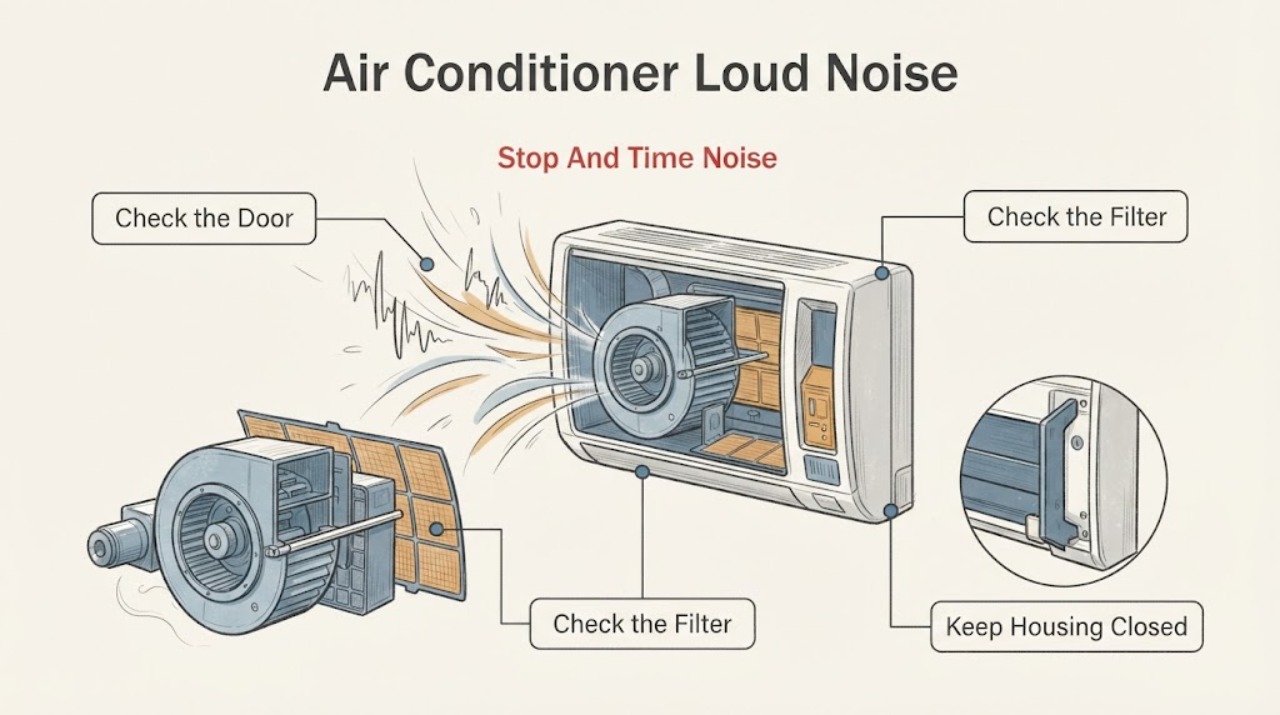
First identify where and when the loud noise occurs, then stop the air conditioner from the thermostat and inspect only the accessible filter, return grille, and supply registers. A blocked filter can restrict airflow and make the blower work harder, while a rattle, squeal, or grinding sound that starts with the indoor blower can indicate a blower wheel, motor, bearing, or electrical fault that requires HVAC service. Do not remove an access panel, reach toward a fan, or continue operating through smoke, a burning smell, arcing, refrigerant-like hissing, water, ice, or a rapidly worsening metal-on-metal sound.
Before you begin
Safety first
- Do not remove air-handler or condenser covers, touch wiring or capacitors, reach into a blower or fan, oil or replace a motor, bypass safety controls, alter refrigerant, or repeatedly restart a noisy or hazardous system.
Work through in order
Diagnostic checks
Use only checks that match the exact appliance or system and its official guide.
-
Check 1
Use the normal thermostat control to stop cooling, then listen from a dry, clear position and note whether the loud noise stops immediately, winds down, or continues after the blower should be off.
Expected result: Record the sound type (rattle, hum, buzz, squeal, scrape, grinding, bang, or hiss), its location, and whether it occurs at startup, during airflow, at shutdown, or continuously.
Next step: Keep the system off for grinding, scraping, loud electrical buzzing, hissing, smoke, burning odor, water, ice, or a rapidly worsening noise; otherwise continue only with the external filter and grille checks below.
Stop if: Do not restart to reproduce a dangerous sound, open a cabinet, reach toward a moving fan, or continue operation with smoke, arcing, burning odor, refrigerant-like hissing, water near electrical equipment, or fire risk.
Why this matters
Why: A sound tied to indoor blower operation keeps the filter and blower path in focus. A sound that continues after shutdown, comes from the outdoor cabinet, or changes independently of airflow needs technician diagnosis rather than repeated cycling.
-
Check 2
From outside the equipment, identify whether the sound is at an indoor return or supply, the indoor air-handler area, an exposed duct or grille, or the outdoor condenser; do not remove a panel or cover.
Expected result: Compare the noise location with airflow: note weak airflow, a whistle at one register, vibration at a grille, or a noise that is clearly outdoors while indoor airflow remains normal.
Next step: Clear furniture, curtains, and visible debris away from accessible registers and returns without altering ductwork; arrange HVAC service if the noise is inside a cabinet, in a concealed duct, or persists after the external clearance check.
Stop if: Stop if a cover is loose but energized, a grille is damaged, the cabinet is vibrating violently, or inspection would require a ladder, panel removal, or contact with moving parts.
Why this matters
Why: A grille or return restriction can create airflow noise, while weak airflow plus blower-start noise supports a filter or blower-path issue. Outdoor-only rattling or fan noise is outside the assigned indoor blower/filter identity and should be reported as a separate symptom.
-
Check 3
With the system stopped and the filter reachable without opening an equipment cabinet, inspect the filter for dust loading, collapse, wetness, damage, wrong size, or an airflow arrow facing the wrong direction.
Expected result: Classify the filter as clean and correctly installed, visibly loaded, damaged or wet, missing, or impossible to assess without removing a cover.
Next step: Photograph the filter marking and airflow arrow; if the filter is dirty, install only the exact type and size specified by the unit instructions, then observe whether airflow and noise improve after the system returns to normal operation.
Stop if: Do not run the unit without its required filter, stack filters, force a filter into a tight slot, use improvised media, or continue when the filter is wet and water is near electrical equipment.
Why this matters
Why: A loaded filter can restrict airflow and make the blower work harder; a wet filter may accompany a condensate or coil problem. A clean, correctly installed filter makes a filter restriction less likely, so a persistent loud blower sound needs service rather than a denser replacement filter.
-
Check 4
From safe standing height, look at the return grille, supply registers, and accessible filter slot for a blocked opening, loose grille, visible debris, or an object touching the grille; do not reach into a duct or blower opening.
Expected result: Note whether one grille whistles or rattles, several returns are blocked, airflow is weak throughout the home, or all visible openings are clear.
Next step: Move only loose furniture or curtains that obstruct the opening and secure a grille only if its normal external fastener is accessible with the system off and no cover or wiring is exposed; otherwise document the location for an HVAC technician.
Stop if: Do not insert tools, hands, vacuum attachments, or chemicals into the duct, and stop if the grille is sharp, loose above a height hazard, wet, or exposing equipment parts.
Why this matters
Why: A single blocked or vibrating grille can explain localized whistle or rattle. Several blocked returns or weak airflow throughout the home can increase blower strain and require airflow assessment; clear openings with persistent noise point farther into the air handler or duct system.
-
Check 5
After the safe filter and grille observations, note the airflow and visible condition without touching coils, refrigerant lines, wiring, or fan parts.
Expected result: Record normal, weak, or absent airflow; visible ice; water or a full drain pan; repeated short cycling; or a temperature change that does not match the thermostat setting.
Next step: Leave cooling off and arrange HVAC service for ice, water, persistent weak airflow, or repeated cycling; provide the technician with photos taken without removing panels and the timing of the sound.
Stop if: Do not chip ice, pour water into the unit, remove coil covers, handle refrigerant lines, or restart repeatedly to see whether the condition clears.
Why this matters
Why: Weak or absent airflow with blower noise can accompany a clogged filter, blower fault, or frozen coil. Ice, water, or short cycling moves the problem beyond a simple filter change and can damage the system if it continues operating.
-
Check 6
If the filter was visibly dirty and the unit instructions permit replacement, fit the correctly sized replacement with the airflow arrow in the documented direction, then make one normal cooling observation from a safe distance.
Expected result: Compare the sound, airflow, and thermostat cycle before and after the filter change: improved, unchanged, louder, or accompanied by a new odor, vibration, ice, or water.
Next step: Keep the system off and request HVAC service for unchanged or worsening noise; do not keep trying different filter densities or operate through a stop condition.
Stop if: Stop the observation immediately for smoke, burning odor, electrical buzzing or arcing, grinding, violent vibration, water, ice, or a hot cabinet or receptacle.
Why this matters
Why: Improvement supports airflow restriction as a contributor, but recurring noise means the filter schedule, return path, and blower still need attention. No change or a new mechanical/electrical symptom makes a blower, wheel, motor, control, or duct issue more likely.
-
Check 7
Prepare a service note from safe observations, including the equipment identity visible from outside, sound recording, filter marking and condition, airflow result, and the exact start or stop stage.
Expected result: Include whether the noise is indoor or outdoor, whether one or several registers are affected, recent filter or maintenance changes, ice or water, thermostat behavior, and any odor or electrical warning.
Next step: Give the record to a qualified HVAC technician and request an inspection of the filter/return path, blower wheel and motor, cabinet and duct vibration, controls, and safety conditions appropriate to the exact system.
Stop if: Do not remove panels, oil or replace the blower motor, handle a capacitor, access wiring, bypass a switch, or alter refrigerant or electrical components.
Why this matters
Why: Sound timing and location help a technician distinguish filter/airflow restriction, loose external grille or panel, blower wheel or motor symptoms, duct vibration, outdoor fan noise, and control or electrical faults without guessing a part.
Use your observations
Decision map
Find the observation that best matches what you see, then follow the next safe action.
-
PATH 01Safety boundary
What you see
The filter is visibly loaded or collapsed and airflow is weak, with no smoke, burning odor, water, ice, or electrical warning.
Do this next
Replace or clean the filter only as the exact unit instructions allow, then make one normal observation; arrange HVAC service if the sound remains or returns.
Why this path and its safety boundary
Why it matters: Restricted airflow is a plausible contributor to blower strain and noise.
Safety stop: Do not use a denser improvised filter or continue running if the filter is wet or a hazard appears.
-
PATH 02Safety boundary
What you see
The filter is clean and correctly installed, but a rattle, squeal, hum, scrape, or grinding sound begins with indoor blower operation.
Do this next
Leave the system off if the sound is severe, worsening, or mechanical, and schedule HVAC diagnosis with the recording and timing details.
Why this path and its safety boundary
Why it matters: The remaining possibilities include blower wheel or motor wear, a cabinet or duct vibration, control/electrical issue, or another internal fault; the exact part cannot be identified safely from sound alone.
Safety stop: Do not open the air handler, reach for the blower, lubricate a motor, or attempt a capacitor or motor repair.
-
PATH 03Safety boundary
What you see
The noise is a localized whistle or rattle at one accessible register or return, while the filter and overall airflow appear normal.
Do this next
Clear visible obstructions without entering the duct and document the grille location; request HVAC service if the grille is loose, damaged, wet, or still noisy.
Why this path and its safety boundary
Why it matters: The grille, nearby obstruction, or local duct vibration may be contributing, but a concealed duct or blower issue remains possible if the sound persists.
Safety stop: Do not insert tools or hands into the register or remove ductwork.
-
PATH 04Safety boundary
What you see
Visible ice, water, repeated short cycling, or weak/absent airflow accompanies the loud noise.
Do this next
Turn cooling off through the normal control, protect the area from water if safe, and arrange HVAC service; report where ice or water was seen and whether the blower ran.
Why this path and its safety boundary
Why it matters: The condition may involve a frozen coil, condensate or airflow problem, control issue, or another fault that can worsen if the system continues to run.
Safety stop: Do not chip ice, pour water into equipment, access coils or refrigerant lines, or repeatedly restart the unit.
-
PATH 05Safety boundary
What you see
The sound is accompanied by smoke, burning odor, arcing, a hot cabinet, repeated electrical interruption, or another immediate hazard.
Do this next
Leave the equipment off, move people away from the hazard, and contact appropriate emergency or qualified HVAC/electrical help from a safe location.
Why this path and its safety boundary
Why it matters: This is not a filter-cleaning decision; continued operation can create fire, shock, equipment, or indoor-air risk.
Safety stop: Do not touch the equipment, reset protection repeatedly, open panels, or investigate a gas or refrigerant concern yourself.
Helpful context
Understand the symptom
Locate the sound before blaming the blower motor
A split system may have an indoor air handler or furnace blower and a separate outdoor condenser fan. Record whether the noise comes from the indoor grille or cabinet, an accessible duct or register, or the outdoor unit, and whether it starts at blower startup, continues during steady airflow, or occurs only at shutdown. The assigned component is blower motor,filter, so this page focuses on the indoor airflow path; outdoor-only noise needs its own equipment diagnosis. A short recording from a safe distance can help a technician without requiring a cover to be removed.
The filter is the main user-serviceable airflow check
ENERGY STAR recommends checking central-air filters regularly, and notes that a dirty filter can damage equipment and reduce airflow. If the filter is visibly packed with dust, collapsed, wet, or installed backward, turn the system off through its normal control and replace or clean it only as the exact unit instructions allow. Use the marked size and airflow direction; do not stack filters, substitute an improvised dense material, or run the system without a required filter. A new filter that does not change the noise does not prove the motor is bad, but it does move the decision toward professional airflow and blower inspection.
Do not turn a sound complaint into a live repair
Trane identifies blower motors, run capacitors, wiring, controls, and frozen coils as professional HVAC diagnosis areas, and advises shutting the system off when the blower is not working. The same boundary applies to a loud blower: do not open the air-handler cabinet, touch wiring, reach into the blower wheel, oil a motor, bypass a safety, or attempt a capacitor or motor repair. If a stop condition is present, leave the system off and give the technician the sound location, timing, airflow, filter condition, and any ice, water, odor, or electrical symptom.
Only after diagnosis
Potential parts
- air filter
Consider only if the existing filter is visibly loaded, damaged, wet, or missing and the exact equipment instructions specify a replacement filter.
Confirm the marked size, airflow direction, filter type, and the unit manufacturer's requirements; do not guess from a generic listing. - blower motor or blower wheel
Consider only after a qualified technician confirms an indoor blower fault rather than a filter, return, duct, control, or frozen-coil issue.
Motor, wheel, electrical characteristics, mounting, and system compatibility must be confirmed against the exact model by the technician. - blower motor run capacitor
Consider only when a qualified technician diagnoses the capacitor as the cause of the blower symptom.
Do not select, handle, discharge, or replace a capacitor based on sound alone; confirm exact equipment specifications and safe service procedure.
When checks do not resolve it
Need a professional?
Arrange qualified HVAC service when the loud noise persists after the one permitted accessible filter check, returns after a filter change, starts with the indoor blower, comes from inside a cabinet or concealed duct, or is accompanied by weak airflow, ice, water, short cycling, or an unclear source. Seek urgent help for smoke, flame, arcing, burning odor, a hot cabinet, or another active hazard.
Safety scope: Do not remove air-handler or condenser covers, touch wiring or capacitors, reach into a blower or fan, oil or replace a motor, bypass safety controls, alter refrigerant, or repeatedly restart a noisy or hazardous system.
Have this ready
- Provide the exact entity and component context (air conditioner; blower motor,filter), model and serial information photographed from a safe position, a short sound recording, sound location, startup/run/shutdown timing, filter size/orientation/condition, airflow result, register observations, recent maintenance, ice or water, thermostat behavior, and every odor or electrical warning.
Common questions
FAQ
Can a dirty filter make an air conditioner loud?
Yes. A loaded filter can restrict airflow and make the blower work harder, but a clean filter does not rule out a blower wheel, motor, duct, control, or coil issue. Check the exact filter instructions once and escalate if the noise persists.
How can I tell whether the noise is from the blower motor or the outdoor fan?
Note the location and timing from a safe distance. Noise at the indoor return or air-handler area that follows indoor airflow keeps the blower/filter path in focus; an outdoor-only sound is a separate condenser-fan or outdoor-unit symptom. Do not remove a cover to confirm.
Should I keep running the AC if it is grinding or rattling?
No. Stop cooling through the normal control and arrange HVAC service for grinding, scraping, violent vibration, a fan strike, or a worsening rattle. Smoke, burning odor, arcing, hot equipment, ice, or water require an immediate safety stop and appropriate emergency or qualified help.
Can I oil or replace the blower motor myself?
Do not. The air handler can contain a motor, run capacitor, controls, and wiring. Leave internal diagnosis and motor or capacitor work to a qualified HVAC professional, and provide the sound recording, timing, airflow, and filter observations instead.
What should I tell the HVAC technician?
Provide the model information visible from outside, sound location and type, whether it occurs at startup/run/shutdown, filter size and condition, airflow, register observations, recent maintenance, and any ice, water, odor, smoke, or electrical warning. This lets the technician assess the filter/return path and blower system without guessing a part.
Read the exact guide
Official sources
- Air Conditioning Service | Expert AC Maintenance & Tune-UpsCarrier · Carrier residential guidance used for general symptom triage, not a model-specific repair instruction.
- AC Fan Not Working? Reasons Why It Stopped SpinningTrane · Trane residential troubleshooting used for general location and safety triage, not cross-model part identification.
- HVAC Repair Guide for HomeownersTrane · Trane residential homeowner guidance; only low-risk external checks are presented here.
- Maintenance ChecklistENERGY STAR · General central-air maintenance guidance; exact filter procedure and equipment limits remain model-specific.
- Air Handler Fan Not Working? Read ThisTrane · Trane residential air-handler guidance; component arrangement and service limits vary by equipment.
Community feedback
Share a repair observation
Share a plain-text repair observation. Accepted observations are published automatically; this page may take a moment to update.