
On this page
Start here
Quick answer
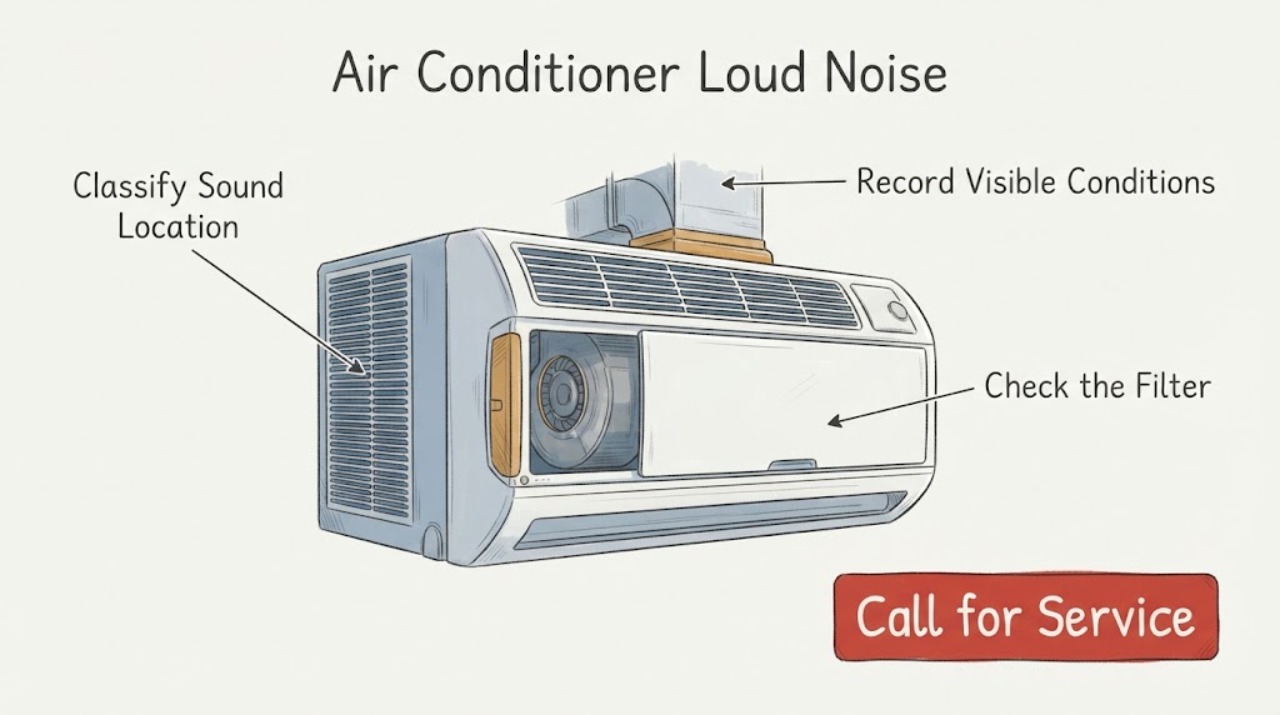
A loud air-conditioner noise can come from the indoor blower motor or wheel, a restricted filter or return, duct movement, or the outdoor fan or compressor rather than the blower itself. Turn the system off at the thermostat when the noise is sudden, harsh, grinding, scraping, rattling, or accompanied by weak airflow, smoke, a burning odor, ice, water, or repeated electrical trips. From ordinary safe access, record whether the sound comes from the indoor air handler or outdoor unit, when it starts, and whether airflow changes. You may inspect or replace an accessible filter according to the unit instructions, but do not open the blower cabinet, touch a capacitor, remove a fan guard, or run the system repeatedly to listen. A persistent or new loud noise needs qualified HVAC service, especially when the blower motor is suspected.
Work through in order
Diagnostic checks
Use only checks that match the exact appliance or system and its official guide.
-
Check 1
From a safe floor position, identify whether the loud noise comes from the indoor air handler or furnace area, a supply or return grille, the ductwork, or the outdoor condenser. Do not remove panels, guards, grilles, or covers to get closer.
Expected result: The sound is indoors near the blower, travels through a grille or duct, is outdoors near the fan or compressor, or cannot be localized; record humming, grinding, scraping, rattling, squealing, clicking, or vibration.
Next step: Turn the system off for a new or harsh sound and use the corresponding branch below. Do not run it repeatedly to compare noises.
Stop if: Stop immediately for smoke, burning odor, visible spark or arc, a hot cabinet, refrigerant-like hissing, water near electrical equipment, or a loose or moving assembly.
Why this matters
Why: Location narrows the service path: an indoor sound keeps the blower motor and wheel in scope, while an outdoor sound points to a different fan, compressor, or electrical assembly. Sound character alone does not prove a failed part.
-
Check 2
Using only the sound already observed, record whether it begins at startup, continues while the blower runs, changes at shutdown, or occurs when the outdoor unit runs. Note whether air still comes from the registers, airflow is weak, the temperature changes, or the system stops.
Expected result: The noise is startup-only, continuous during indoor fan operation, present after the call ends, linked to the outdoor unit, or accompanied by weak or absent airflow, poor cooling, ice, water, or a trip.
Next step: Leave the system off for a new persistent noise, no airflow, ice, water, electrical symptom, or rapid worsening. Provide this timing to HVAC service instead of performing another listening test.
Stop if: Do not continue operation for grinding, scraping, violent vibration, smoke, burning odor, arcing, an overheated cabinet, or repeated breaker operation.
Why this matters
Why: Timing separates a blower or duct symptom from outdoor equipment and helps the technician distinguish a normal transition from a new persistent noise. Weak airflow with indoor noise raises concern for the filter, blower wheel, motor, or a restriction.
-
Check 3
With the thermostat off and no unsafe symptom present, inspect only the filter location intended for ordinary user access. Follow the equipment instructions for the correct size, airflow direction, cleaning or replacement method, and access; do not remove the blower access panel.
Expected result: The filter is visibly loaded, wet, damaged, missing, installed backward, or clean and correctly seated; note whether the return grille is blocked by furniture or another ordinary obstruction.
Next step: Correct only an accessible filter or return obstruction according to the manual, then leave the system off if noise persists. A wet filter, repeated icing, or any cabinet access requirement needs HVAC service.
Stop if: Stop for water near electrical equipment, a burning smell, smoke, damaged wiring, a hot cabinet, or any need to reach into the blower or remove an access panel.
Why this matters
Why: A blocked filter or return can restrict airflow and increase blower effort, but a clean filter does not clear the blower motor, wheel, capacitor, duct, or control. A wet filter or water source may indicate a separate condensate or coil issue.
-
Check 4
From the thermostat, record the selected mode and fan setting, displayed alerts, and whether the indoor fan is expected to be running. Do not repeatedly switch modes or fan settings to recreate the loud sound, and do not open the air handler control compartment.
Expected result: The noise occurs only during a cooling call, with the fan set to On, at shutdown, or despite the thermostat being off; the display may show an alert or no alert.
Next step: Leave the system off and arrange HVAC service for noise that continues when it should be idle, an alert, or an unresponsive control. Do not reset repeatedly or open the control area.
Stop if: Stop for smoke, odor, heat, sparks, a tripped breaker, water near controls, or any need to test live wiring or a capacitor.
Why this matters
Why: Control timing tells the technician whether the blower is being commanded, coasting, or running unexpectedly. A fan that continues loudly after the thermostat is off, or a system that ignores the control, may involve a relay, board, wiring, or motor fault.
-
Check 5
From a safe position, observe the indoor return and supply openings and the outdoor unit for ordinary external obstructions, loose visible panels, unusual cabinet vibration, or debris around the outdoor unit. Do not reach through a grille, remove a guard, move the unit, or use tools.
Expected result: A return or grille is blocked, an external panel visibly vibrates, outdoor debris is present without touching the equipment, or the airflow path and cabinet appear clear while noise persists.
Next step: Remove only an ordinary room obstruction from the floor if safe; leave HVAC equipment and exterior panels untouched. Persistent noise or any loose assembly needs HVAC service.
Stop if: Stop for a moving fan, exposed wiring, sharp metal, refrigerant-line damage, smoke, odor, ice, water, severe vibration, or any need to climb or open equipment.
Why this matters
Why: An accessible airflow obstruction or loose exterior panel can transmit noise, but internal blower-wheel imbalance, bearings, motor, capacitor, compressor, and wiring cannot be diagnosed safely by sight alone. Trane identifies excessive vibration and rattling as abnormal service clues.
-
Check 6
Prepare a service handoff without opening the unit: record the equipment type and model if safely visible, indoor or outdoor source, sound description, startup or shutdown timing, airflow, cooling result, filter condition, ice or water, thermostat behavior, recent service, and safe photos from a distance.
Expected result: The technician receives enough information to focus on the blower motor and wheel, filter and airflow, duct or mounting, control, outdoor fan, compressor, or electrical supply without a risky repeat test.
Next step: Keep the system off until qualified HVAC service when the noise is new, persistent, severe, or associated with weak airflow or another warning sign.
Stop if: Stop documenting and leave if smoke, flame, arcing, strong odor, rapid heating, water near electrical parts, or another immediate hazard appears.
Why this matters
Why: A detailed symptom history is more useful than a guessed part. A blower motor may need a capacitor, control, wheel, or motor diagnosis, and compatibility or replacement must be established for the exact equipment.
Use your observations
Decision map
Find the observation that best matches what you see, then follow the next safe action.
-
PATH 01Next step
What you see
There is smoke, flame, visible arcing, strong burning odor, rapid heat, a hot cabinet, or repeated electrical trips.
Do this next
Shut the system off if it can be done without approaching danger, leave the area when appropriate, and contact emergency help or a qualified electrician/HVAC professional from a safe location.
-
PATH 02Next step
What you see
The loud noise is indoors near the air handler and continues with airflow or comes with weak airflow.
Do this next
Turn the system off, check only the accessible filter and return obstruction, and arrange HVAC service for the blower motor, wheel, capacitor, control, duct, or mounting diagnosis.
-
PATH 03Next step
What you see
The noise is outdoors near the condenser fan or compressor rather than the indoor blower.
Do this next
Leave the system off and arrange HVAC service; do not remove the guard, touch the fan, or open the electrical compartment.
-
PATH 04Next step
What you see
The noise travels through a grille or duct, or a visible exterior panel vibrates without an emergency sign.
Do this next
Record the location and timing, remove only a safe room obstruction, and request HVAC inspection rather than tightening or opening equipment.
-
PATH 05Next step
What you see
The accessible filter is dirty, wet, damaged, missing, or installed incorrectly.
Do this next
Follow the exact equipment instructions for the filter and leave the system off if noise, ice, water, or weak airflow persists; arrange HVAC service.
-
PATH 06Next step
What you see
The filter, return, and visible exterior appear clear but the new loud noise remains.
Do this next
Do not run another test. Provide the sound history to qualified HVAC service for internal blower, motor, control, duct, fan, or compressor diagnosis.
Helpful context
Understand the symptom
First separate indoor blower noise from outdoor noise
A split air conditioner has an indoor air handler or furnace blower and an outdoor condenser fan and compressor. Trane notes that a loud indoor hum can involve the blower motor, while outdoor noise can involve the fan motor, capacitor, contactor, or compressor. Do not use a general sound description to identify a part. The location, sound character, start or stop timing, airflow, and temperature symptoms are more useful to the HVAC technician.
Filter and airflow checks are the low-risk boundary
A dirty filter or restricted return can change airflow and motor load, but an accessible filter is the only routine user check recommended here. Read the unit's instructions for the filter location and orientation, and replace or clean it only as specified. Do not remove the blower access panel or reach into the wheel. If a clean, correctly installed filter does not change the noise, the blower motor, wheel, capacitor, relay, duct, or another HVAC component needs professional diagnosis.
Treat harsh noise and abnormal heat as a stop condition
Trane advises turning off an HVAC system that suddenly becomes noticeably loud. Grinding, scraping, repeated rattling, a high-pitched change, loud humming with no airflow, or noise that worsens during operation is not a reason to keep testing. Smoke, a burning or electrical odor, a hot cabinet, visible arcing, a frozen coil, water near electrical equipment, or repeated breaker trips requires immediate shutdown and appropriate HVAC or electrical help.
Safety boundary
Stop conditions
- Turn the system off and stop for smoke, flame, burning or electrical odor, visible sparks or arcing, rapid heating, a hot cabinet, or repeated breaker trips.
- Stop for severe vibration, a moving or loose fan assembly, grinding or scraping, weak or absent airflow, repeated icing, water near electrical equipment, or refrigerant-like hissing.
- Do not open the blower or control cabinet, touch a capacitor, remove a fan guard, reach through a grille, test live wiring, or run the system repeatedly to reproduce noise.
- Do not alter refrigerant lines, bypass a safety control, or use an improvised repair. Leave internal motor, wheel, duct, electrical, and refrigerant work to qualified professionals.
When checks do not resolve it
Need a professional?
Request qualified HVAC service for a new or persistent loud noise, suspected blower motor or wheel problem, weak airflow, an indoor fan that runs unexpectedly, a recurring trip, ice or water, or any internal access requirement. Use a qualified electrician for a confirmed electrical supply issue and emergency response for active fire, smoke, or immediate danger.
Have this ready
- Provide the equipment make and model if safely visible, indoor or outdoor source, sound character, startup or shutdown timing, fan setting, airflow and cooling result, filter condition, ice or water, breaker behavior, recent work, and safe external photos.
Common questions
FAQ
Why is my air conditioner making a loud humming noise indoors?
A loud indoor hum can involve the blower motor or another air-handler component. Turn the system off if the noise is new or unusually loud, inspect only the accessible filter, and arrange HVAC service if the sound persists or airflow is weak. Do not open the blower cabinet or test a capacitor.
Could a dirty filter cause a loud blower noise?
A dirty filter can restrict airflow and increase blower effort, but it does not prove the motor is the cause. Replace or clean only an accessible filter according to the equipment instructions. Persistent noise, weak airflow, ice, or water requires HVAC service.
How do I tell if the noise is from the blower motor or outdoor unit?
From a safe distance, note whether the sound is at the indoor air handler or at the outdoor condenser and when it occurs. Do not remove covers or run repeated tests. Indoor loud humming keeps the blower in scope; outdoor noise may involve the fan or compressor and needs HVAC inspection.
Should I keep running the AC to see whether the loud noise goes away?
No. Trane advises shutting off an HVAC system that suddenly becomes loud. Leave it off for grinding, scraping, rattling, severe vibration, weak airflow, smoke, odor, ice, water, or electrical symptoms and arrange qualified HVAC service.
When is a loud air-conditioner noise an emergency?
Stop immediately for smoke, burning or electrical odor, visible sparks or arcing, a hot cabinet, repeated breaker trips, severe vibration, water near electrical equipment, or a moving fan assembly. Leave the area when appropriate and contact emergency, electrical, or HVAC help from a safe location.
Read the exact guide
Official sources
- Is This Normal? HVAC Smells and Sounds, ExplainedTrane · Official Trane residential HVAC guidance used for general sound-location and escalation distinctions; exact equipment instructions control.
- HomeCooling101U.S. Department of Energy · Official U.S. Department of Energy home-cooling guidance for common air-conditioner system components and maintenance.
- Air Handler Fan Not Working? Read ThisTrane · Official Trane air-handler troubleshooting guidance; components and access vary by equipment.
- Measure Guideline: Air Conditioner Diagnostics, Maintenance, and ReplacementU.S. Department of Energy, Building Technologies Office · Official U.S. Department of Energy technical guidance for air-conditioner diagnostics and maintenance; cabinet and refrigerant work is professional.
Community feedback
Share a repair observation
Share a plain-text repair observation. Accepted observations are published automatically; this page may take a moment to update.