
Repair problem
Loud Noise Troubleshooting Guides
Published FixGraph guidance for diagnosing and responding to loud noise.
Matching published guides
Choose a guide that matches the service, equipment, and conditions you are seeing.
-
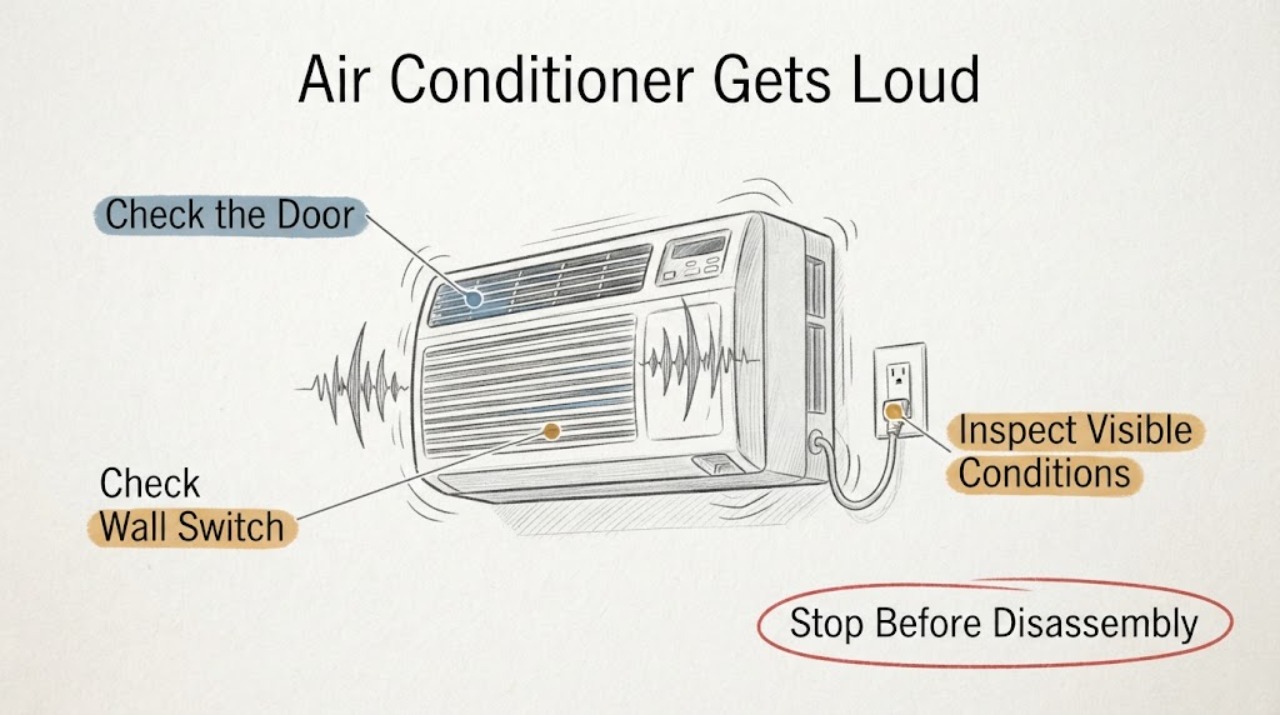
Air Conditioner Gets Loud and Resonates at Startup: Safe Checks
When an air conditioner becomes loud and then resonates as it starts, first identify whether the sound is coming from the indoor air handler, duct or grille, outdoor cabinet, or the building surface carrying vibration. A brief familiar startup sound may be normal for some systems, but a new or worsening resonance can involve an unstable mounting surface, loose external panel, duct transmission, fan or blower imbalance, motor trouble, capacitor or compressor trouble.
-
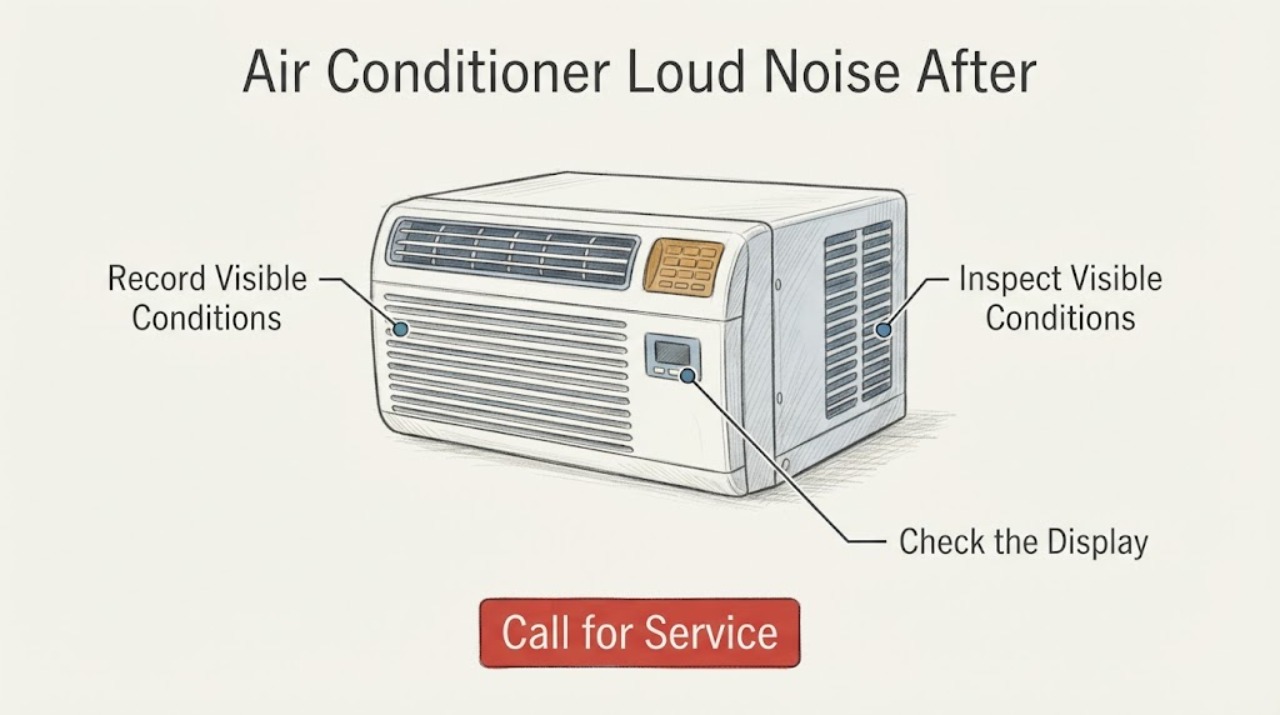
Air Conditioner Loud Noise After Buzzing
If an air conditioner begins making a loud noise after a buzzing sound, stop treating the buzz as a harmless startup sound until the source is identified. From a safe distance, note whether the sound starts at the outdoor unit, whether the outdoor fan turns, and whether cooling or electrical behavior changes.
-
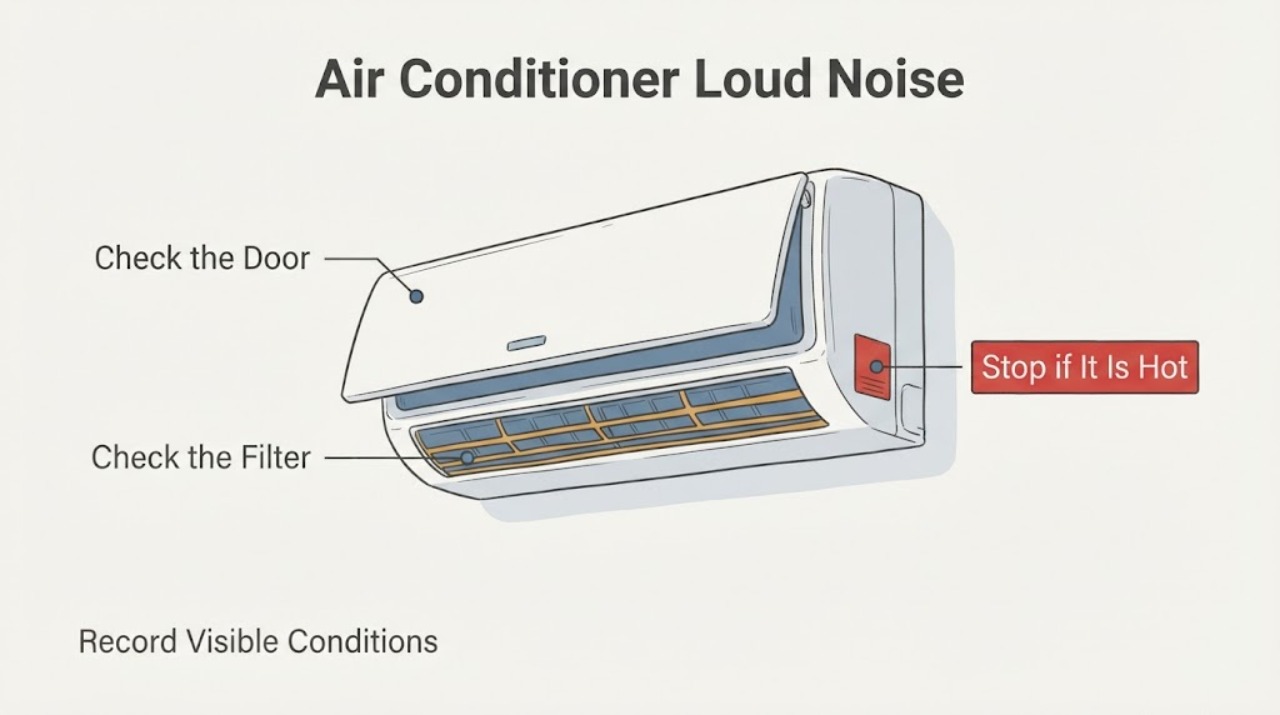
Air Conditioner Loud Noise in the House: Indoor Unit, Duct, and Airflow Checks
First determine whether the loud sound comes from the indoor air handler, a return or supply grille, a duct, or the condensate area, and whether it occurs at startup, while running, or during shutdown. A blocked filter, obstructed register, loose grille, duct vibration, or normal expansion can create indoor noise, but a new grinding, rattling, loud hum, hissing near the indoor coil, water, burning odor, or electrical sound means turn the system off and arrange HVAC service.
-
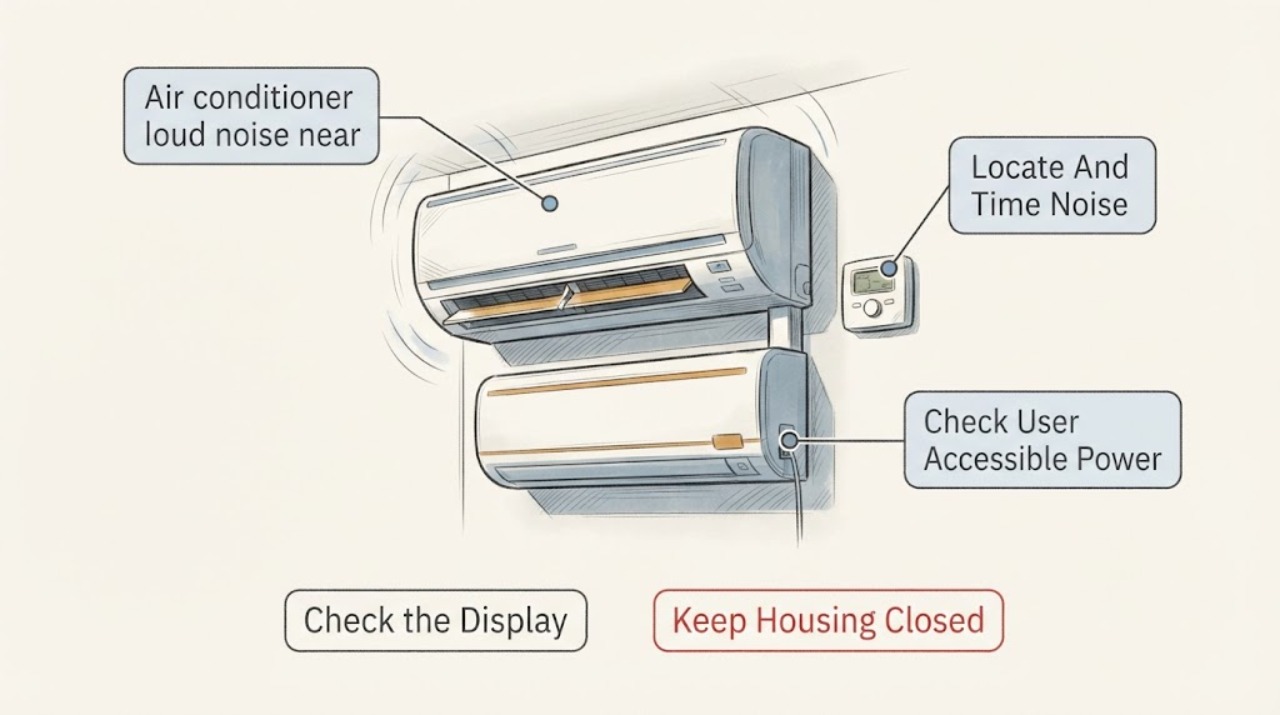
Air conditioner loud noise near the thermostat: separate a normal click from a fault
A brief click when a thermostat starts or stops a cooling call can be the control making contact, but a new loud click, buzz, crackle, vibration, or repeated clicking is not proof that the thermostat itself is bad. First stand safely near the wall control and record whether the sound is truly at the thermostat or is the outdoor unit starting at the same moment.
-
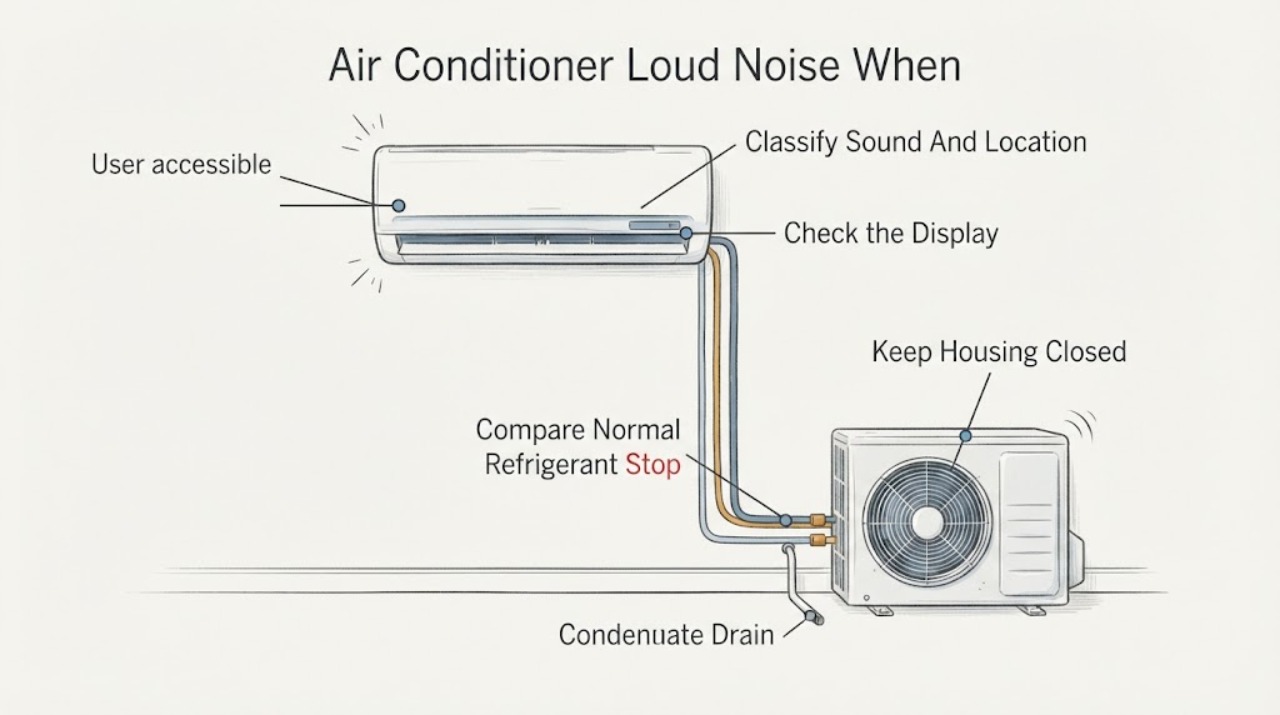
Air Conditioner Loud Noise When a Mini-Split Is Off
A loud noise from a mini-split after you turn it off is worth classifying before you reset or open anything. A brief hiss immediately after stopping, a short creak as parts cool, a faint drain-pump sound, or limited outdoor run-on can be normal on some systems; a multi-zone system may also make a faint sound at a stopped indoor head while another head is operating.
-
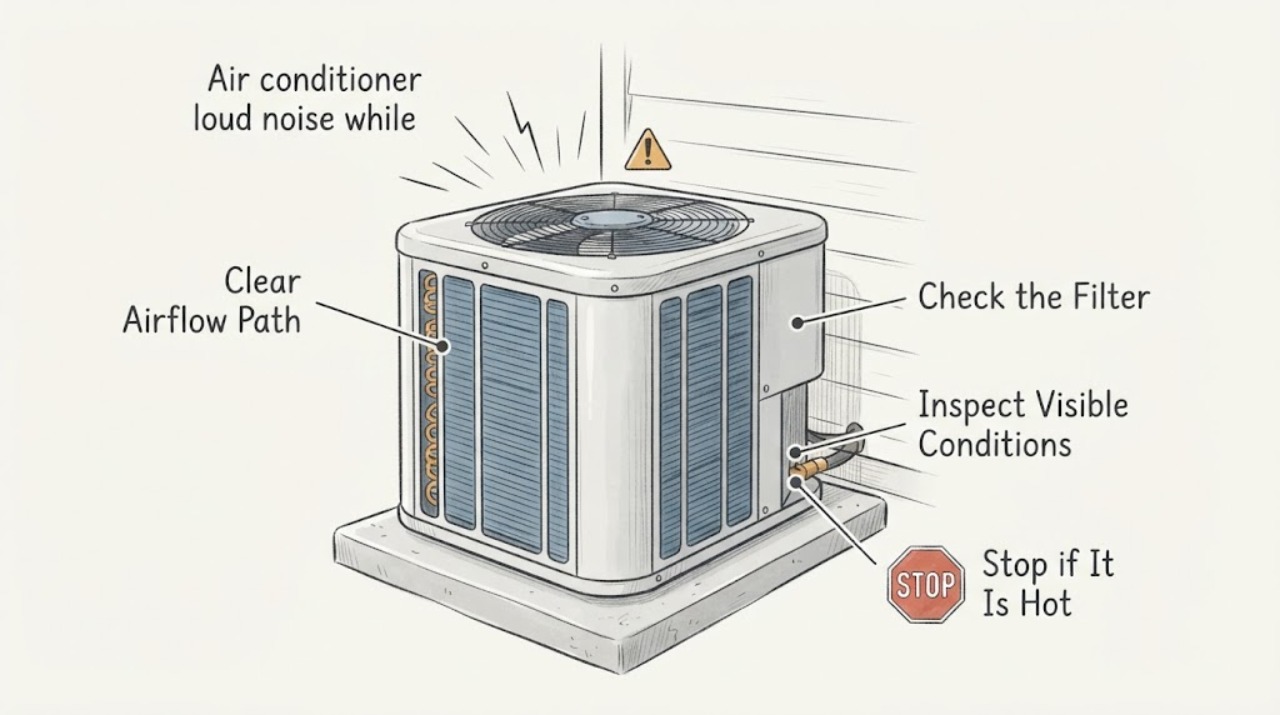
Air conditioner loud noise while the outdoor unit runs but the house is not cooling
If the outdoor air-conditioner unit is running but the house is not cooling and the system is making a loud noise, first verify the thermostat call and identify whether the indoor blower is moving air. Then check only the user-accessible filter and unobstructed vents, and look from a safe position for ice or abnormal water.
-
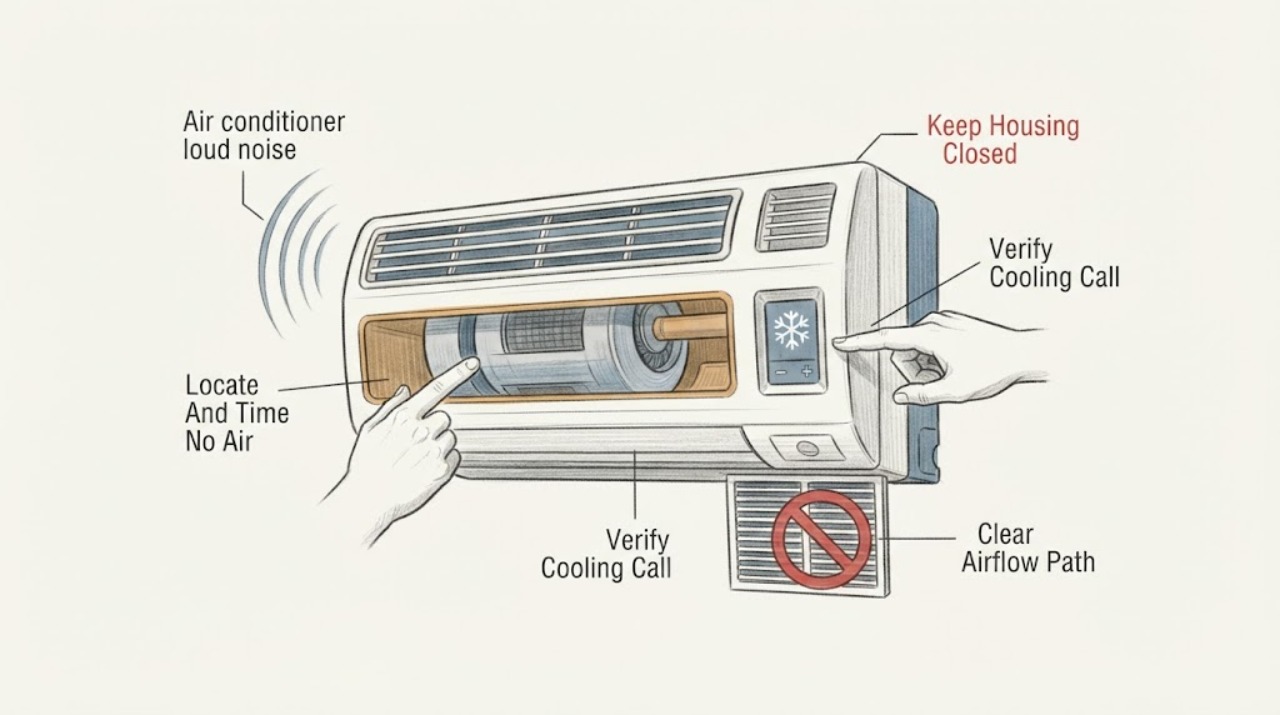
Air conditioner loud noise with no air: check the blower motor safely
If an air conditioner makes a loud noise when turned on but no air comes from the vents, first confirm that the thermostat is actually calling for cooling and identify whether the sound is at the indoor air handler or the outdoor unit. A loud indoor hum with no airflow can involve the blower motor, blower wheel, a restricted filter or frozen coil, a control or safety shutdown, or another electrical fault; an outdoor sound is a different diagnostic path.
-
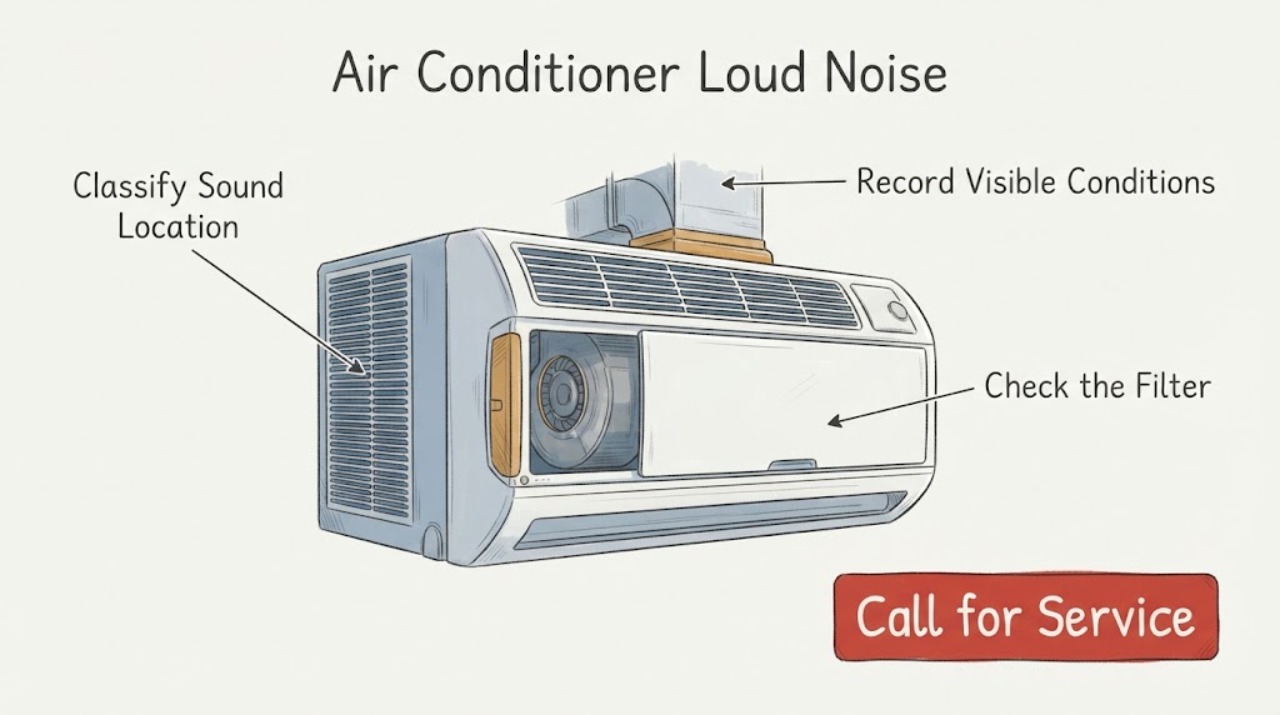
Air Conditioner Loud Noise: Isolate the Blower Motor Safely
A loud air-conditioner noise can come from the indoor blower motor or wheel, a restricted filter or return, duct movement, or the outdoor fan or compressor rather than the blower itself. Turn the system off at the thermostat when the noise is sudden, harsh, grinding, scraping, rattling, or accompanied by weak airflow, smoke, a burning odor, ice, water, or repeated electrical trips.
-
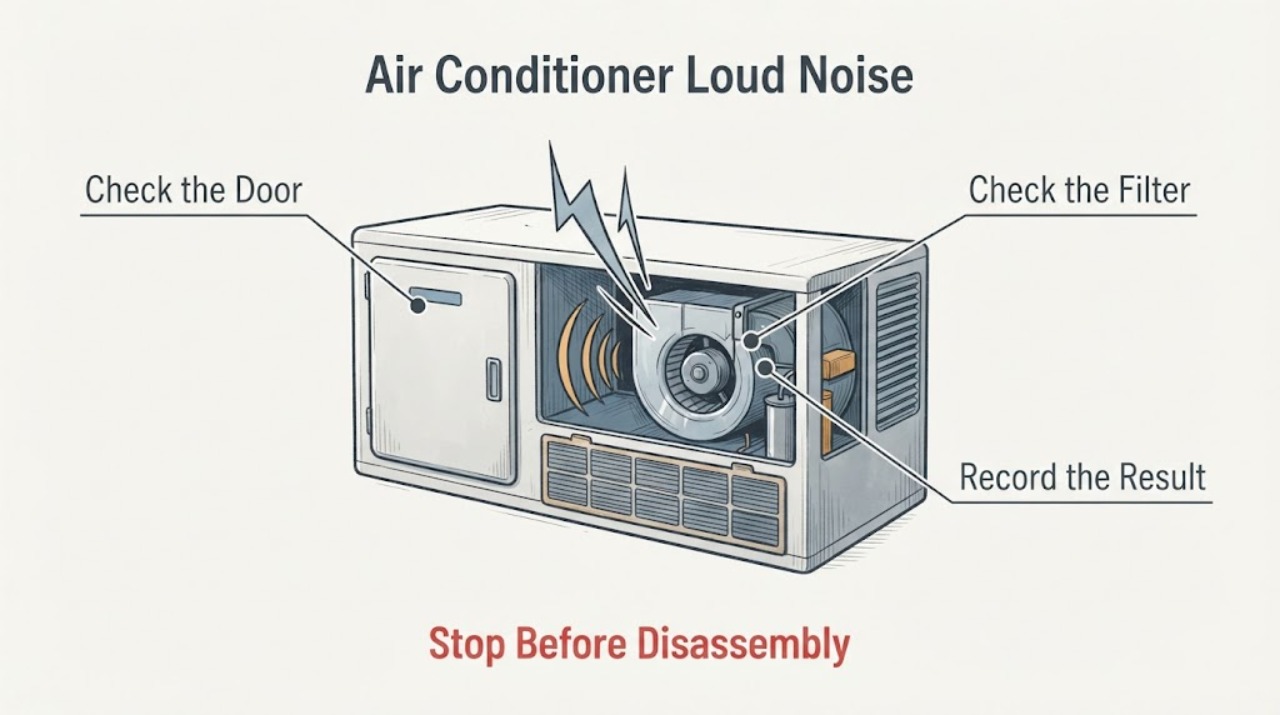
Air Conditioner Loud Noise: Blower Motor and Capacitor Checks
A new loud sound should be treated as a fault until its location and timing are clear. Turn cooling off, note whether the sound comes from the indoor blower or outdoor unit, and do only external, power-off checks.
-
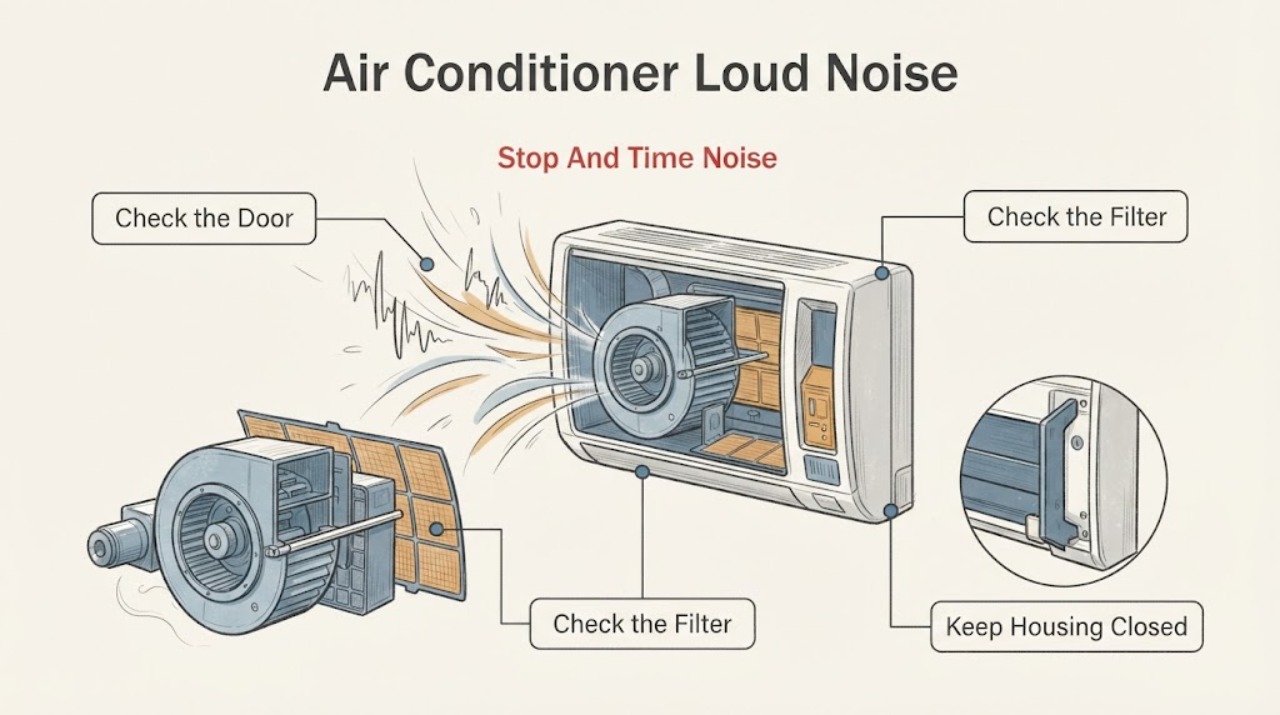
Air Conditioner Loud Noise: Check the Filter and Blower Safely
First identify where and when the loud noise occurs, then stop the air conditioner from the thermostat and inspect only the accessible filter, return grille, and supply registers. A blocked filter can restrict airflow and make the blower work harder, while a rattle, squeal, or grinding sound that starts with the indoor blower can indicate a blower wheel, motor, bearing, or electrical fault that requires HVAC service.
-
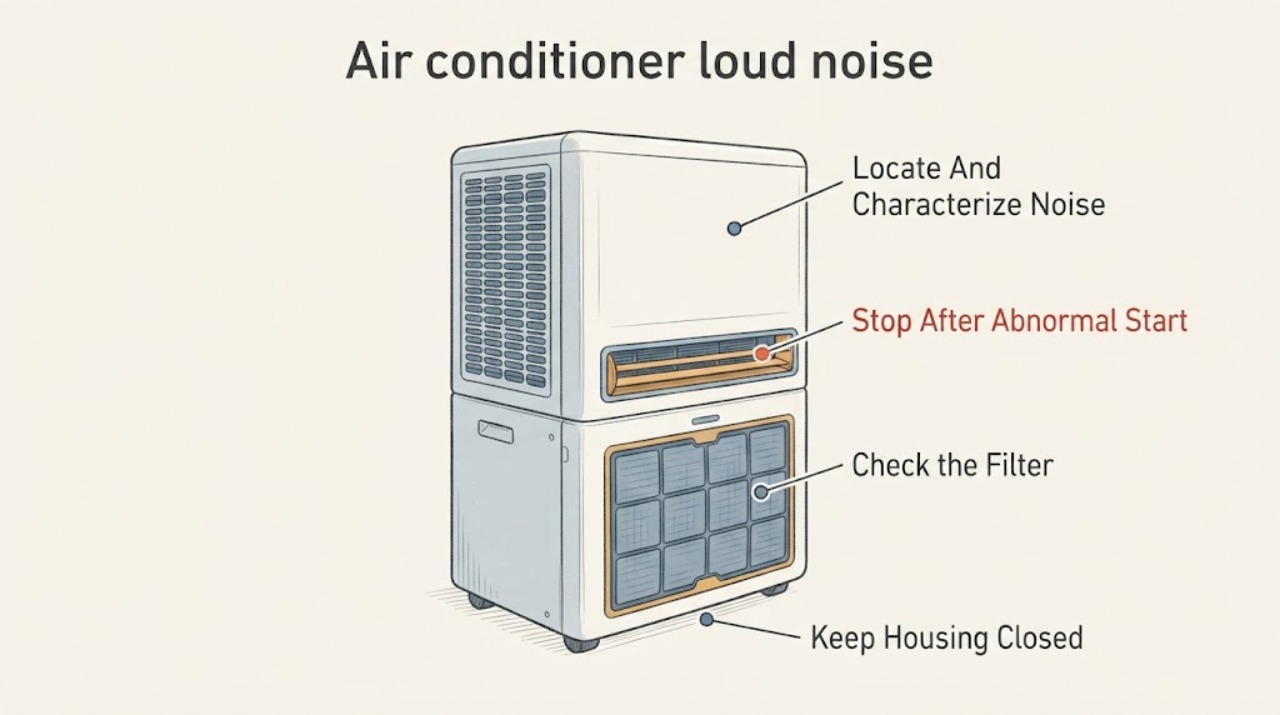
Air conditioner loud noise: how to tell whether a capacitor needs service
A loud air conditioner does not prove that the capacitor has failed. Note whether the sound comes from the indoor or outdoor unit and whether it occurs at startup, during cooling, or at shutdown, then stop the system if the sound is sudden, harsh, or accompanied by poor cooling.
-
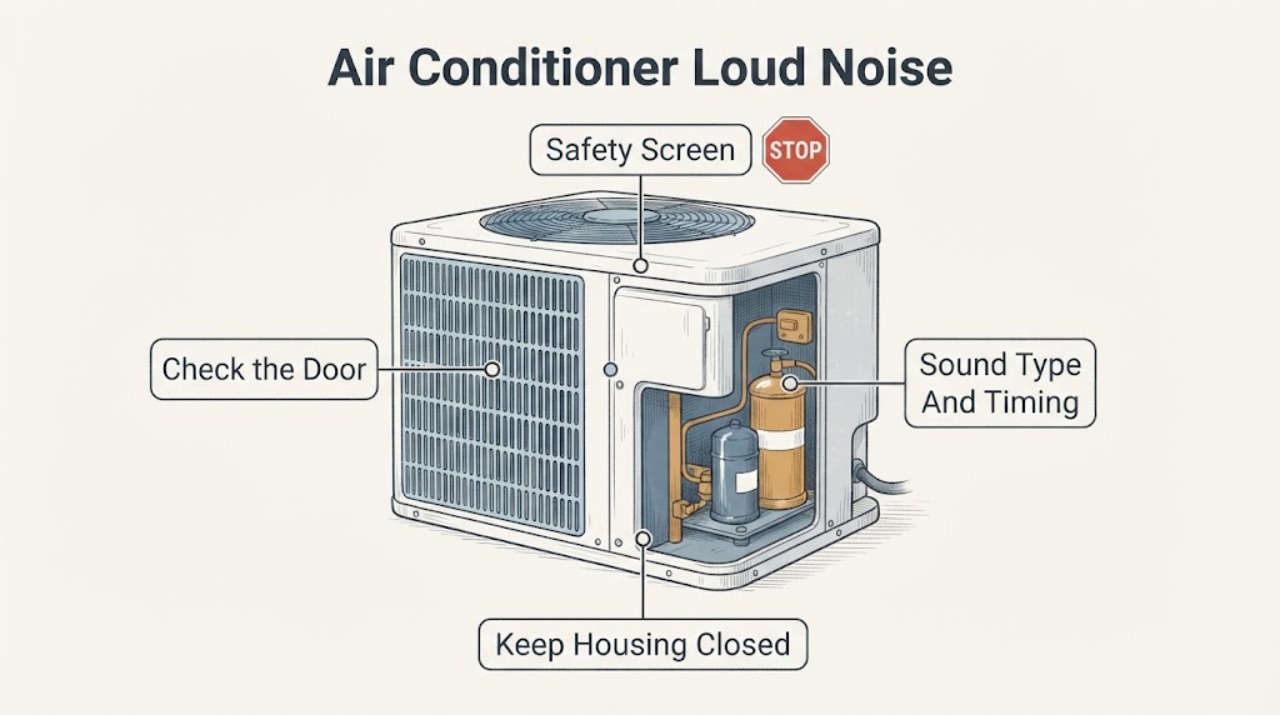
Air Conditioner Loud Noise: Capacitor and Compressor Clues
A loud air-conditioner noise should be classified by location, sound, and timing before anyone guesses a part. Turn cooling off at the thermostat and listen from a safe position: an indoor blower sound points to a different path from an outdoor hum, click, rattle, grind, bang, or squeal.
-
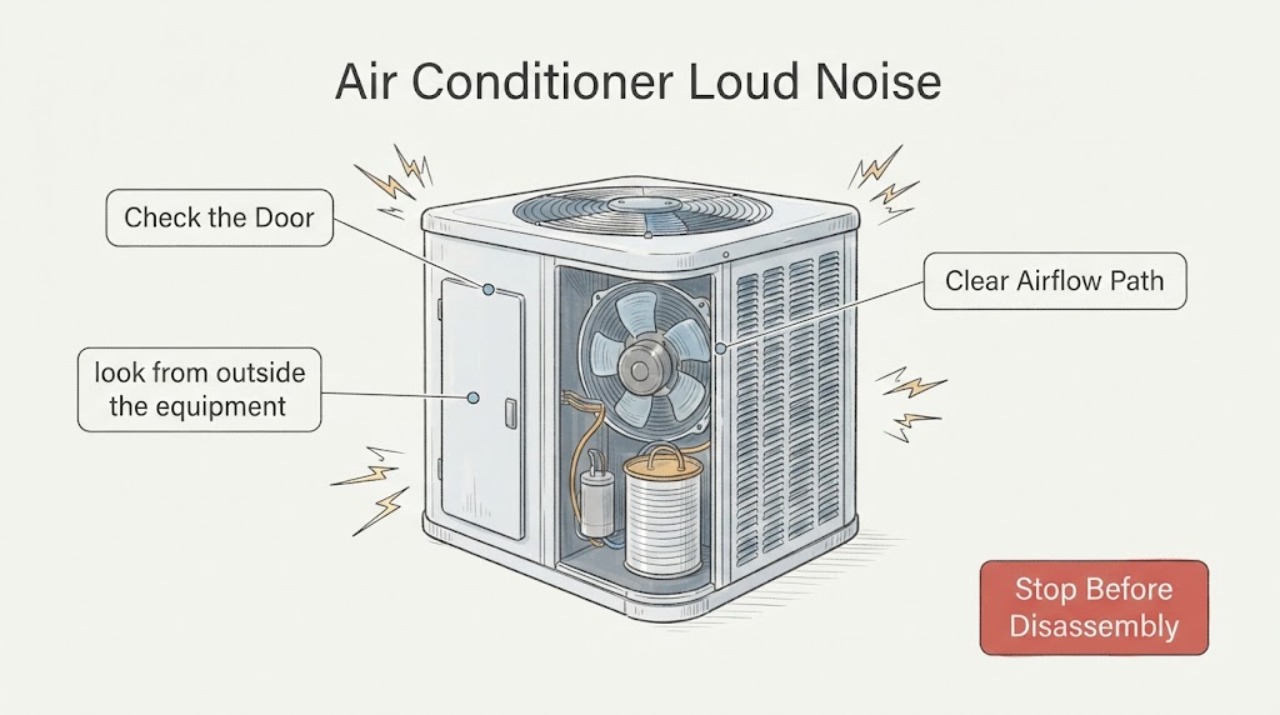
Air Conditioner Loud Noise: Check the Fan and Capacitor Safely
A suddenly loud air conditioner should be diagnosed by location, sound, and timing, not by opening the unit. From a safe position, note whether the noise is indoors or outdoors and whether it is a hum at startup, repeated clicking, rattling, scraping, grinding, or a fan that is not turning.
-
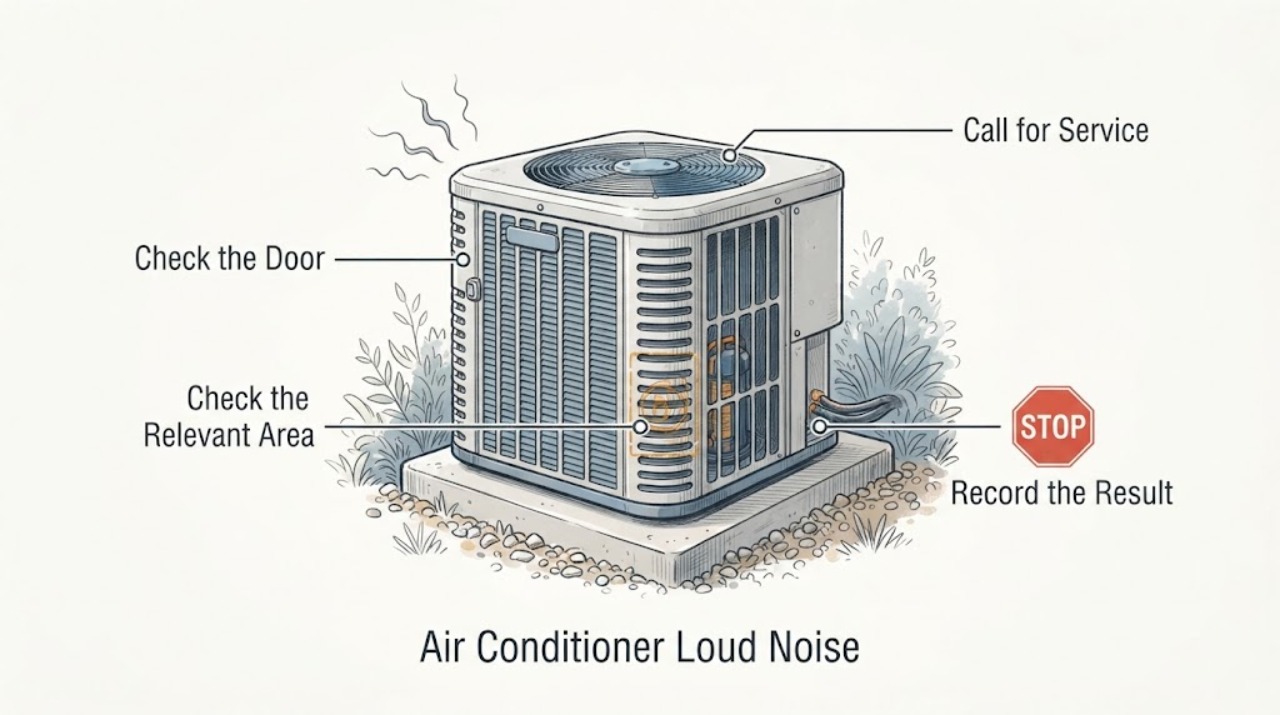
Air Conditioner Loud Noise: Is the Compressor the Source?
A loud air conditioner does not prove that the compressor has failed. First locate the sound from a safe distance and note whether it starts with the outdoor unit, only during compressor startup, or continues while the system runs.
-
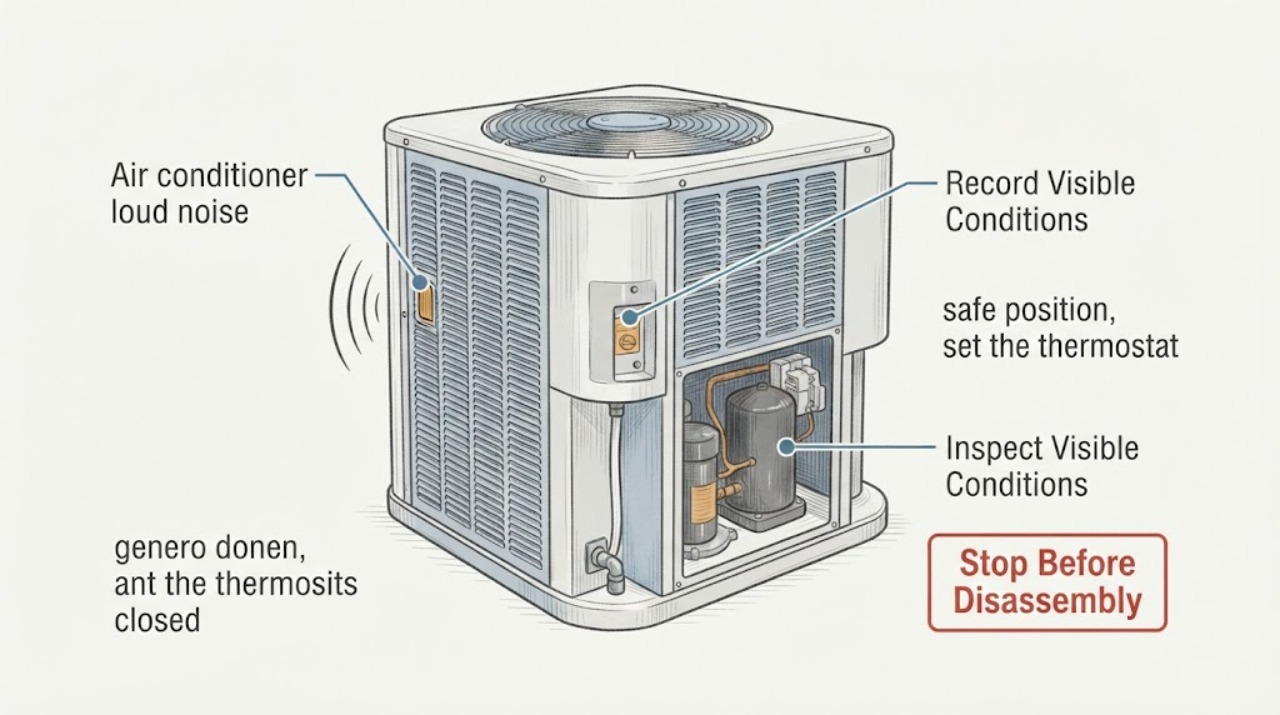
Air conditioner loud noise: check the compressor and contactor safely
A loud air conditioner can be a harmless startup or airflow sound, but a new bang, grinding noise, repeated buzzing or clicking, violent vibration, or a sound that comes with poor cooling can indicate an outdoor fan, compressor, contactor, electrical, mounting, or refrigerant problem. From a safe distance, note whether the sound comes from the indoor or outdoor unit and whether it starts, stops, or changes with a cooling call.
-
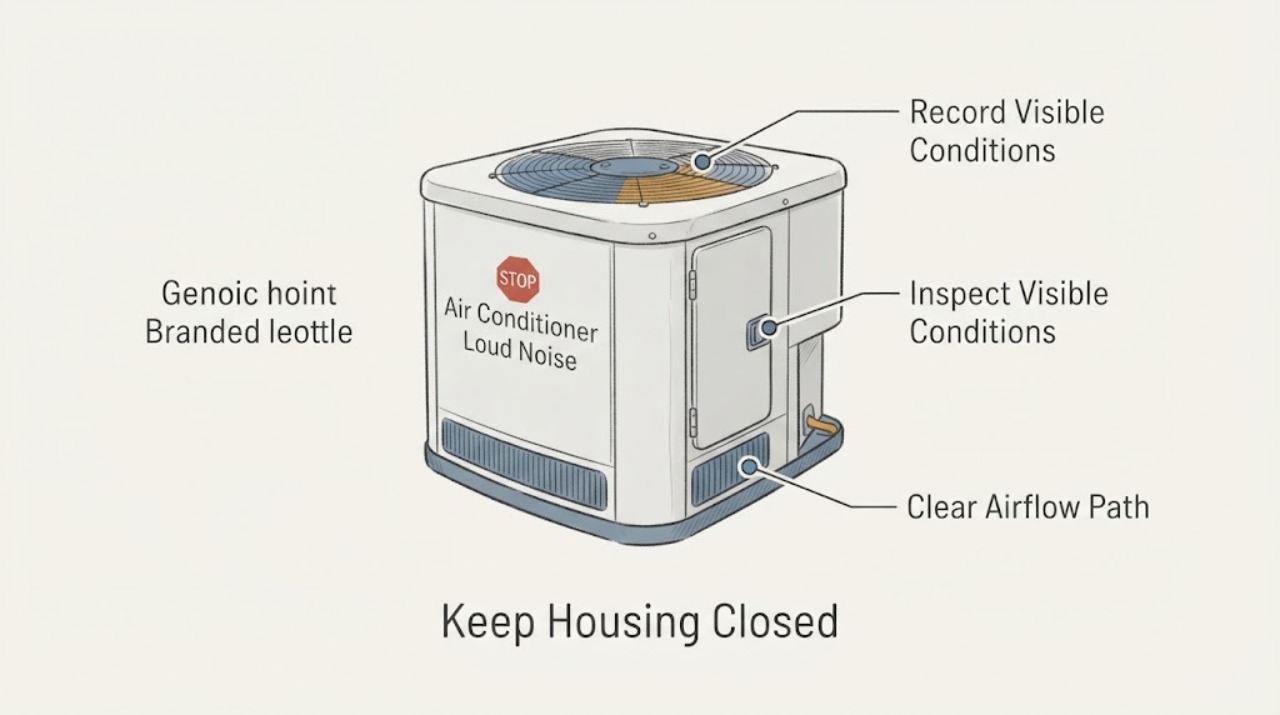
Air Conditioner Loud Noise: When a Contactor Needs HVAC Service
A new or unusually loud hum, buzz, or repeated click from an air conditioner's outdoor unit can involve the contactor, capacitor, fan, compressor, loose hardware, or another electrical or mechanical fault. From a safe position, note whether the sound is indoors or outdoors, whether it occurs at startup, shutdown, or continuously, whether the outdoor fan runs, and whether cooling changes.
-
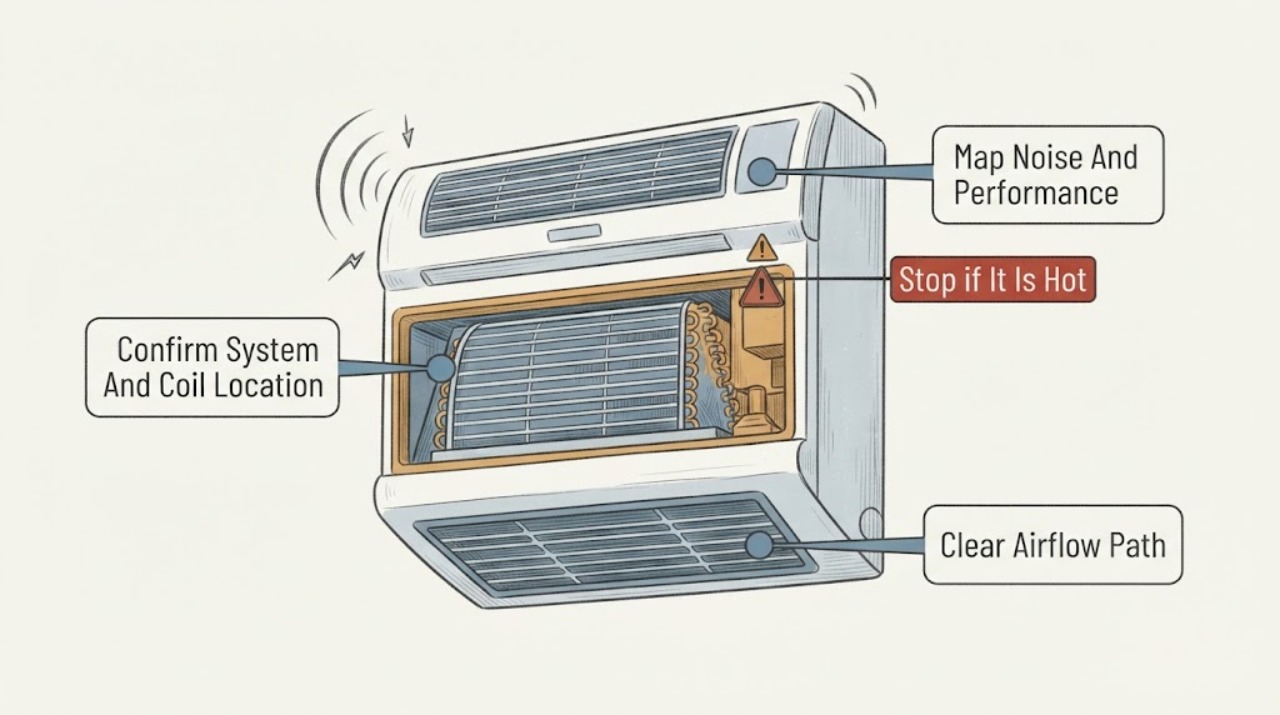
Air Conditioner Loud Noise: Check the Evaporator Coil, Airflow, and Ice Safely
A loud air-conditioner noise near the evaporator coil can be caused by restricted airflow, a frozen or dirty coil, a blower or fan problem, vibration, or a refrigerant-side fault. First note whether the sound is indoors or outdoors and whether cooling, airflow, frost, or water changed at the same time.
-
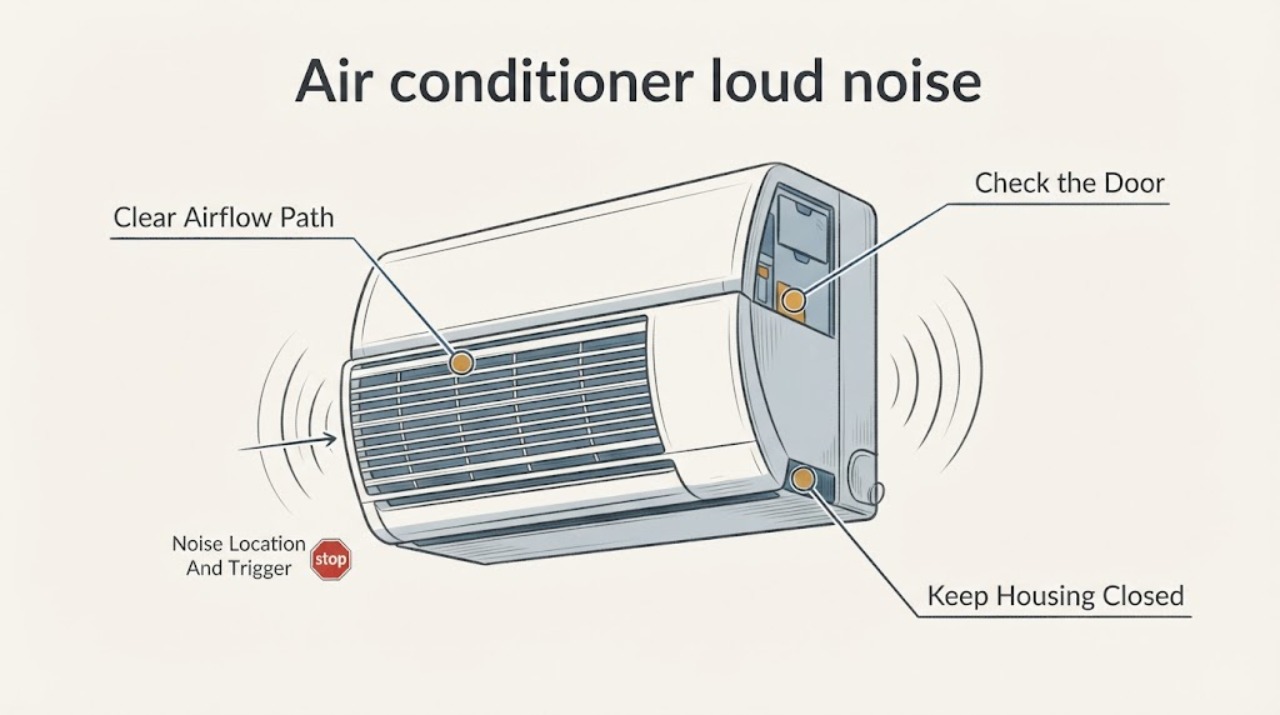
Air conditioner loud noise: What to check and when to stop
A new or intrusive air-conditioner noise is a symptom to classify, not a part to guess. Turn cooling off before inspecting anything.
-
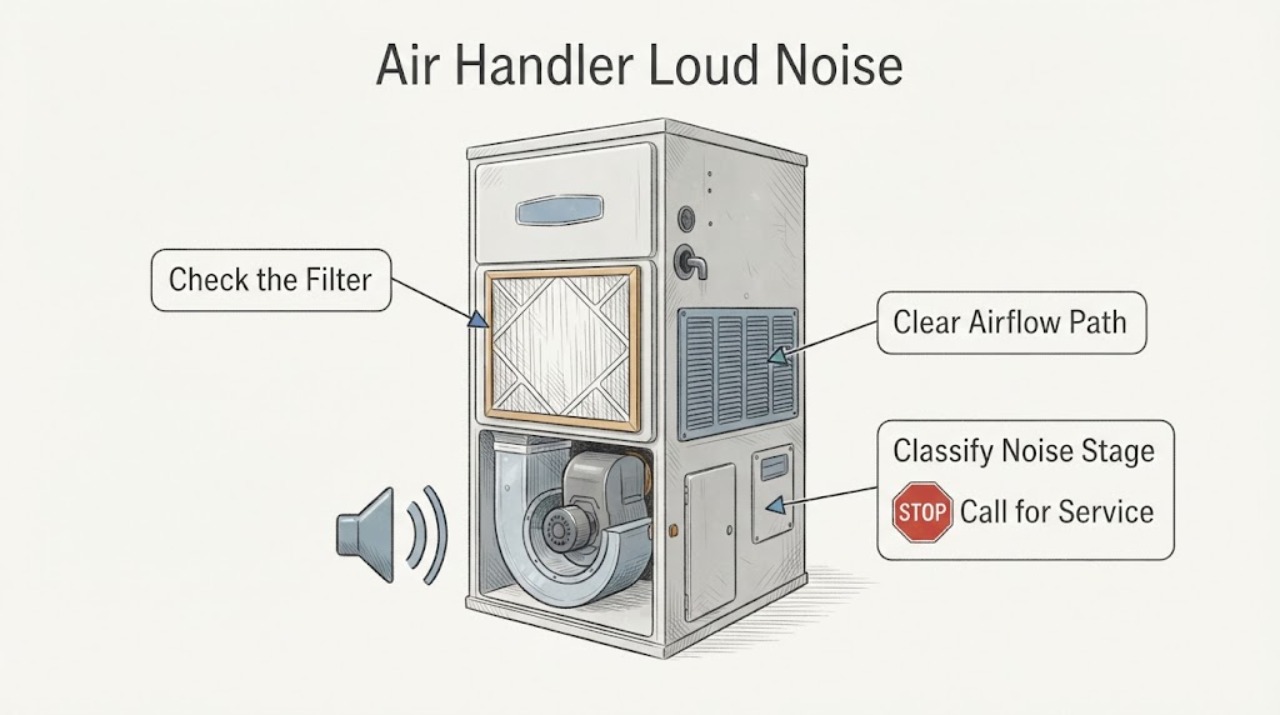
Air Handler Loud Noise: Safe Checks for Blower and Airflow
An air handler that suddenly becomes loud may have restricted airflow, a loose grille or cabinet part, a blower-wheel or fan problem, vibration, or a blower motor, capacitor, relay, or control fault. First classify the sound as a whistle, rattle, buzz, hum, grind, or vibration and note whether it occurs at startup, during airflow, or at shutdown.
-
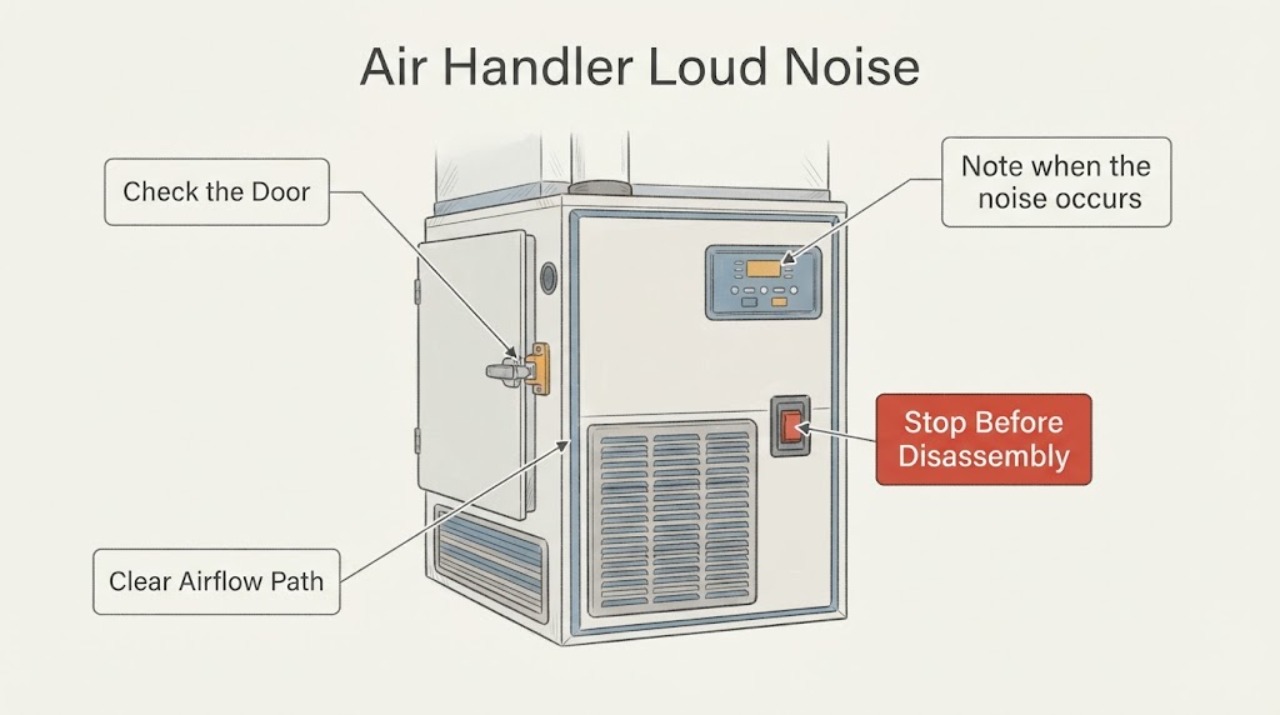
Air Handler Loud Noise: Safe Contactor-Focused Checks
A loud air-handler noise is not enough to prove a contactor is failing. First identify whether the sound comes from the indoor air handler, ductwork, registers, or the outdoor unit, and whether it occurs at startup, shutdown, or continuously.
-
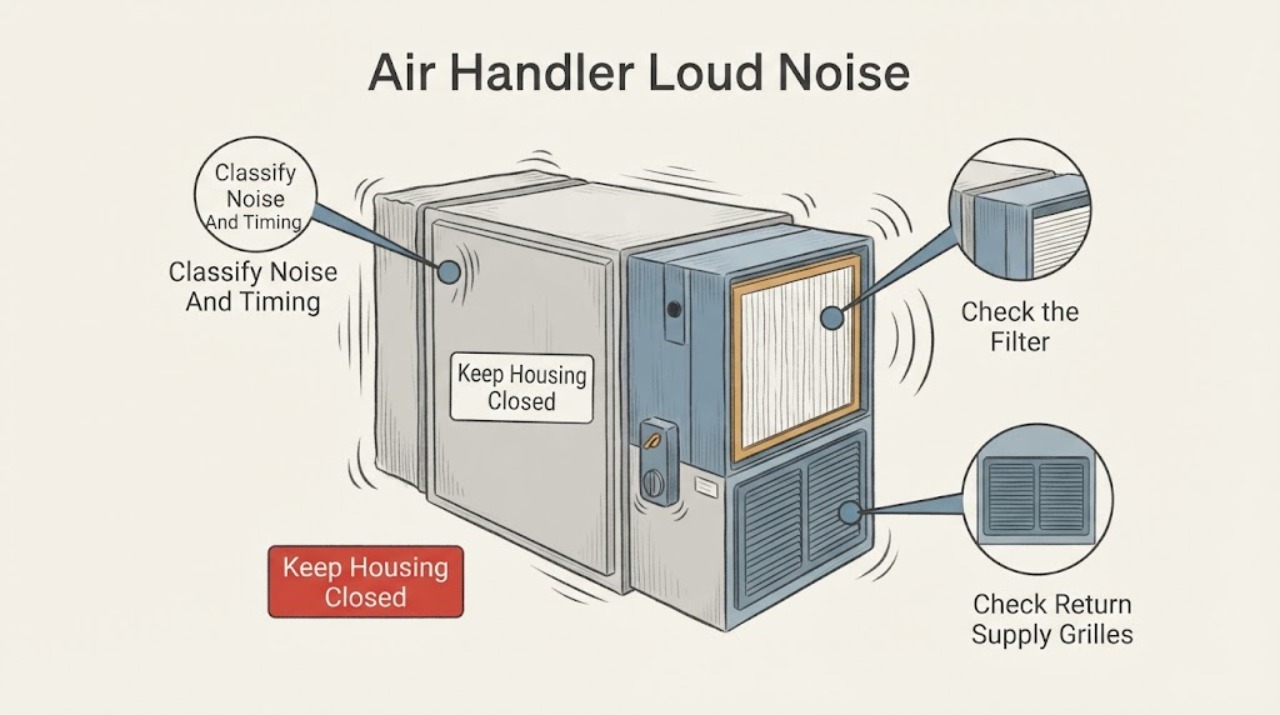
Air Handler Loud Noise: Check the Filter and Airflow Before Blaming the Blower
An air handler can sound loud because a filter is dirty, wet, damaged, missing, reversed, or the wrong size; return or supply grilles are blocked; a loose cover or duct is resonating; or an internal blower, motor, bearing, electrical, coil, or drain problem is present. First classify the sound as a whistle, rattle, buzz, hum, grinding, or bang and note whether it occurs at startup, steady airflow, or shutdown.
-
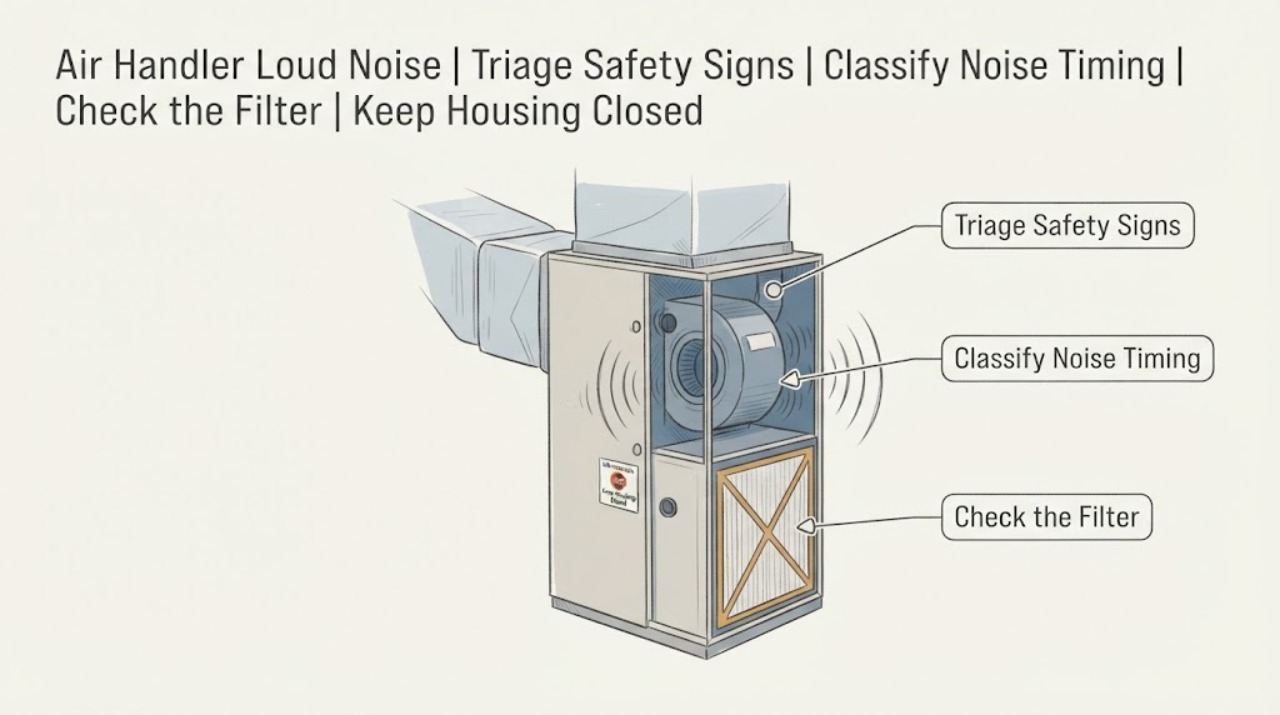
Air Handler Loud Noise: What to Check and When to Call HVAC Service
A loud air-handler noise is not automatically a blower failure, but a sudden or worsening change deserves attention. From a safe position, note whether the sound is rattling, scraping, squealing, humming, banging, or hissing; whether it occurs at startup, shutdown, or continuously; and whether airflow has changed.
-
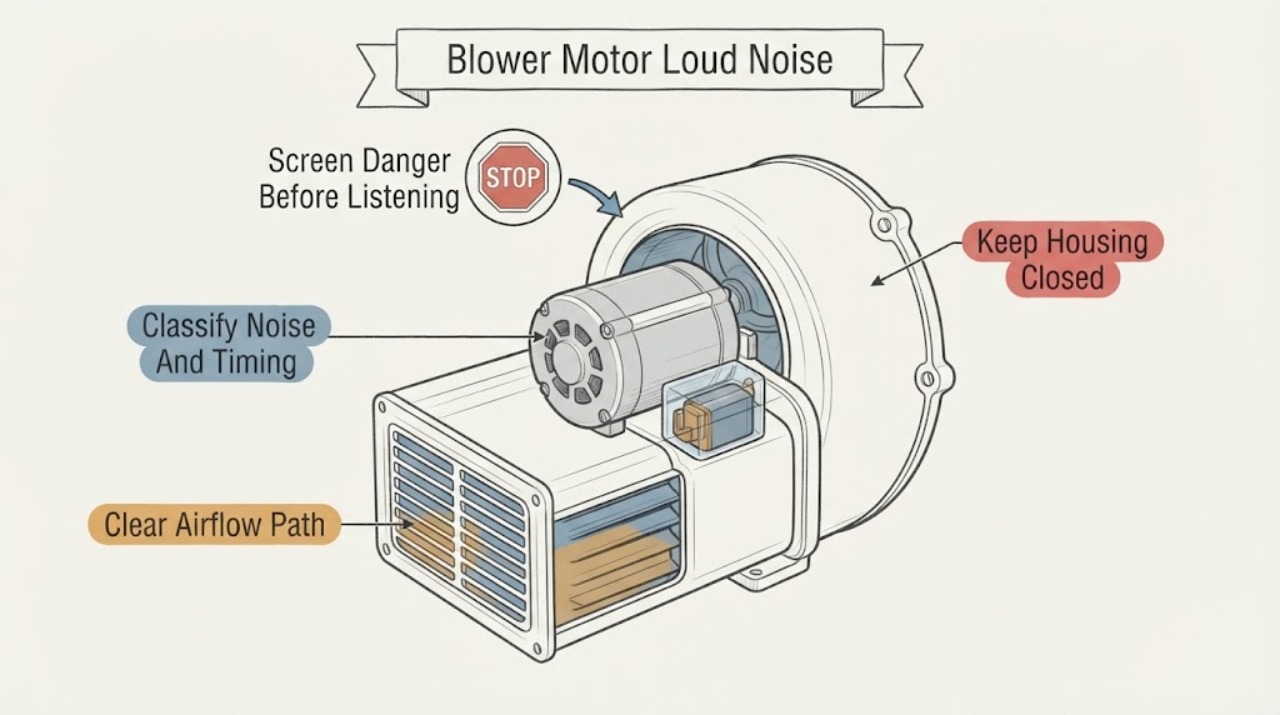
Blower Motor Loud Noise: Recognize Capacitor Clues Without Opening the HVAC Unit
A loud blower-motor noise can come from restricted airflow, a loose panel or duct, a damaged blower wheel, worn bearings, an electrical fault, or a capacitor that is struggling to start the motor. Listen from outside the equipment for the timing and character of the sound: humming with no airflow, grinding or squealing, rattling, or a sudden bang each point to different professional checks.
-
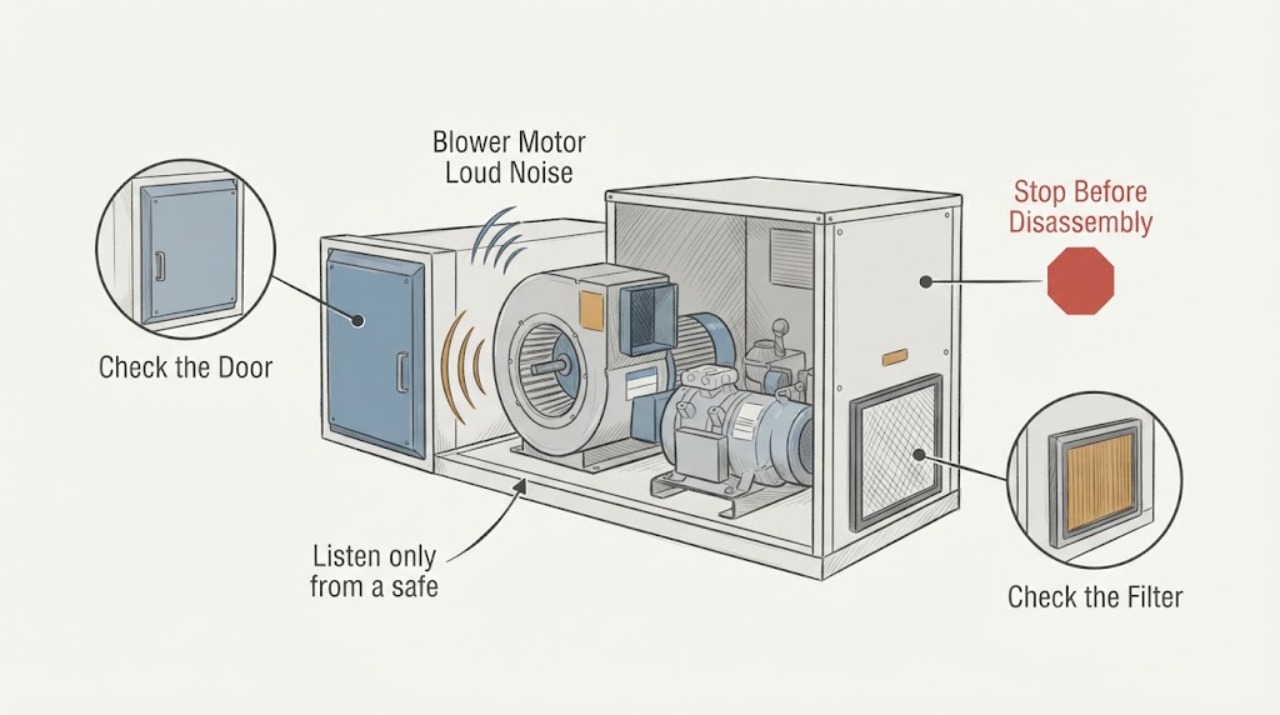
Blower Motor Loud Noise: Separate Indoor and Compressor Sounds
A loud noise blamed on a blower motor may actually come from the indoor blower assembly, ductwork, or the outdoor compressor and fan section. First locate the sound: the blower is normally in the indoor air handler or furnace, while a split-system compressor is outdoors.
-
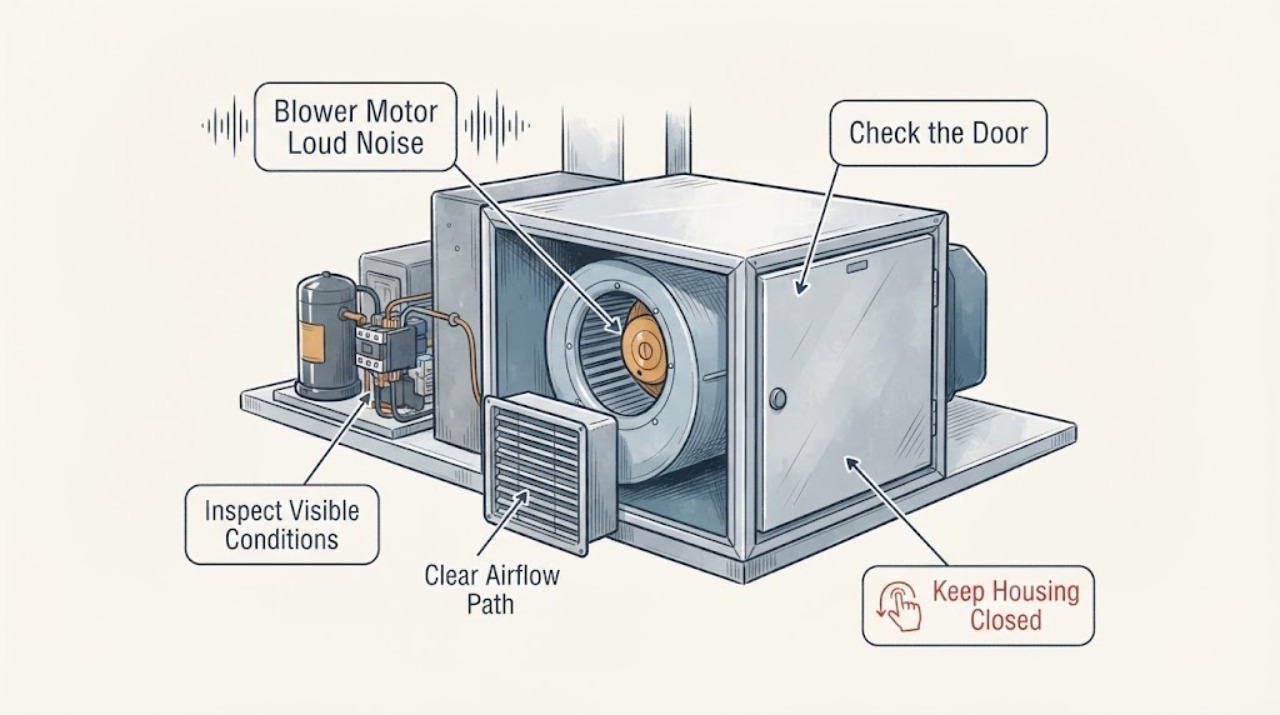
Blower Motor Loud Noise: Separate Indoor Fan, Compressor, and Contactor Clues
A loud noise reported near a blower motor can come from the indoor blower wheel or motor, airflow restriction, cabinet vibration, or a sound transmitted from the outdoor compressor or contactor. First identify where the sound is loudest and whether it occurs when the indoor fan starts, while air is moving, when the system stops, or only when the outdoor unit runs.
-
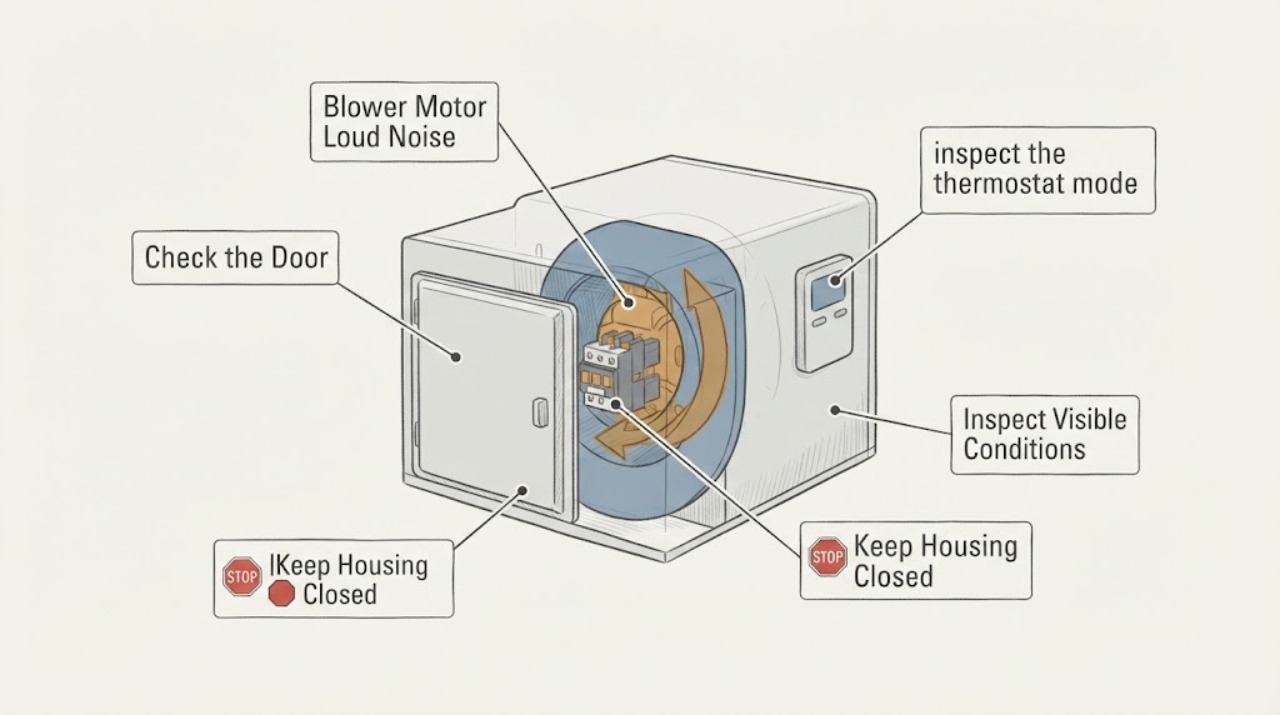
Blower Motor Loud Noise: Is the Contactor Involved?
A loud noise that seems to come from the blower motor is not automatically a contactor fault. First locate the sound: an indoor blower noise that follows fan speed points toward airflow, a filter, a wheel, motor, or mounting; a click, hum, or buzz from the outdoor unit at startup or shutdown can involve the contactor, capacitor, fan motor, or compressor.
-
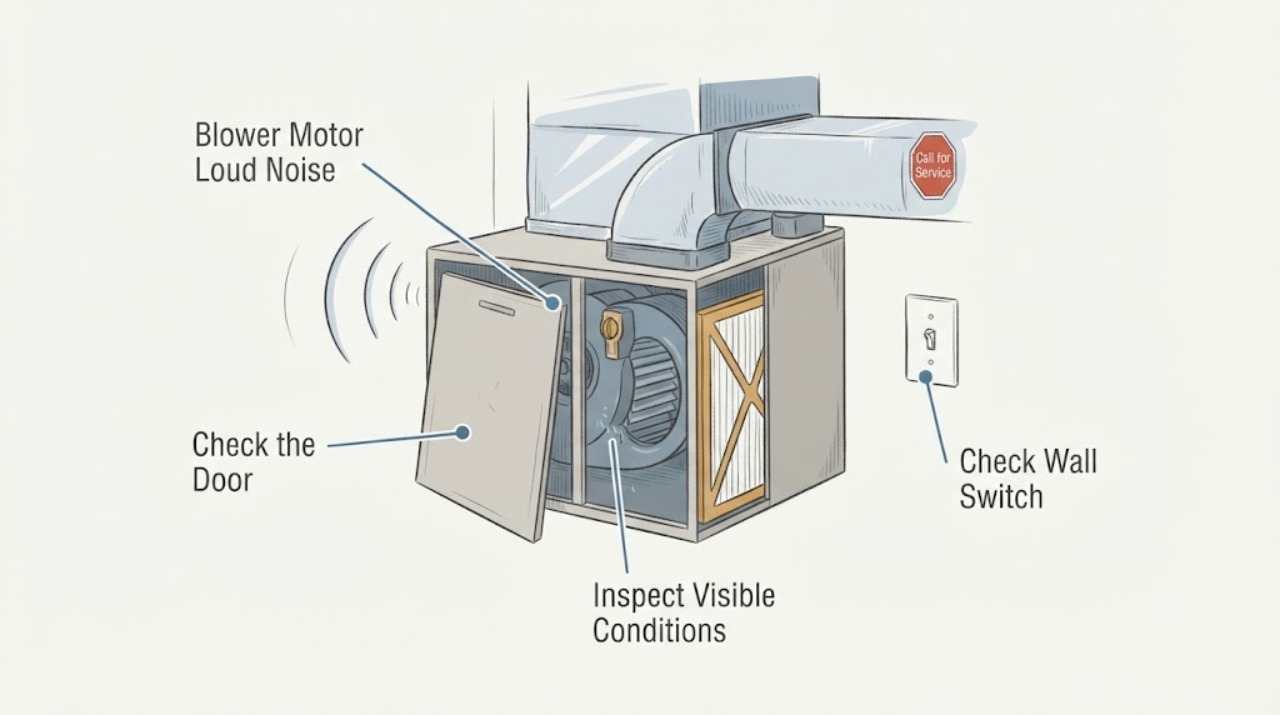
Blower Motor Loud Noise: Safe HVAC Checks
A new or unusually loud noise from the indoor blower is not something to diagnose by opening the air handler. Humming can come from a blower motor or another motor, while rattling, grinding, squealing, or banging can involve the blower wheel, worn bearings, a loose internal part, a capacitor, or airflow restriction.
-
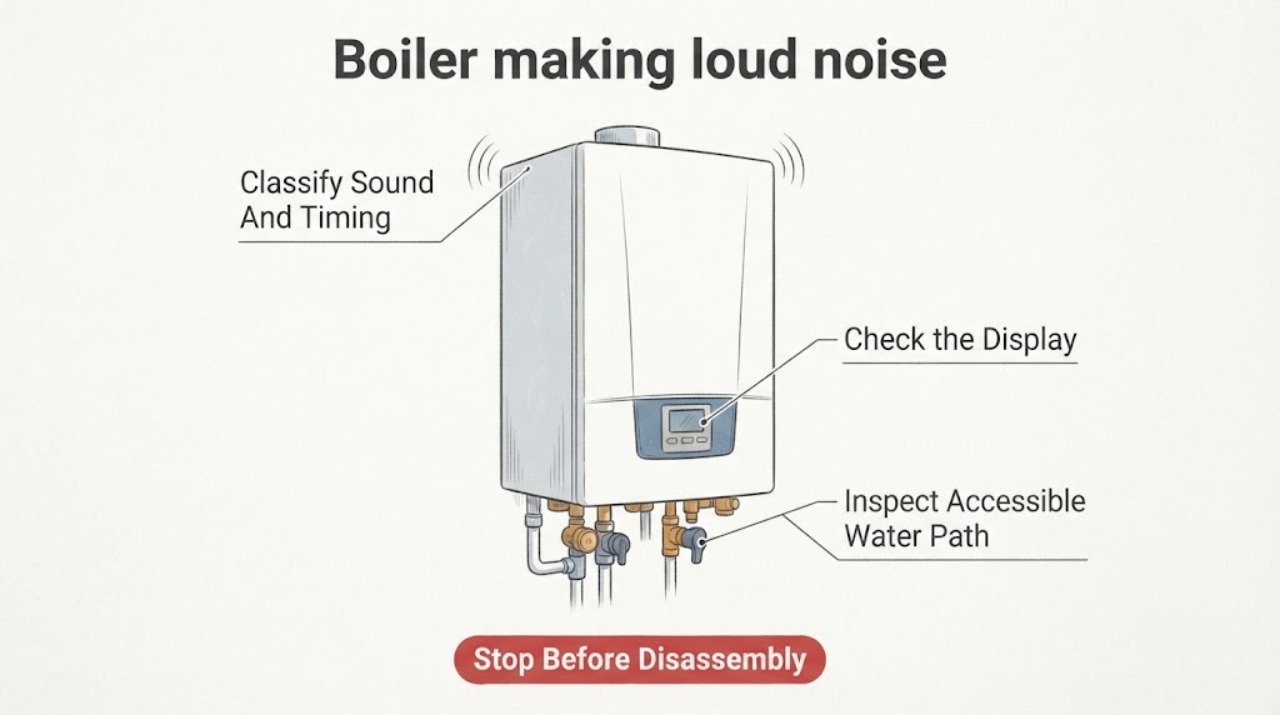
Boiler making loud noise: classify the sound before changing anything
A loud boiler is not diagnosed by volume alone: gurgling, splashing, or whistling can point to air or flow in the hydronic system, while knocking or cracking may come from expanding pipes, brackets, pressure or flow controls, or a boiler component.
-
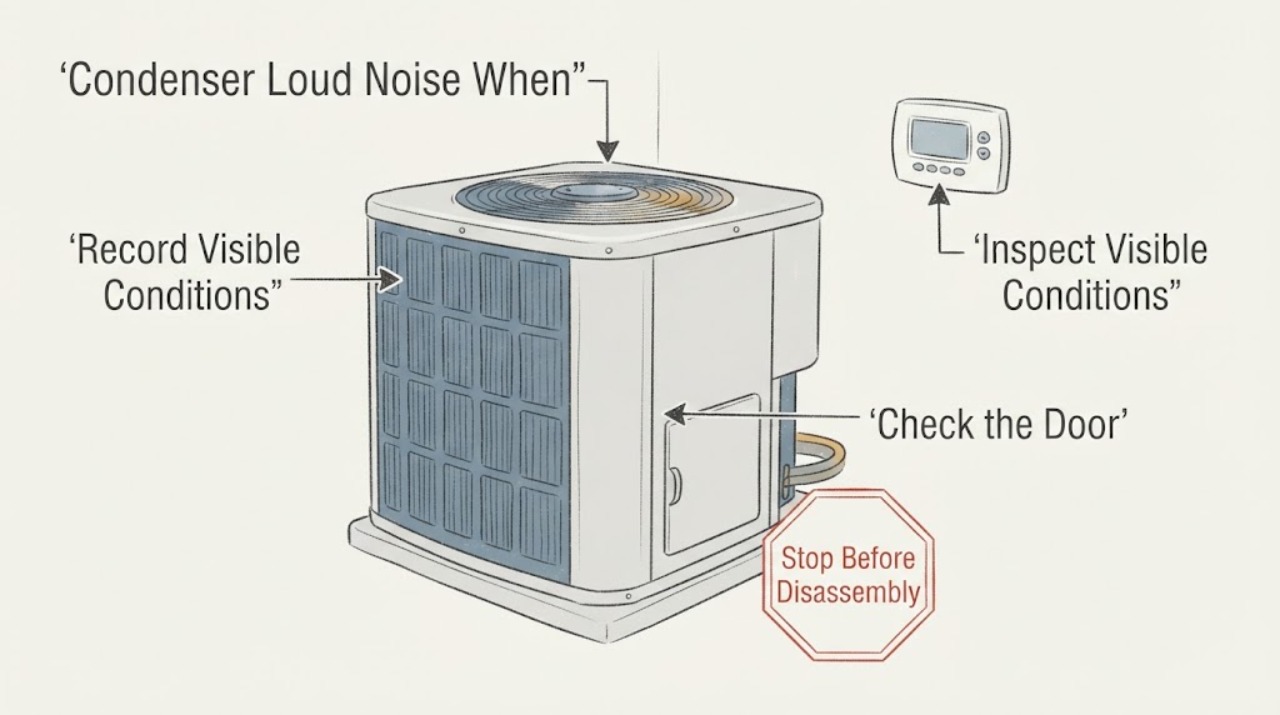
Condenser Loud Noise When the Thermostat Calls: Identify the Safe Next Step
If an outdoor condenser becomes loud when the thermostat calls for cooling, use the thermostat as the timing trigger, not as proof that the thermostat is the noisy part. From a safe position, record whether the sound starts with the cooling call, whether it comes from the outdoor cabinet or indoor air handler, and whether the outdoor fan moves normally.
-
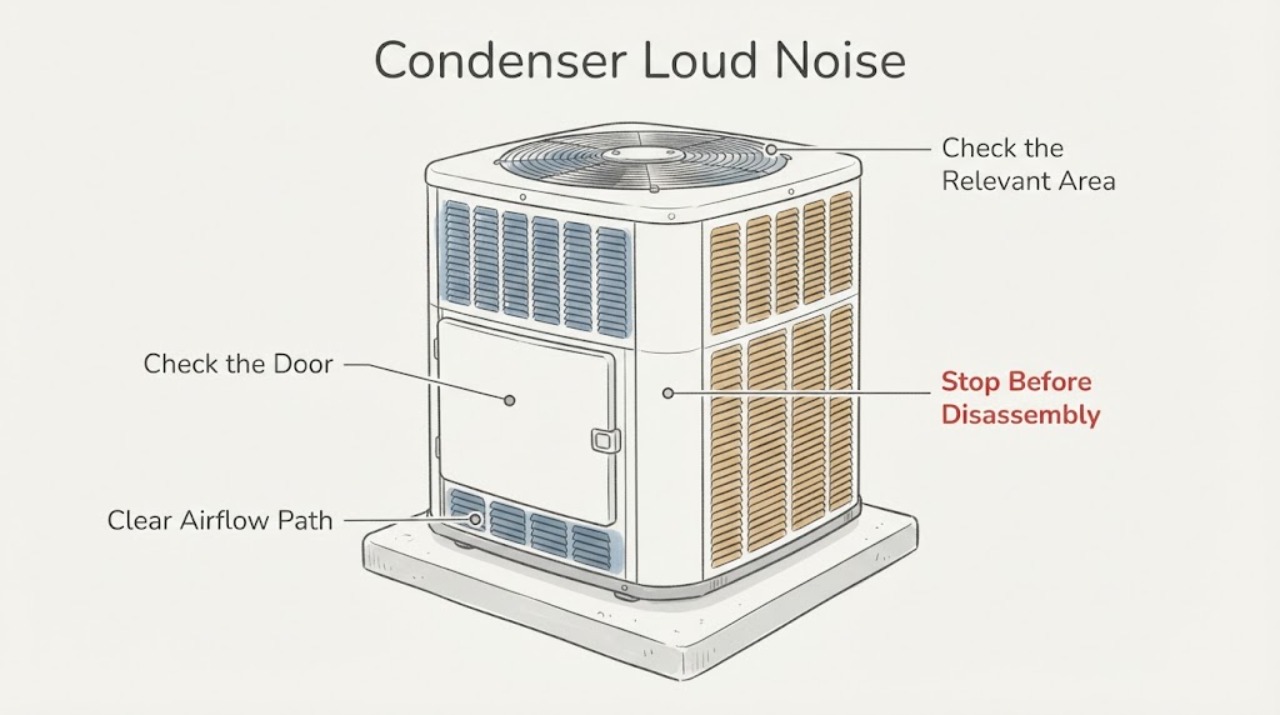
Condenser Loud Noise: Find the Source Before It Damages the System
A loud sound blamed on the condenser may be coming from the outdoor condenser fan or compressor, or from the indoor blower motor that shares the same cooling call. First identify whether the sound is indoors or outdoors and whether it starts, continues, or stops with the cooling cycle.
-
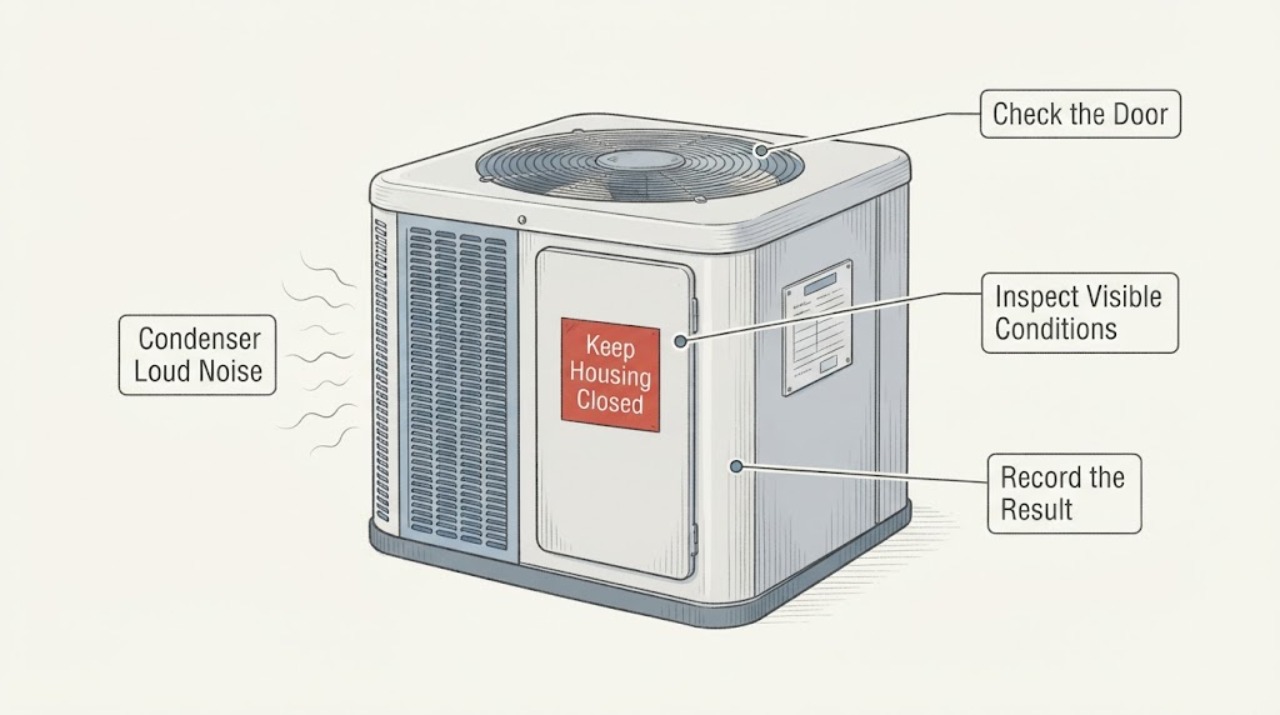
Condenser Loud Noise: Separate the Outdoor Fan, Compressor, and Indoor Blower
A loud-noise complaint needs the sound source identified before any diagnosis: the outdoor condenser cabinet contains the condenser fan and compressor, while the indoor blower is in the air handler or furnace. From a safe distance, note whether the noise is rattling or scraping at the outdoor fan grille, a deep hum or hard start from the compressor area, or a register/indoor-cabinet sound from the blower.
-
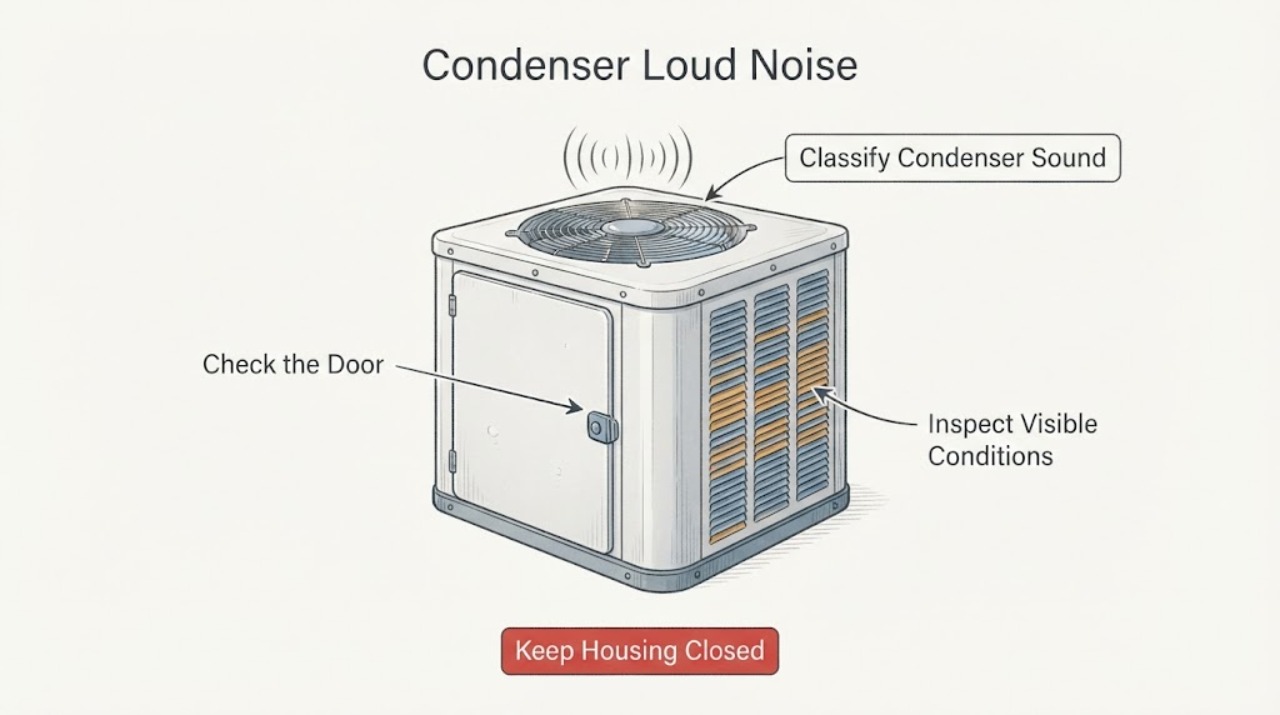
Condenser Loud Noise: Separate Fan, Compressor, and Capacitor Clues Safely
A loud outdoor condenser sound can come from the fan guard or debris, a fan motor or blade, the compressor, a loose panel, refrigerant or pressure conditions, or a capacitor that is struggling to start a motor. From a dry, safe position, note whether the sound is a hum, rattle, grind, squeal, click, or bang and whether the outdoor fan starts and airflow or cooling changes.
-
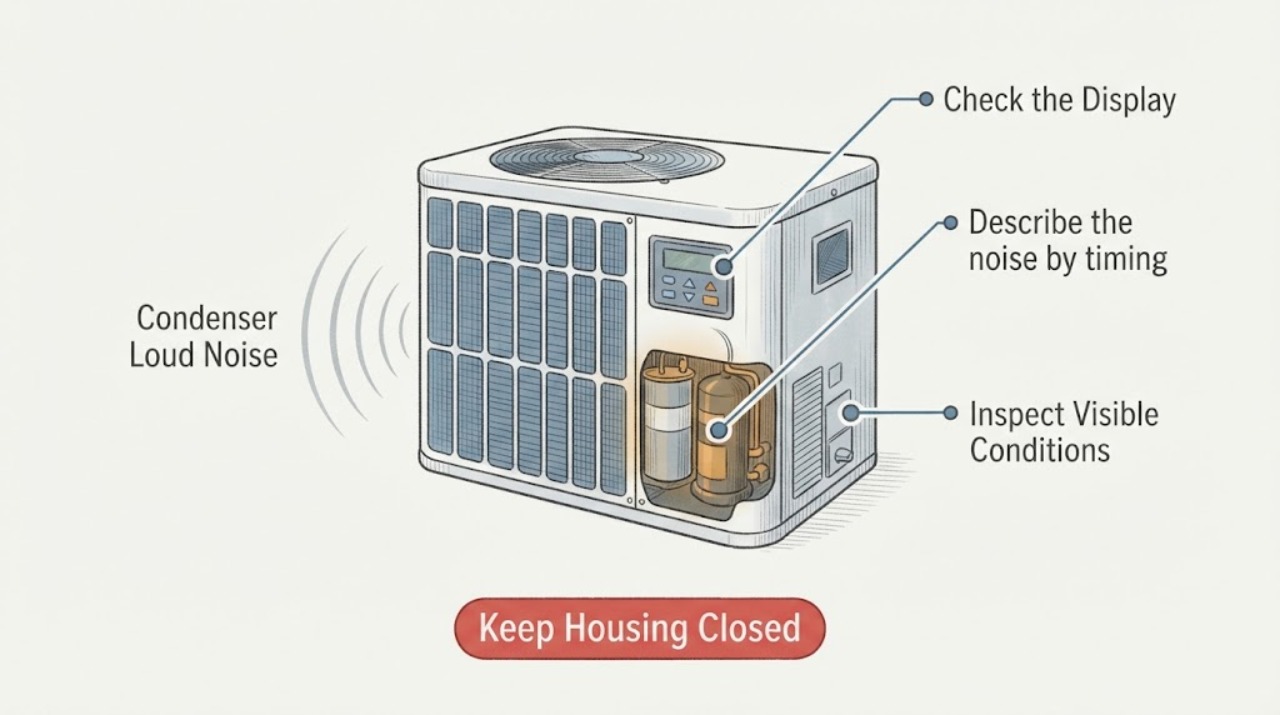
Condenser Loud Noise: Safe Checks for the Capacitor and Compressor
A loud condenser may be reacting to loose debris, a fan or cabinet vibration, or a normal startup sound, but grinding, banging, repeated clicking, or a heavy hum can indicate a fan, capacitor, or compressor problem. From a safe distance, identify the sound, when it occurs, whether the outdoor fan runs, and whether cooling changes.
-
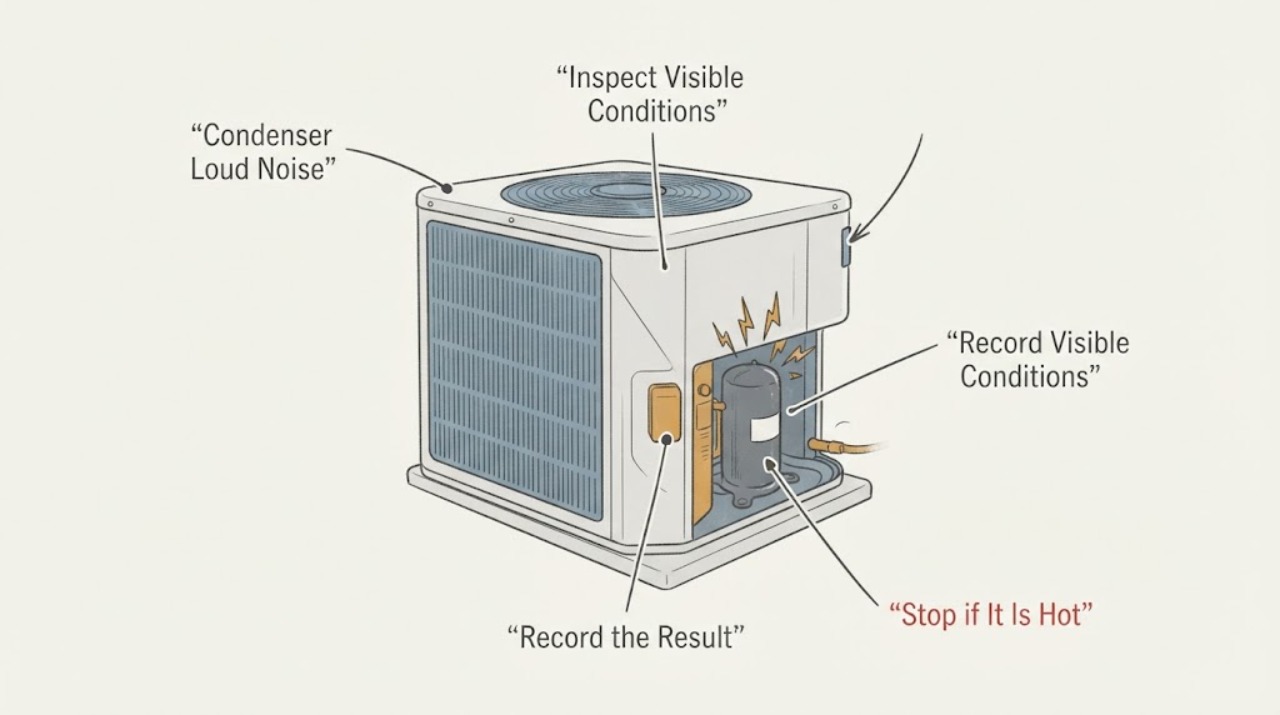
Condenser Loud Noise: Tell Compressor, Fan, and Contactor Symptoms Apart Safely
A loud outdoor condenser is not automatically a failed compressor. From a safe distance, first note whether the sound is a brief click at start or stop, a steady motor hum, fan rattle or scraping, cabinet vibration, or a harsh grinding, banging, or repeated starting sound.
-
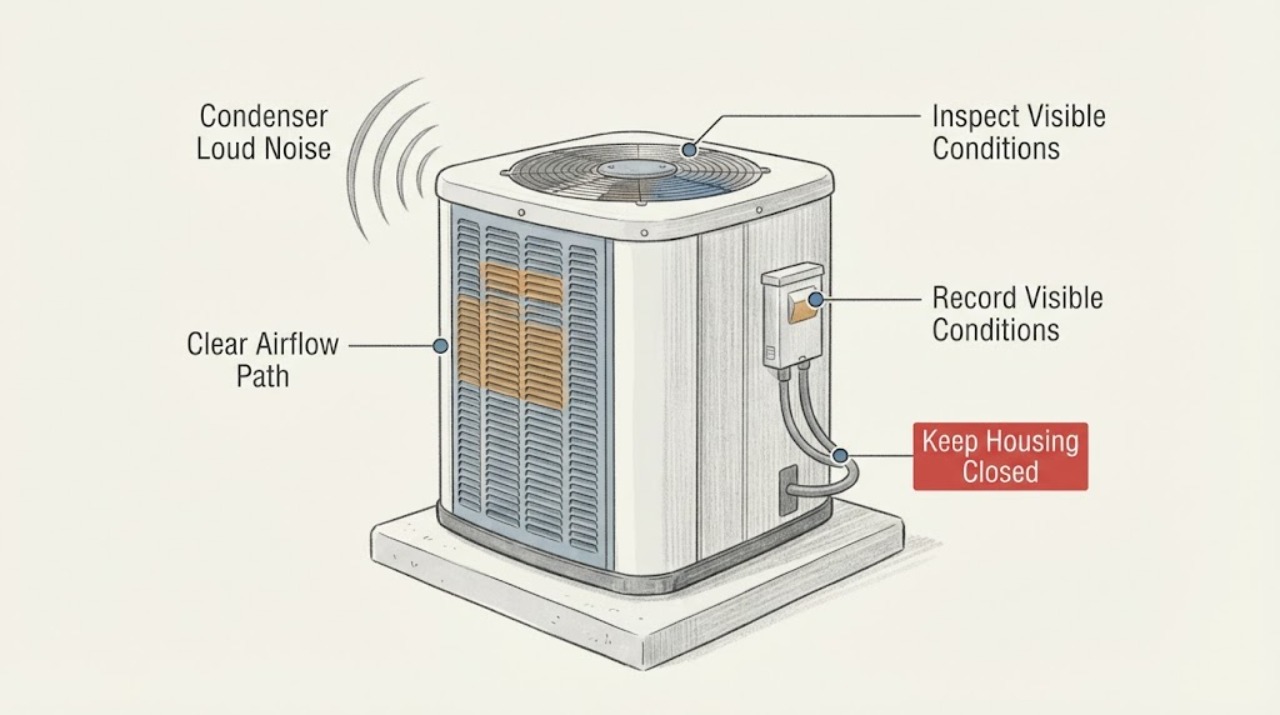
Condenser Loud Noise: How to Tell if the Contactor May Be Involved
A loud outdoor condenser can make a contactor buzz or chatter, but the same sound may come from the fan, compressor, loose cabinet parts, a capacitor, or another electrical fault. Record when the sound occurs and whether the fan starts, the system cools, or a breaker trips, using only safe observations outside the cabinet.
-
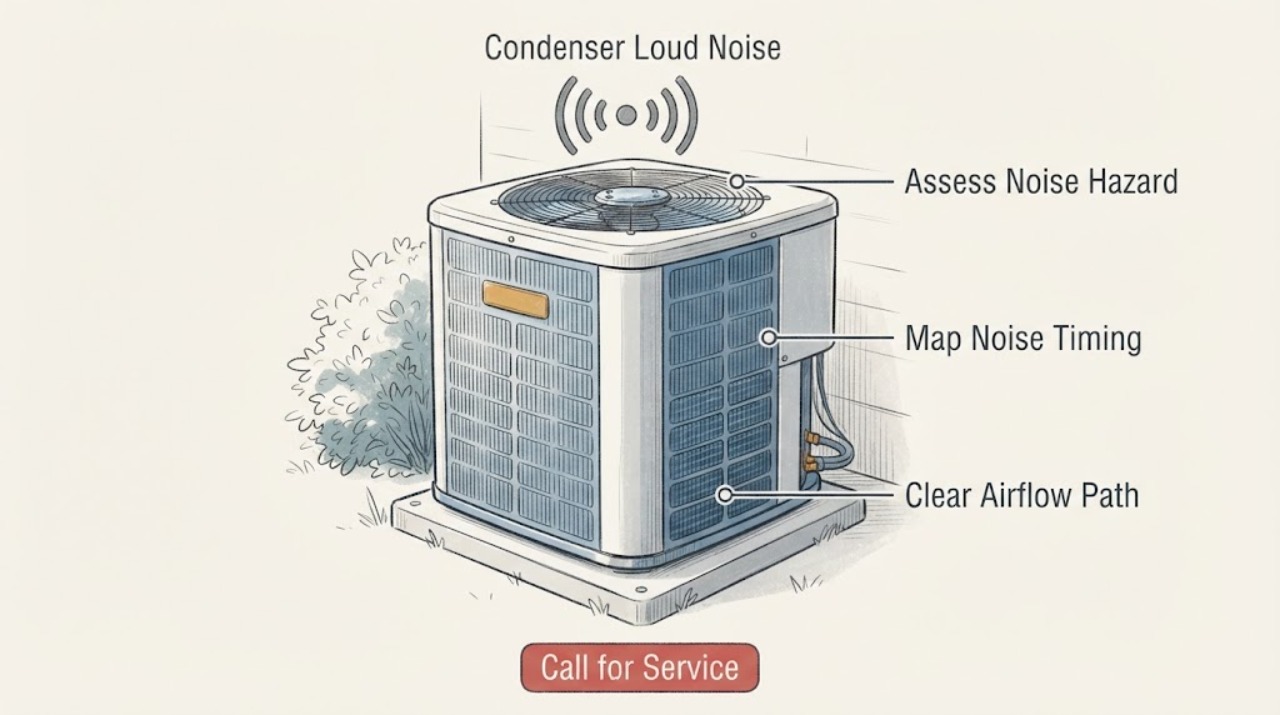
Condenser Loud Noise: Safe Checks and What to Do Next
If an HVAC condenser suddenly becomes loud, turn the system off when the sound is scraping, grinding, banging, high-pitched, or accompanied by a burning smell, smoke, ice, poor cooling, or strong vibration. From a safe position, identify whether the sound comes from the fan, cabinet, compressor area, or refrigerant lines; note whether it occurs at startup, during operation, shutdown, or defrost.
-
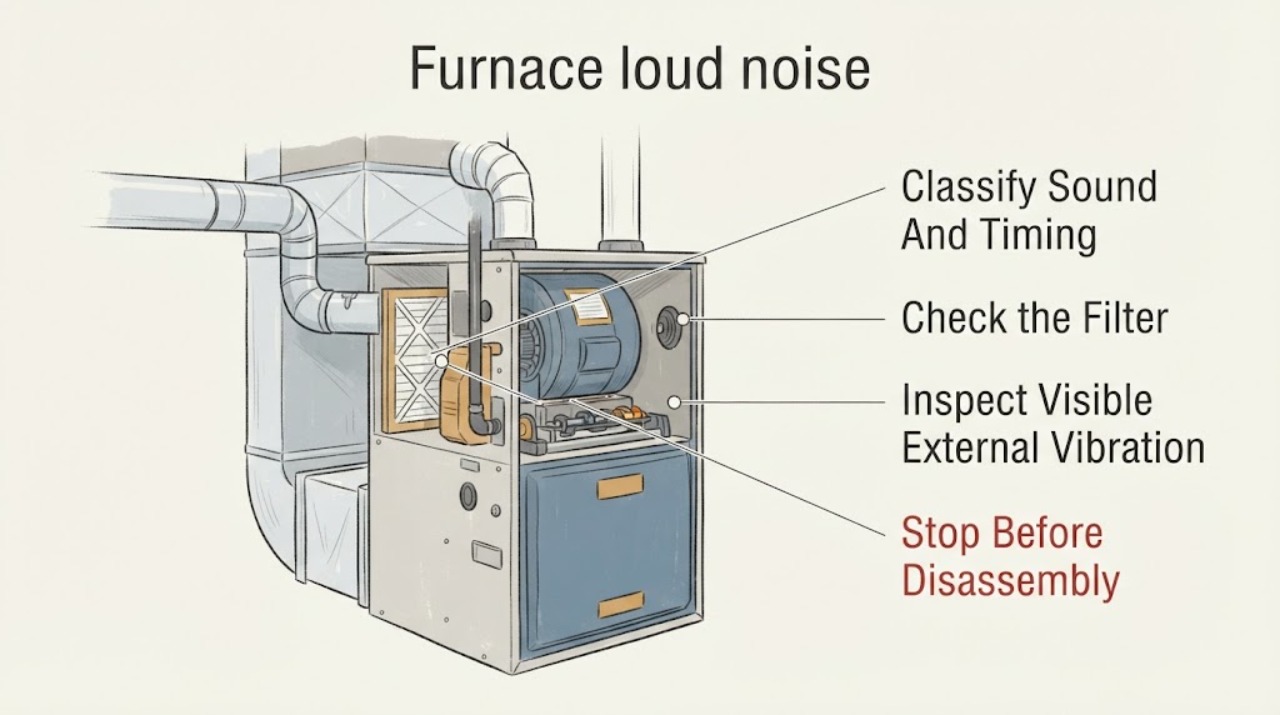
Furnace loud noise: identify the sound and the safe next step
A furnace that suddenly becomes loud should be identified by sound and timing, not by replacing a guessed part. With the system off and cool, note whether the noise is a bang at ignition, whistle during airflow, rattle or vibration, high-pitched squeal, buzzing, or rumbling.
-
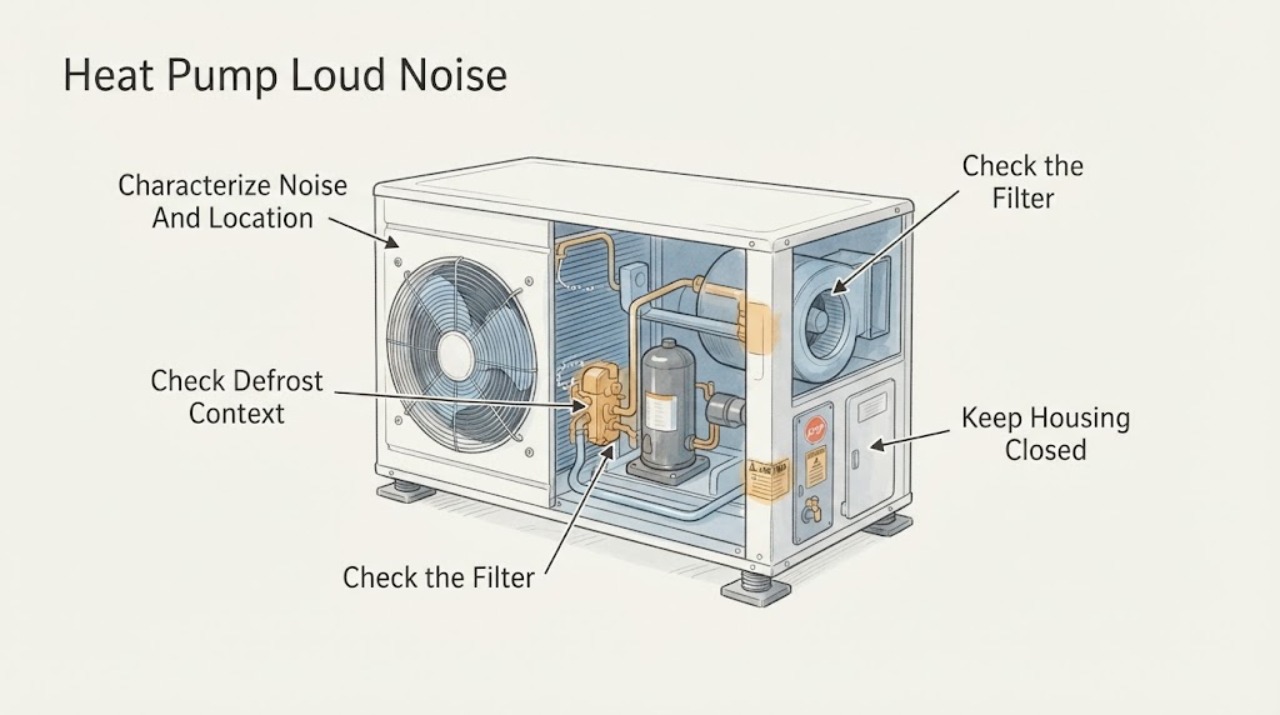
Heat Pump Loud Noise: Identify Normal Defrost vs. a Fault
First note where the sound comes from, whether it is indoors or outdoors, what it sounds like, and whether it occurs only during startup, shutdown, or a winter defrost cycle. A heat pump can make a brief whoosh or become louder while defrosting, and Trane says that sound should settle within a few minutes; a newly loud, grinding, rattling, screeching, buzzing, gurgling, or prolonged sound is not a DIY repair signal.
-
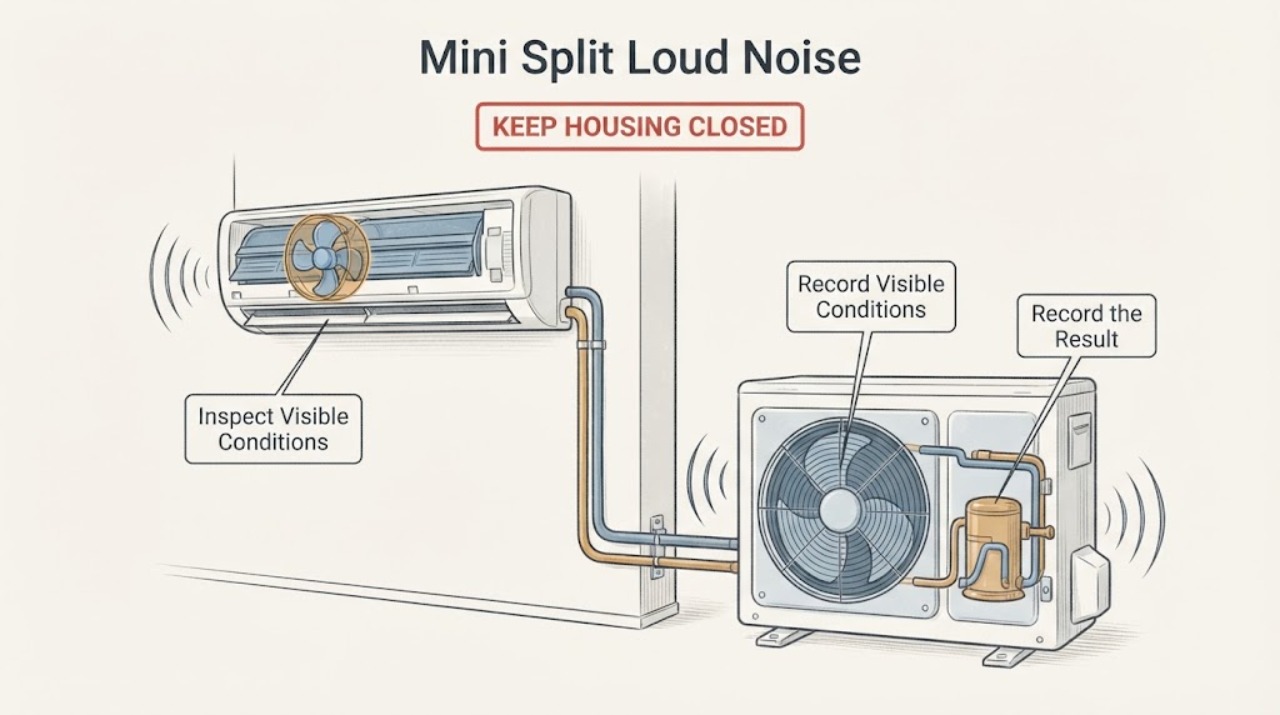
Mini Split Loud Noise: Identify Normal Sounds and Safe Stop Points
A mini split can make brief water-flow, louver, airflow or defrost sounds that are normal for its design, but a new or unusually loud banging, grinding, rattling, screeching, prolonged buzzing or hissing sound needs attention. First record whether the sound comes from the indoor head or outdoor unit and whether it occurs at startup, shutdown, defrost or continuous operation.
-
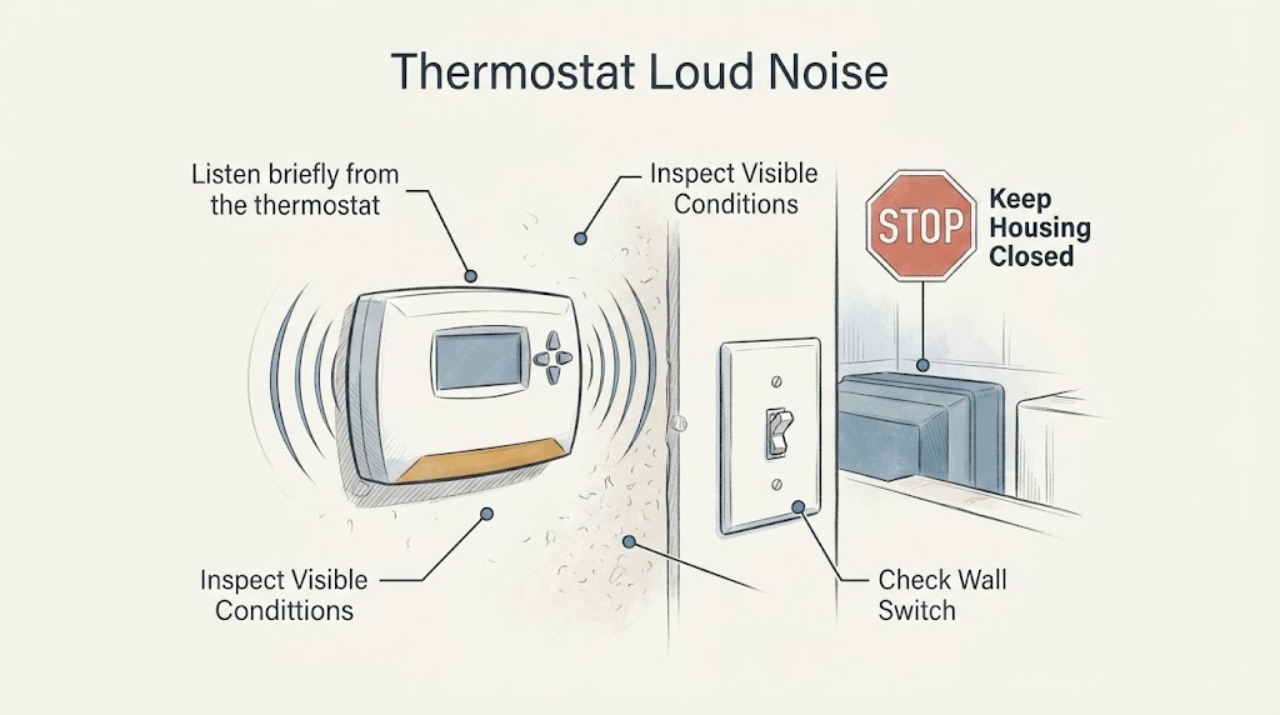
Thermostat Loud Noise: Locate the Source Before Checking HVAC Power or Wiring
A thermostat that seems loud may not be the source: a beep can come from a nearby smoke detector, doorbell, or security device, while clicking, chattering, or thumping can be caused by the heating or cooling system cycling rapidly. First identify the sound and whether it comes from the wall control or the equipment, then note what the thermostat display and HVAC system are doing at the same moment.
-
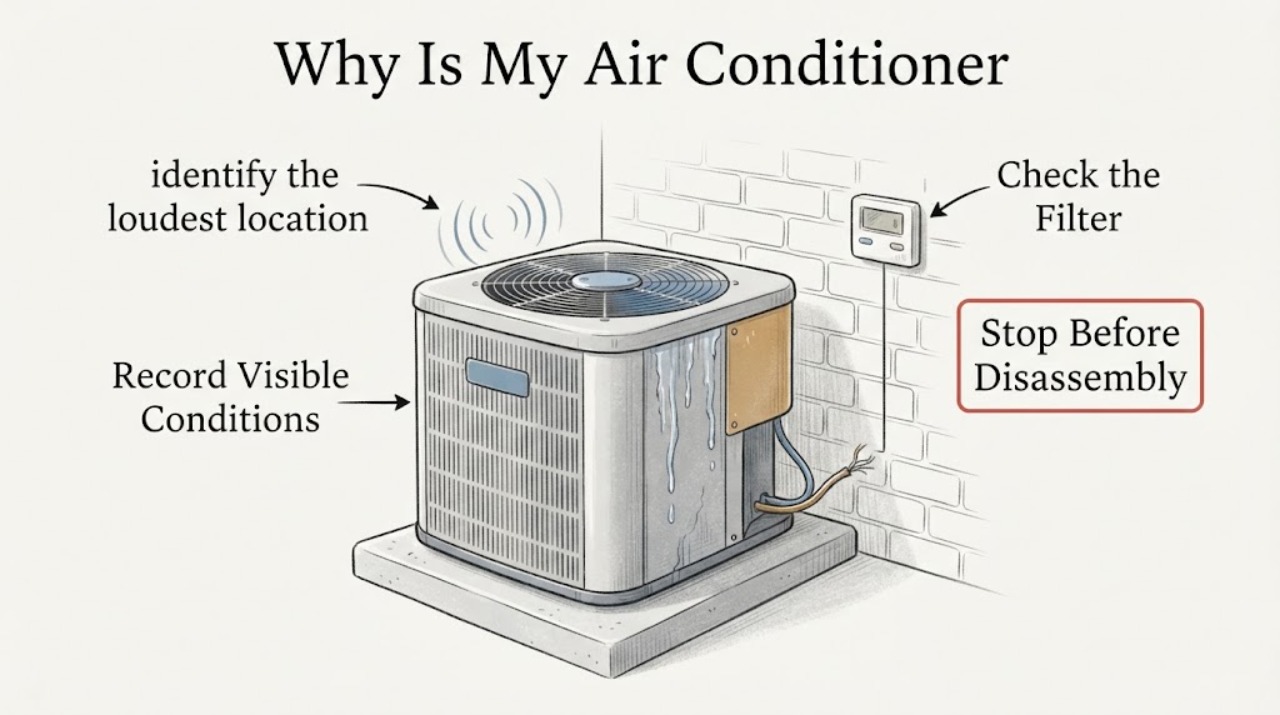
Why Is My Air Conditioner So Loud? Safe Checks for Thermostat and Capacitor Clues
A loud air conditioner is diagnosed first by where the sound occurs and whether it starts at a thermostat cooling call, during steady operation, or at shutdown. Check the thermostat settings, filter, registers, and outdoor clearance from the outside only.