
On this page
Start here
Quick answer
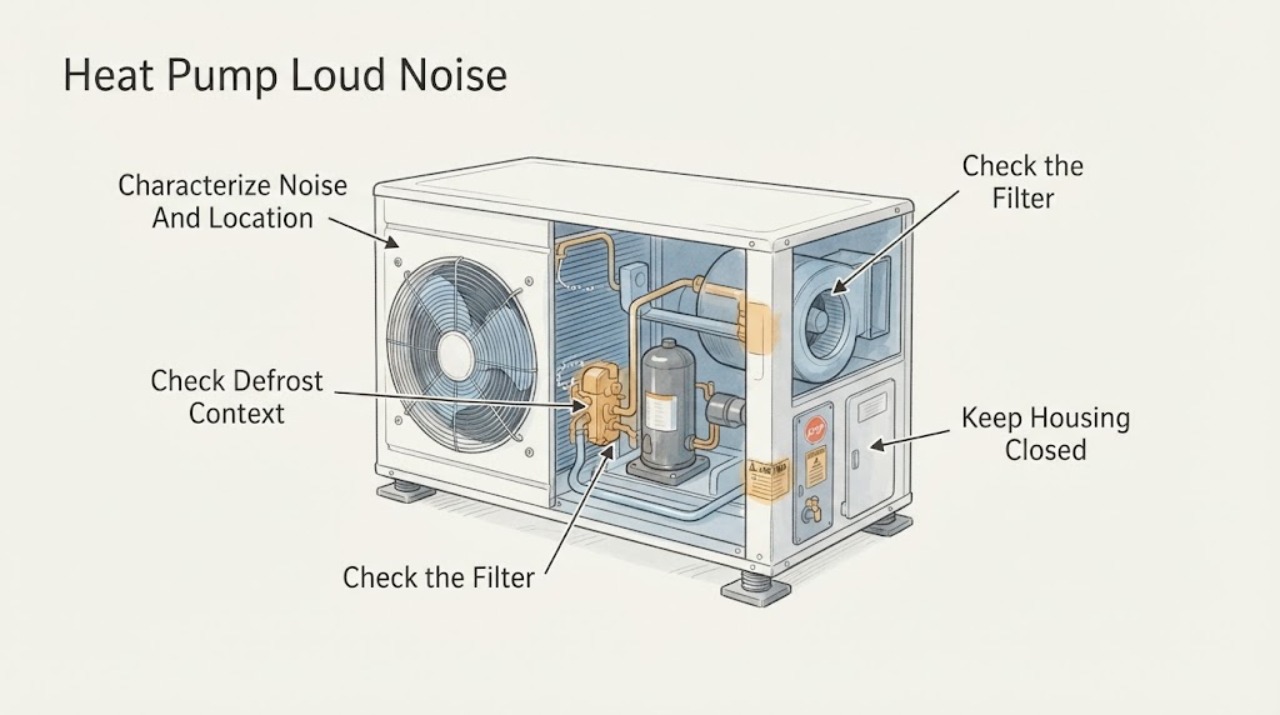
First note where the sound comes from, whether it is indoors or outdoors, what it sounds like, and whether it occurs only during startup, shutdown, or a winter defrost cycle. A heat pump can make a brief whoosh or become louder while defrosting, and Trane says that sound should settle within a few minutes; a newly loud, grinding, rattling, screeching, buzzing, gurgling, or prolonged sound is not a DIY repair signal. From a safe distance, check that the thermostat is in the intended mode, the filter is not visibly blocked, and leaves or snow are not obstructing the outdoor unit without opening the cabinet or touching the fan. If the sound persists, is louder than usual, occurs outside defrost, comes with ice, weak heating/cooling, smoke, burning odor, refrigerant hissing, water, or vibration, turn the system off and arrange qualified HVAC service. Do not remove panels, touch the capacitor or wiring, push the fan, add refrigerant, or attempt compressor, reversing-valve, or motor work.
Before you begin
Safety first
- User checks are limited to listening/recording from a safe distance, thermostat settings, normal filter access, and a visual check for loose external debris or snow without tools or contact with the unit. Do not open panels or grilles, touch fans/capacitors/wiring/refrigerant lines, chip ice, test live voltage, add refrigerant, bypass controls, or work on the compressor, reversing valve, motor, or defrost system.
Work through in order
Diagnostic checks
Use only checks that match the exact appliance or system and its official guide.
-
Check 1
From a safe position, listen once during a normal call for heat or cooling and record whether the sound is indoors or outdoors, its character (whoosh, hum, buzz, rattle, grind, screech, bang, hiss, or gurgle), when it begins, how long it lasts, and whether the indoor blower or outdoor fan appears to run. Do not approach the fan grille, remove panels, or repeat the cycle just to reproduce the sound.
Expected result: The sound is brief and tied to startup, shutdown, or defrost; it is continuous or newly louder; it comes with visible vibration; or it is accompanied by weak airflow, poor heating/cooling, ice, odor, smoke, or water.
Next step: Use the matching branch below and keep the system off for persistent or hazardous noise. Save a short recording only if it can be made without approaching the equipment.
Stop if: Stop immediately for smoke, burning odor, sparks, exposed wiring, refrigerant hissing, severe shaking, water near electrical equipment, or any need to touch or enter the unit.
Why this matters
Why: Timing can separate a documented defrost or normal transition from a changed mechanical, electrical, airflow, or refrigerant symptom. A loud or prolonged sound, especially with performance or hazard symptoms, is a service condition rather than evidence for a particular part.
-
Check 2
If the noise occurs in cold weather, observe from indoors and outside without touching the unit whether frost is light and temporary, whether the outdoor fan pauses, and whether the sound settles within the heat pump's normal defrost period. Do not chip ice, force the fan, or interrupt a cycle by opening the cabinet.
Expected result: A brief change occurs with light frost and then normal heating resumes; the noise continues beyond the cycle; ice grows or coats the coil; or defrost behavior is unclear.
Next step: Monitor only a brief, documented defrost transition with no other abnormal symptom. If the sound remains loud, ice grows, or heat output does not recover, turn the system off and arrange HVAC service.
Stop if: Never chip ice, pour water on the coil, remove a cover, bypass defrost controls, or keep operating through persistent loud noise or an iced-over unit.
Why this matters
Why: Trane and DOE explain that heat pumps can become louder during defrost and that outdoor frost may clear itself. Noise that does not settle, excessive ice, or poor recovery can indicate a defrost control, sensor, fan, airflow, or refrigerant problem.
-
Check 3
Check the thermostat from its normal user interface to confirm the intended Heat or Cool mode and a reasonable setpoint. Inspect the air filter only at its normal user access point and replace or clean it if the equipment manual permits and it is visibly blocked. Do not use the thermostat or filter check to justify opening the air handler.
Expected result: The thermostat was in the wrong mode; the filter is blocked; indoor airflow is weak; or settings and filter look normal while the noise remains.
Next step: Correct only the user setting or filter condition and observe one normal cycle without approaching the equipment. If the sound remains or comfort is poor, turn the system off and call a qualified HVAC technician.
Stop if: Stop for a damaged filter door, water at the air handler, burning odor, smoke, unusual indoor vibration, or any need to remove a blower/air-handler panel.
Why this matters
Why: Mode errors and restricted airflow can make the system run unusually long or poorly, while a normal filter does not explain a new grinding, rattling, buzzing, or prolonged outdoor sound. Persistent noise with normal user checks points toward equipment diagnosis.
-
Check 4
With the system off at the thermostat, look from outside around the outdoor unit for leaves, snow, branches, loose covers, a visibly damaged fan blade, blocked airflow, or an unlevel/shifted cabinet. Clear only loose material that is plainly outside and reachable without tools; do not touch the grille, fan, coil, wires, or refrigerant lines.
Expected result: Loose debris or snow obstructs the unit; a blade, cover, or cabinet appears damaged or displaced; the coil is heavily iced; or the unit looks clear and stable.
Next step: Remove only loose external material, then make no more than one normal observation if the unit is intact and quiet. If noise persists, vibration is severe, ice remains, or a component looks damaged, leave it off and arrange service.
Stop if: Do not reach through the grille, bend coil fins, push the fan, scrape ice, lift the cabinet, remove covers, or use tools or water near the equipment.
Why this matters
Why: Carrier says outdoor debris can restrict airflow and that a little winter frost may be normal, while ice that does not clear, excessive noise, and visible damage need professional attention. Clearing exterior debris cannot confirm or repair a fan, compressor, motor, mounting, or defrost fault.
-
Check 5
Without opening the system, note whether the home reaches the thermostat setpoint, whether the heat pump cycles normally, whether auxiliary heat appears unusually often, and whether airflow or humidity has changed. Record if the loud sound is tied to heating, cooling, defrost, or every start/stop event.
Expected result: The noise is new and comfort has declined; the unit runs constantly or cycles frequently; auxiliary heat stays on; the system is noisy but performance is unchanged; or the sound has returned after maintenance.
Next step: Turn the system off for persistent or changed noise and give the technician the timing and performance record. Do not increase the setpoint dramatically, switch modes repeatedly, or run a sound test with panels removed.
Stop if: Stop for smoke, odor, refrigerant hiss, severe vibration, ice that grows, water leakage, electrical symptoms, or a unit that cannot complete a cycle.
Why this matters
Why: Excessive noise together with unmet temperature, frequent cycling, auxiliary heat, frozen coils, or unusual smells indicates a broader system problem. A stable setpoint does not make a suddenly louder or prolonged sound safe; compressor, capacitor, fan, reversing-valve, mounting, or control faults can still be present.
-
Check 6
Decide whether the sound was a short, expected operating transition that settled and left the heat pump heating or cooling normally, or whether it is loud, prolonged, new, recurring, or linked to a visible or performance symptom. Record the system mode, indoor/outdoor location, sound description, duration, frost/ice, airflow, setpoint response, debris, and any recent service.
Expected result: The brief sound settled and normal operation returned; or the noise remains, is louder than before, recurs, occurs outside defrost, or comes with poor comfort, ice, vibration, odor, smoke, water, or electrical symptoms.
Next step: For persistent, recurring, or hazardous noise, turn the heat pump off and arrange qualified HVAC service. Do not touch internal parts or restart it repeatedly to see whether the noise changes.
Stop if: Do not remove panels, test live electrical parts, handle capacitors, push a fan, add refrigerant, bypass controls, adjust the reversing valve, or work on the compressor or motor.
Why this matters
Why: A settled defrost or transition can be monitored, but it does not justify ignoring a changed baseline. Trane specifically recommends professional help for unusual noises, and Carrier identifies compressor, reversing-valve, frozen-coil, airflow, and fan-related conditions that require diagnosis.
Use your observations
Decision map
Find the observation that best matches what you see, then follow the next safe action.
-
PATH 01Next step
What you see
The sound occurs during cold-weather defrost, is brief, and the unit returns to normal heating with no other symptom.
Do this next
Monitor the transition from a safe distance. If it becomes prolonged, unusually loud, or the outdoor coil stays iced, turn the system off and arrange HVAC service.
-
PATH 02Next step
What you see
A new bang, grind, rattle, screech, buzz, gurgle, or strong vibration occurs during operation or start/stop.
Do this next
Turn the heat pump off and arrange qualified HVAC service. Do not tighten, lubricate, push the fan, or open the cabinet; the noise may involve a motor, fan, compressor, capacitor, contactor, mounting, or control.
-
PATH 03Next step
What you see
Ice grows on the outdoor unit, does not clear after a normal defrost period, or accompanies loud noise and poor performance.
Do this next
Leave the system off and call an HVAC professional to diagnose airflow, fan, defrost control, sensor, and refrigerant causes. Never chip or scrape the ice or add refrigerant.
-
PATH 04Next step
What you see
Leaves, snow, blocked airflow, a dirty filter, or an obvious exterior obstruction is present without damage or hazard.
Do this next
Correct only the accessible filter or loose external obstruction as the manual permits, then observe one normal cycle. If noise or poor performance persists, arrange service.
-
PATH 05Next step
What you see
The loud sound is accompanied by a refrigerant hiss, burning odor, smoke, sparks, damaged wiring, water at electrical equipment, or severe vibration.
Do this next
Shut the system off if it can be done without approaching the hazard and obtain urgent qualified HVAC help. Do not touch the unit, open a panel, or handle refrigerant or electrical components.
-
PATH 06Next step
What you see
The unit looks clear and stable, but the noise remains loud, recurs, or is noticeably different from its prior baseline.
Do this next
Leave the system off and arrange professional diagnosis. Provide a recording and the exact operating mode/timing; do not infer a failed part from the sound alone.
Helpful context
Understand the symptom
The timing and location of the sound matter
A heat pump changes refrigerant direction and may enter defrost in cold weather, so a short whoosh, humming period, or outdoor fan pause can be part of normal operation. That is different from a sudden change, sound that continues after defrost, or noise accompanied by poor comfort, ice, or abnormal vibration. Identify the sound and context without repeatedly cycling the unit or placing hands near moving parts.
Keep checks outside the equipment cabinet
A homeowner can record the sound, check thermostat mode, inspect a user-accessible filter, and look from outside for leaves, snow, or an obvious obstruction. The outdoor unit contains electrical components and moving machinery; a fan, capacitor, compressor, reversing valve, refrigerant circuit, wiring, and mounting fault need professional testing. Never remove a grille or panel to find the noise.
Stop when loud noise is paired with a hazard
Turn the heat pump off if the noise is persistent or accompanied by smoke, burning odor, sparks, damaged wiring, a refrigerant hiss, water near electrical equipment, severe vibration, ice that does not clear, or loss of heating/cooling. A technician needs the sound recording and operating context, not a homeowner attempt to tighten, lubricate, recharge, or electrically test the unit.
Only after diagnosis
Potential parts
- heat pump outdoor fan motor or mounting component
Consider a replacement only after a qualified HVAC technician confirms that the fan motor or mounting is the diagnosed source of the loud noise; similar sounds can come from the compressor, capacitor, contactor, fan blade, coil, or controls.
Confirm the exact heat-pump model, component specification, and diagnostic result with the technician before ordering; do not select or install a part by sound or appearance.
When checks do not resolve it
Need a professional?
Arrange qualified HVAC service for any new, loud, prolonged, recurring, or unexplained heat-pump noise, especially with ice, weak heating/cooling, frequent cycling, unusual vibration, or a changed startup/shutdown sound. Shut the system off and seek urgent help for smoke, burning odor, sparks, refrigerant hiss, water near electrical equipment, damaged wiring, or severe shaking.
Safety scope: User checks are limited to listening/recording from a safe distance, thermostat settings, normal filter access, and a visual check for loose external debris or snow without tools or contact with the unit. Do not open panels or grilles, touch fans/capacitors/wiring/refrigerant lines, chip ice, test live voltage, add refrigerant, bypass controls, or work on the compressor, reversing valve, motor, or defrost system.
Have this ready
- Provide the heat-pump model from its normal label location, indoor/outdoor sound location, description and duration, operating mode, whether it coincides with defrost, fan behavior seen from a safe distance, frost/ice pattern, filter and obstruction observations, comfort changes, and recent maintenance. Do not remove panels to obtain details.
Common questions
FAQ
Is some heat-pump noise normal?
A brief whoosh or humming change during a defrost or refrigerant-direction transition can be normal and should settle. A sudden, loud, prolonged, or changed sound—especially with ice, vibration, or poor comfort—needs HVAC service.
Why does my heat pump get loud during defrost?
Heat pumps can become louder while defrosting the outdoor coil, and the outdoor fan may pause. The sound should settle and normal operation should return; growing ice or noise that continues beyond defrost requires professional diagnosis.
What does a rattling or grinding heat pump mean?
It can involve a fan, blower wheel, motor, compressor, mounting, loose component, or another fault, and sound alone cannot identify the failed part. Turn the system off and arrange HVAC service rather than opening the unit or touching moving parts.
Can snow or leaves make a heat pump loud?
Exterior debris or snow can restrict outdoor airflow and contribute to poor performance or noise. Clear only loose material outside the cabinet if safe; do not reach through the grille, bend coils, scrape ice, or continue using the unit if the noise remains.
Should I keep running a heat pump that suddenly becomes loud?
No. Turn it off for a new, loud, prolonged, or recurring sound, particularly with ice, hissing, odor, smoke, vibration, or weak heating/cooling. A qualified technician should diagnose the fan, compressor, electrical, refrigerant, defrost, and mounting systems.
Read the exact guide
Official sources
- Heat Pump Troubleshooting | Heat Pump Problems | CarrierCarrier · General Carrier residential heat-pump guidance; exact model and local service instructions control.
- Is This Normal? HVAC Smells and Sounds, ExplainedTrane · General Trane HVAC sound guidance; exact equipment behavior and manual control.
- Heat Pump Troubleshooting: Diagnosing Common IssuesTrane · General Trane residential heat-pump troubleshooting; exact model manual controls.
- What to Confirm with Your ContractorU.S. Department of Energy Building Science Education · General U.S. air-source heat-pump homeowner/contractor guidance; manufacturer instructions and qualified service control.
Community feedback
Share a repair observation
Share a plain-text repair observation. Accepted observations are published automatically; this page may take a moment to update.