
HVAC guides
Heat Pumps Repair Guides
Troubleshooting for heat-pump heating, cooling, defrost, and airflow concerns.
Published heat pumps guides
Choose the guide that best matches the equipment and symptom you are seeing.
-
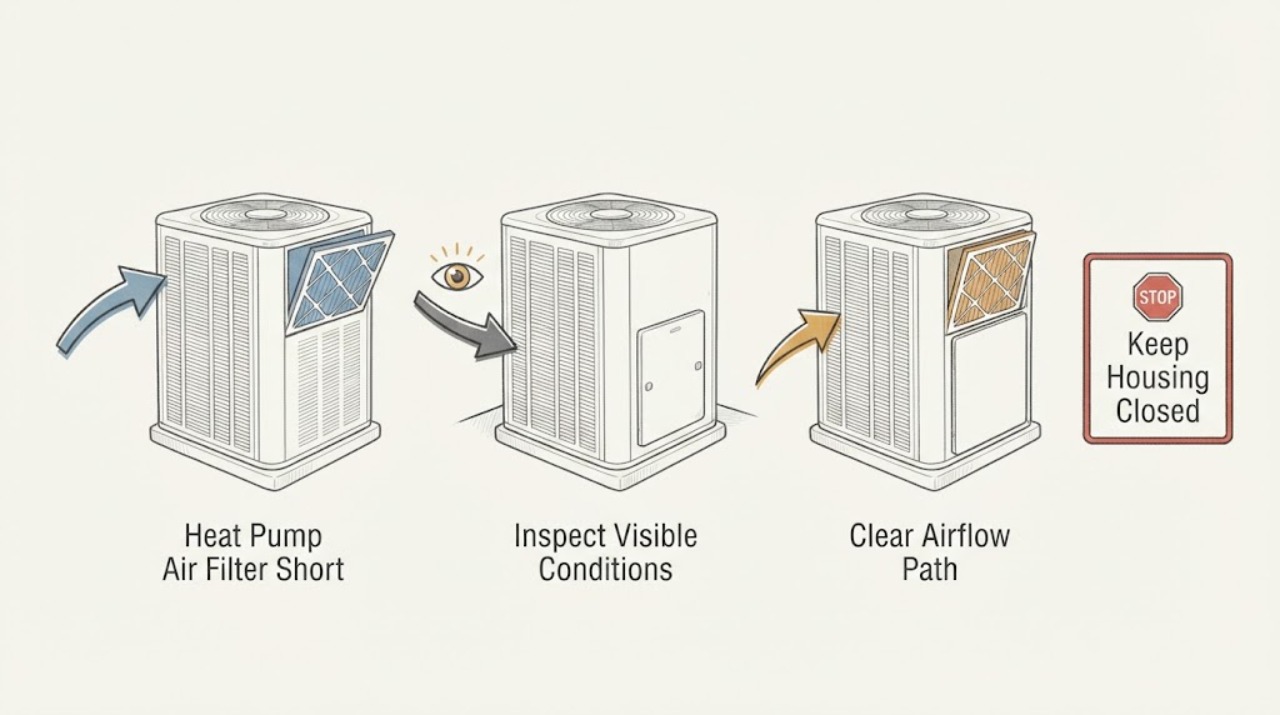
Carrier Heat Pump Air Filter Short Cycling: What to Check and What to Do Next
A Carrier heat pump that starts and stops repeatedly can be reacting to restricted airflow from a clogged air filter, but a clean filter does not rule out a thermostat, frozen coil, refrigerant, outdoor-airflow, control, or sizing problem. Confirm the pattern, replace or clean the filter with the exact model-approved type, and make sure visible registers and the outdoor unit are not blocked.
-
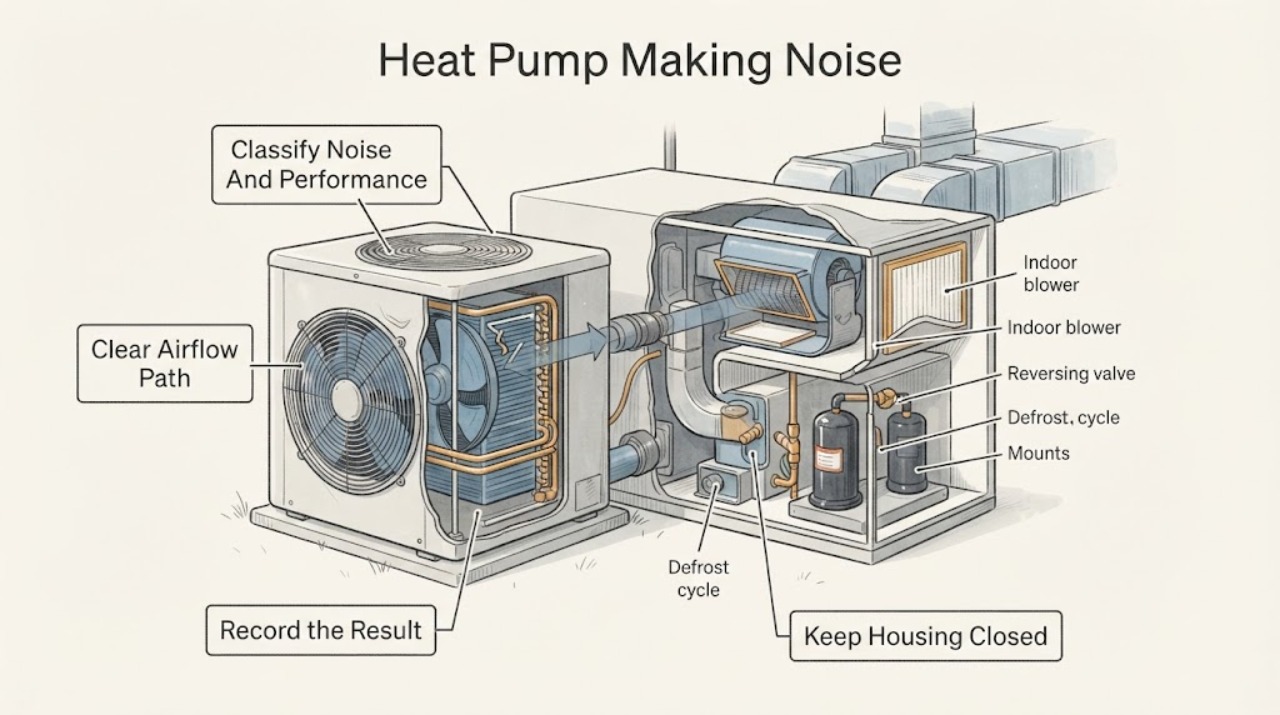
Carrier Heat Pump Making Noise: What to Check and What to Do Next
A Carrier heat pump can make brief operating sounds when a fan, compressor, or defrost cycle starts, but a new, very loud, grinding, rattling, buzzing, screeching, or persistent hissing sound deserves attention. First note whether the sound comes from the indoor air handler, outdoor unit, ducts, or refrigerant lines, and whether it occurs at startup, shutdown, heating, cooling, or defrost.
-
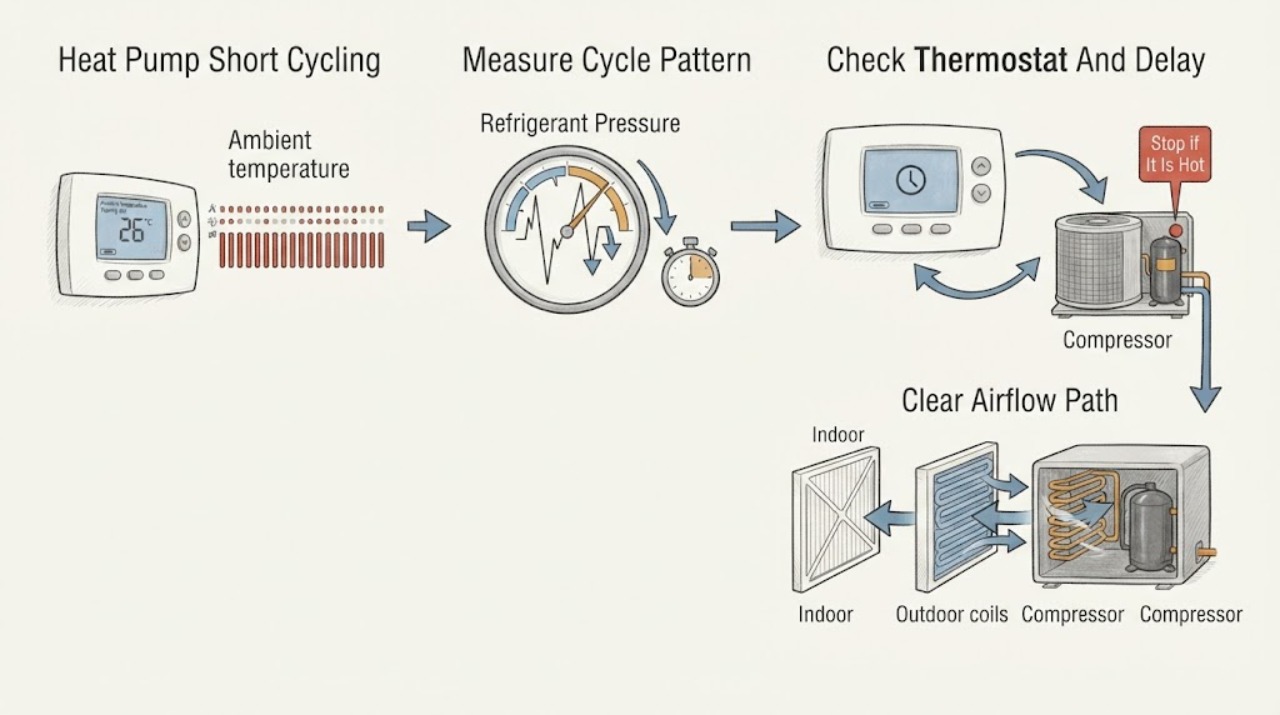
Carrier Heat Pump Short Cycling: What to Check and What to Do Next
A Carrier heat pump is short cycling when it starts and stops repeatedly before completing a normal heating or cooling cycle. A thermostat time delay after a stop can be normal, but repeated rapid restarts are not a condition to ignore because they can reduce comfort and stress the compressor and motors.
-
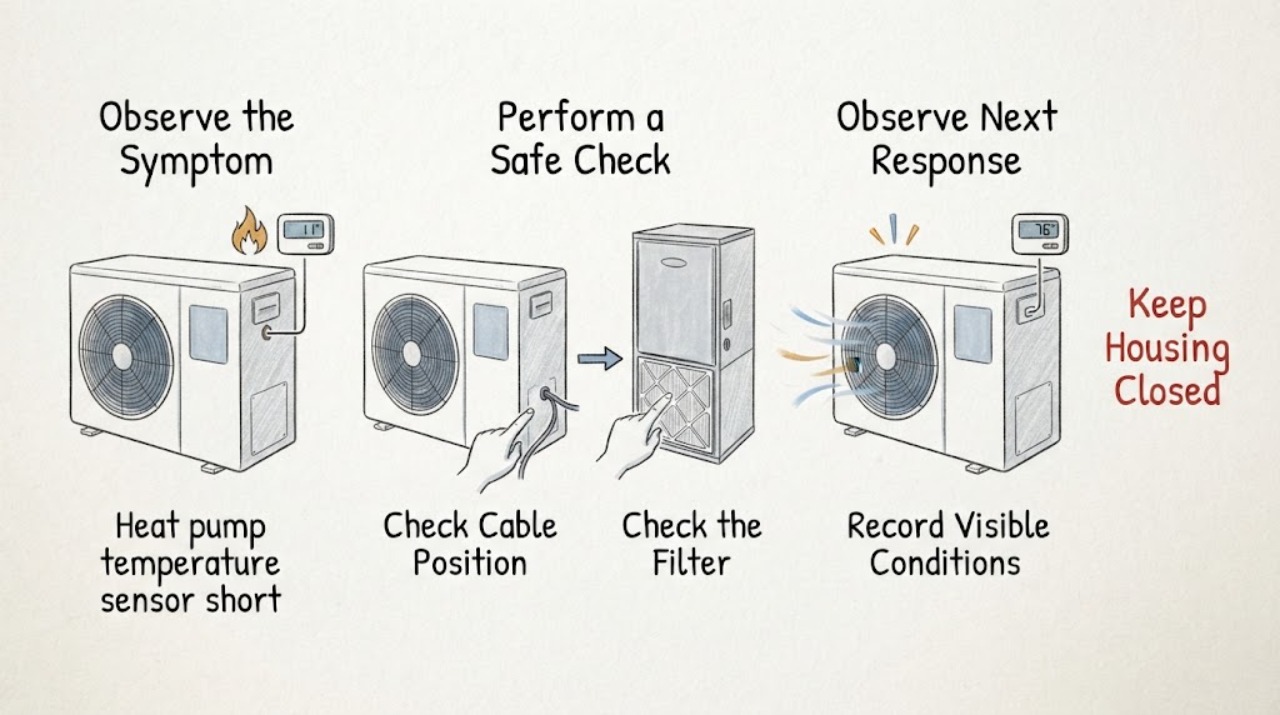
Carrier heat pump temperature sensor short cycling: What to Check and What to Do Next
A Carrier heat pump that turns on and off rapidly may have a temperature-sensing problem, but short cycling is not proof that the sensor is bad. First log whether the compressor and indoor fan stop together, whether the thermostat still calls for heat, the displayed room temperature, outdoor conditions, airflow, and any error code.
-
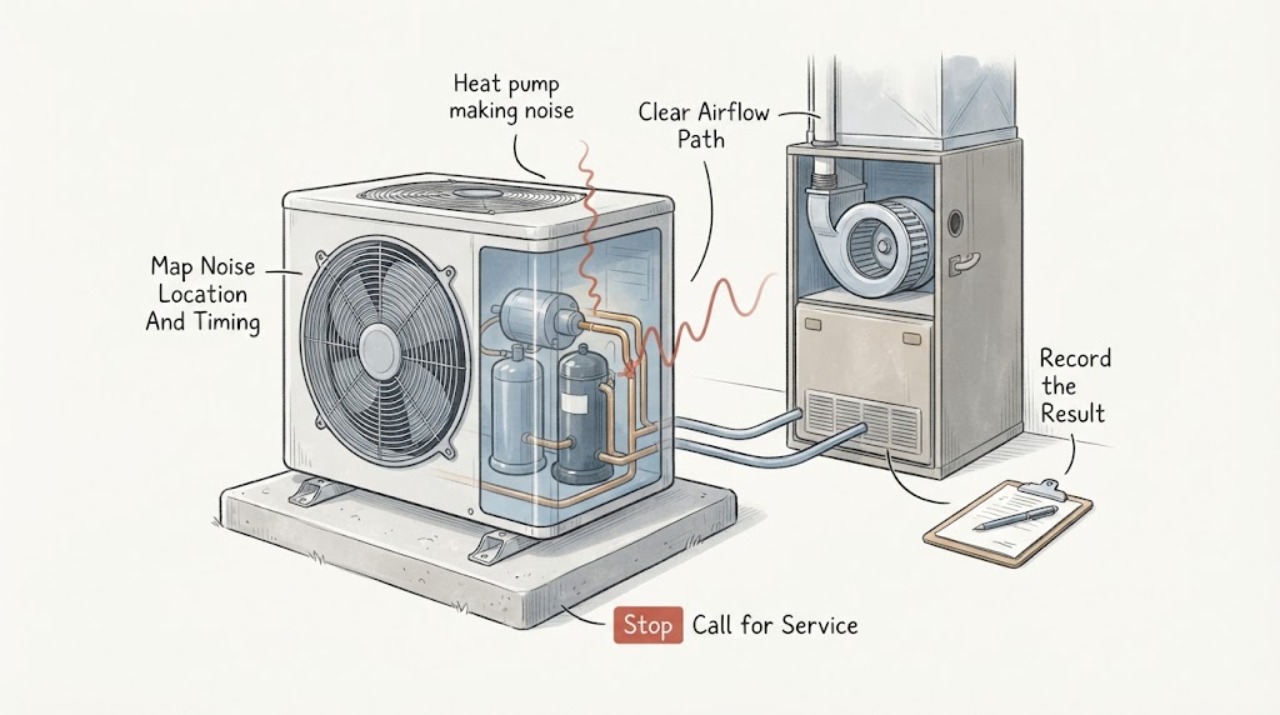
Daikin heat pump making noise: What to Check and What to Do Next
Some Daikin heat-pump sounds are part of normal operation: a steady compressor hum, outdoor fan airflow, a brief whoosh when refrigerant flow changes, clicks at start or stop, and temporary increases during an outdoor defrost cycle. A new or worsening metallic scrape, harsh rattle, electrical buzz, repeated knocking, burning smell, smoke, water leak, or noise accompanied by poor heating is not a sound to diagnose by opening the unit.
-
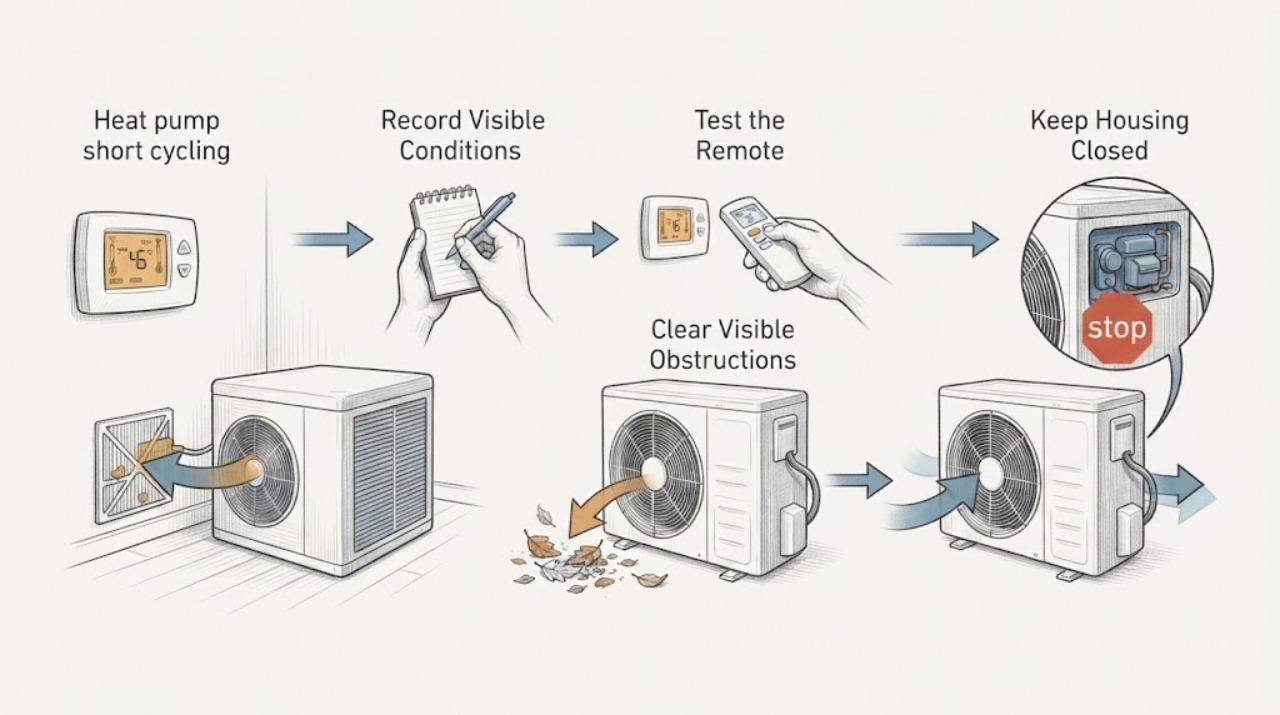
Daikin heat pump short cycling: What to Check and What to Do Next
A Daikin heat pump is short cycling when it starts and stops repeatedly before completing a normal demand, rather than simply turning off after the thermostat is satisfied or briefly changing operation during defrost. First confirm the thermostat mode and schedule, replace or clean an accessible filter according to its instructions, and make sure supply and return vents and the outdoor unit are not blocked.
-
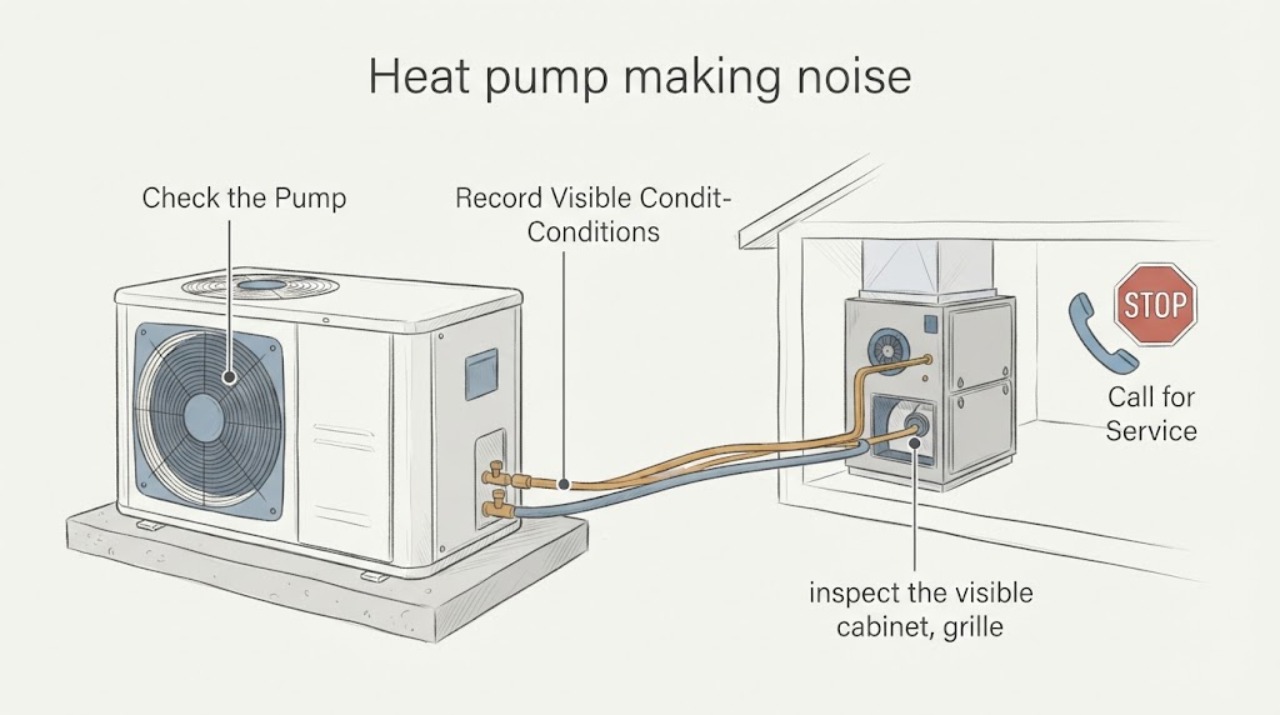
Goodman heat pump making noise: What to Check and What to Do Next
A Goodman heat pump can make normal hums, airflow sounds, clicks, or temporary defrost sounds, but a new or worsening rattle, roar, screech, grinding, loud buzz, hissing, or vibration needs attention. First note whether the sound comes from the outdoor unit, indoor air handler, duct/register, or refrigerant-line area and whether it occurs at startup, shutdown, heating, cooling, or defrost.
-
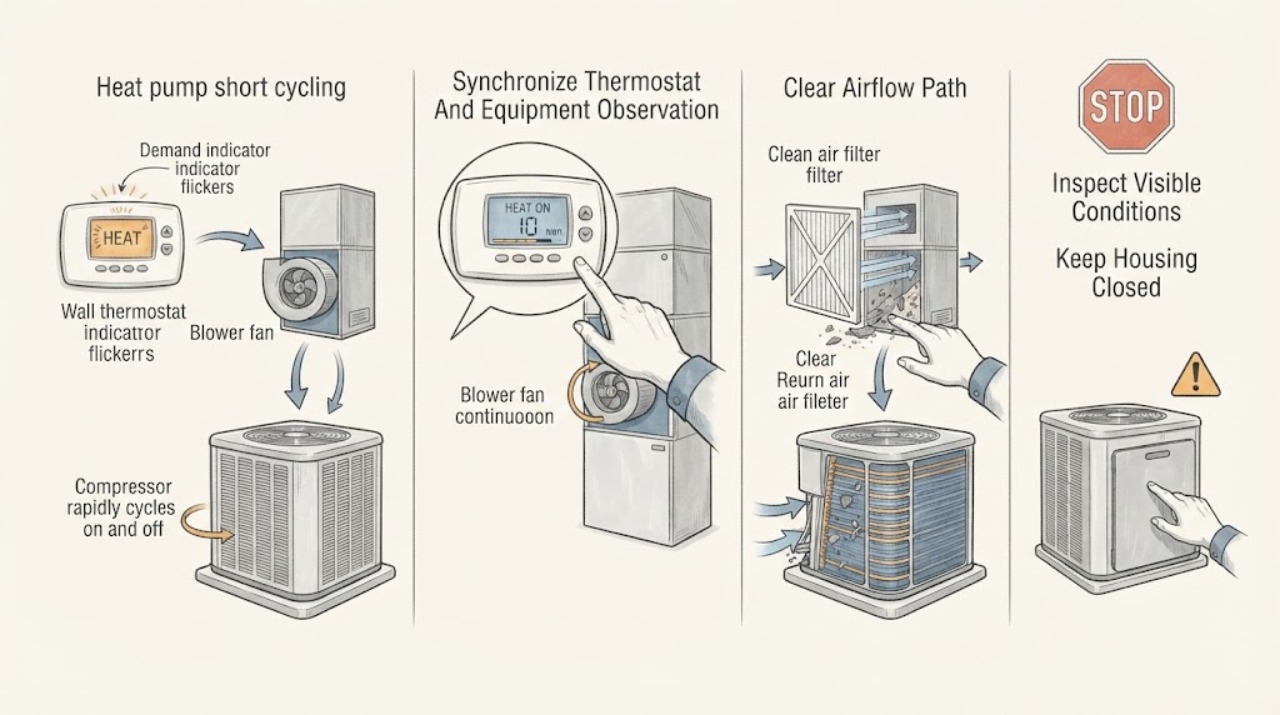
Goodman heat pump short cycling: What to check and what to do next
A Goodman heat pump is short cycling when it starts and stops repeatedly before a normal heating or cooling call is complete. The first useful split is whether the thermostat still shows a demand when the outdoor unit stops.
-
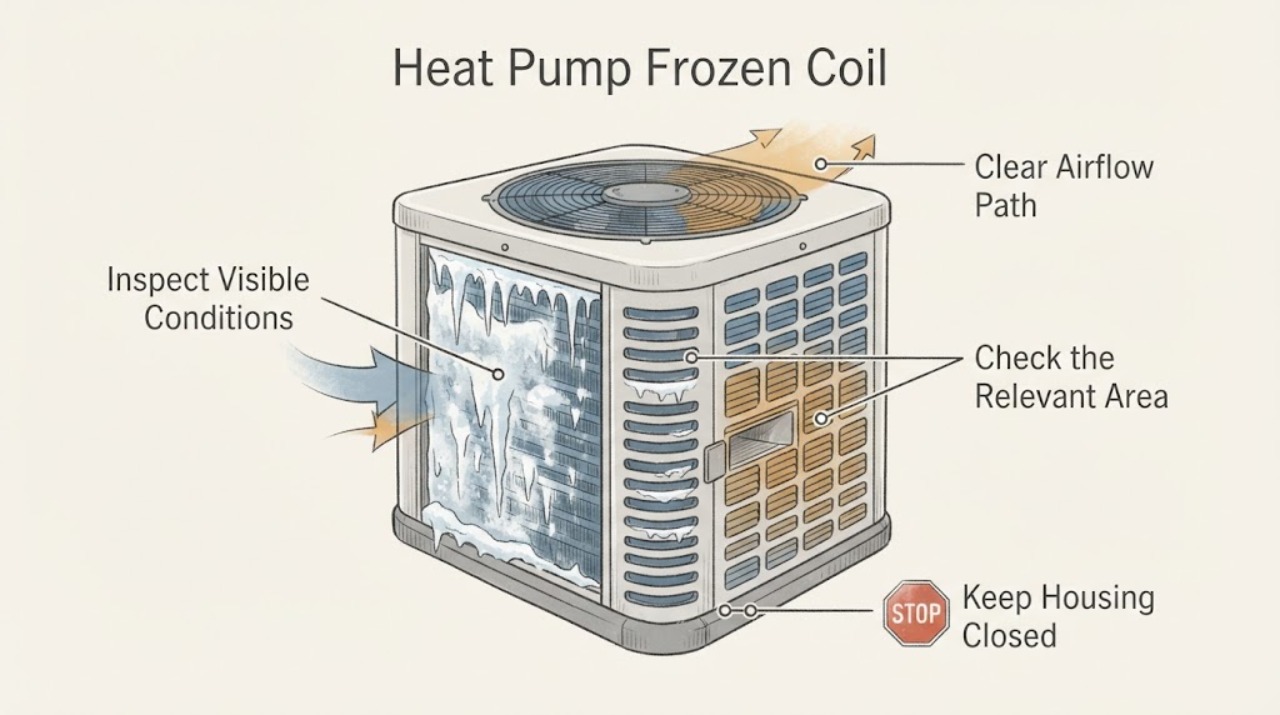
Heat Pump Frozen Coil: Tell Normal Frost From a Defrost or Airflow Fault
A thin layer of frost on a heat pump's outdoor coil during heating can be normal because the unit periodically enters a defrost cycle. A thick coating of ice that keeps growing, does not clear after the normal defrost period, or returns quickly is not a condition to chip away or heat with hot water.
-
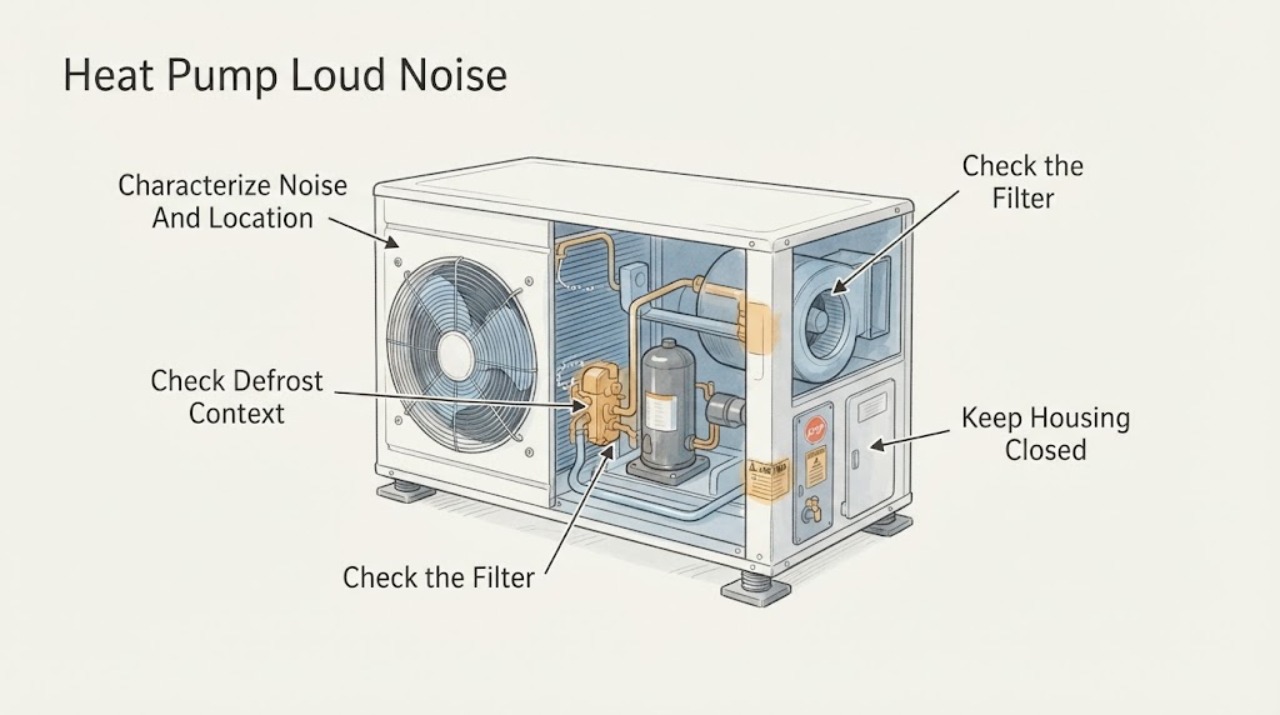
Heat Pump Loud Noise: Identify Normal Defrost vs. a Fault
First note where the sound comes from, whether it is indoors or outdoors, what it sounds like, and whether it occurs only during startup, shutdown, or a winter defrost cycle. A heat pump can make a brief whoosh or become louder while defrosting, and Trane says that sound should settle within a few minutes; a newly loud, grinding, rattling, screeching, buzzing, gurgling, or prolonged sound is not a DIY repair signal.
-
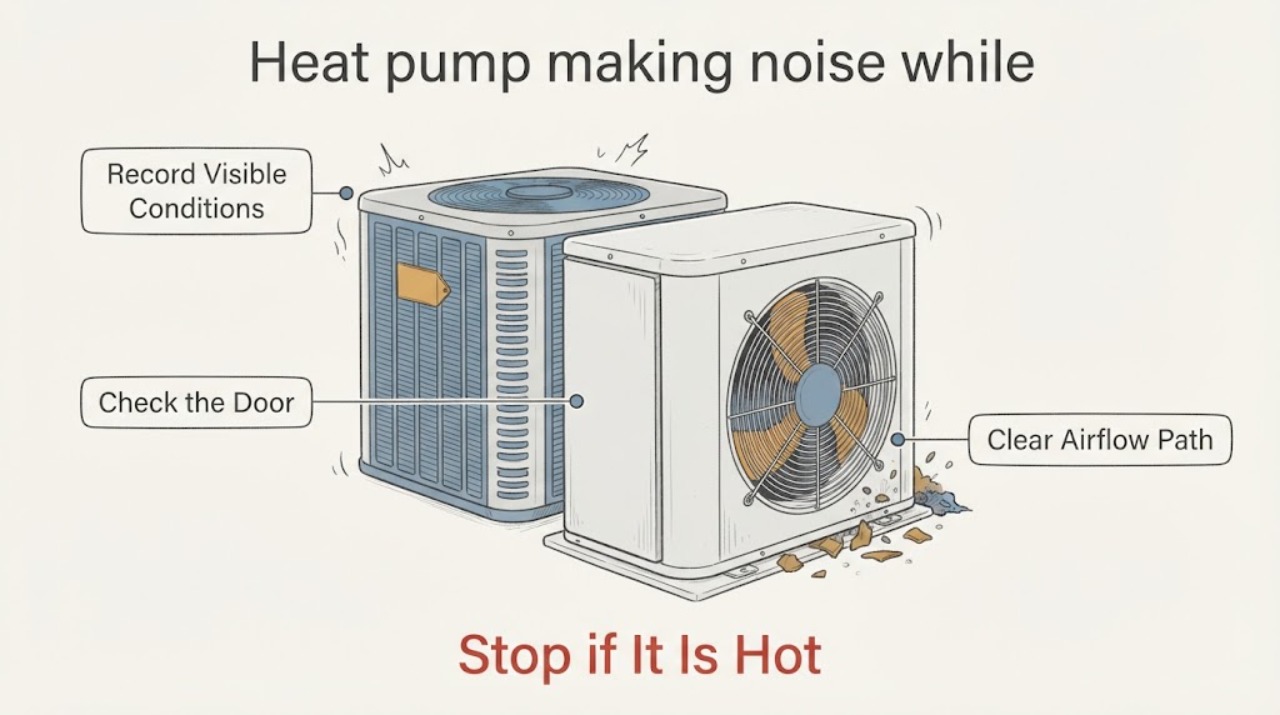
Heat pump making noise while the outdoor unit runs: What to Check and What to Do Next
Some outdoor heat-pump sounds are part of normal operation: a brief whoosh or hum during a defrost cycle, a short startup or shutdown sound, and a temporary change while the reversing valve shifts. A new, loud, prolonged, or metallic bang, screech, grind, rattle, buzz, or hissing sound is not something to diagnose by opening the unit.
-
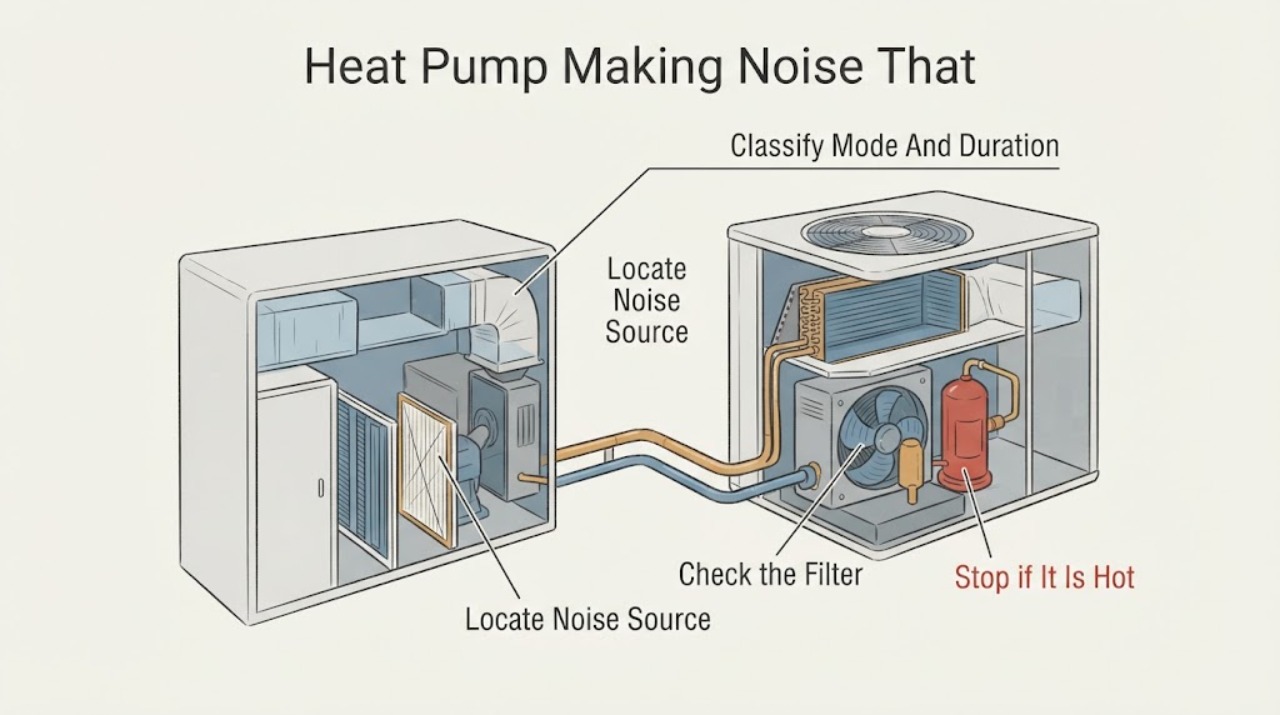
Heat Pump Making Noise That Changes With Heating or Cooling Mode: What to Check and What to Do Next
A heat pump can sound different in heating and cooling because the reversing valve changes refrigerant direction and the fans, compressor, and coil pressures operate differently. A brief whoosh or low hiss during startup, shutdown, a mode change, or a normal defrost cycle can be expected, but a new loud, grinding, rattling, high-pitched, or constant sound is not identified by mode alone.
-
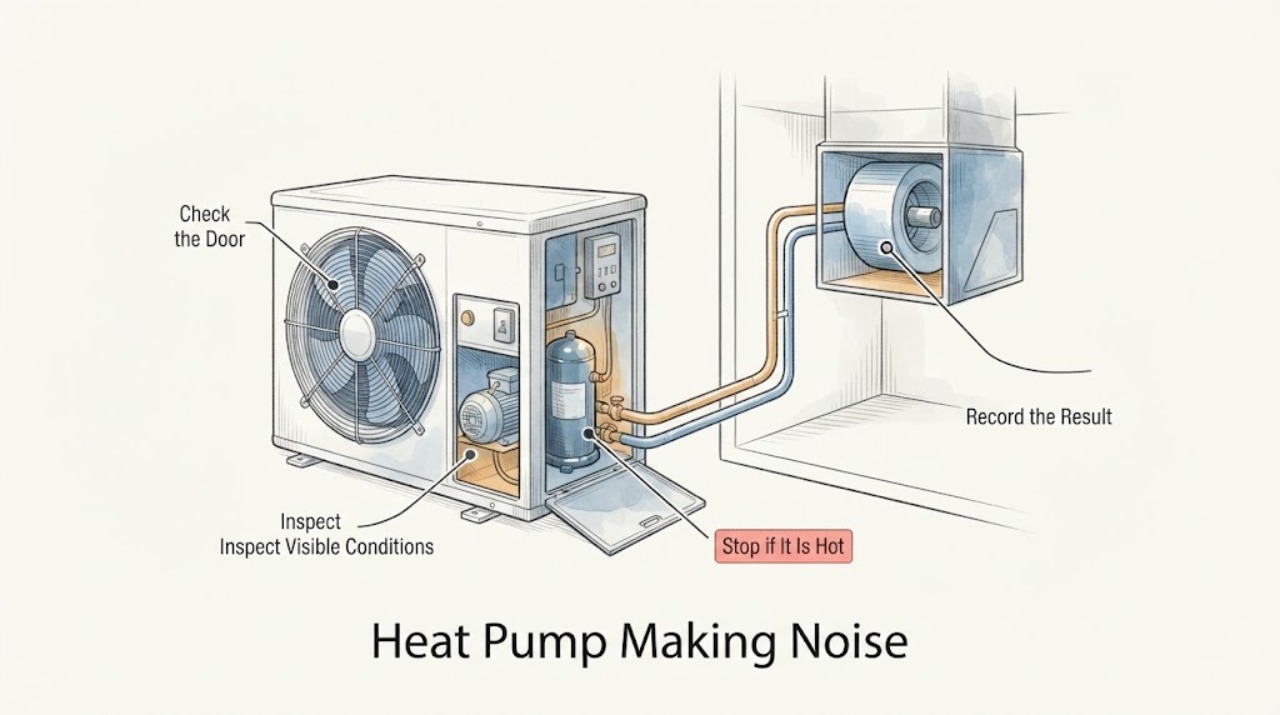
Heat Pump Making Noise: No Visible Obstruction—What to Check and What to Do Next
A heat pump can make brief operating sounds during startup, shutdown, refrigerant movement, or a defrost cycle, so the useful clues are the sound type, location, duration, and whether it is new or accompanied by poor heating/cooling.
-
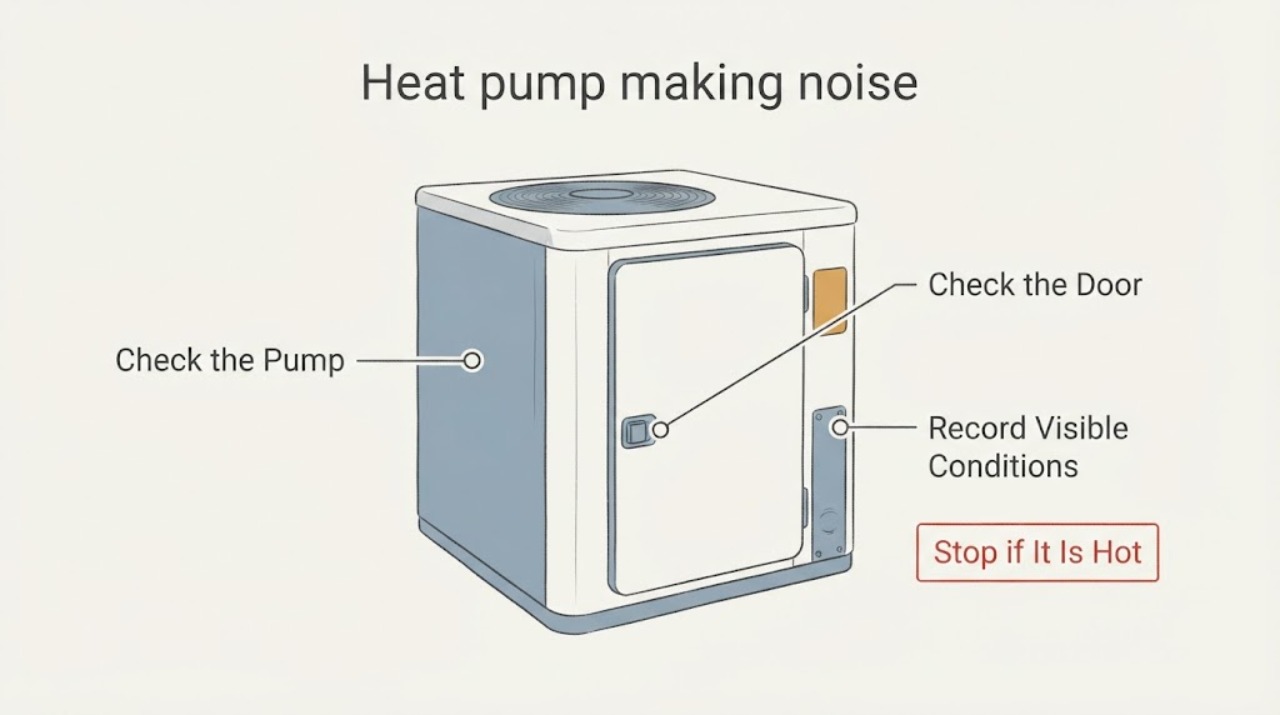
Heat pump making noise: What to Check and What to Do Next
A heat pump can make ordinary startup, shutdown, airflow, or defrost sounds, but a new or worsening grinding, rattling, screeching, hissing, burning, or violently vibrating sound needs professional attention. From a safe distance, record the sound type, where it seems to come from, when it occurs, the operating mode, and whether weather, frost, ice, or an indoor comfort change is present.
-
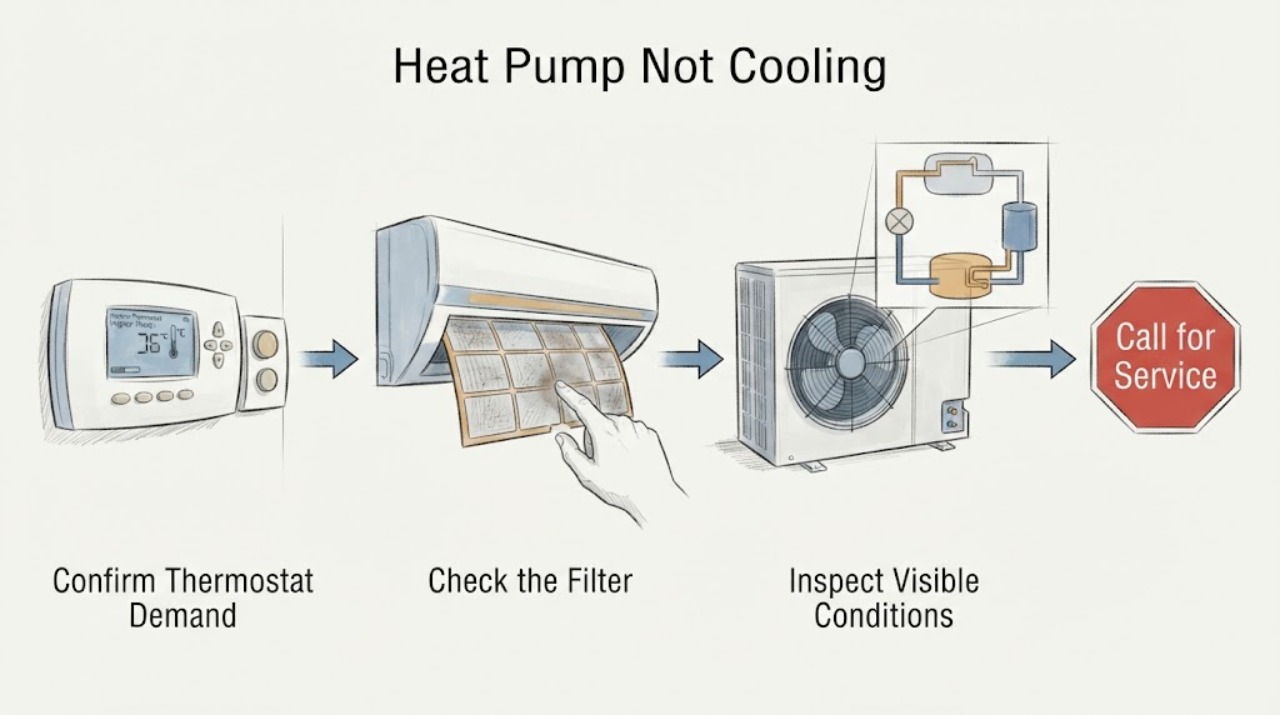
Heat Pump Not Cooling: Safe Checks and Next Steps
If a heat pump is not cooling, first confirm the thermostat is in Cool with the setpoint below the room temperature and the fan on Auto, then note whether the indoor and outdoor units run, whether airflow is weak, and whether ice is visible. Check only the accessible filter, registers, and outdoor-unit clearance.
-
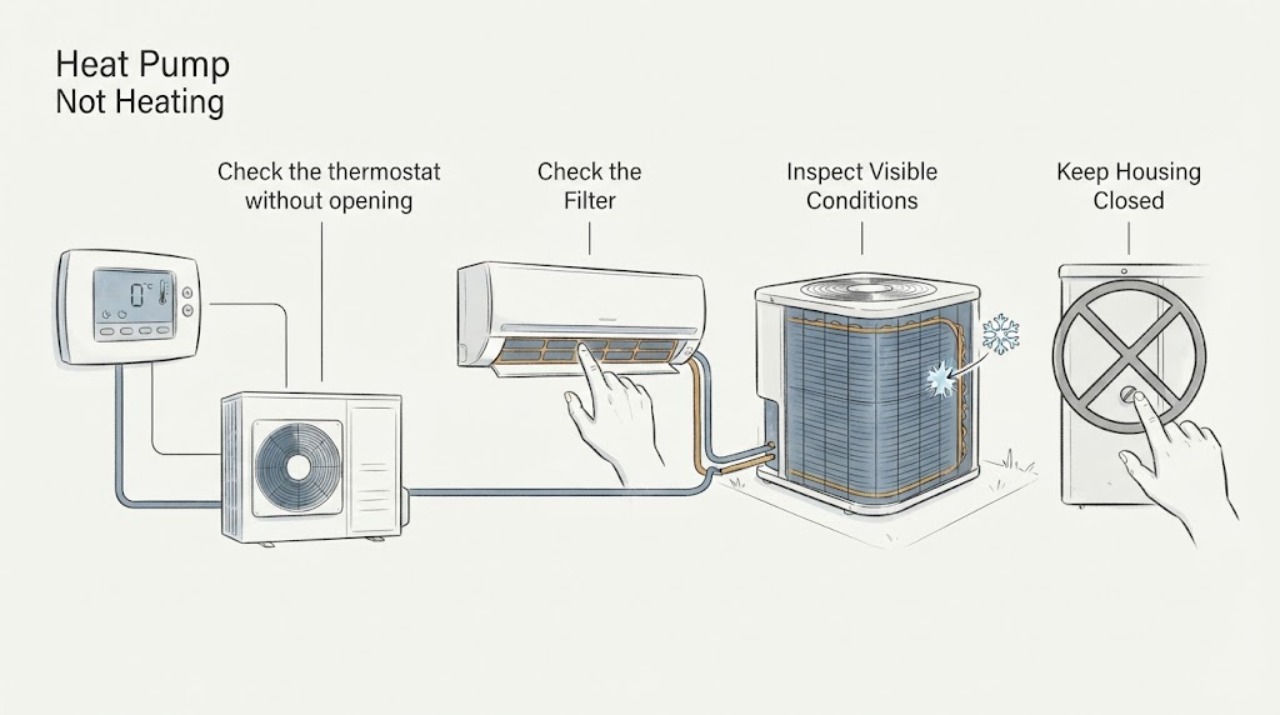
Heat Pump Not Heating: Check Mode, Airflow, Defrost, and Power Before Service
If a heat pump is not heating, first confirm the thermostat is calling for heat and that the fan is set to Auto, then check the accessible air filter, indoor and outdoor power status, and the outdoor unit for leaves, snow, or a solid ice coating. Cool air for a short period can occur during a normal defrost cycle, and heat-pump supply air may feel less hot than furnace air.
-
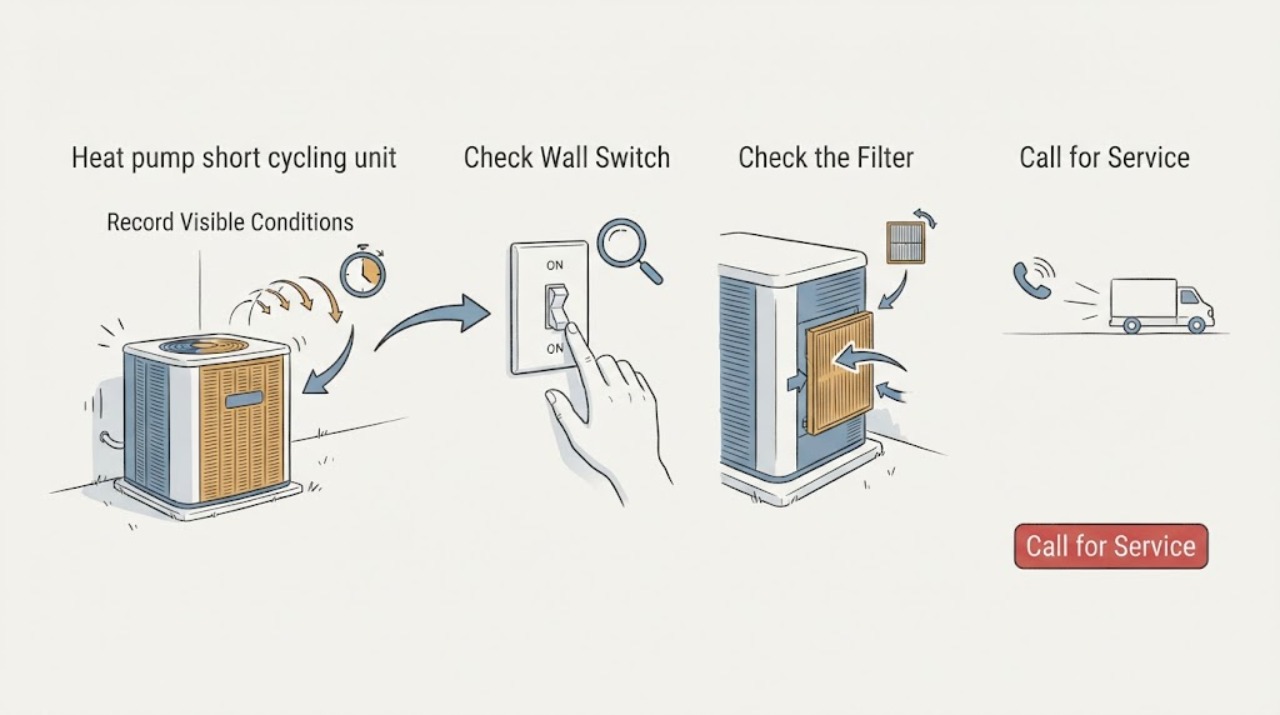
Heat pump short cycling unit starts and stops repeatedly: What to Check and What to Do Next
A heat pump that starts and stops repeatedly may have restricted airflow, a thermostat or control problem, persistent ice or a defrost fault, an electrical or refrigerant issue, or equipment that is oversized for the home. First confirm that the stops are rapid and repeated rather than a normal cold-weather defrost event: note the mode, thermostat display, outdoor frost or steam, indoor comfort, and approximate run pattern.
-
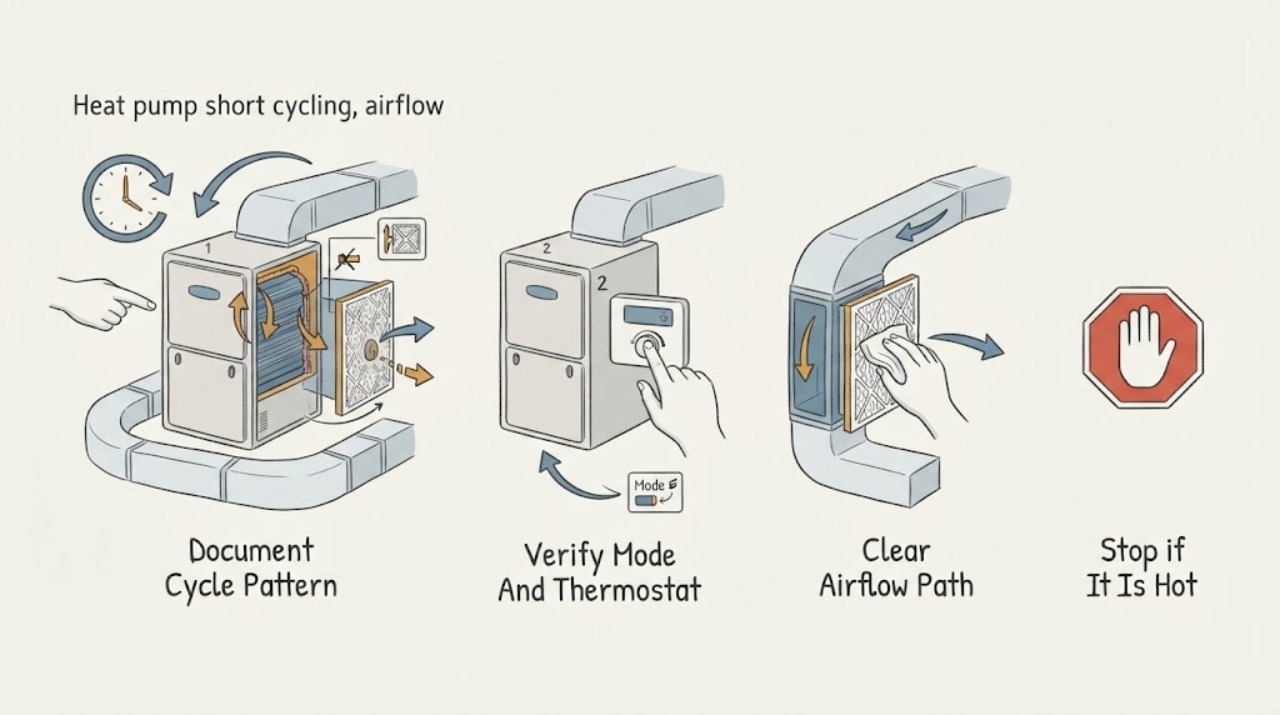
Heat pump short cycling, airflow may be restricted: What to Check and What to Do Next
A heat pump that starts and stops before the home is comfortable may have restricted airflow, a thermostat or control issue, an outdoor coil or fan problem, a defrost fault, low refrigerant, or incorrect sizing.
-
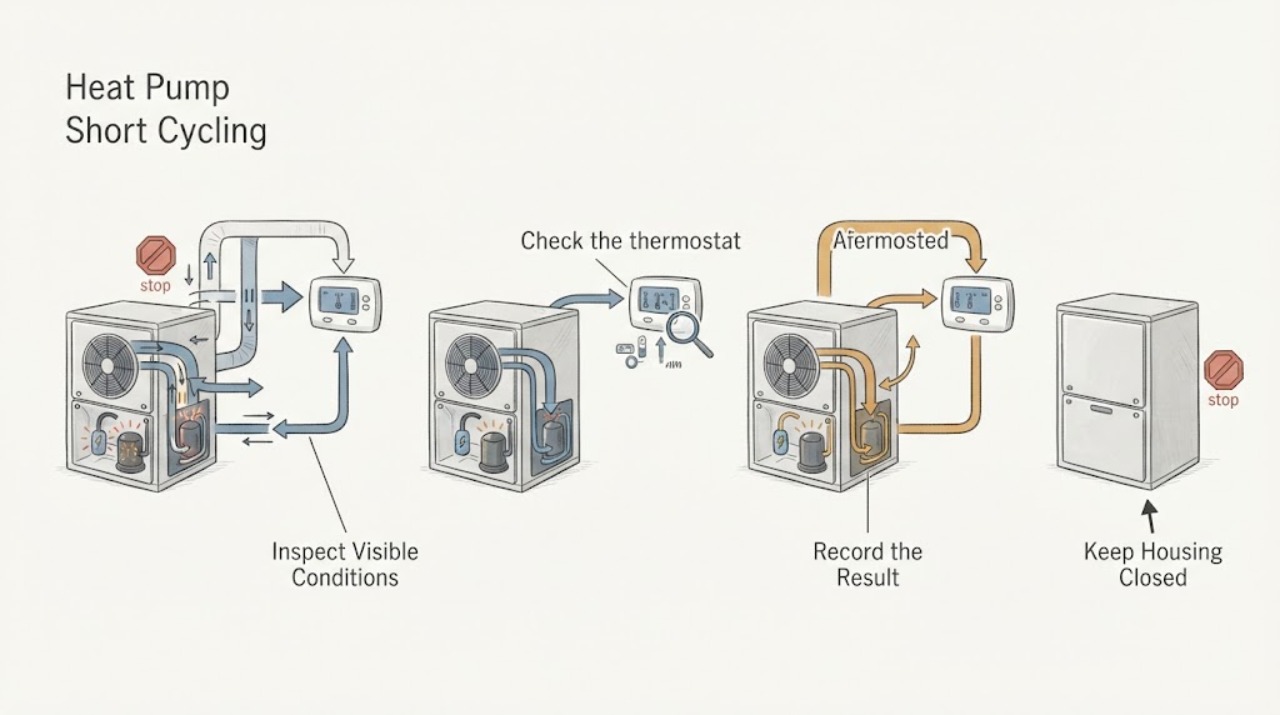
Heat Pump Short Cycling: Safe Checks Before HVAC Service
Heat pump short cycling means the system starts and stops repeatedly without completing a normal heating or cooling run. First confirm that the pattern is not a brief defrost or fan-only event, then check thermostat mode and location, the user-accessible air filter, open registers and visible outdoor airflow.
-
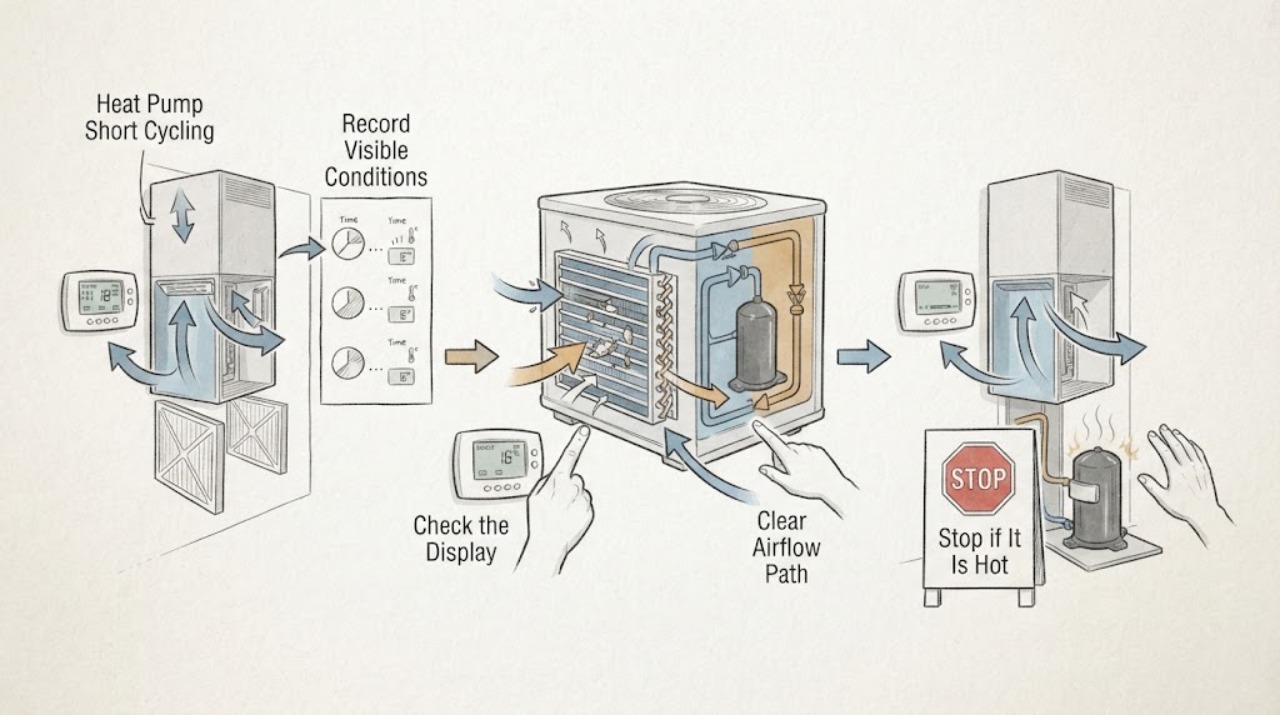
Heat Pump Short Cycling: Setpoint Is Not Reached—What to Check and What to Do Next
A heat pump that starts and stops repeatedly without reaching the thermostat setpoint is not behaving like a normal completed cycle. Check the thermostat mode and reading, the accessible air filter, supply and return airflow, and the outdoor unit for obvious leaves, snow, or ice.
-
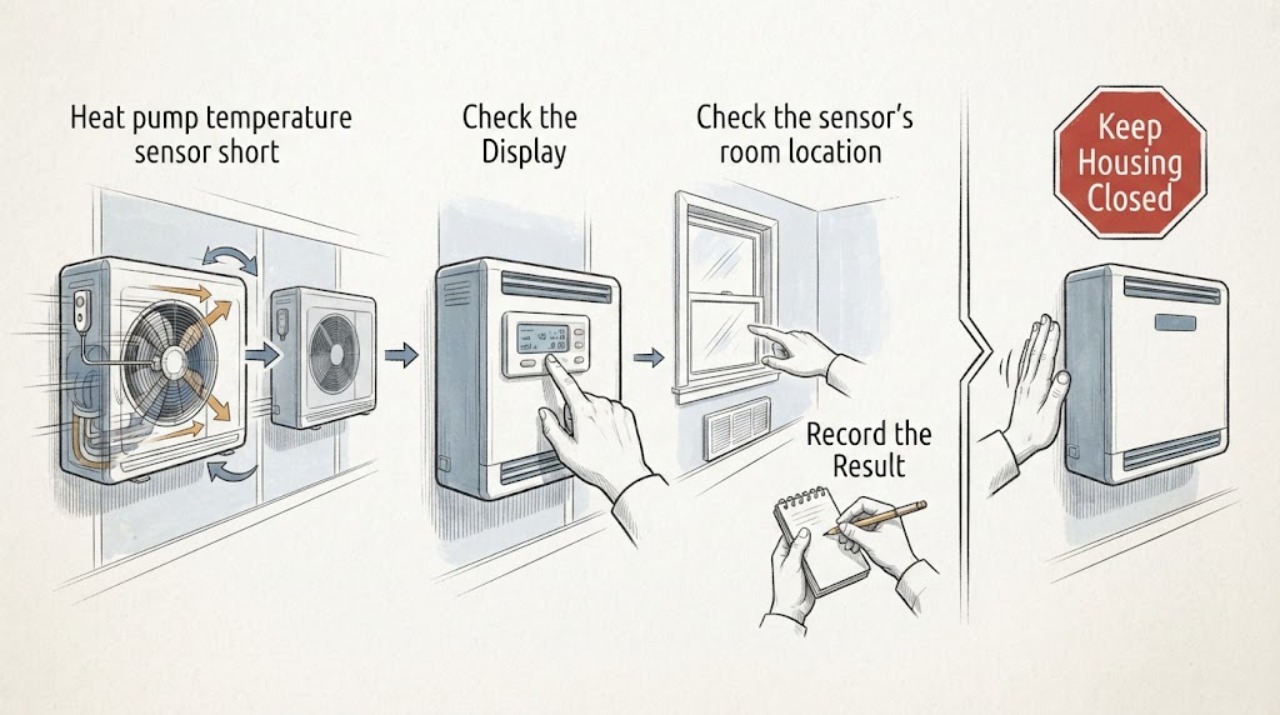
Heat pump temperature sensor short cycling: What to Check and What to Do Next
When a heat pump short-cycles and the temperature sensor is suspected, compare the thermostat display with an independent room-temperature trend while noting where the sensor sits. A display that changes unlike the room, or a sensor exposed to direct sun, supply airflow, a draft, doorway, or heat source, can make the control end a call too early.
-
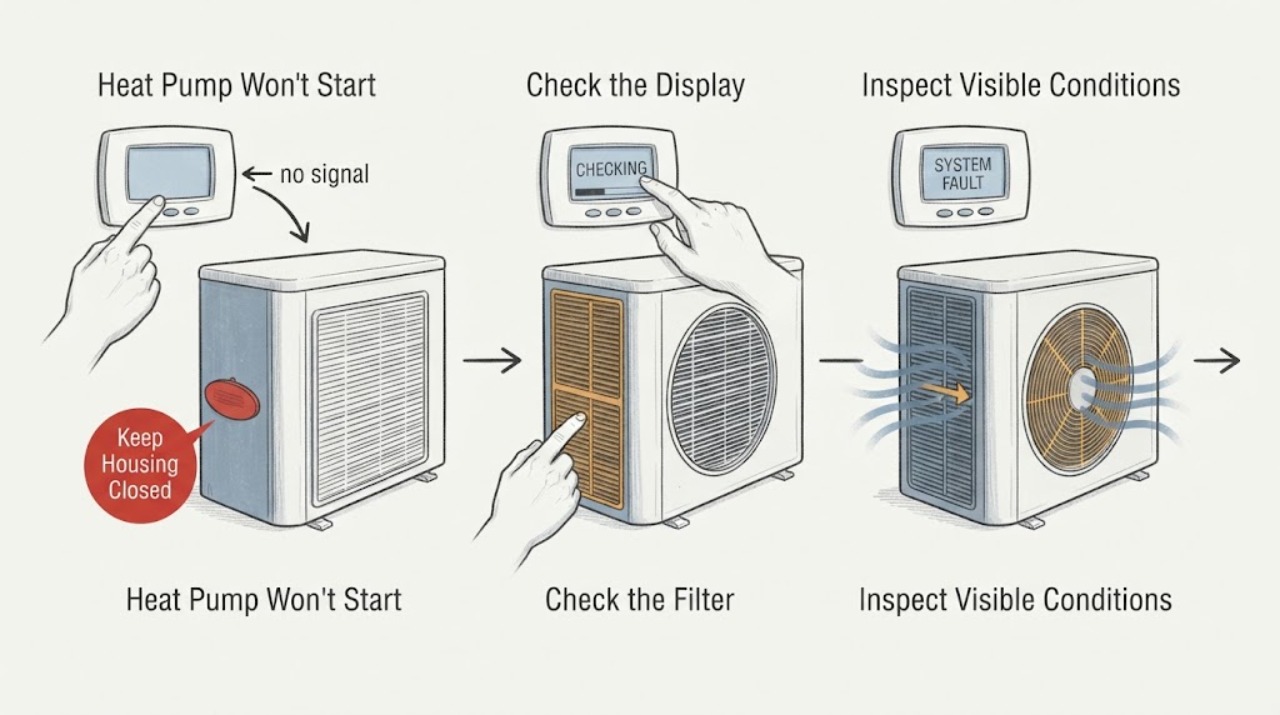
Heat Pump Won't Start: Check the Thermostat, Airflow, and Power Safely
If a heat pump will not start, begin at the thermostat: confirm the system is set to Heat or Cool as intended, the setpoint is calling for the chosen mode, and the display has power. Then inspect the accessible air filter, open return grilles, and clear loose leaves or snow from around the outdoor unit.
-
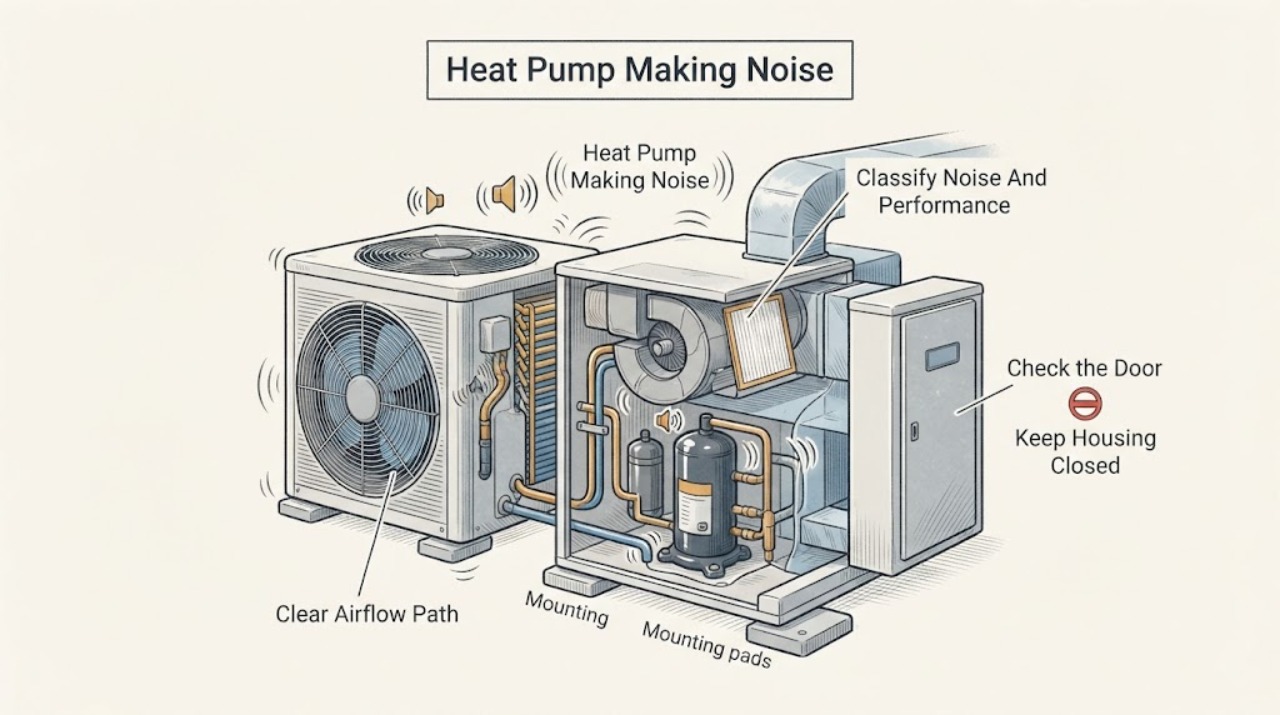
Lennox Heat Pump Making Noise: What to Check and What to Do Next
A Lennox heat pump may briefly change sound as a fan or compressor starts, stops, or enters defrost, but a new, very loud, grinding, screeching, buzzing, rattling, or persistent hissing noise should not be diagnosed by sound alone. First note whether the noise comes from the indoor air handler, outdoor unit, registers, or exposed refrigerant lines, and whether it occurs at startup, shutdown, heating, cooling, or defrost.
-
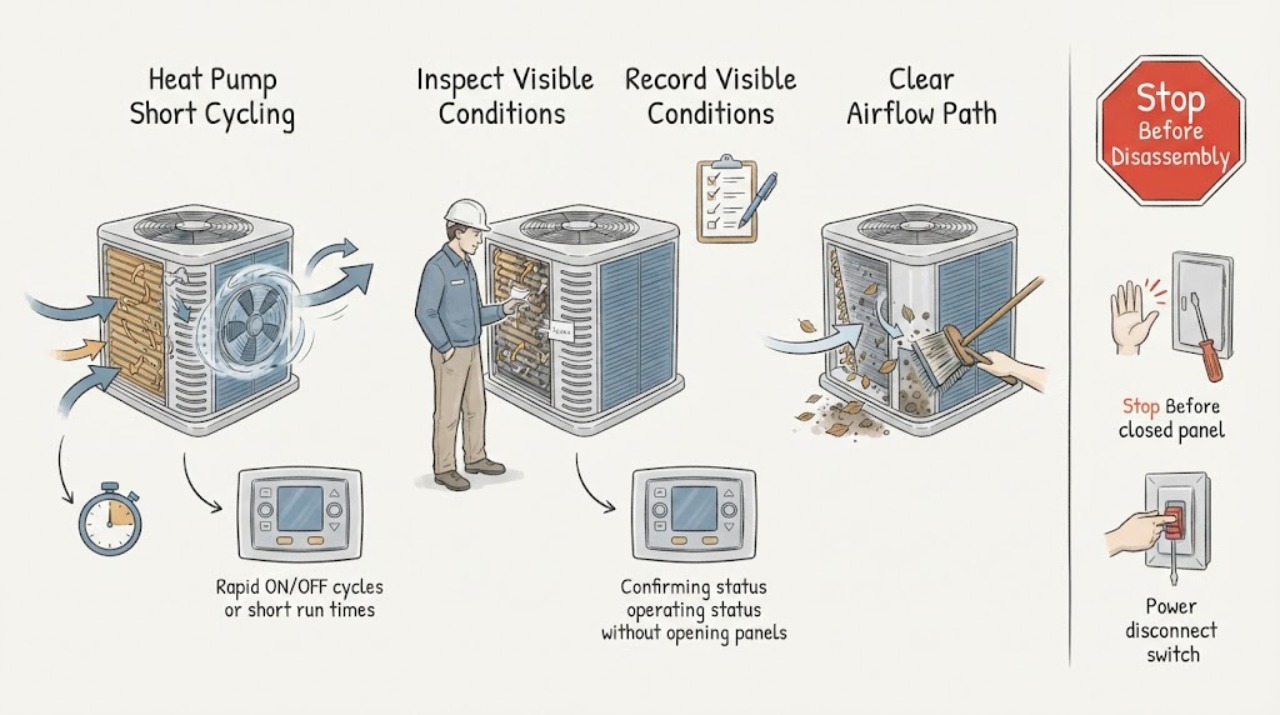
Lennox Heat Pump Short Cycling: What to Check and What to Do Next
A Lennox heat pump that starts and stops every few minutes should not be diagnosed by replacing a part at random. First record whether the thermostat is still calling, whether the indoor airflow is weak, whether the outdoor coil is blocked or heavily iced, and whether a Lennox alert is present.
-
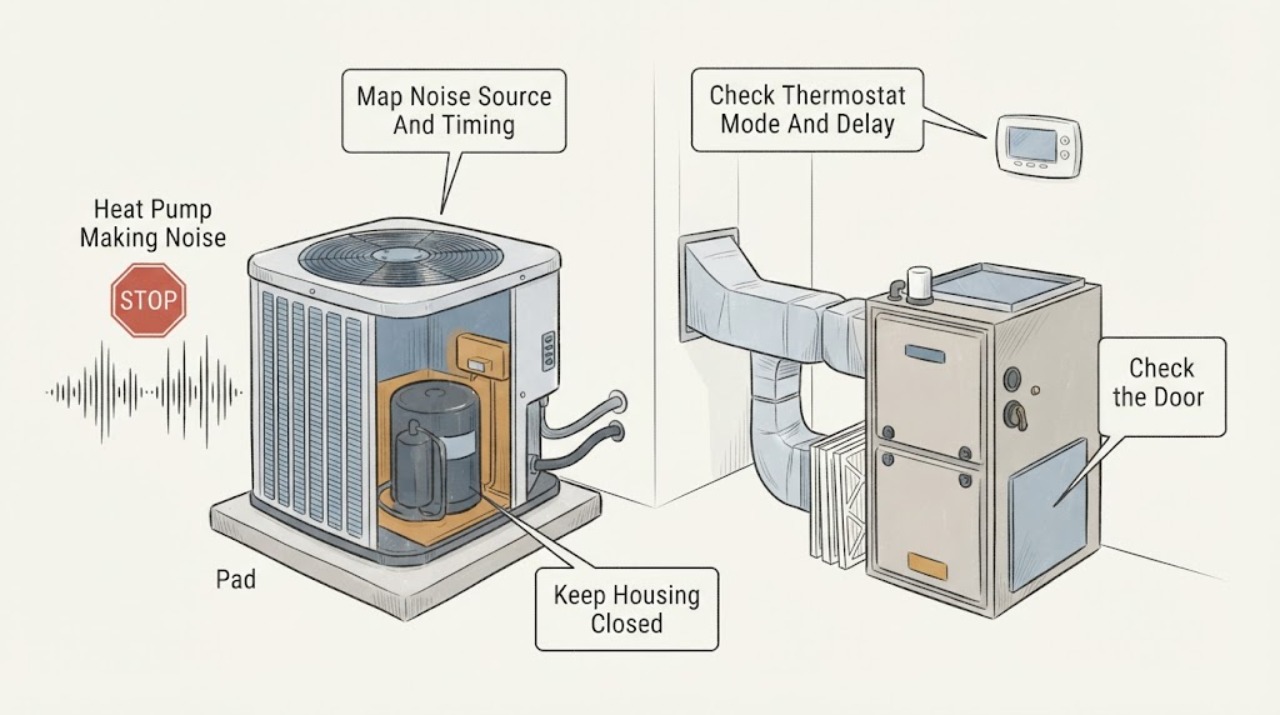
Rheem Heat Pump Making Noise: What to Check and What to Do Next
A Rheem heat pump can make normal fan, compressor, airflow, refrigerant, or defrost sounds, but a new, loud, metallic, scraping, rattling, humming, or vibration-related noise deserves a source-and-timing check. Note whether the noise comes from the outdoor unit, indoor air handler, ductwork, or thermostat, and whether it appears in heating, cooling, startup, shutdown, or defrost.
-
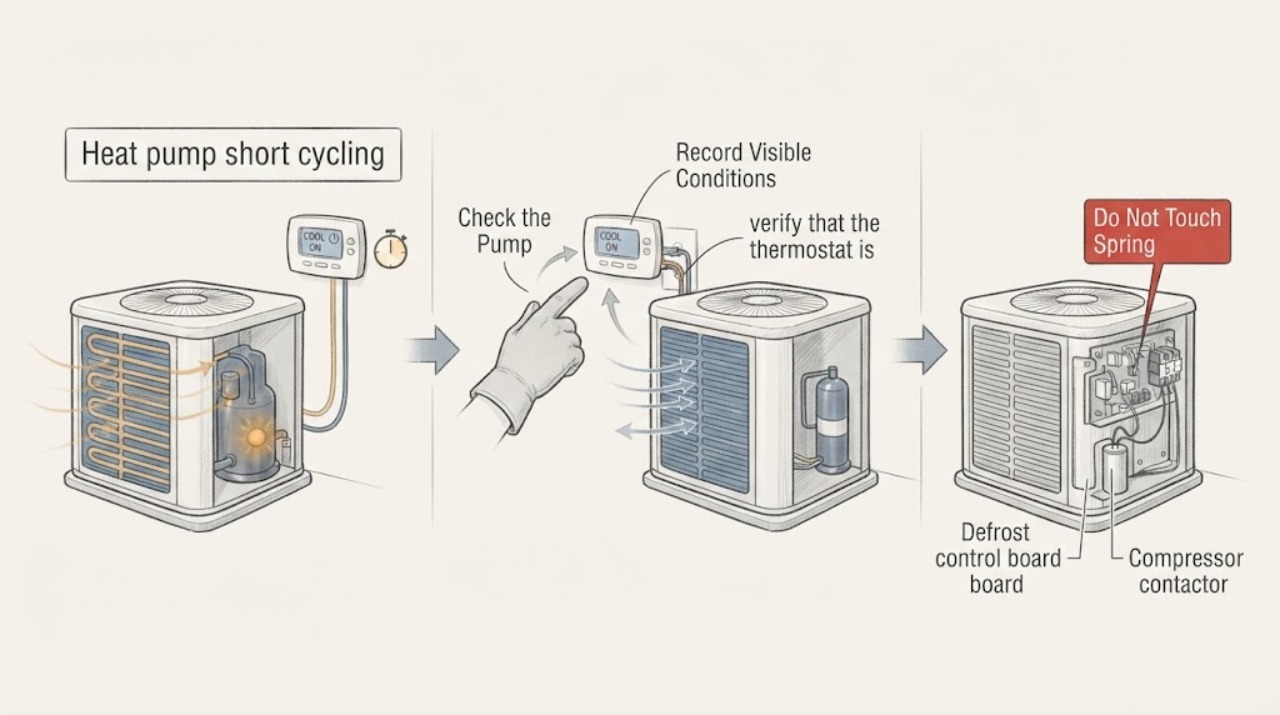
Rheem heat pump short cycling: What to Check and What to Do Next
A Rheem heat pump is short cycling when the compressor or outdoor unit starts and stops repeatedly instead of completing a normal heating or cooling call. First distinguish a brief anti-short-cycle delay after a setpoint, mode, or power change from repeated starts while the thermostat still calls.
-
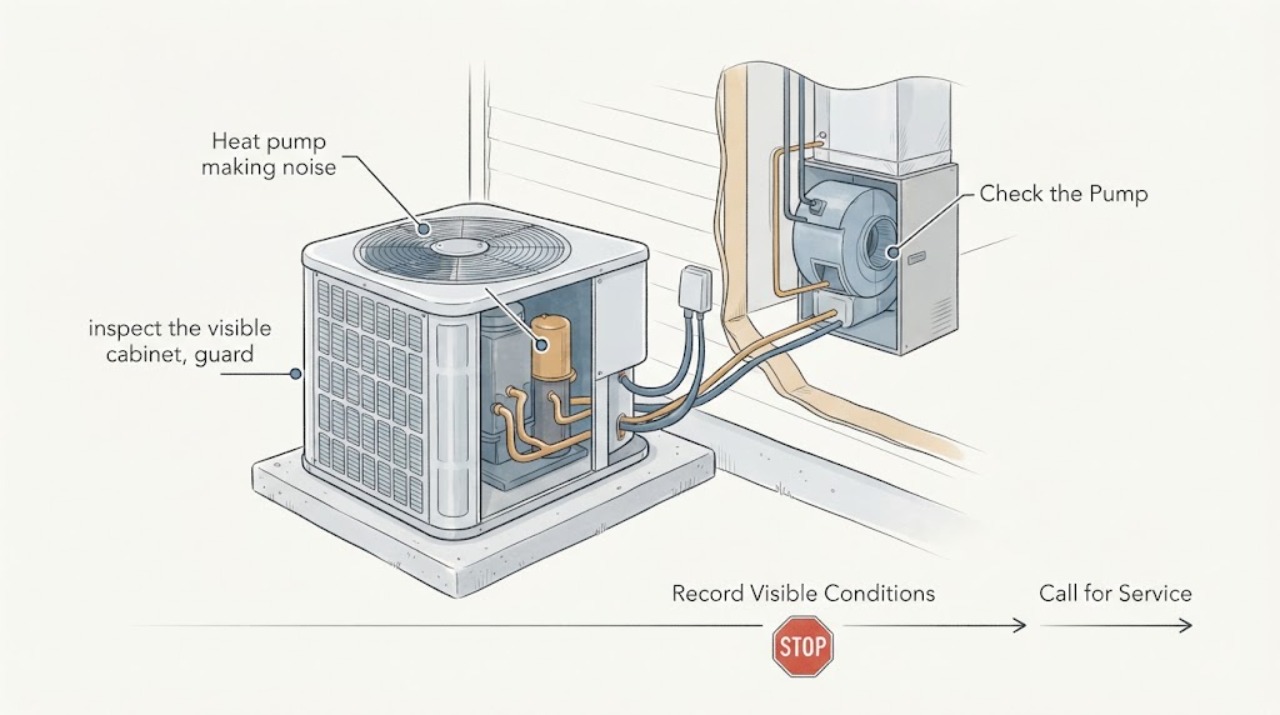
Trane heat pump making noise: What to Check and What to Do Next
A Trane heat pump may hum, click, or briefly change sound during a normal mode transition or defrost, but a new, loud, prolonged, or worsening bang, screech, rattle, buzz, grind, gurgle, or hissing sound needs attention. First note whether the sound comes from the outdoor unit, indoor air handler, duct or register, and whether it occurs at startup, shutdown, heating, cooling, or defrost.
-
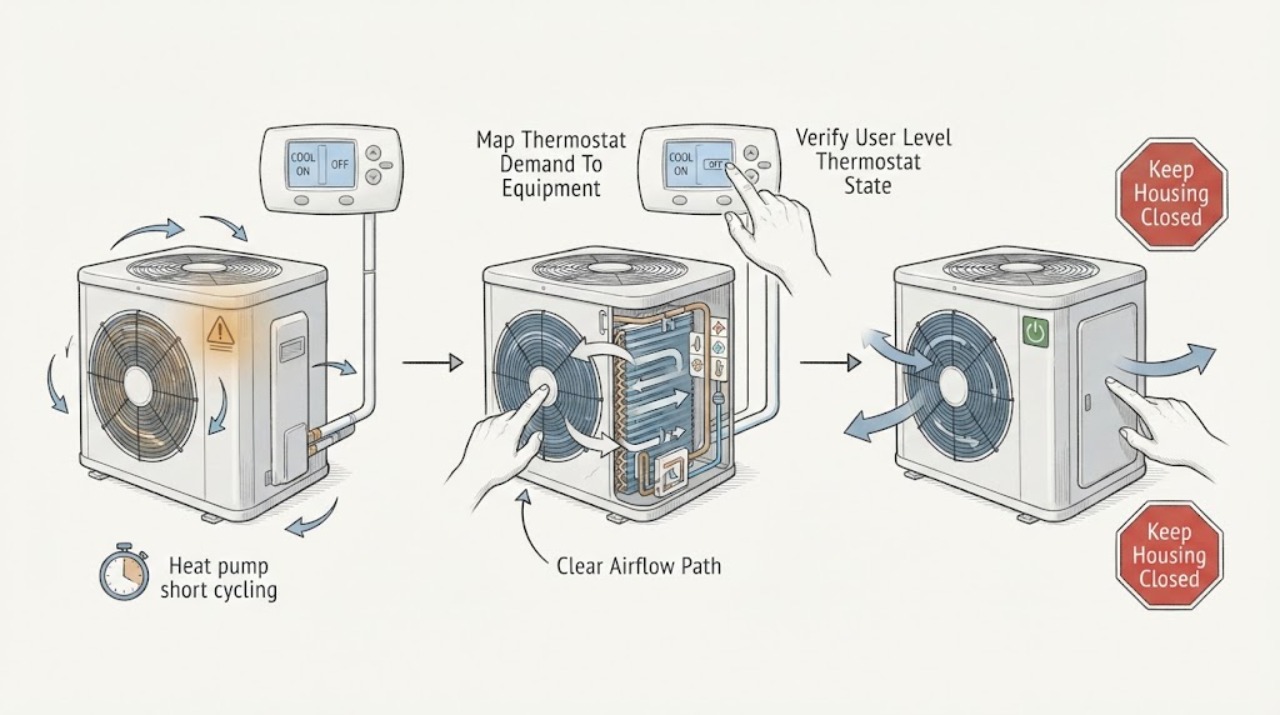
Trane heat pump short cycling: What to Check and What to Do Next
A Trane heat pump is short cycling when it starts and stops repeatedly before a normal heating or cooling call is complete. The useful first split is whether the thermostat still shows a demand when the equipment stops: a disappearing demand points toward mode, schedule, sensor, or control behavior, while a continuing demand points toward airflow, outdoor fan, defrost, protection, refrigerant, or equipment problems.