
On this page
Start here
Quick answer
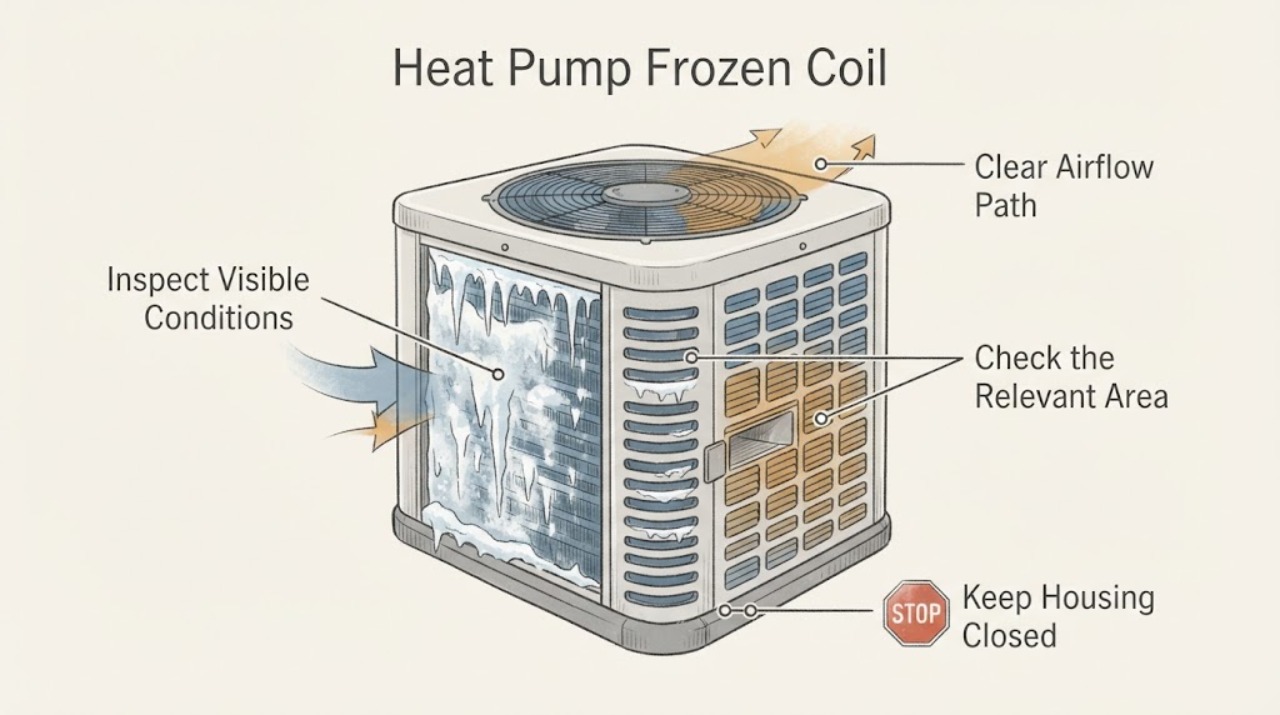
A thin layer of frost on a heat pump's outdoor coil during heating can be normal because the unit periodically enters a defrost cycle. A thick coating of ice that keeps growing, does not clear after the normal defrost period, or returns quickly is not a condition to chip away or heat with hot water. Check only the safe external airflow around the outdoor unit and any obvious leaves, snow, or gutter runoff; if the ice persists, the fan is not running, or unusual noise or an electrical hazard is present, stop using the system and arrange HVAC service. A technician may need to check refrigerant charge, the outdoor fan, or defrost controls and sensors.
Before you begin
Safety first
- Keep the system off as directed by the technician when heavy ice persists or a hazard is present. Do not open the cabinet, touch the fan or wiring, bypass controls, or test or alter refrigerant.
Work through in order
Diagnostic checks
Use only checks that match the exact appliance or system and its official guide.
-
Check 1
Identify where the ice is and make the system safe before touching anything. Observe the outdoor coil without reaching through the grille, and note whether the heat pump is in heating mode, whether the fan is operating normally, and whether there is smoke, a burning smell, exposed wiring, or an unusual mechanical noise.
Expected result: The coil may have a thin uneven frost, a thick solid ice coating, or ice that is being fed by water from above. The system may be quiet and operating, or the fan may be stopped or making an abnormal noise.
Next step: If there is no hazard, continue with the defrost and airflow observations. If there is smoke, burning odor, exposed wiring, or abnormal noise, turn the system off using normal controls if safe and arrange urgent professional service.
Stop if: Do not touch the fan, coil, wiring, or refrigerant tubing while the equipment is operating.
Why this matters
Why: Thin frost with normal operation can fit a normal heating and defrost cycle. Thick ice, a stopped or abnormal fan, or any electrical or mechanical hazard changes the problem to an equipment-protection and service decision.
-
Check 2
Give the heat pump time to complete its normal defrost behavior while you observe from a safe distance. Do not scrape the coil, pour water on it, apply a heater, or force a defrost cycle. Note whether the frost thins and clears, whether water or a little steam appears, or whether the ice keeps building.
Expected result: The frost may clear on its own, or a solid coating may remain or grow after the unit has had time to defrost. Record whether the ice returns quickly after it clears.
Next step: If the frost clears fully, monitor the next heating cycle. If substantial ice remains or returns, stop forcing operation and move to the external-obstruction check and professional-service branch.
Stop if: Never chip ice or use hot water or an open heat source on the coil.
Why this matters
Why: A cycle that removes light frost supports normal defrost operation. Ice that persists, grows, or repeatedly returns can restrict airflow and points toward a defrost, airflow, refrigerant, fan, or water-management fault rather than a cosmetic frost condition.
-
Check 3
With the system stopped by its normal thermostat control, inspect only the area around the outdoor unit. Remove loose leaves or snow that are clearly outside the cabinet, keep the intake and discharge space open, and check that no cover, plant growth, or stored item is blocking airflow. Do not remove panels or bend coil fins.
Expected result: There may be an obvious external obstruction, or the space may already be clear. A clear perimeter does not prove the coil, fan, or internal airflow path is healthy.
Next step: After clearing only loose external debris, allow the system to resume normal operation once and observe whether airflow and defrost improve. If icing persists, stop and call a technician.
Stop if: Do not spray, pressure-wash, scrape, or insert tools into the coil or grille.
Why this matters
Why: An external blockage can reduce airflow and make frost harder to clear. If the perimeter is clear or the coil remains iced after the obstruction is removed, an internal airflow, fan, refrigerant, or defrost fault remains possible.
-
Check 4
Look above and around the outdoor unit for a gutter, downspout, roof drip, melting snow bank, or other water source that lands on the coil and freezes again. Correct only an obvious external drainage or snow path without moving the heat pump or working on the electrical or refrigerant system.
Expected result: Water may be visibly directed onto the unit, or there may be no external water source. Ice in the same spot after every thaw supports a refreezing pattern, but its absence does not rule out a mechanical cause.
Next step: Redirect only accessible external runoff and observe the next normal cycle. If the source is hidden, unsafe to correct, or the coil still freezes, arrange professional service.
Stop if: Do not climb, dismantle gutters, move the unit, or pour water onto the coil.
Why this matters
Why: Water that repeatedly freezes on the coil can mimic or worsen a defrost problem. Persistent ice with no water source, or icing that continues after the source is corrected, needs equipment diagnosis.
-
Check 5
Prepare a service report instead of testing internal parts. Record the outdoor temperature and weather, heating or cooling mode, whether the ice is on the outdoor coil, how long it takes to appear, whether a complete defrost clears it, whether airflow changes, and any display code or unusual sound.
Expected result: The pattern may be a one-time light frost that clears, persistent full-coil icing, rapid refreezing, weak airflow, a fan problem, or a recurring fault after an apparent defrost.
Next step: Give the report to an HVAC professional and ask them to inspect airflow, the outdoor fan, defrost controls and sensors, and the refrigerant circuit as indicated by the evidence.
Stop if: Do not remove panels, bypass a defrost control, measure live electrical parts, or add or release refrigerant.
Why this matters
Why: These observations help separate normal frost from airflow, fan, defrost-control, water, or refrigerant possibilities, but they do not identify a replaceable part by themselves. Refrigerant and electrical diagnosis require qualified equipment and service.
Use your observations
Decision map
Find the observation that best matches what you see, then follow the next safe action.
-
PATH 01Next step
What you see
Only a thin, intermittent frost appears and it clears during the normal defrost behavior.
Do this next
Keep the outdoor area clear and monitor heating performance; seek service if the ice becomes a solid coating or stops clearing.
Why this path and its safety boundary
Why it matters: This is consistent with normal heat-pump frost formation and defrost.
-
PATH 02Next step
What you see
A thick ice coating remains, grows, or returns quickly after a defrost attempt.
Do this next
Stop repeated operation, do not chip or heat the ice, and arrange HVAC service.
Why this path and its safety boundary
Why it matters: The ice is restricting airflow or heat transfer and may reflect an airflow, fan, refrigerant, water, or defrost fault.
-
PATH 03Next step
What you see
Leaves, snow, stored items, or plant growth visibly obstruct the outdoor unit's airflow.
Do this next
Remove only loose external debris from a safe position, then monitor one normal cycle; call a technician if icing persists.
Why this path and its safety boundary
Why it matters: The obstruction may be contributing to poor airflow and icing.
-
PATH 04Next step
What you see
A gutter, downspout, melting snow bank, or other visible runoff repeatedly lands on the coil.
Do this next
Correct the accessible runoff path without working on the unit; obtain service if the source is unsafe or icing continues.
Why this path and its safety boundary
Why it matters: External water may be refreezing and adding to the ice.
-
PATH 05Next step
What you see
The outdoor fan is not running normally, the unit makes unusual noise, or a breaker/electrical symptom occurs.
Do this next
Stop the system using normal controls if safe and arrange qualified HVAC service; do not reach through the grille or open the cabinet.
Why this path and its safety boundary
Why it matters: The fault may involve the fan, controls, or electrical system and is not a user-level coil-cleaning issue.
-
PATH 06Next step
What you see
The outdoor area is clear and there is no obvious runoff, but the coil still freezes or heating performance remains poor.
Do this next
Stop further DIY testing and give the technician the frost and defrost history for professional diagnosis.
Why this path and its safety boundary
Why it matters: An internal airflow, refrigerant, fan, or defrost-system problem remains possible.
Helpful context
Understand the symptom
Light frost versus a frozen coil
In heating mode, the outdoor coil can become colder than the surrounding air, so moisture may freeze on it. The heat pump periodically changes operation to melt that frost. During defrost, a little steam or water can be normal. The decision changes when ice becomes a solid coating, blocks the coil, grows between defrost cycles, or returns soon after it clears: ice reduces airflow and heat transfer, so continued operation may leave the system unable to heat effectively.
Keep the check external and safe
Do not scrape or chip ice from the coil, pour hot water over it, bend the fins, remove panels, or attempt refrigerant, fan, electrical, or defrost-control tests. Look for external leaves, snow, and water flowing from a gutter or downspout toward the unit. If a full coating remains after the system has had time to complete its normal defrost behavior, stop troubleshooting and give the technician the weather, operating mode, ice location, and what happened during defrost.
Safety boundary
Stop conditions
- Stop immediately for smoke, a burning odor, exposed or damaged wiring, an electrical hazard, an unusual mechanical noise, or a fan that is blocked or not operating normally.
- Do not chip, scrape, bend, drill, or pry ice from the coil, and do not pour hot water or apply an open heat source.
- Do not remove panels, bypass defrost controls, test live electrical components, or add, recover, or release refrigerant.
- Stop repeated operation when a thick ice coating persists, grows, or returns after a normal defrost period; arrange HVAC service.
Only after diagnosis
Potential parts
- defrost control or defrost sensor
Consider only if a technician confirms the coil is not completing its defrost cycle after airflow and external water causes are excluded.
Confirm the complete heat-pump model and the service documentation; frost alone does not identify a control or sensor. - outdoor fan motor or fan assembly
Consider only if professional testing finds that the outdoor fan is not moving air correctly or its motor/control circuit has failed.
Verify model-specific electrical and mechanical fit before any replacement; do not work on the fan while energized. - refrigerant circuit or leak repair
Consider only after a qualified technician finds evidence of low charge or a leak; icing is not proof of a refrigerant fault.
Refrigerant diagnosis and recovery require qualified service and the correct refrigerant specified for the unit.
When checks do not resolve it
Need a professional?
The coil remains heavily iced or refreezes quickly after the unit has had time to defrost., The outdoor fan is not running normally, airflow is weak, the system makes unusual noise, or a breaker or electrical symptom occurs., The outdoor area and visible runoff are clear but icing or poor heating continues., You would need to open the cabinet, test refrigerant or electrical components, or repair the defrost controls, fan, sensor, or wiring.
Safety scope: Keep the system off as directed by the technician when heavy ice persists or a hazard is present. Do not open the cabinet, touch the fan or wiring, bypass controls, or test or alter refrigerant.
Common questions
FAQ
Is frost on a heat pump coil normal?
Light, intermittent frost on the outdoor coil during heating can be normal. The heat pump should periodically defrost it. A solid coating that remains, grows, or returns quickly is a service symptom, not something to scrape away.
Can I chip the ice off a frozen heat-pump coil?
No. Do not chip or scrape the ice, pour hot water on it, or use an open heat source. Those actions can damage the coil or create a safety hazard. Let normal defrost operate from a safe distance; persistent ice needs HVAC service.
What should I check before calling an HVAC technician?
From a safe position, check whether leaves, snow, stored items, or visible gutter runoff are obstructing or wetting the outdoor unit. Note the operating mode, weather, fan behavior, time to ice, and whether a defrost cycle clears it. Do not open the unit or test refrigerant, electrical, fan, or defrost components.
Why does a frozen coil reduce heat-pump performance?
Frost forms when the outdoor coil is below the dew point. As ice builds, it reduces heat transfer and the open area for airflow, so the system can deliver less heat and work harder. The defrost cycle is intended to remove that frost; repeated or incomplete defrosting requires diagnosis.
Read the exact guide
Official sources
- Radiation Defrosting TechniqueU.S. Department of Energy / Oak Ridge National Laboratory · DOE/ORNL explanation of how frost on heat-pump coils affects airflow, fan power, and heat transfer
- Heat Pump Troubleshooting | Heat Pump Problems | CarrierCarrier · Carrier heat-pump outdoor-unit icing, airflow obstructions, water refreezing, fan and defrost symptoms, and safe escalation
- Heat Pump Troubleshooting: Diagnosing Common IssuesTrane · Trane residential heat pumps with outdoor frost or ice, defrost concerns, airflow symptoms, or unusual operation
- Measured Performance of a Low Temperature Air Source Heat PumpU.S. Department of Energy / Building America · DOE technical explanation of frost formation on air-source heat-pump outdoor coils and the defrost cycle
Community feedback
Share a repair observation
Share a plain-text repair observation. Accepted observations are published automatically; this page may take a moment to update.