
Repair problem
Frozen Coil Troubleshooting Guides
Published FixGraph guidance for diagnosing and responding to frozen coil.
Matching published guides
Choose a guide that matches the service, equipment, and conditions you are seeing.
-
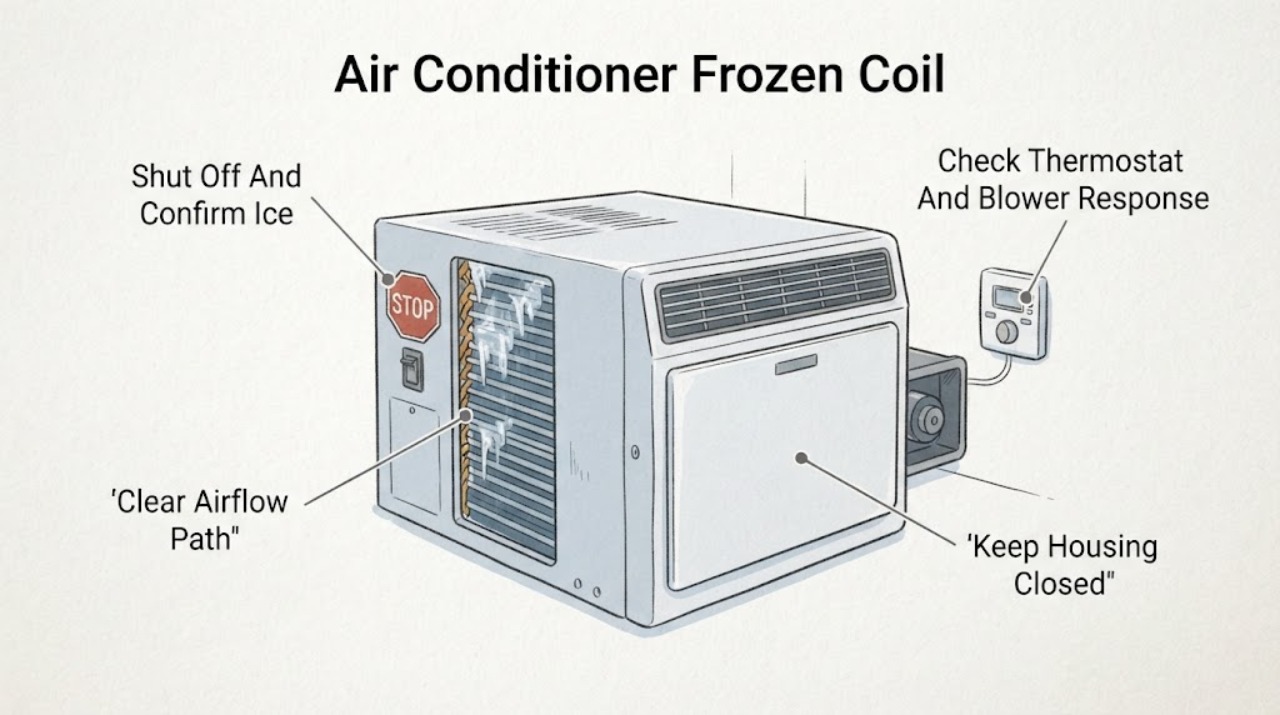
Air Conditioner Frozen Coil: Check Airflow and Blower Motor Safely
If ice is visible on the indoor evaporator coil, refrigerant lines, or nearby tubing, turn the thermostat's cooling mode to Off and leave the compressor off while the coil defrosts. Do not chip the ice, use a heat gun, or keep running cooling against a frozen coil.
-
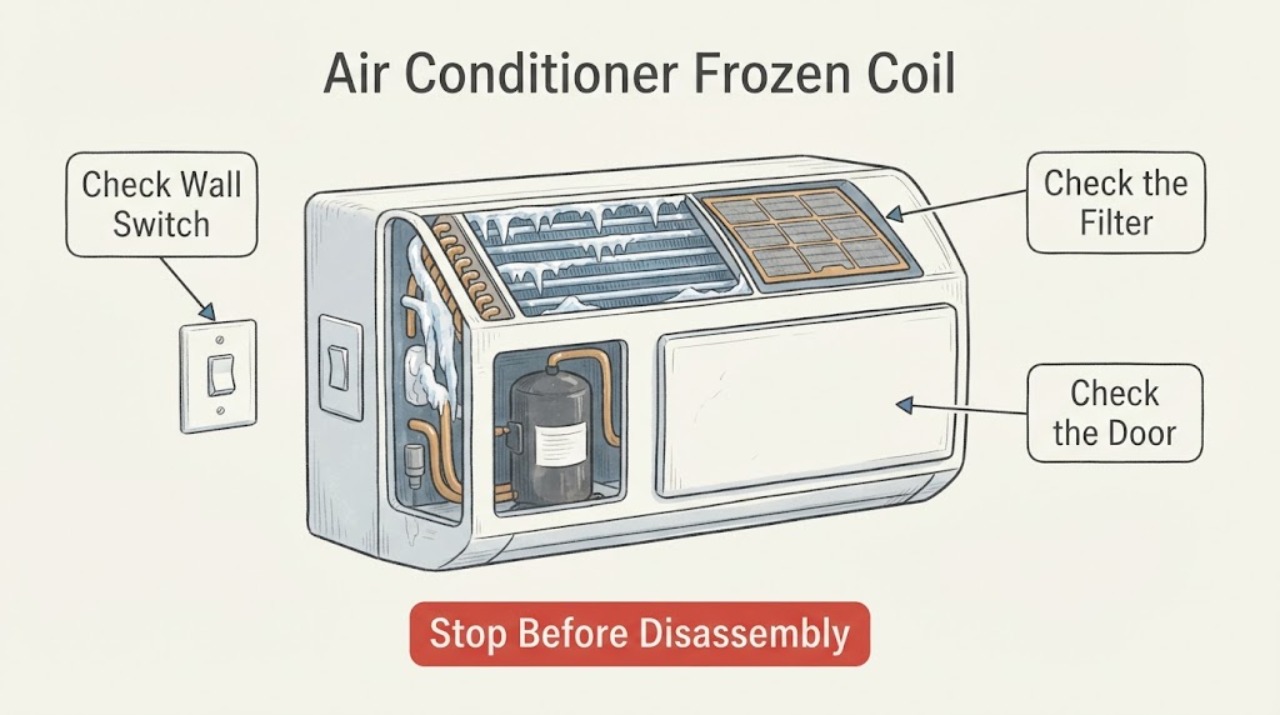
Air Conditioner Frozen Coil: Safe Checks Before Compressor Damage
Turn the thermostat from COOL to OFF as soon as you see ice or frost, and do not keep running the compressor while the coil is frozen. Let the ice thaw naturally, then check only the accessible air filter, supply registers, return grilles, and outdoor-unit clearance.
-
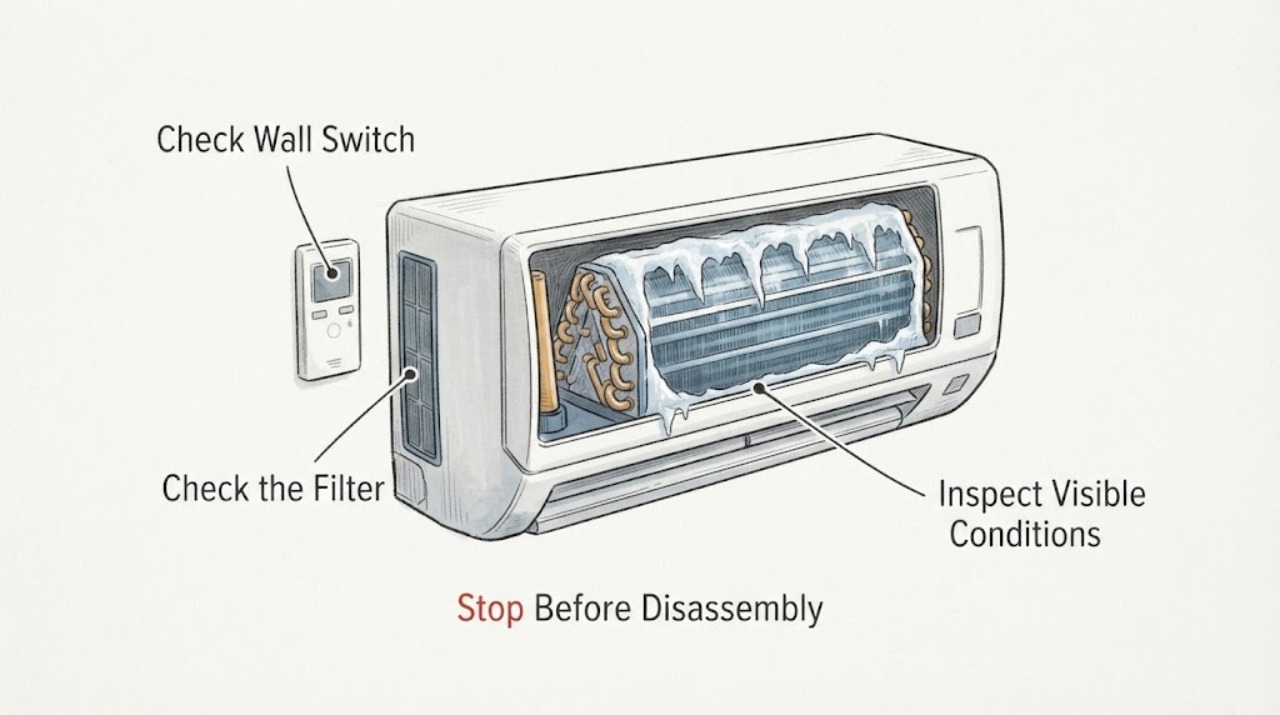
Air Conditioner Frozen Coil: Safely Defrost the Evaporator Coil and Find the Cause
If ice is forming on an air conditioner's evaporator coil or refrigerant line, switch the thermostat from COOL to OFF and let the coil thaw naturally; do not chip at the ice or keep running the compressor against a frozen coil. Once the ice is gone and the equipment is dry, check the return-air filter, make sure supply and return grilles are open, and confirm the indoor blower is moving normal air.
-
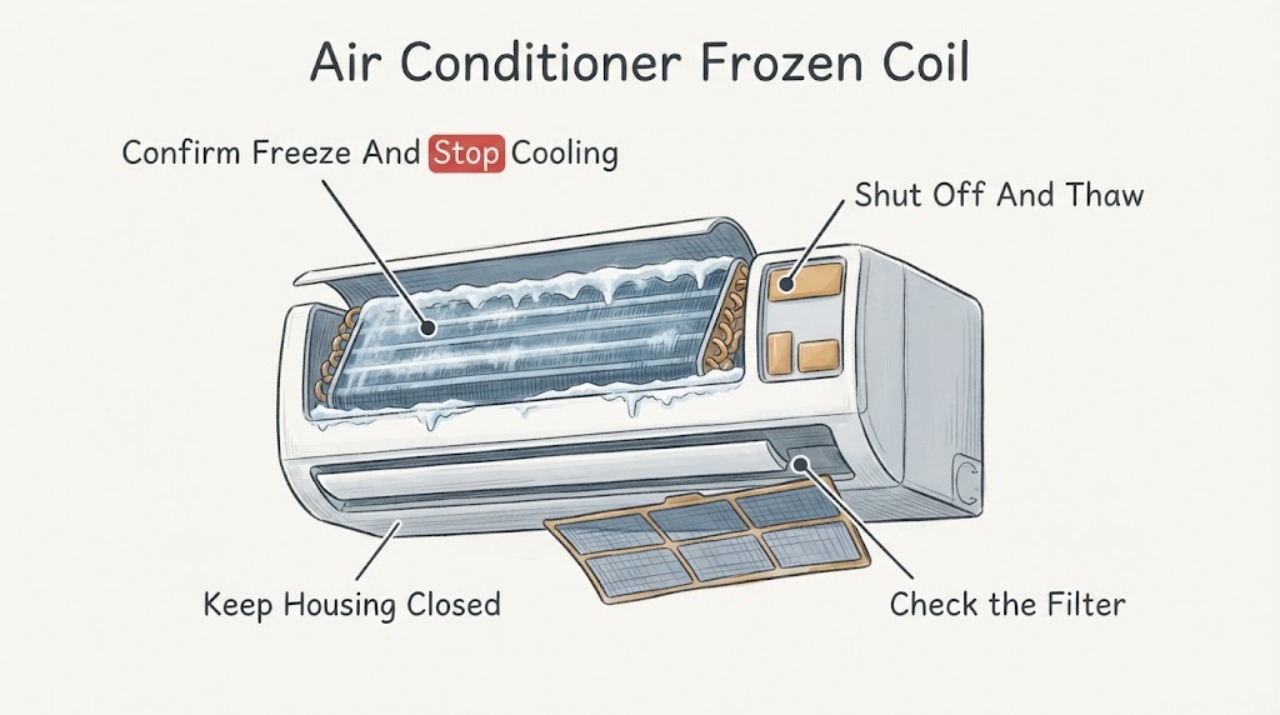
Air Conditioner Frozen Coil
Turn the cooling function off as soon as you see ice on the evaporator coil, copper lines, or indoor unit. Let the coil thaw naturally; do not use a hair dryer, space heater, hot water, or another heat source.
-
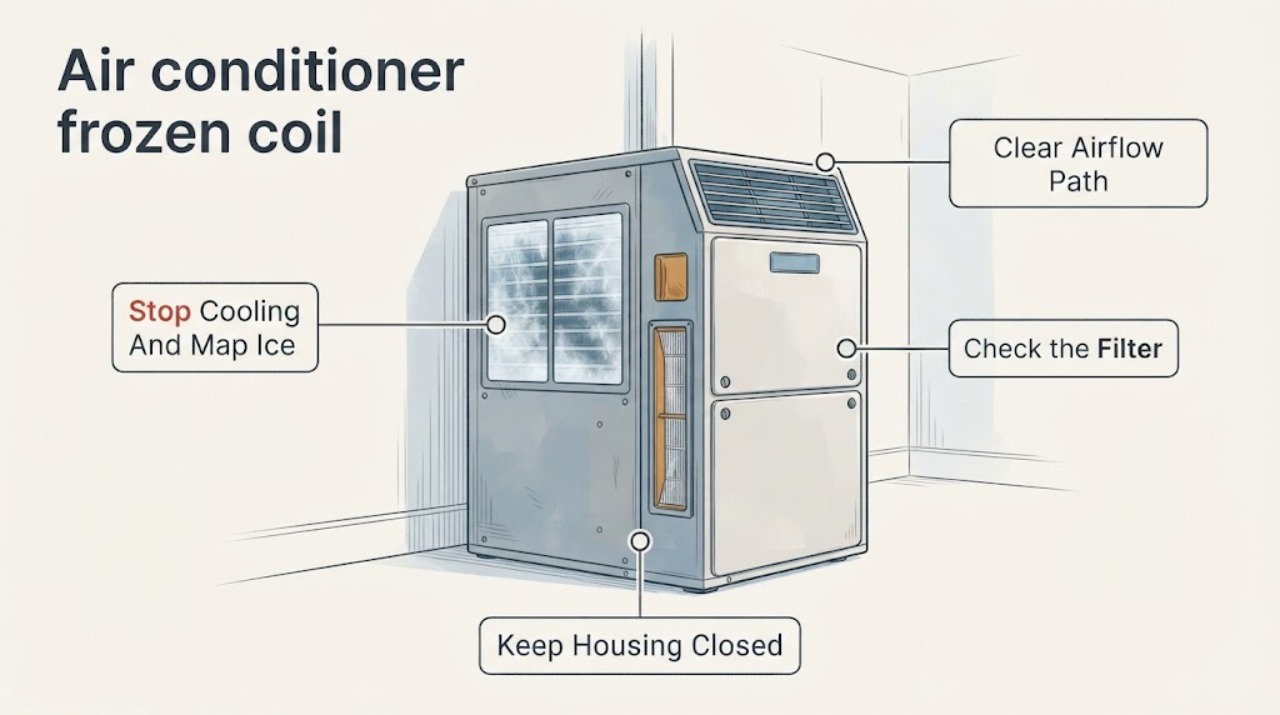
Air conditioner frozen coil: stop cooling, restore airflow, and call HVAC service safely
If an air conditioner has a frozen evaporator coil, switch the thermostat from COOL to OFF and leave cooling off while the ice melts naturally. Do not chip the ice, pour hot water on it, use a flame, open the coil cabinet, or touch electrical or refrigerant parts.
-
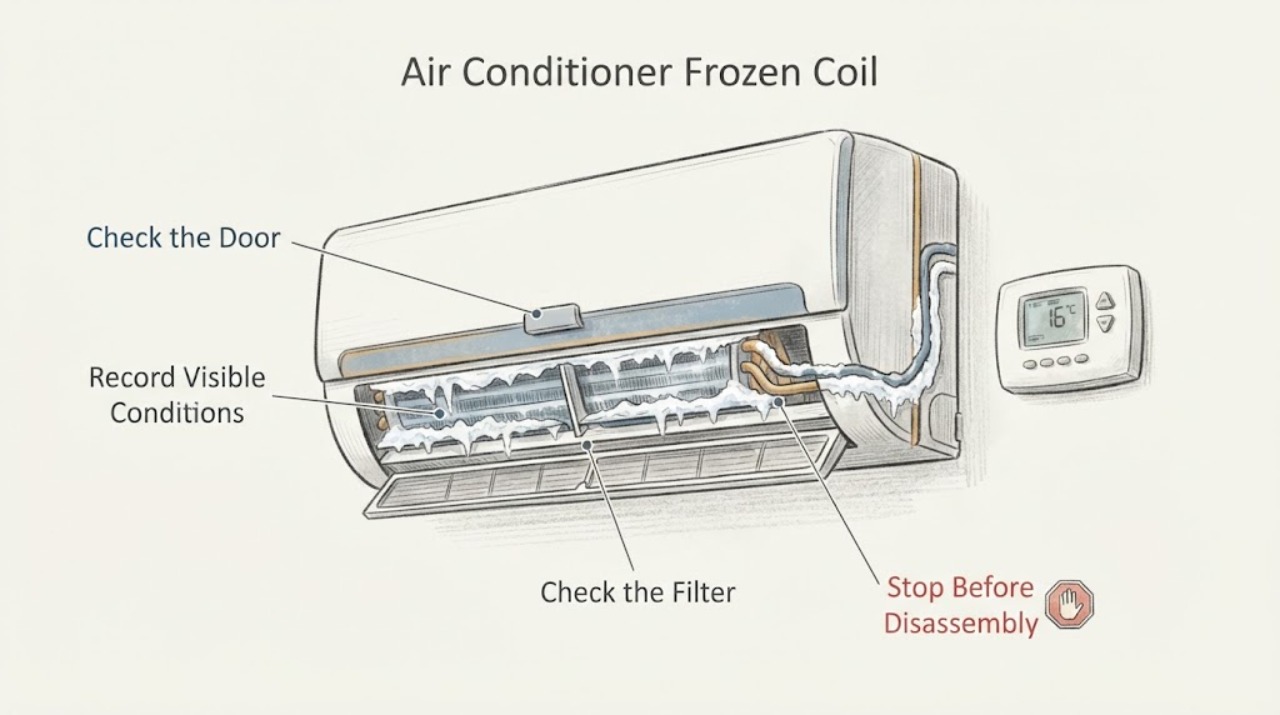
Air Conditioner Frozen Coil: Check the Thermostat Safely
Set the thermostat to OFF so the compressor stops, allow the ice on the evaporator coil to melt naturally, and do not chip it away or use heat. While the system is off, check only the thermostat display and accessible filter, return, supply, and drain areas.
-
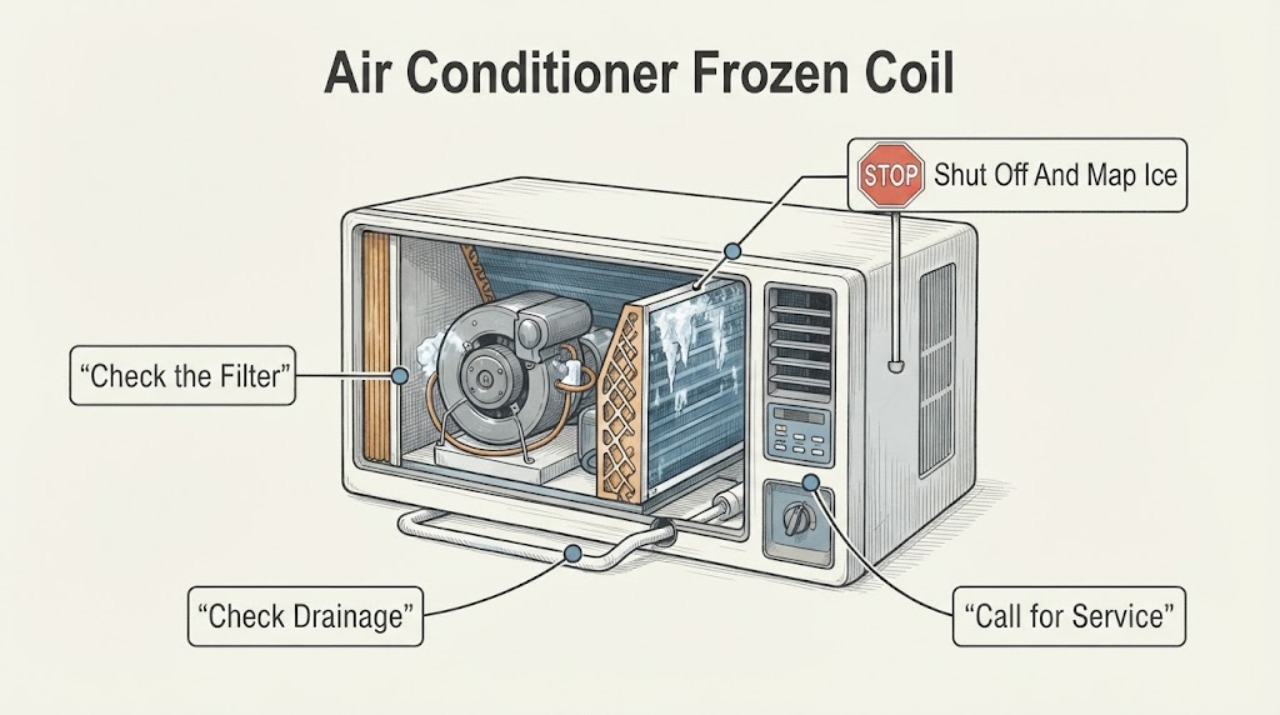
Air Conditioner Frozen Coil: Stop the Cooling Cycle, Restore Airflow, and Find the Cause
If an air conditioner has ice on the evaporator coil or refrigerant line, switch the thermostat from COOL to OFF and do not chip the ice or keep running the system. Trane identifies restricted airflow from a dirty filter, blocked return vents, or a dirty coil as common causes, while low refrigerant, a blower problem, or thermostat trouble can also freeze the coil.
-
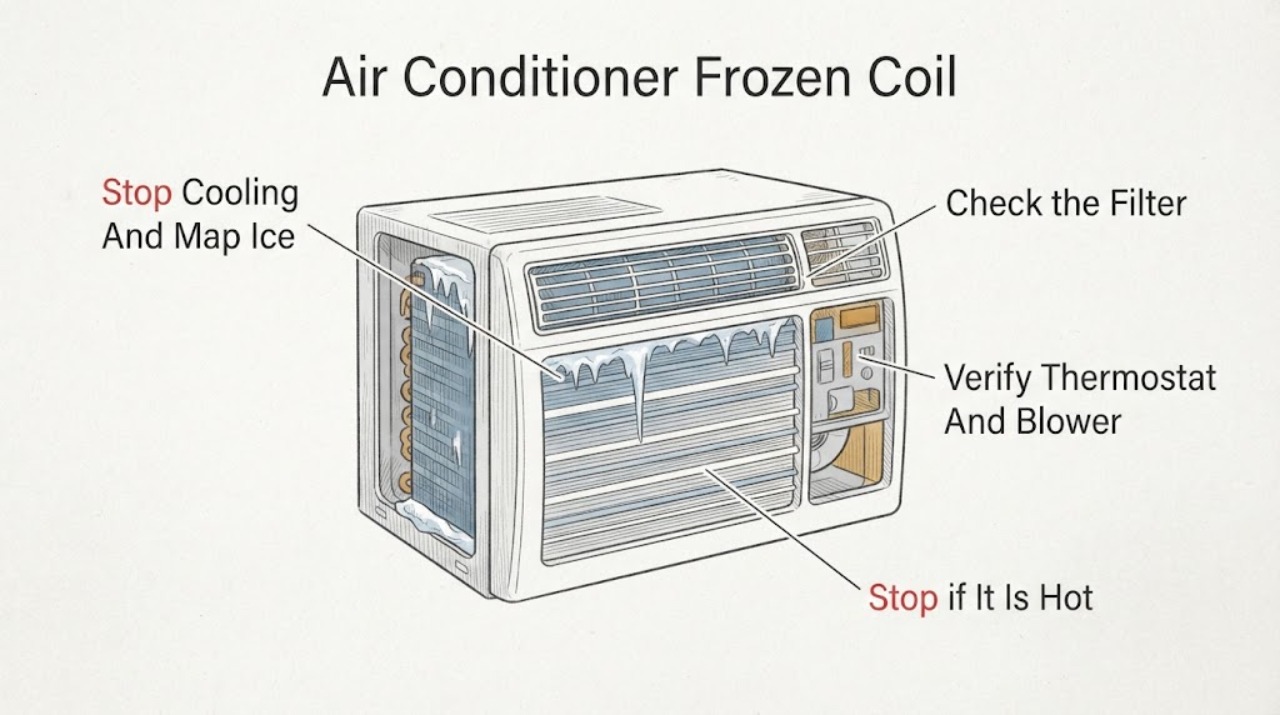
Air Conditioner Frozen Coil: What to Check and What to Do Next
If you see ice on the indoor evaporator coil, the copper refrigerant line, or the air-handler cabinet, stop cooling immediately. Set the thermostat to COOL OFF; if the indoor blower is operating normally and meltwater is not threatening the equipment, FAN ON can help thaw the coil.
-
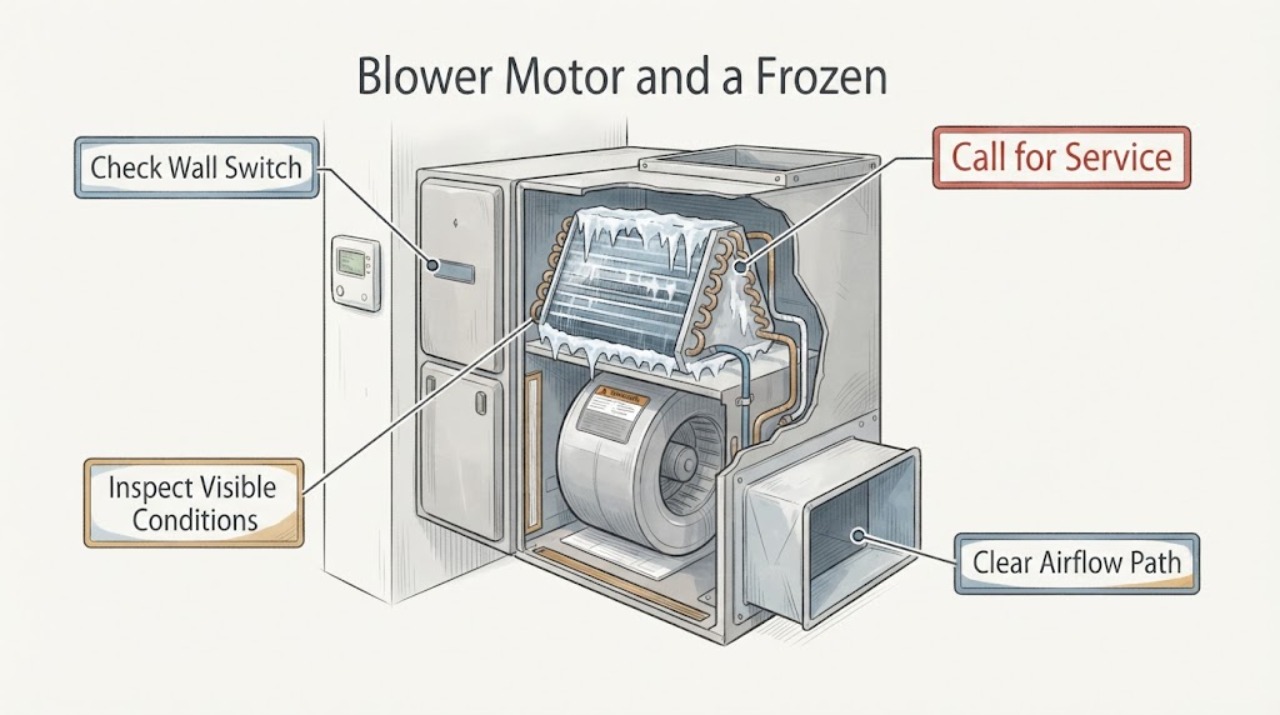
Blower Motor and a Frozen Coil: Safe HVAC Checks
A frozen indoor evaporator coil with weak or absent airflow does not prove that the blower motor alone has failed. Restricted airflow from a dirty filter or blocked return, a malfunctioning blower, a thermostat issue, or low refrigerant can all contribute to freezing.
-
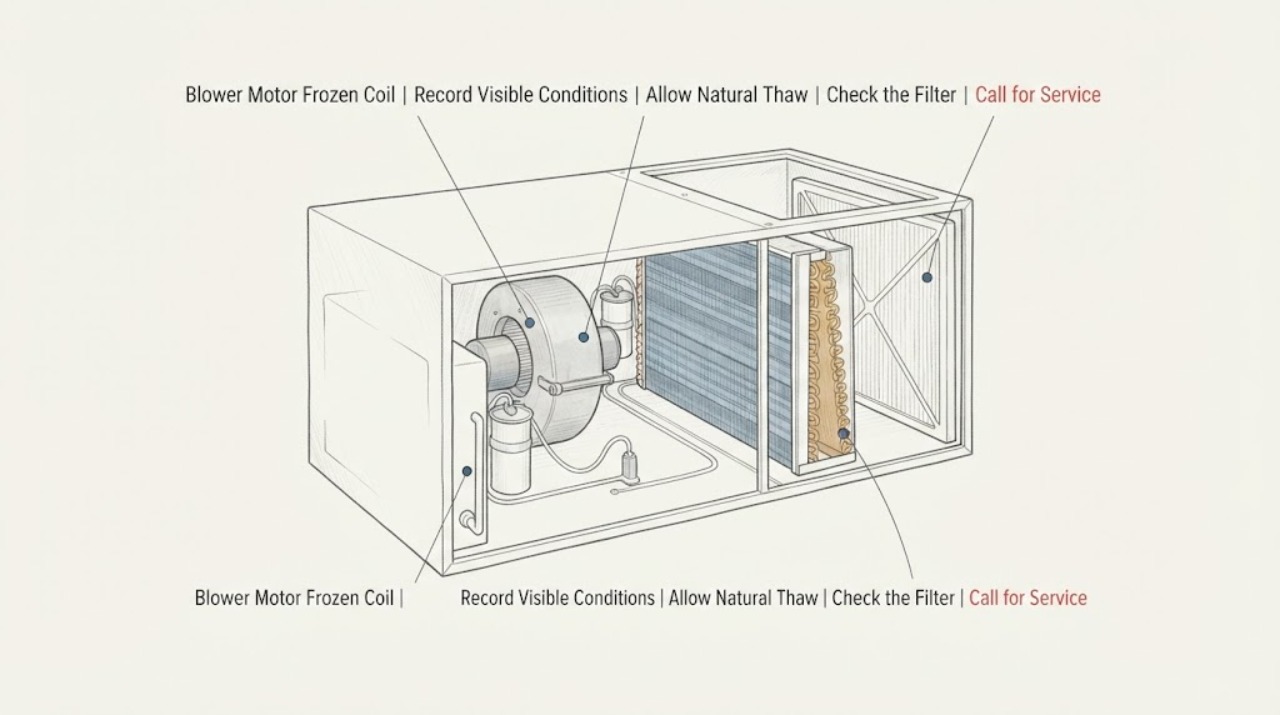
Blower Motor Frozen Coil: Let the Air Handler Thaw Before Diagnosis
A frozen evaporator coil around an air-handler blower is usually a symptom of restricted airflow, a blower or control problem, or a cooling-side condition such as low refrigerant; a dirty filter is only one possible cause. Turn the cooling call off and let the ice thaw naturally, without chipping it or pouring hot water on it.
-
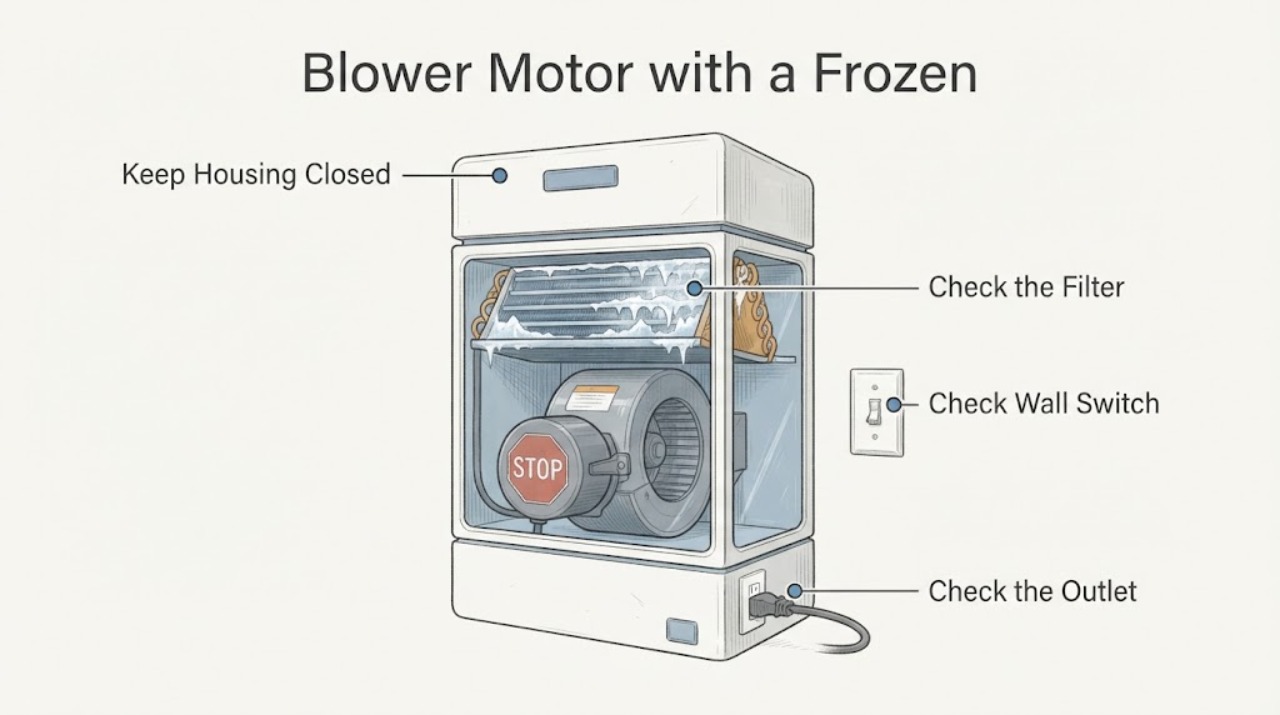
Blower Motor with a Frozen Evaporator Coil: Safe HVAC Checks
A frozen evaporator coil can restrict airflow enough to make a blower motor struggle, overheat, or stop, while a failing blower motor can also reduce airflow and allow the coil to freeze. Turn the cooling function off and let the evaporator coil thaw naturally; do not chip the ice, pour water on it, or keep running cooling through it.
-
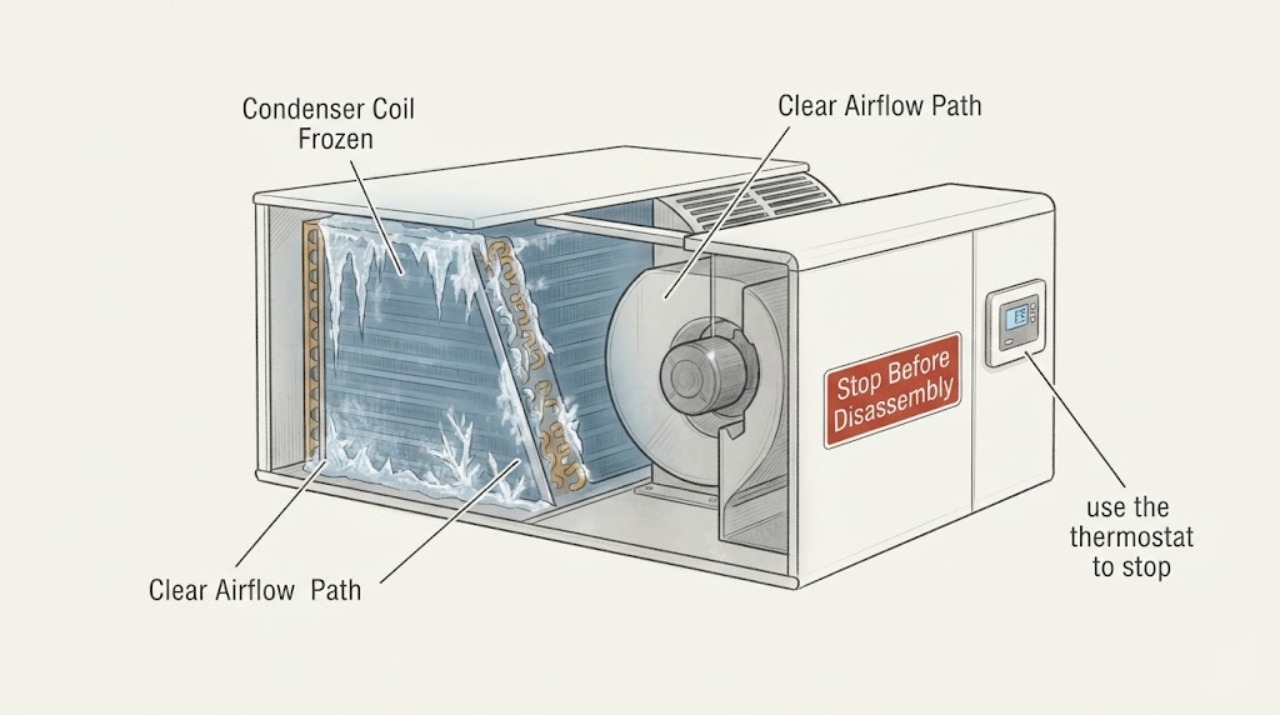
Condenser Coil Frozen: Distinguish Outdoor Ice from a Blower-Motor Airflow Fault
A frozen coil at the outdoor condenser is not automatically a blower-motor failure. In cooling mode, the coil that normally freezes is usually the indoor evaporator; an outdoor condenser coil or refrigerant line icing is more often associated with a heat-pump heating cycle, a system fault, or ice carried over from an evaporator problem.
-
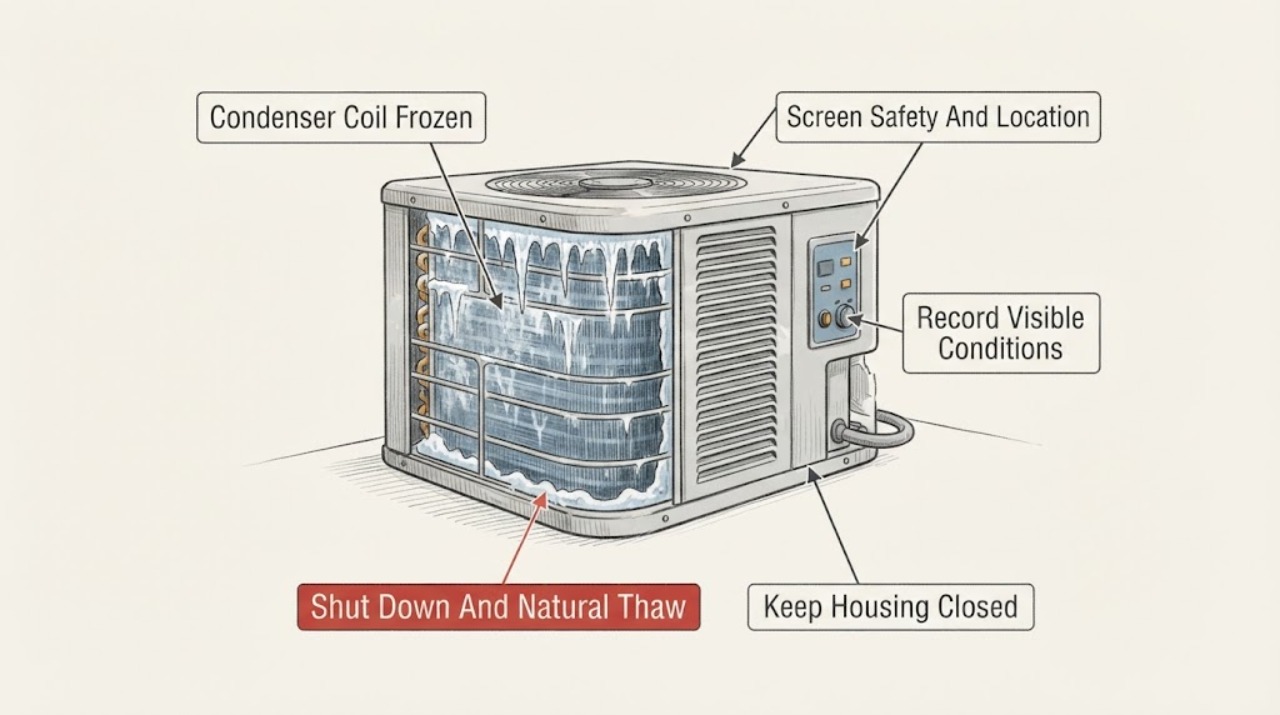
Condenser Coil Frozen: Separate Normal Heat-Pump Frost from a Coil Fault
First confirm which coil is frozen. In a heat pump, the outdoor coil can frost during heating and should periodically defrost; a light, temporary frost can be normal, but thick ice that grows, blocks airflow, or does not clear is not.
-
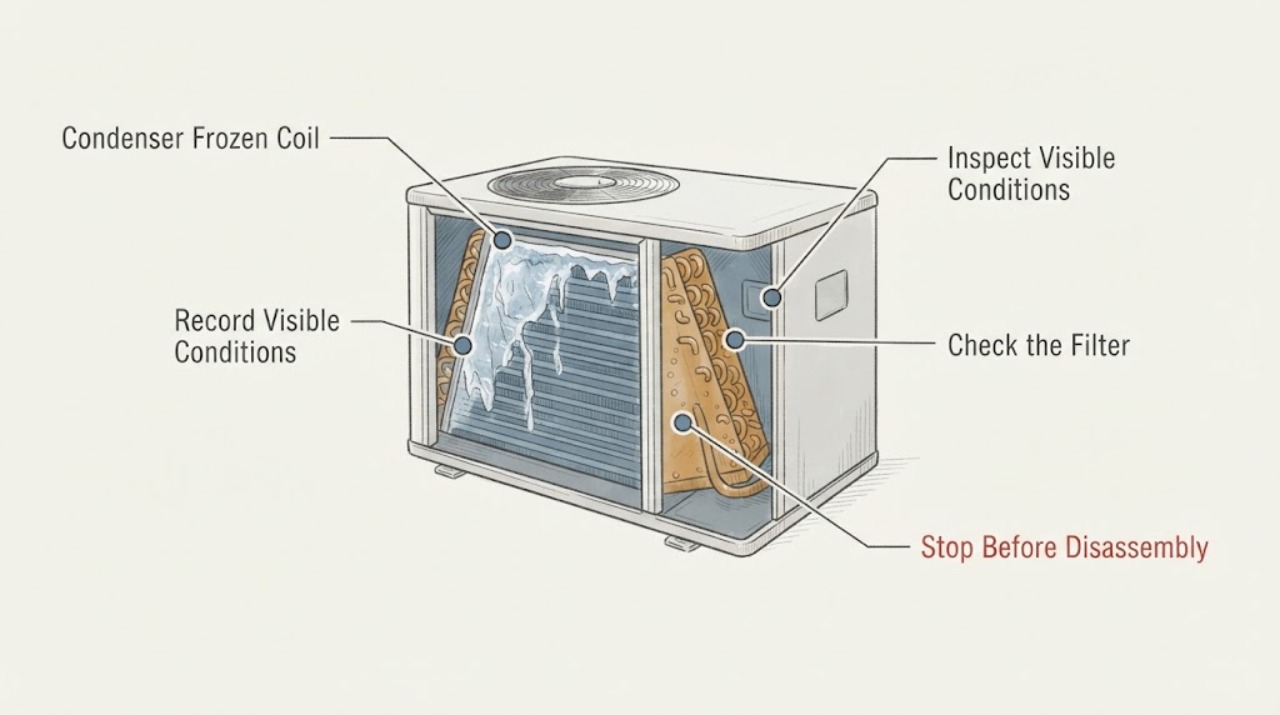
Condenser Frozen Coil: Separate Outdoor Condenser Frost from Indoor Evaporator Ice
A frozen coil is usually an indoor evaporator-coil or connected refrigerant-line problem, not proof that the outdoor condenser coil itself is frozen. From a safe position, switch cooling off, note whether ice is on the indoor cabinet or copper line and whether the outdoor condenser fan is running, and check only an accessible air filter, open registers, and visible water.
-
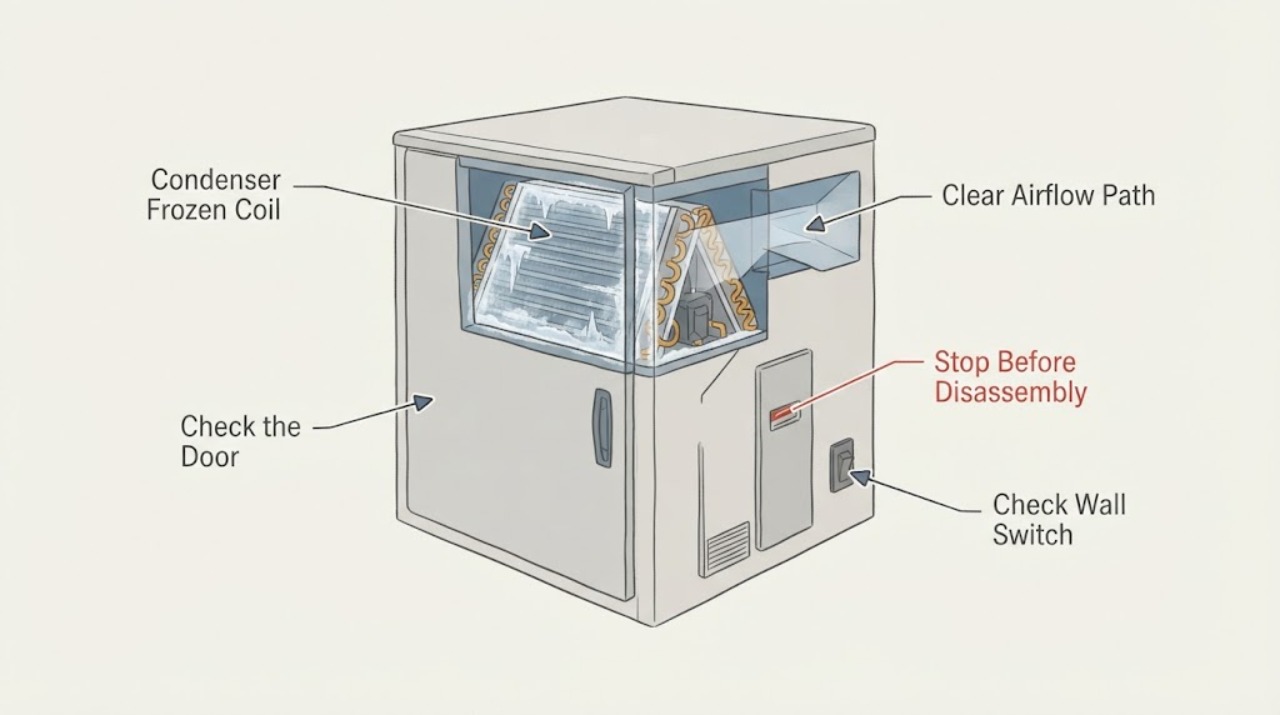
Condenser Frozen Coil: Distinguish the Outdoor Unit from the Evaporator
A coil that appears frozen near the outdoor condenser is often the indoor evaporator coil or the refrigerant line connected to it, not the outdoor condenser coil itself. Turn cooling off at the thermostat and let visible ice thaw naturally; do not chip it, pour hot water on it, or keep running the compressor against the ice.
-
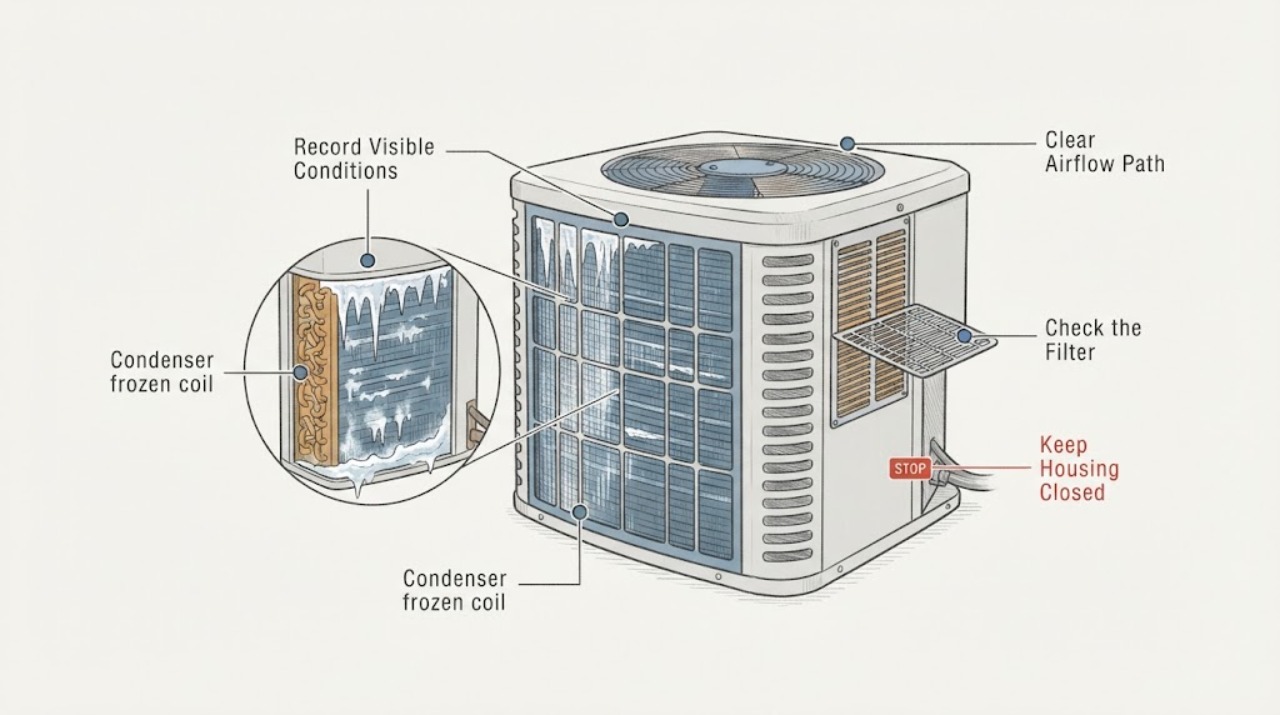
Condenser frozen coil: check the filter and identify the iced coil safely
Turn cooling off at the thermostat and let any ice melt naturally; do not chip it, pour hot water on it, or keep running the system with a frozen coil. First establish which coil is actually iced: the condenser is normally the outdoor heat-rejecting coil, while the evaporator is normally the indoor cold coil and is the one commonly associated with frost in cooling mode.
-
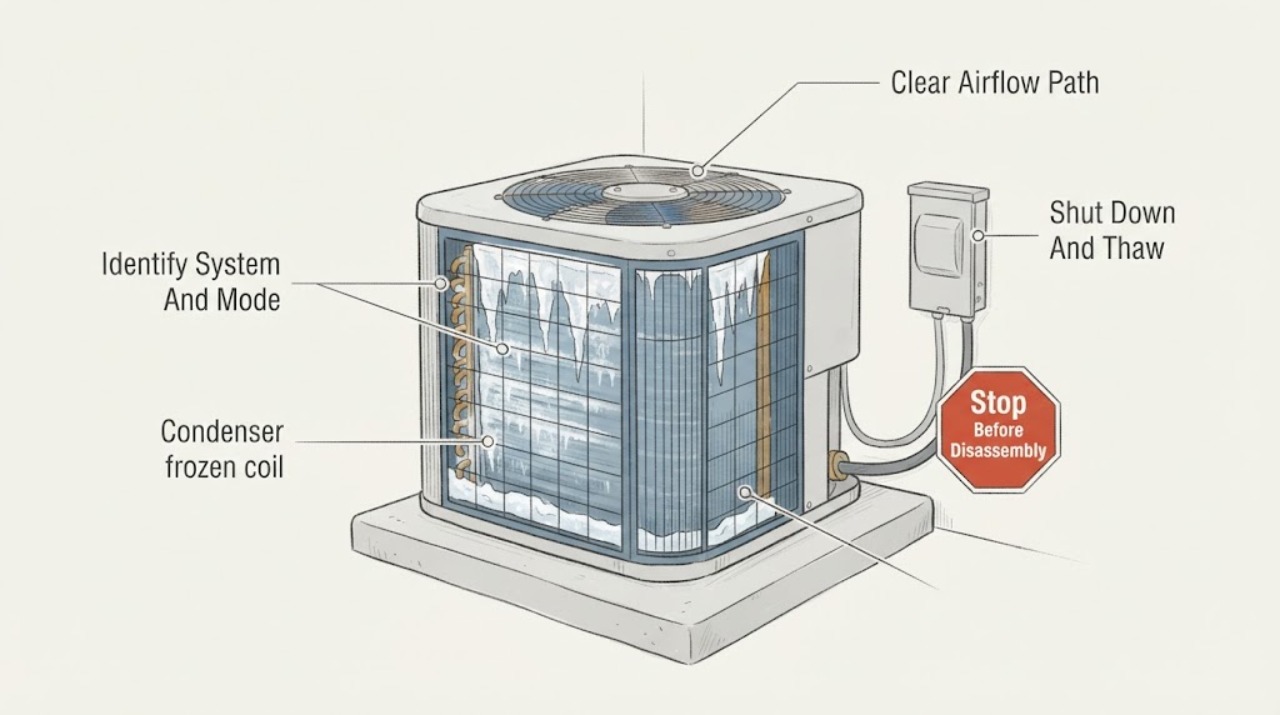
Condenser frozen coil: first confirm whether it is an outdoor heat-pump coil or an indoor evaporator
“Condenser frozen coil” can describe two different situations: in a standard split air conditioner, the frozen coil is usually the indoor evaporator, while the outdoor condenser releases heat; in a heat pump running in heating mode, light frost on the outdoor coil can be normal during an automatic defrost cycle.
-
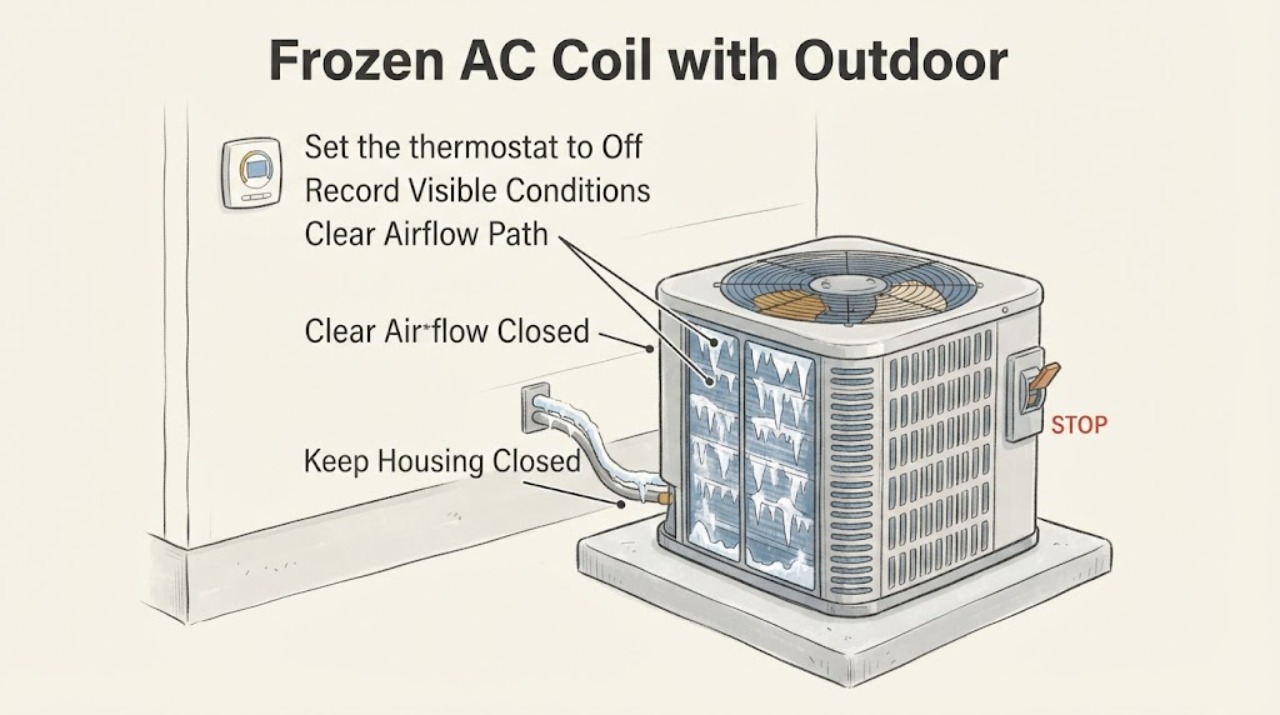
Frozen AC Coil with Outdoor Fan Not Running: Triage Guide
Turn the thermostat out of cooling mode immediately and leave the AC off while the ice melts naturally. A frozen evaporator coil together with an outdoor fan motor that is not running can damage the compressor if cooling continues.
-
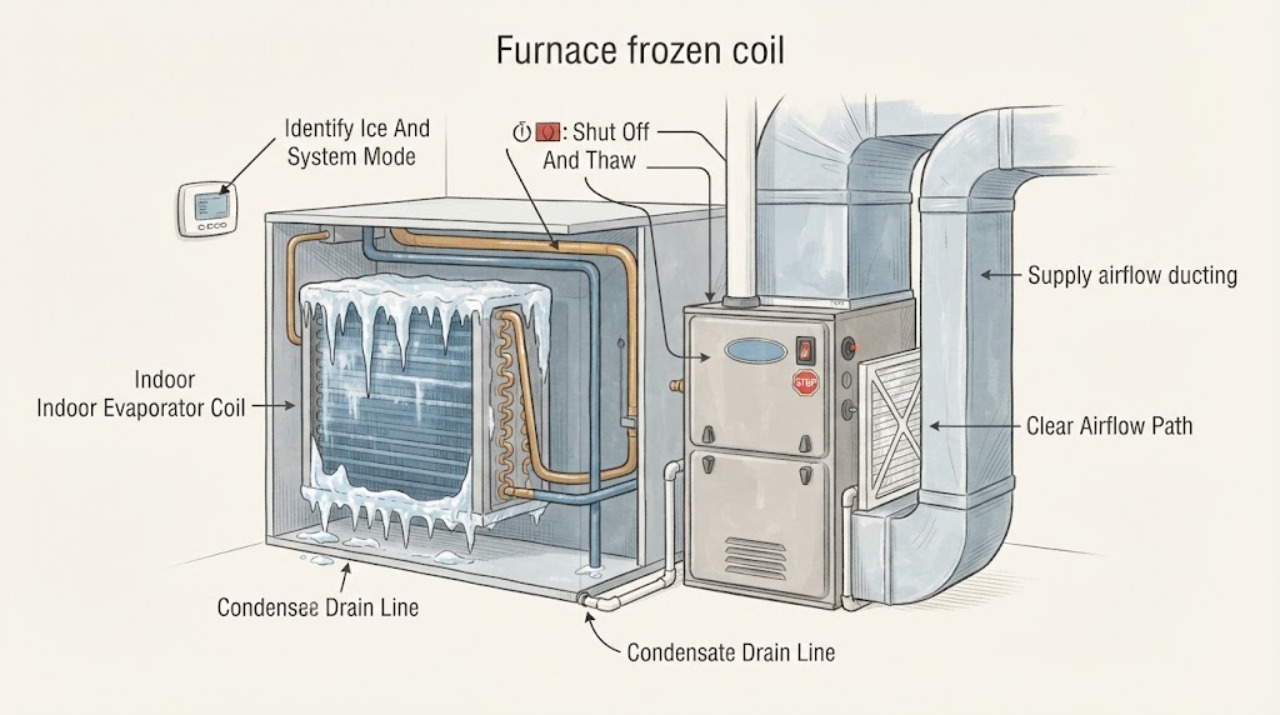
Furnace frozen coil: safe checks before HVAC service
In a furnace-and-central-AC system, the frozen coil is usually the indoor evaporator coil mounted in or beside the furnace airflow path, not the furnace heat exchanger. If you see ice on the indoor coil or refrigerant line, or the system blows warm air while cooling runs, turn cooling off at the thermostat and do not keep operating the system frozen.
-
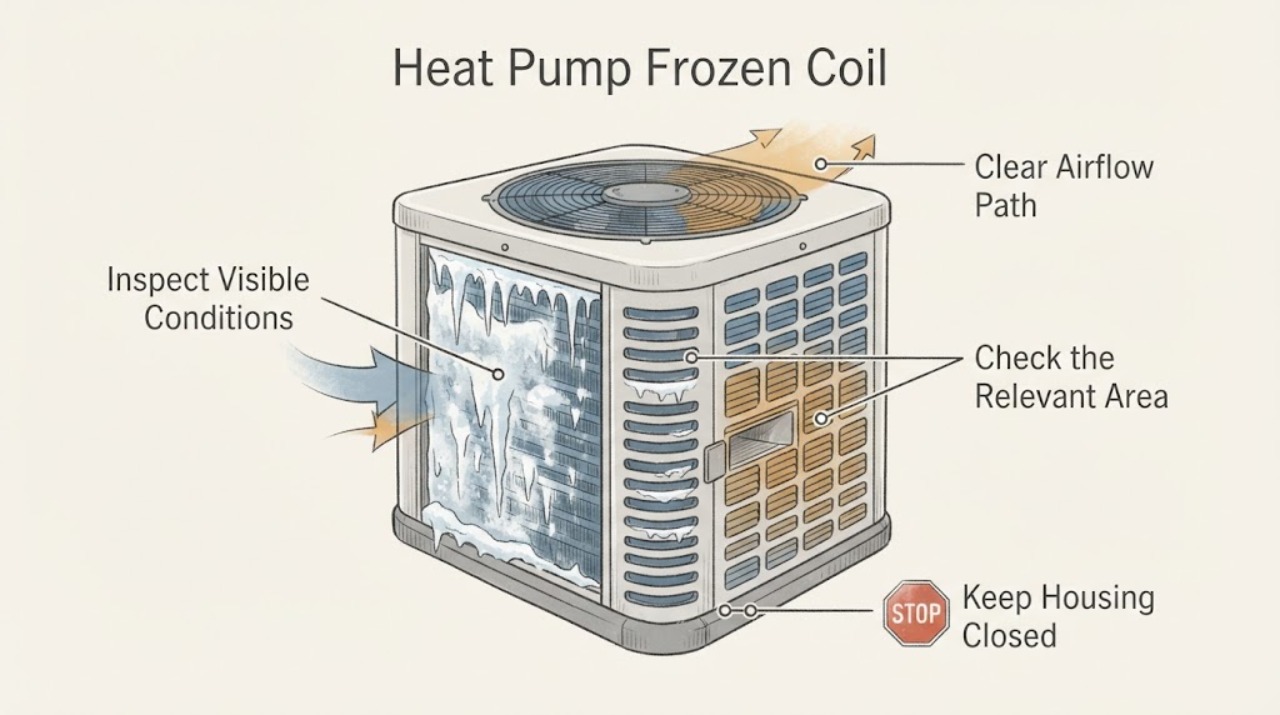
Heat Pump Frozen Coil: Tell Normal Frost From a Defrost or Airflow Fault
A thin layer of frost on a heat pump's outdoor coil during heating can be normal because the unit periodically enters a defrost cycle. A thick coating of ice that keeps growing, does not clear after the normal defrost period, or returns quickly is not a condition to chip away or heat with hot water.
-
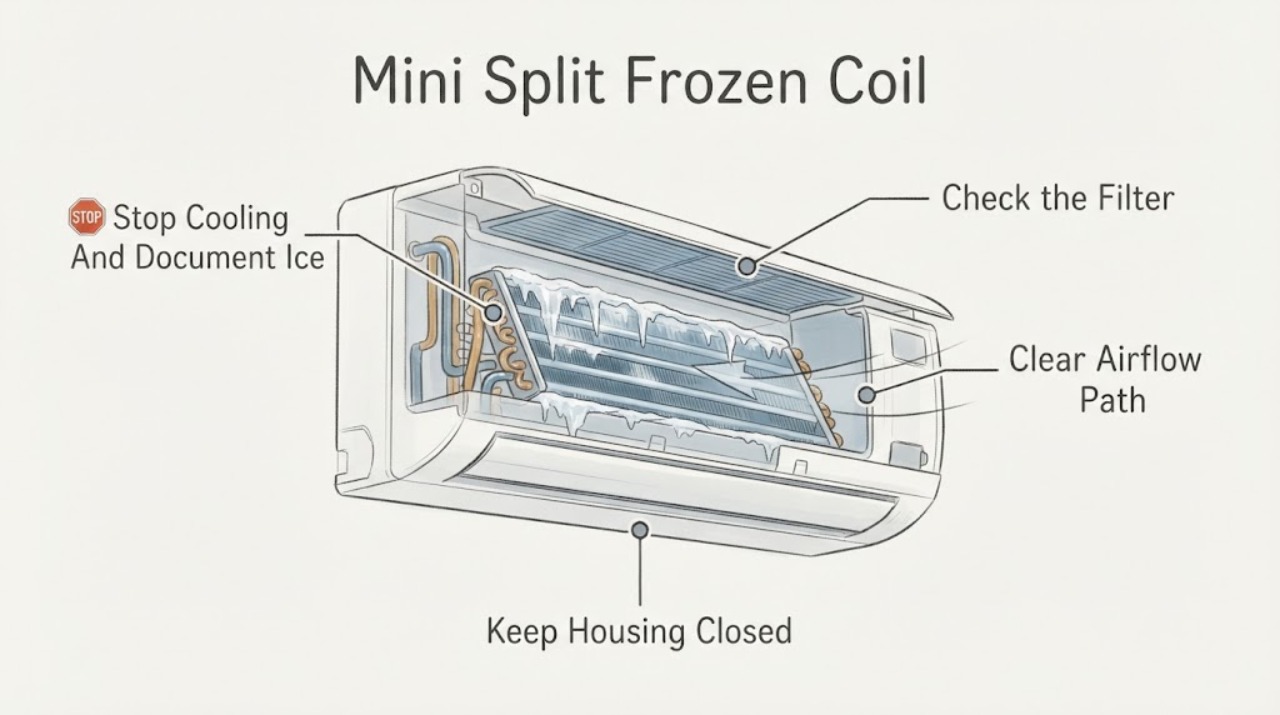
Mini Split Frozen Coil: Safe Checks Before HVAC Service
If a mini split has frost or ice on the indoor coil or refrigerant tubing, turn off cooling and let the ice melt without chipping it or continuing to run the system in cooling. Once it is fully thawed and there is no water or electrical hazard, check the accessible filter, visible airflow obstructions, and operating mode according to the unit manual.
-
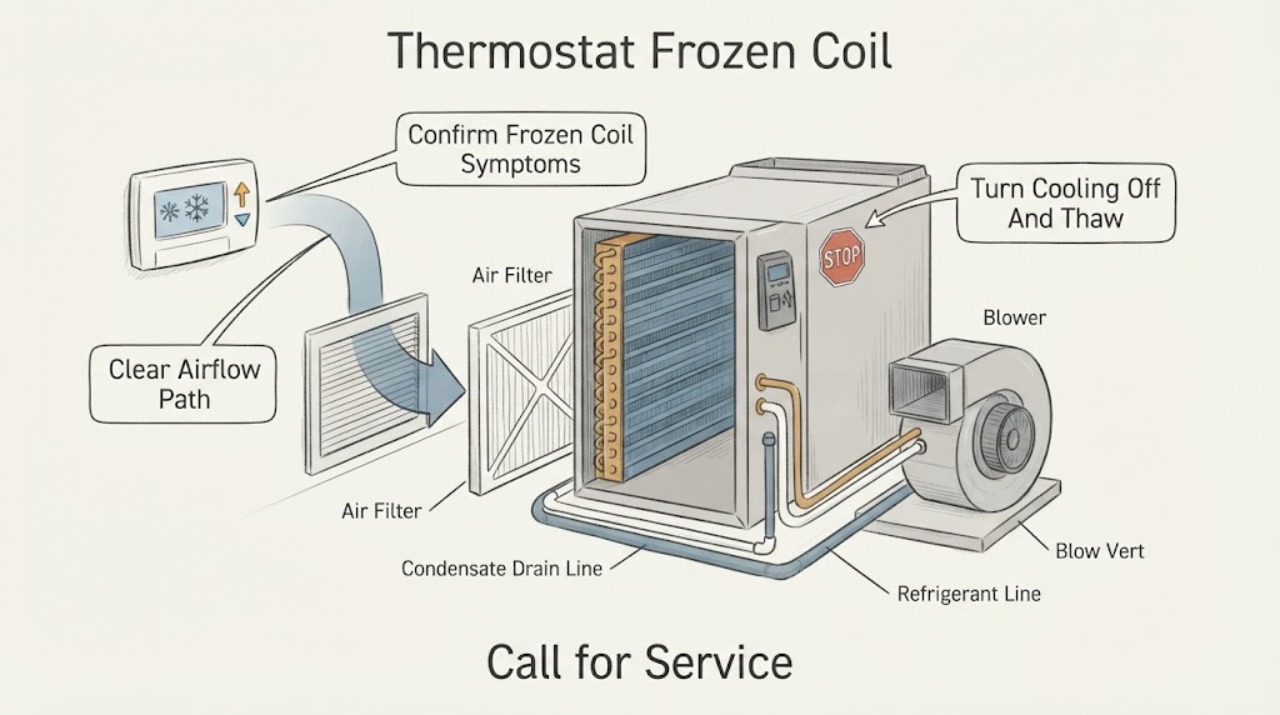
Thermostat Frozen Coil: Turn Cooling Off and Check Airflow Safely
A thermostat does not freeze; the part usually meant by “thermostat frozen coil” is the indoor air conditioner's evaporator coil or refrigerant line. If you see ice, turn the thermostat from COOL to OFF and let the ice thaw naturally.