
On this page
Start here
Quick answer
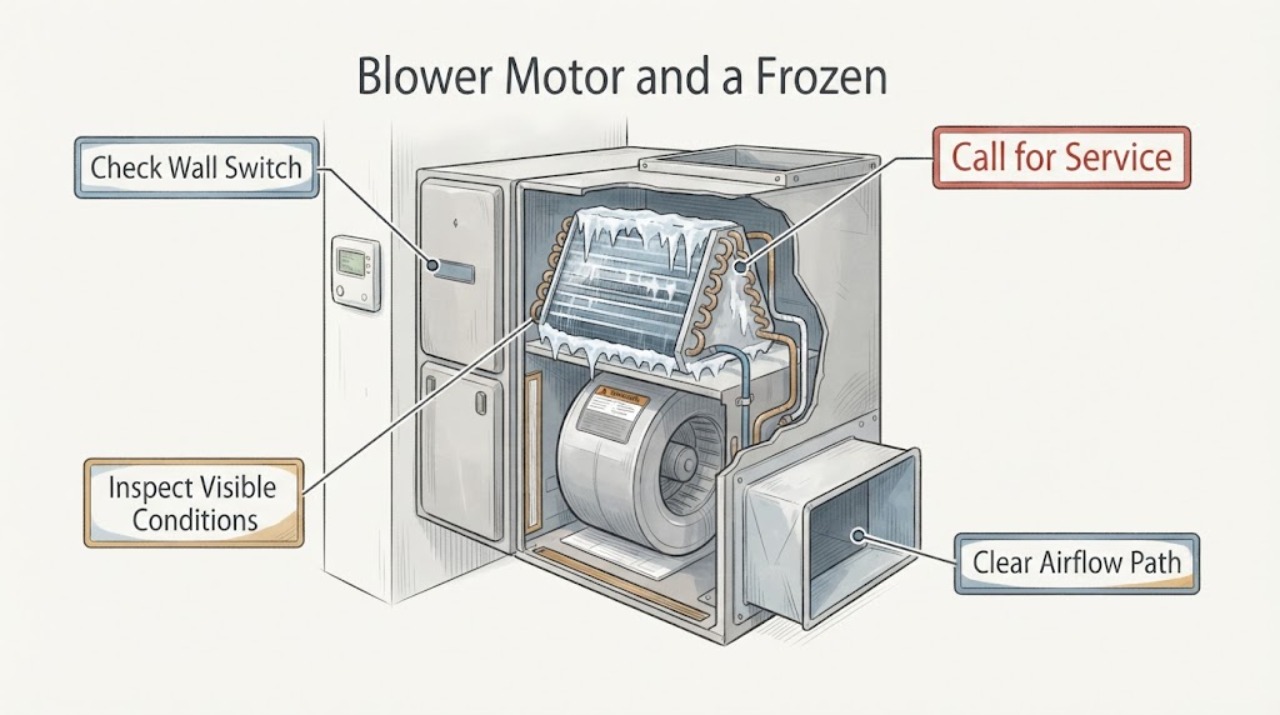
A frozen indoor evaporator coil with weak or absent airflow does not prove that the blower motor alone has failed. Restricted airflow from a dirty filter or blocked return, a malfunctioning blower, a thermostat issue, or low refrigerant can all contribute to freezing. Switch the cooling system off at the thermostat and let the ice thaw; do not chip it, apply heat, open the air handler, test a capacitor, measure electrical values, or handle refrigerant. If the filter is safely accessible, inspect or replace it according to the equipment manual and make sure visible return and supply openings are not blocked. Persistent ice, no blower airflow after thawing, water near electrical equipment, or any need to open the cabinet requires a qualified HVAC technician.
Work through in order
Diagnostic checks
Use only checks that match the exact appliance or system and its official guide.
-
Check 1
At the thermostat, switch the cooling system to OFF and note the symptoms without opening the air handler: weak or absent air at the registers, visible ice on an indoor coil cabinet or refrigerant line, a condensate puddle, or an indoor blower that does not seem to run when the system previously called for cooling.
Expected result: Ice is visible, airflow is weak or absent, water appears below the indoor unit, or the blower symptom is present without a visible ice pattern.
Next step: Leave cooling OFF and allow the coil to thaw naturally. Keep people away from water near electrical equipment and arrange HVAC service if the source is unclear, the blower is not operating, or the indoor unit is inaccessible.
Why this matters
Why: Ice plus low airflow supports a frozen-coil condition, but does not separate a filter restriction, blower fault, low refrigerant, thermostat issue, or another airflow problem. Meltwater can overflow or damage nearby materials. A no-blower symptom without ice still needs a separate motor, control, power, or safety diagnosis.
-
Check 2
With the system off and the cabinet closed, inspect the return grille and any filter that the owner manual identifies as user-accessible. Look for a visibly loaded filter, a blocked return, or furniture and coverings obstructing a supply register; do not remove an air-handler panel or reach toward the coil or blower.
Expected result: The filter is visibly dirty, a return or supply opening is blocked, or the accessible airflow path looks clear.
Next step: Correct only the safe, accessible airflow restriction while cooling remains OFF and let the ice thaw fully. If the filter is not safely accessible, the coil is dirty, or freezing returns, stop and call a qualified HVAC technician.
Why this matters
Why: A loaded filter or blocked return can reduce warm air crossing the evaporator coil and contribute to freezing. Clear visible room-level obstructions or replace a user-accessible filter with the type and size specified by the manual. A clear filter and registers do not rule out a dirty internal coil, failed blower, duct problem, or low refrigerant.
-
Check 3
After the ice has completely thawed and the area is dry, use the thermostat or equipment controls only as directed by the owner manual to note whether the indoor blower produces normal airflow; do not remove a panel, touch a motor or capacitor, or use a meter. Stop immediately if water remains near electrical parts or the equipment makes an abnormal sound.
Expected result: Airflow returns normally, remains weak or absent, the blower hums or stops, or the coil begins icing again when cooling is used.
Next step: If airflow is weak, the blower hums, or ice returns, turn cooling OFF again and schedule qualified HVAC diagnosis. Do not bypass a safety control, keep cycling the system, or attempt capacitor, motor, coil, or refrigerant work.
Why this matters
Why: Normal airflow after a clean filter and full thaw lowers the likelihood of a currently failed blower but does not prove the refrigeration circuit is healthy. Weak or absent airflow keeps the blower, control, duct, or airflow path in focus. Refreezing after airflow is restored points toward a persistent restriction, low refrigerant, thermostat, or other HVAC fault.
-
Check 4
From outside the closed cabinet, inspect the floor and visible drain area after thawing for ongoing water, a full or overflowing pan, wet insulation, or a blocked-looking condensate outlet. Do not open the pan, push a tool into a drain, lift the air handler, or handle wet electrical components.
Expected result: Meltwater drains normally, water remains or returns below the unit, or water is near wiring, controls, or an electrical disconnect.
Next step: Keep cooling OFF if water persists or returns and arrange HVAC service for the condensate path and coil. If water contacts electrical equipment, stay clear and obtain professional help for safe isolation; do not restart the system to test drainage.
Why this matters
Why: Some water is expected as ice melts, but continued pooling can indicate a condensate drain or pan problem, while water near electrical equipment adds a shock and equipment-damage hazard. A dry floor does not rule out a frozen coil or hidden drain issue.
-
Check 5
Record what changed before the freeze-up: a new or overdue filter, blocked return, reduced airflow, recent service, unusual outdoor conditions, or repeated icing after previous thawing. Include the thermostat state, airflow pattern, ice location, water location, and whether the blower ever ran; do not record or adjust refrigerant pressures or electrical readings.
Expected result: Freezing follows a dirty filter or blocked return, returns despite clear airflow, follows a blower that does not run, or has no clear trigger.
Next step: Keep the system off if freezing recurs or the blower is unreliable and provide the record to a qualified HVAC technician. Refrigerant, motor, capacitor, wiring, controls, and concealed coil work require professional tools and procedures.
Why this matters
Why: A clear airflow restriction gives the technician a useful first branch, but repeated icing with restored airflow raises concern for low refrigerant, a leak, dirty internal coil, thermostat, blower, or another component. A missing trigger is not evidence that the coil or motor is safe to test casually.
Use your observations
Decision map
Find the observation that best matches what you see, then follow the next safe action.
-
PATH 01Next step
What you see
The coil is frozen and a filter or room-level return obstruction is visibly restricting airflow
Do this next
Leave cooling OFF, correct only the accessible filter or obstruction specified by the manual, and allow the ice to thaw naturally. Call an HVAC technician if the coil refreezes or the filter and vents were already clear.
-
PATH 02Next step
What you see
The coil remains frozen, refreezes after airflow is restored, or no safe external airflow cause is found
Do this next
Keep the cooling system OFF and schedule qualified HVAC diagnosis for the coil, blower, thermostat, airflow, and refrigerant circuit. Do not chip ice, open the cabinet, or add refrigerant yourself.
-
PATH 03Next step
What you see
The ice has thawed but the indoor blower produces weak or no airflow, hums, or stops
Do this next
Turn cooling OFF and arrange professional diagnosis of the blower motor, controls, capacitor, duct path, and related safety devices. Do not touch the motor or capacitor or perform an electrical test.
-
PATH 04Next step
What you see
Meltwater remains, the drain pan overflows, or water reaches electrical equipment
Do this next
Keep the HVAC system off. Stay clear of wet electrical parts and arrange qualified HVAC or electrical help for safe isolation and condensate diagnosis; do not restart the equipment to watch the leak.
-
PATH 05Next step
What you see
There is smoke, a burning odor, arcing, a hot enclosure, exposed wiring, or another immediate electrical or fire hazard
Do this next
Leave the area, keep people away, and contact emergency responders for immediate danger. Do not approach the air handler, restore power, or open any panel; arrange qualified HVAC and electrical service after the area is safe.
Helpful context
Understand the symptom
Why the frozen coil and blower symptoms overlap
The indoor blower moves air across the evaporator coil. If airflow is restricted or the blower is not operating, the coil can become too cold and ice over; the ice then restricts airflow even further. Low refrigerant or a thermostat and control issue can create a similar pattern. A frozen coil is therefore a condition to stop and thaw, not a reliable identification of a failed motor.
Use a thaw-and-observe boundary
Turn cooling off at the thermostat and protect the area from meltwater with a pan or towels only where it is safe to do so. Keep the air handler closed and do not scrape ice, use a heat gun or hair dryer, reach toward the blower, or remove an access panel. A filter and visible vent check is reasonable only when those parts are designed to be reached without cabinet disassembly; electrical, motor, capacitor, coil, condensate, and refrigerant work belongs to a technician.
Only after diagnosis
Potential parts
- HVAC air filter
Consider this only if the user-accessible filter is visibly loaded and the equipment manual identifies filter replacement as routine maintenance rather than a cabinet repair.
Confirm the exact filter type and size from the equipment manual or existing filter label; do not use a filter change to justify restarting a system that is still frozen. - indoor blower motor assembly
Consider this only after a qualified HVAC technician confirms that the motor or its approved assembly is the failed cause of weak or absent airflow after the coil has thawed.
Confirm the air-handler model, motor type, control method, wheel, mounting, and electrical requirements through the technician and manufacturer information; do not select or install a motor from symptoms alone.
When checks do not resolve it
Need a professional?
Use professional HVAC service for persistent or recurring ice, no blower airflow, a motor or capacitor symptom, internal coil or drain access, low-refrigerant suspicion, water near electrical parts, or any electrical and refrigeration testing.
Common questions
FAQ
Does a frozen coil prove the blower motor is bad?
No. A frozen evaporator coil can follow restricted airflow from a dirty filter or blocked return, a blower problem, thermostat behavior, or low refrigerant. Turn cooling off, let the ice thaw, and use only the safe filter and visible vent checks before calling an HVAC technician for recurring ice or low airflow.
What should I do when I see ice on the indoor coil?
Switch the thermostat out of cooling and allow the ice to thaw naturally. Do not chip it or apply a hair dryer, heater, or other heat source. Check only a safely accessible filter and visible room-level airflow obstruction; persistent icing needs professional diagnosis.
Can I test the blower motor or capacitor myself?
No. Do not open the air handler, touch the motor or capacitor, measure electrical values, or bypass a safety control. After a full thaw, document whether airflow returns and give that observation to a qualified HVAC technician.
Why is water dripping after the coil freezes?
Ice can melt into the condensate pan as the coil thaws. Some meltwater may be expected, but ongoing pooling, a full or overflowing pan, or water near electrical equipment needs the system kept off and professional HVAC service; do not restart it to watch the leak.
Read the exact guide
Official sources
- Coils Troubleshooting GuideTrane · The opened Trane coil guidance connects dirty or restricted coils and low refrigerant with freezing and directs visible ice or frost to professional service.
- Why Is My Air Handler Freezing Up?Trane · The opened Trane guidance explains the visible frozen-coil and water signs, recommends switching cooling off, prohibits chipping ice, and separates filter, airflow, blower, thermostat, and refrigerant causes.
- AC Fan Not Working? Reasons Why It Stopped SpinningTrane · The opened Trane fan guidance distinguishes indoor blower and outdoor condenser symptoms, lists frozen evaporator coil and low refrigerant as causes, and directs capacitor and motor diagnosis to professional help.
- Why Is My AC Unit Freezing Up?Lennox · The opened Lennox guidance supports distinguishing airflow restrictions and low refrigerant, checking accessible filters and vents, shutting the system off, and escalating persistent icing to a certified HVAC technician.
Community feedback
Share a repair observation
Share a plain-text repair observation. Accepted observations are published automatically; this page may take a moment to update.