
HVAC components
HVAC Blower Motors Guides
Guidance for blower starting, speed, noise, airflow, wheels, and related controls.
Published blower motors guides
Use the equipment name and symptom in each title to choose the most relevant guide.
-
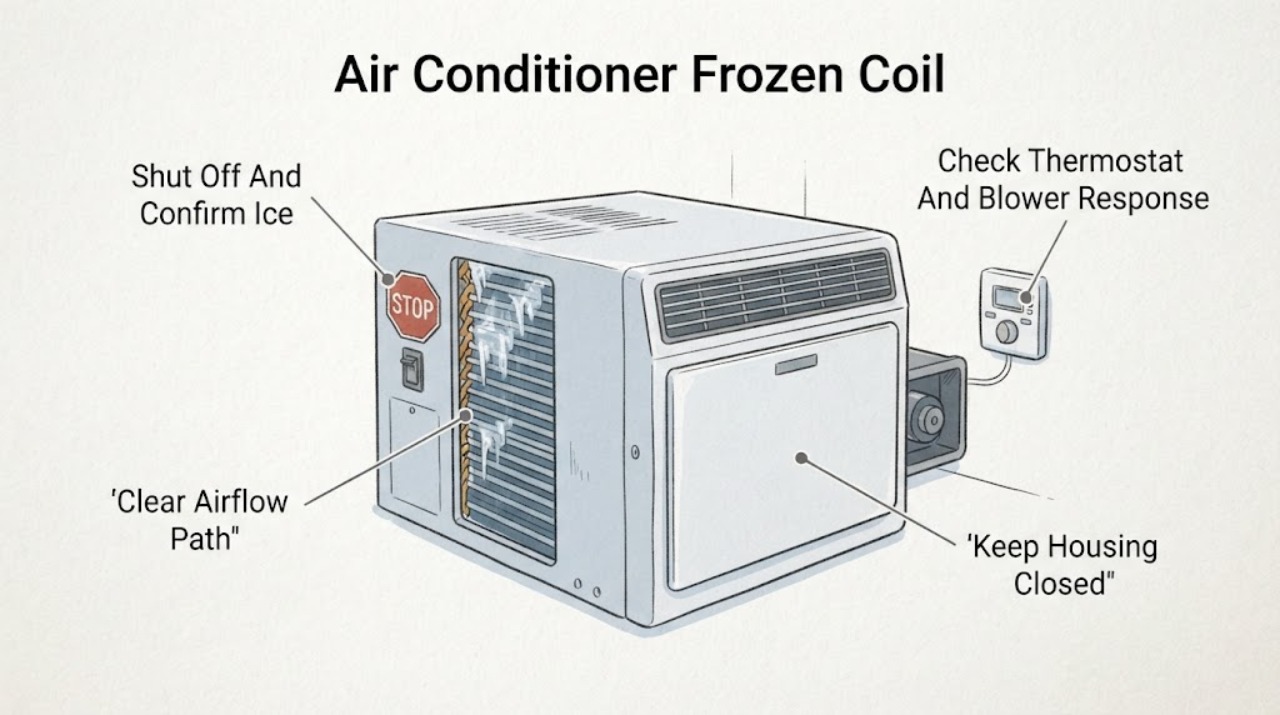
Air Conditioner Frozen Coil: Check Airflow and Blower Motor Safely
If ice is visible on the indoor evaporator coil, refrigerant lines, or nearby tubing, turn the thermostat's cooling mode to Off and leave the compressor off while the coil defrosts. Do not chip the ice, use a heat gun, or keep running cooling against a frozen coil.
-
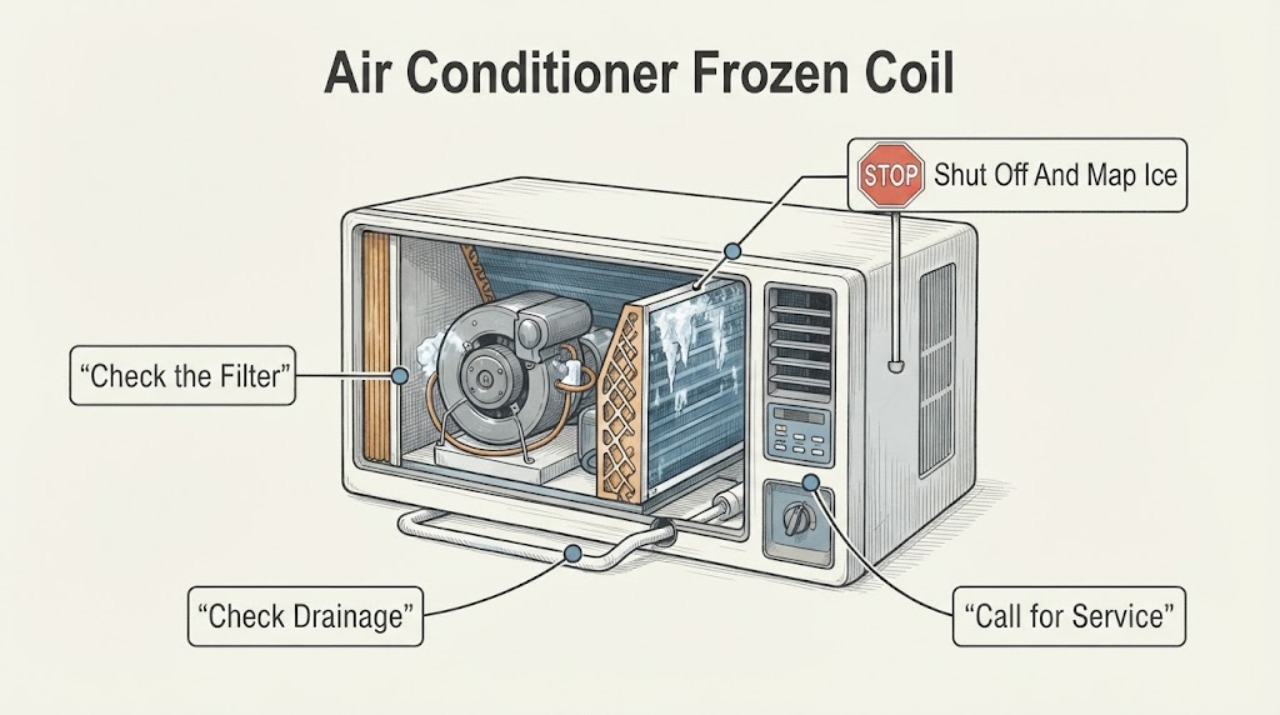
Air Conditioner Frozen Coil: Stop the Cooling Cycle, Restore Airflow, and Find the Cause
If an air conditioner has ice on the evaporator coil or refrigerant line, switch the thermostat from COOL to OFF and do not chip the ice or keep running the system. Trane identifies restricted airflow from a dirty filter, blocked return vents, or a dirty coil as common causes, while low refrigerant, a blower problem, or thermostat trouble can also freeze the coil.
-
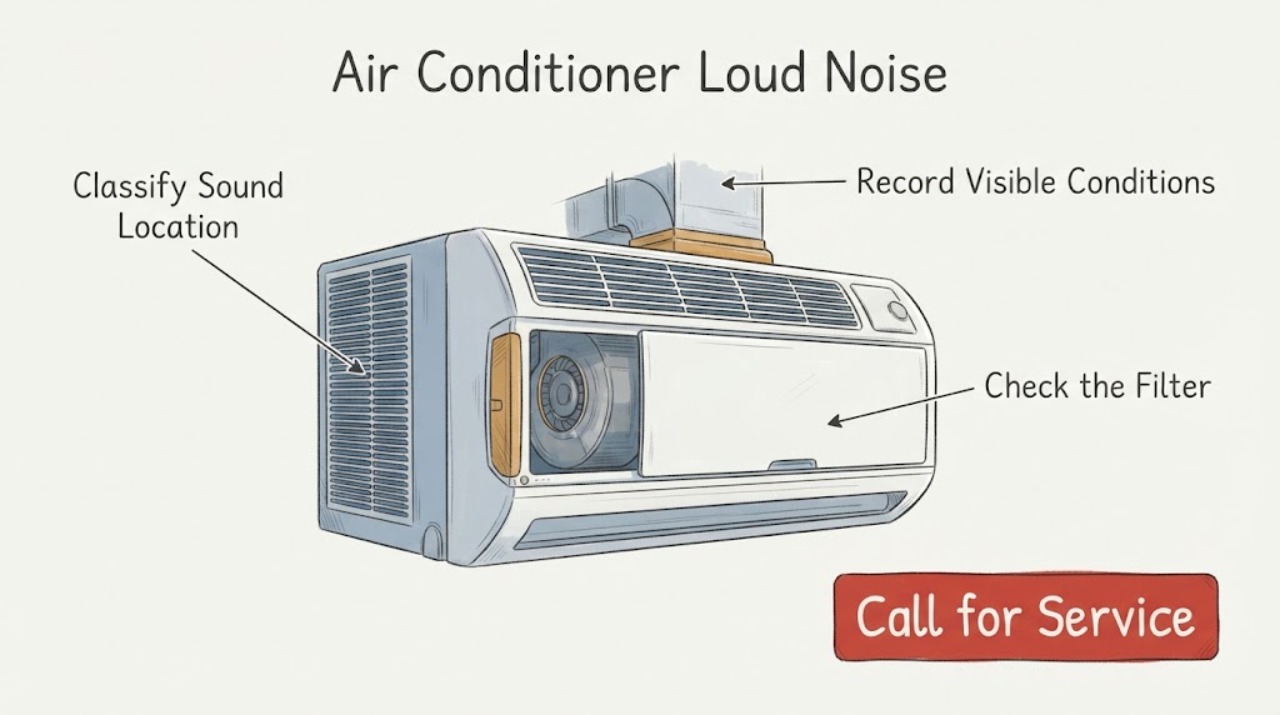
Air Conditioner Loud Noise: Isolate the Blower Motor Safely
A loud air-conditioner noise can come from the indoor blower motor or wheel, a restricted filter or return, duct movement, or the outdoor fan or compressor rather than the blower itself. Turn the system off at the thermostat when the noise is sudden, harsh, grinding, scraping, rattling, or accompanied by weak airflow, smoke, a burning odor, ice, water, or repeated electrical trips.
-
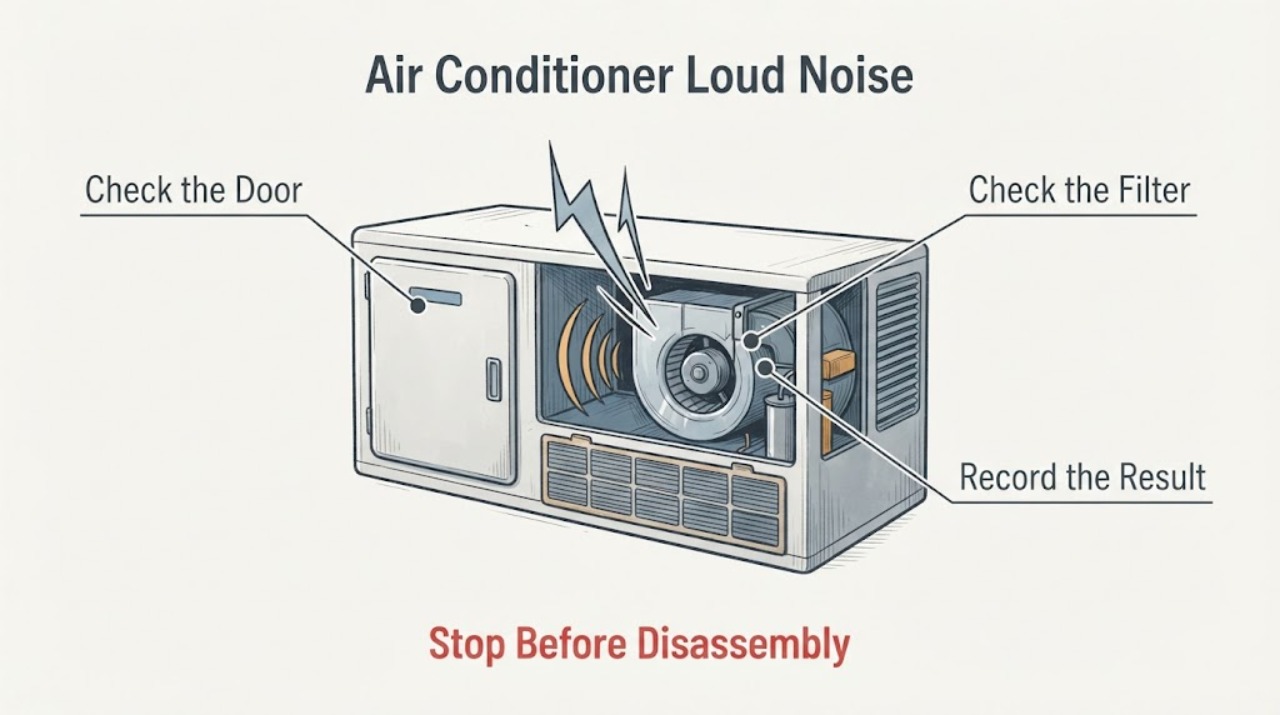
Air Conditioner Loud Noise: Blower Motor and Capacitor Checks
A new loud sound should be treated as a fault until its location and timing are clear. Turn cooling off, note whether the sound comes from the indoor blower or outdoor unit, and do only external, power-off checks.
-
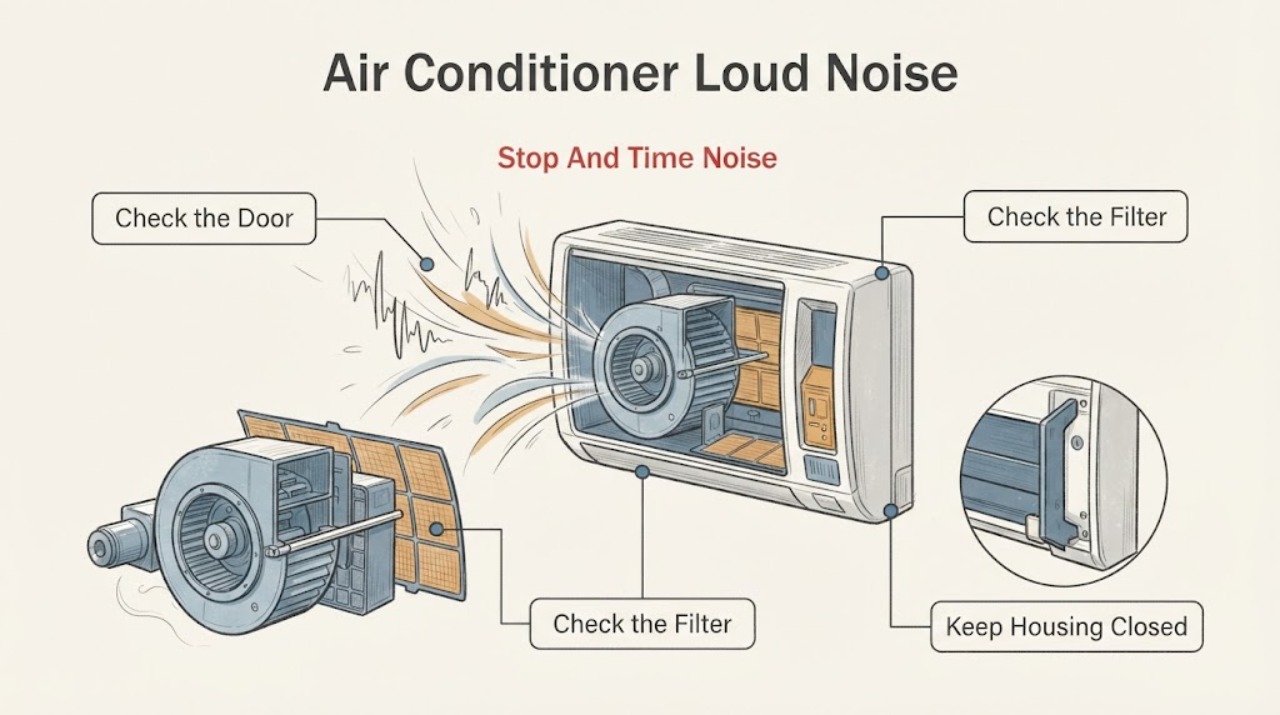
Air Conditioner Loud Noise: Check the Filter and Blower Safely
First identify where and when the loud noise occurs, then stop the air conditioner from the thermostat and inspect only the accessible filter, return grille, and supply registers. A blocked filter can restrict airflow and make the blower work harder, while a rattle, squeal, or grinding sound that starts with the indoor blower can indicate a blower wheel, motor, bearing, or electrical fault that requires HVAC service.
-
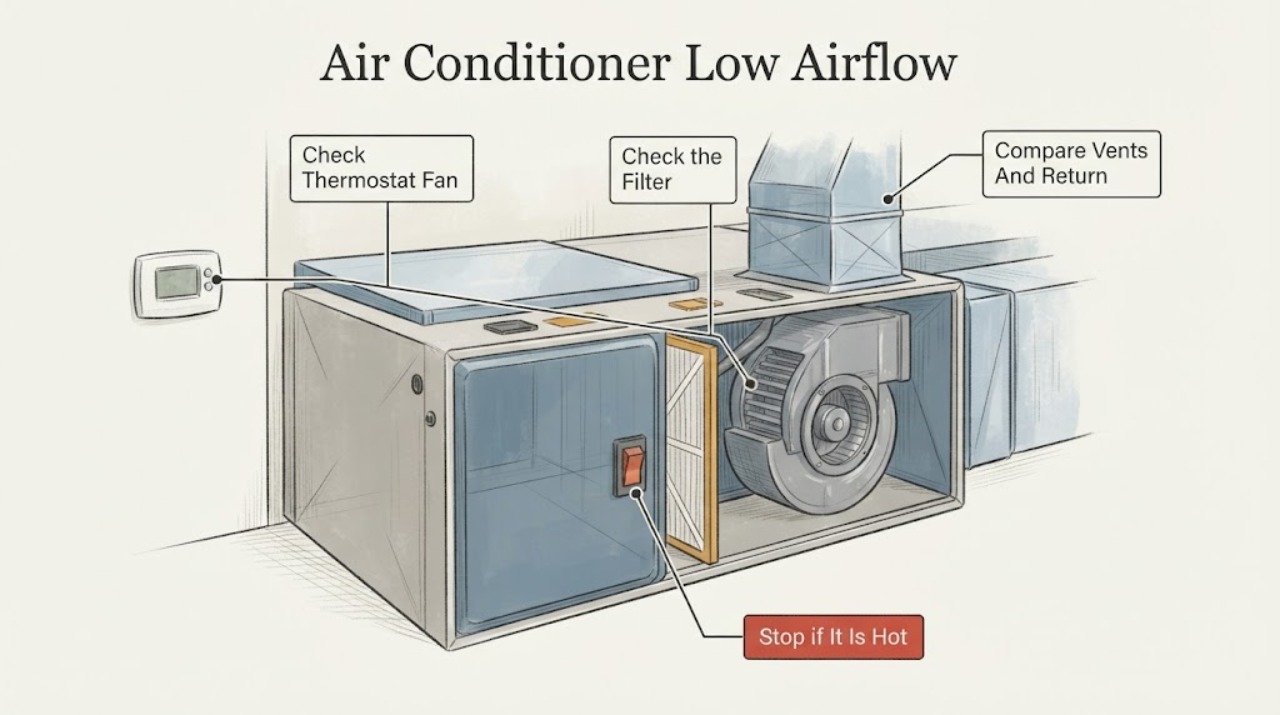
Air Conditioner Low Airflow: Check the Air Path Before Blaming the Blower Motor
Low airflow can come from a blocked filter, closed or obstructed return and supply grilles, an incorrect thermostat fan state, a frozen evaporator coil, or an indoor blower that is not running correctly. First compare several supply vents and the return, then inspect the accessible filter and thermostat from a safe position.
-
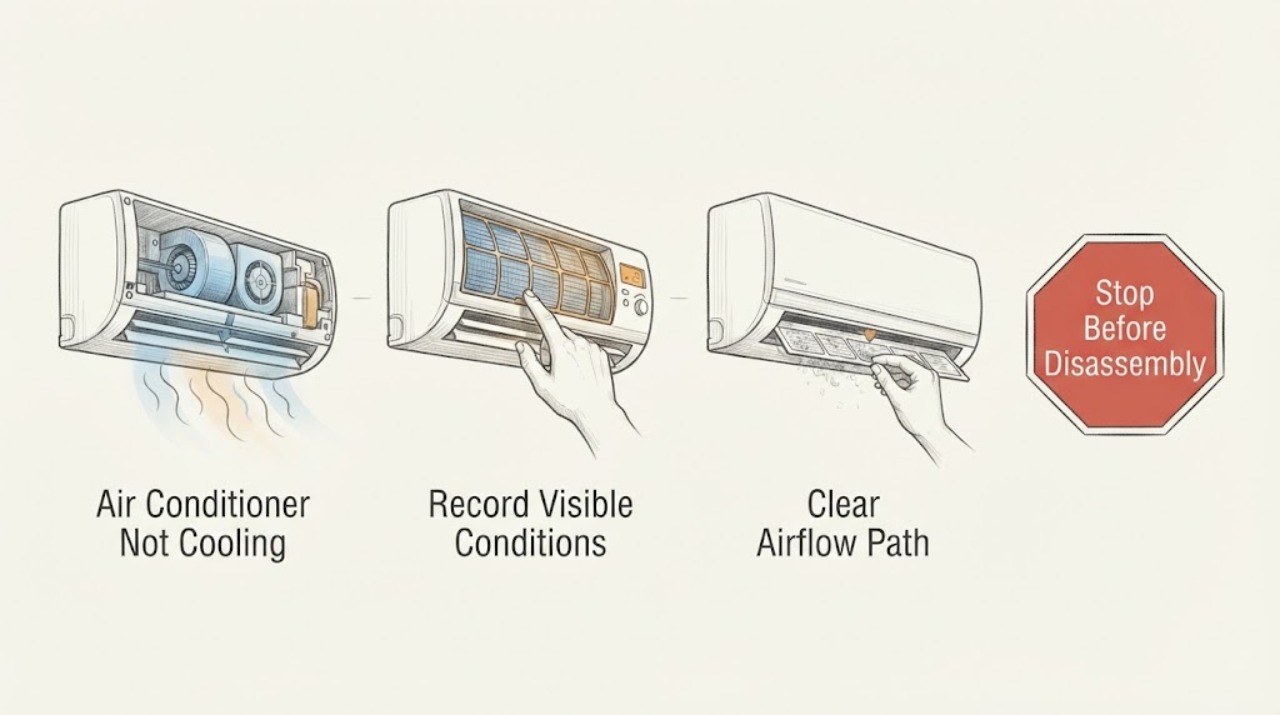
Air Conditioner Not Cooling: Blower Motor and Airflow Checks
When an air conditioner is not cooling and the suspected component is the blower motor, first separate an airflow problem from a refrigeration problem. Check that the thermostat is calling for cooling, the indoor blower is moving air, and the return filter and supply registers are not blocked.
-
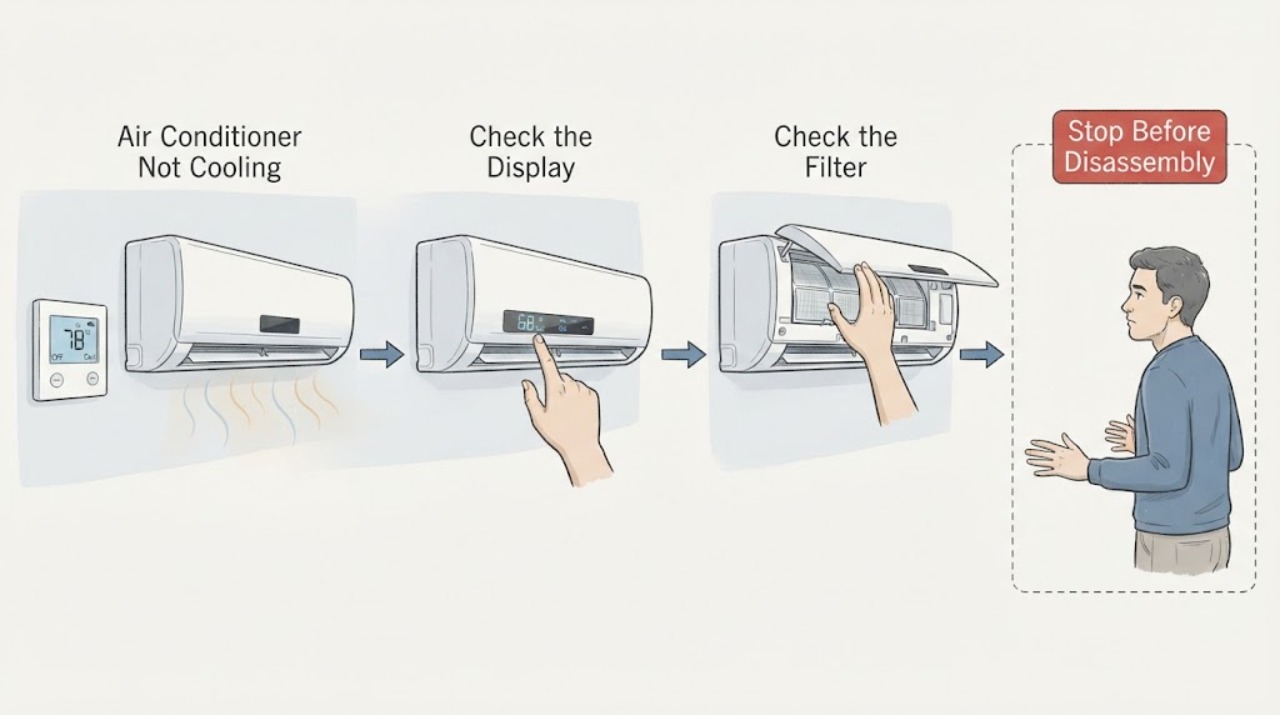
Air Conditioner Not Cooling: Thermostat and Blower Motor Checks
If the air conditioner is not cooling, confirm the thermostat is actually calling for Cool, then inspect the accessible filter and registers before judging the blower motor. A fan set to run continuously can move warm air, while a loaded filter can reduce airflow and contribute to ice.
-
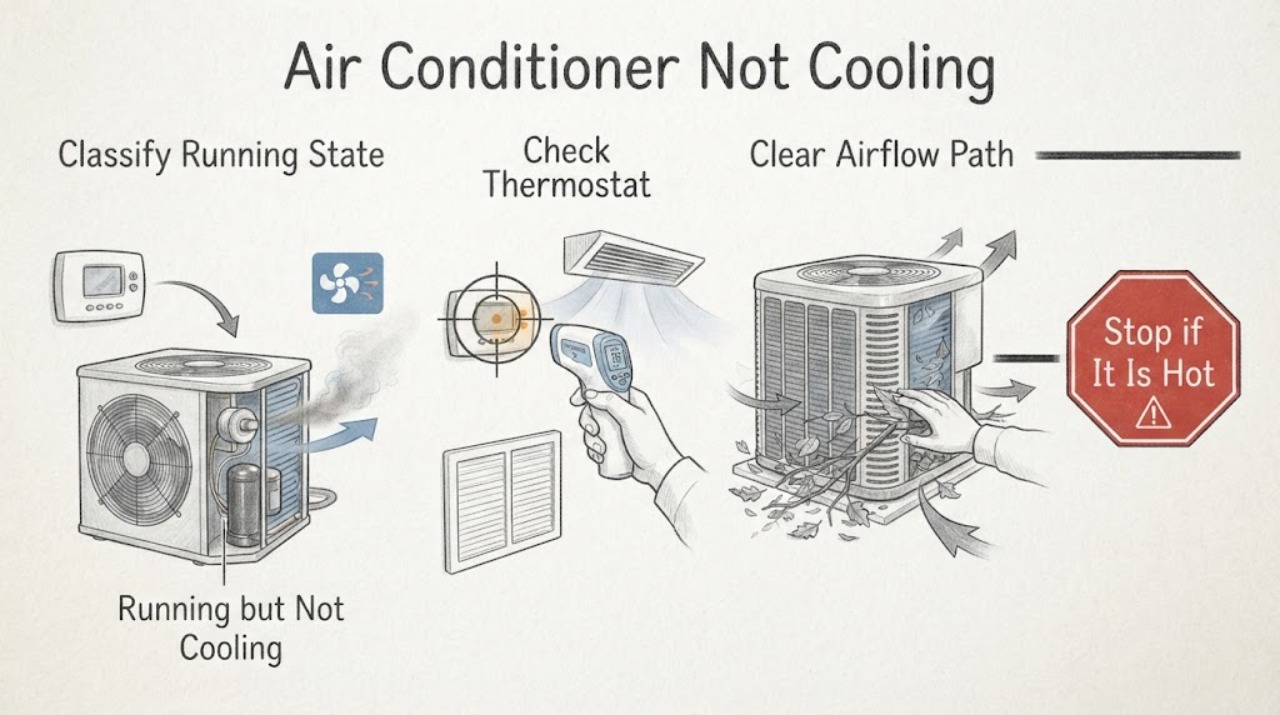
Air Conditioner Not Cooling: Check the Thermostat and Airflow Before Internal Parts
First decide whether the air conditioner is not running, is running with weak airflow, or is blowing air that is not cool. Check the thermostat mode and setpoint, compare supply vents and the return, inspect the accessible filter with the system off, and look from a safe distance for ice, water, or outdoor-unit obstruction.
-
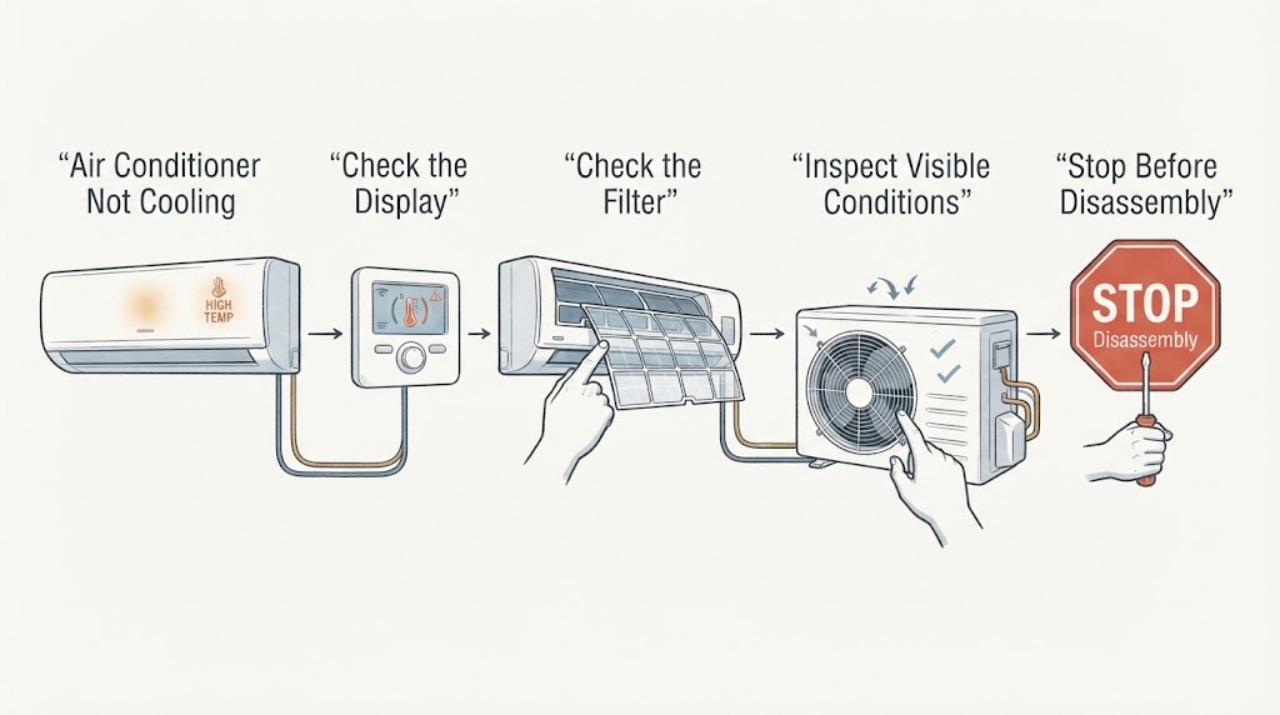
Air Conditioner Not Cooling: Check the Thermostat, Airflow, and Outdoor Unit
When an air conditioner runs but does not cool, start at the thermostat and filter, then observe airflow, ice, condensate, and the outdoor unit from a safe distance. A thermostat setting or a loaded filter can limit cooling, while weak airflow can point toward the blower path.
-
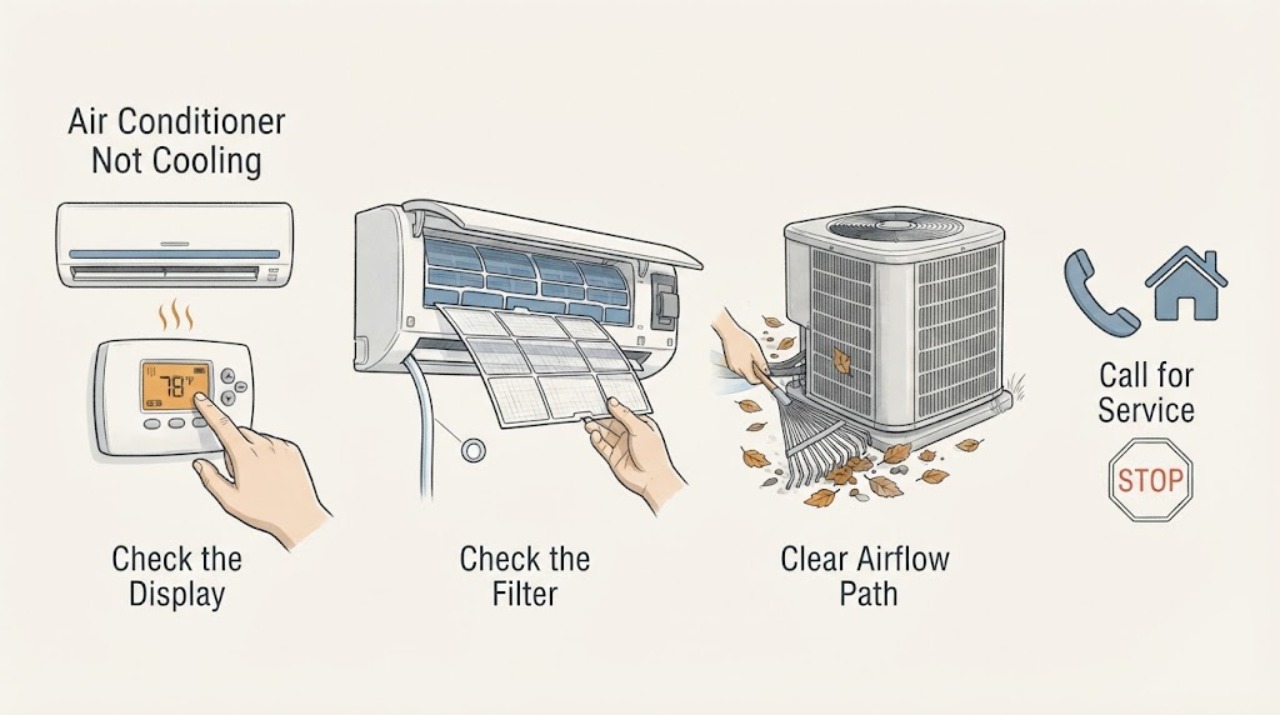
Air Conditioner Not Cooling: Thermostat, Airflow, and Drain Checks
First confirm that the thermostat is actually calling for cooling, then check the dry, user-accessible filter and airflow. If airflow is weak or absent, the filter, return path, blower motor, or indoor control may be involved.
-
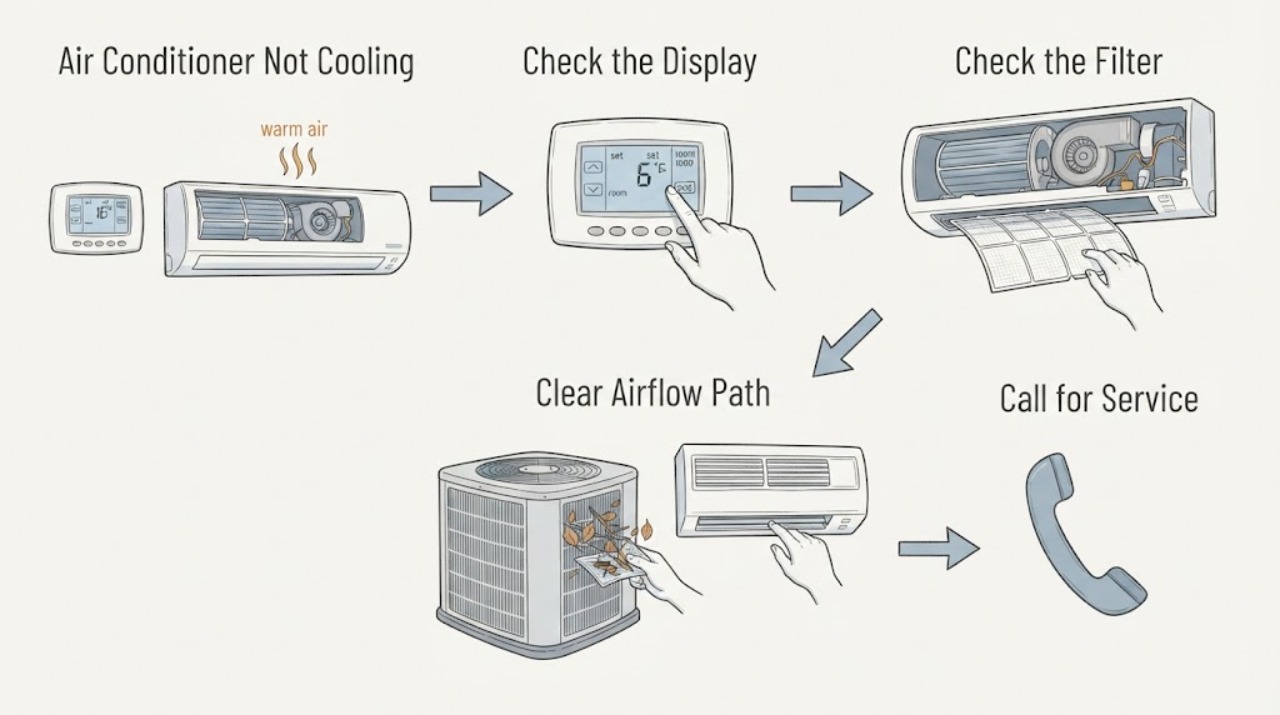
Air Conditioner Not Cooling: Thermostat, Filter, Blower, and Capacitor Checks
Start with the thermostat and the user-accessible air filter, then compare airflow with what the outdoor unit is visibly doing. A wrong mode or clogged filter can mimic a failed air conditioner, while weak or absent indoor airflow, ice, an outdoor fan that will not start, humming, or repeated electrical trips point toward a blower motor, capacitor, compressor, refrigerant, or control problem that needs HVAC service.
-
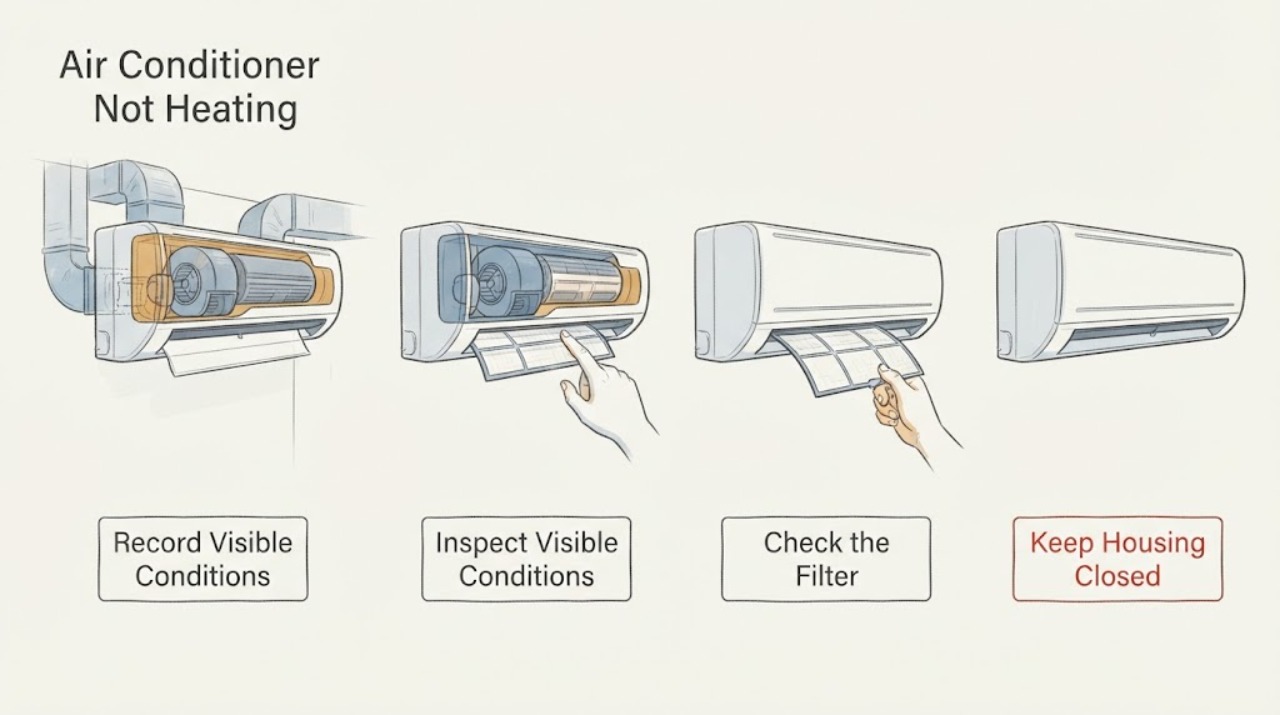
Air Conditioner Not Heating: Separate No Heat From a Blower Motor Airflow Fault
An air conditioner that is not heating may actually be a heat pump in the wrong mode, a normal defrost period, a heating or reversing-valve fault, or a blower-motor and airflow problem. First identify whether the equipment is a heat pump or a cooling-only air conditioner, then record the thermostat mode, indoor airflow, outdoor-unit behavior, filter condition, and any code or alarm.
-
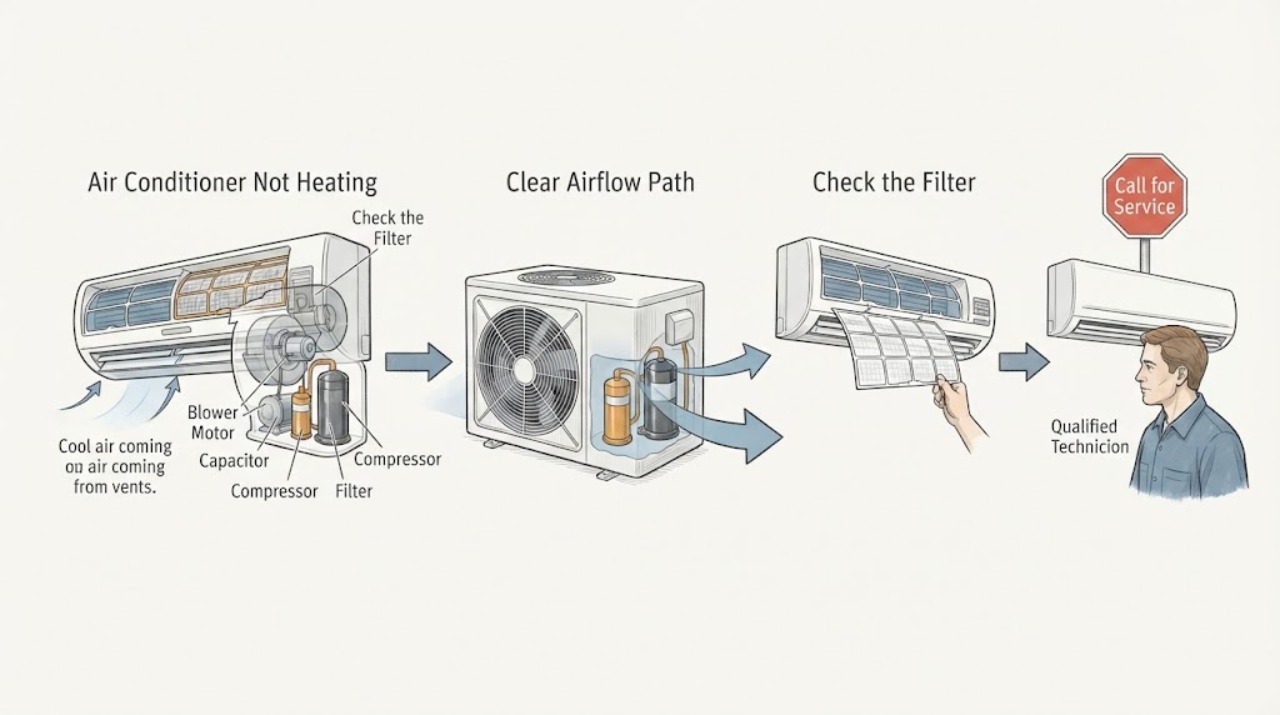
Air Conditioner Not Heating: Check the Heat Mode and Airflow
First confirm what equipment you have: a cooling-only air conditioner cannot provide heat, while a heat pump or a dual-fuel system must be in the correct heat mode. For a heat pump, check the thermostat mode and fan, compare indoor airflow, and inspect the user-accessible filter with the system off.
-
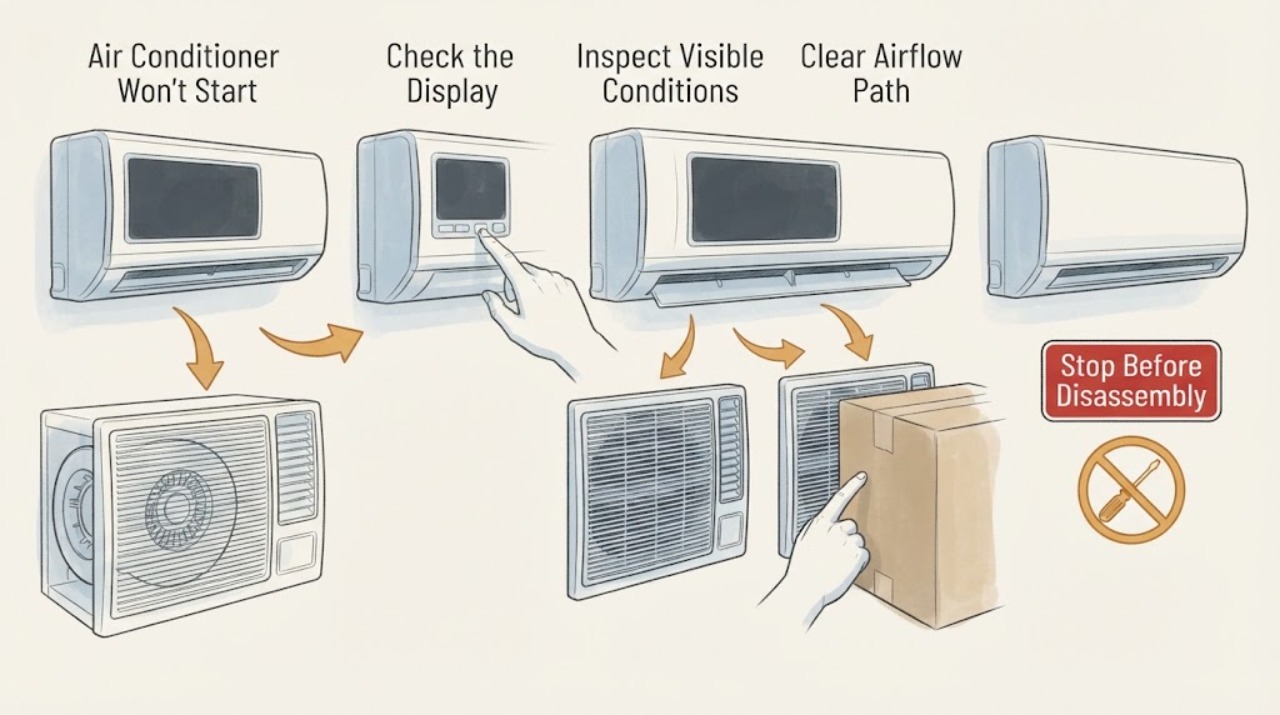
Air Conditioner Won't Start: Safe Blower Motor Checks
When an air conditioner will not start and the suspected component is the blower motor, first determine whether the indoor blower is actually silent, whether the thermostat is calling for cooling, and whether the system has visible power. Check the thermostat mode and schedule, inspect the accessible filter and supply/return airflow, and note whether the outdoor unit or indoor fan responds.
-
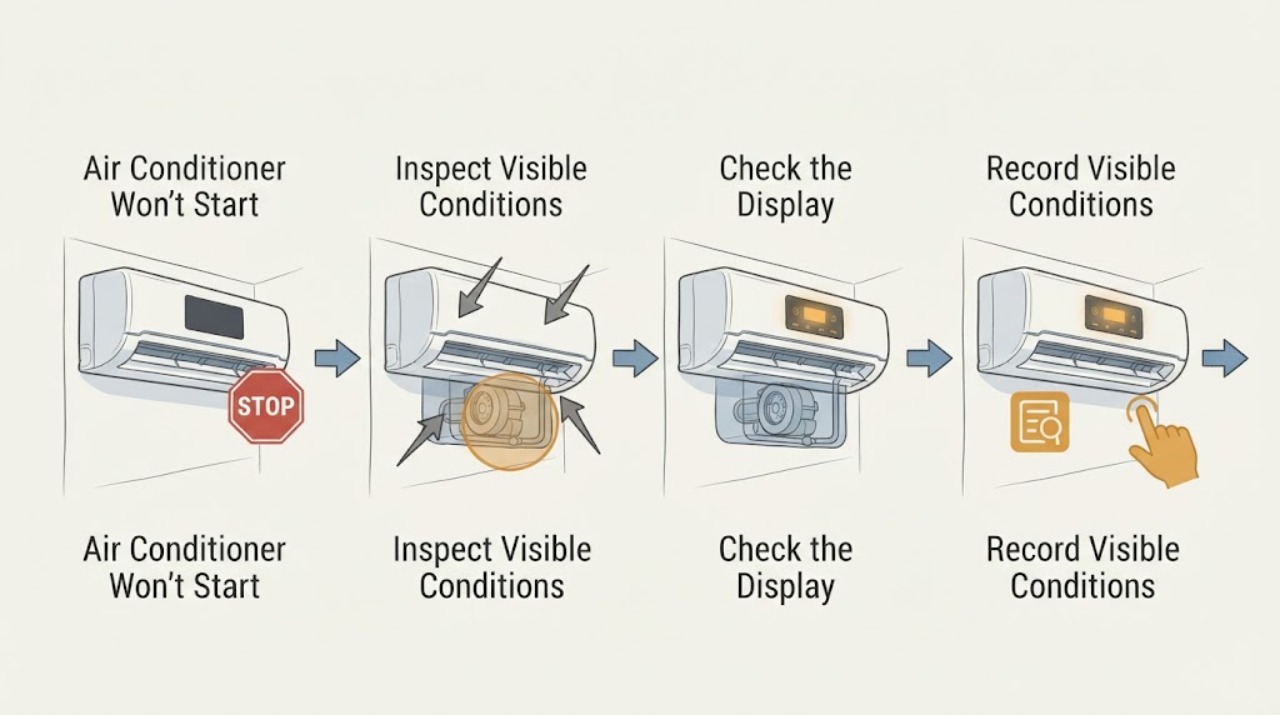
Air Conditioner Won't Start: Check the Thermostat, Drain Line, and Blower Safely
An air conditioner that will not start may have a thermostat command or power problem, a condensate drain blockage that has tripped a float switch, or an internal blower-motor, capacitor, control, or safety fault. Start with the thermostat display, mode, setpoint, batteries if applicable, and the exact symptom: no display, no indoor airflow, or no outdoor response.
-
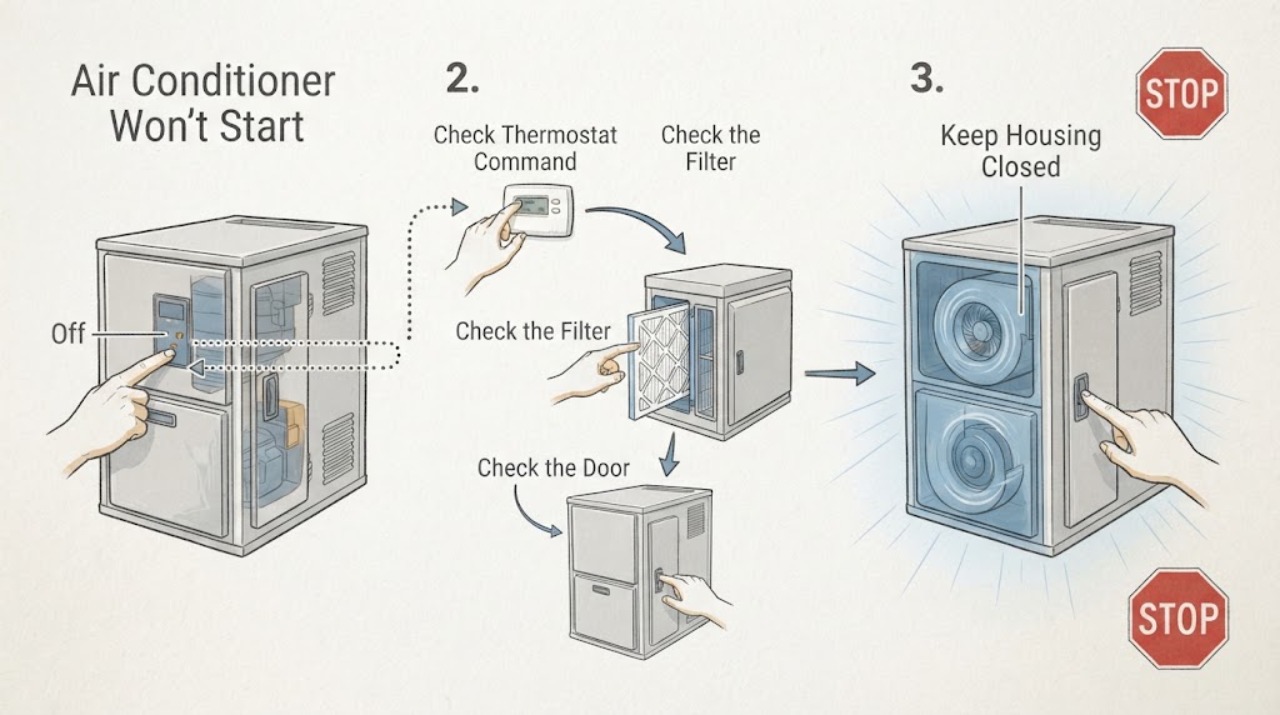
Air Conditioner Won't Start: Check the Blower Motor and Filter Safely
When an air conditioner will not start, first separate a thermostat or power command problem from an indoor airflow problem. Check the thermostat mode, setpoint, fan setting, display, and schedule; then look at the accessible filter and registers.
-
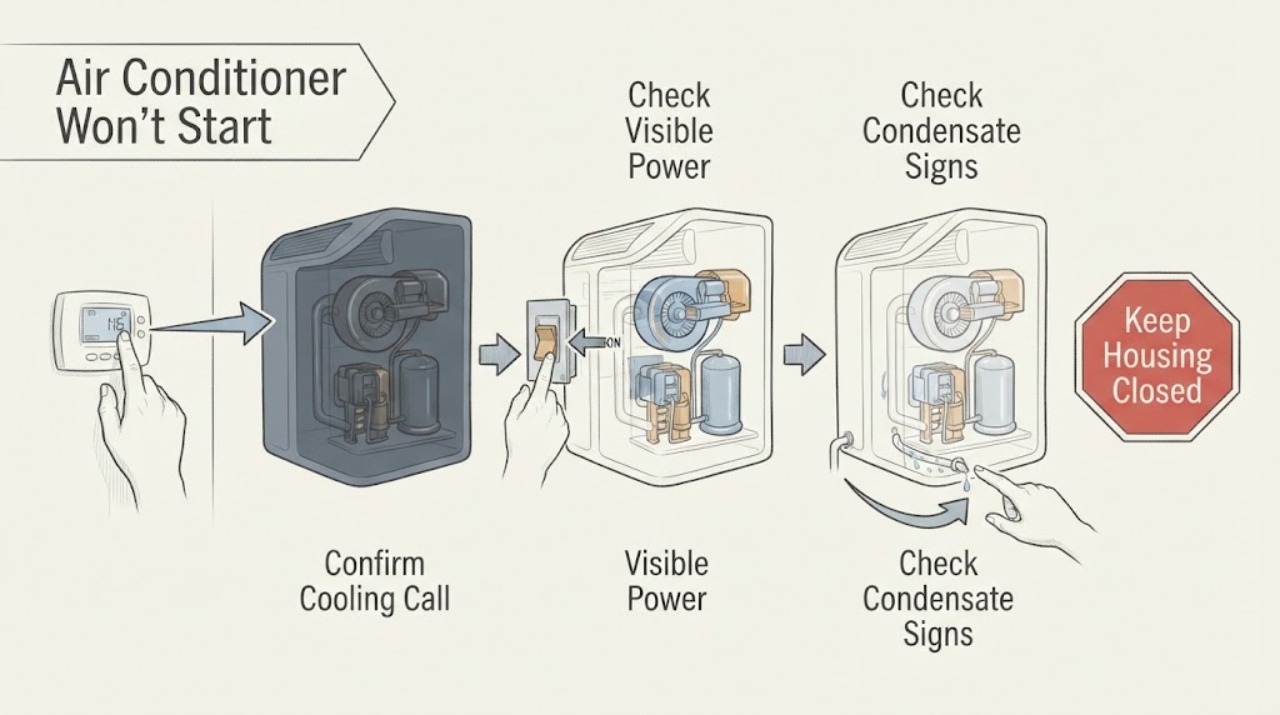
Air Conditioner Won't Start: Blower Motor, Compressor, and Contactor Checks
If an air conditioner will not start, first determine whether the thermostat is actually calling for cooling, whether the indoor blower responds, and whether the outdoor unit responds. From ordinary safe access, check the thermostat setting, the visible power status, the filter, and signs of condensate or an overflow shutdown; do not open panels or test live voltage.
-
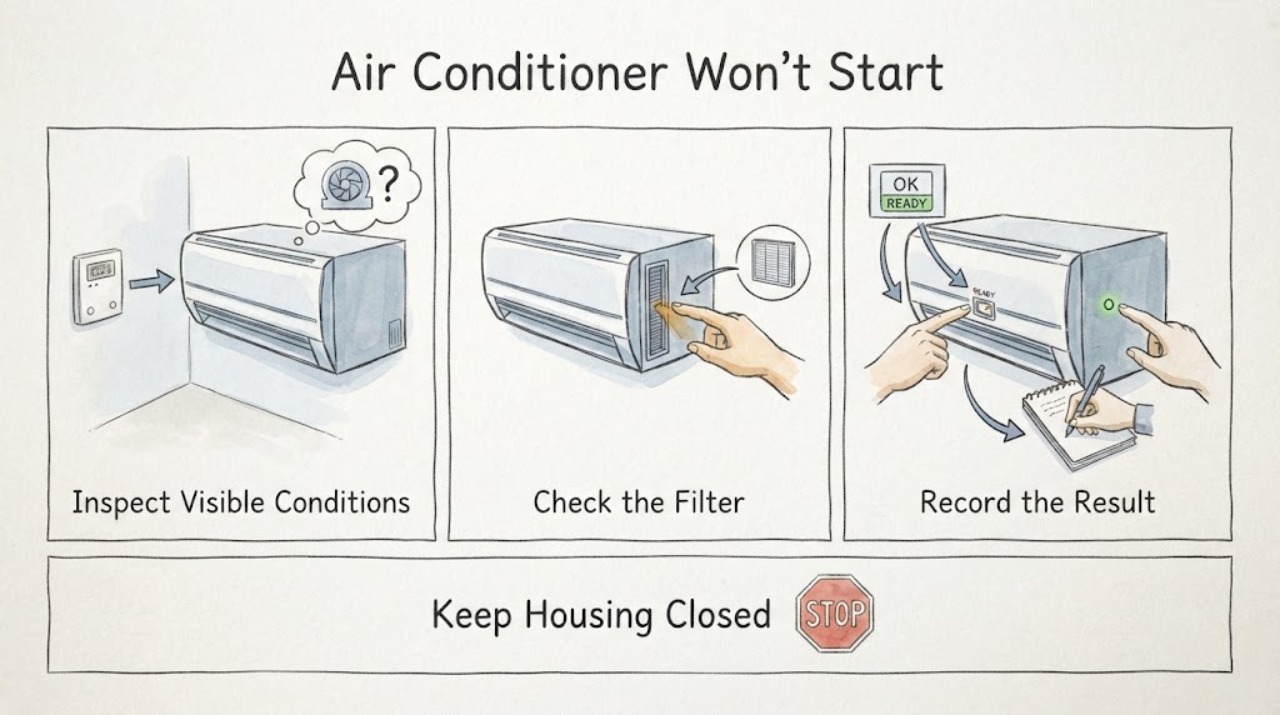
Air Conditioner Won't Start: Check the Thermostat, Blower, and Outdoor Unit
If an air conditioner will not start, first determine whether the thermostat is actually calling for cooling, whether the indoor blower moves air, and whether the outdoor unit responds. Check only the thermostat settings, the user-accessible air filter, visible registers, and the breaker or disconnect from a safe dry position; do not open a cabinet, touch wiring, reach into a fan, test a capacitor, or handle refrigerant.
-
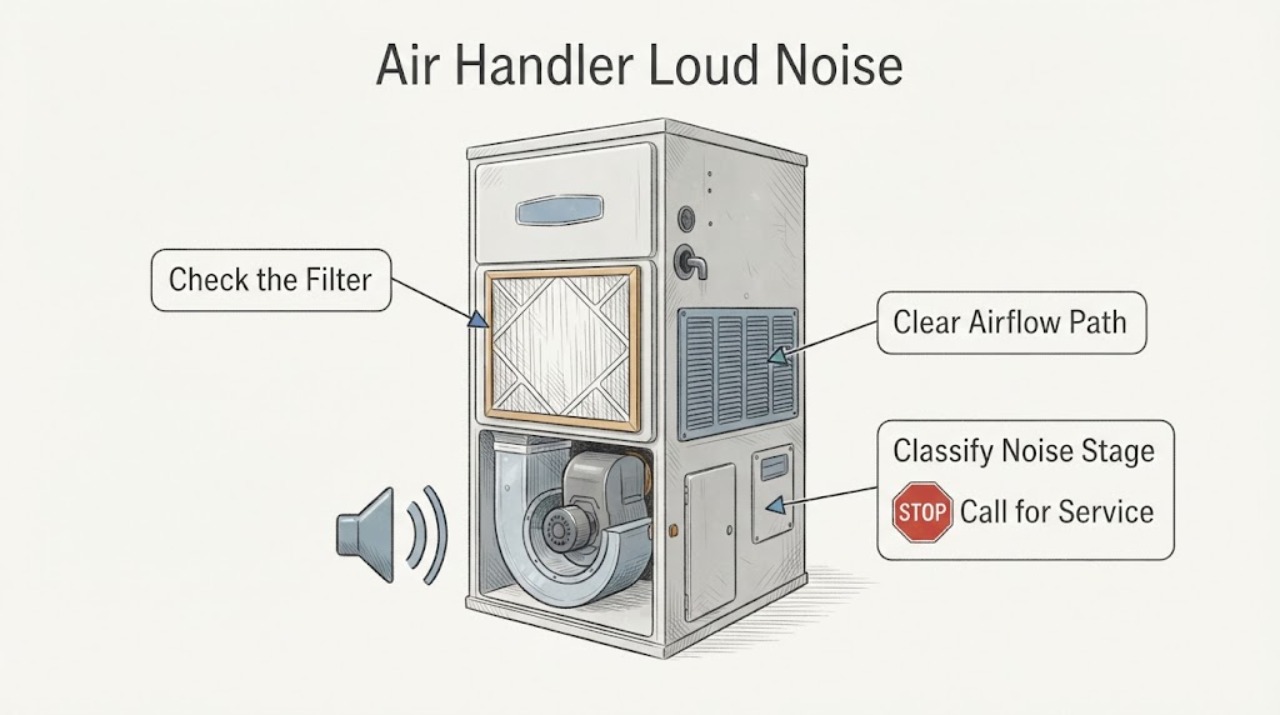
Air Handler Loud Noise: Safe Checks for Blower and Airflow
An air handler that suddenly becomes loud may have restricted airflow, a loose grille or cabinet part, a blower-wheel or fan problem, vibration, or a blower motor, capacitor, relay, or control fault. First classify the sound as a whistle, rattle, buzz, hum, grind, or vibration and note whether it occurs at startup, during airflow, or at shutdown.
-
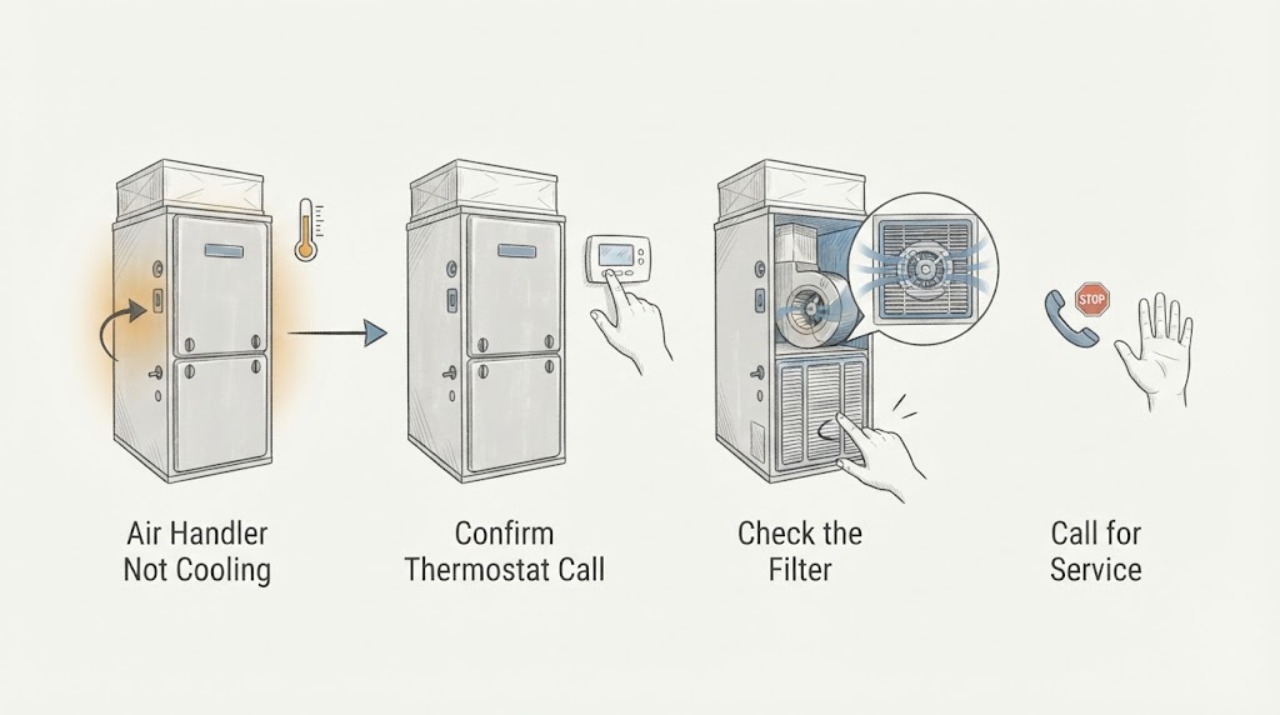
Air Handler Not Cooling: Blower Motor and Airflow Checks
An air handler that is not cooling may have no cooling call, restricted airflow, a frozen coil, a condensate or protection shutdown, or a fault in the blower motor or another HVAC component. First separate no cold air with normal airflow from no airflow at all: check the thermostat, accessible filter, return and supply registers, and visible ice or water from a safe position.
-
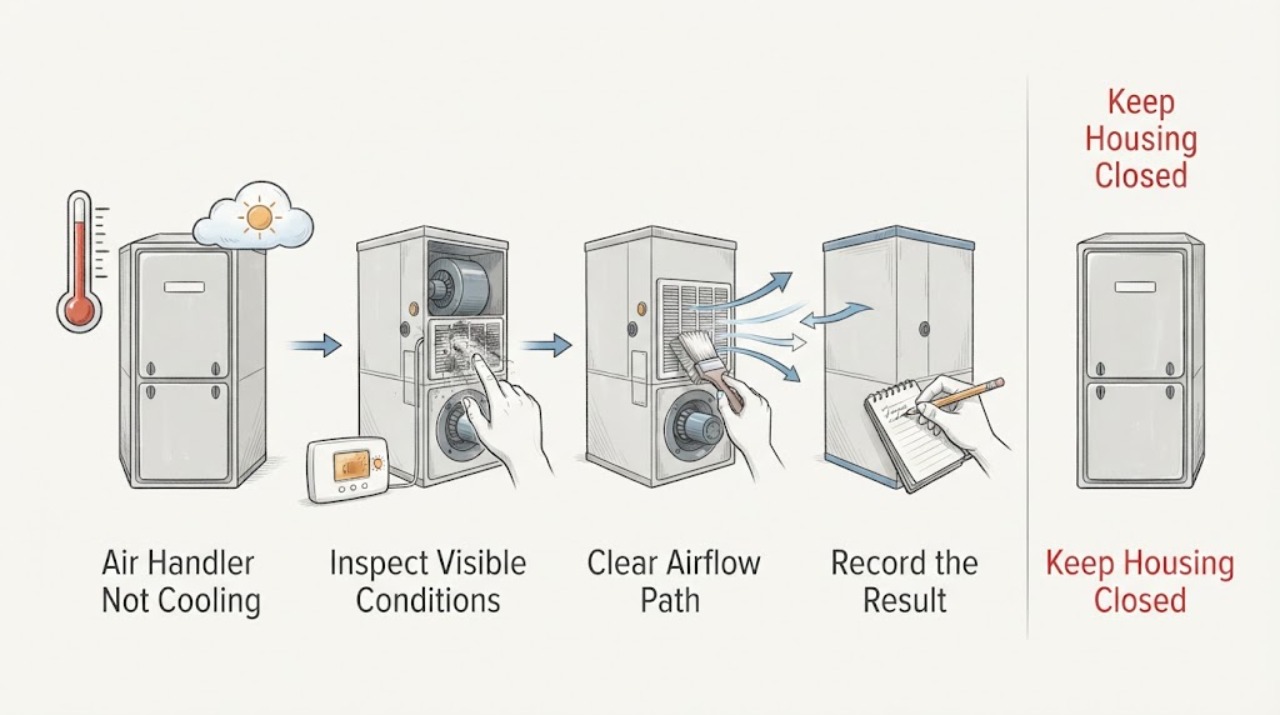
Air Handler Not Cooling: Blower Motor and Thermostat Checks
First determine whether the air handler has no airflow or is moving air that is not cool. Confirm that the thermostat is powered, set to Cool, and calling below the room temperature; then compare airflow at several registers.
-
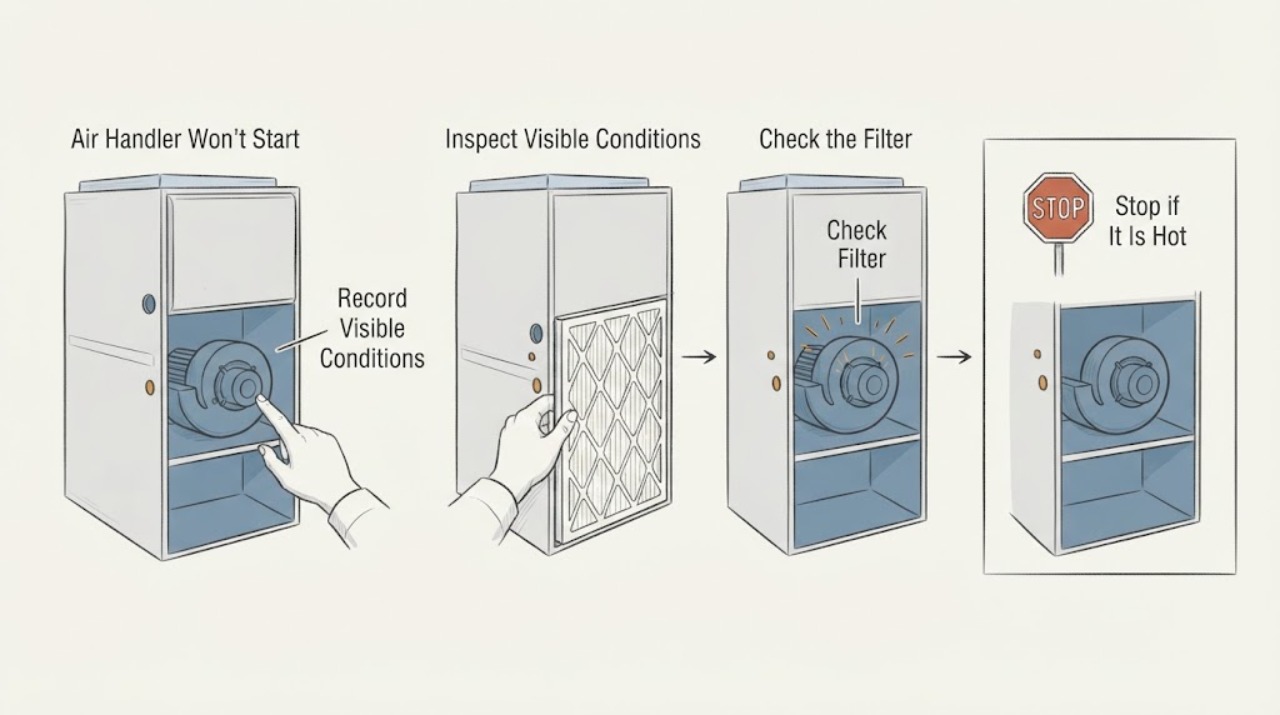
Air Handler Won't Start: Safe Blower Motor and Airflow Checks
If an air handler will not start and the blower motor is suspected, begin at the thermostat: confirm the display is active, the system is calling for the intended heating or cooling mode, and the fan setting is appropriate. Observe any visible power indicator or nearby service-switch position without opening equipment or resetting a breaker.
-
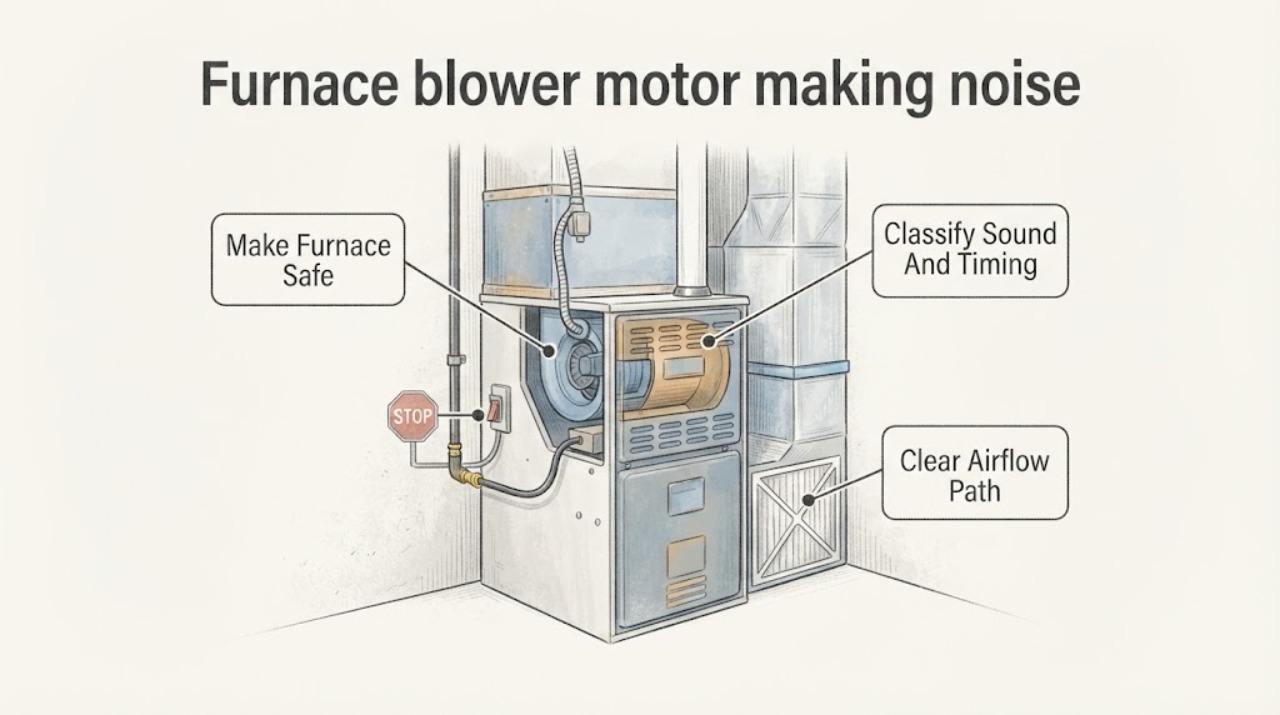
Amana furnace blower motor making noise: What to Check and What to Do Next
An Amana furnace blower motor that suddenly hums, rattles, scrapes, squeals, or vibrates may be reacting to restricted airflow, debris, a loose panel or duct, an unbalanced blower wheel, worn bearings, an electrical/control fault, or a motor that is overheating. First make a safe note of when the sound starts and whether it changes with the heating call, then check only the accessible filter, return and supply airflow, and exterior panels or ducts.
-
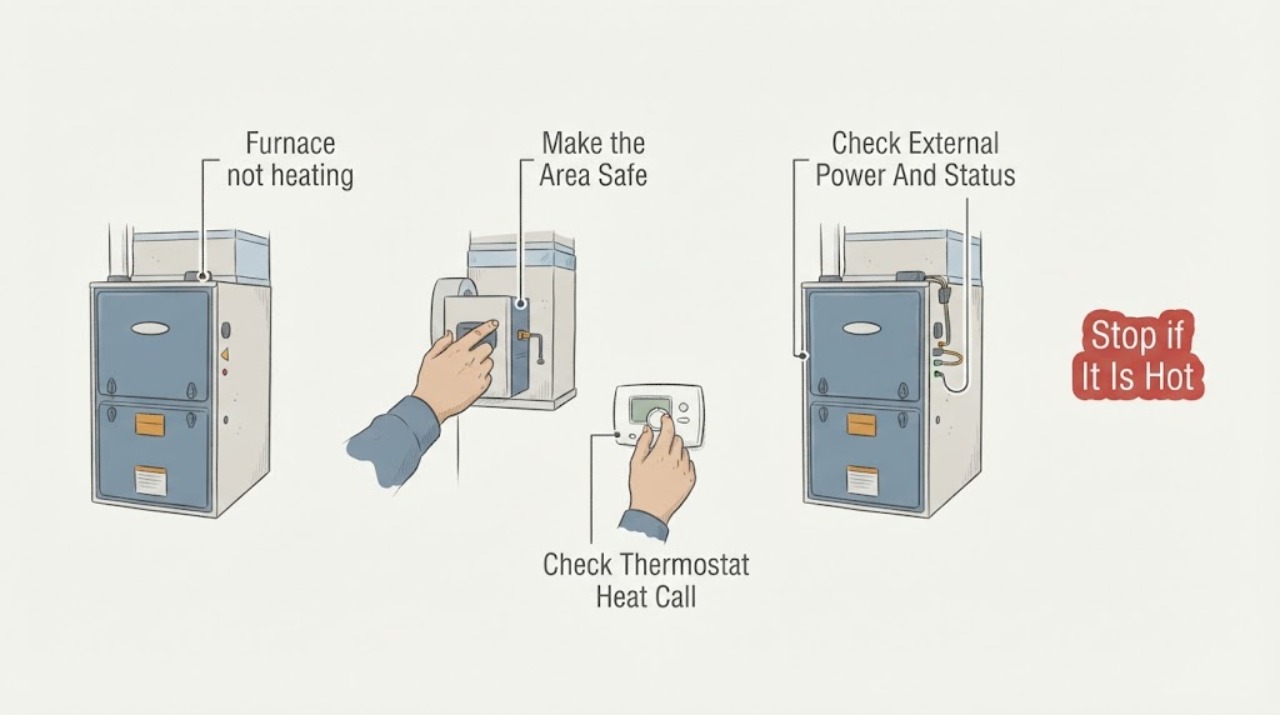
Amana furnace not heating: check the blower motor symptoms safely
An Amana furnace that is not heating can have no thermostat call, lost power, a dirty filter, an ignition or flame-safety shutdown, or a blower motor and airflow problem. The blower motor moves heated air through the ductwork, so a furnace that lights but has no airflow, weak airflow, a humming or non-starting blower, or a blower that stops after overheating needs a different path from a furnace that never attempts ignition.
-
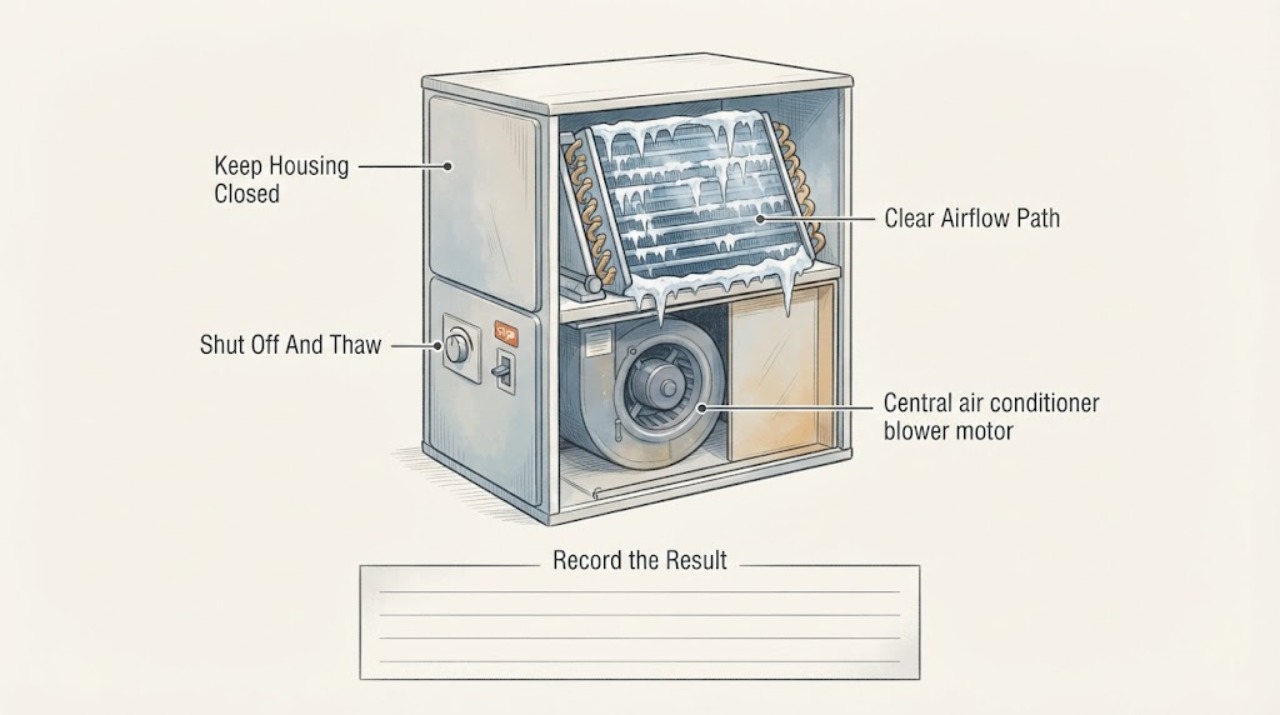
American Standard central air conditioner blower motor evaporator coil frozen: What to Check and What to Do Next
A frozen evaporator coil with weak or absent airflow can be caused by a blower motor problem, but a dirty filter, dirty coil, blocked return or supply path, thermostat issue, or low refrigerant can produce the same ice. Turn cooling off at the thermostat and do not keep running the AC while the coil is frozen.
-
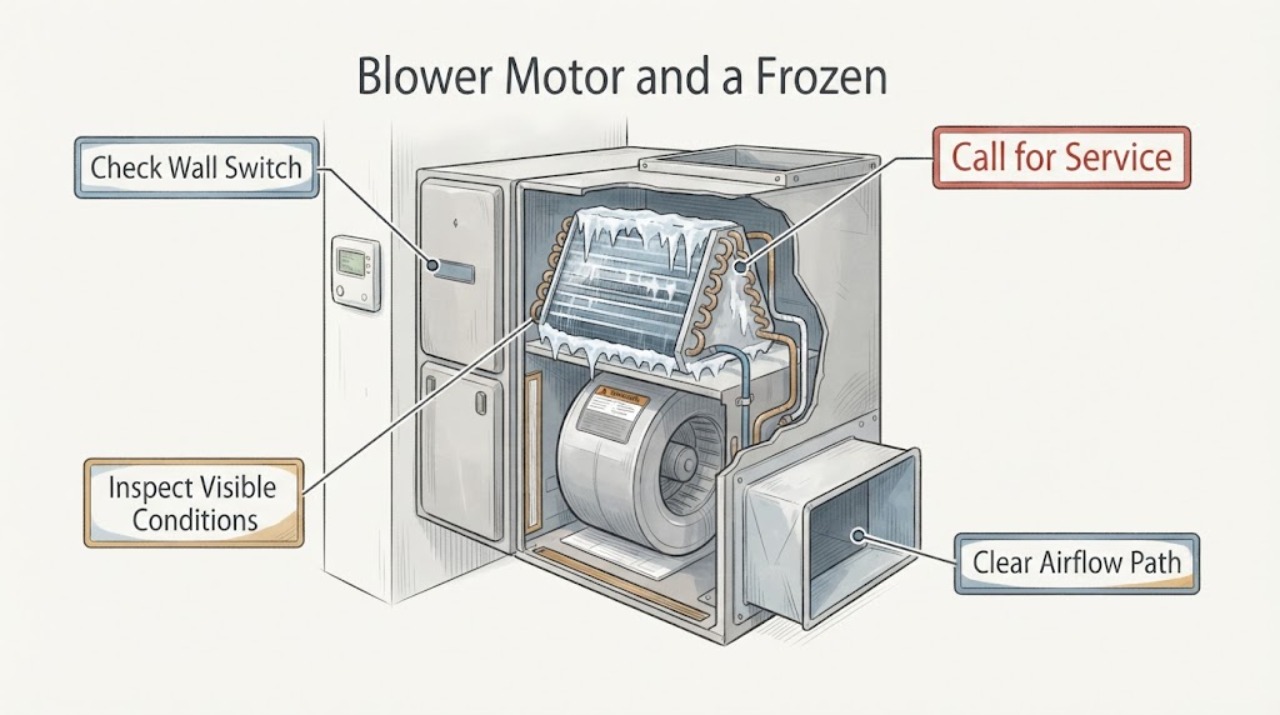
Blower Motor and a Frozen Coil: Safe HVAC Checks
A frozen indoor evaporator coil with weak or absent airflow does not prove that the blower motor alone has failed. Restricted airflow from a dirty filter or blocked return, a malfunctioning blower, a thermostat issue, or low refrigerant can all contribute to freezing.
-
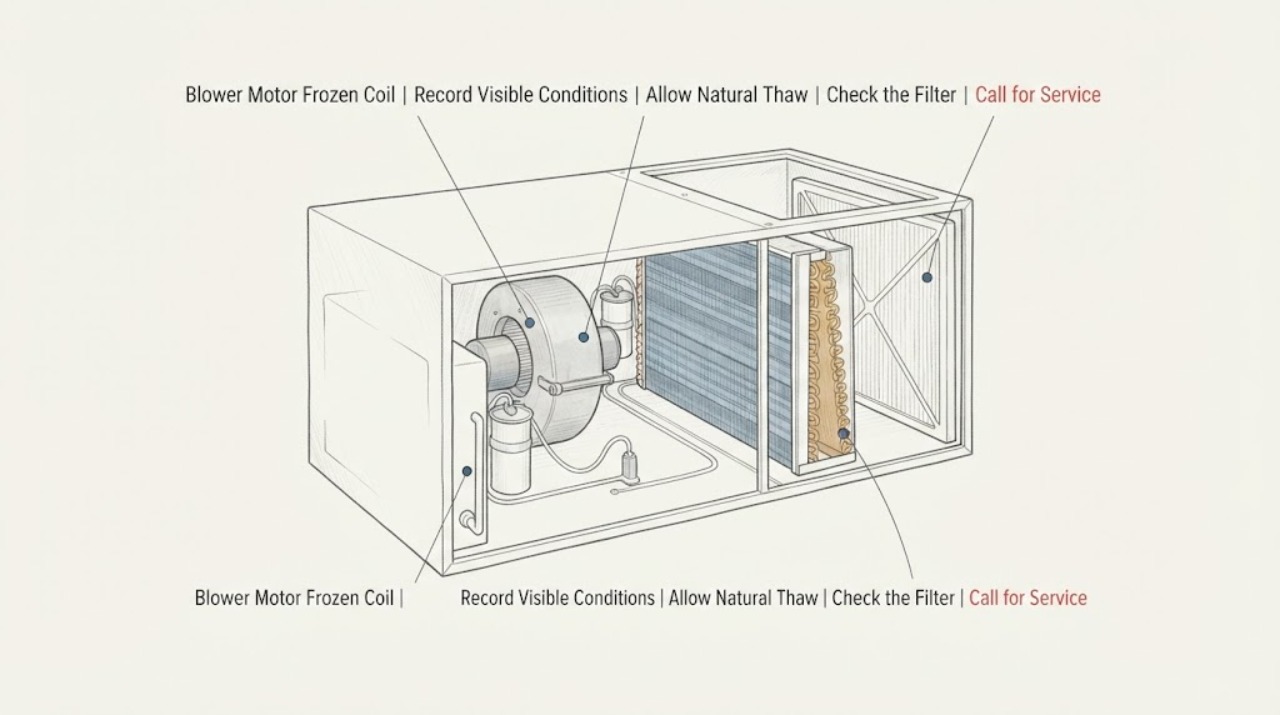
Blower Motor Frozen Coil: Let the Air Handler Thaw Before Diagnosis
A frozen evaporator coil around an air-handler blower is usually a symptom of restricted airflow, a blower or control problem, or a cooling-side condition such as low refrigerant; a dirty filter is only one possible cause. Turn the cooling call off and let the ice thaw naturally, without chipping it or pouring hot water on it.
-
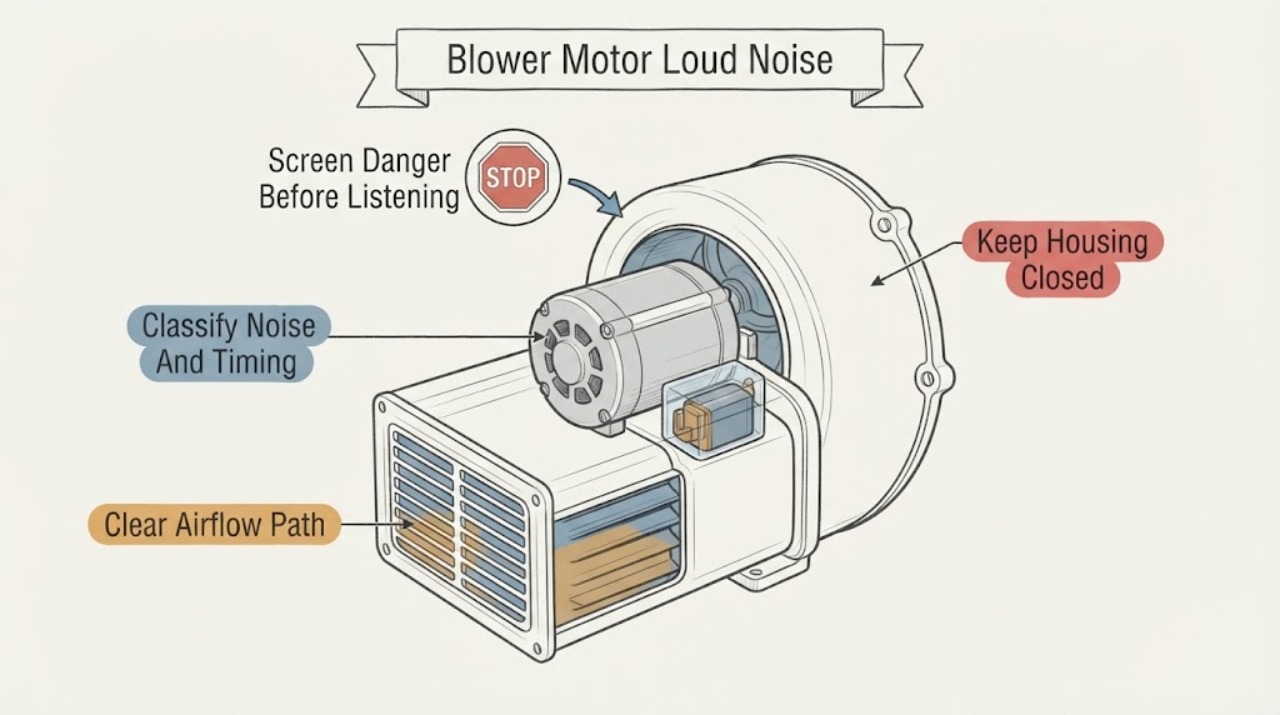
Blower Motor Loud Noise: Recognize Capacitor Clues Without Opening the HVAC Unit
A loud blower-motor noise can come from restricted airflow, a loose panel or duct, a damaged blower wheel, worn bearings, an electrical fault, or a capacitor that is struggling to start the motor. Listen from outside the equipment for the timing and character of the sound: humming with no airflow, grinding or squealing, rattling, or a sudden bang each point to different professional checks.
-
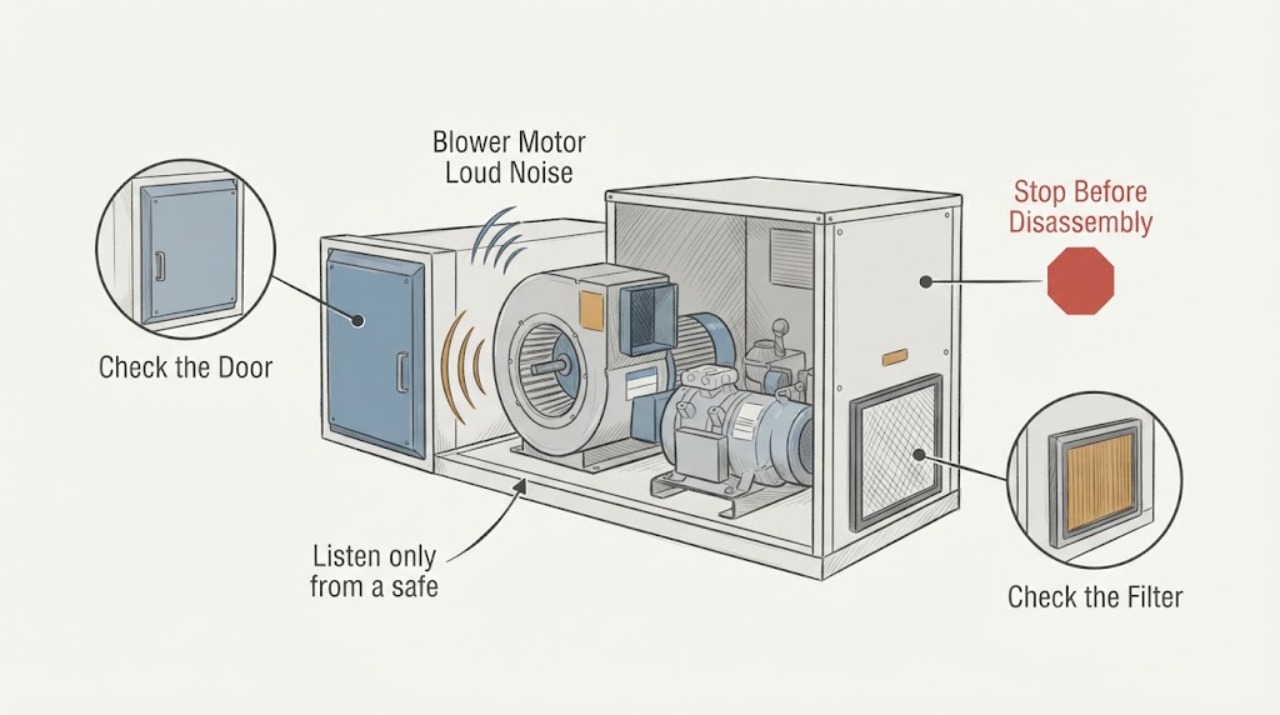
Blower Motor Loud Noise: Separate Indoor and Compressor Sounds
A loud noise blamed on a blower motor may actually come from the indoor blower assembly, ductwork, or the outdoor compressor and fan section. First locate the sound: the blower is normally in the indoor air handler or furnace, while a split-system compressor is outdoors.
-
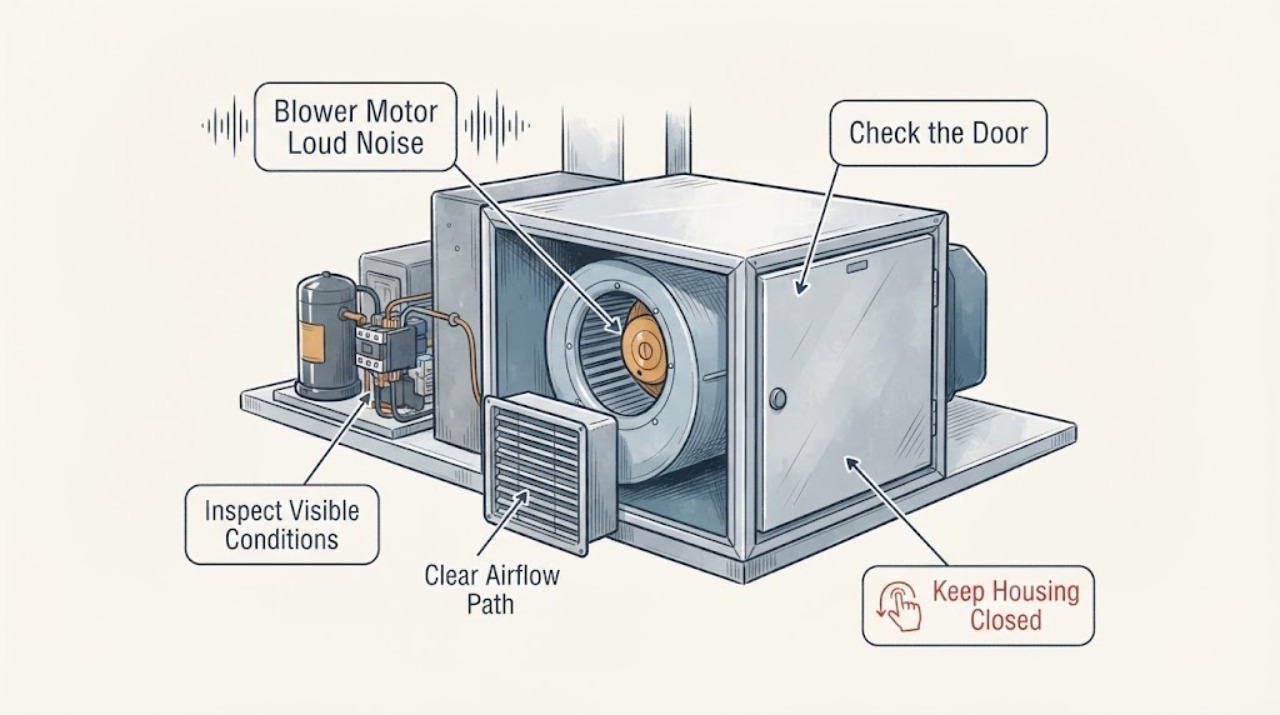
Blower Motor Loud Noise: Separate Indoor Fan, Compressor, and Contactor Clues
A loud noise reported near a blower motor can come from the indoor blower wheel or motor, airflow restriction, cabinet vibration, or a sound transmitted from the outdoor compressor or contactor. First identify where the sound is loudest and whether it occurs when the indoor fan starts, while air is moving, when the system stops, or only when the outdoor unit runs.
-
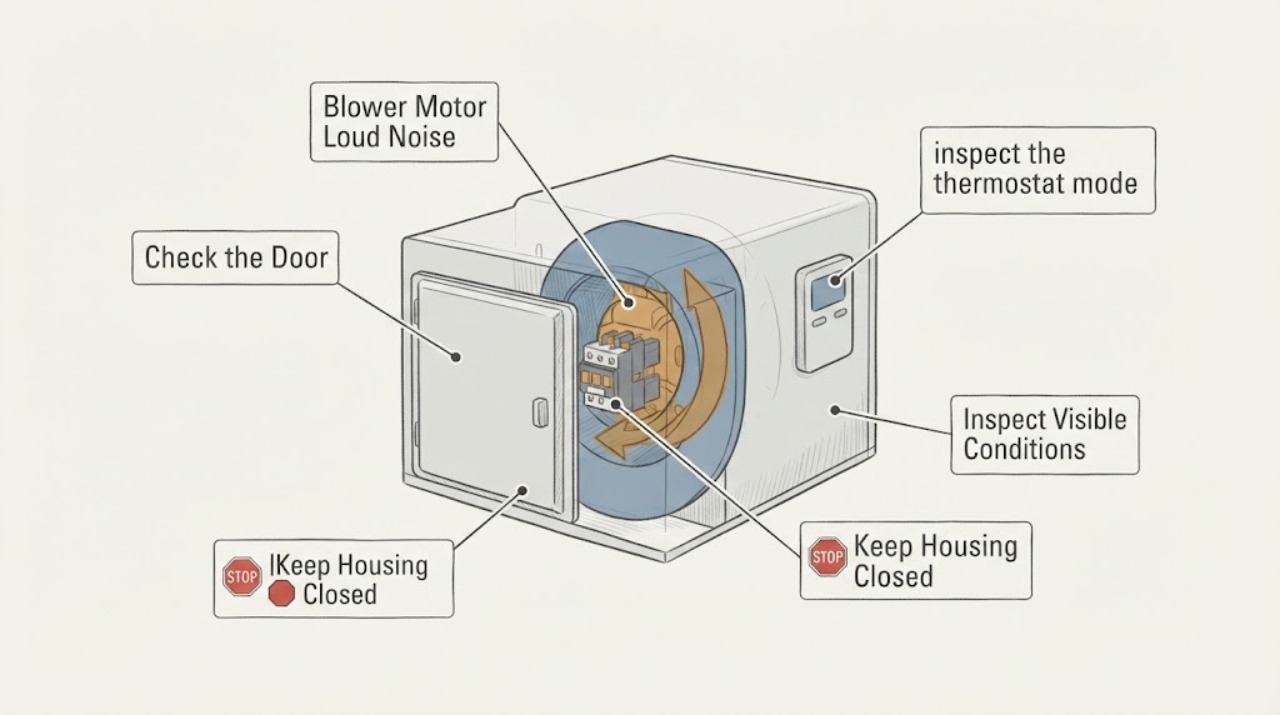
Blower Motor Loud Noise: Is the Contactor Involved?
A loud noise that seems to come from the blower motor is not automatically a contactor fault. First locate the sound: an indoor blower noise that follows fan speed points toward airflow, a filter, a wheel, motor, or mounting; a click, hum, or buzz from the outdoor unit at startup or shutdown can involve the contactor, capacitor, fan motor, or compressor.
-
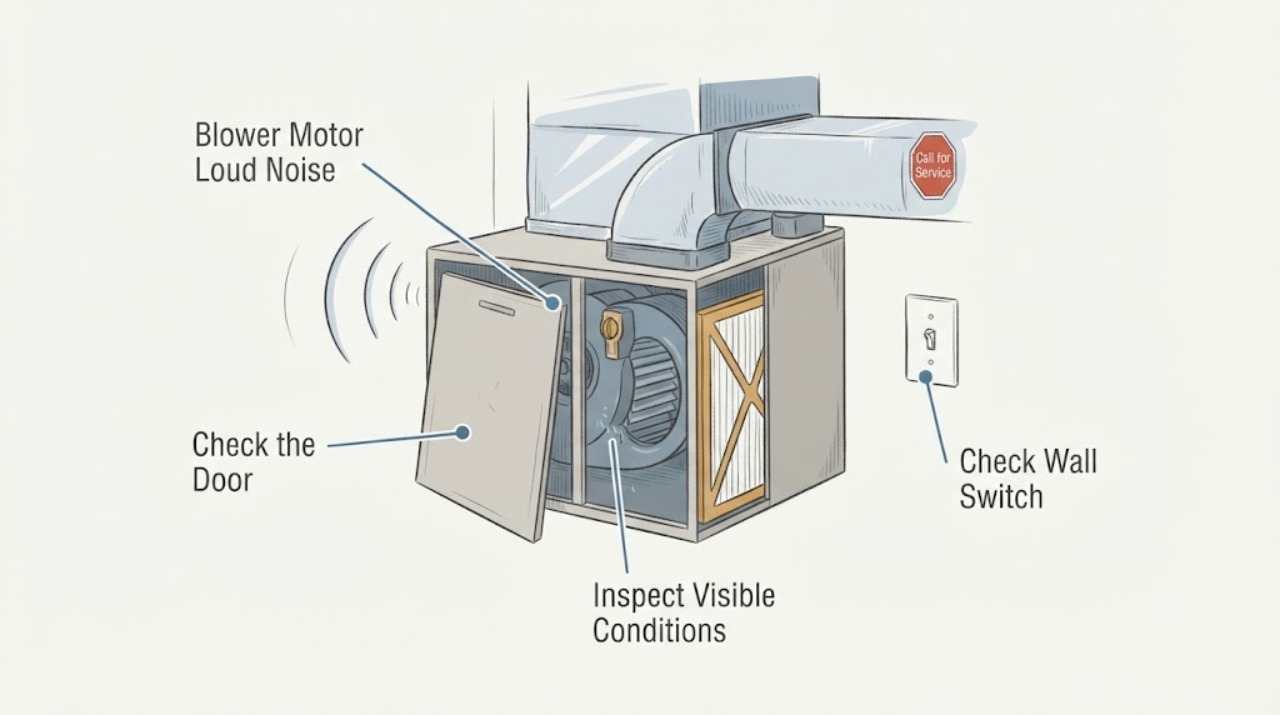
Blower Motor Loud Noise: Safe HVAC Checks
A new or unusually loud noise from the indoor blower is not something to diagnose by opening the air handler. Humming can come from a blower motor or another motor, while rattling, grinding, squealing, or banging can involve the blower wheel, worn bearings, a loose internal part, a capacitor, or airflow restriction.
-
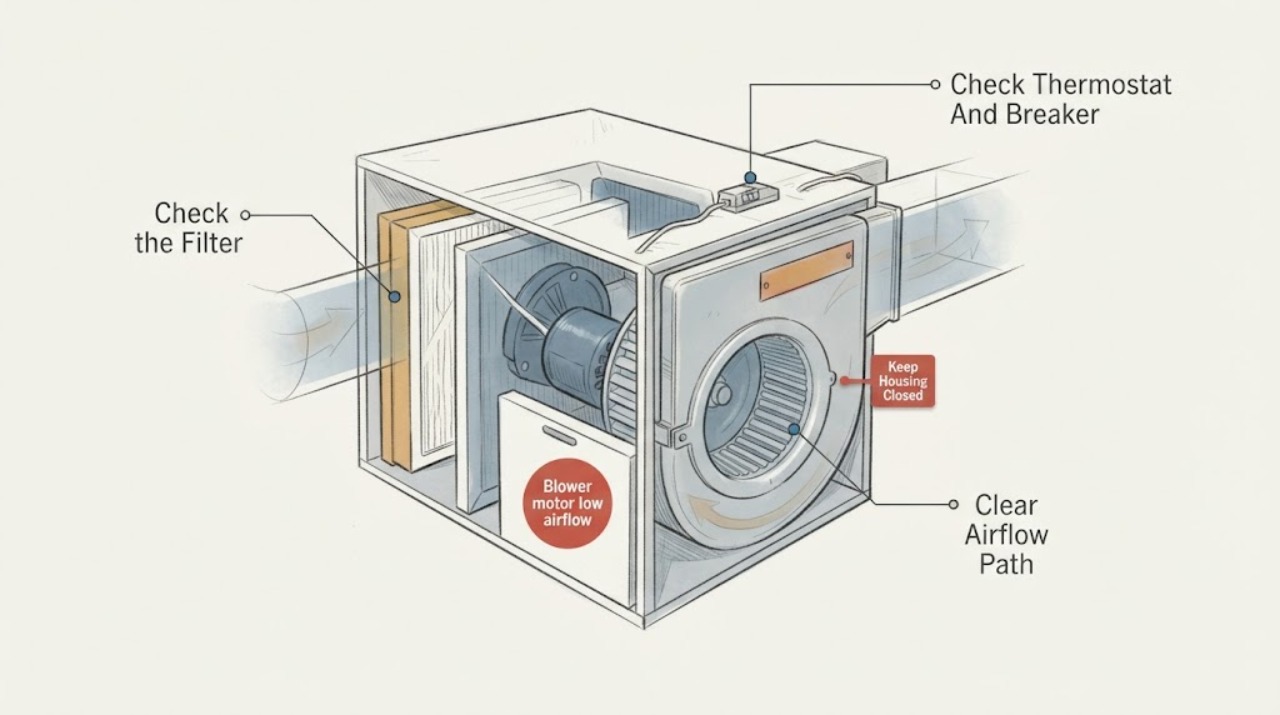
Blower motor low airflow: check the air path before calling the motor failed
Low airflow does not by itself prove that the blower motor has failed. First note whether every register is weak or only one area, confirm the thermostat is calling normally, inspect and replace an accessible filter exactly as the equipment instructions specify, and make sure return grilles and supply registers are not blocked.
-
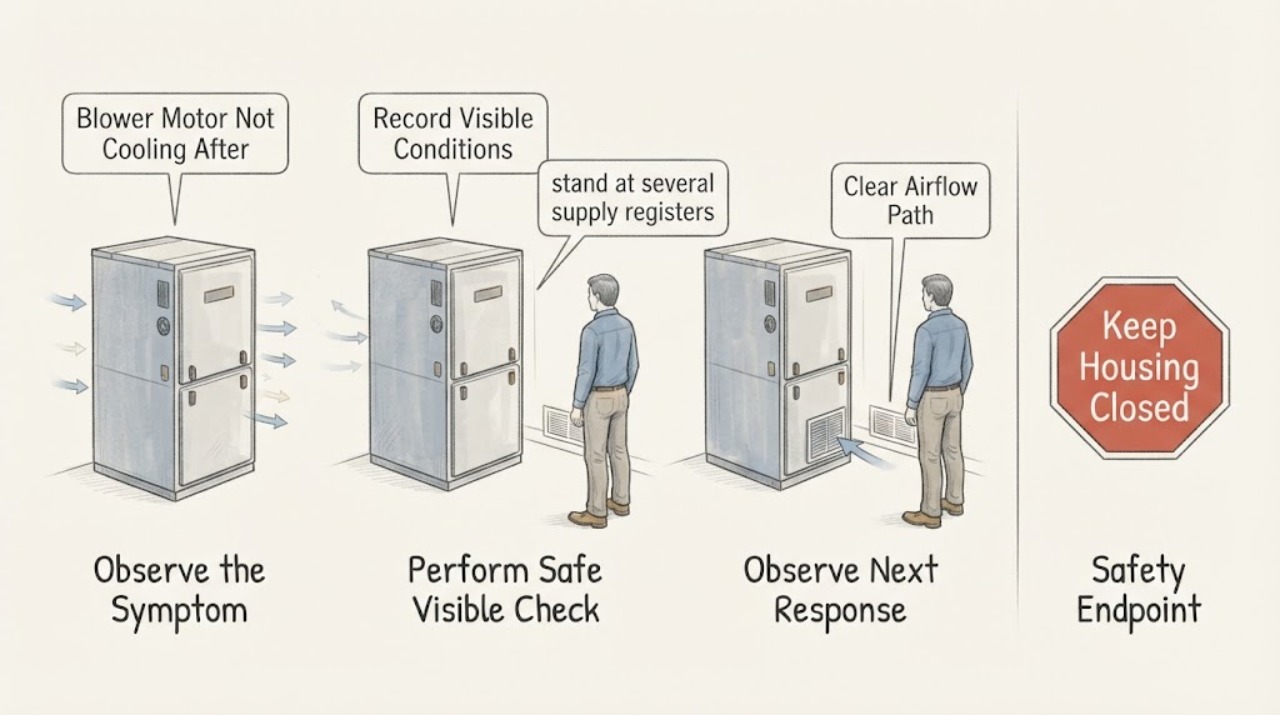
Blower Motor Not Cooling After a Blower Motor Change
If an air conditioner stopped cooling after the blower motor was changed, first separate an airflow failure from a refrigeration failure. From the thermostat and registers, check whether the system is calling for cooling and whether air is moving.
-
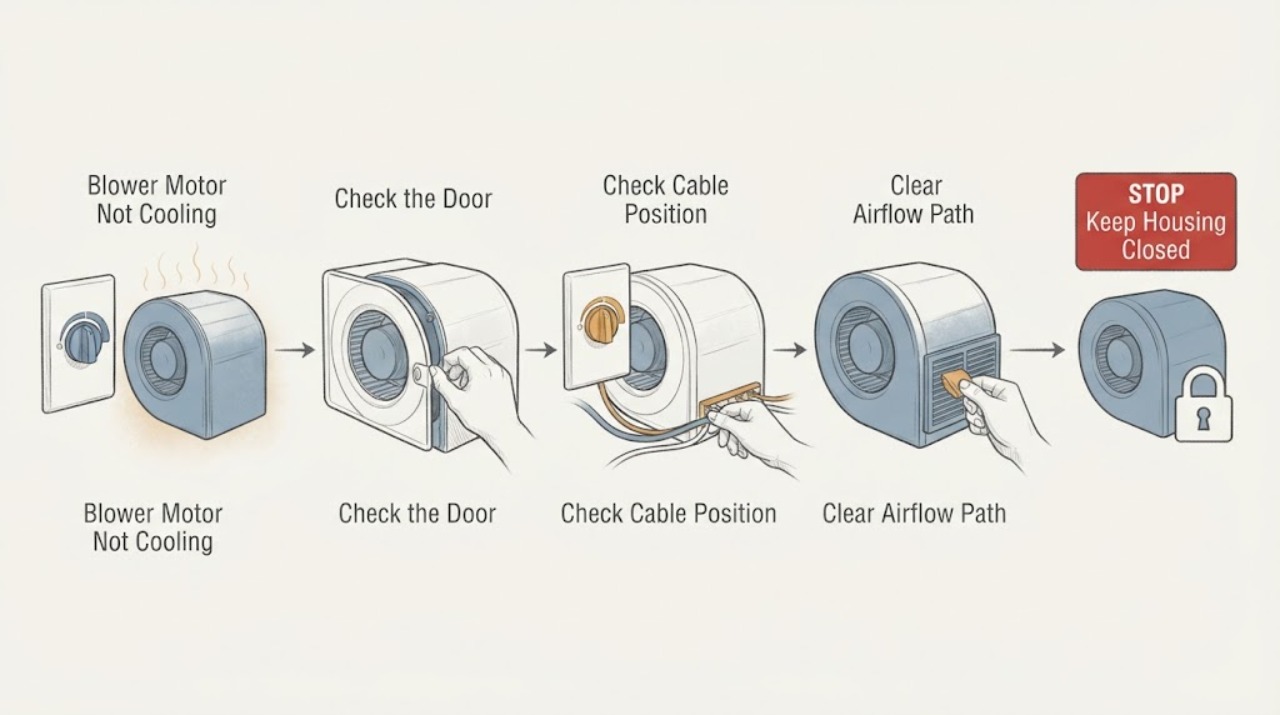
Blower Motor Not Cooling: Check the Thermostat Before HVAC Service
A blower motor does not create cooling by itself: it moves air through the indoor unit while the thermostat calls for cooling and the outdoor system removes heat. First separate no airflow from warm airflow.
-
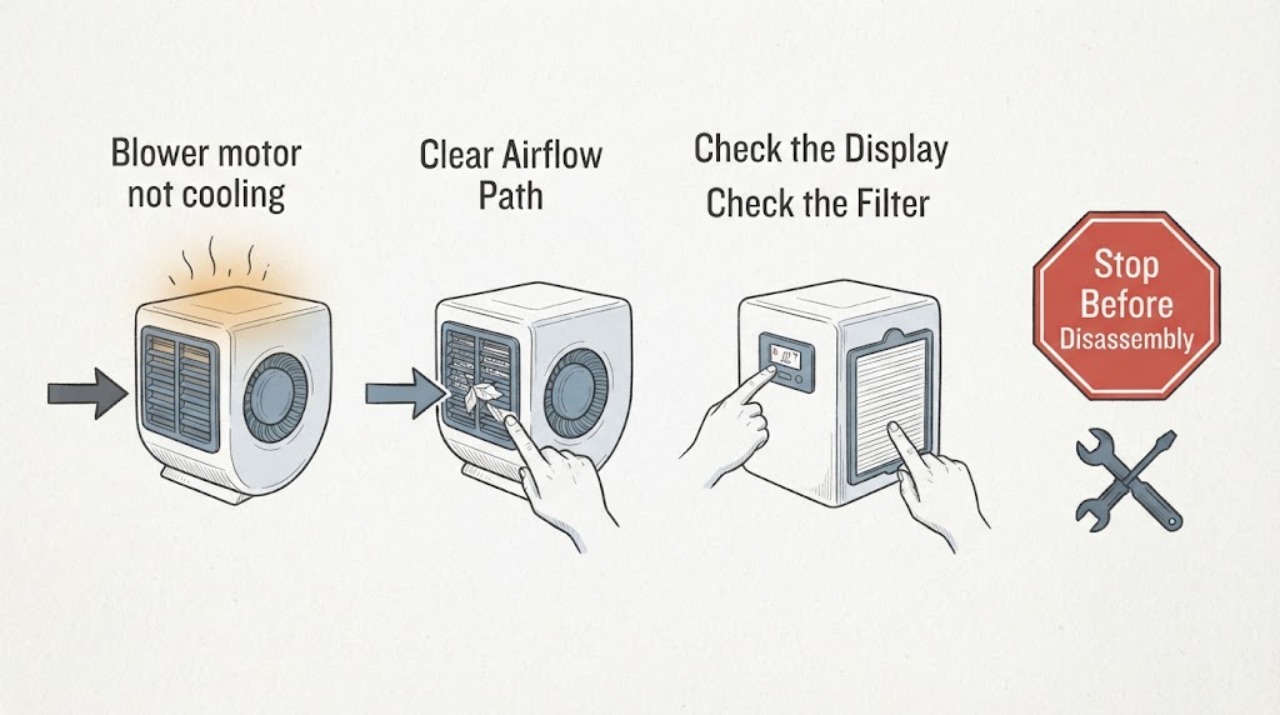
Blower motor not cooling: separate airflow loss from an AC cooling fault
A blower motor does not create cooling by itself: it circulates air through the indoor coil and supply ducts, so a failed or overheating blower can cause little or no airflow, while normal airflow with warm air points to the thermostat, outdoor unit, coil, refrigerant, or another system problem.
-
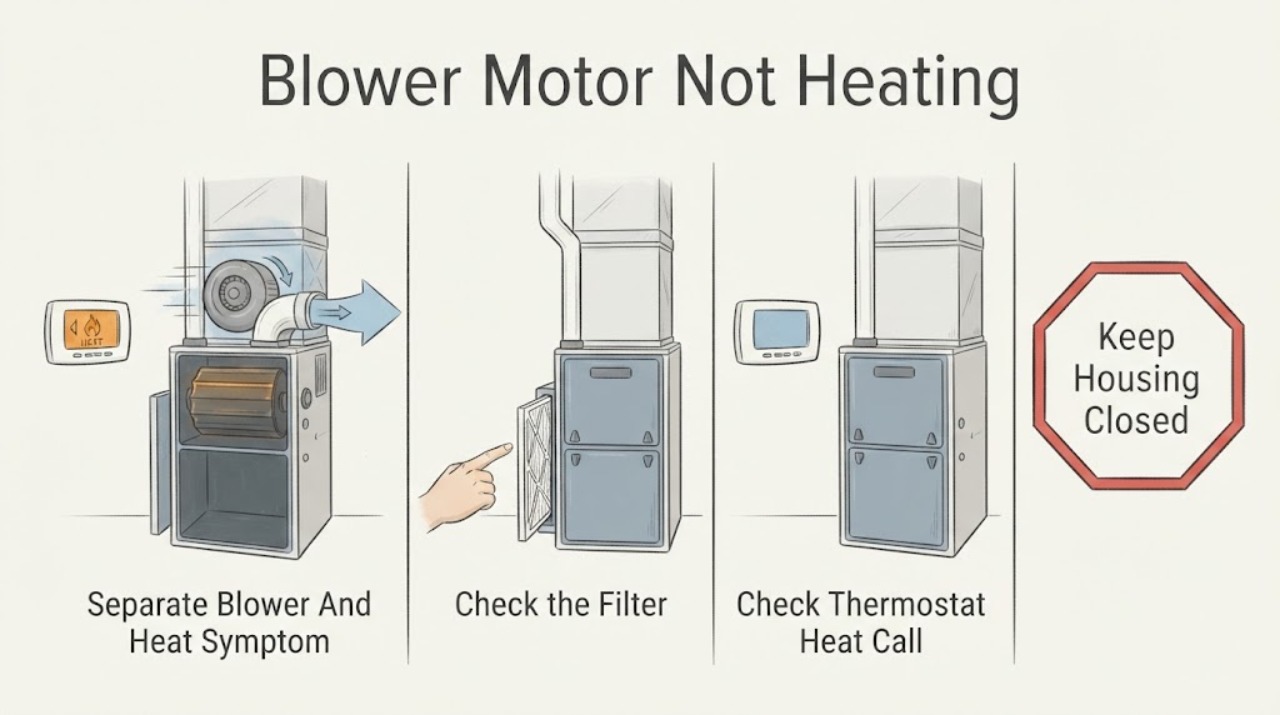
Blower Motor Not Heating: Why the Furnace Blows Cold Air
A blower motor does not create heat; it moves return air across the furnace heat exchanger and into the rooms. First determine whether the blower is running but the air is cold, or whether the blower is not running at all.
-
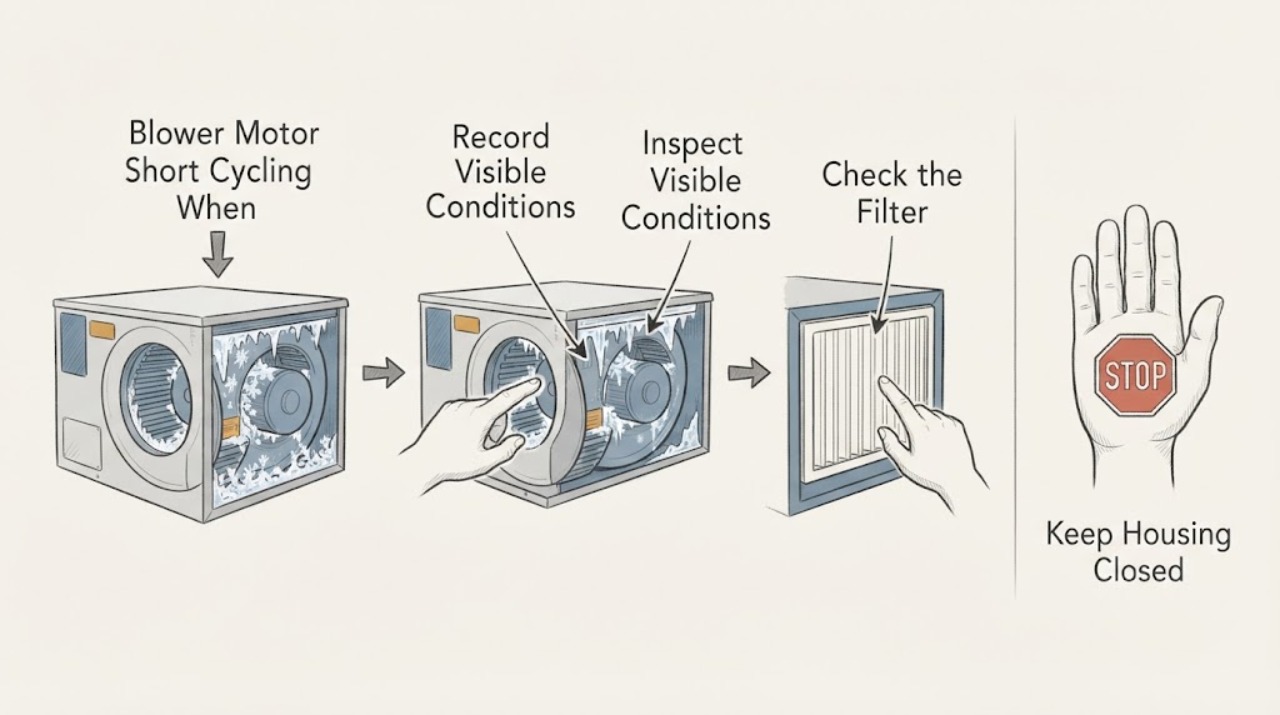
Blower Motor Short Cycling When the Inside Is Frozen Up
If the inside of an HVAC system is frozen up and the blower motor is short cycling, turn the cooling function off and allow the evaporator coil to thaw naturally. Do not keep restarting cooling, chip the ice, pour hot water on the coil, or open the air handler.
-
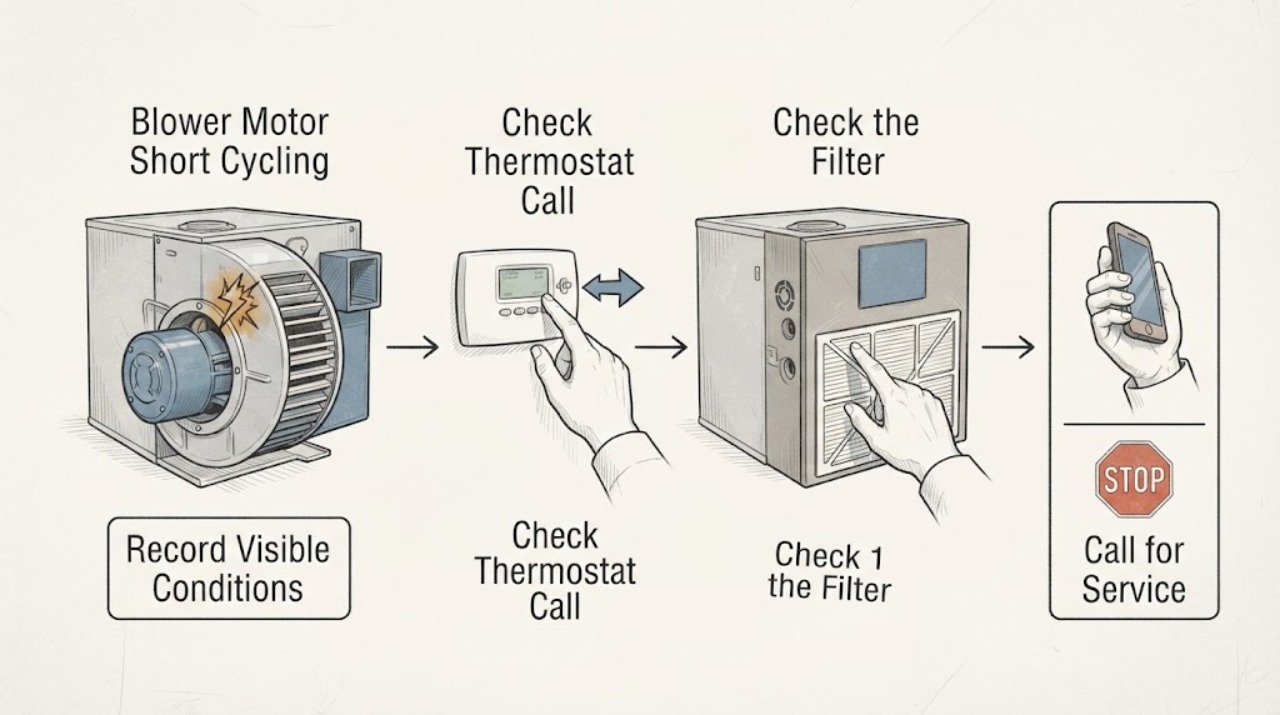
Blower Motor Short Cycling: Check Airflow and the Thermostat First
A blower motor that appears to short cycle may actually be reacting to a dirty filter, restricted return airflow, a thermostat call that starts and stops, a frozen coil, a condensate safety shutdown, or a blower, control, or cooling-side fault. Record the complete on/off pattern and first check the thermostat mode and schedule, the accessible filter, and room-side airflow.
-
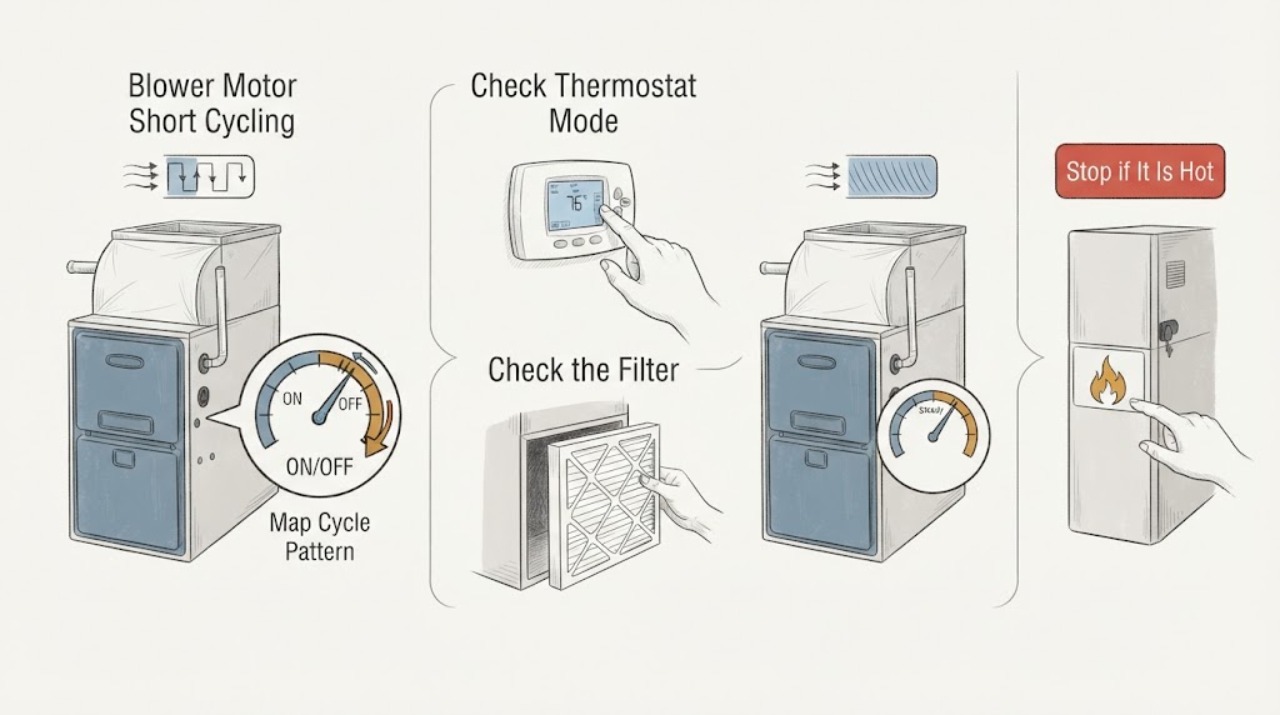
Blower Motor Short Cycling: Safe Checks and Next Steps
A blower motor that starts and stops repeatedly before the heating or cooling call is complete is not the same as a normal brief fan overrun. First determine whether only the blower is cycling or the whole HVAC system is ending its call, then check the thermostat fan mode, the accessible air filter, and blocked return or supply grilles.
-
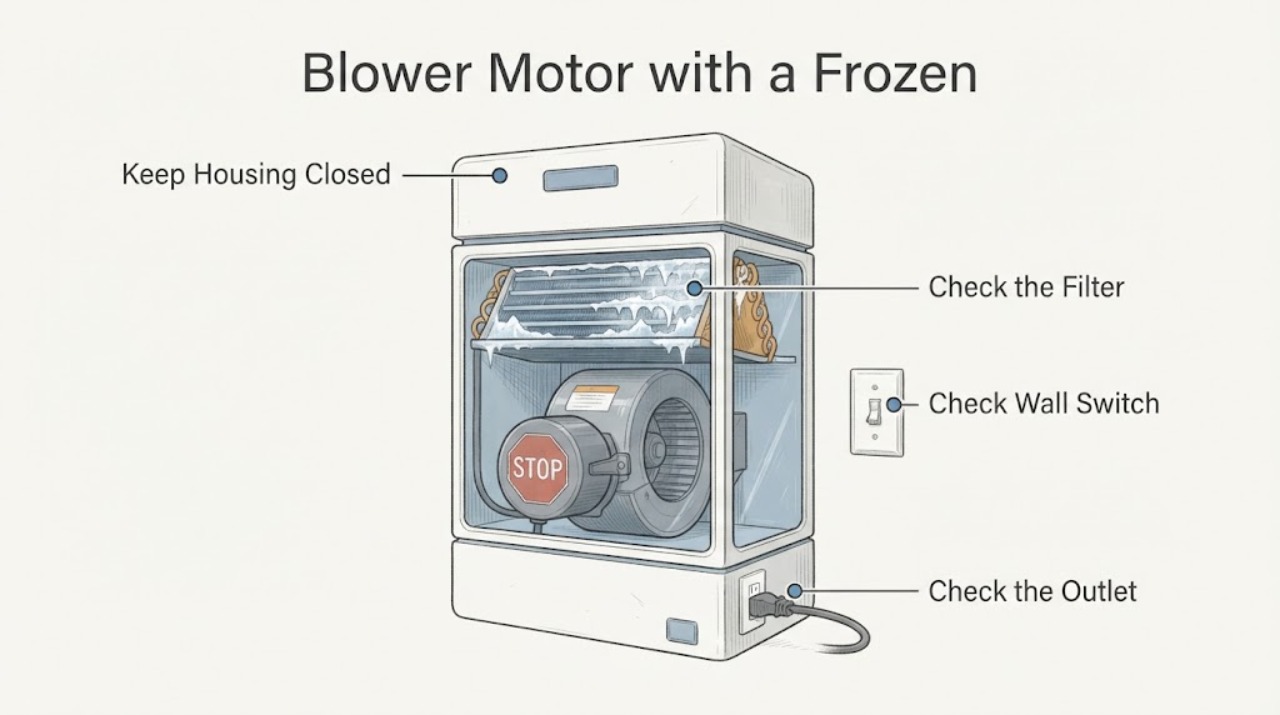
Blower Motor with a Frozen Evaporator Coil: Safe HVAC Checks
A frozen evaporator coil can restrict airflow enough to make a blower motor struggle, overheat, or stop, while a failing blower motor can also reduce airflow and allow the coil to freeze. Turn the cooling function off and let the evaporator coil thaw naturally; do not chip the ice, pour water on it, or keep running cooling through it.
-
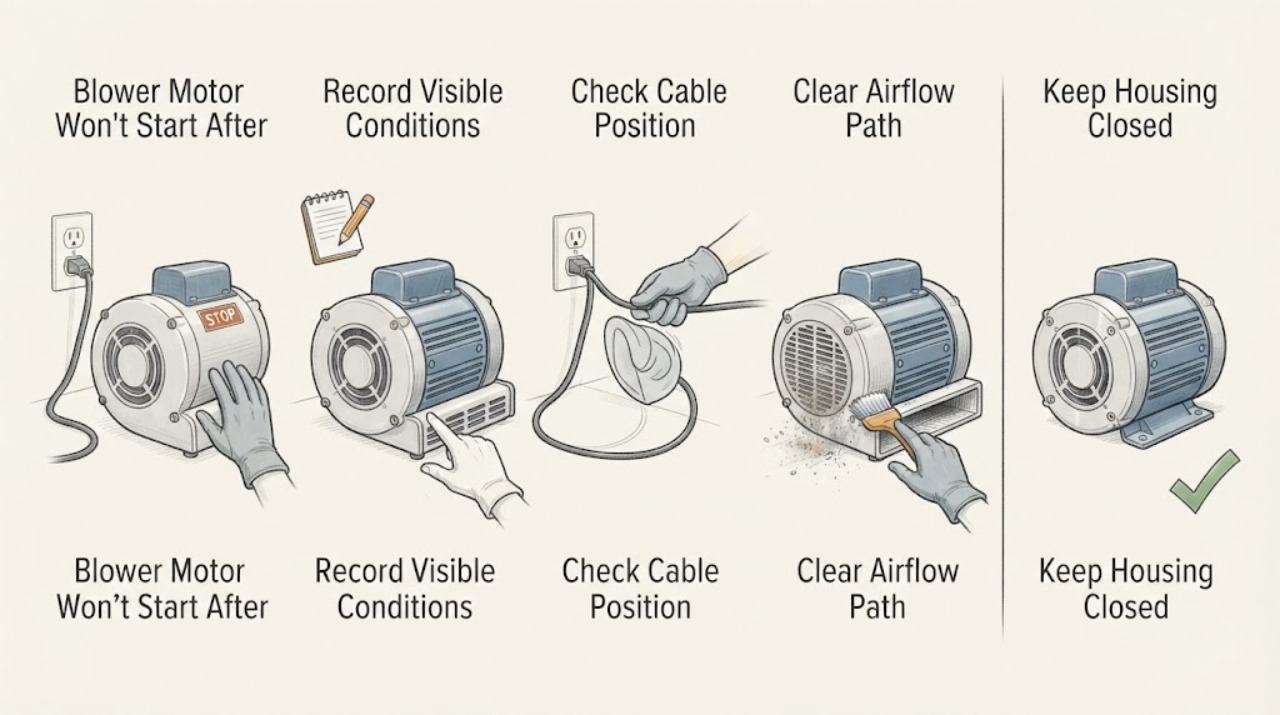
Blower Motor Won't Start After Spinning Manually
If an HVAC blower motor still will not start after someone spun the wheel manually, that hand movement does not prove the motor, capacitor, control, or power circuit is healthy. Do not repeat the hand-spin test while the equipment is connected or energized, and do not reach through a grille or access panel.
-
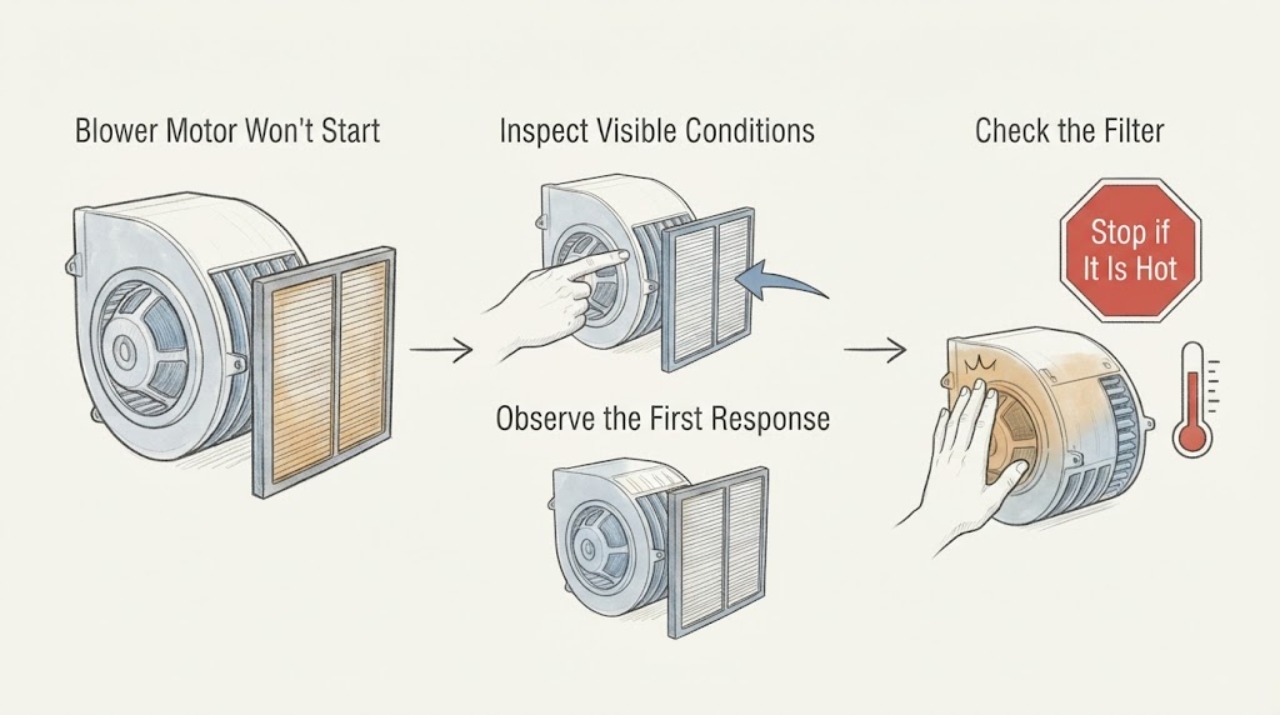
Blower Motor Won't Start: Check the Filter and Airflow Before HVAC Service
If the HVAC blower motor will not start, first separate a thermostat command problem from a loss of power, a loaded filter, blocked airflow, an open access-door safety switch, or a failed motor or starting component. Confirm the thermostat call, observe whether the indoor fan and outdoor unit respond, inspect only the accessible filter and grilles, and look for visible ice or water.
-
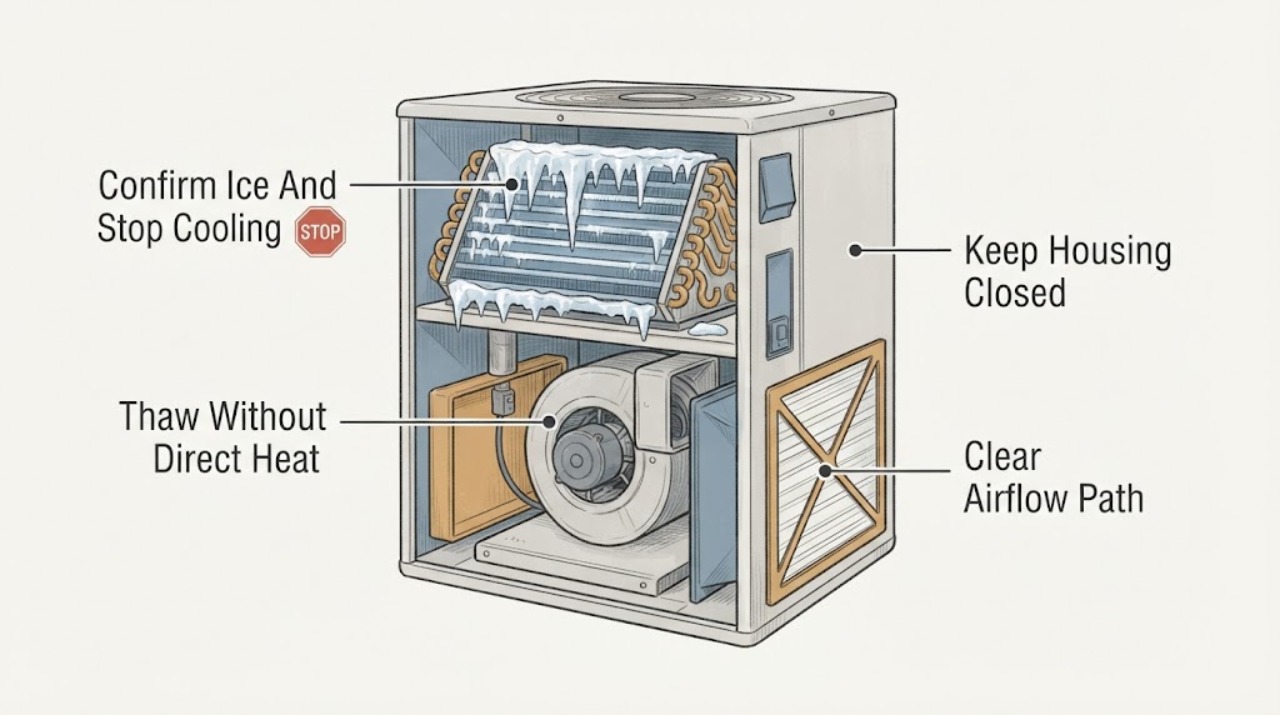
Carrier Central Air Conditioner Blower Motor with Frozen Evaporator Coil: What to Check and What to Do Next
Turn the cooling function off as soon as you see ice on the evaporator coil or refrigerant line. A frozen coil can block airflow, and Carrier warns that continuing to run the system can damage the compressor and may allow a blower motor to be blocked or seized by ice.
-
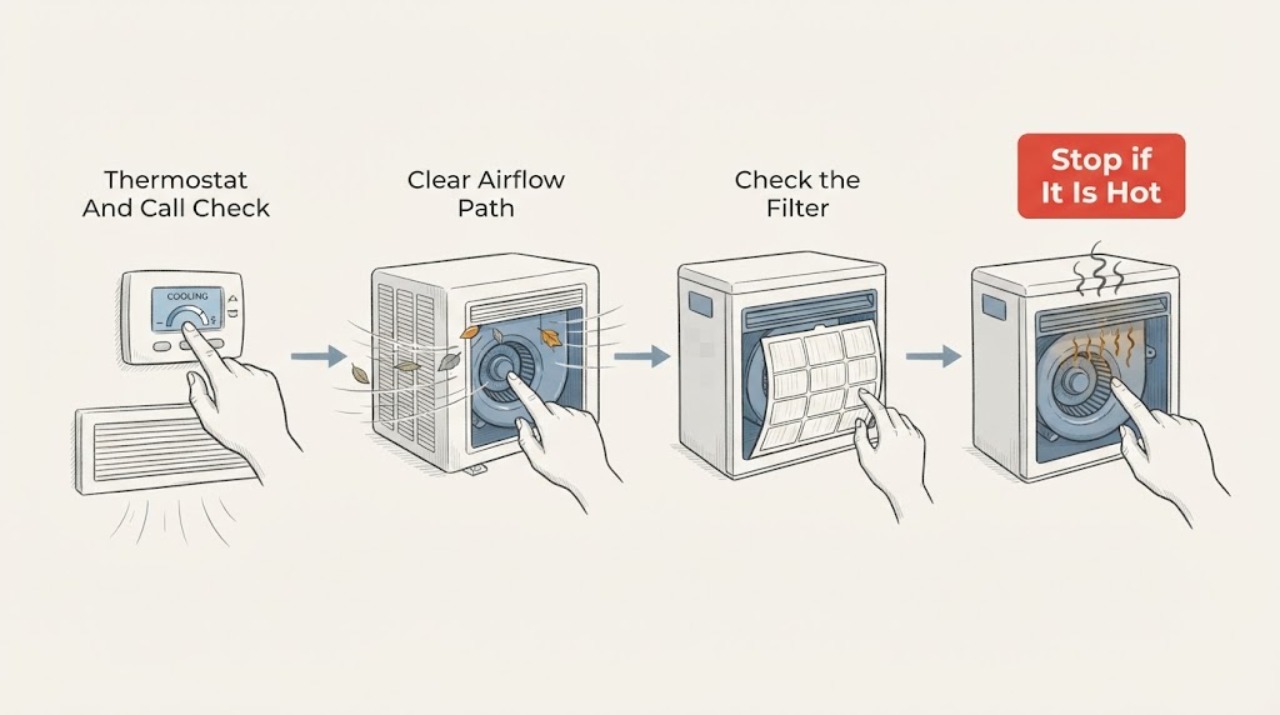
Central air conditioner blower motor not cooling: What to Check and What to Do Next
A central AC blower motor problem usually shows up as weak or no indoor airflow, but warm air can also come from thermostat settings, a restricted filter, a frozen coil, an outdoor-unit fault, or another control problem. Start with safe observations: read the thermostat, compare airflow at several registers, inspect only an accessible filter, and look and listen at the air handler and outdoor unit without opening panels.
-
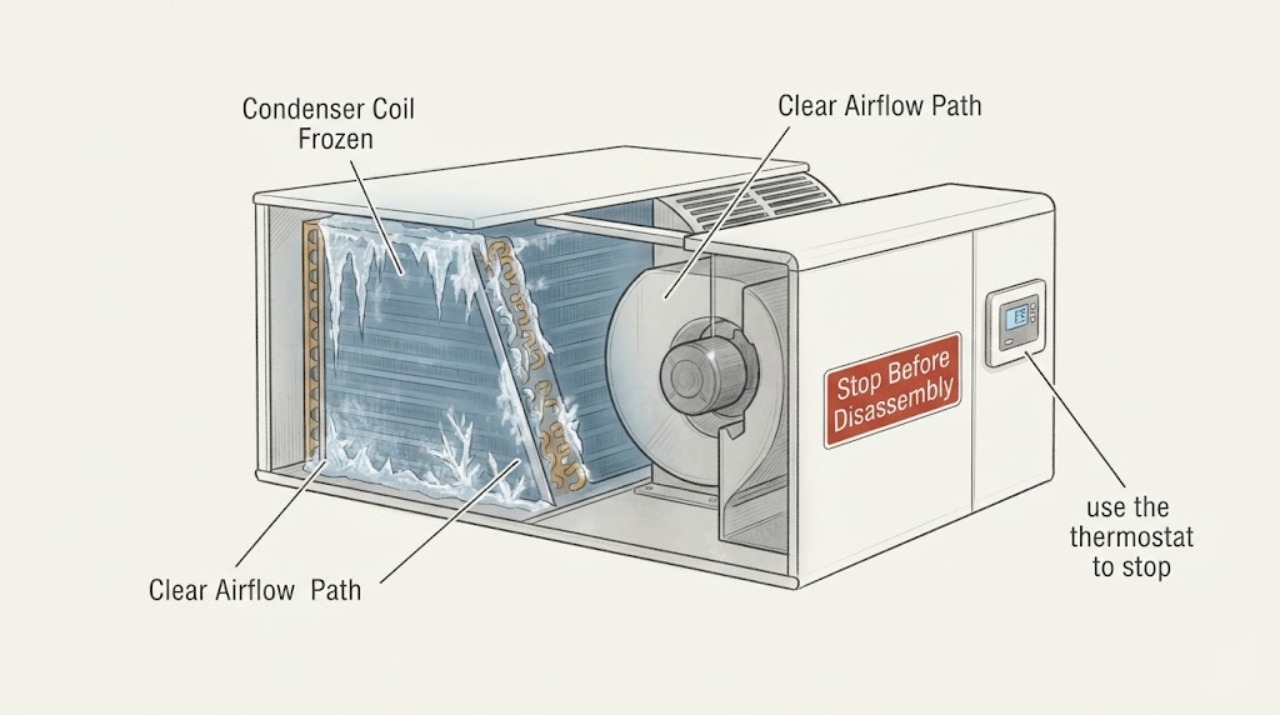
Condenser Coil Frozen: Distinguish Outdoor Ice from a Blower-Motor Airflow Fault
A frozen coil at the outdoor condenser is not automatically a blower-motor failure. In cooling mode, the coil that normally freezes is usually the indoor evaporator; an outdoor condenser coil or refrigerant line icing is more often associated with a heat-pump heating cycle, a system fault, or ice carried over from an evaporator problem.
-
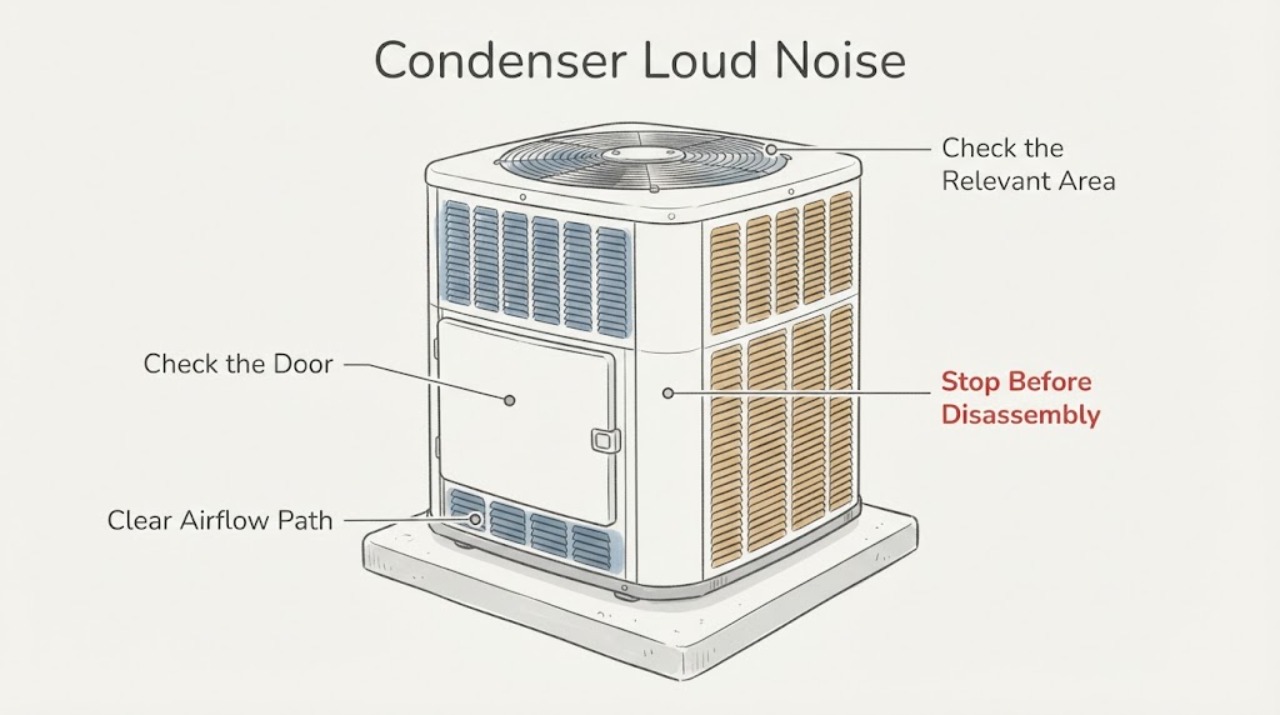
Condenser Loud Noise: Find the Source Before It Damages the System
A loud sound blamed on the condenser may be coming from the outdoor condenser fan or compressor, or from the indoor blower motor that shares the same cooling call. First identify whether the sound is indoors or outdoors and whether it starts, continues, or stops with the cooling cycle.