
On this page
Start here
Quick answer
There is no reliable number of days or loads after which dryer rollers become covered in lint and hair. Lint accumulation depends on the dryer design, lint-screen and exhaust condition, loads, and whether lint is escaping into the cabinet. Clean the lint screen and inspect only the accessible chute, then use the sound pattern to separate a temporary roller thump after non-use from a persistent squeak, rumble, or grinding noise that needs service; do not open the cabinet or lubricate rollers yourself.
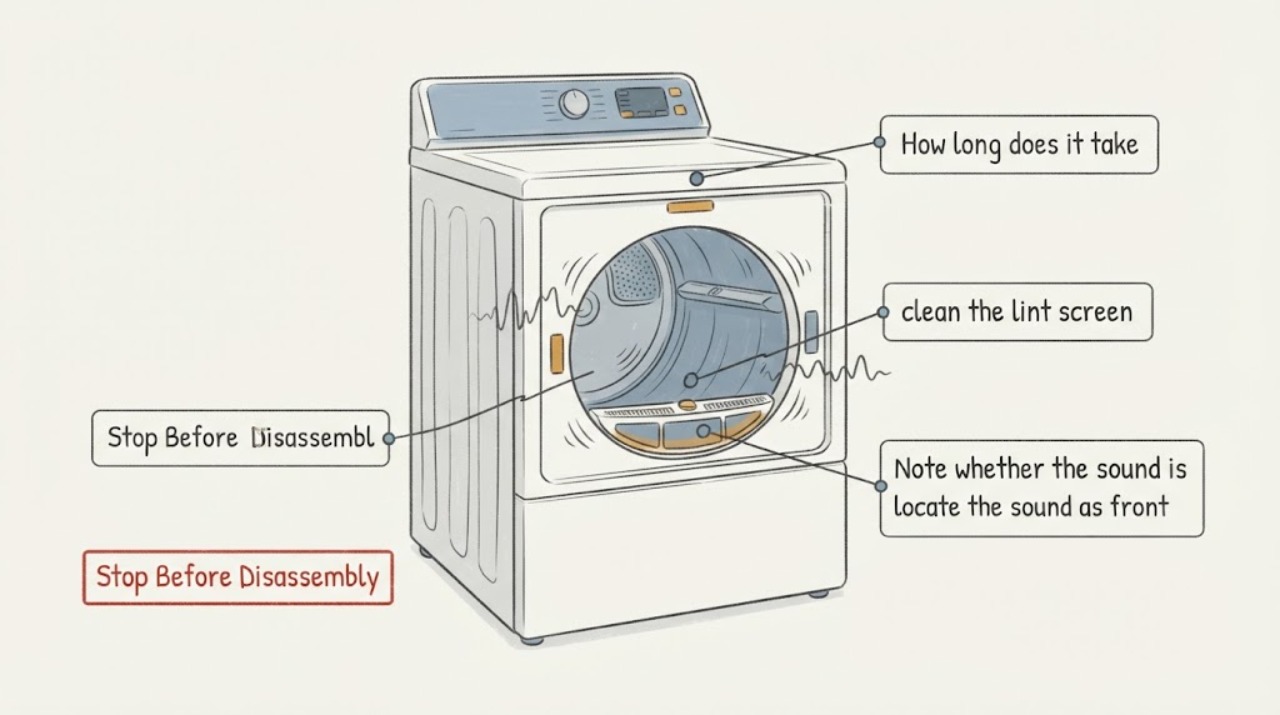
Work through in order
Diagnostic checks
Use only checks that match the exact appliance or system and its official guide.
-
Check 1
After the dryer is cool and unplugged, clean the lint screen and look into the accessible lint chute for visible lint or foreign objects; keep the lint screen installed during operation and do not reach through the chute or open the cabinet.
Expected result: The screen or accessible chute is heavily loaded, or it is reasonably clear while the noise continues.
Next step: Clean the accessible path as the manufacturer permits. If the noise remains, continue by identifying its timing and character rather than estimating a roller-cleaning interval.
Why this matters
Why: A dirty accessible lint path can contribute to noise or airflow problems, but its condition does not establish how long lint has been on internal rollers or prove that rollers are the cause.
-
Check 2
Note whether the sound is a light thump only during the first few minutes after the dryer has sat unused, or whether it persists through regular cycles; do not repeatedly run the dryer just to test it.
Expected result: The thump fades after a short period, or the noise does not diminish and instead becomes a persistent squeak, rumble, or grinding sound.
Next step: If the sound fades as described, monitor it and follow the appliance manual. If it persists or worsens, stop using the dryer and arrange a qualified inspection.
Why this matters
Why: Whirlpool explains that rollers can temporarily flatten during non-use and regain shape during operation; a persistent sound is a different symptom and can involve worn roller shafts, bearings, glides, belt, or other parts.
-
Check 3
From outside the dryer, locate the sound as front, rear, bottom, or drum interior while observing whether the machine is level and whether loose objects are touching it; do not remove panels or apply lubricant.
Expected result: The noise is a rear squeak or rumble, a rattle from the drum or lint chute, or a vibration related to an unlevel cabinet.
Next step: Remove only accessible loose objects and correct an obvious external leveling issue if the manual allows it. Persistent rear, grinding, or mechanical noise needs licensed service.
Why this matters
Why: Official guidance associates rear squeaks with roller shafts or other drum-support parts, rattles with objects in the drum or lint chute, and squeaks at the bottom with leveling or loose legs; sound location narrows the next step but does not prove lint-covered rollers.
Use your observations
Decision map
Find the observation that best matches what you see, then follow the next safe action.
-
PATH 01Next step
What you see
The dryer makes a light thump only after sitting unused, and the sound diminishes during the first minutes.
Do this next
Follow the manual and monitor; seek service if the sound stops diminishing or changes character.
Why this path and its safety boundary
Why it matters: This pattern is consistent with temporary roller flat spots described by Whirlpool, not a measured lint buildup interval.
-
PATH 02Next step
What you see
The noise persists through normal cycles, especially as a rear squeak, rumble, or grinding sound.
Do this next
Stop using the dryer if the noise is severe or worsening and have a qualified technician inspect it.
Why this path and its safety boundary
Why it matters: Persistent noise can involve worn roller shafts, bearings, glides, belt, or another mechanical part; lint coverage cannot be inferred from elapsed time.
-
PATH 03Next step
What you see
The sound is a rattle and accessible lint-chute or drum objects are visible.
Do this next
Remove only the accessible object with the dryer unplugged; arrange service if the noise remains or requires disassembly.
Why this path and its safety boundary
Why it matters: The object may be striking the blower or drum rather than the rollers being covered in lint.
Helpful context
Understand the symptom
A dryer roller does not have a published “lint and hair coverage” interval. Manufacturer guidance uses maintenance and symptoms instead: clean the lint path regularly, identify when the sound occurs, and escalate persistent or mechanical noise. A roller thump after the dryer has sat unused is different from a squeak that continues through every cycle.
When checks do not resolve it
Need a professional?
Stop using the dryer and arrange qualified service for persistent squealing, grinding, loud rumbling, a burning smell, visible cabinet lint escape, poor airflow, or any noise that requires opening panels, reaching the blower, servicing rollers, or lubricating internal parts.
Have this ready
- Provide the noise type, where it is loudest, whether the dryer sat unused, whether the lint screen/chute was clear, and whether airflow or heat changed.
Common questions
FAQ
How many loads does it take for lint and hair to cover dryer rollers?
There is no manufacturer-supported load count or time interval. Roller contamination depends on the dryer’s lint path and use; the sound pattern and a qualified inspection are more reliable than an elapsed-time estimate.
Should I lubricate or clean the rollers through the dryer cabinet?
No. Whirlpool says accessing and lubricating internal drum rollers requires professional help, and its guidance warns against using WD-40 because it is combustible. Keep internal roller service with a qualified technician.
Read the exact guide
Official sources
- Possible Fixes for a Dryer That’s Making Loud NoisesMaytag · Manufacturer guidance for general household dryer loud-noise symptoms, lint-chute objects, level checks, roller-related parts, and service boundaries.
- Dryer Sounds and NoisesWhirlpool Product Help · Manufacturer guidance for general household dryer roller sounds, non-use flat spots, and foreign-object noise.
- How to find the cause of a squeaky dryer and fix itWhirlpool · Whirlpool general dryer noise guidance for sound location, roller-shaft build-up, professional internal service, and no WD-40.
Community feedback
Share a repair observation
Share a plain-text repair observation. Accepted observations are published automatically; this page may take a moment to update.