
On this page
Start here
Quick answer
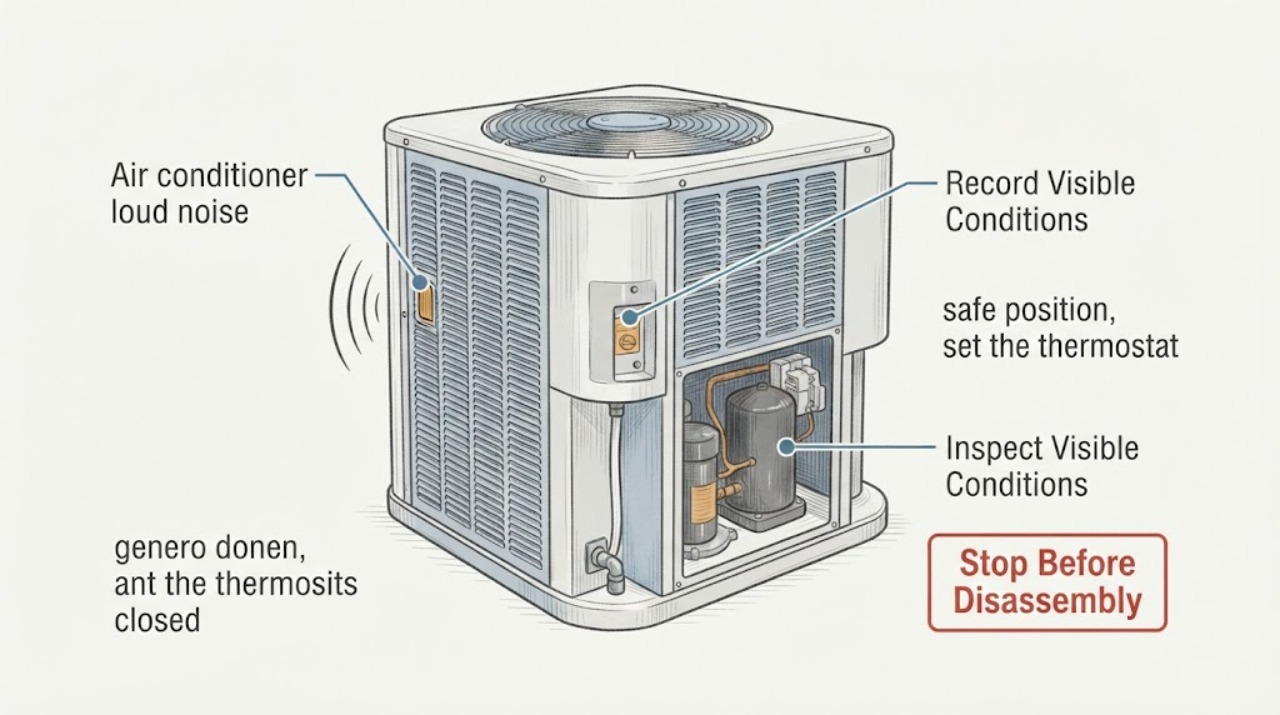
A loud air conditioner can be a harmless startup or airflow sound, but a new bang, grinding noise, repeated buzzing or clicking, violent vibration, or a sound that comes with poor cooling can indicate an outdoor fan, compressor, contactor, electrical, mounting, or refrigerant problem. From a safe distance, note whether the sound comes from the indoor or outdoor unit and whether it starts, stops, or changes with a cooling call. You may check thermostat settings and an accessible filter, but do not remove an electrical cover, touch the contactor or compressor, measure live voltage, open the refrigerant circuit, or keep operating a unit with smoke, burning odor, arcing, overheating, ice, a refrigerant release, or repeated breaker trips. Turn the system off from a safe control and arrange HVAC service when the noise is new, severe, or recurring.
Work through in order
Diagnostic checks
Use only checks that match the exact appliance or system and its official guide.
-
Check 1
From a safe position, note whether the noise comes from the indoor air handler, the outdoor cabinet, the ductwork, or a nearby object, and record whether it begins at startup, during steady cooling, at shutdown, or when the thermostat stops calling.
Expected result: A sound at the outdoor unit during a cooling call can involve the fan, compressor, contactor, cabinet, or mounting. A noise inside or in ductwork may be airflow or blower related. Rapid clicking or chatter at startup is different from a steady operating hum.
Next step: Record a short sound description and the operating stage, then turn the system off from a safe thermostat control if the noise is new, severe, or worsening. Do not keep cycling the system to reproduce it.
Why this matters
Why: Location and timing narrow the service path without requiring access to energized parts or assumptions about a specific component.
-
Check 2
With the system off and from outside the cabinet, look for an object touching the unit, a loose-looking grille, unusual cabinet movement, blocked air space, debris at the visible fan guard, or a unit that is visibly leaning; do not reach through the guard or remove a panel.
Expected result: A rattling panel, contact with a wall or object, or visible vibration can amplify a normal motor sound. Severe shaking, scraping, a fan that appears to strike something, or a leaning cabinet suggests a mechanical or mounting fault.
Next step: Keep people away and leave the system off for severe vibration, scraping, a damaged guard, or a cabinet that has shifted. Request HVAC service; do not push the cabinet, bend tubing, or reach into the fan area.
Why this matters
Why: External resonance and fan contact can sound like compressor damage, while severe movement can damage refrigerant tubing, wiring, or mounts if operation continues.
-
Check 3
From a dry, safe position, set the thermostat to OFF and listen only long enough to determine whether the abnormal sound stops with the cooling call; do not access the electrical disconnect, contactor, capacitor, or compressor terminals.
Expected result: A sound that stops when the cooling call ends is associated with the operating cycle. A sound that continues with the system off may come from another appliance, a fan with a delayed stop, or a mechanical problem that needs immediate assessment.
Next step: If the sound is persistent, returns immediately, or is accompanied by heat, odor, smoke, arcing, or poor cooling, leave the system off and arrange HVAC service. Do not restore the call repeatedly.
Why this matters
Why: This separates a call-related HVAC symptom from a nearby or persistent sound without a live electrical test.
-
Check 4
If there is no smoke, burning odor, ice, water near electrics, or other hazard, inspect only the user-accessible indoor air filter and return-air path; replace or clean the filter only as its equipment instructions allow, without opening the air handler.
Expected result: A blocked filter or restricted return can reduce airflow, cause warmer rooms or short cycling, and make the system work harder. A clean accessible filter with a continuing outdoor mechanical noise does not clear the compressor or contactor.
Next step: Run no further test if the filter is damaged, the coil is iced, water is present, or cooling remains abnormal. Keep the system off and request HVAC service for persistent noise or inadequate cooling.
Why this matters
Why: Airflow is a separate branch that can contribute to performance symptoms, but it cannot be used to diagnose energized outdoor components.
-
Check 5
Observe cooling performance and electrical behavior from outside the equipment: note warm supply air, repeated short cycling, the outdoor unit failing to start, a breaker opening, or a contactor-like buzz or rapid chatter. Do not reset a breaker repeatedly and do not open the disconnect or cabinet.
Expected result: Carrier associates loud or unusual outdoor noise with condensing-unit faults and warns that buzzing, burning odor, or ice calls for shutdown and service. Copeland describes contactor failure risks including arcing and brownouts; Danfoss lists relay, motor, compressor, mounting, and supply conditions among possible noise causes.
Next step: Leave the HVAC system off and arrange qualified HVAC service. If the breaker trips again, there is a hot or damaged disconnect, smoke, or visible arcing, keep clear and obtain urgent electrical or emergency help as appropriate.
Why this matters
Why: Noise plus poor cooling, cycling, loss of start, or electrical symptoms raises the probability of a compressor, contactor, motor, refrigerant, or supply fault beyond a homeowner adjustment.
-
Check 6
Prepare a service handoff with the equipment model if known, sound location and description, start or stop timing, thermostat state, cooling result, filter condition, visible ice or water, breaker behavior, and any recent installation or electrical work; leave the unit off when the noise is abnormal.
Expected result: A technician can use the pattern to separate cabinet or fan vibration from compressor, contactor, control-voltage, refrigerant, or supply faults. Refrigerant work requires trained handling and must not be inferred from noise alone.
Next step: Request an HVAC technician experienced with the equipment and refrigerant type. EPA states that technicians servicing refrigerant circuits must meet applicable certification requirements; do not vent refrigerant or attempt a recharge.
Why this matters
Why: The component identity is a dispatch clue, not a confirmed diagnosis; opening the sealed or electrical system can add injury, environmental, and equipment risk.
Use your observations
Decision map
Find the observation that best matches what you see, then follow the next safe action.
-
PATH 01Next step
What you see
The noise is a brief, familiar startup or airflow sound, with normal cooling and no heat, odor, vibration, or electrical symptom.
Do this next
Arrange qualified service and follow the exact model guidance.
Why this path and its safety boundary
Why it matters: Monitor from a safe distance and keep the filter and airflow path maintained according to the equipment instructions. Arrange service if the sound changes, grows louder, or cooling changes.
-
PATH 02Next step
What you see
A new rattling or vibration changes when the outdoor cabinet, grille, or nearby object is involved.
Do this next
Arrange qualified service and follow the exact model guidance.
Why this path and its safety boundary
Why it matters: Keep the system off if movement or scraping is severe and have an HVAC technician inspect mounting, fan clearance, tubing, and cabinet resonance. Do not reach through the guard or bend tubing.
-
PATH 03Next step
What you see
A buzz, rapid click or chatter, grinding, bang, or squeal occurs at compressor start or the unit fails to start.
Do this next
Arrange qualified service and follow the exact model guidance.
Why this path and its safety boundary
Why it matters: Turn the system off and request HVAC service for the contactor, compressor, motor, control, or electrical supply. Do not open the cabinet, repeatedly reset power, or replace a component by sound alone.
-
PATH 04Next step
What you see
Loud noise is paired with poor cooling, short cycling, ice, water, or an outdoor unit that overheats or stops.
Do this next
Arrange qualified service and follow the exact model guidance.
Why this path and its safety boundary
Why it matters: Leave the system off and call HVAC service for airflow, refrigerant, compressor, fan, and control diagnosis. Do not chip ice, open the refrigerant circuit, or recharge it yourself.
-
PATH 05Next step
What you see
Smoke, burning odor, visible arcing, a hot disconnect or cabinet, damaged wiring, water near electrics, or a repeated breaker trip is present.
Do this next
Arrange qualified service and follow the exact model guidance.
Why this path and its safety boundary
Why it matters: Stop immediately, keep clear, isolate power only from a safe and clearly accessible control, and obtain urgent electrical or emergency help. Do not touch the unit or reset the breaker again.
Helpful context
Understand the symptom
The assigned component is compressor,contactor, but a listener cannot safely identify either part by sound alone. The compressor and contactor are in or near the outdoor condensing unit, where high-voltage parts, a stored-energy capacitor, moving fan parts, and a sealed refrigerant circuit may be present. Use sound location, timing, cooling result, and visible symptoms to decide whether to stop and call an HVAC professional.
A short startup hum or a change in sound as the system begins a cooling cycle can be normal for some equipment. A new grinding, squealing, banging, loud buzzing, rapid clicking or chatter, or vibration that is getting worse is not a part-identification exercise. Do not remove the service panel to watch the contactor or compressor operate.
Safety boundary
Stop conditions
- Stop immediately for smoke, flame, burning odor, visible arcing, a hot or damaged disconnect or cabinet, damaged wiring, water near electrical parts, a repeated breaker trip, violent vibration, scraping fan contact, refrigerant release, or an ice-covered system.
- Do not remove the outdoor panel, touch a contactor, capacitor, compressor terminal, or fan, measure live voltage, open the refrigerant circuit, vent or recharge refrigerant, chip ice, bend tubing, or repeatedly cycle power.
- Leave the system off when a new loud noise returns, the compressor will not start, cooling is poor, the noise is paired with cycling or overheating, or the source cannot be identified safely.
Common questions
FAQ
Can a loud air conditioner noise mean the compressor is failing?
It can, especially when grinding, squealing, or banging is paired with poor cooling, overheating, or repeated breaker trips, but cabinet, fan, mounting, relay, and airflow problems can sound similar. Record the pattern and have an HVAC technician diagnose it.
What does a buzzing or clicking outdoor AC unit mean?
Buzzing or rapid clicking can involve the contactor, control signal, motor, compressor, or supply. Do not open the outdoor cabinet or keep cycling the system; shut it off and arrange service, especially if there is heat, odor, arcing, or a breaker trip.
Is it safe to keep running an air conditioner that is making a loud noise?
Do not keep running it when the noise is new, severe, worsening, or accompanied by poor cooling, ice, vibration, heat, odor, smoke, arcing, water, or electrical interruption. Turn it off from a safe control and request HVAC service.
Read the exact guide
Official sources
- Troubleshoot an Air Conditioner: 6 Steps to Fix an AC Not WorkingCarrier · Outdoor-unit noise, electrical hazards, airflow, icing, and professional escalation
- CompressorsDanfoss · Compressor and relay noise patterns, mounting, fan, supply, and service diagnosis
- What Technicians Need to KnowU.S. Environmental Protection Agency · Refrigerant service, recovery, and technician certification
- AC CompressorCarrier · Compressor symptoms, unusual noises, overheating, and repeated breaker trips
- Contactor UpgradeCopeland · Air-conditioning contactor failure risks, arcing, foreign objects, and brownouts
Community feedback
Share a repair observation
Share a plain-text repair observation. Accepted observations are published automatically; this page may take a moment to update.