
On this page
Start here
Quick answer
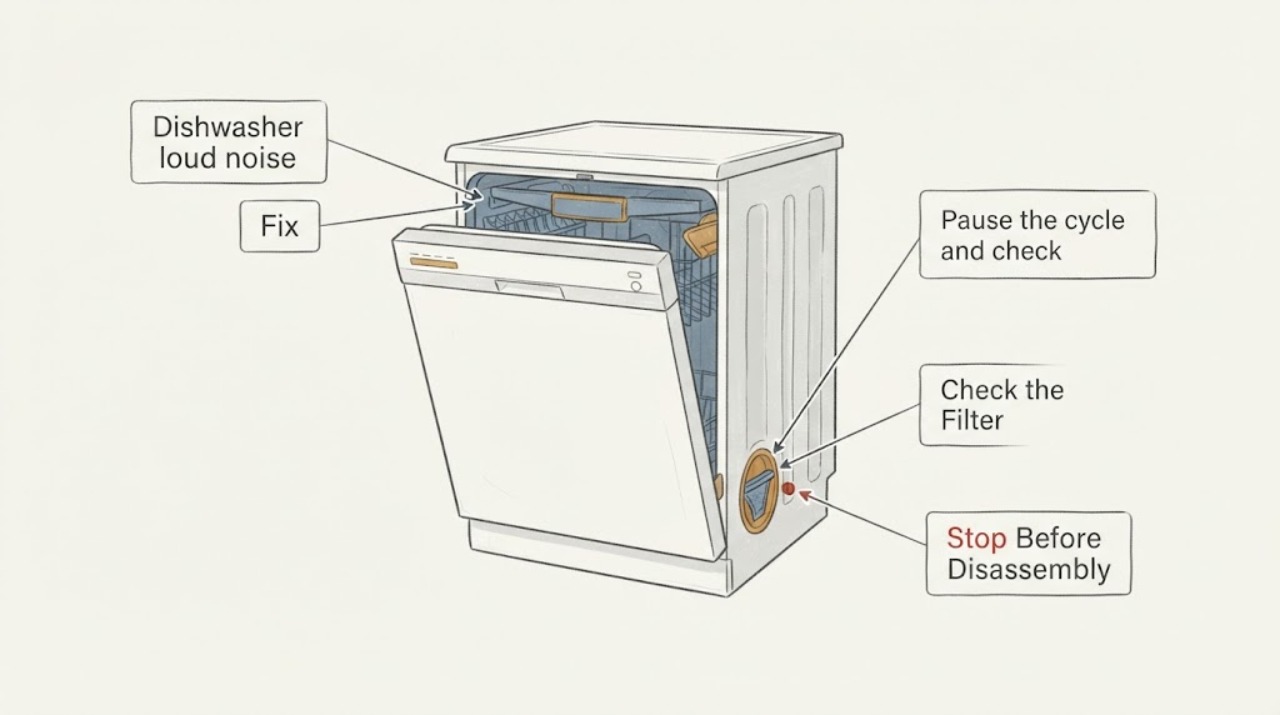
First note when the noise occurs in the cycle. LG says water-draw whistling, drain-pump buzzing that stops after draining, filter-cleaning growling and a high-temperature alert can be normal, while rattling may come from loading or a loose/clogged filter. Pause the cycle to secure dishes, keep utensils inside the racks, and with the dishwasher safely stopped clean and reseat the accessible filter according to the model manual. Persistent squealing or grinding, excessive noise, a slow sink drain, leakage or a sound that is different from the model's normal operation needs inspection; do not open the cabinet or assume the pump is bad.
Work through in order
Diagnostic checks
Use only checks that match the exact appliance or system and its official guide.
-
Check 1
Note the noise phase and pattern: while filling, during spray washing, while draining, during a selected express cycle, when the door is opened after a heated cycle, or continuously throughout operation.
Expected result: The sound is a water whistle, brief drain buzz, filter-related growl or high-temperature alert, or it is a persistent rattle, squeal, grind or unfamiliar noise.
Next step: If the sound follows a normal phase and stops as described, continue with loading and filter checks. If it is persistent, excessive or different from the unit's usual sound, pause the cycle and continue only with safe accessible checks.
Why this matters
Why: LG describes water-draw whistling, drain-pump buzzing that stops after draining, filter-cleaning growling and a high-temperature alert as expected possibilities; persistent or excessive sounds need a different path.
-
Check 2
Pause the cycle and check that dishes, cutlery and light plastic items are secure and that no utensil protrudes into a spray arm's path.
Expected result: A rack item or utensil can contact a spray nozzle or another dish, or the racks are correctly loaded and the noise remains.
Next step: Reposition the items with the dishwasher paused according to the model loading guidance. If the rattle continues with an empty, correctly loaded rack, stop troubleshooting by load position and arrange inspection.
Why this matters
Why: LG says improper loading can cause rattling and protruding utensils can hit spray nozzles or dishes; an orderly load makes that explanation less likely but does not diagnose an internal part.
-
Check 3
After stopping the cycle and following the model's safe access instructions, remove the accessible drain filter, inspect it for debris or looseness, clean it with warm running water and reinstall it securely.
Expected result: The filter is clogged, loose or incorrectly seated, or it is clean and secure but the noise persists.
Next step: Run only the model-approved next cycle if the filter was safely serviced and no leak or electrical concern exists. If rattling remains or access differs from the guide, stop and request service rather than reaching deeper into the sump.
Why this matters
Why: LG says a loose or clogged filter can rattle or shake; its maintenance guide says to remove debris and reinstall the filter in reverse order. A clean, correctly fitted filter does not rule in a pump failure.
-
Check 4
With power and water isolated if the model manual requires it, inspect only the accessible spray-arm openings and visible tub area for food residue or an object that could contact the arm; do not remove the cabinet or pump cover.
Expected result: A visible nozzle opening is blocked or an object is accessible without force, or nothing visible explains the sound.
Next step: Clear only accessible residue using the model-appropriate maintenance method. If the spray arm still contacts something, grinding continues or the object is not safely accessible, keep the dishwasher off and arrange service.
Why this matters
Why: LG recommends clearing food residue from spray-nozzle heads and caring for the spray arms, but a visible obstruction is not evidence of a pump or motor defect.
-
Check 5
Observe the sink and drain area during the affected phase from outside the cabinet, without using corrosive drain chemicals or disconnecting water lines.
Expected result: The sink drains slowly, the noise is a loud gulping or air-sucking sound, water remains in the tub, or the external drain path appears normal.
Next step: Stop if water backs up or leaks. Follow only model-specific external drain guidance or use qualified service; do not open the cabinet or infer an internal blockage from sound alone.
Why this matters
Why: LG links growling or gulping with detergent, food waste/residue and a clogged drain path; a slow sink can support an external drainage concern, but it does not identify the dishwasher pump.
-
Check 6
Stop and arrange inspection when the noise is squealing or grinding, remains after loading and filter checks, is accompanied by leakage or an error, or is clearly excessive compared with prior cycles.
Expected result: The abnormal noise persists, dishes or spray arms appear to catch, water leaks, a code appears, or the dishwasher operates normally after the accessible check.
Next step: Turn the dishwasher off, protect the floor from any leak and request LG service with the exact model, cycle phase and recording. Do not run repeated cycles, remove the cabinet or replace a pump based only on the sound.
Why this matters
Why: LG says squealing/grinding can indicate a pump problem and that excessive or unfamiliar noise needs inspection; an error code or leak adds a model-specific service boundary.
Use your observations
Decision map
Find the observation that best matches what you see, then follow the next safe action.
-
PATH 01Next step
What you see
The sound is a water whistle during fill, a drain buzz that stops after draining, a filter-cleaning growl or a high-temperature alert at the expected phase.
Do this next
Confirm the exact model manual and monitor for a change, leak, error or sound that continues outside the expected phase.
Why this path and its safety boundary
Why it matters: LG documents these as possible normal operating sounds, although exact sound levels vary by model.
-
PATH 02Next step
What you see
Rattling stops after protruding utensils are repositioned or after a loose/clogged filter is cleaned and securely reseated.
Do this next
Keep the rack loading and filter installation within the model's instructions and stop if the noise returns with an orderly load.
Why this path and its safety boundary
Why it matters: Loading or filter fit can account for the rattle without proving damage to the pump or motor.
-
PATH 03Next step
What you see
A loud gulping or air-sucking sound occurs with slow sink drainage, standing water or suspected residue in the external drain path.
Do this next
Stop if water backs up or leaks and obtain model-specific drain support; do not use unsafe chemicals or open the cabinet.
Why this path and its safety boundary
Why it matters: LG associates this pattern with cycle air movement, excess detergent or drain-path residue, but it does not establish the failed component.
-
PATH 04Next step
What you see
Squealing or grinding persists, the sound is excessive or unfamiliar, or the dishwasher leaks, shows an error or contacts an object after accessible checks.
Do this next
Stop using the dishwasher and request qualified LG service with the model and sound timing.
Why this path and its safety boundary
Why it matters: LG treats this as an inspection/service condition; a pump problem is only a possible explanation.
Helpful context
Understand the symptom
A loud LG dishwasher is best classified by sound and cycle phase before any part is considered. Water entering, draining, or air being pulled through the filter can sound different from a rattle caused by the load. LG also notes that excessive or unusual noise varies by model and needs inspection.
The checks below stay at the racks, filter, spray arms, sink connection and user-accessible surroundings. They do not establish a failed pump, motor, impeller or bearing and do not include cabinet removal or powered internal testing.
When checks do not resolve it
Need a professional?
Request LG service when squealing or grinding persists, rattling remains with a secure load and filter, the noise is excessive or unfamiliar, water backs up or leaks, an error appears, or any suspected repair would require cabinet access. Do not diagnose or replace a pump, motor or impeller from sound alone.
Common questions
FAQ
Is a loud LG dishwasher always a bad pump?
No. LG lists normal water and draining sounds and says rattling can come from loading or a loose/clogged filter. Squealing or grinding may indicate a pump problem, but the sound alone is not a diagnosis.
Should I clean the filter when the dishwasher rattles?
If the filter is user-accessible for your model, stop the cycle, follow the model's safe access instructions, clean debris with warm running water and reseat the filter securely. Stop if access differs, a leak is present or the sound remains.
What does a whistling or buzzing dishwasher sound mean?
LG says a whistle can occur as water enters, and a drain-pump buzz can occur while water is being drained and then stop. If the sound is excessive, persists outside that phase or is joined by leakage or an error, request inspection.
Read the exact guide
Official sources
- LG Dishwasher - Common NoisesLG USA Support · Official LG USA all-model dishwasher noise guidance; exact sound behavior and maintenance access can vary by model.
- LG Dishwasher - MaintenanceLG USA Support · Official LG USA maintenance guidance; filter and spray-arm access varies by model.
- [LG DIOS Dishwasher] Common Dishwasher NoisesLG USA Support · Official LG USA dishwasher support article created for all models; images and exact behavior may differ by product.
Community feedback
Share a repair observation
Share a plain-text repair observation. Accepted observations are published automatically; this page may take a moment to update.