
On this page
Start here
Quick answer
Turn off the dishwasher and its water supply, dry the floor, then identify whether water starts at the door, a hose connection, or from oversudsing. Check level, accessible connections, and detergent choice; persistent or concealed leaks need service.
Before you begin
Safety first
- Turn power and water off before checks; do not open sealed components.
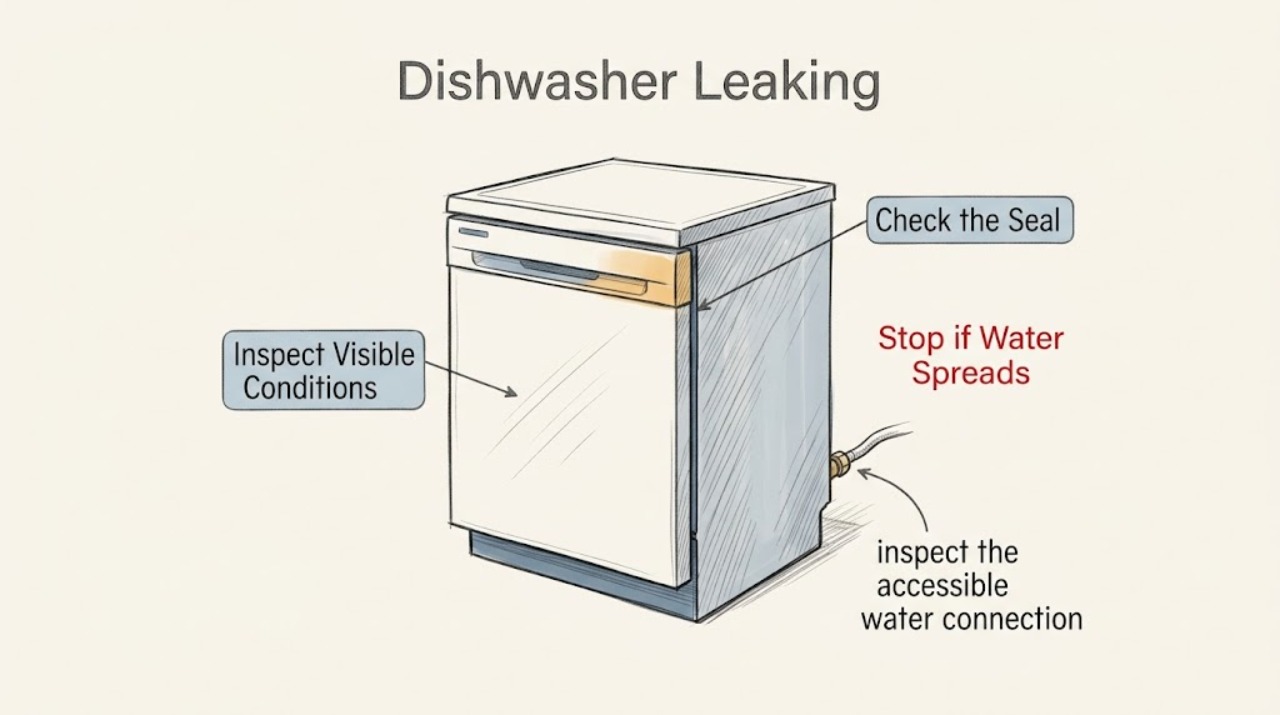
Work through in order
Diagnostic checks
Use only checks that match the exact appliance or system and its official guide.
-
Check 1
Turn the appliance and water supply off, dry the floor, and run one empty rinse only when safe to observe.
Expected result: Water first appears at the door, under the unit, or at a hose connection.
Next step: Keep the water off if water reaches wiring or the leak is heavy.
Why this matters
Why: The first wet point separates door/leveling issues from supply or internal leaks.
-
Check 2
Check level across the top and inside the tub, and inspect whether the door seal meets evenly.
Expected result: The cabinet is tilted or the seal contacts unevenly.
Next step: Correct leveling only under the exact installation instructions or request service.
Why this matters
Why: LG identifies an unlevel or shifted dishwasher as a cause of door-edge leaks.
-
Check 3
With power and water off, inspect the accessible water connection with a dry paper towel and check the tub for excessive suds.
Expected result: The towel wets at a fitting or foam is excessive.
Next step: Tighten only an accessible approved fitting, stop using dish soap, and retest once.
Why this matters
Why: A loose connection or incorrect/excess detergent can cause leaking.
Use your observations
Decision map
Find the observation that best matches what you see, then follow the next safe action.
-
PATH 01Next step
What you see
Leak begins at the door and the unit is not level
Do this next
Stop use, dry the area, and correct installation or request service.
Why this path and its safety boundary
Why it matters: Installation/alignment is more likely.
-
PATH 02Next step
What you see
A connection leaks or the leak persists after correct detergent and leveling
Do this next
Close the water valve and arrange qualified service.
Why this path and its safety boundary
Why it matters: A damaged line, seal, tub, or internal component remains possible.
When checks do not resolve it
Need a professional?
Arrange service for a concealed, heavy, or persistent leak.
Safety scope: Turn power and water off before checks; do not open sealed components.
Common questions
FAQ
Can excess detergent cause a leak?
Yes. LG warns that excess suds, including dish soap, can overflow. Use only dishwasher detergent at the marked amount.
What if leveling does not stop the leak?
Keep the water supply off and request service; an internal seal or component may be involved.
Read the exact guide
Official sources
- LG Dishwasher – Troubleshooting Leaking IssuesLG USA Support · LG dishwashers
Community feedback
Share a repair observation
Share a plain-text repair observation. Accepted observations are published automatically; this page may take a moment to update.