
HVAC guides
Air Conditioners Repair Guides – Page 2
Cooling-system guidance for airflow, temperature, drainage, controls, and outdoor-unit problems.
Published air conditioners guides
Choose the guide that best matches the equipment and symptom you are seeing.
-
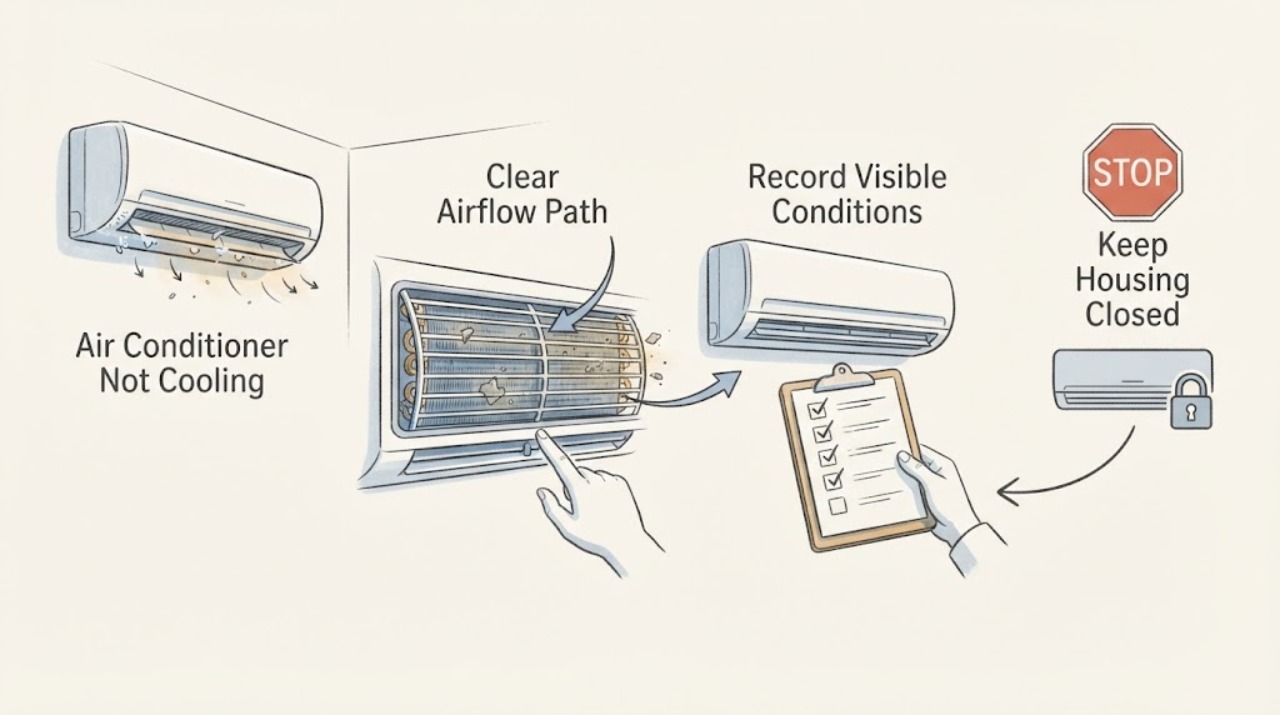
Air Conditioner Not Cooling: Check the Evaporator Coil Safely
If an air conditioner is not cooling, first confirm the thermostat's cooling mode and inspect the accessible filter and airflow. Look for frost or ice on visible tubing, the indoor coil area, or the outdoor unit, and look for condensate water near the air handler.
-
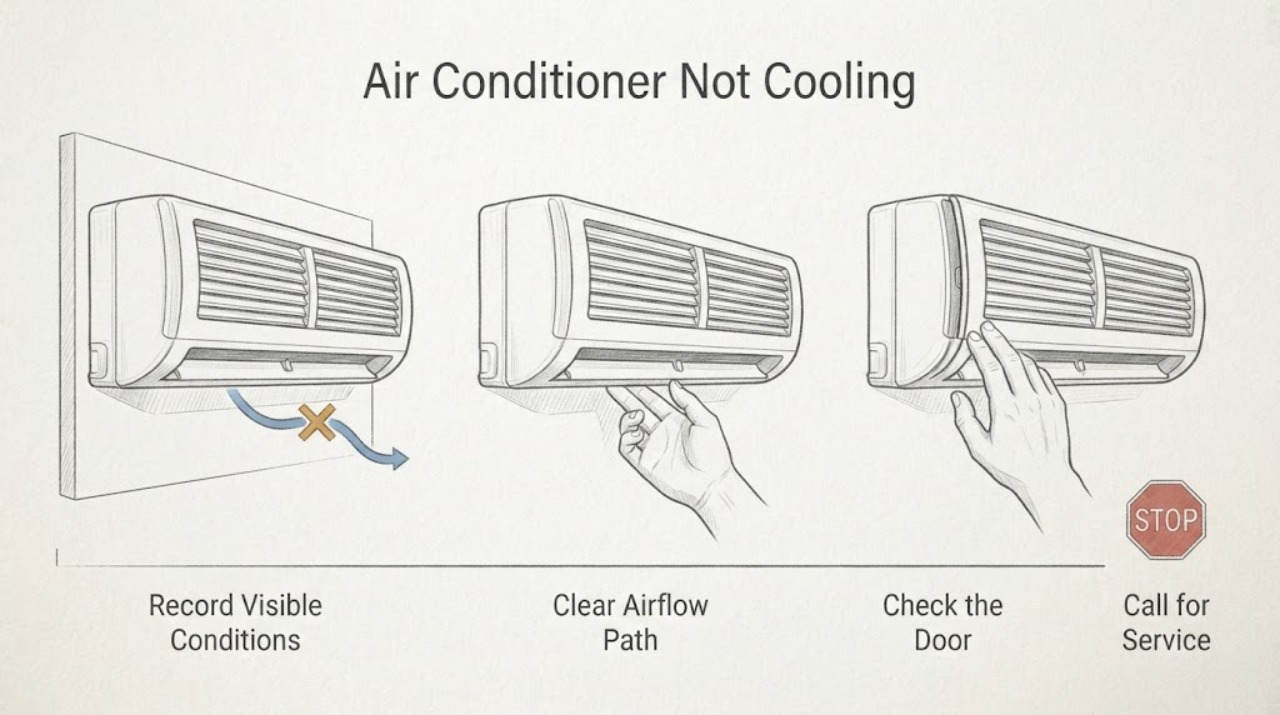
Air Conditioner Not Cooling: Check the Filter First
A dirty, wet, collapsed, incorrectly sized, or backward-installed air filter can restrict airflow enough to make an air conditioner cool poorly, run longer, or freeze the indoor coil. Check the filter only at the user-accessible location named by the equipment manual, confirm its size and airflow direction, and replace or clean it only as the filter and system instructions allow.
-
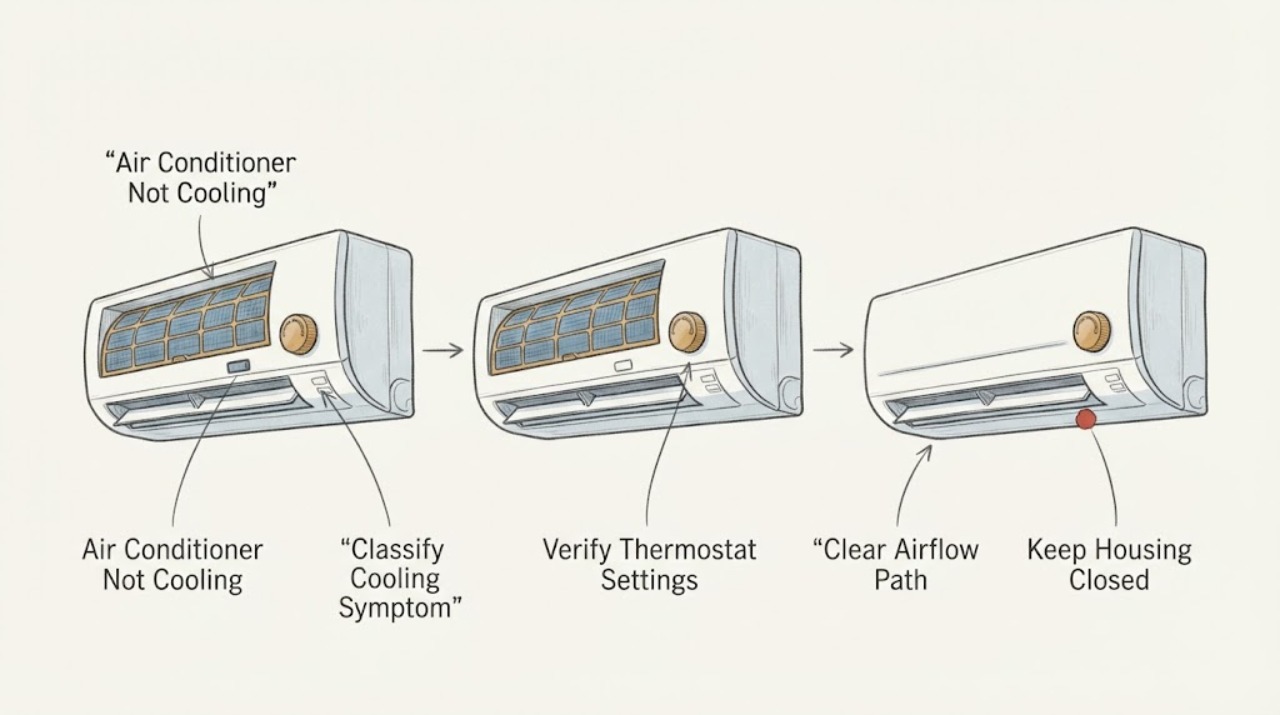
Air Conditioner Not Cooling: Check the Filter and Thermostat Before the HVAC System
When an air conditioner is not cooling, first separate a thermostat or power command problem from weak airflow caused by the filter and from a running system that is not removing heat. Confirm that the thermostat is calling for cooling, the fan is not set to run continuously, and the filter is installed in the correct direction and not heavily loaded.
-
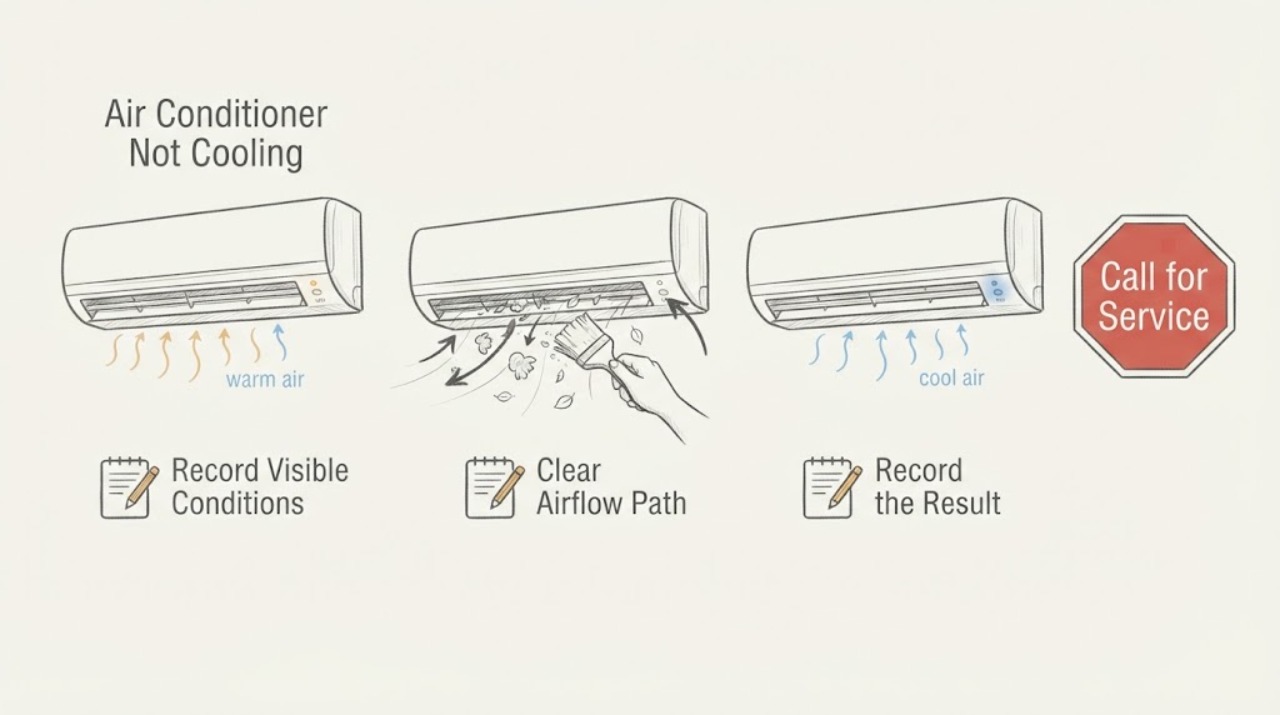
Air Conditioner Not Cooling: Safe Indoor and Outdoor Checks
The assigned condition is “inside post”; this wording is preserved exactly and this article does not infer what it refers to. Start with observable facts instead: confirm the cooling setting, compare indoor airflow, inspect the user-accessible filter, look for visible ice or condensate, and observe the outdoor unit from a safe distance.
-
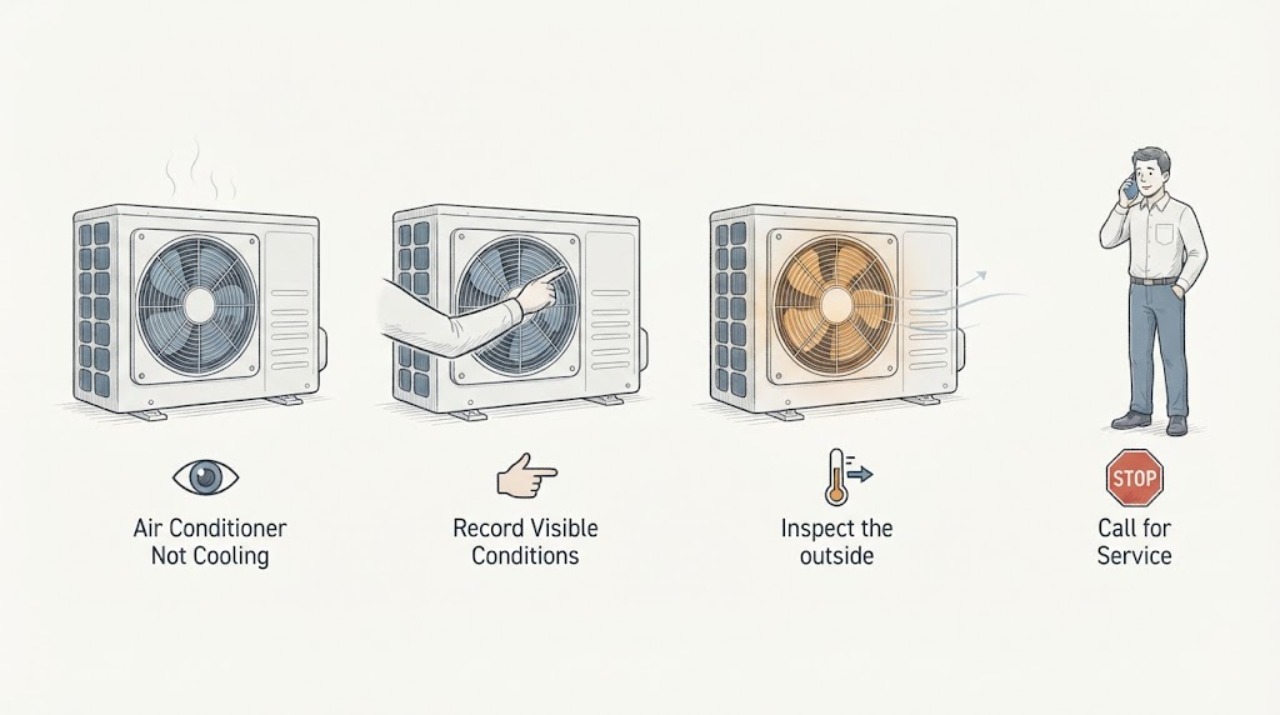
Air Conditioner Not Cooling: Safe Outside-Unit Checks
The assigned condition is “outside unit,” and this phrase is preserved without adding a meaning that was not provided. From a safe position, confirm the cooling call, compare indoor airflow, observe whether the outdoor fan starts, and look for external debris, unusual sounds, ice, water, or visible oily residue.
-
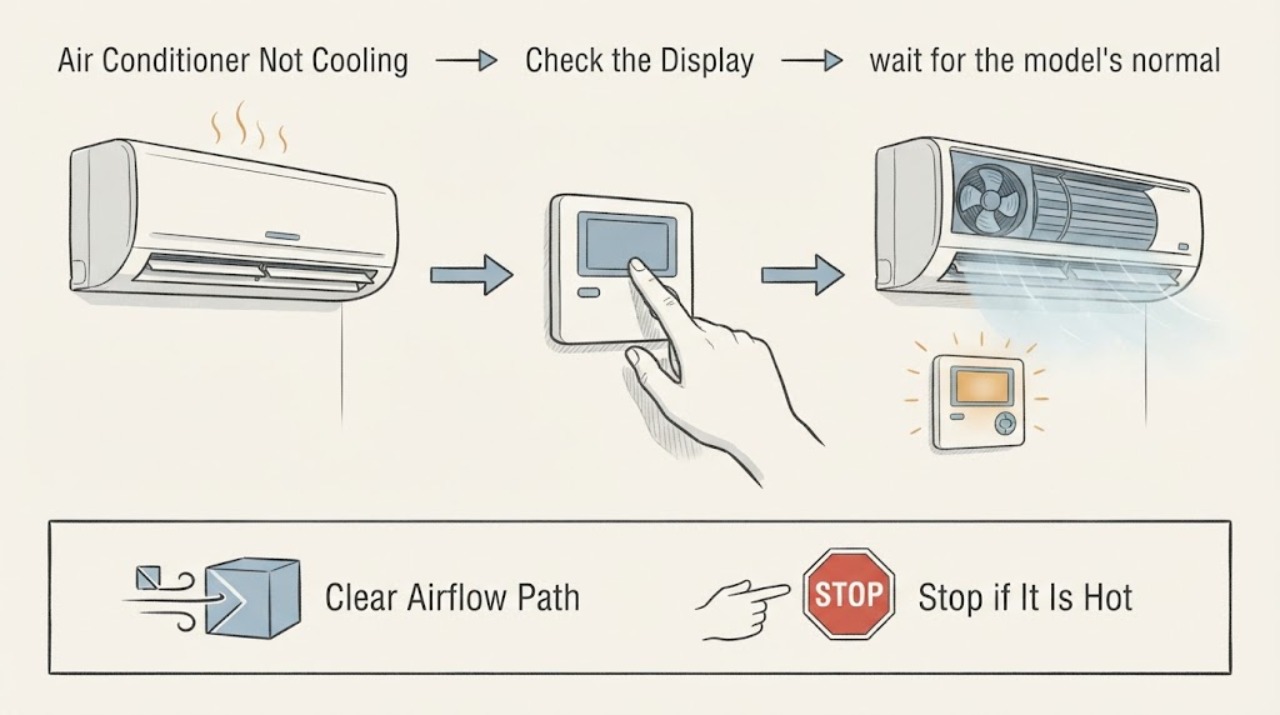
Air Conditioner Not Cooling: Thermostat Checks Before HVAC Service
When an air conditioner is not cooling and the thermostat is the suspected component, confirm the thermostat is calling for Cool, the target is below the room temperature, and the fan and schedule are not overriding the request. Check the display or batteries if applicable, then turn the system off before inspecting an accessible filter and the return and supply openings.
-
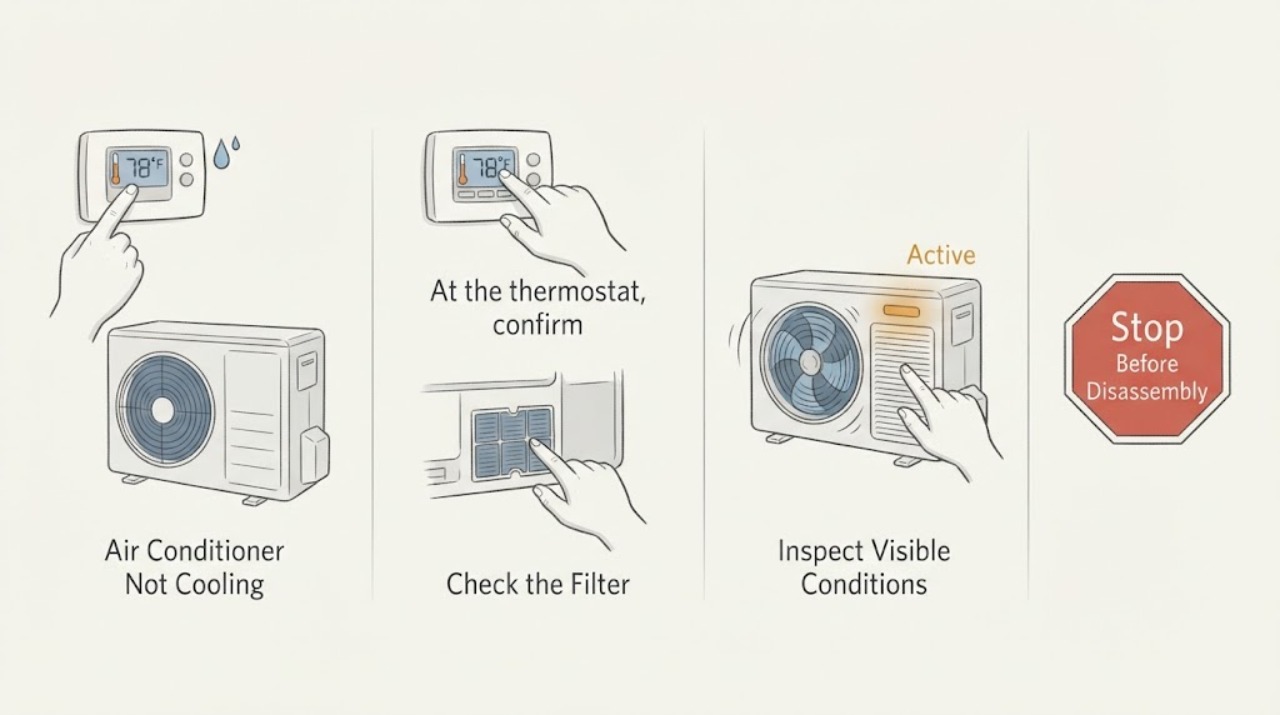
Air Conditioner Not Cooling: Check Settings, Airflow, Ice, and the Outdoor Unit
Start with the thermostat mode and fan setting, then check the air filter and the outdoor unit from a safe distance. A dirty filter or blocked outdoor coil can reduce airflow and cooling, while ice on the refrigerant lines, repeated breaker trips, a non-running outdoor unit, or suspected low refrigerant requires the system to be shut down as appropriate and examined by a qualified HVAC professional. Do not open electrical compartments or handle refrigerant.
-
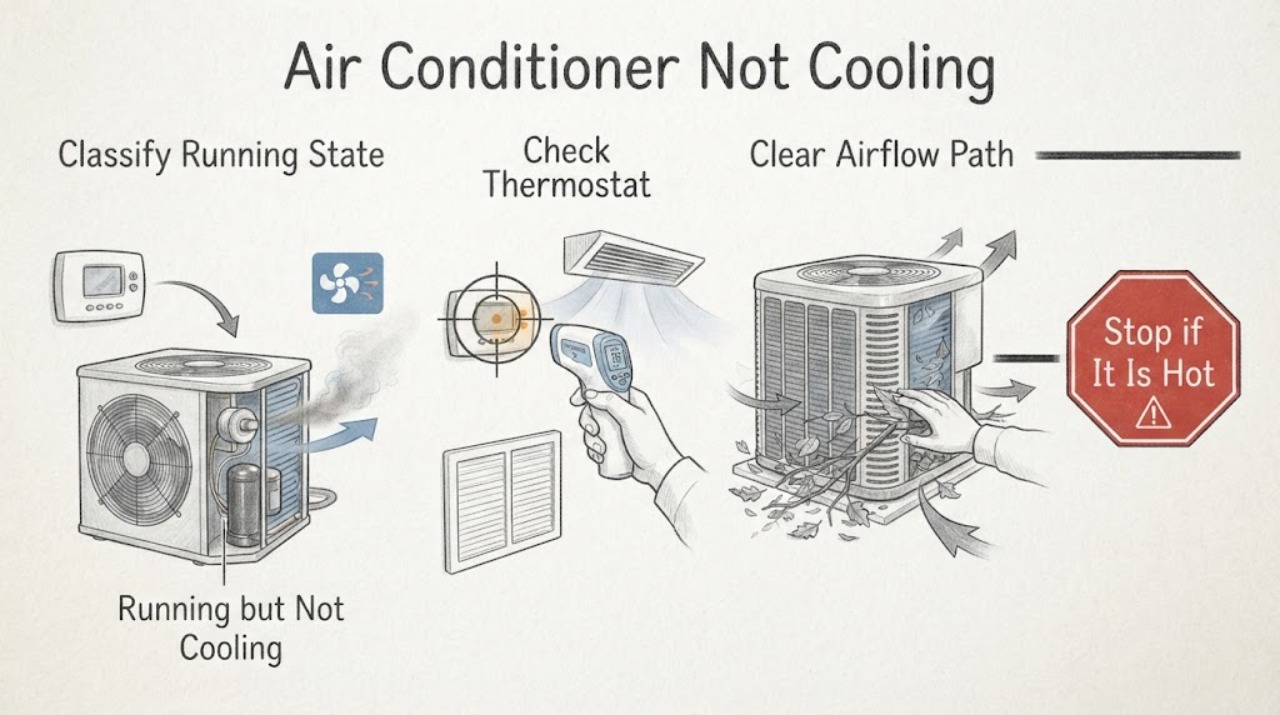
Air Conditioner Not Cooling: Check the Thermostat and Airflow Before Internal Parts
First decide whether the air conditioner is not running, is running with weak airflow, or is blowing air that is not cool. Check the thermostat mode and setpoint, compare supply vents and the return, inspect the accessible filter with the system off, and look from a safe distance for ice, water, or outdoor-unit obstruction.
-
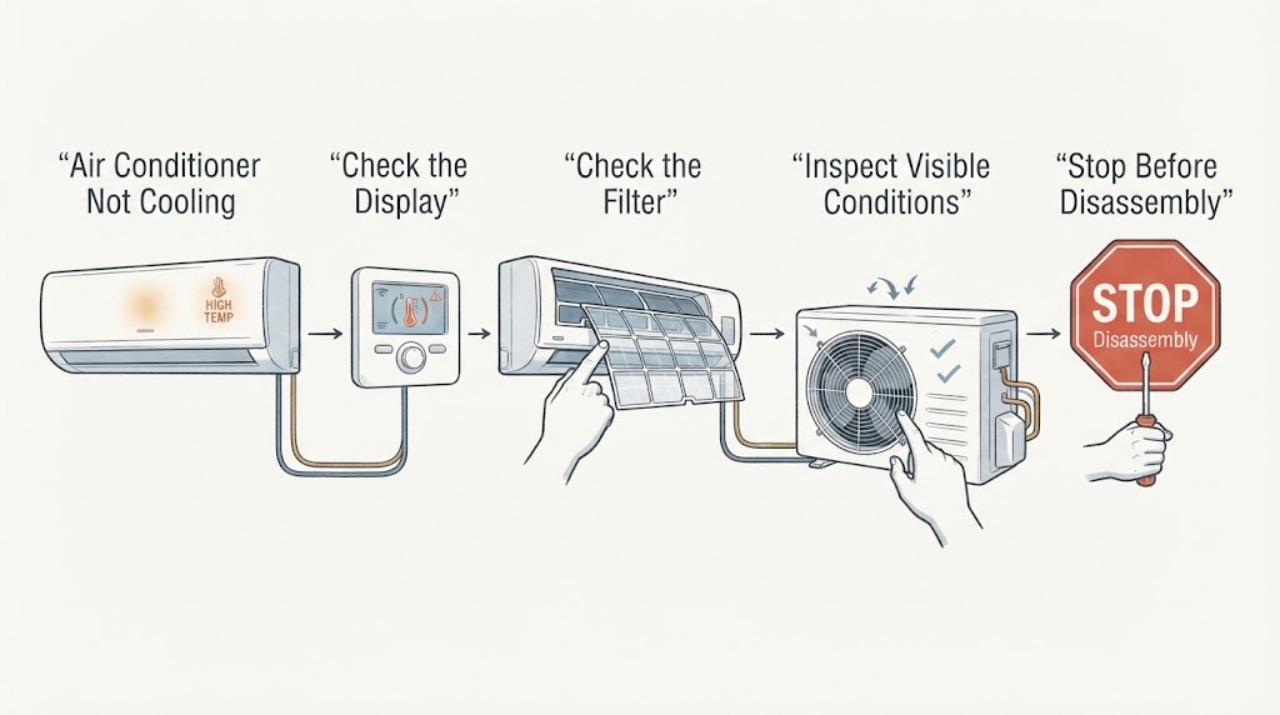
Air Conditioner Not Cooling: Check the Thermostat, Airflow, and Outdoor Unit
When an air conditioner runs but does not cool, start at the thermostat and filter, then observe airflow, ice, condensate, and the outdoor unit from a safe distance. A thermostat setting or a loaded filter can limit cooling, while weak airflow can point toward the blower path.
-
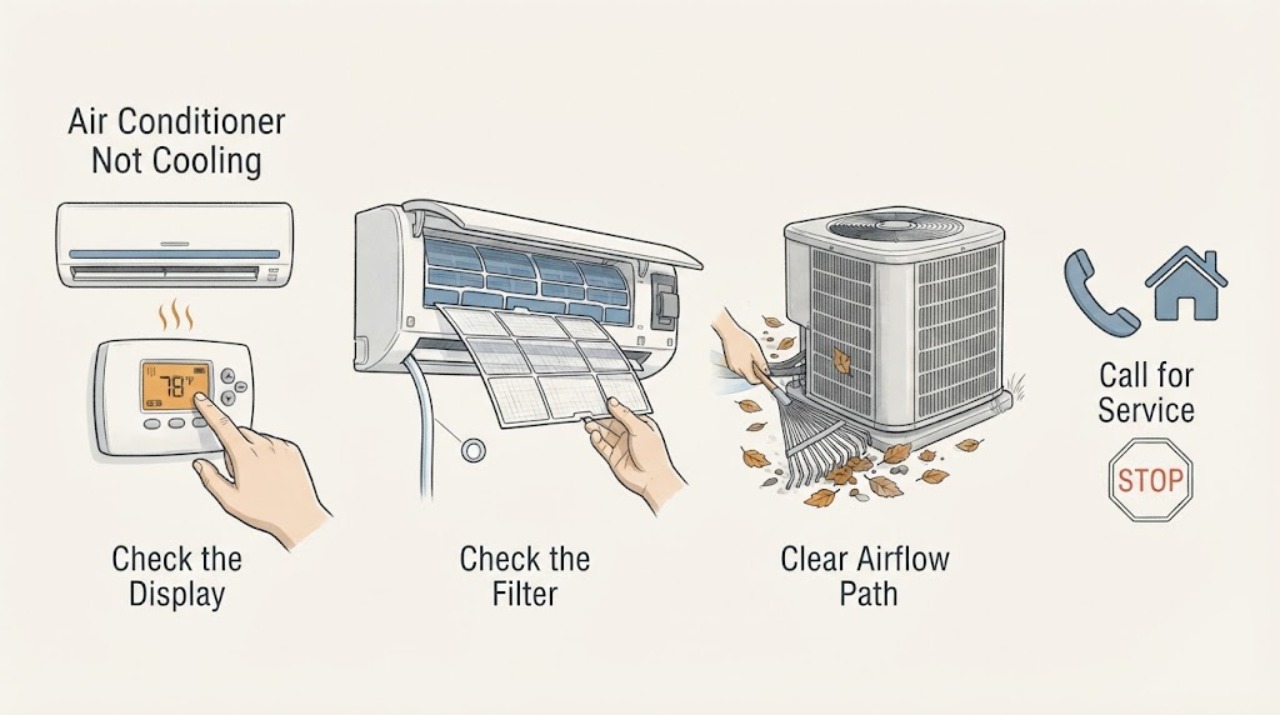
Air Conditioner Not Cooling: Thermostat, Airflow, and Drain Checks
First confirm that the thermostat is actually calling for cooling, then check the dry, user-accessible filter and airflow. If airflow is weak or absent, the filter, return path, blower motor, or indoor control may be involved.
-
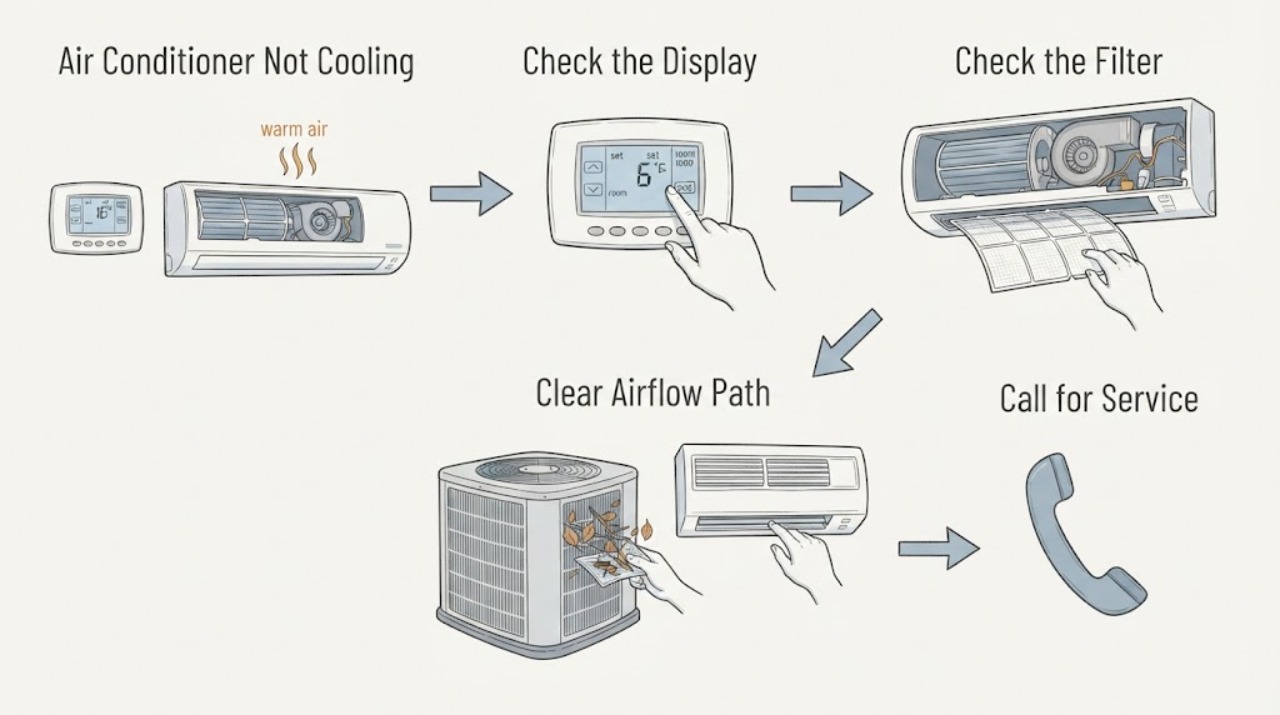
Air Conditioner Not Cooling: Thermostat, Filter, Blower, and Capacitor Checks
Start with the thermostat and the user-accessible air filter, then compare airflow with what the outdoor unit is visibly doing. A wrong mode or clogged filter can mimic a failed air conditioner, while weak or absent indoor airflow, ice, an outdoor fan that will not start, humming, or repeated electrical trips point toward a blower motor, capacitor, compressor, refrigerant, or control problem that needs HVAC service.
-
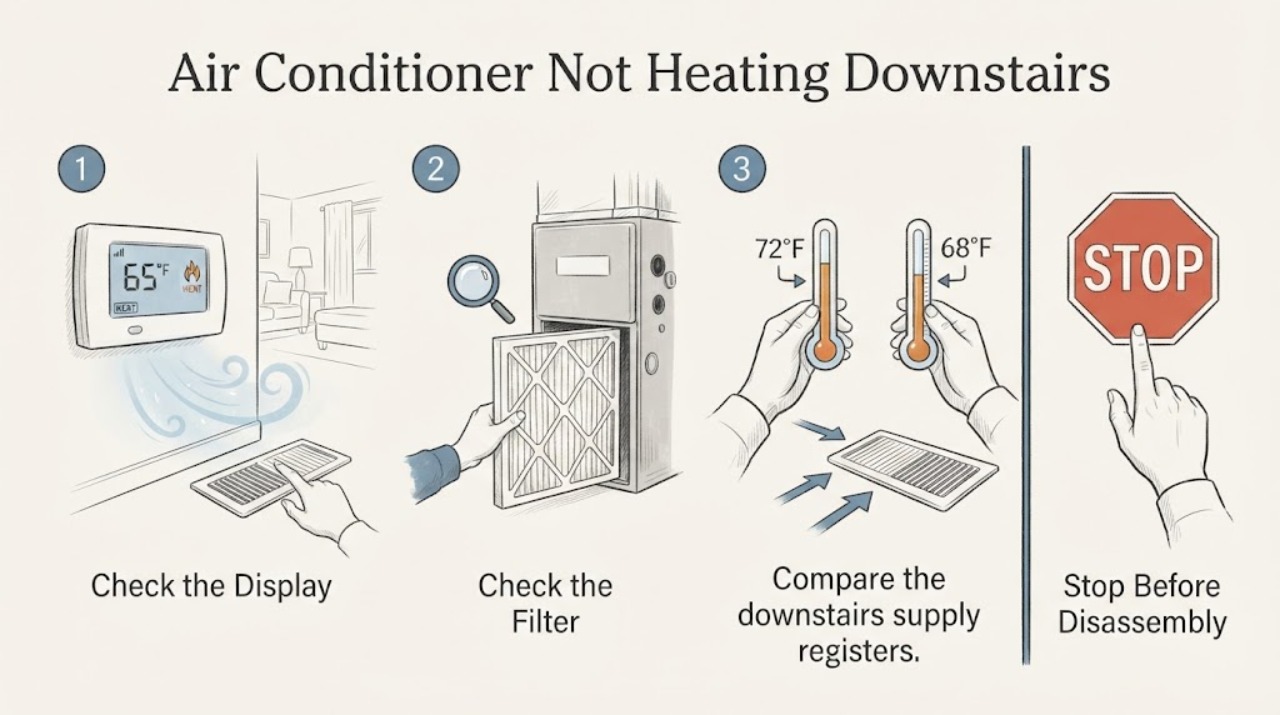
Air Conditioner Not Heating Downstairs: Zone, Airflow, and Heat-Pump Checks
First confirm that the equipment can heat: a cooling-only air conditioner cannot produce heat, while a heat pump or dual-fuel system should have a heating mode. If only downstairs is cold, compare the downstairs thermostat or zone call with the upstairs zone, then check the accessible filter, return, registers, and exposed duct path.
-
Air Conditioner Not Heating: Separate No Heat From a Blower Motor Airflow Fault
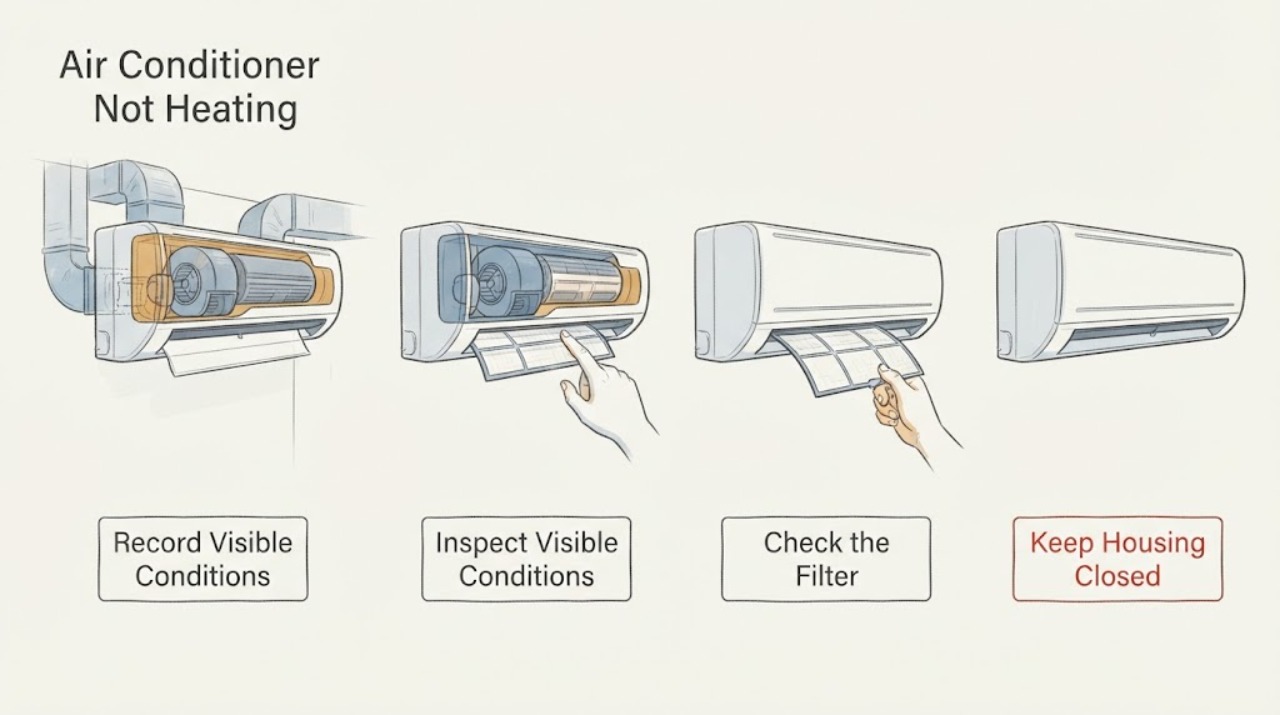
An air conditioner that is not heating may actually be a heat pump in the wrong mode, a normal defrost period, a heating or reversing-valve fault, or a blower-motor and airflow problem. First identify whether the equipment is a heat pump or a cooling-only air conditioner, then record the thermostat mode, indoor airflow, outdoor-unit behavior, filter condition, and any code or alarm.
-
Air Conditioner Not Heating: Separate Fan Motor and Heat-Pump Faults
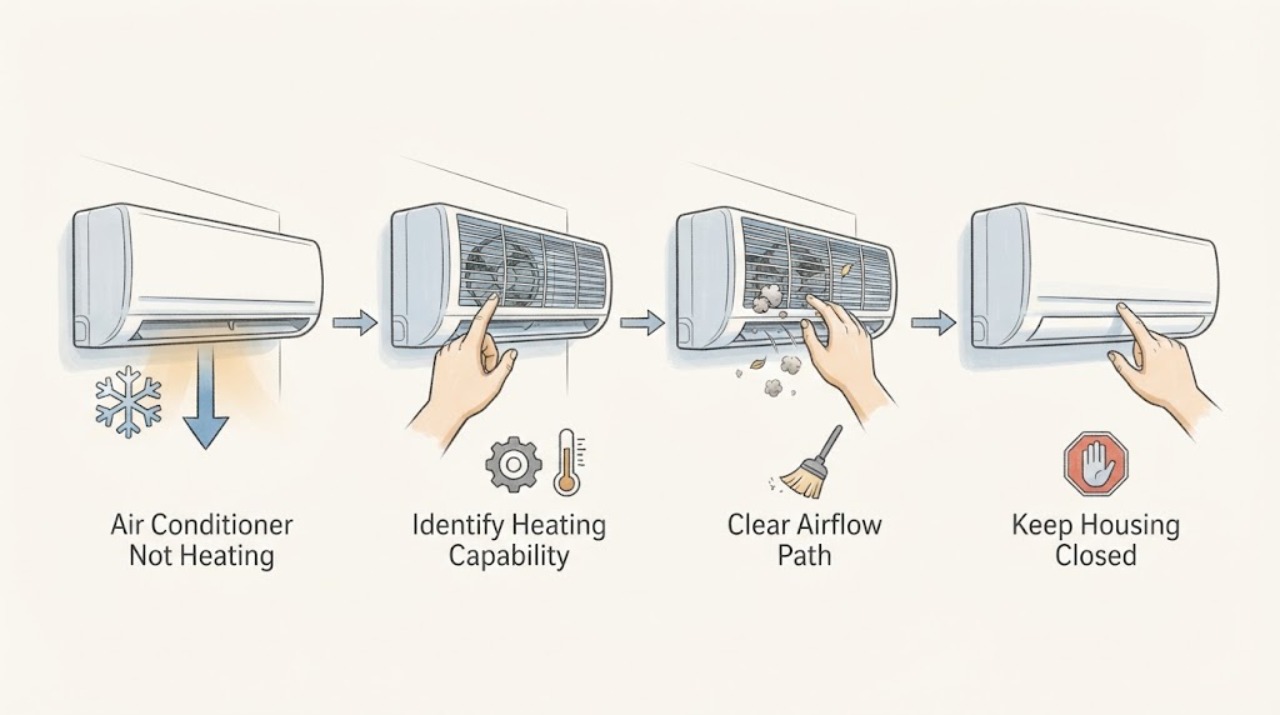
An air conditioner does not necessarily provide heat: only a heat-pump or another heating-equipped system can heat a home. If a heat pump is not heating, first confirm Heat mode and separate no warm air from no airflow.
-
Air Conditioner Not Heating: Check the Thermostat and Heat-Pump Mode
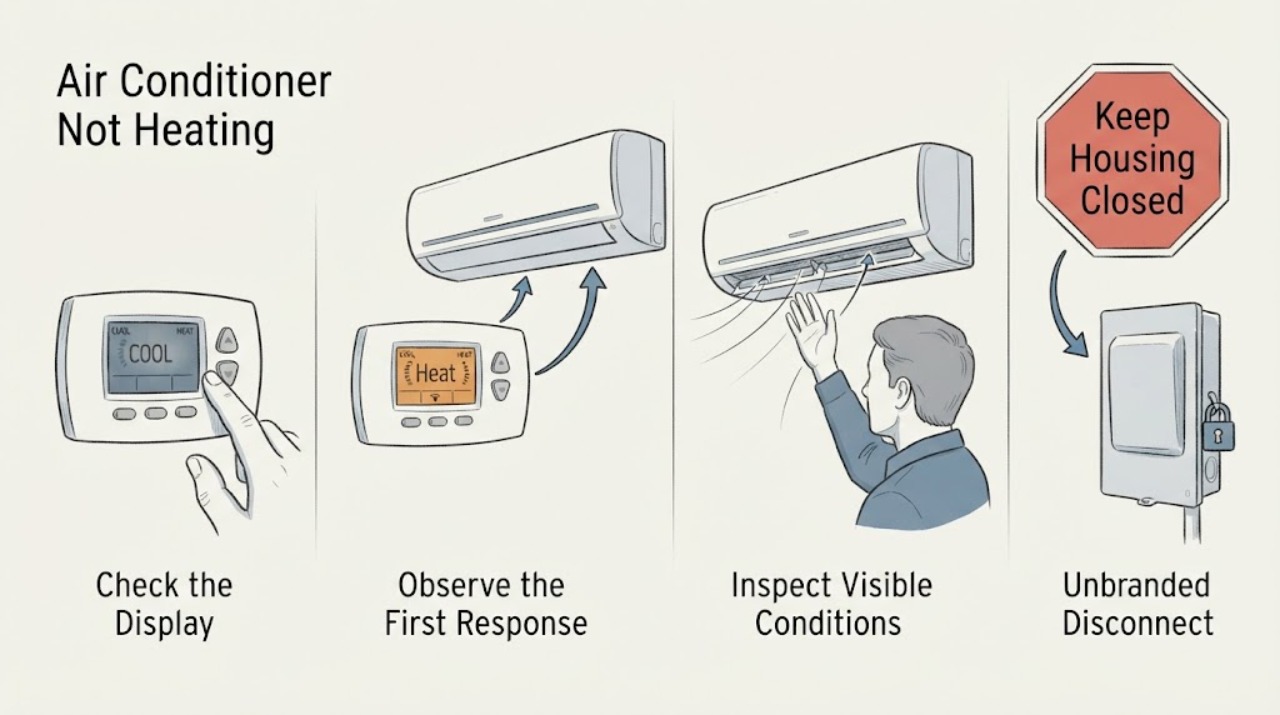
An air conditioner may not heat because it is a cooling-only system paired with a separate furnace, because a heat-pump thermostat is in the wrong mode or schedule, or because the thermostat has lost power or is not sensing the room correctly. First identify whether the outdoor unit is a heat pump and whether the thermostat offers Heat, Aux, or Emergency Heat.
-
Air Conditioner Not Heating: Check the Heat Mode and Airflow
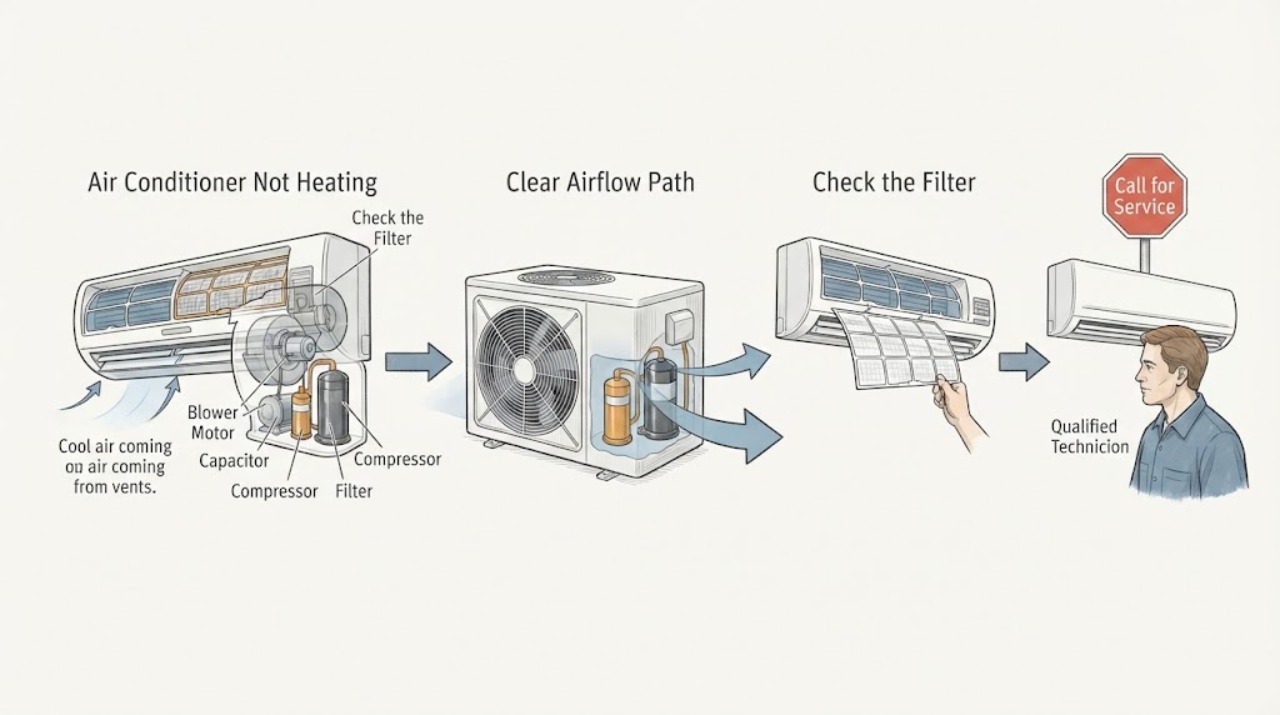
First confirm what equipment you have: a cooling-only air conditioner cannot provide heat, while a heat pump or a dual-fuel system must be in the correct heat mode. For a heat pump, check the thermostat mode and fan, compare indoor airflow, and inspect the user-accessible filter with the system off.
-
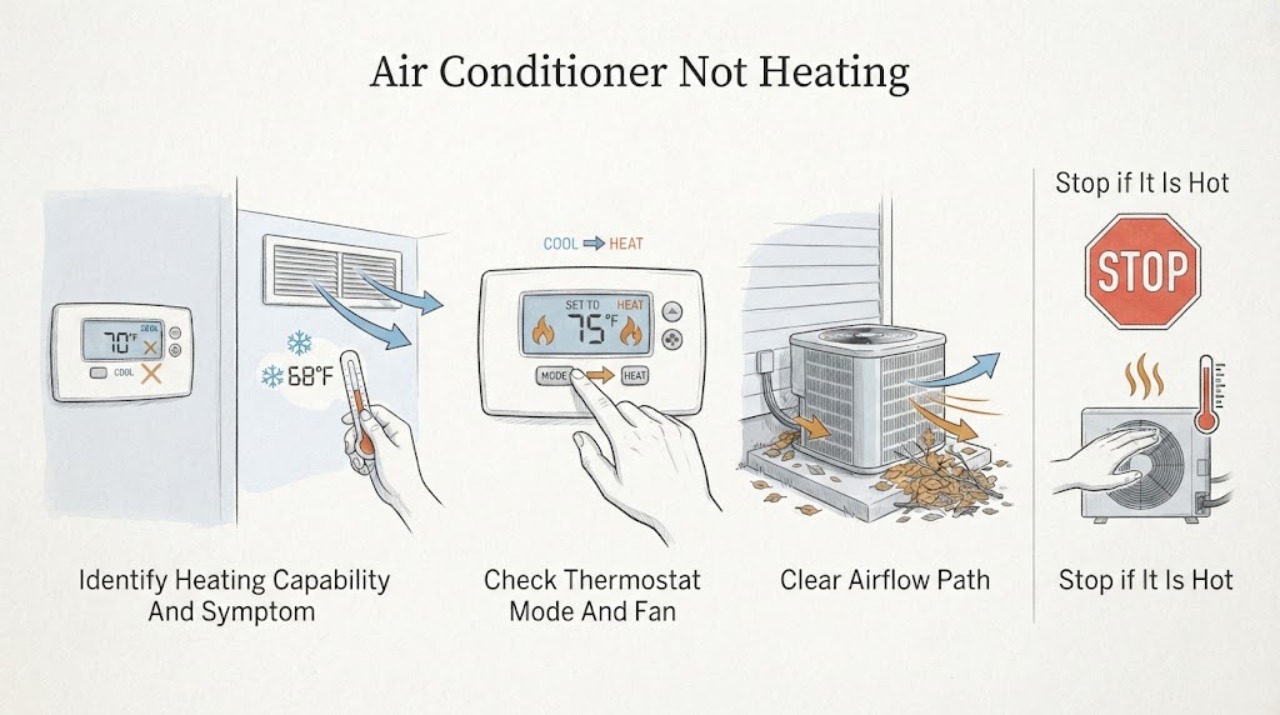
Air Conditioner Not Heating: Safe Heat-Pump Checks
First confirm that your air conditioner is a heat pump or another system designed to provide heat; a cooling-only air conditioner cannot produce heat in winter. If heating is supported, set the thermostat to Heat with the fan on Auto, check the air filter and indoor airflow, verify that the outdoor unit is not blocked, and check the heating-system breaker only if it is safe for you to do so.
-
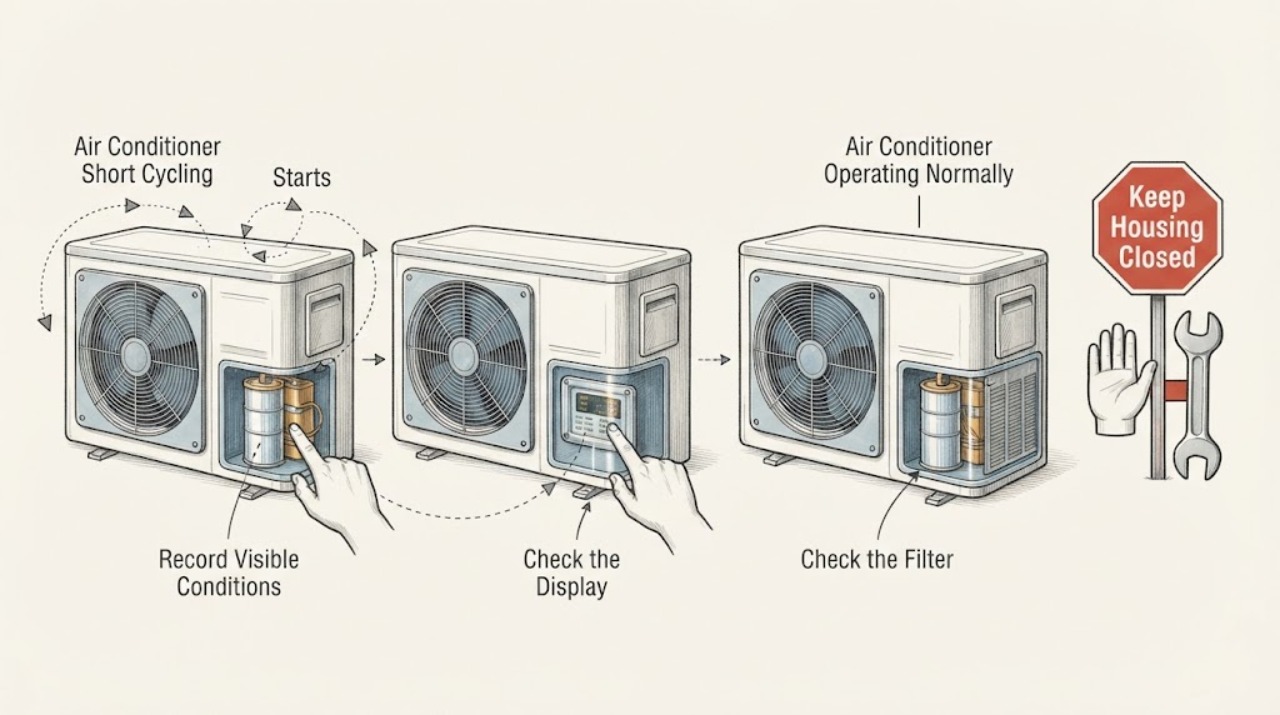
Air Conditioner Short Cycling: Check the Cause Before Blaming the Capacitor
Short cycling means the air conditioner starts and stops repeatedly without completing a normal cooling cycle. A weak capacitor can make a motor or compressor struggle to start, but short cycling can also come from a thermostat or control delay, a dirty filter, frozen coil, low refrigerant, blocked outdoor coil, fan problem, oversized equipment, or an electrical fault.
-
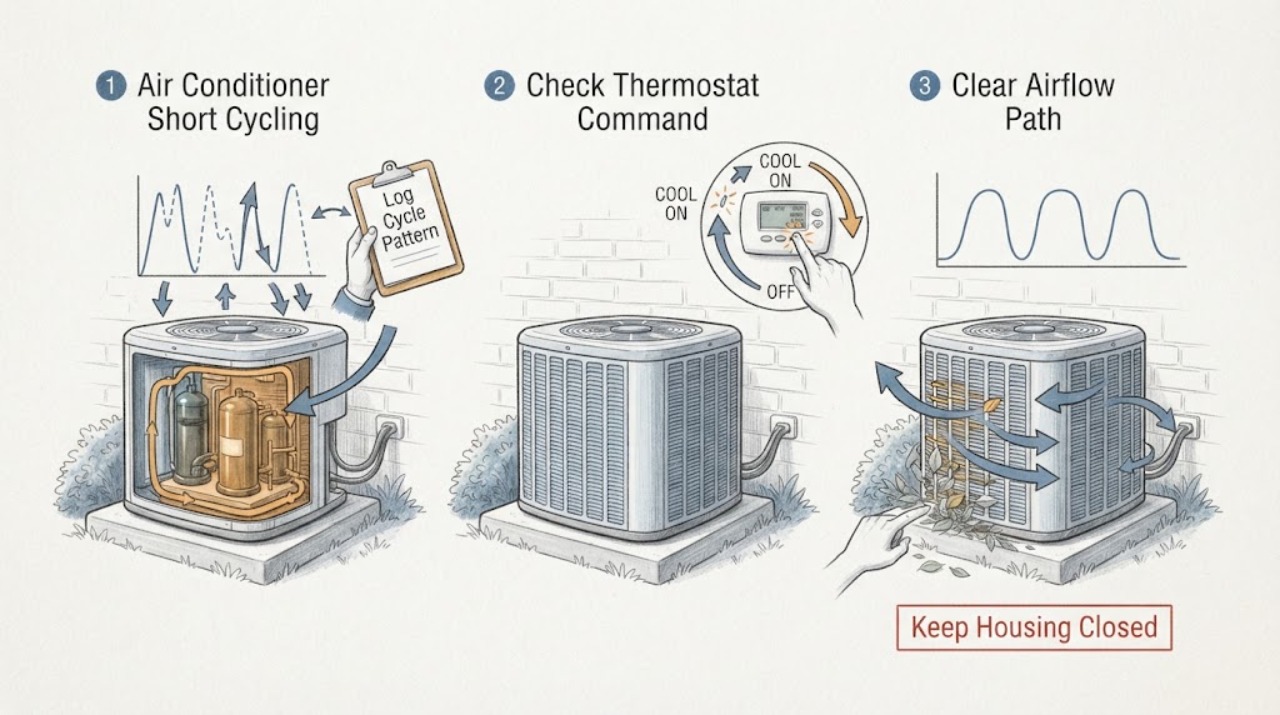
Air Conditioner Short Cycling: Protect the Compressor While You Find the Trigger
Short cycling means an air conditioner starts and stops repeatedly before completing a normal cooling call. Record each start and stop, the thermostat call, indoor airflow, outdoor-unit behavior, and any ice or water.
-
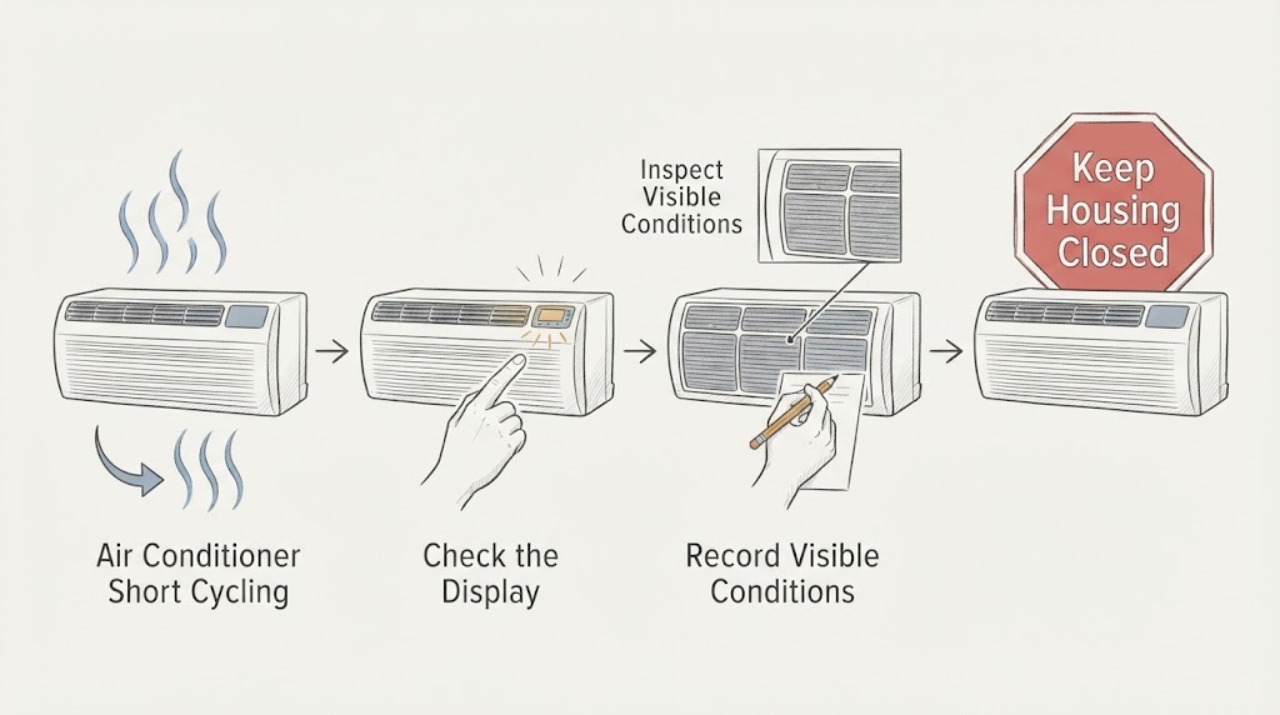
Air Conditioner Short Cycling: Check the Filter Before Bigger Repairs
Short cycling is repeated air-conditioner starts and stops before a useful cooling cycle is complete. A dirty, wet, damaged, wrong-size, reversed, or poorly seated filter can restrict airflow and contribute, but thermostat settings or placement, frozen coils, low refrigerant, electrical components, an oversized system, duct problems, and outdoor-unit faults can look similar.
-
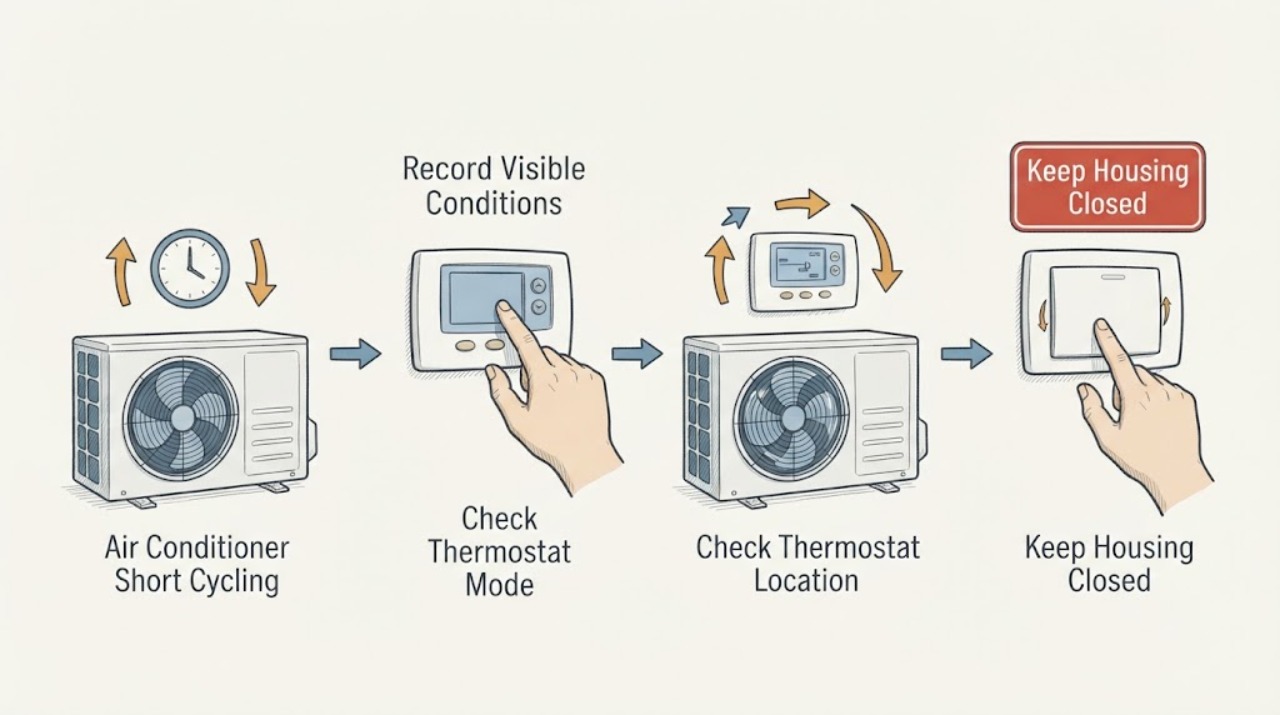
Air Conditioner Short Cycling: Check the Thermostat and Cycle Pattern
Short cycling means the air conditioner starts and stops before completing a normal cooling cycle, but one brief run can be normal in mild weather or near the setpoint. Record the start, stop, and restart pattern, then check that the thermostat mode, fan setting, schedule, and location are appropriate.
-
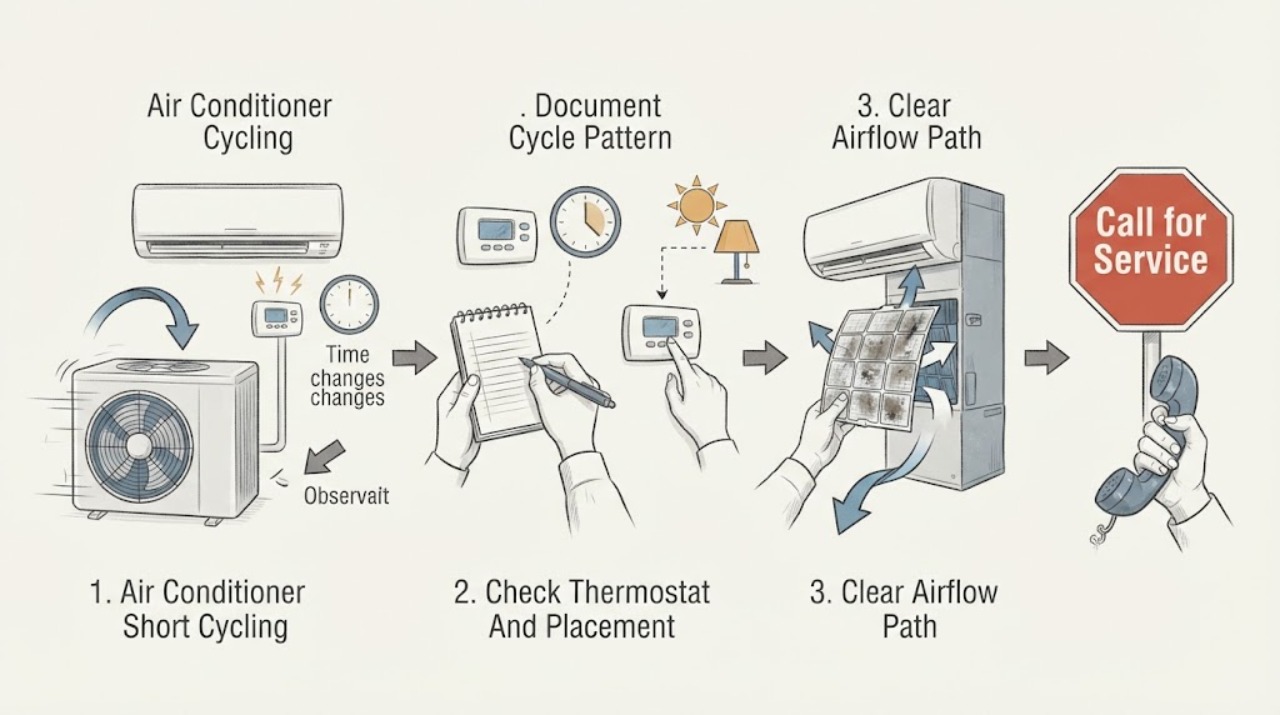
Air Conditioner Short Cycling: Safe Checks Before Service
Air-conditioner short cycling means the system starts and stops repeatedly before completing a normal cooling cycle. First confirm the pattern by noting the run and off times and whether the thermostat reaches its setting.
-
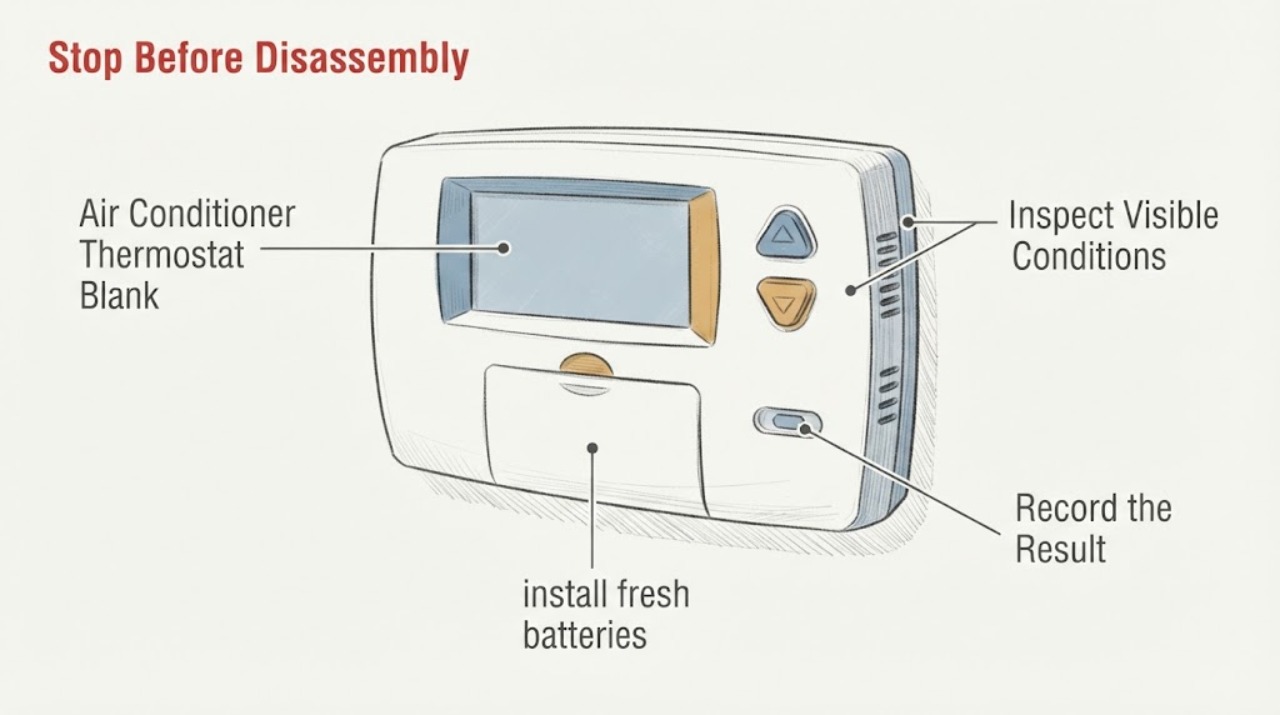
Air Conditioner Thermostat Blank: Safe Power and Transformer Checks
A completely blank air-conditioner thermostat usually means the control has lost its power source, not that a transformer has been proven bad. Depending on the model, check only the user-accessible battery compartment, the visible position of the HVAC breaker, and an accessible system power switch.
-
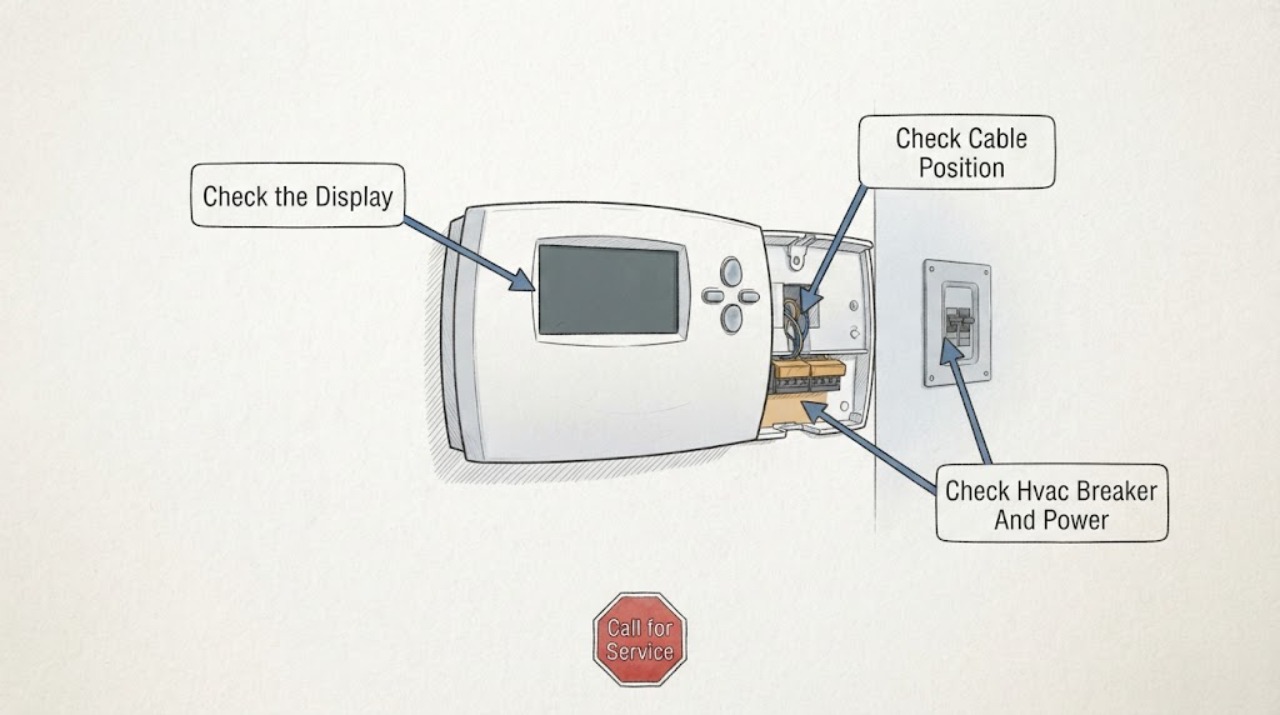
Air Conditioner Thermostat Blank: Safe Checks Before Service
A blank air-conditioner thermostat usually means the thermostat has lost power, so first determine whether it uses batteries or receives power from the HVAC system. Replace batteries only in a battery-powered model, confirm the thermostat and HVAC breakers are not off, and use the thermostat's model manual for any approved reset.
-
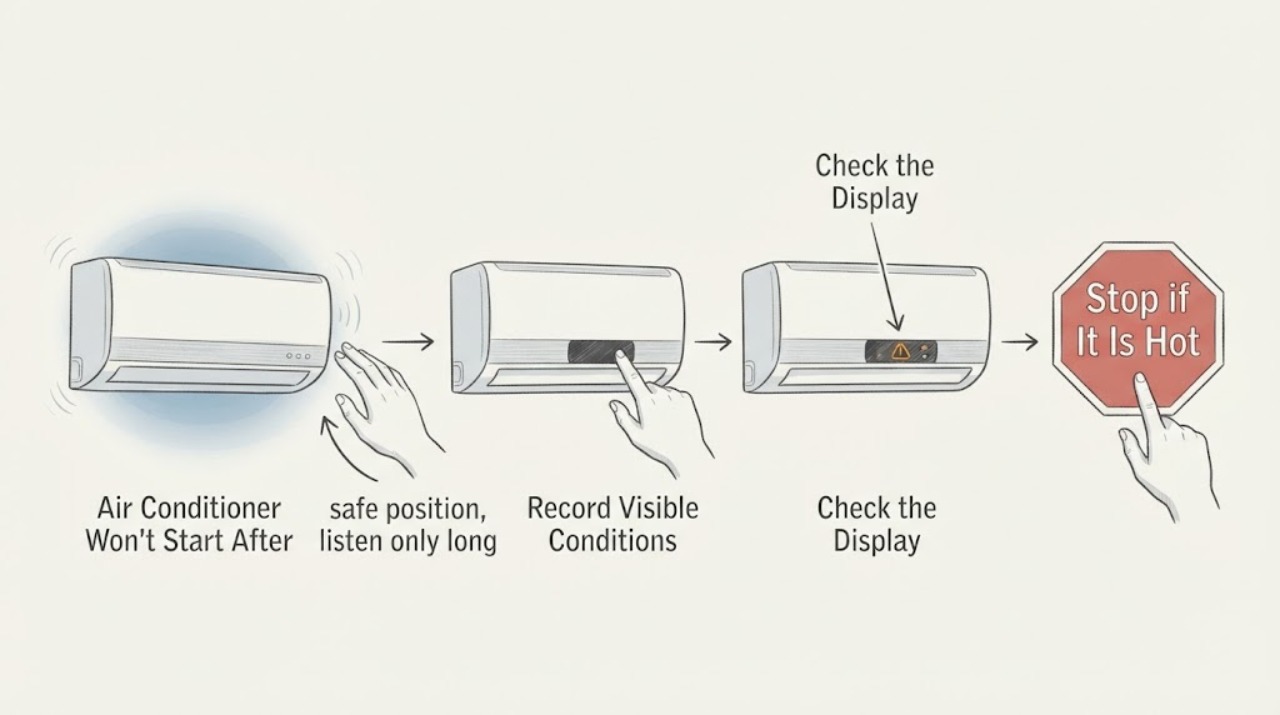
Air Conditioner Won't Start After Buzzing: Safe Checks and Service Boundaries
If an air conditioner buzzed and then would not start, treat the sound as useful evidence rather than repeatedly trying to start it. First note whether the buzz came from the thermostat, indoor air handler, outdoor cabinet, or electrical service area, and whether it occurred during a cooling call, at shutdown, or repeatedly.
-
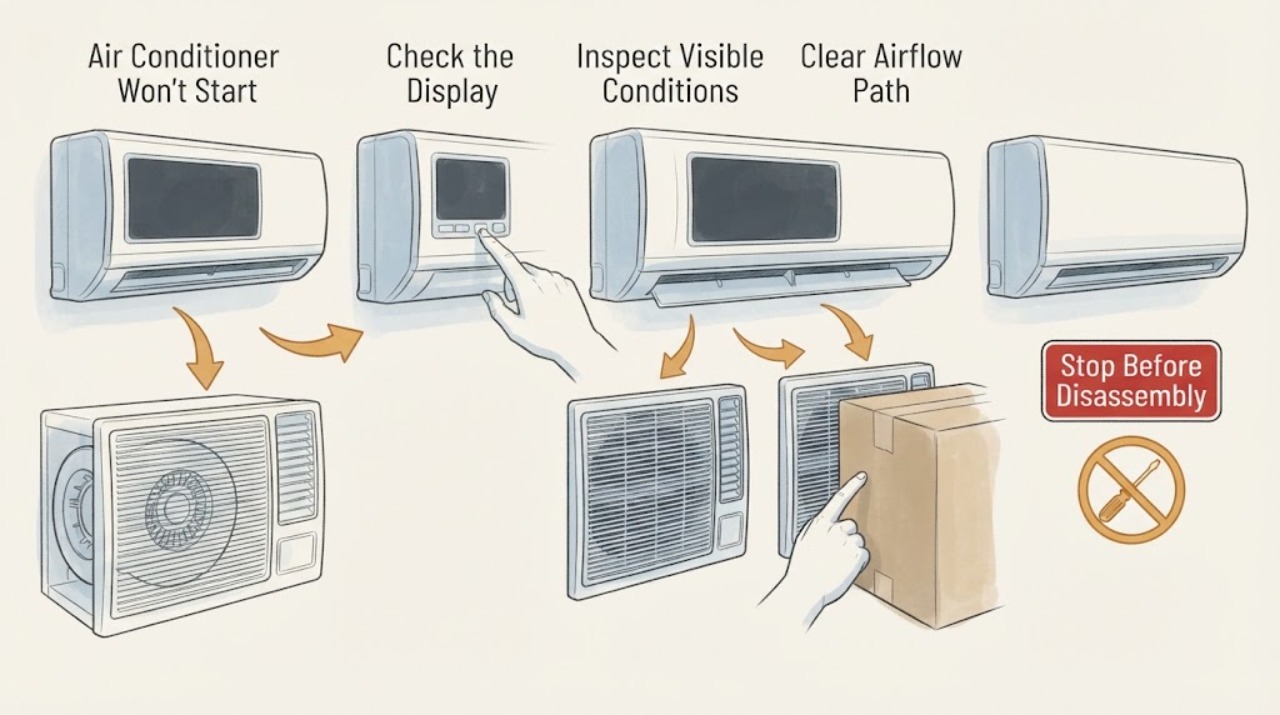
Air Conditioner Won't Start: Safe Blower Motor Checks
When an air conditioner will not start and the suspected component is the blower motor, first determine whether the indoor blower is actually silent, whether the thermostat is calling for cooling, and whether the system has visible power. Check the thermostat mode and schedule, inspect the accessible filter and supply/return airflow, and note whether the outdoor unit or indoor fan responds.
-
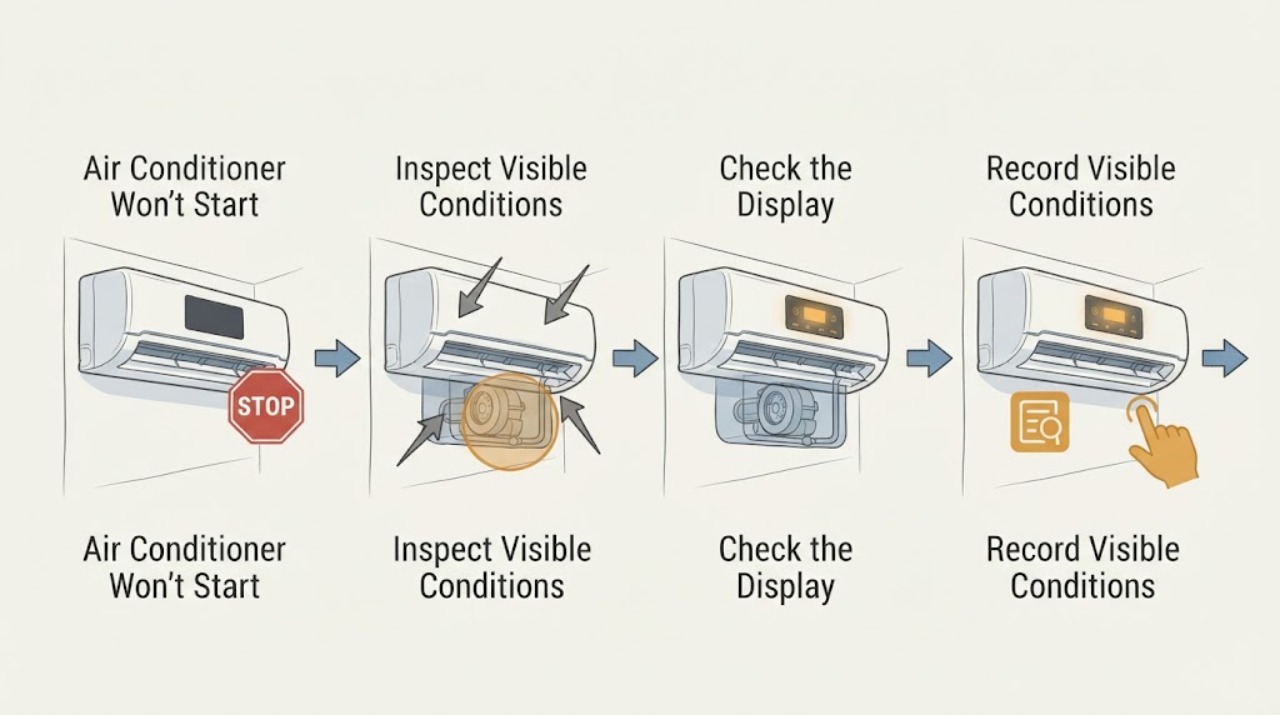
Air Conditioner Won't Start: Check the Thermostat, Drain Line, and Blower Safely
An air conditioner that will not start may have a thermostat command or power problem, a condensate drain blockage that has tripped a float switch, or an internal blower-motor, capacitor, control, or safety fault. Start with the thermostat display, mode, setpoint, batteries if applicable, and the exact symptom: no display, no indoor airflow, or no outdoor response.
-
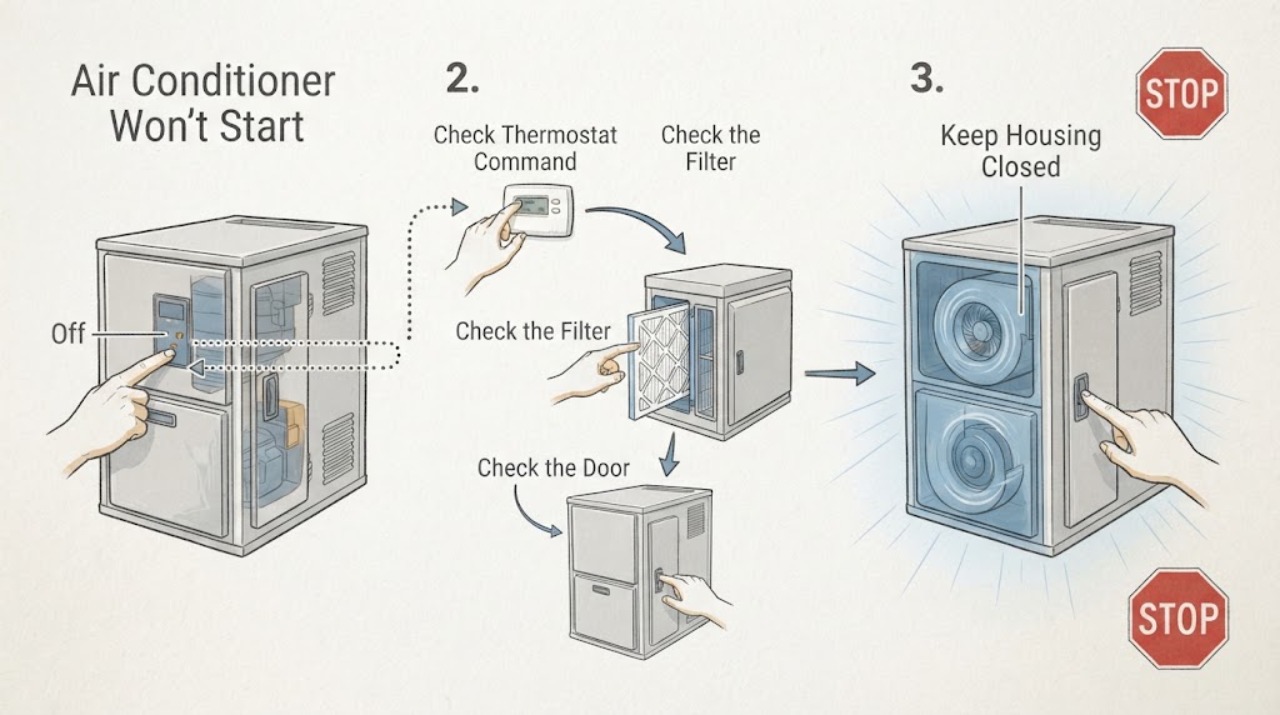
Air Conditioner Won't Start: Check the Blower Motor and Filter Safely
When an air conditioner will not start, first separate a thermostat or power command problem from an indoor airflow problem. Check the thermostat mode, setpoint, fan setting, display, and schedule; then look at the accessible filter and registers.
-
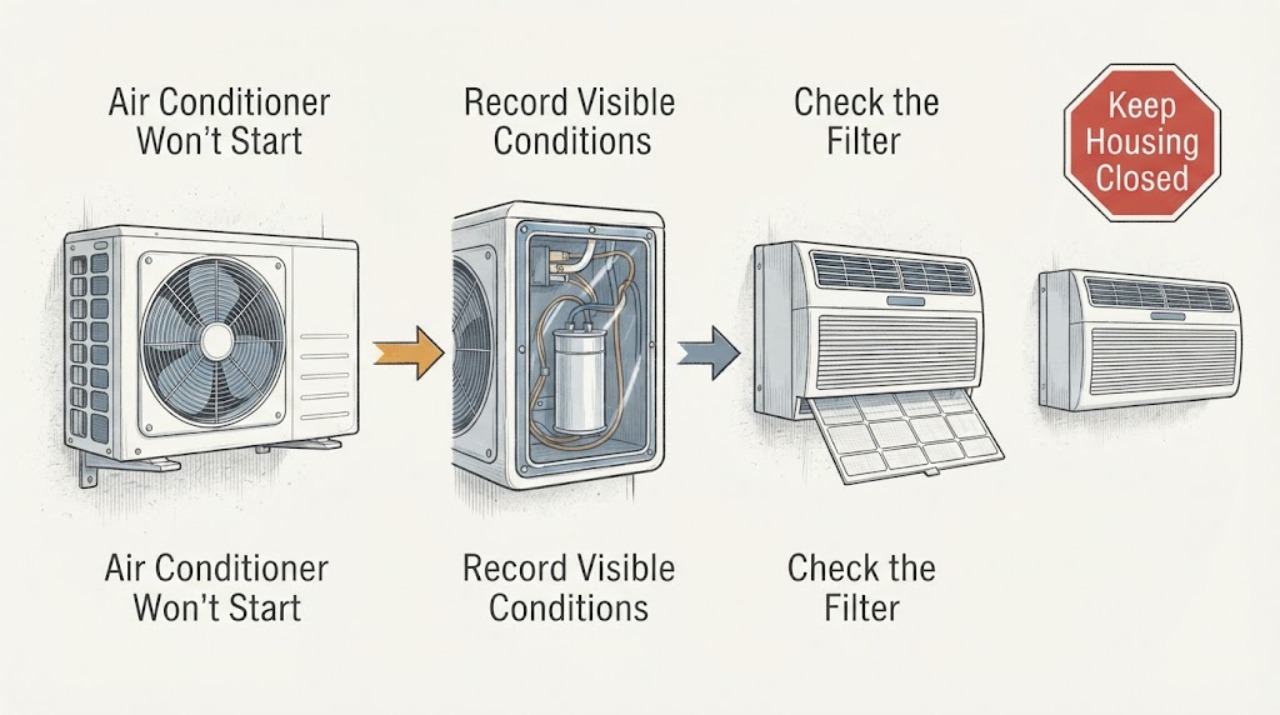
Air Conditioner Won't Start: Is the Capacitor the Cause?
A failed run or start capacitor can keep an air conditioner's outdoor fan or compressor from starting, but a no-start symptom does not prove the capacitor is bad. Check only the thermostat mode and setpoint, the accessible filter, indoor airflow, visible ice or water, and the outdoor unit's response from a safe distance.
-
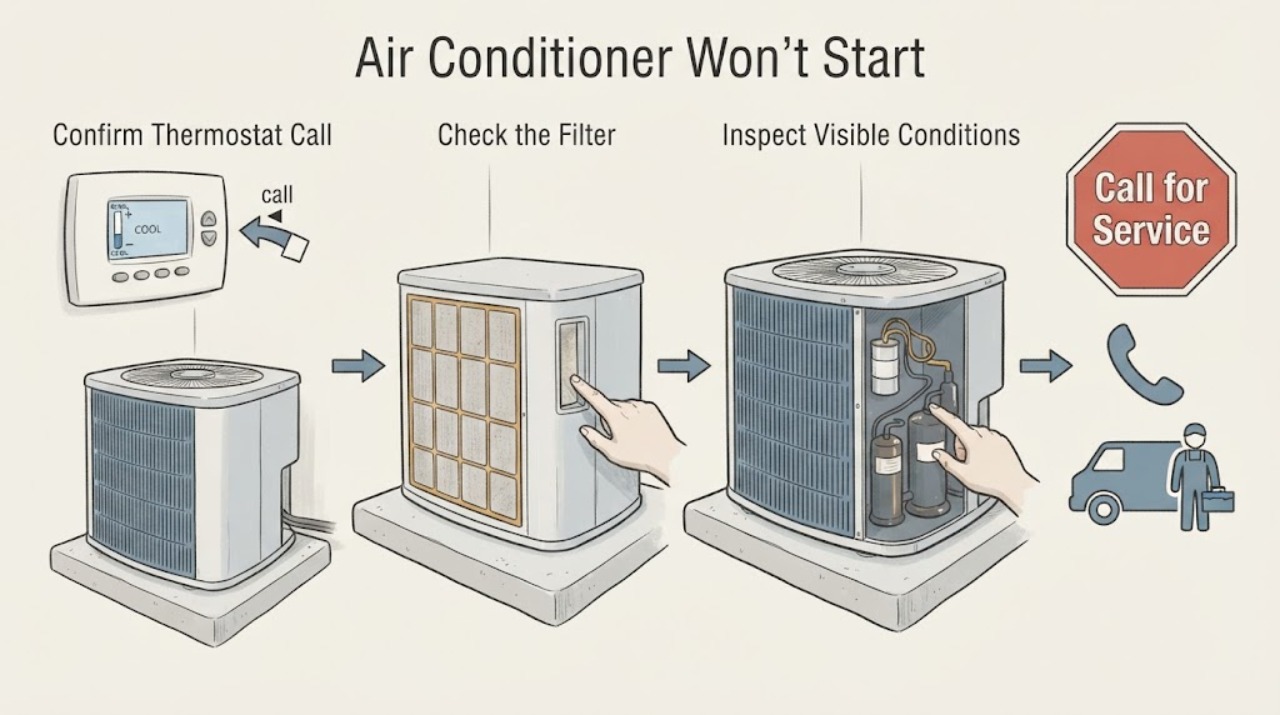
Air Conditioner Won't Start: Check the Thermostat and Filter Before Calling HVAC
Start with the user-safe checks: confirm the thermostat is calling for cooling and inspect the accessible air filter for blockage. Then note whether the indoor blower, outdoor fan, or compressor produces any response, and whether there is ice, water, burning odor, or unusual noise.
-
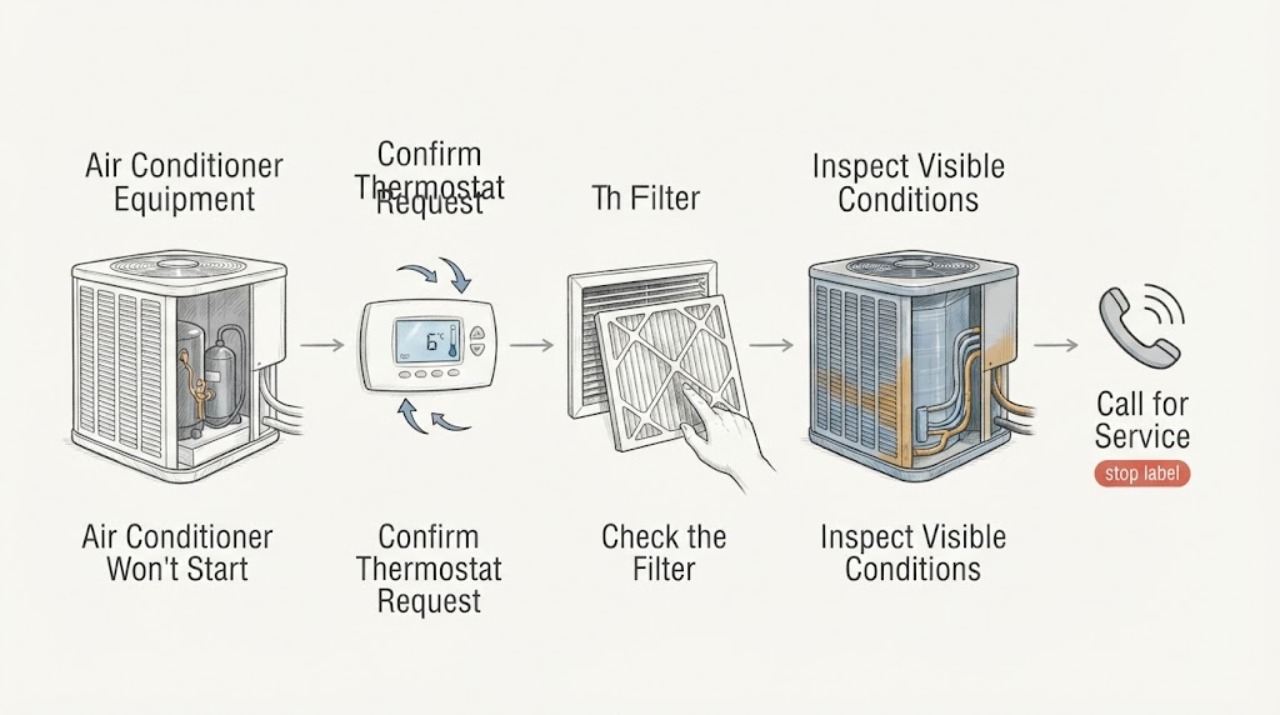
Air Conditioner Won't Start: Check the Thermostat and Filter Before Compressor Service
Confirm the thermostat is calling for cooling and inspect the accessible air filter before treating a no-start as a compressor failure. Then observe from a safe distance whether the indoor blower, outdoor fan, or compressor area responds, and record any hum, click, ice, water, odor, or protection trip without opening equipment.
-
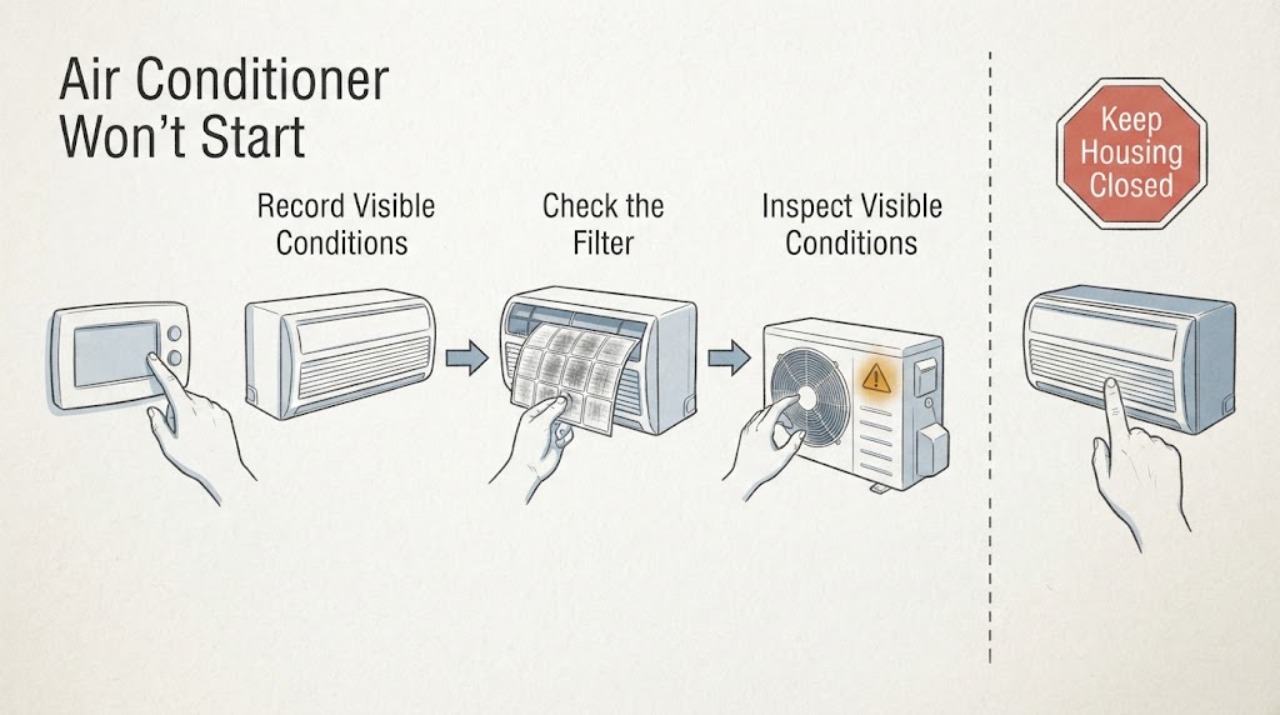
Air Conditioner Won't Start: Check the Thermostat Before the Compressor
If an air conditioner will not start, first check whether the thermostat is actually calling for cooling, then distinguish a blank indoor unit, no indoor airflow, and an outdoor unit that stays silent. Check only the thermostat mode and setpoint, an accessible filter, visible registers, and clearly visible power status.
-
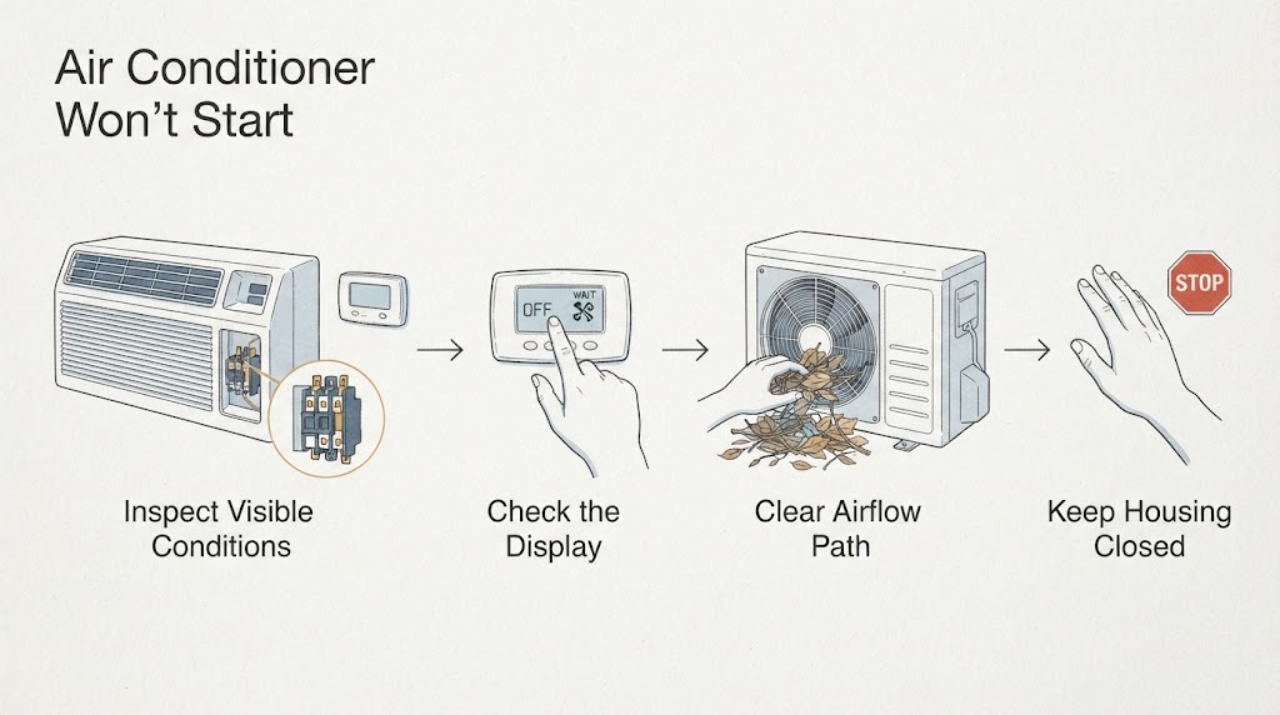
Air Conditioner Won't Start: Check the Thermostat Before Calling HVAC
Use the thermostat and other visible responses to separate a simple call-for-cooling problem from an HVAC equipment fault. Confirm that the thermostat has power, is set to Cool, and is calling for a temperature below the room temperature; allow any normal startup delay.
-
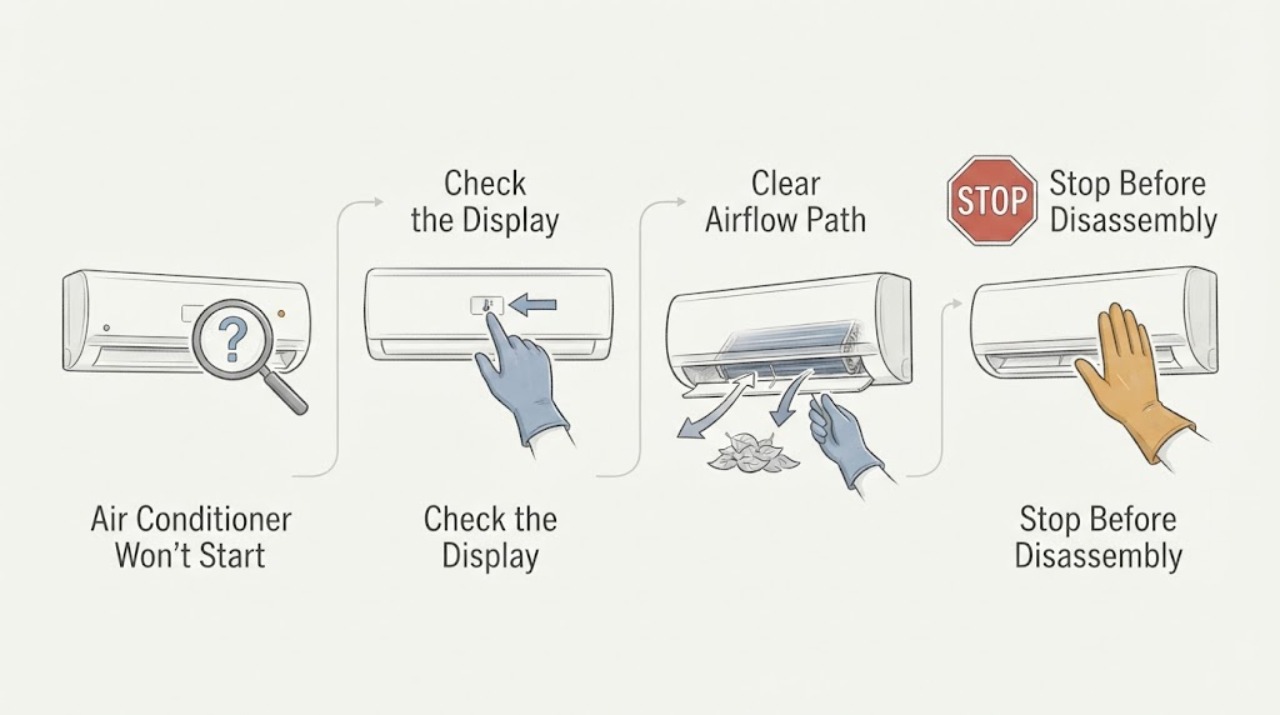
Air Conditioner Won't Start: Safe Evaporator Coil Checks
An air conditioner that will not start may have a thermostat or power problem, restricted airflow, a frozen evaporator coil, a condensate safety shutdown, or a professional-level electrical or refrigerant fault. Check the thermostat call, accessible filter, clear registers and return, visible breaker or service-switch state, and any ice or water you can see without opening the equipment.
-
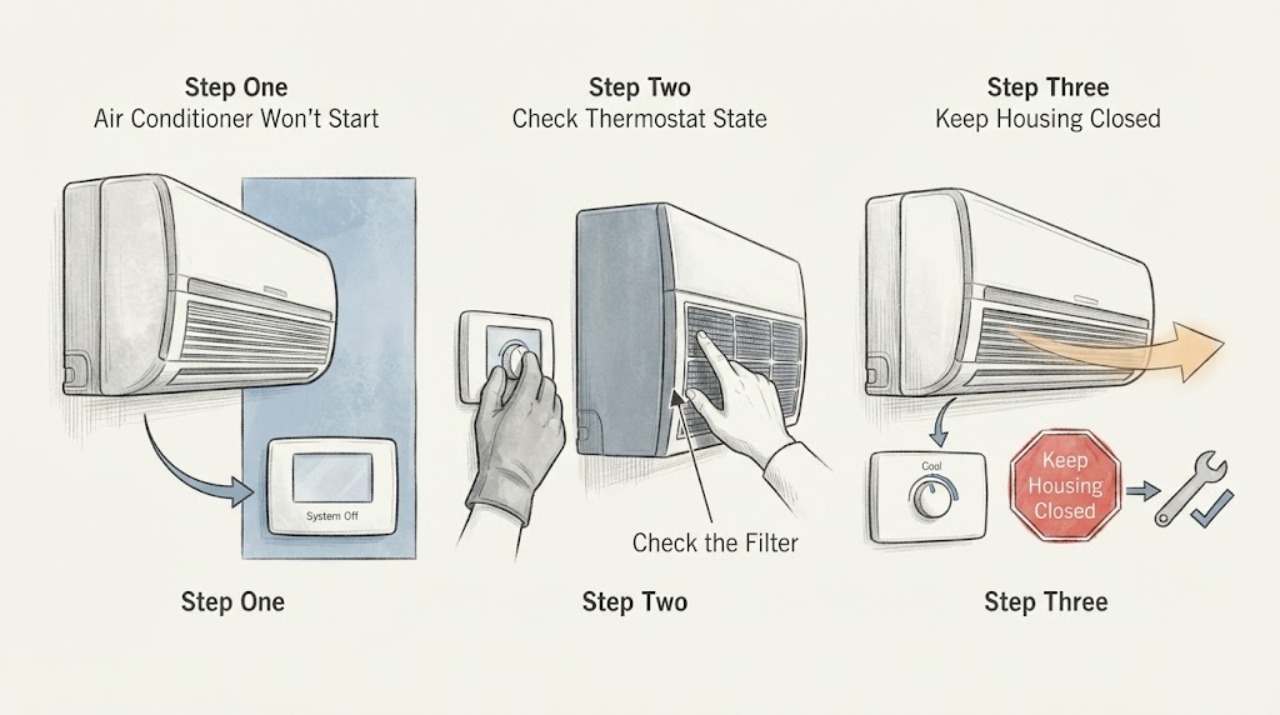
Air Conditioner Won't Start: Check the Thermostat and Filter
When an air conditioner will not start, begin at the thermostat and filter rather than opening the unit. Confirm the thermostat mode, setpoint, fan setting, schedule, display, and batteries, then inspect an accessible filter and visible registers.
-
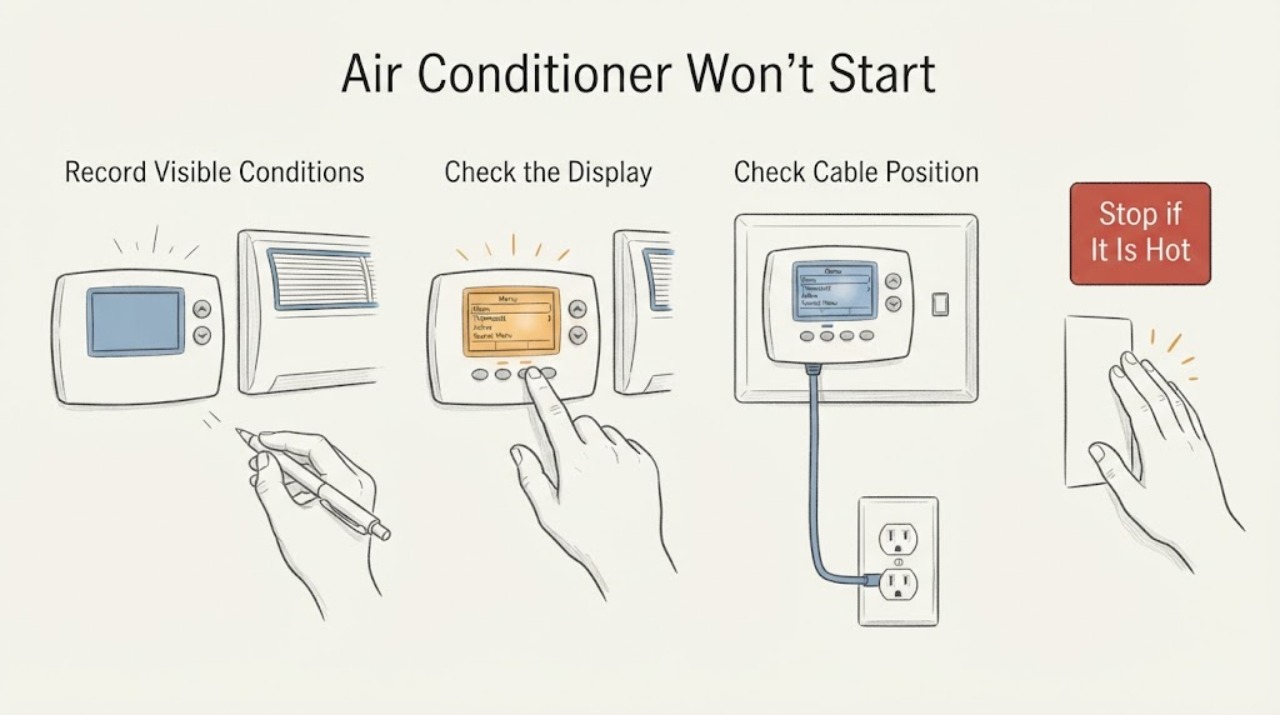
Air Conditioner Won't Start: Check the Thermostat First
If an air conditioner will not start and the thermostat is the suspected component, confirm that the control is awake, set to Cool, and below the current room temperature. Check whether a schedule, hold, Eco or away mode, fan-only setting, lock, or displayed delay is preventing a cooling call.
-
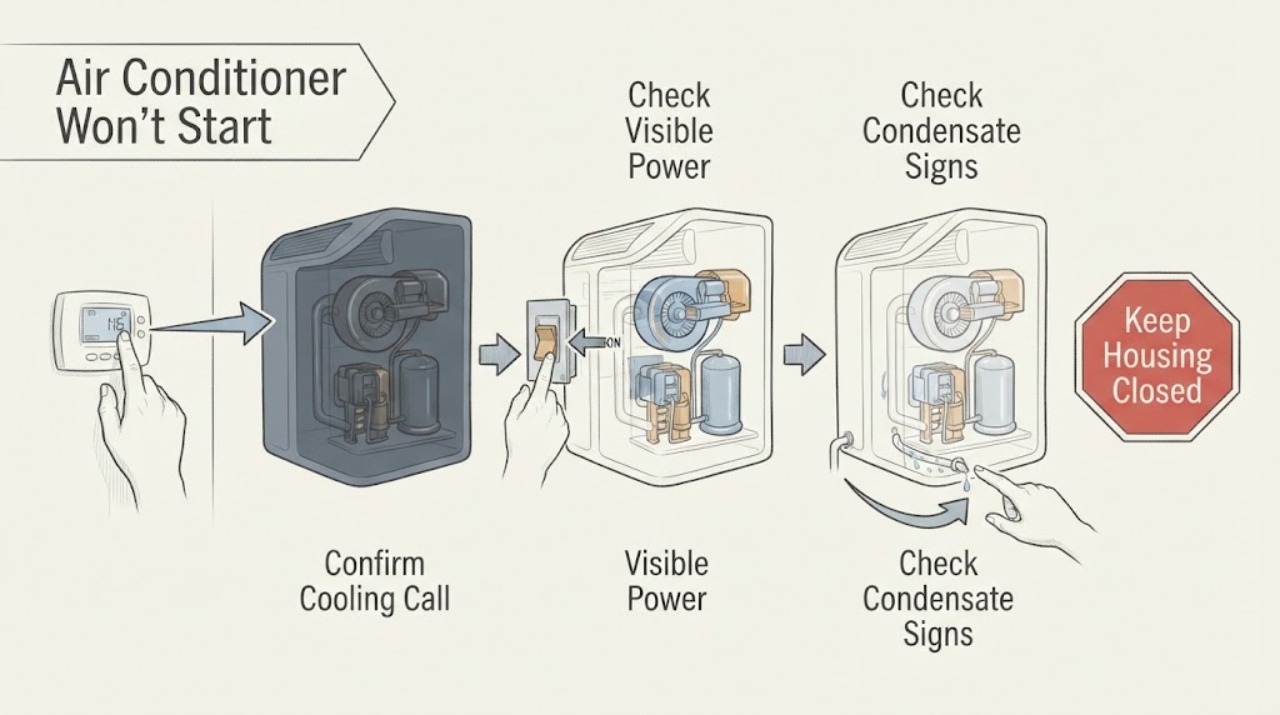
Air Conditioner Won't Start: Blower Motor, Compressor, and Contactor Checks
If an air conditioner will not start, first determine whether the thermostat is actually calling for cooling, whether the indoor blower responds, and whether the outdoor unit responds. From ordinary safe access, check the thermostat setting, the visible power status, the filter, and signs of condensate or an overflow shutdown; do not open panels or test live voltage.
-
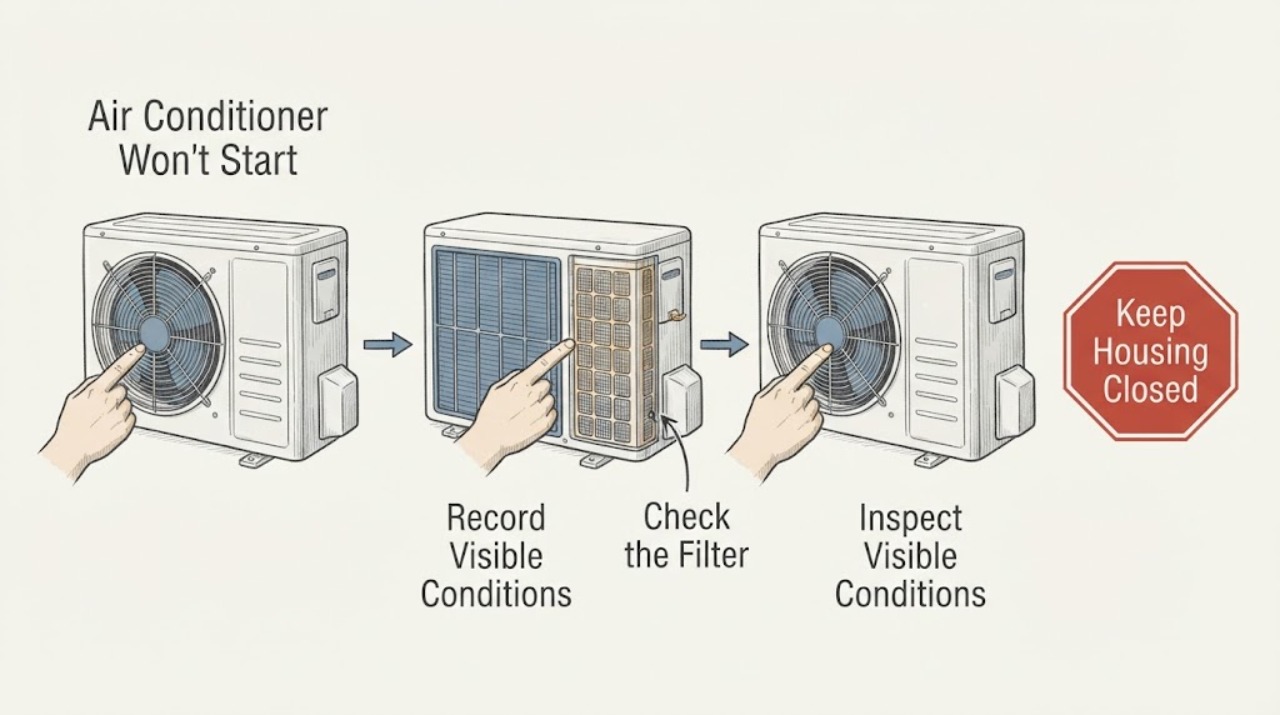
Air Conditioner Won't Start: Check the Safe Causes Before Ordering Parts
When an air conditioner will not start, first separate no thermostat call, no indoor response, and an outdoor unit that stays silent. Check the thermostat mode and setpoint, the accessible air filter, visible supply and return airflow, and whether a clearly labeled HVAC protective device is open.
-
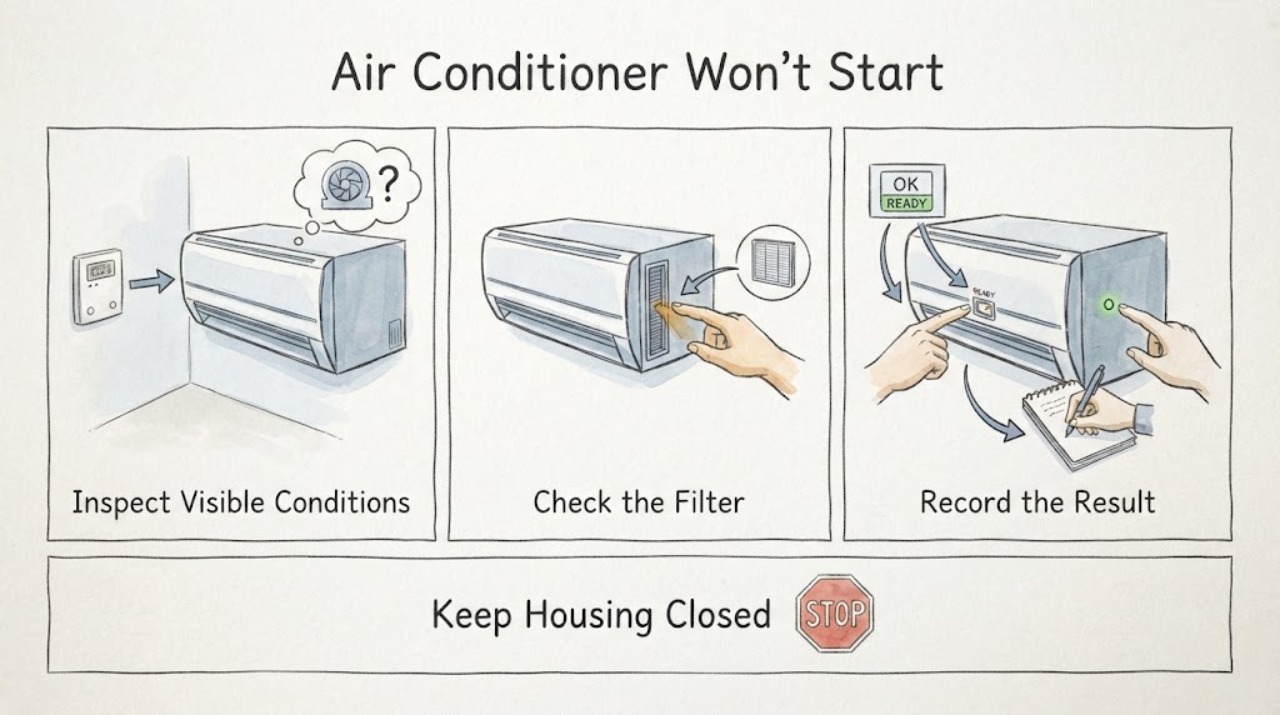
Air Conditioner Won't Start: Check the Thermostat, Blower, and Outdoor Unit
If an air conditioner will not start, first determine whether the thermostat is actually calling for cooling, whether the indoor blower moves air, and whether the outdoor unit responds. Check only the thermostat settings, the user-accessible air filter, visible registers, and the breaker or disconnect from a safe dry position; do not open a cabinet, touch wiring, reach into a fan, test a capacitor, or handle refrigerant.
-
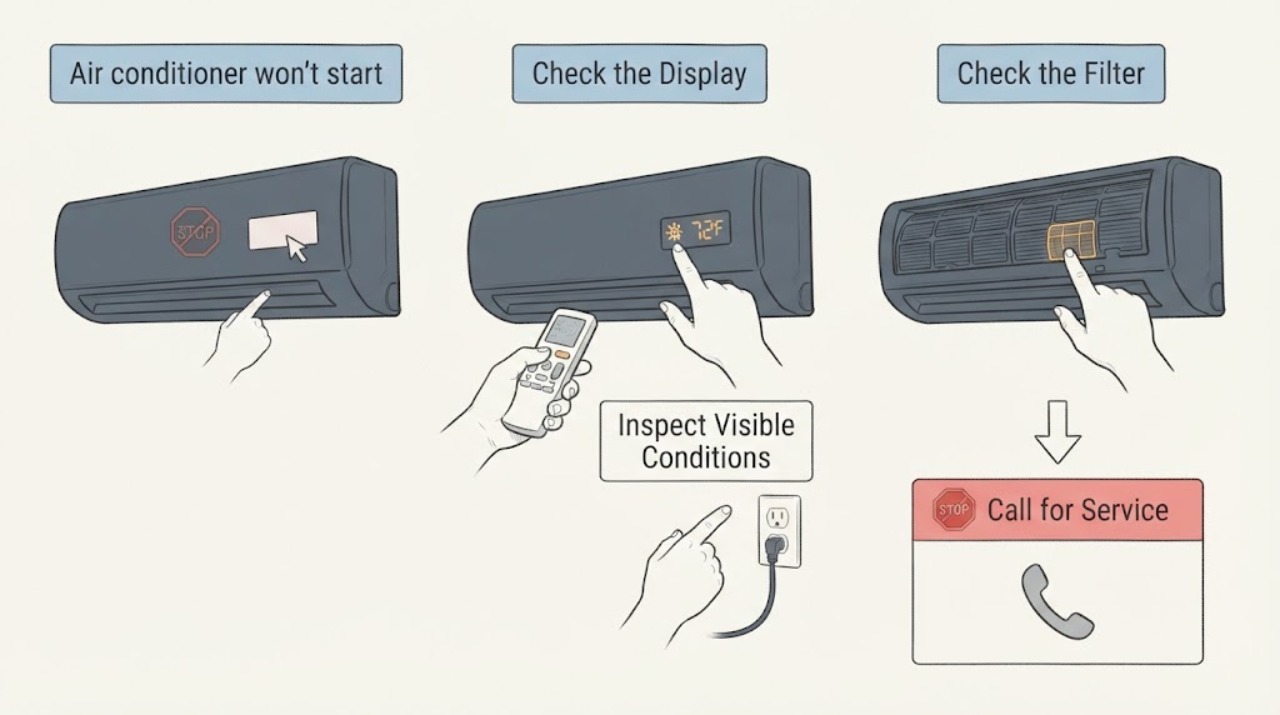
Air conditioner won't start: safe checks before calling for service
Start at the thermostat: confirm Cool mode, a set temperature below the room temperature, and the expected fan setting. Then check the air filter and look at the indoor and outdoor power switches or breakers without opening equipment.
-
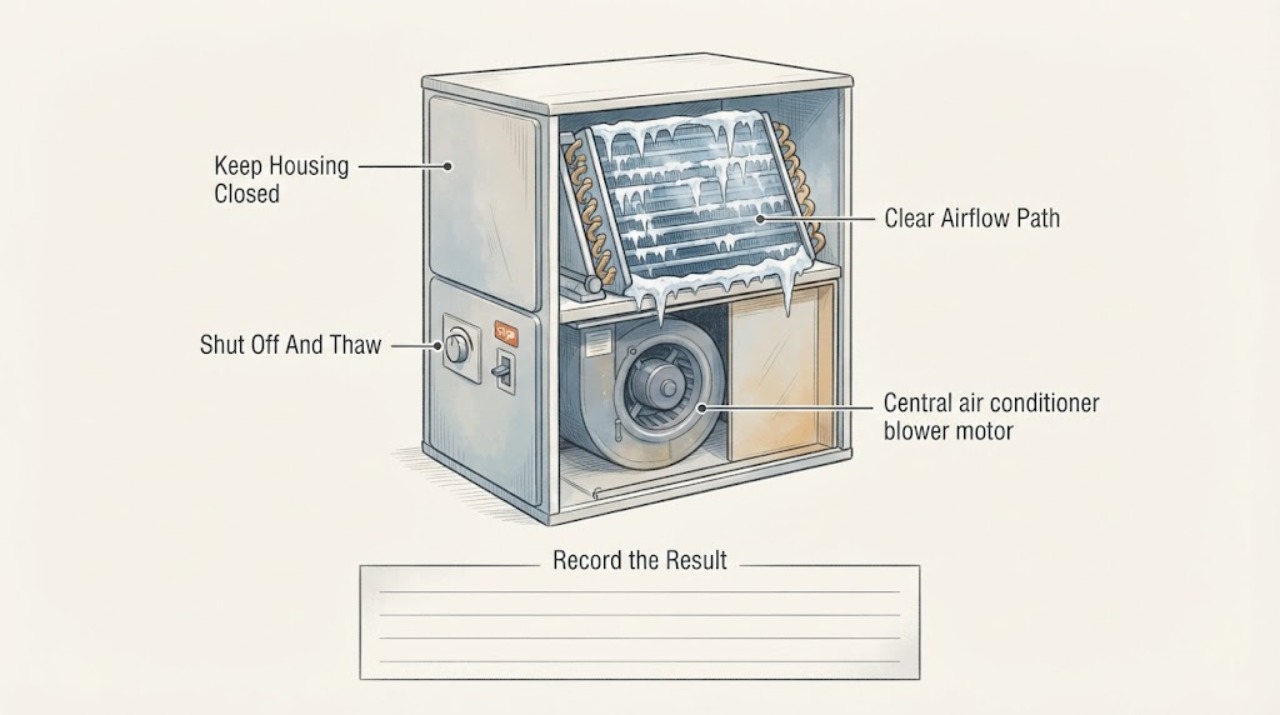
American Standard central air conditioner blower motor evaporator coil frozen: What to Check and What to Do Next
A frozen evaporator coil with weak or absent airflow can be caused by a blower motor problem, but a dirty filter, dirty coil, blocked return or supply path, thermostat issue, or low refrigerant can produce the same ice. Turn cooling off at the thermostat and do not keep running the AC while the coil is frozen.
-
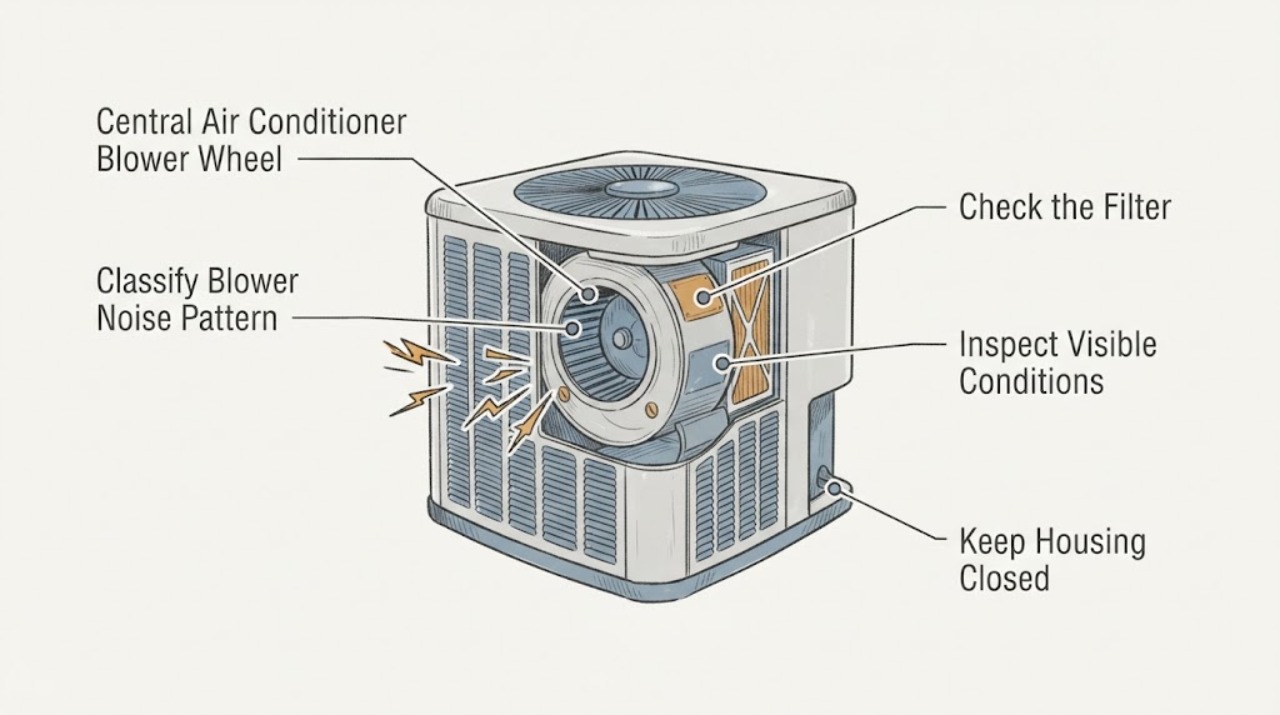
American Standard Central Air Conditioner Blower Wheel Making Loud Noise: What to Check and What to Do Next
A loud noise that seems to come from the blower wheel of an American Standard central air conditioner can be caused by a restricted filter or return, a loose or damaged blower-wheel or housing component, motor or bearing wear, belt or pulley trouble, vibration, or sound transmitted through the ductwork.
-
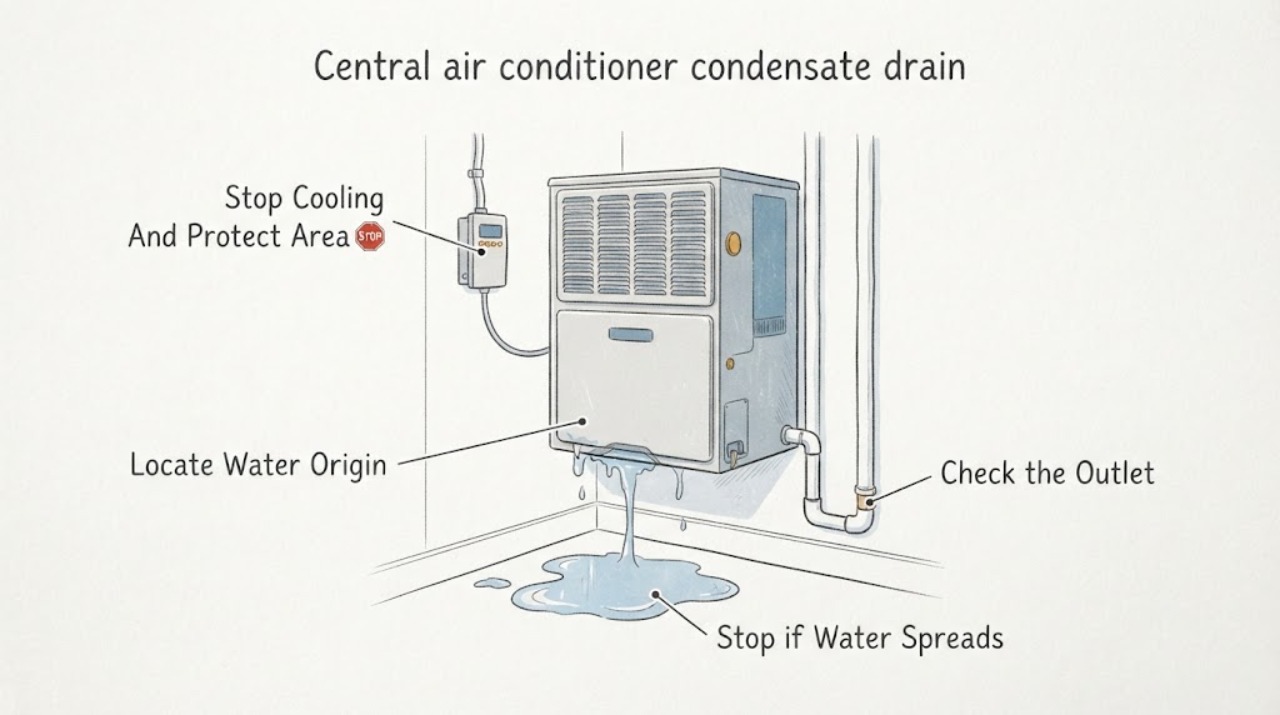
American Standard central air conditioner condensate drain leaking water: What to Check and What to Do Next
Water from an American Standard central air conditioner near the indoor unit commonly points to a backed-up condensate drain, an overflowing or damaged drain pan, a frozen evaporator coil that is thawing, or a leak at a connection. Turn cooling off, keep water away from electrical equipment, and document where the water starts and whether the pan or visible drain outlet is full.
-
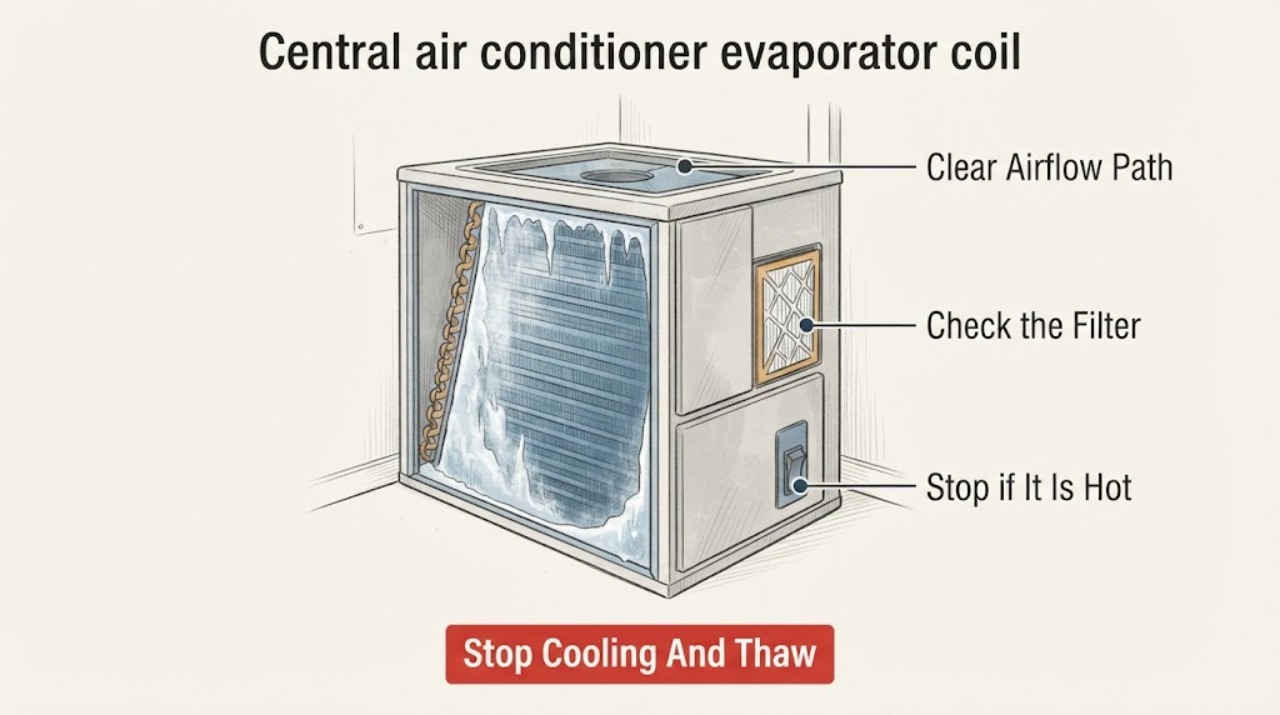
American Standard central air conditioner evaporator coil frozen: What to Check and What to Do Next
Ice on an American Standard central air conditioner's indoor evaporator coil means the cooling system needs to stop cooling until the coil thaws; continued operation can damage the system. The common first suspects are restricted airflow from a dirty filter or blocked return/supply, but a dirty coil, blower problem, thermostat behavior, condensate issue, or low refrigerant can look similar.
-
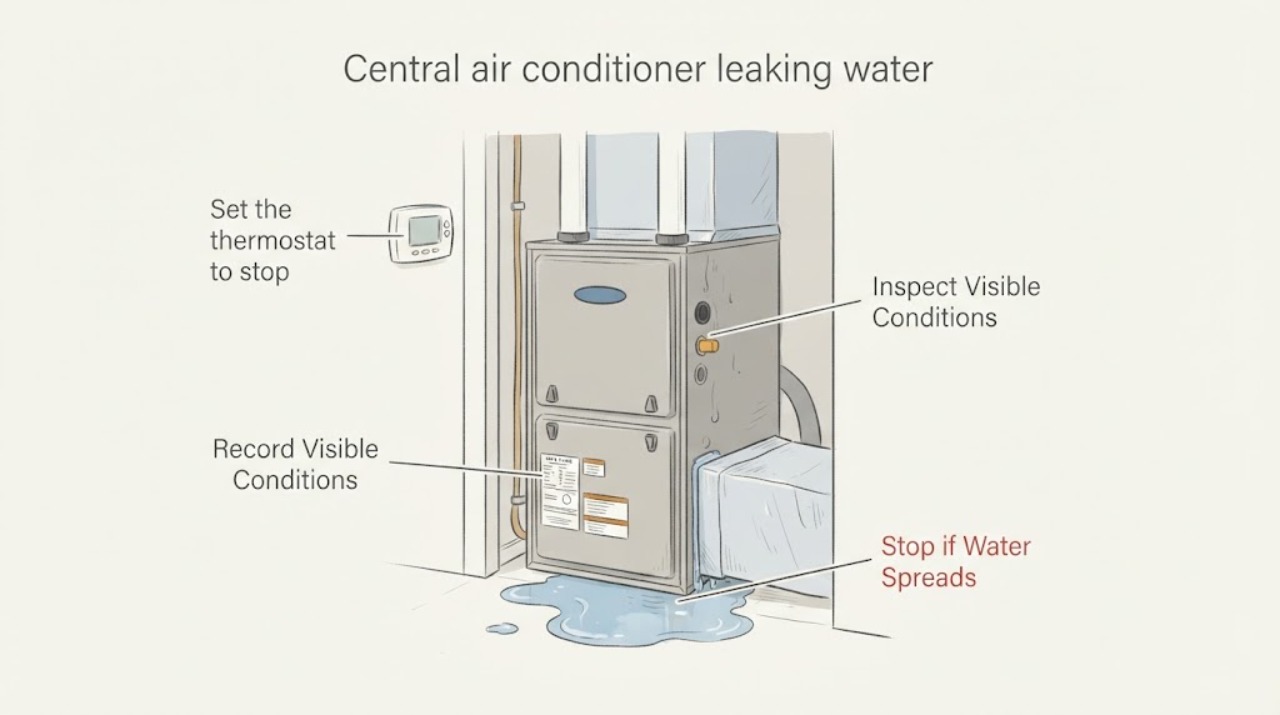
American Standard central air conditioner leaking water: What to Check and What to Do Next
Water from an American Standard central air conditioner usually means condensate is not reaching its drain, a drain pan or line is damaged or blocked, or a frozen evaporator coil is thawing. Turn cooling off if water is pooling, near electrical equipment, or reaching a ceiling or wall; never run a visibly frozen coil.
-
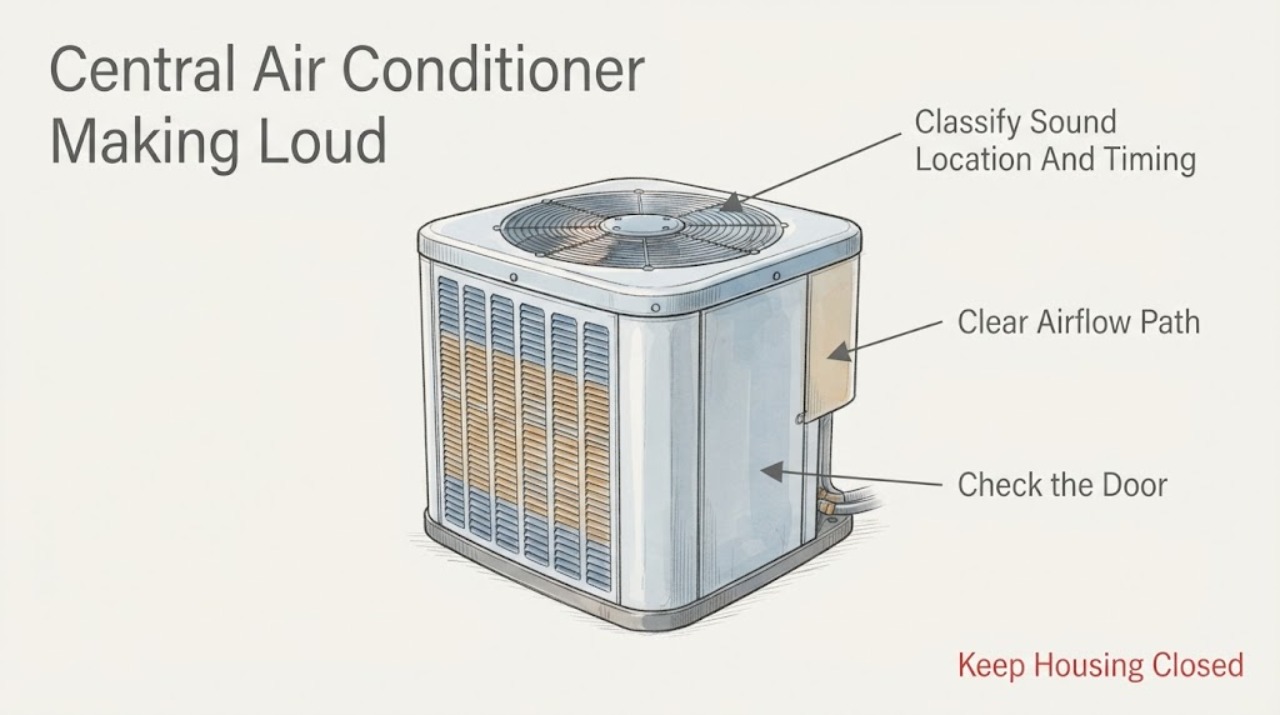
American Standard Central Air Conditioner Making Loud Noise: What to Check and What to Do Next
A new or unusually loud American Standard central-air-conditioner sound should be treated as a change in system behavior, not diagnosed by noise name alone. First note whether the sound comes from the indoor air handler, ductwork, or outdoor condenser and whether it happens at startup, during cooling, continuously, or at shutdown.
-
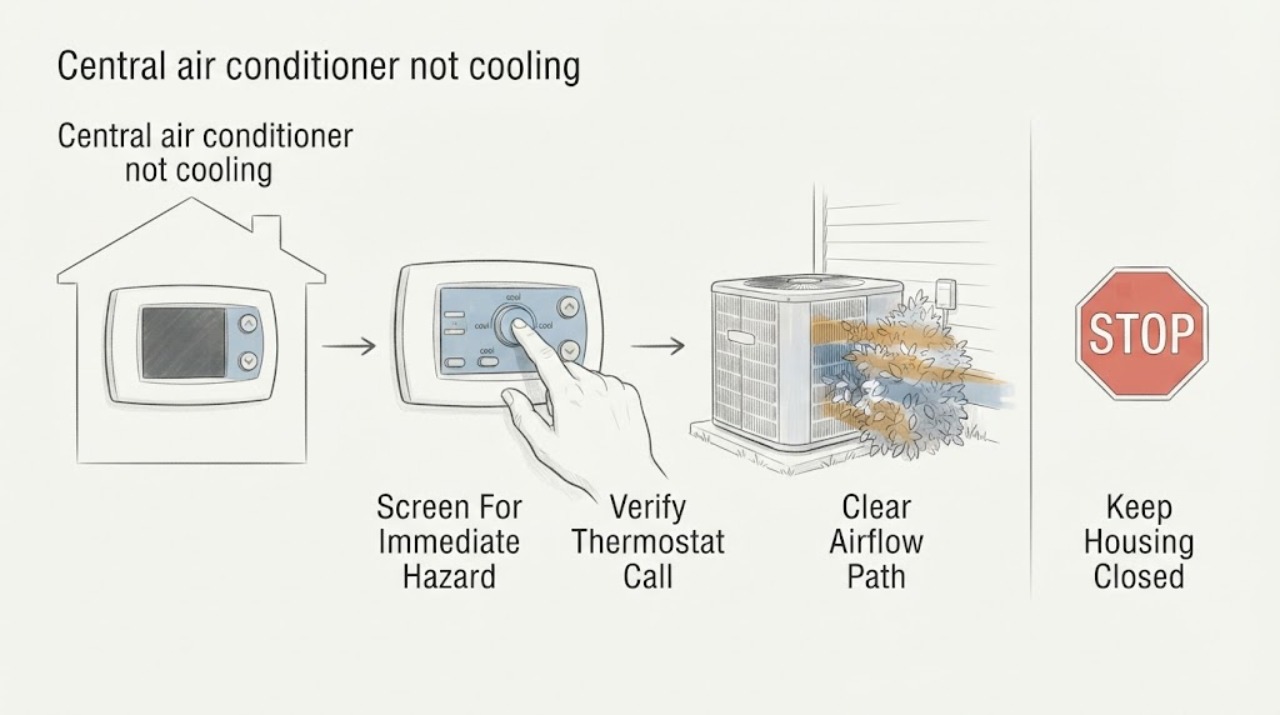
American standard central air conditioner not cooling: What to Check and What to Do Next
When an American Standard central air conditioner is not cooling, first separate a control or airflow problem from a refrigeration or outdoor-unit fault. From a dry, safe position, confirm the thermostat is on COOL with the fan on AUTO, check the air filter and open registers, and inspect the outdoor unit for leaves or other blockage without touching the equipment.
-
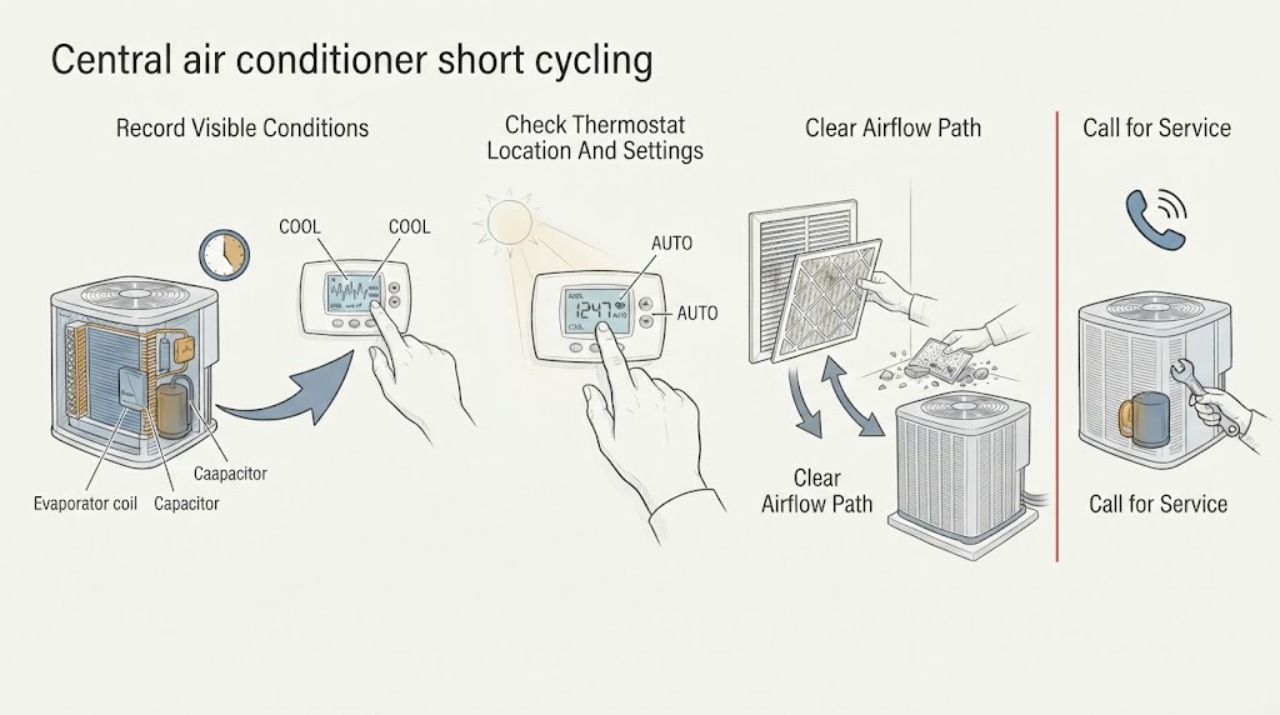
American Standard central air conditioner short cycling: What to Check and What to Do Next
An American Standard central air conditioner is short cycling when it starts and stops repeatedly without completing a normal cooling cycle. Note the run and off pattern, thermostat setting, indoor airflow, filter condition, ice, outdoor-unit response, and any breaker or odor event.