
HVAC guides
Air Conditioners Repair Guides – Page 3
Cooling-system guidance for airflow, temperature, drainage, controls, and outdoor-unit problems.
Published air conditioners guides
Choose the guide that best matches the equipment and symptom you are seeing.
-
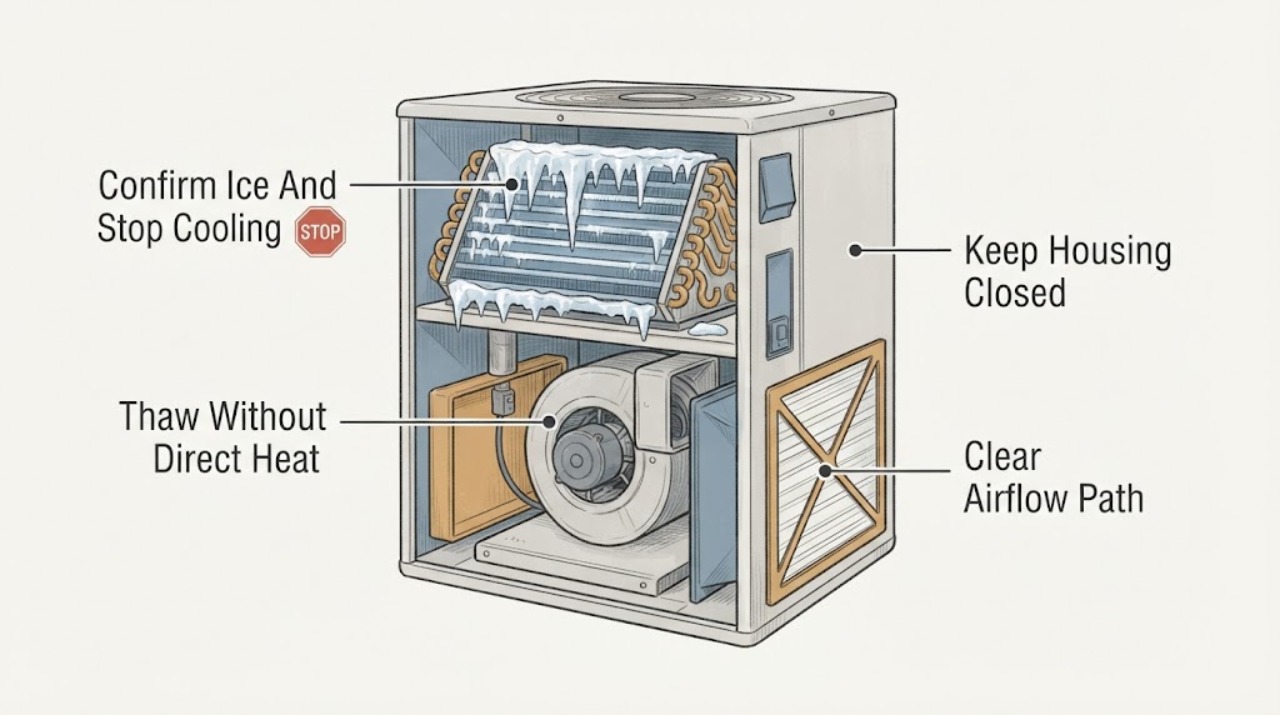
Carrier Central Air Conditioner Blower Motor with Frozen Evaporator Coil: What to Check and What to Do Next
Turn the cooling function off as soon as you see ice on the evaporator coil or refrigerant line. A frozen coil can block airflow, and Carrier warns that continuing to run the system can damage the compressor and may allow a blower motor to be blocked or seized by ice.
-
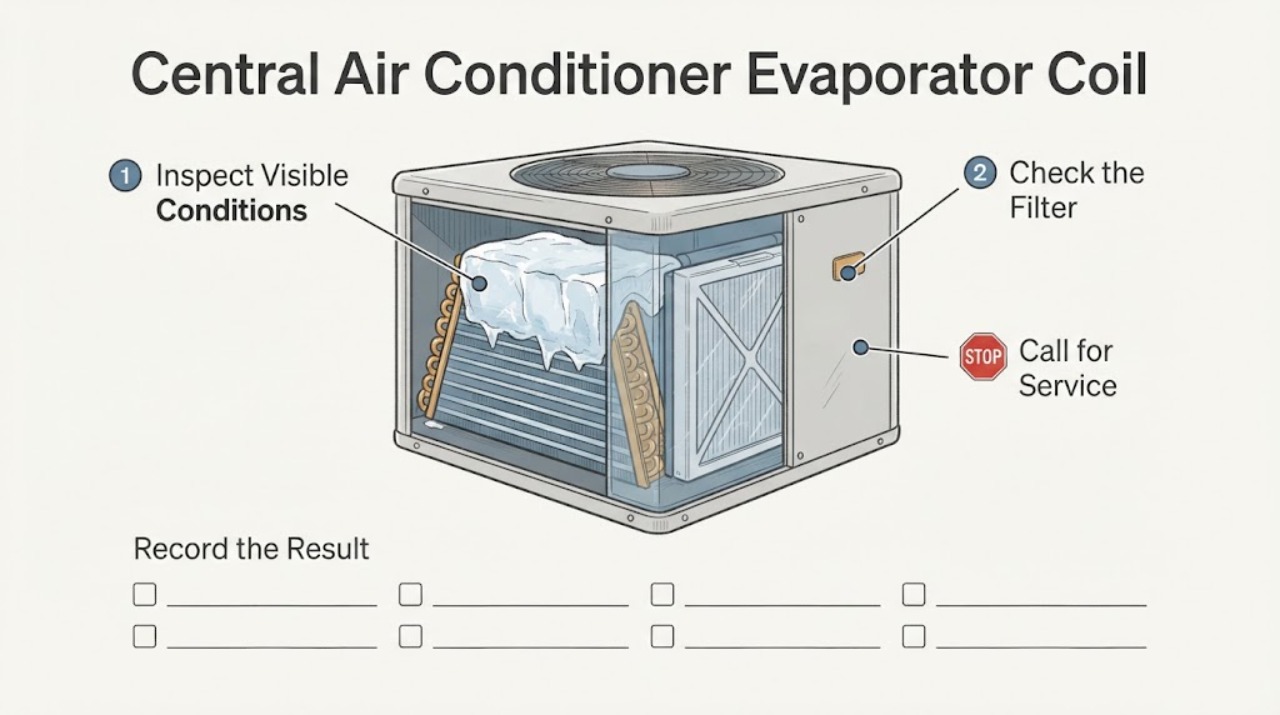
Carrier Central Air Conditioner Evaporator Coil Frozen: What to Check and What to Do Next
If a Carrier central air conditioner's evaporator coil is frozen, turn the cooling function off immediately and do not keep running the compressor against the ice. From a safe position, document where ice or frost appears, whether airflow is weak, whether the filter is dirty, whether the outdoor unit runs, and whether water collects as the ice melts.
-
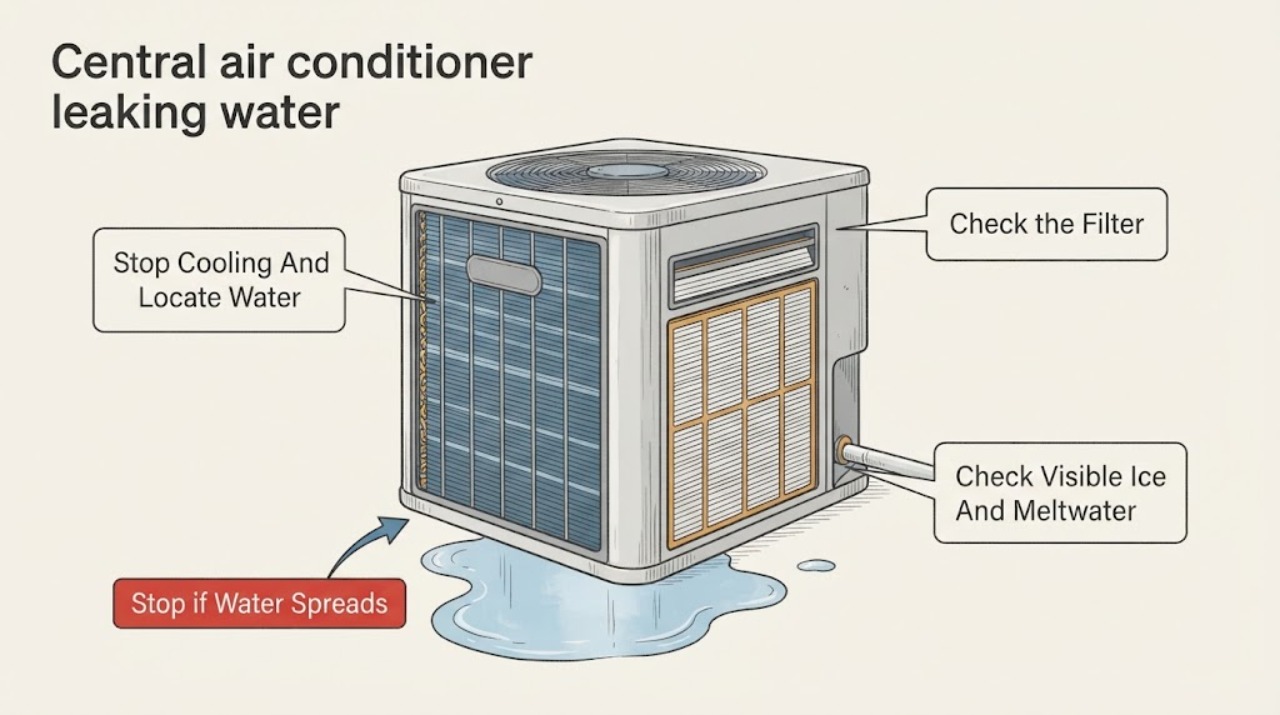
Carrier central air conditioner leaking water: What to Check and What to Do Next
A Carrier central air conditioner leaking water usually has a condensate drainage problem, a frozen evaporator coil that is melting, or a damaged drain pan. A dirty filter or blocked return can reduce airflow and freeze the coil; a refrigerant issue, disconnected drain, pump problem, or installation condition can look similar.
-
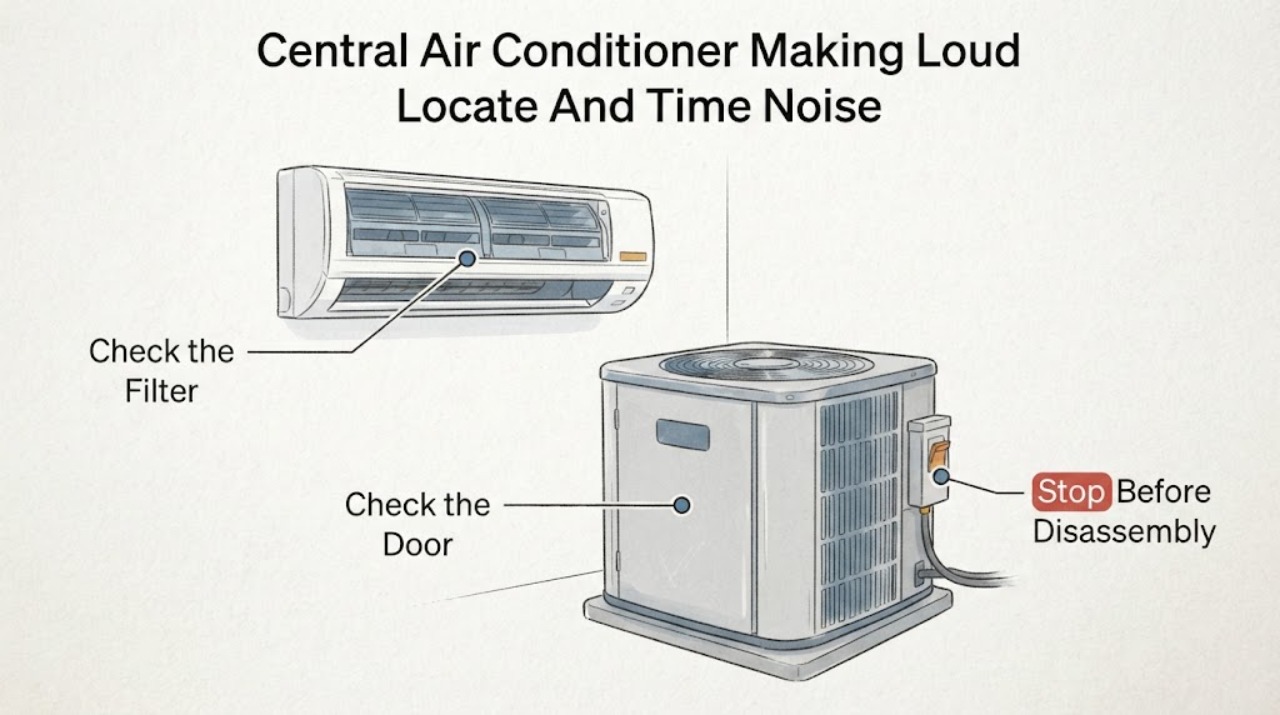
Carrier Central Air Conditioner Making Loud Noise: What to Check and What to Do Next
A loud Carrier central-air-conditioner noise should be diagnosed by location, timing, and system behavior—not by replacing a part from the sound alone. Turn the system off promptly for grinding, scraping, banging, loud buzzing, burning odor, smoke, water, or a noise that starts with abnormal vibration.
-
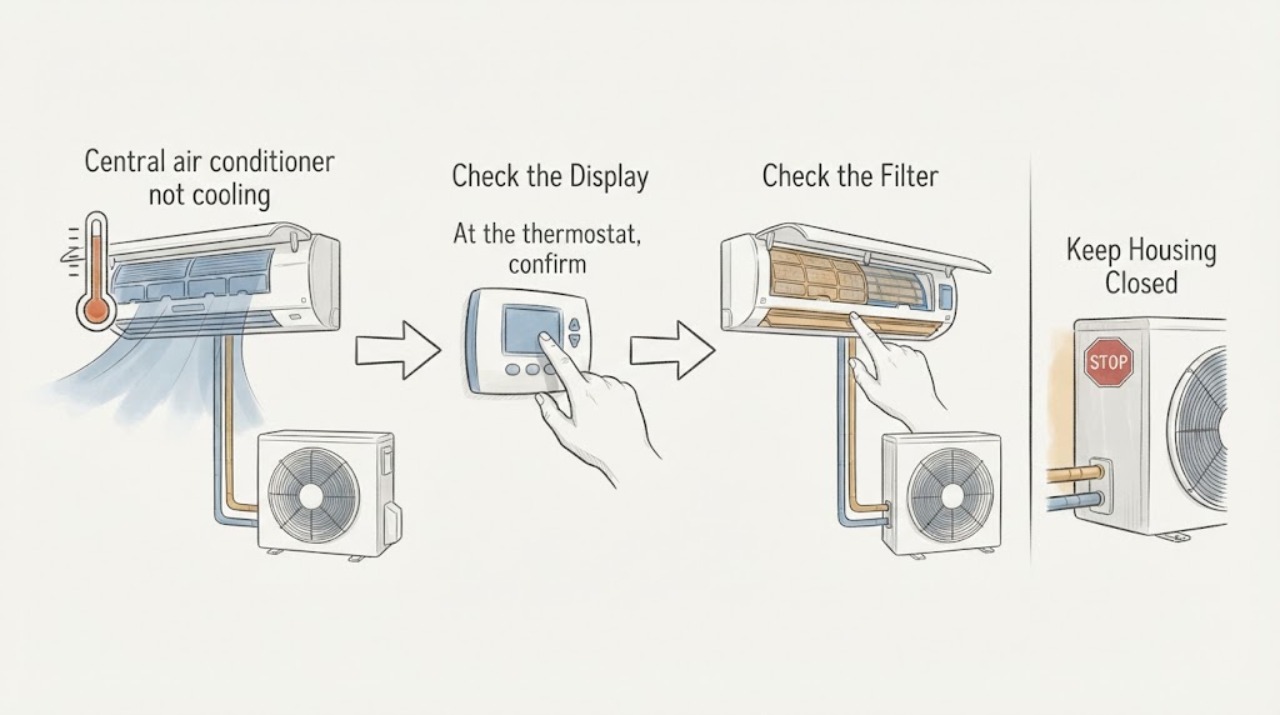
Carrier central air conditioner not cooling: What to Check and What to Do Next
A Carrier central air conditioner that is not cooling may have an incorrect thermostat mode, restricted airflow, a blocked outdoor coil, a tripped electrical circuit, a frozen evaporator coil, a condensate safety shutdown, low refrigerant, or an outdoor-unit component fault. Check the thermostat, filter, supply airflow, visible ice or water, and outdoor-unit status from a safe distance.
-
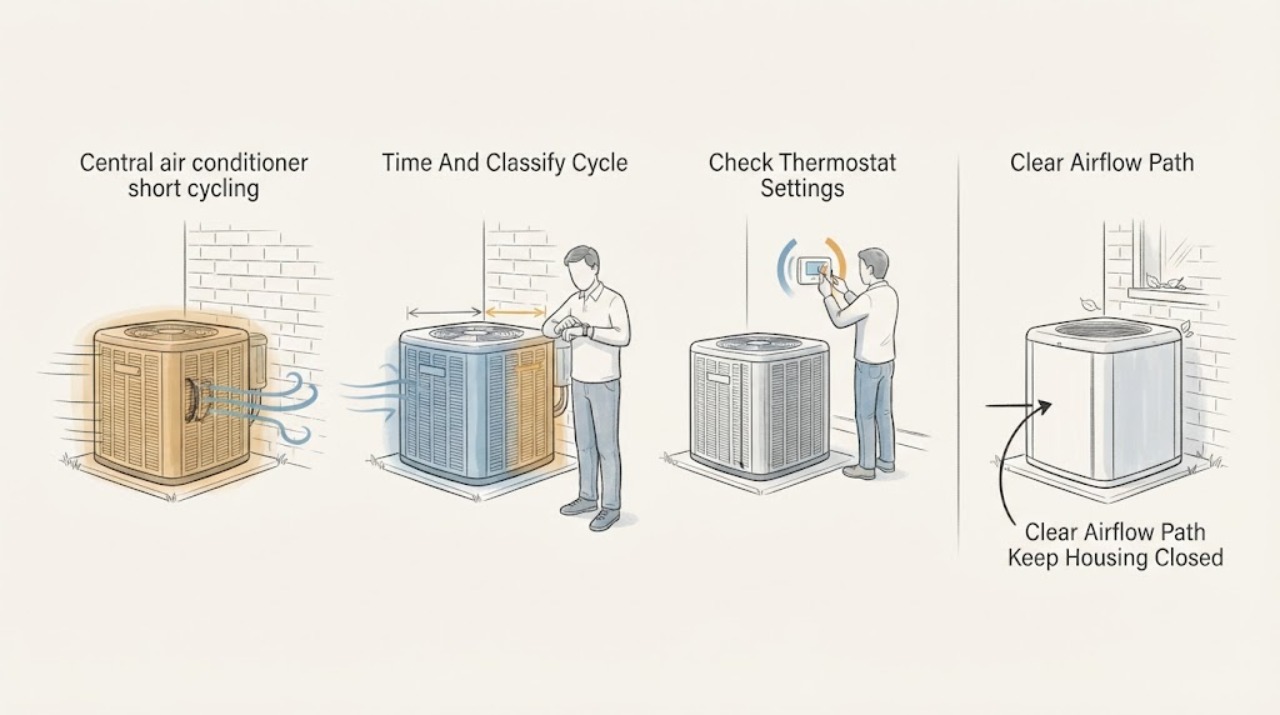
Carrier central air conditioner short cycling: What to Check and What to Do Next
A Carrier central air conditioner is short cycling when it starts and stops repeatedly before completing a normal cooling run. First distinguish a normal compressor-protection delay from a fault: a brief 3 to 5 minute Cool On delay after a power interruption can be normal, while repeated rapid starts, poor cooling, or high indoor humidity is not.
-
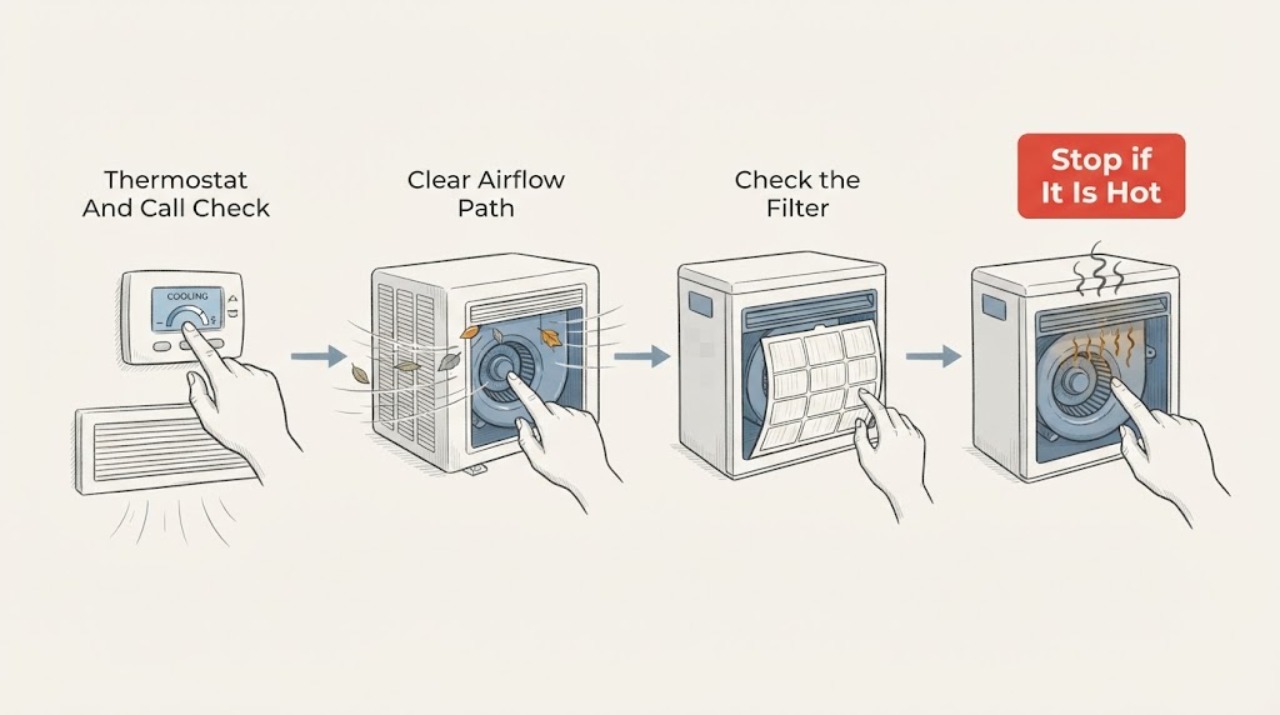
Central air conditioner blower motor not cooling: What to Check and What to Do Next
A central AC blower motor problem usually shows up as weak or no indoor airflow, but warm air can also come from thermostat settings, a restricted filter, a frozen coil, an outdoor-unit fault, or another control problem. Start with safe observations: read the thermostat, compare airflow at several registers, inspect only an accessible filter, and look and listen at the air handler and outdoor unit without opening panels.
-
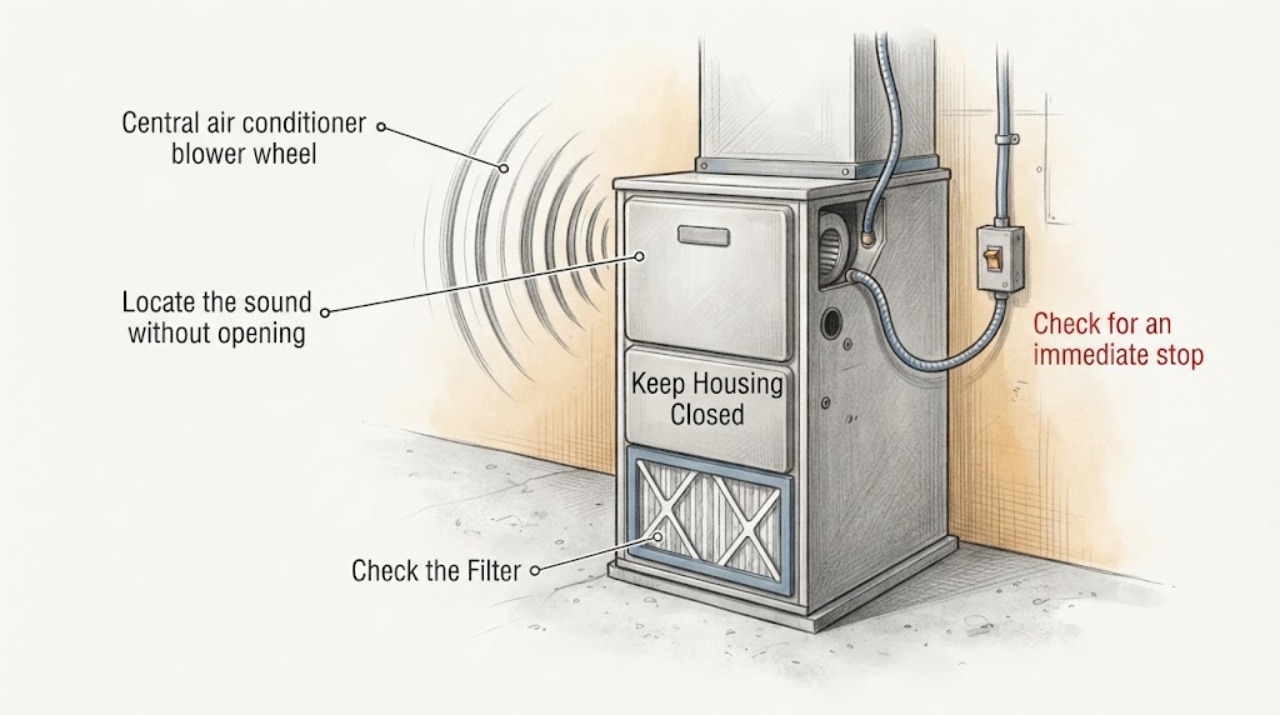
Central air conditioner blower wheel making loud noise: What to Check and What to Do Next
A new loud noise from a central-air blower wheel is a stop-and-diagnose symptom, not a reason to reach into the air handler. Turn the system off at the thermostat, note whether the sound is scraping, rattling, humming, or accompanied by vibration or a burning smell, and check only the accessible filter and registers.
-
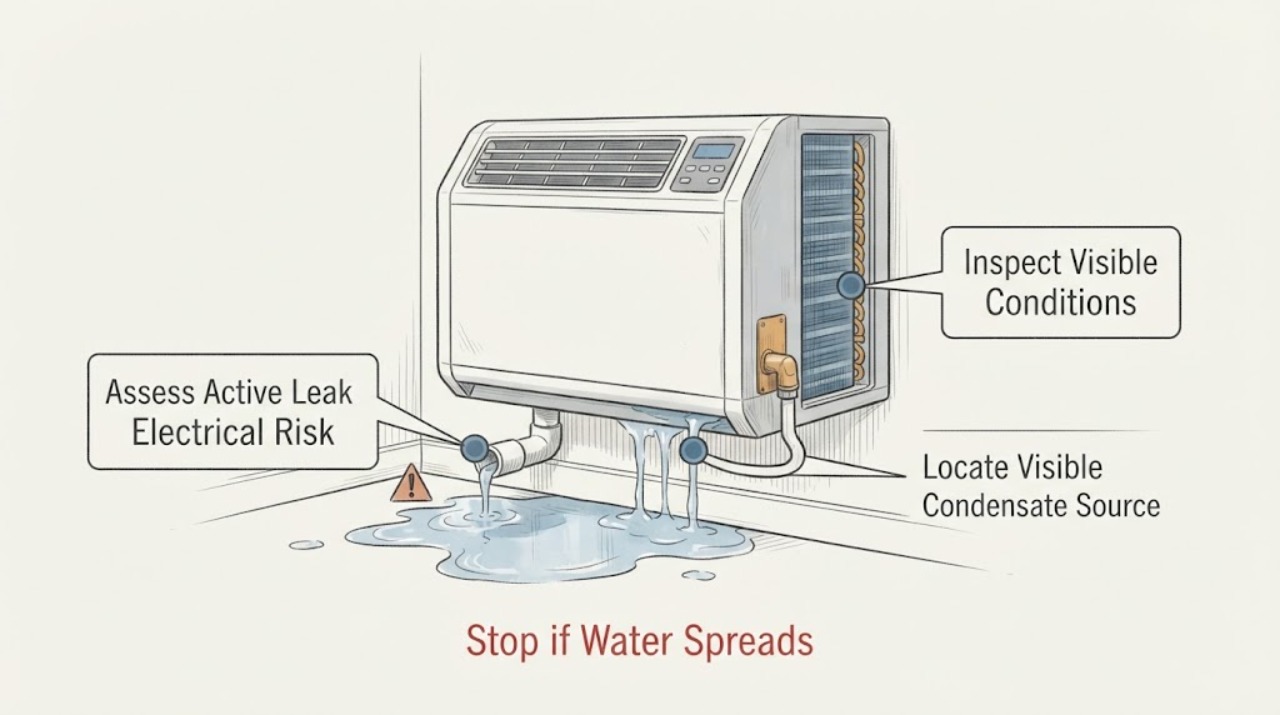
Central air conditioner condensate drain leaking water: What to Check and What to Do Next
Turn the air conditioner off at the thermostat if water is actively leaking, and keep it off until the source is understood. From a dry, safe position, identify whether water is coming from the indoor unit, a visible drain-pan edge, a condensate-pipe joint, or nearby ceiling or wall; note whether the pan is overflowing, the drain outlet is producing water, or ice is visible.
-
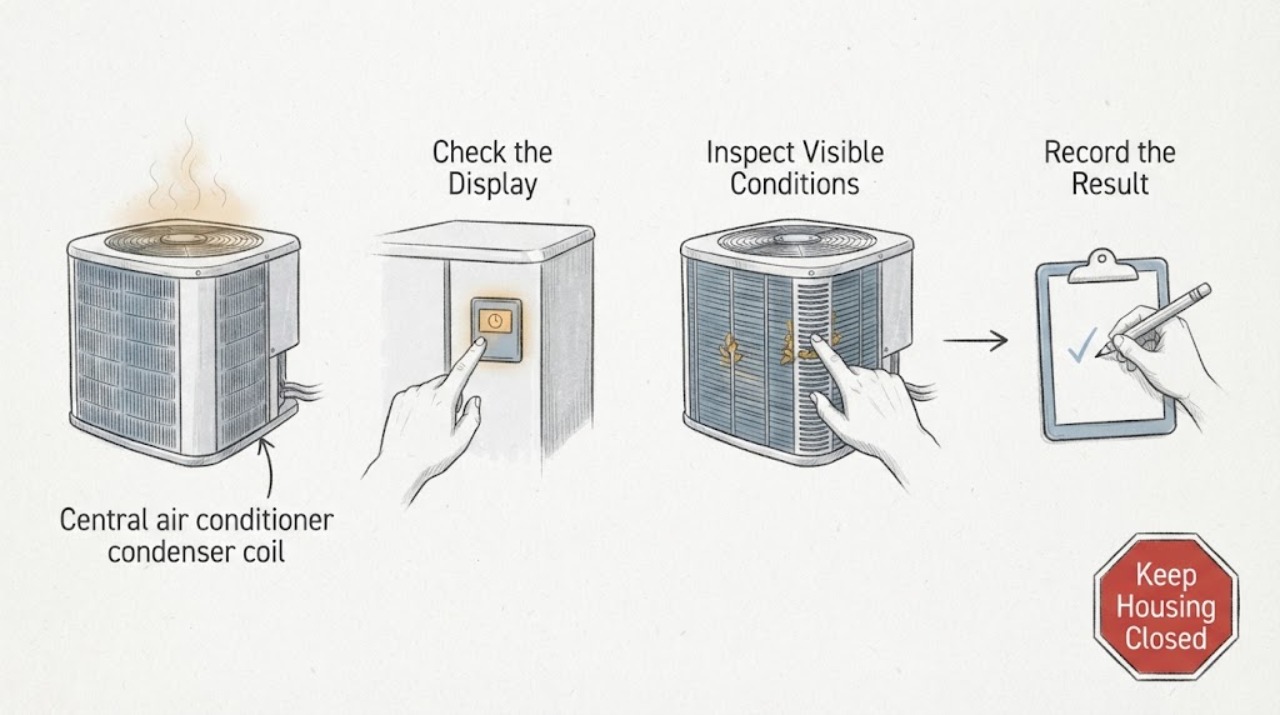
Central air conditioner condenser coil not cooling: What to Check and What to Do Next
A central AC condenser coil does not make indoor air cold; it releases the heat captured indoors to outdoor air. If the home is not cooling, first record the thermostat demand, indoor airflow, accessible filter condition, outdoor fan behavior, visible coil obstruction, ice, water, and breaker or odor symptoms without opening the equipment.
-
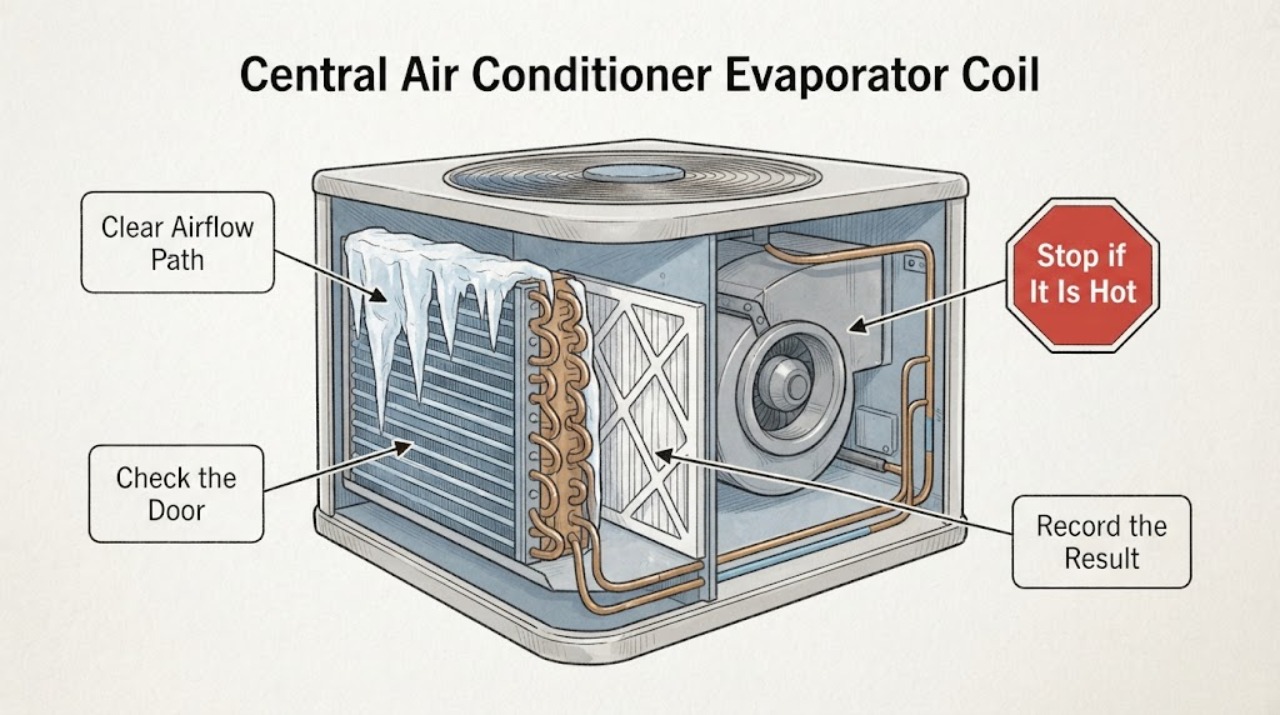
Central Air Conditioner Evaporator Coil Frozen and Airflow Weak: What to Check and What to Do Next
A frozen indoor evaporator coil can block the air path and make the registers feel weak or warm. Turn the thermostat's cooling function off and let the ice melt; use the indoor fan only if the system manual allows it and watch for meltwater.
-
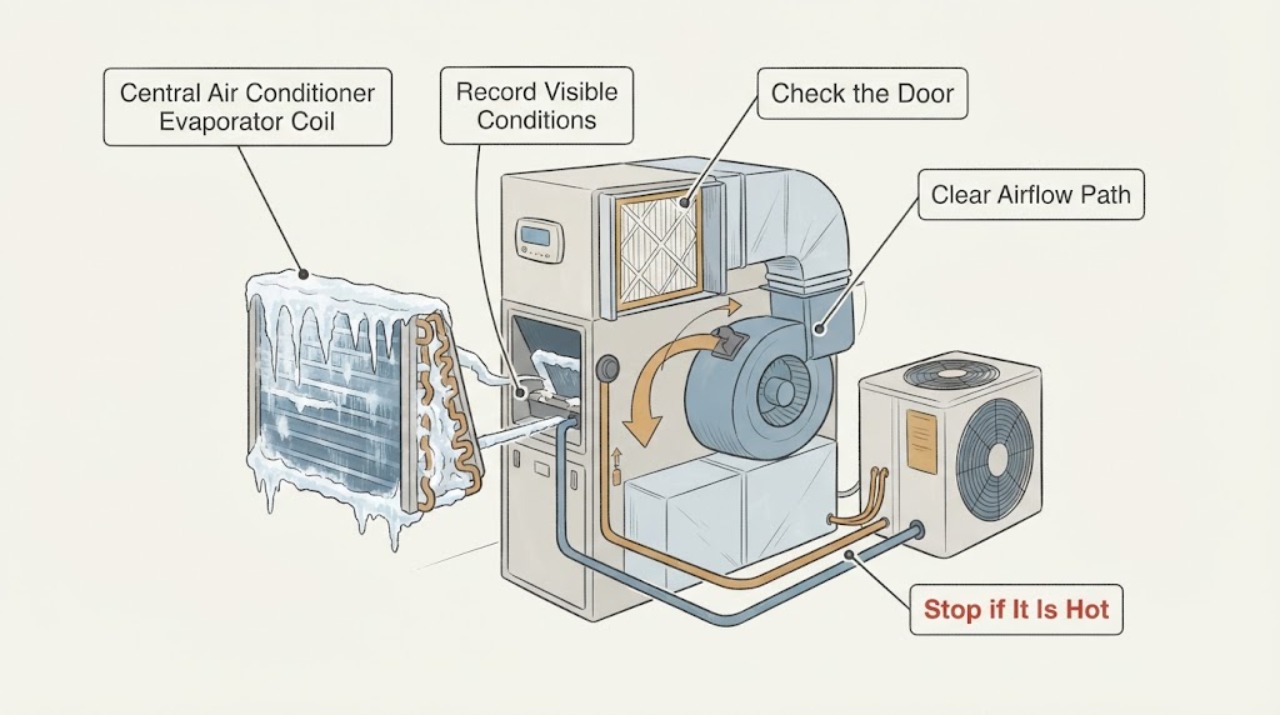
Central Air Conditioner Evaporator Coil Frozen While Thermostat Calls for Cooling: What to Check and What to Do Next
A thermostat still calling for cooling does not mean a frozen central-AC evaporator coil should keep running. The call for cooling may be valid while ice blocks the indoor coil, or the system may be failing to satisfy the setpoint because airflow is restricted, the blower is weak, refrigerant is low, or another control or mechanical fault is present.
-
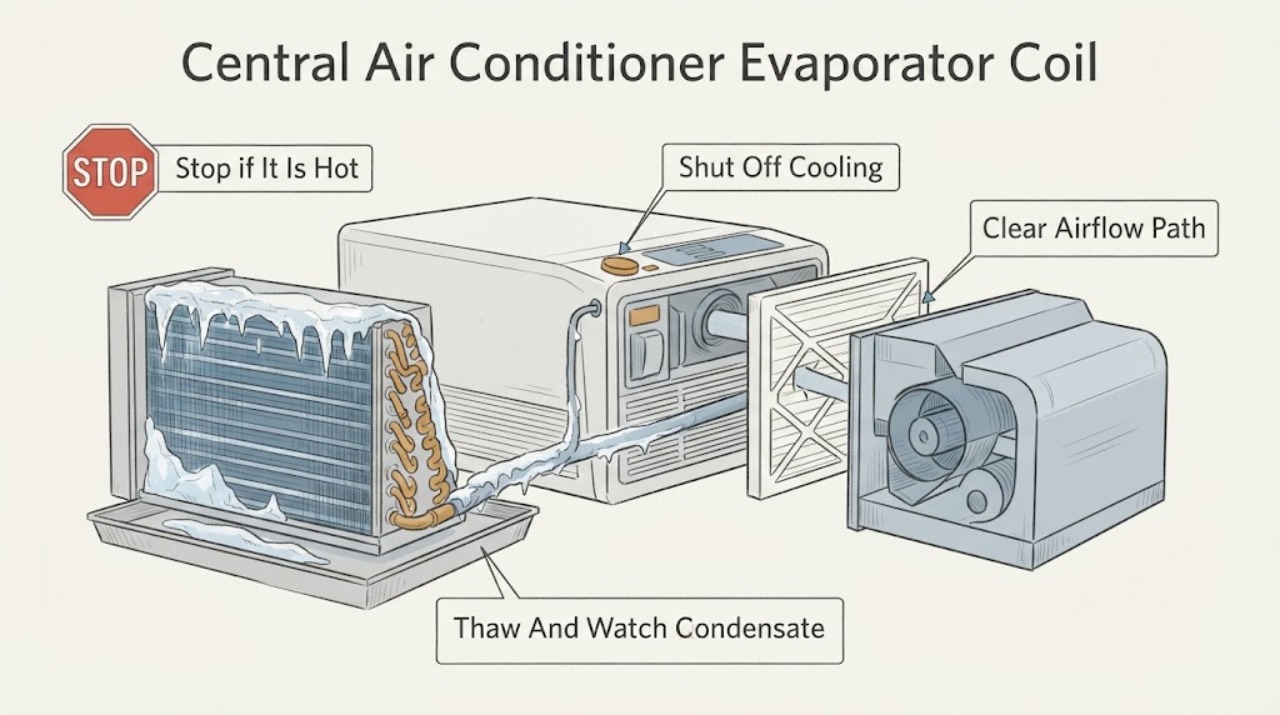
Central Air Conditioner Evaporator Coil Frozen: Ice Is Visible on the Indoor Coil or Line
Visible ice on the indoor evaporator coil or on the refrigerant line coming from the coil cabinet means the central air conditioner is frozen. Switch the thermostat from COOL to OFF now and do not keep running the compressor to test it.
-
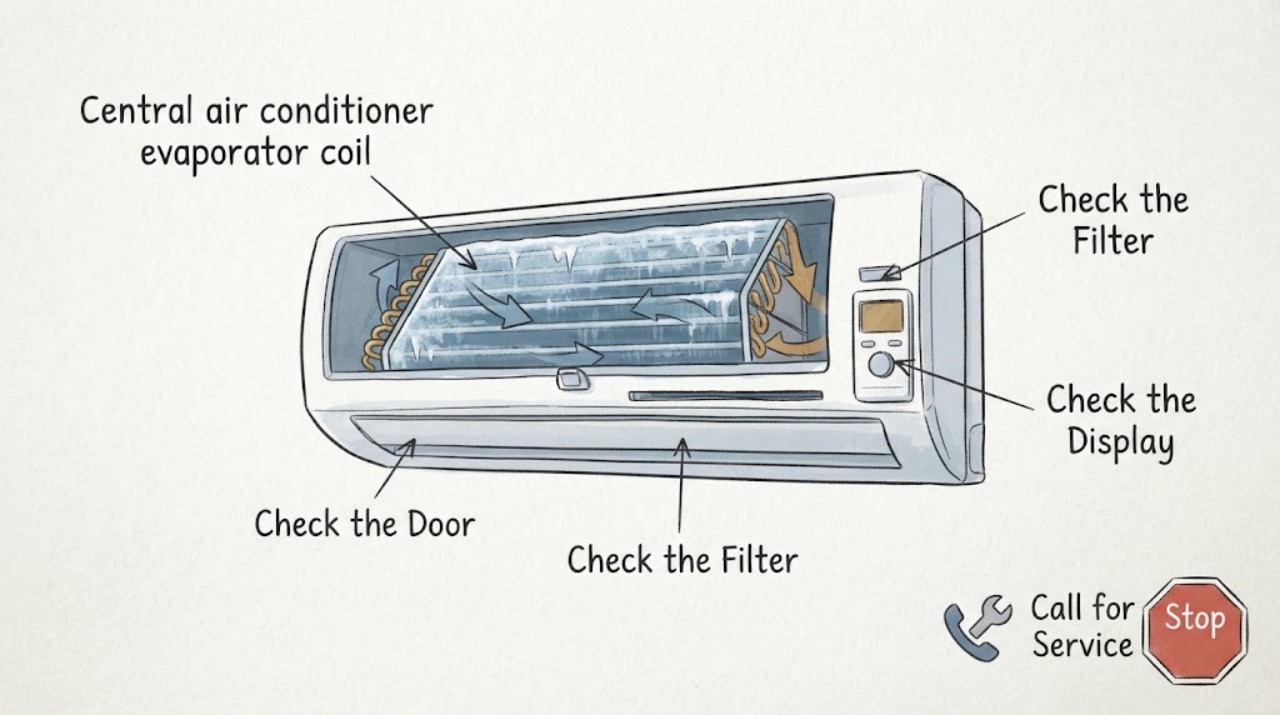
Central air conditioner evaporator coil frozen: What to Check and What to Do Next
Turn the thermostat's cooling mode to OFF as soon as you see ice on the indoor coil cabinet or refrigerant line, and leave cooling off while you arrange HVAC service. From safe, accessible locations, note the ice or thawing water, filter and return-air condition, thermostat setting, airflow at registers, and condensate signs.
-
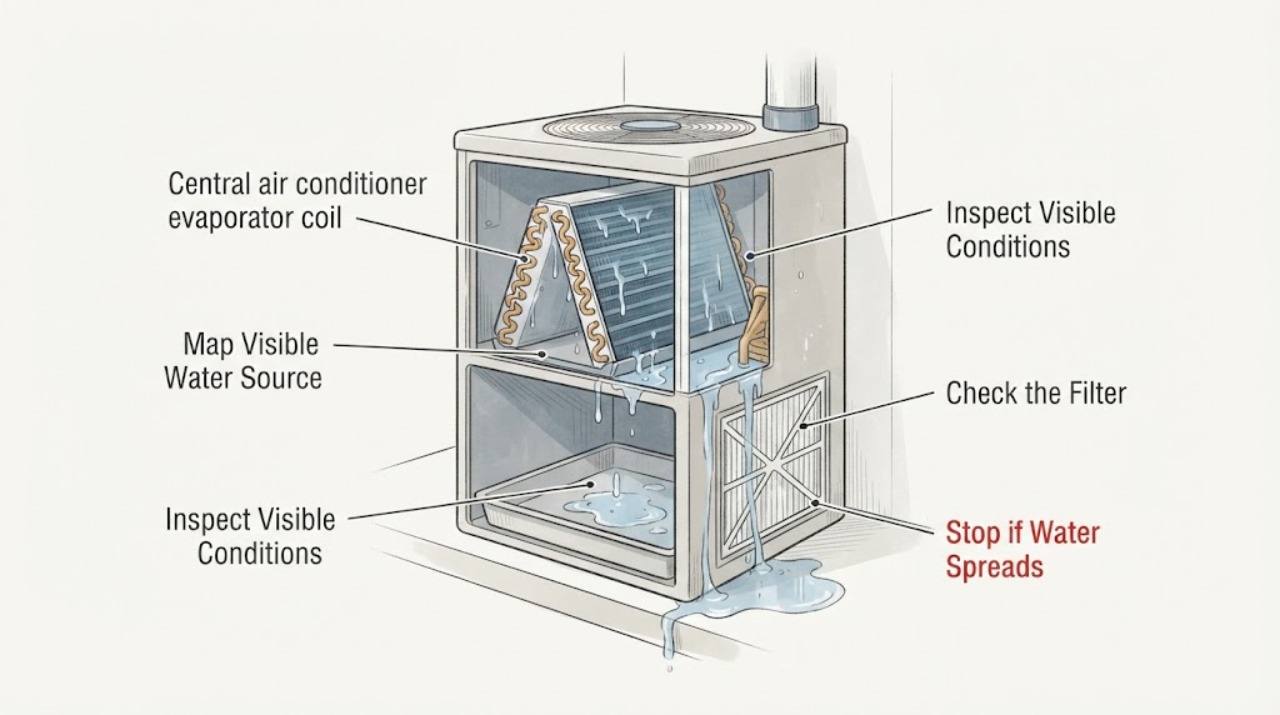
Central air conditioner evaporator coil leaking water: What to Check and What to Do Next
Water attributed to a central air conditioner's evaporator coil is usually a condensate-management or frozen-coil symptom, not a safe coil repair for a homeowner. From a dry, accessible position, note where water appears, whether ice or frost is visible without opening the cabinet, filter condition from its normal access point, drain-outlet behavior, and any water near electrical equipment.
-
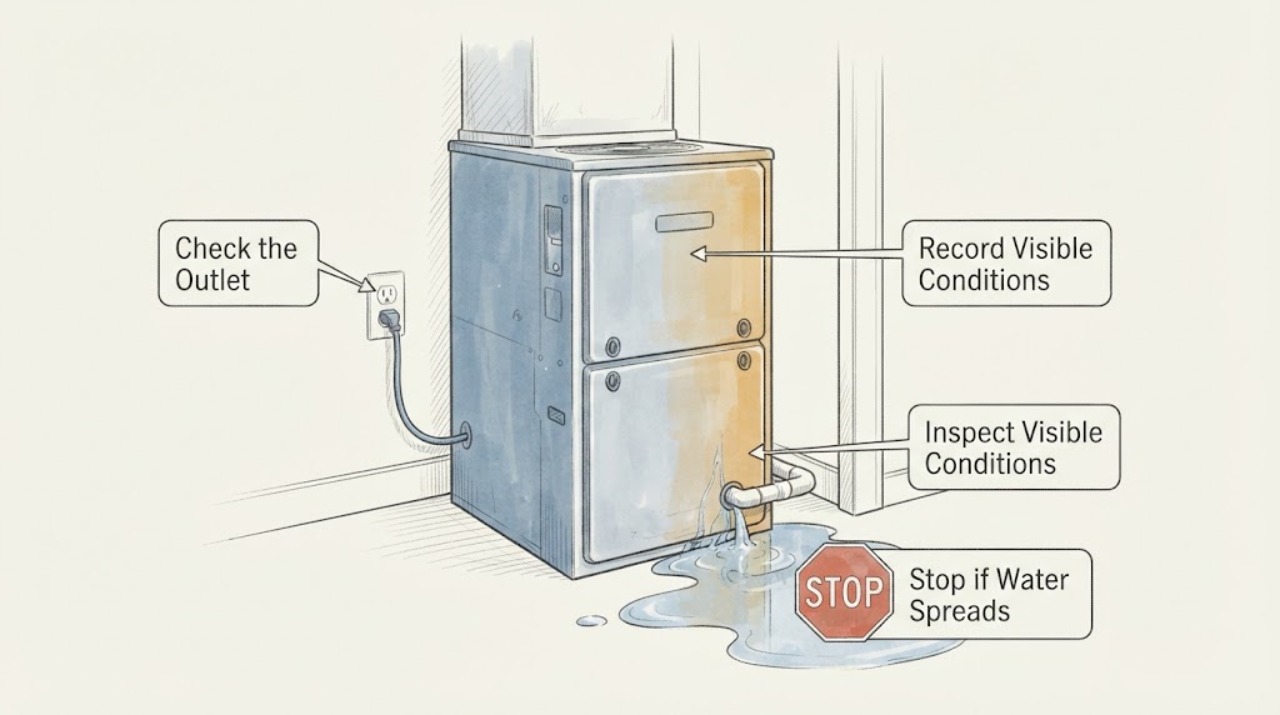
Central air conditioner leaking water is near indoor unit: What to Check and What to Do Next
Water near a central air conditioner's indoor unit is commonly related to condensate drainage, but it can also follow a frozen evaporator coil, damaged drain pan, condensate pump problem, or condensation on a cold cabinet, duct, or pipe. Turn cooling off, protect the area, and keep away from wet electrical equipment.
-
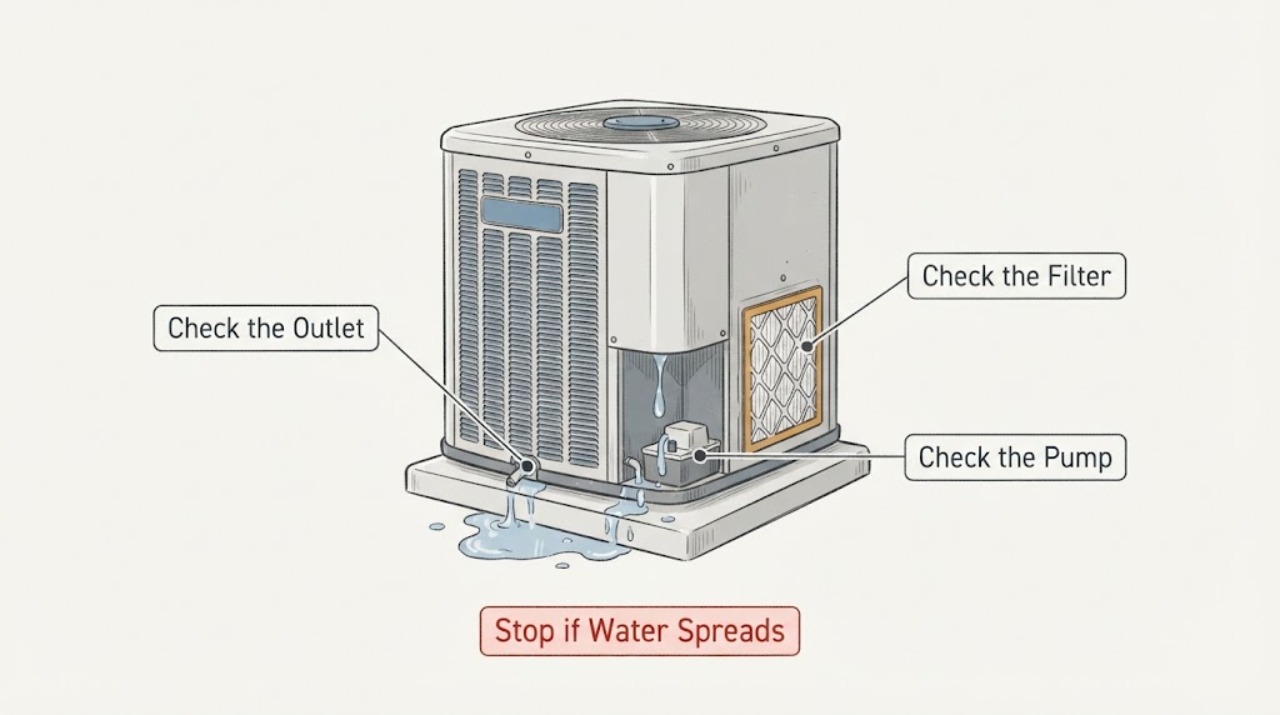
Central air conditioner leaking water drain may be blocked: What to Check and What to Do Next
A blocked condensate drain can make a central air conditioner leak, but the same water can come from a frozen evaporator coil, damaged drain pan, condensate pump, or condensation on an uninsulated surface. Turn cooling off to limit water damage, keep clear of wet electrical equipment, and note where and when water appears.
-
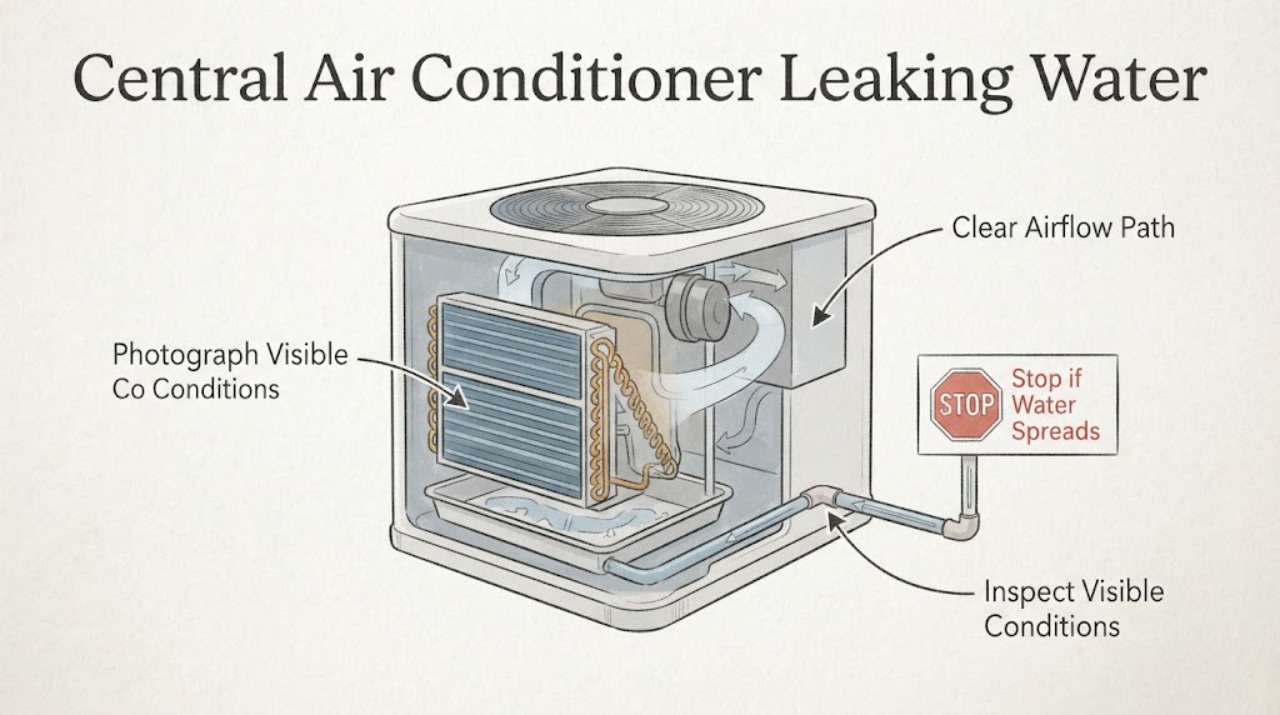
Central Air Conditioner Leaking Water While Cooling Is Running: What to Check and What to Do Next
A central air conditioner normally creates condensate while cooling, but that water should collect in an indoor drain pan and leave through the condensate drain. Water escaping onto a floor, ceiling, wall, or around the air handler usually means the drain is blocked, the pan is damaged or overflowing, or a frozen evaporator coil is melting; restricted airflow, a dirty filter, low refrigerant, or a pump problem can be upstream causes.
-
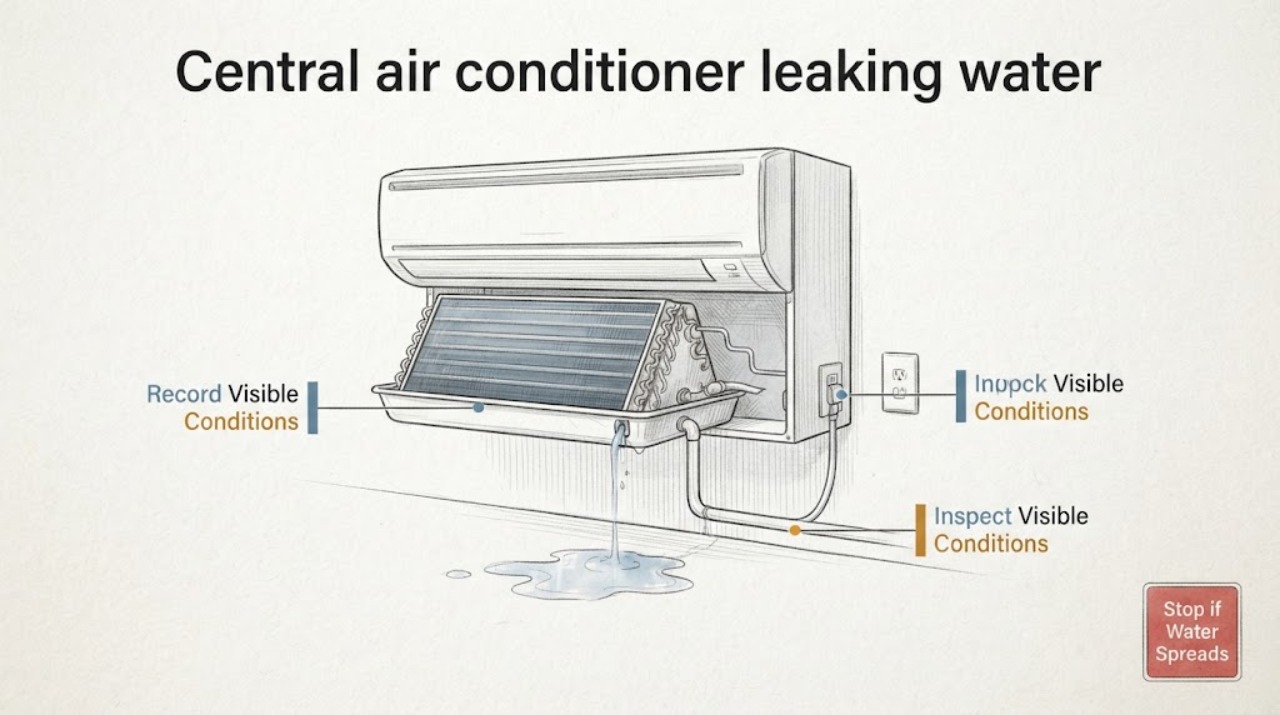
Central air conditioner leaking water: What to Check and What to Do Next
Turn the central AC off when you find indoor water, then identify where and when it appears without opening the equipment. Record whether the water is at the indoor air handler, ceiling, floor, or wall; whether it follows cooling, shutdown, or melting ice; and whether you can see frost, a dirty filter, a full visible pan, or a blocked-looking drain outlet from a safe user-accessible position.
-
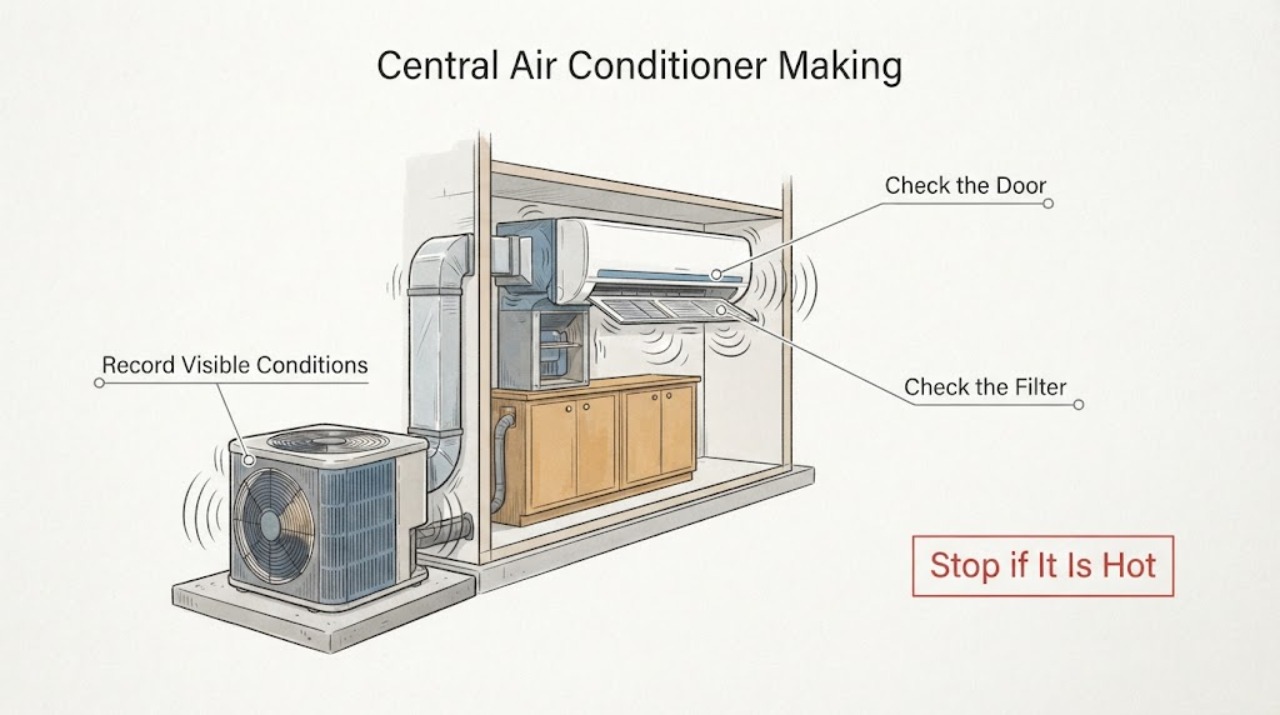
Central Air Conditioner Making a Loud Noise While Cooling May Continue: What to Check and What to Do Next
A central air conditioner that still cools while making a new or unusually loud noise should not be treated as normal simply because the temperature is falling. First note whether the sound is indoors or outdoors and whether it is humming, rattling, grinding, banging, hissing, clicking, or vibrating; turn the system Off for smoke, burning odor, arcing, refrigerant hissing, a damaged fan blade, severe vibration, or a noise that suddenly changed.
-
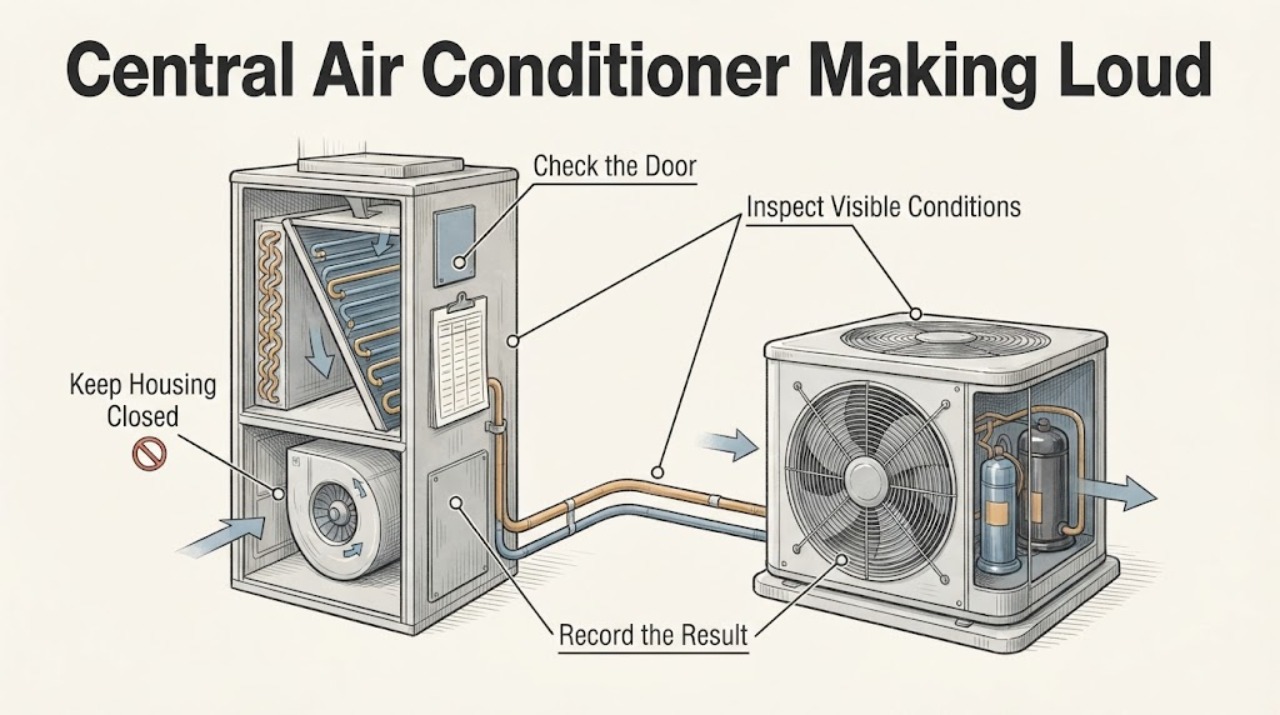
Central Air Conditioner Making Loud Noise Comes From Indoor or Outdoor Unit: What to Check and What to Do Next
A new or unusually loud sound is more useful when you identify which unit makes it and when it happens. In a split central system, the indoor unit contains the evaporator and blower while the outdoor unit contains the condenser fan and compressor.
-
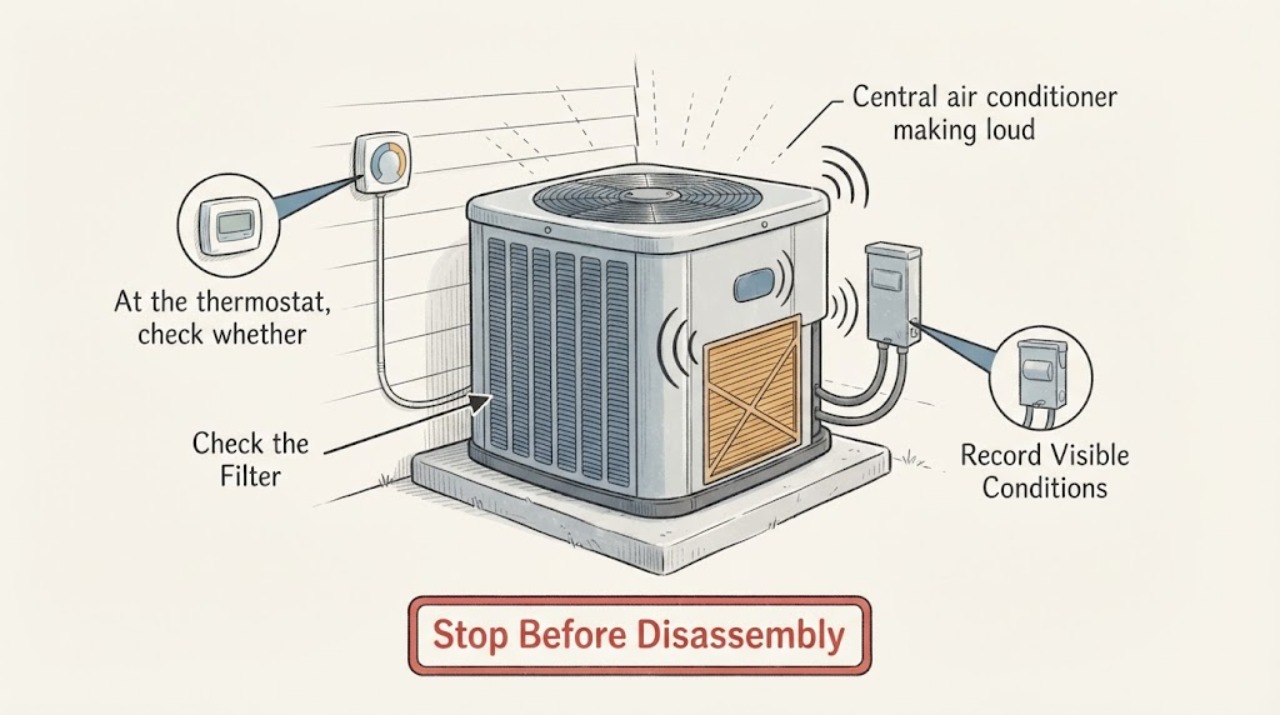
Central air conditioner making loud noise, sound changes with fan: What to Check and What to Do Next
When a central air conditioner's loud sound changes as the indoor or outdoor fan starts, stops, or changes speed, first locate the source and distinguish airflow noise from a mechanical or electrical noise. Check whether the thermostat fan is set to Auto or On, inspect the filter and visible registers, and look at the outdoor unit from a safe distance for obstructions or a damaged blade.
-
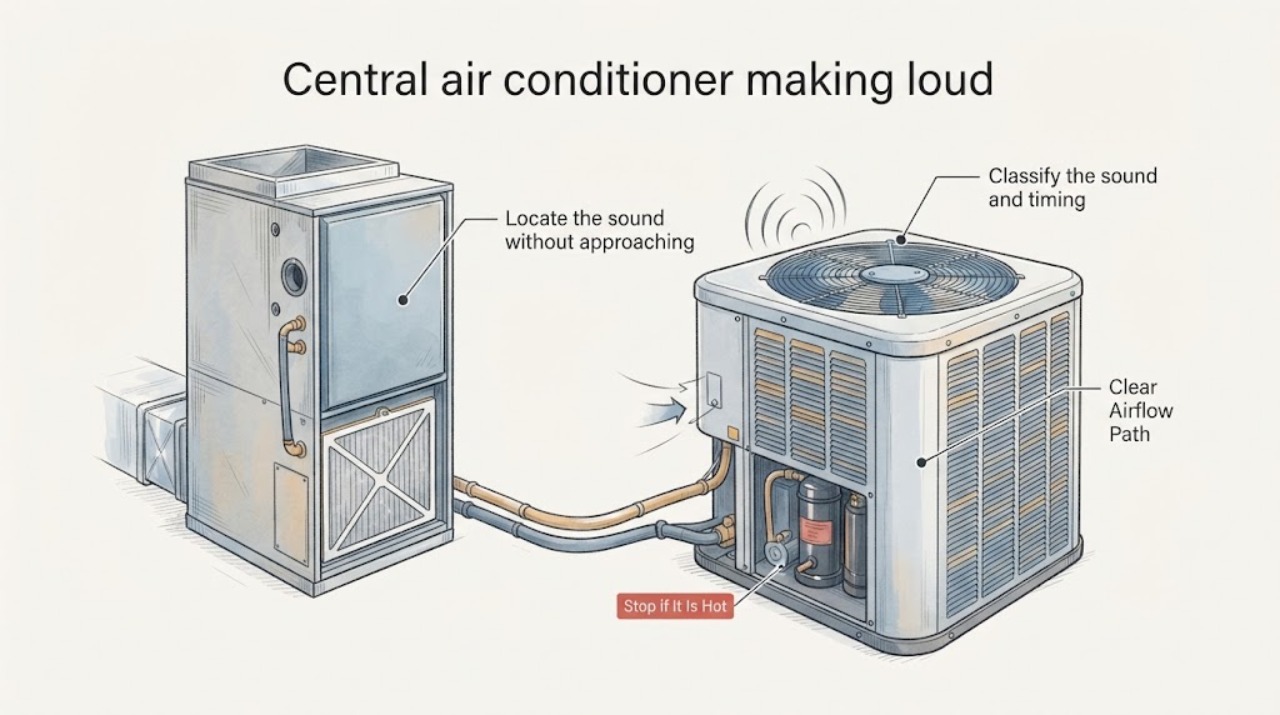
Central air conditioner making loud noise: What to Check and What to Do Next
A new or unusually loud central-AC sound should be treated as a service clue, especially if it is grinding, scraping, rattling with vibration, hissing, or accompanied by a burning smell, ice, weak airflow, or poor cooling. From a safe distance, record the sound type, whether it comes from the indoor or outdoor unit, when it occurs, and any airflow, ice, water, or odor changes.
-
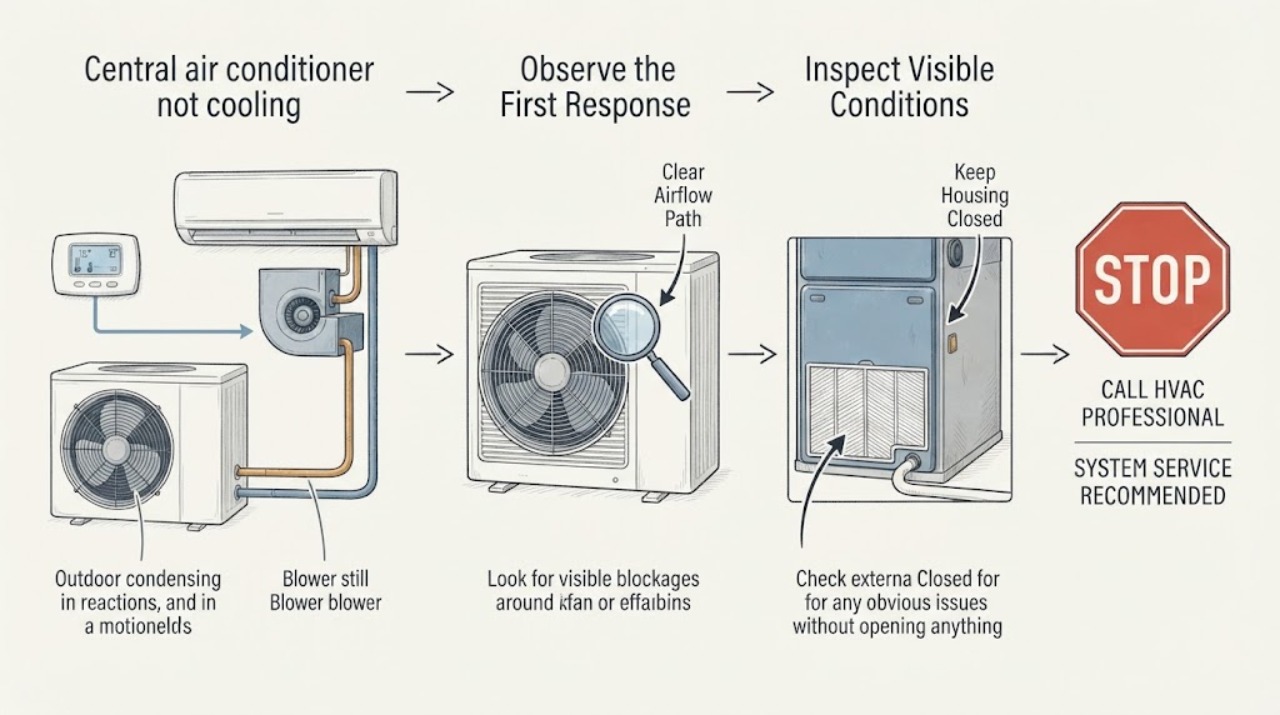
Central air conditioner not cooling when the thermostat calls for cooling: What to Check and What to Do Next
A thermostat call proves that the control is requesting cooling, not that the indoor coil, outdoor condenser, compressor, or refrigerant circuit is operating. Set the thermostat to Cool with the fan on Auto, confirm the setpoint is below room temperature, and observe whether air moves from the registers.
-
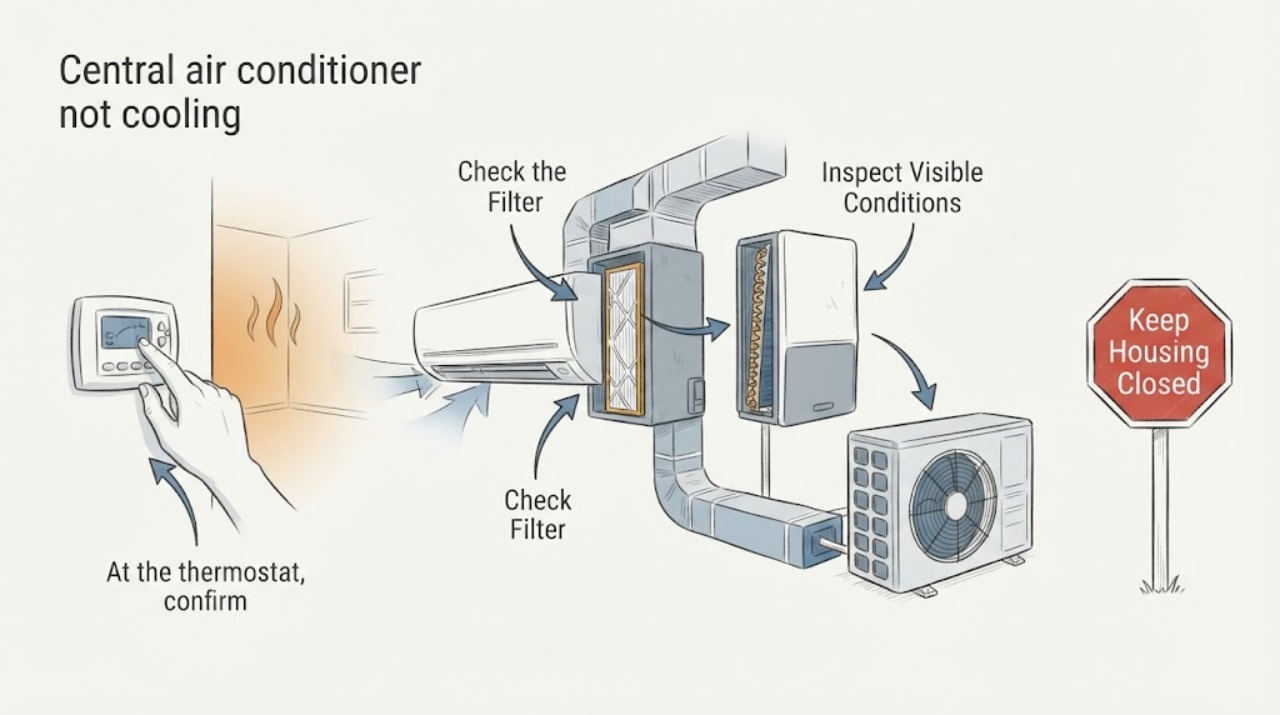
Central air conditioner not cooling, indoor air is warm: What to Check and What to Do Next
Warm air from a central air conditioner usually points first to a thermostat or fan setting, restricted airflow, a frozen coil, a non-running outdoor unit, a refrigerant problem, or a duct-delivery problem. Set the thermostat to Cool with the fan on Auto, check the filter and visible registers, and observe the outdoor unit from a safe distance during a cooling call.
-
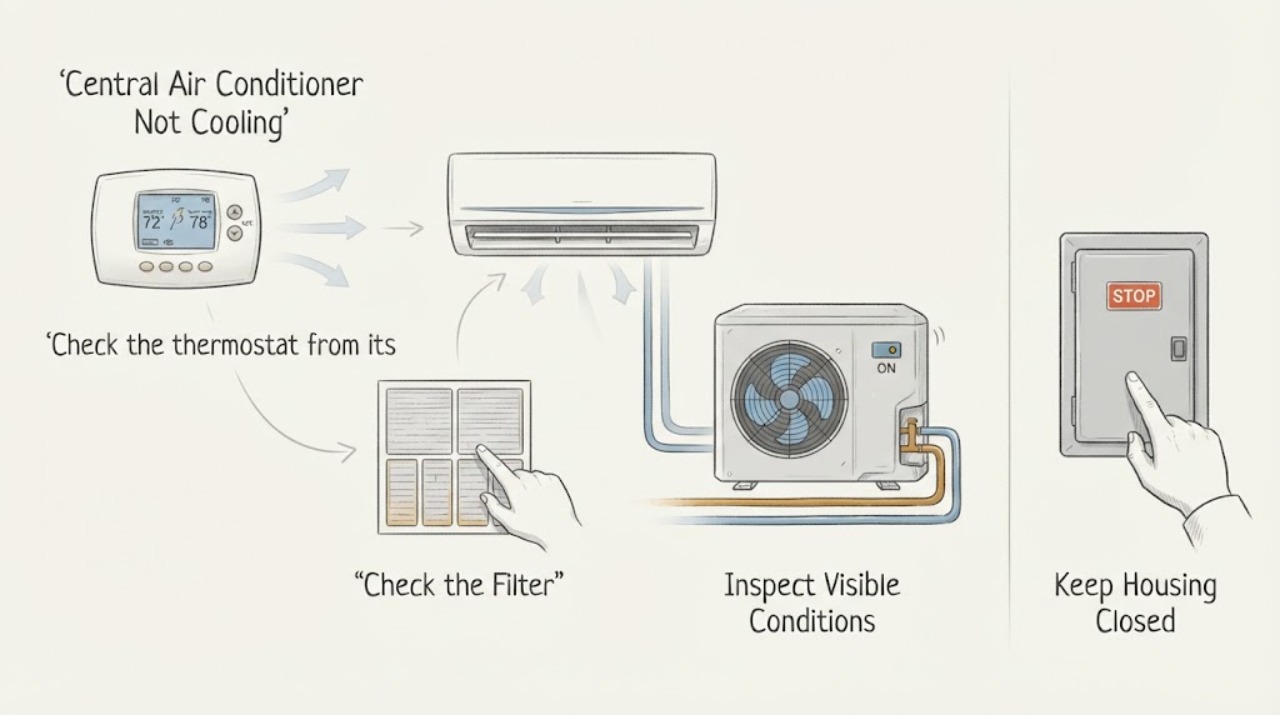
Central Air Conditioner Not Cooling, Outdoor Unit May Run: What to Check and What to Do Next
An outdoor fan running does not prove that a central air conditioner is producing cooling. First confirm the thermostat is calling for cooling with the indoor fan set appropriately, then check whether air is moving through a clean filter and registers.
-
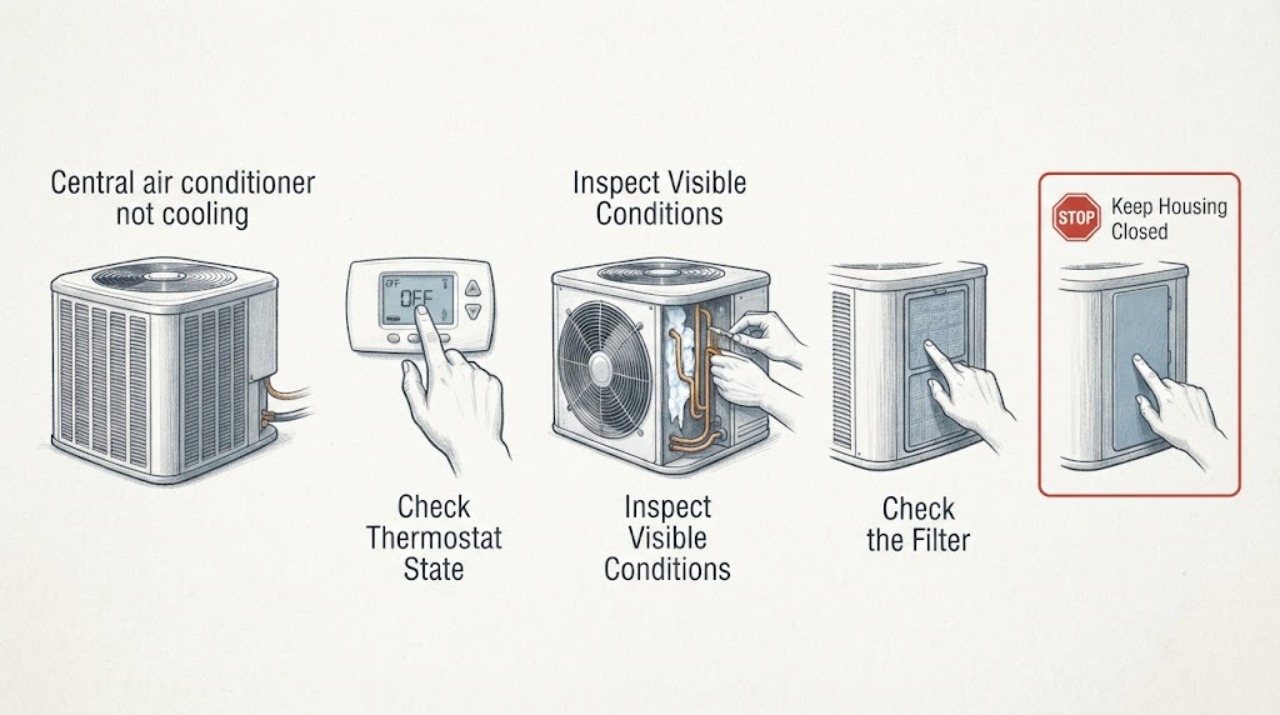
Central air conditioner not cooling: What to Check and What to Do Next
Start with safe observations: confirm the thermostat is calling for cooling, compare airflow at the registers, inspect an accessible air filter without opening equipment, and observe the outdoor unit from a clear ground-level position. Ice, burning odor, repeated breaker trips, exposed wiring, unusual electrical noise, or water near electrical equipment are stop conditions—turn the system off using normal controls if safe and call an HVAC professional.
-
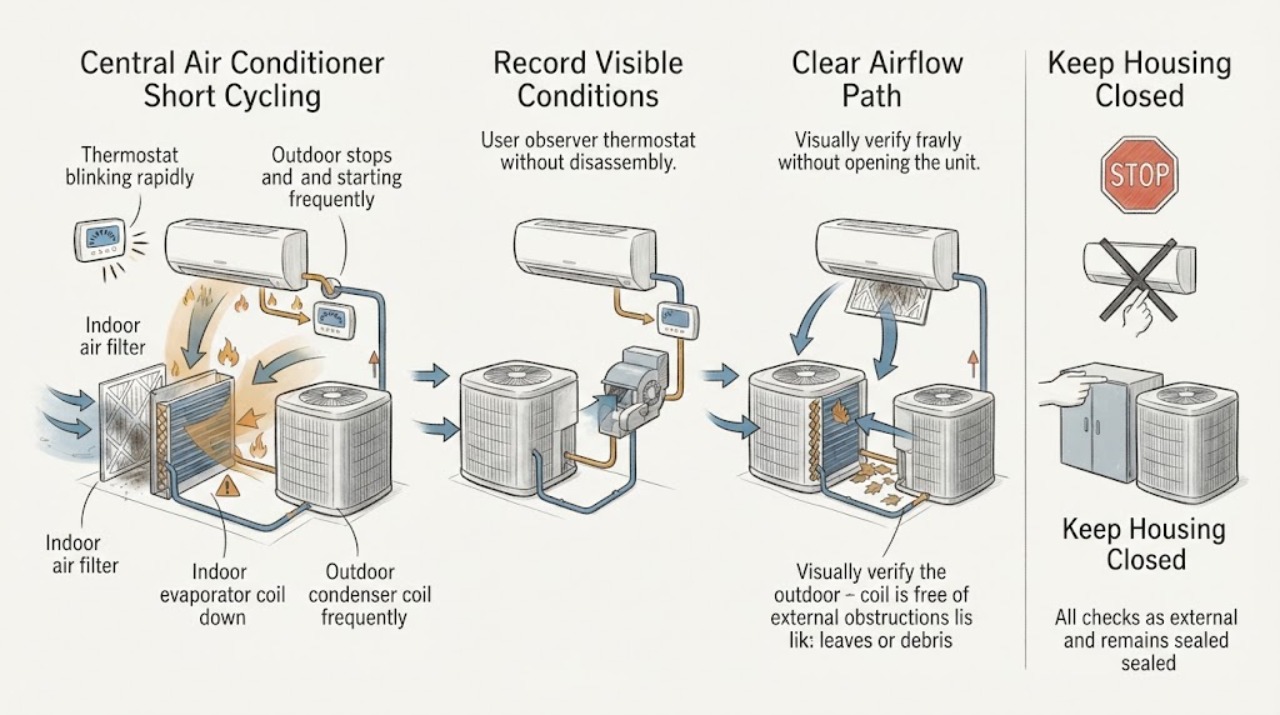
Central Air Conditioner Short Cycling Filter or Coil May Be Dirty: What to Check and What to Do Next
Short cycling means the central AC starts and stops repeatedly before completing a normal cooling cycle. A visibly clogged filter can restrict indoor airflow and contribute to short cycling, but a dirty or frozen evaporator coil, debris on the outdoor condenser coil, low refrigerant, thermostat trouble, or an electrical fault can look similar.
-
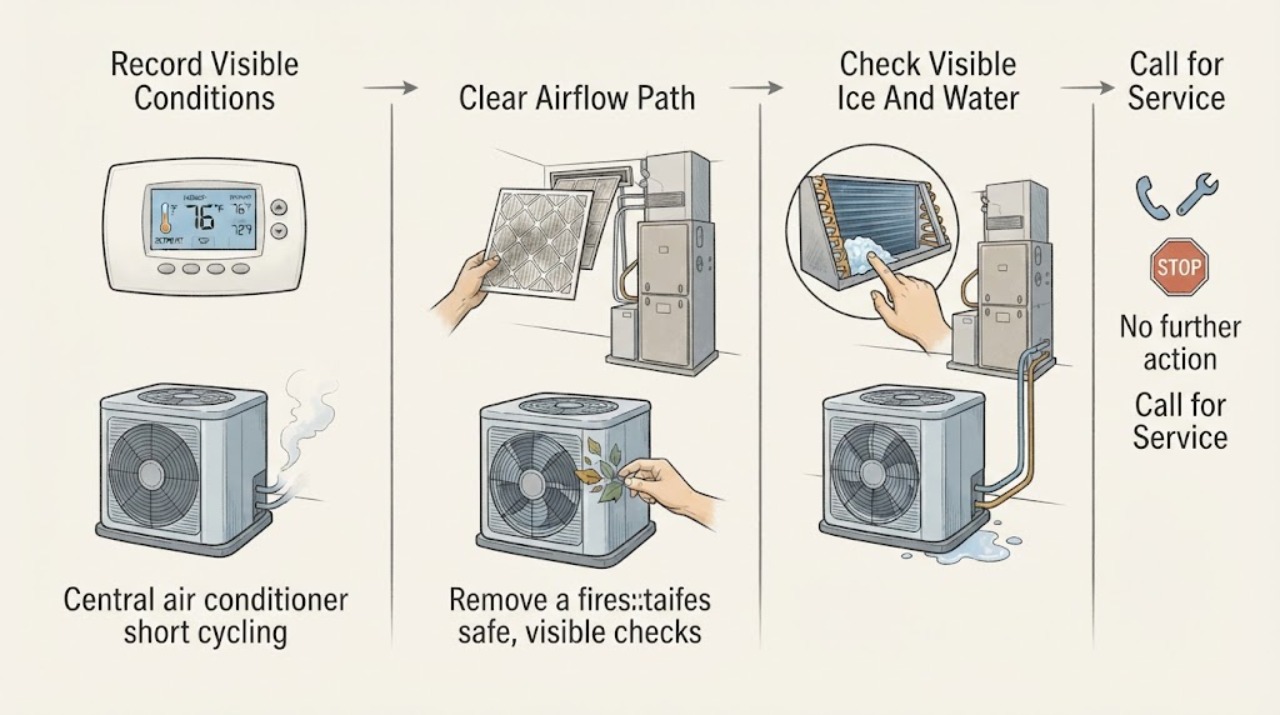
Central air conditioner short cycling home does not reach setpoint: What to Check and What to Do Next
Short cycling means the central air conditioner starts and stops before the home reaches the thermostat setpoint. Common paths include a restricted filter or airflow, thermostat setting or location, a frozen coil, low refrigerant, an electrical or control fault, an outdoor-unit problem, or an oversized system.
-
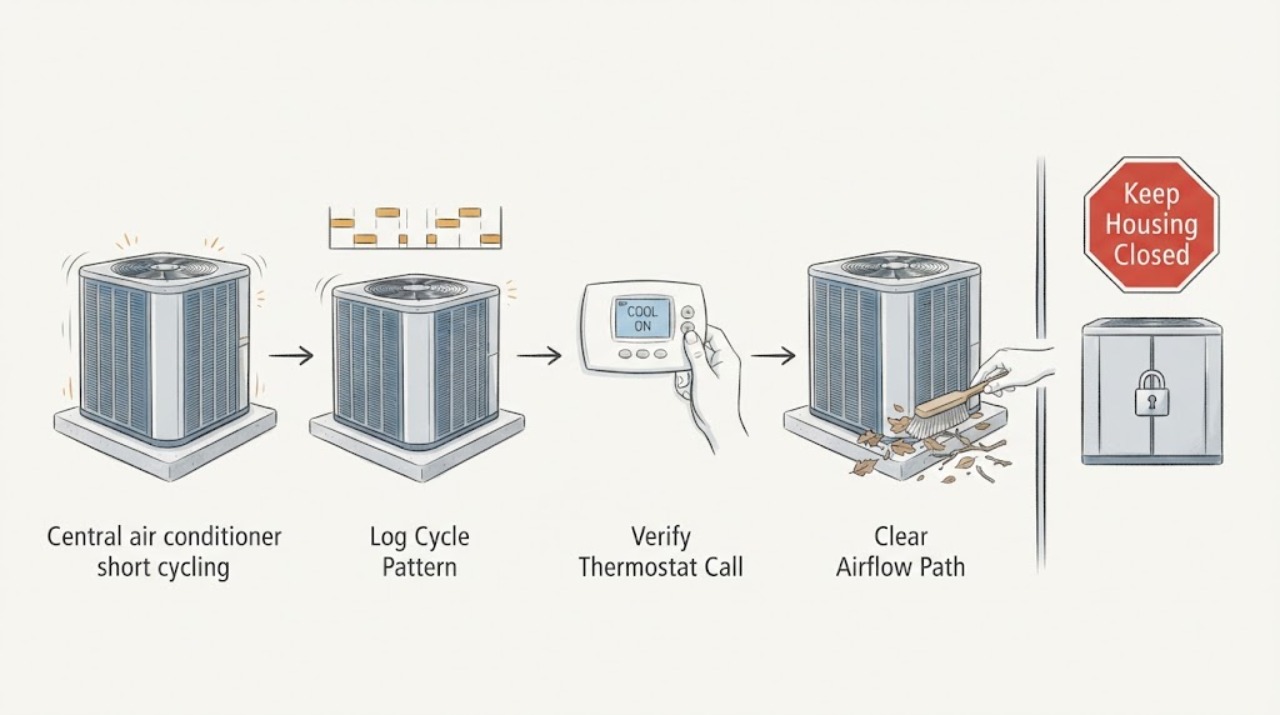
Central air conditioner short cycling, unit starts and stops often: What to Check and What to Do Next
A central air conditioner that starts and stops before completing a normal cooling run is short cycling. First document the timing and confirm the thermostat is calling for cooling, the filter and registers allow airflow, and there is no visible ice or water.
-
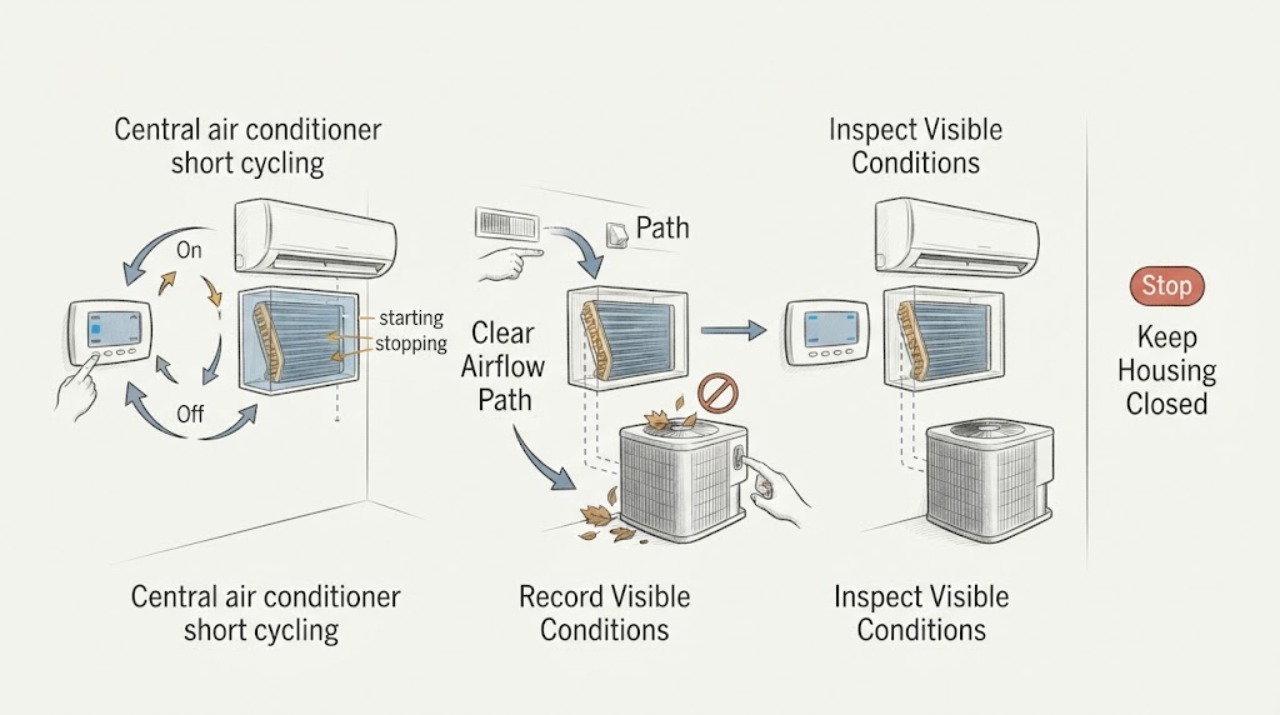
Central air conditioner short cycling: What to Check and What to Do Next
Central AC short cycling means the cooling call ends and restarts repeatedly before the home is comfortable. Start with safe observations: record the thermostat mode and schedule, note how often the system starts and stops, inspect an accessible air filter and supply airflow, and look at the outdoor unit from a safe distance for ice, water, debris, unusual sound, or a fan that is not running.
-
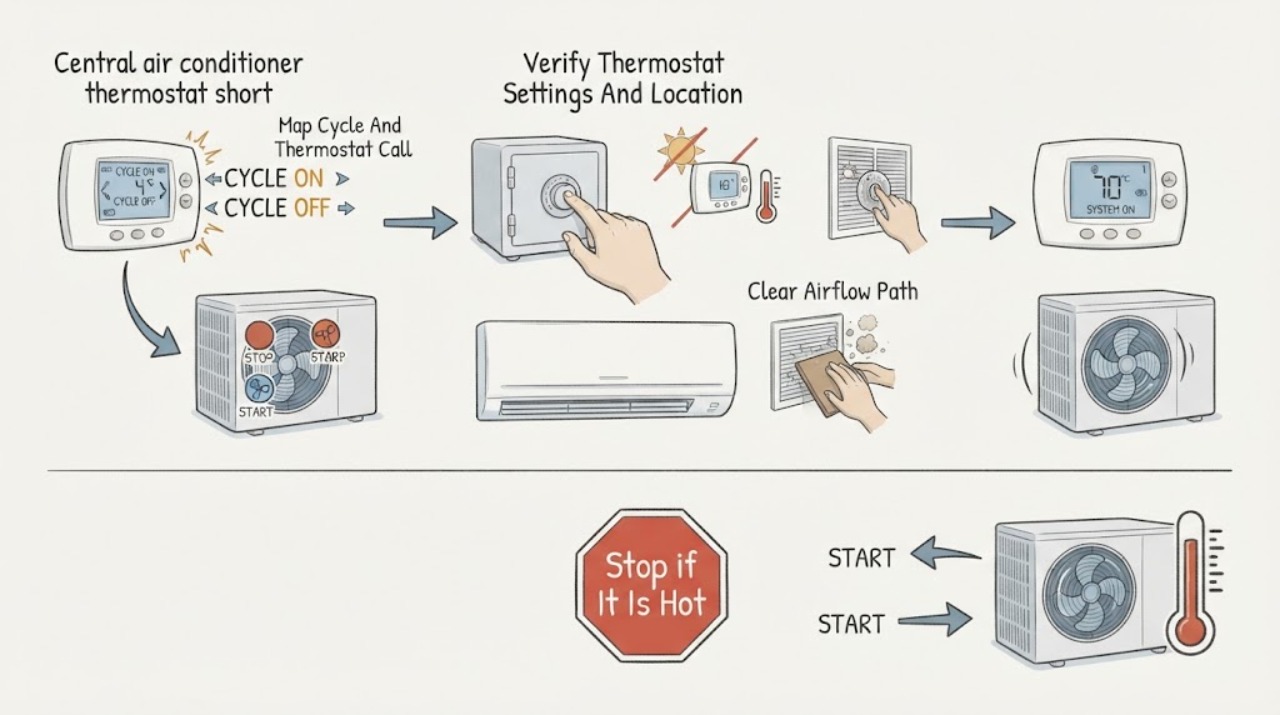
Central air conditioner thermostat short cycling: What to Check and What to Do Next
If a central air conditioner starts and stops before completing a normal cooling cycle, first determine whether the thermostat is cancelling the cooling call or the equipment is stopping while the thermostat still calls for cooling. Check the mode, schedule, display power, thermostat location, accessible air filter, and airflow without opening the HVAC cabinet.
-
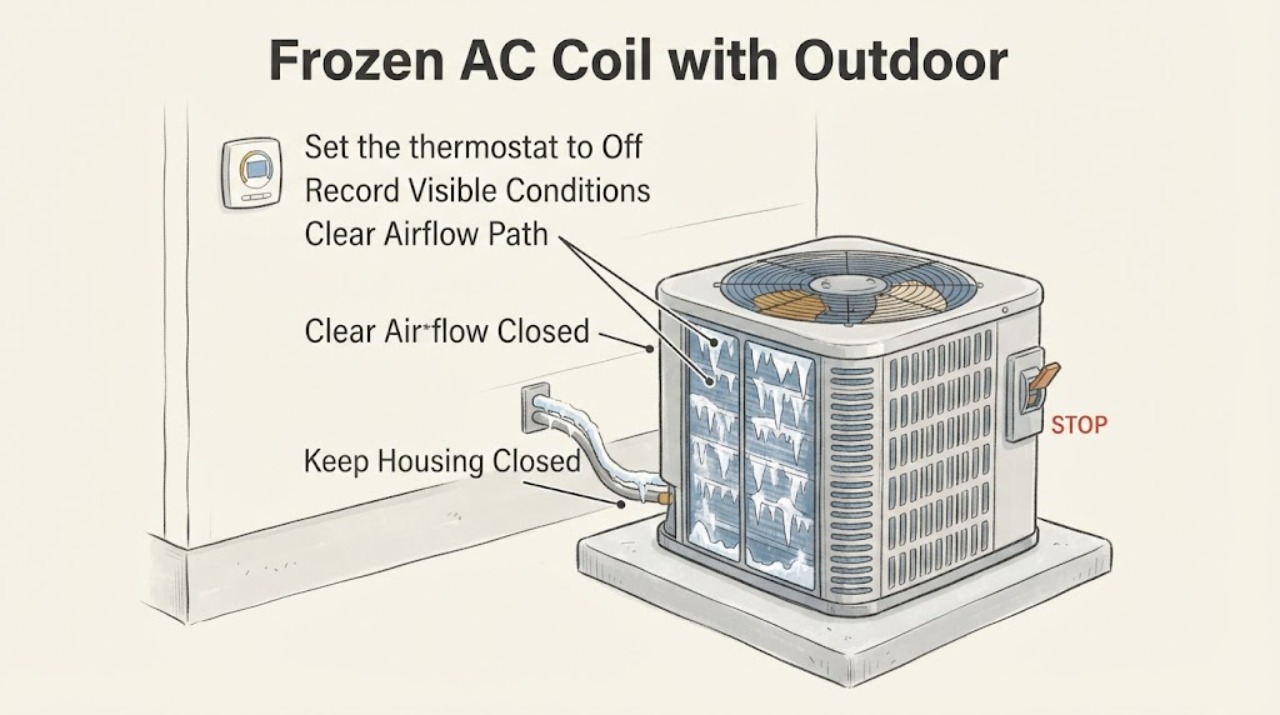
Frozen AC Coil with Outdoor Fan Not Running: Triage Guide
Turn the thermostat out of cooling mode immediately and leave the AC off while the ice melts naturally. A frozen evaporator coil together with an outdoor fan motor that is not running can damage the compressor if cooling continues.
-
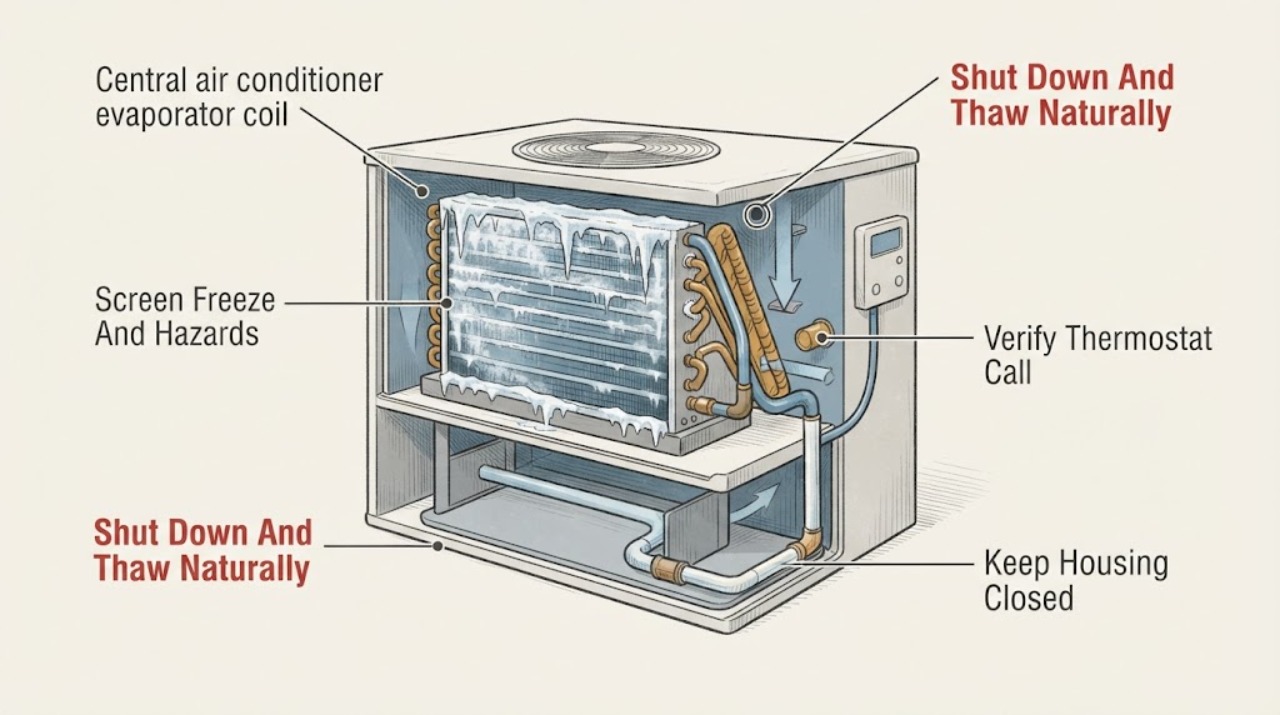
Goodman central air conditioner evaporator coil frozen: What to Check and What to Do Next
If a Goodman central air conditioner evaporator coil is frozen, turn cooling off at the thermostat and let the ice thaw naturally; do not chip it, apply heat, or keep running the system. From a dry, safe position, check the accessible filter, return and supply airflow, thermostat call, condensate water, and outdoor-unit obstructions.
-
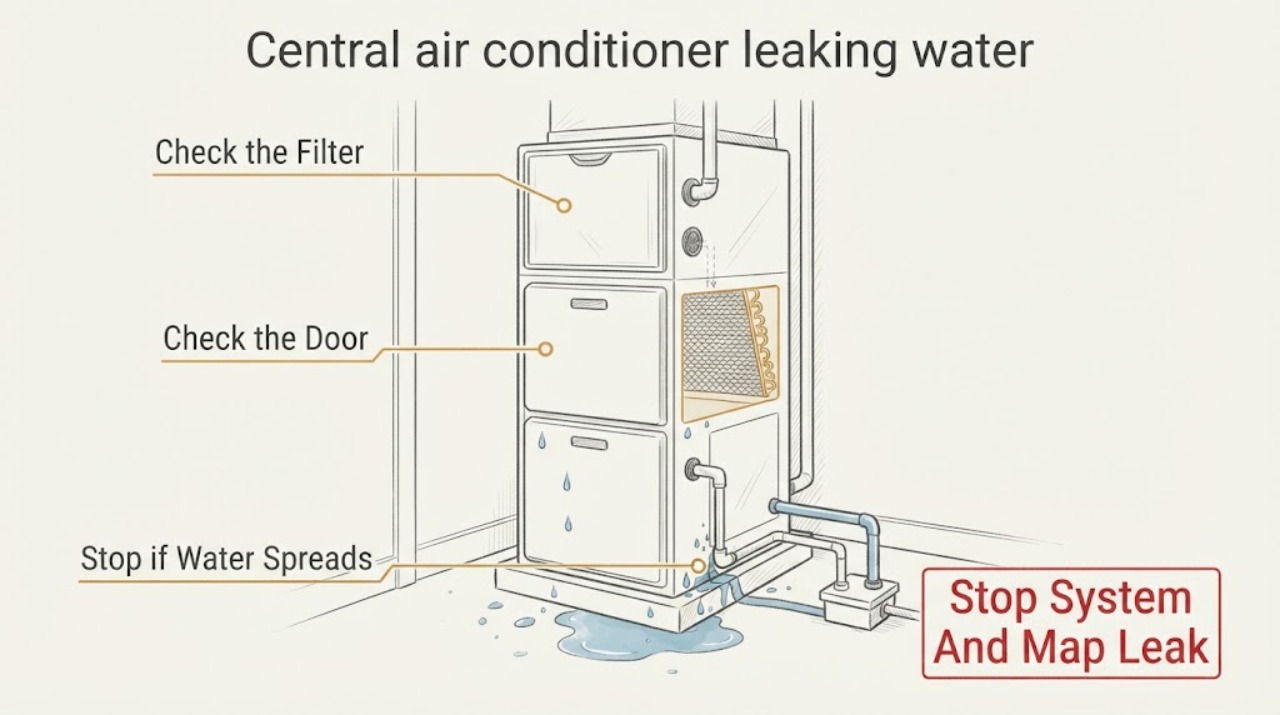
Goodman central air conditioner leaking water: What to Check and What to Do Next
A Goodman central air conditioner leaking water usually has condensate that is not reaching its drain, a drain pan or line problem, or an evaporator coil that froze and is now thawing. A dirty filter, blocked return path, dirty coil, blower issue, refrigerant problem, pump, or installation condition can cause or worsen the symptom.
-
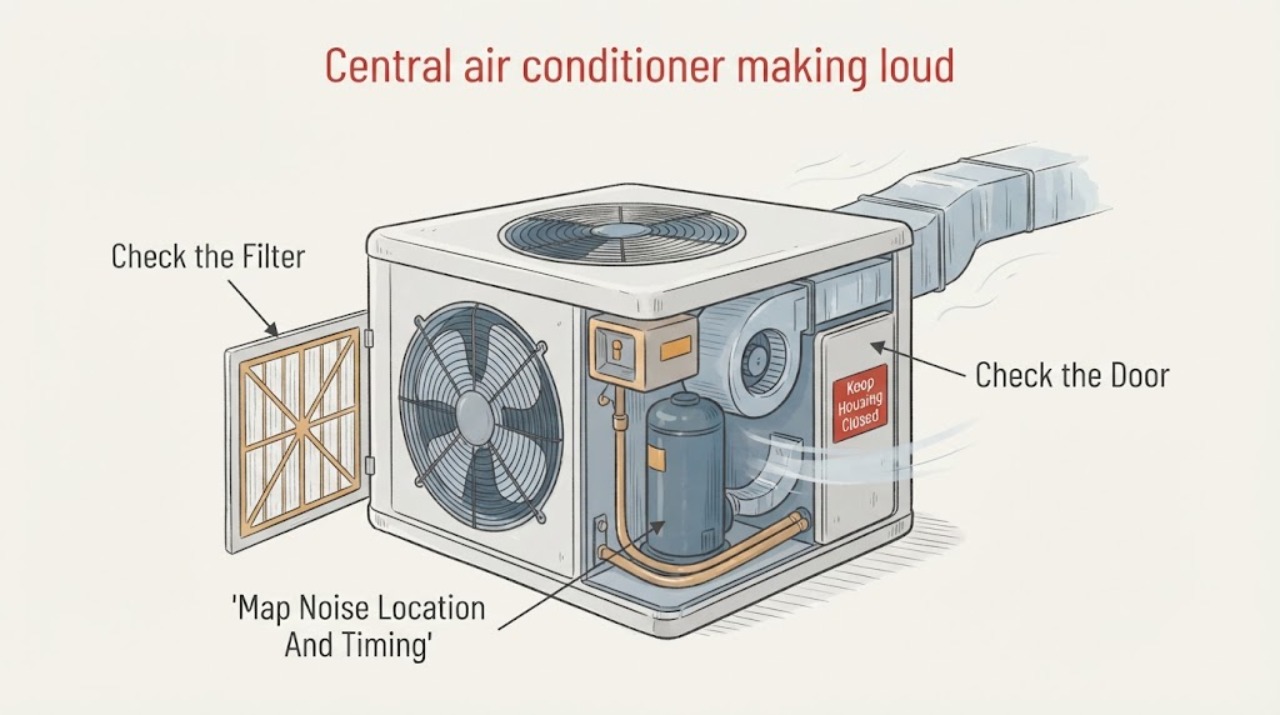
Goodman central air conditioner making loud noise: What to Check and What to Do Next
A Goodman central air conditioner may make some normal startup, shutdown, airflow, or variable-speed sounds, but a new or significantly louder hum, buzz, rattle, roar, screech, or grinding sound deserves attention. First locate whether the sound comes from the outdoor unit, indoor air handler or furnace, ductwork, or a register, and note whether it changes with the fan, compressor, or thermostat cycle.
-
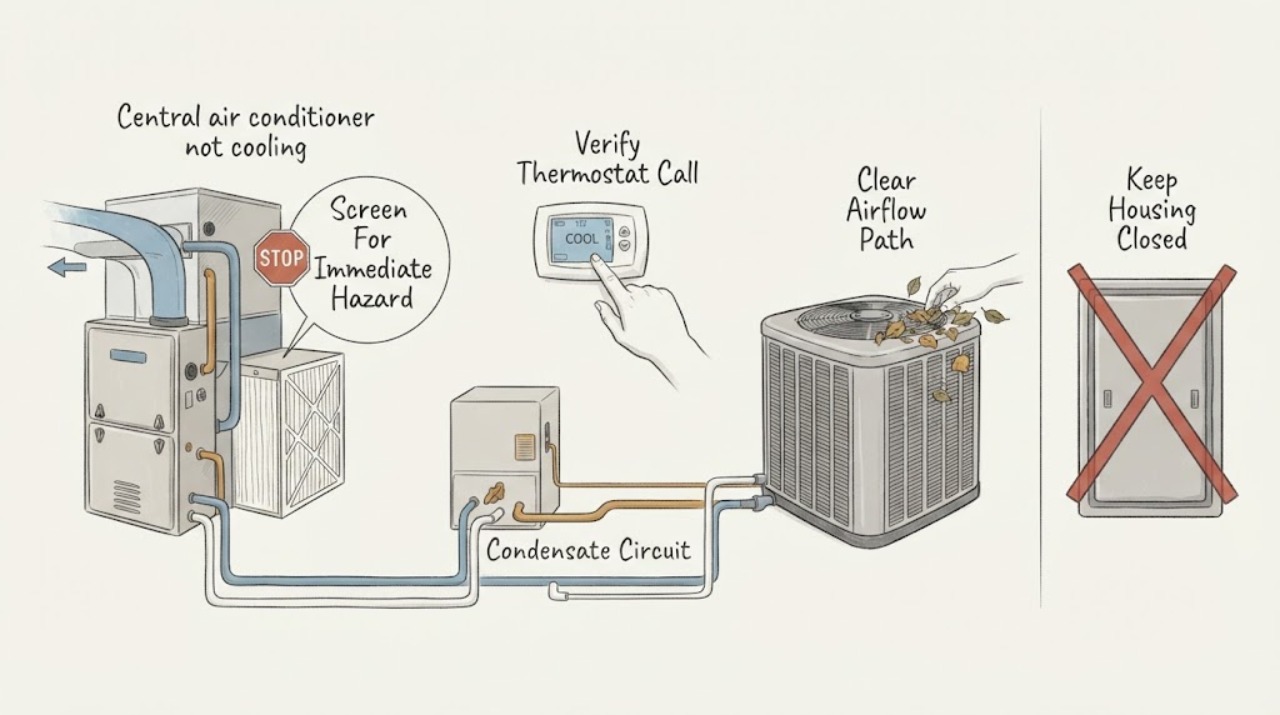
Goodman central air conditioner not cooling: What to Check and What to Do Next
When a Goodman central air conditioner is not cooling, first check the thermostat call, filter, registers, and visible outdoor obstructions from a dry, safe position. Then note whether the indoor blower and outdoor unit run, whether airflow is weak, whether ice or condensate water is visible, and whether a breaker or system alert has appeared.
-
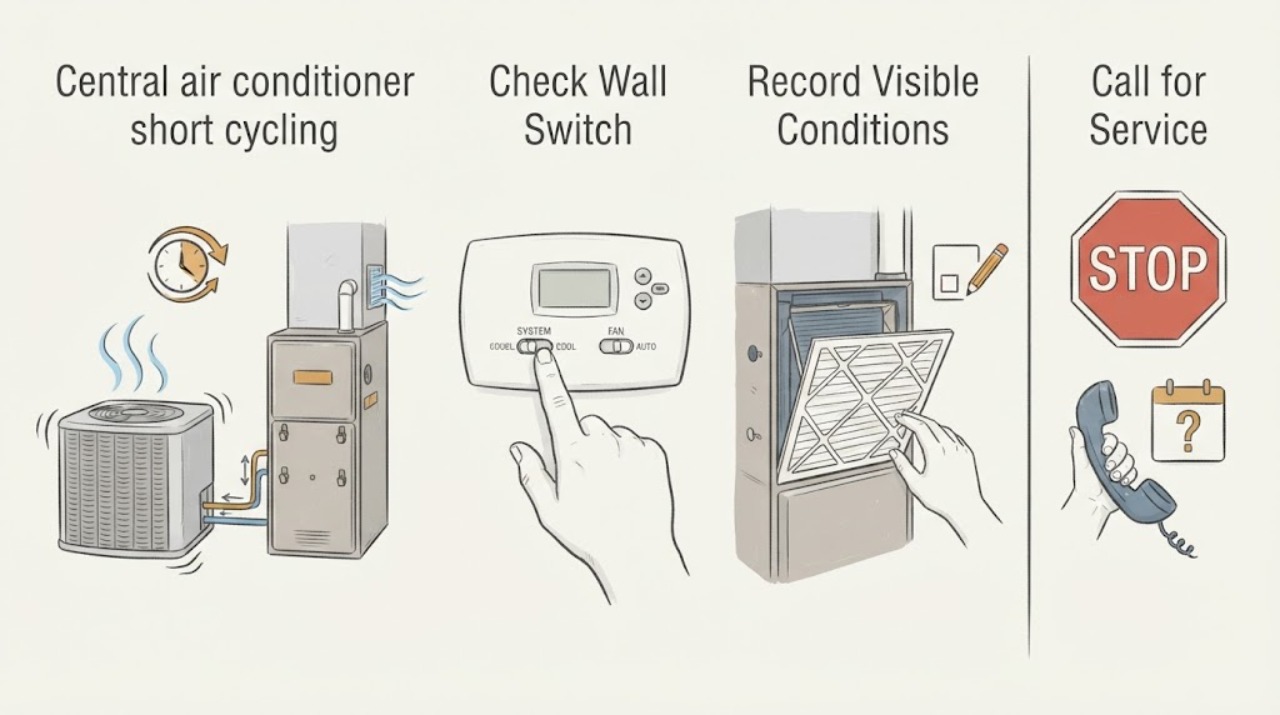
Goodman central air conditioner short cycling: What to Check and What to Do Next
A Goodman central air conditioner that starts and stops unusually often may be responding to a thermostat or control signal, restricted airflow, a frozen or dirty coil, outdoor-unit or electrical protection, low refrigerant or another sealed-system fault, duct problems, or an incorrectly sized system.
-
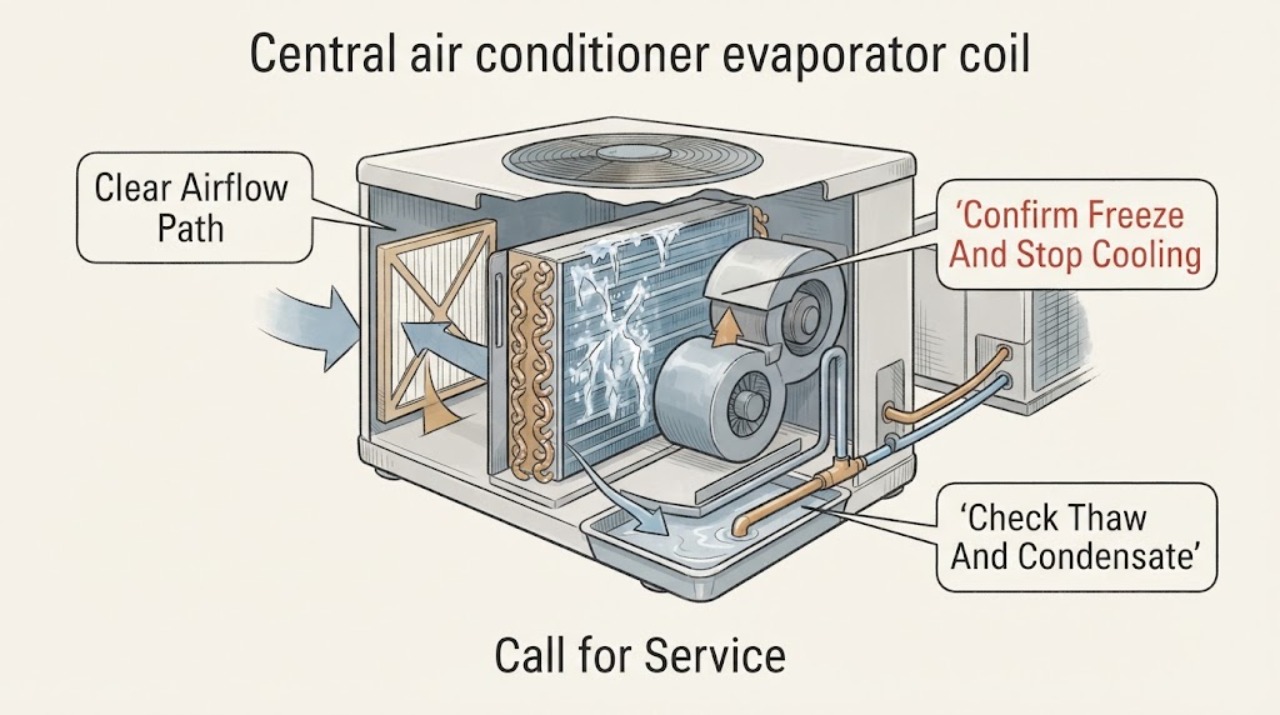
Lennox central air conditioner evaporator coil frozen: What to Check and What to Do Next
A frozen Lennox evaporator coil means cooling should be stopped so the ice can thaw. Turn the thermostat out of cooling, let the ice melt naturally, and inspect only the filter, visible return and supply obstructions, and outdoor debris.
-
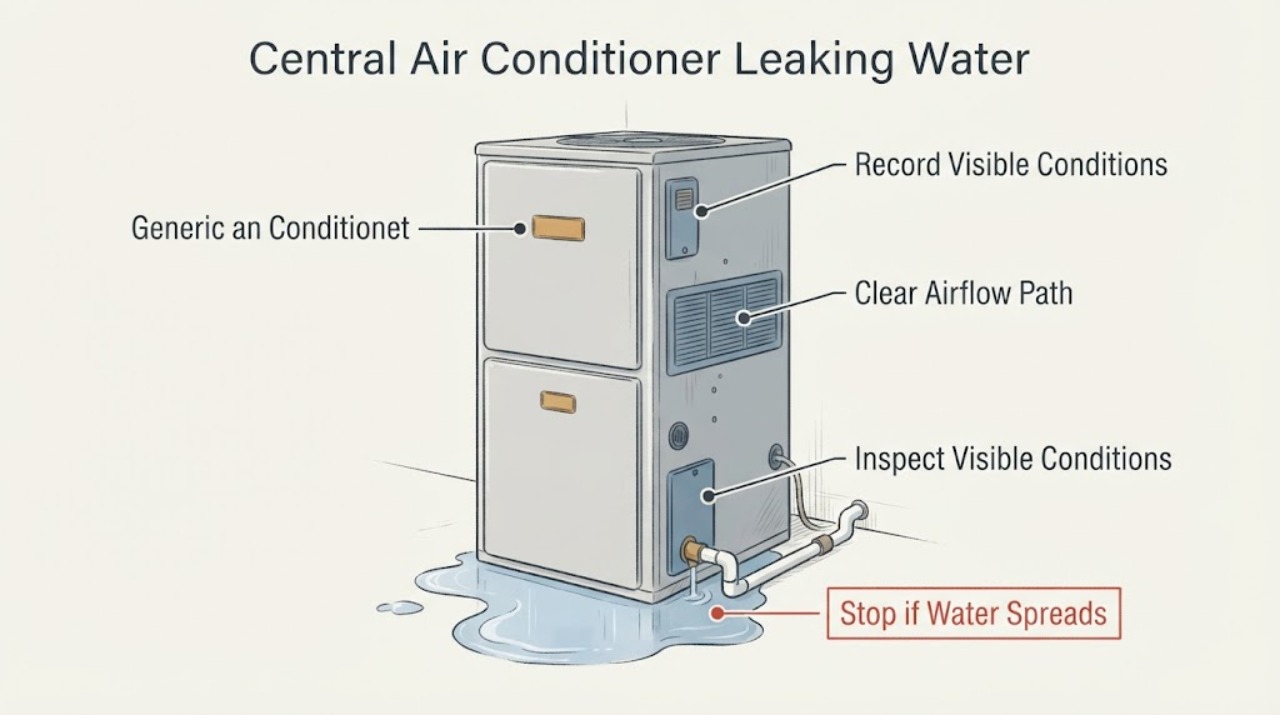
Lennox Central Air Conditioner Leaking Water: What to Check and What to Do Next
A Lennox central air conditioner can produce normal condensation, but water pooling, dripping from the indoor unit or vents, or wet flooring means the drainage path or another part of the system needs attention. Switch cooling off if water is near electrical equipment, a pan is overflowing, or ice is melting, then identify where the water starts.
-
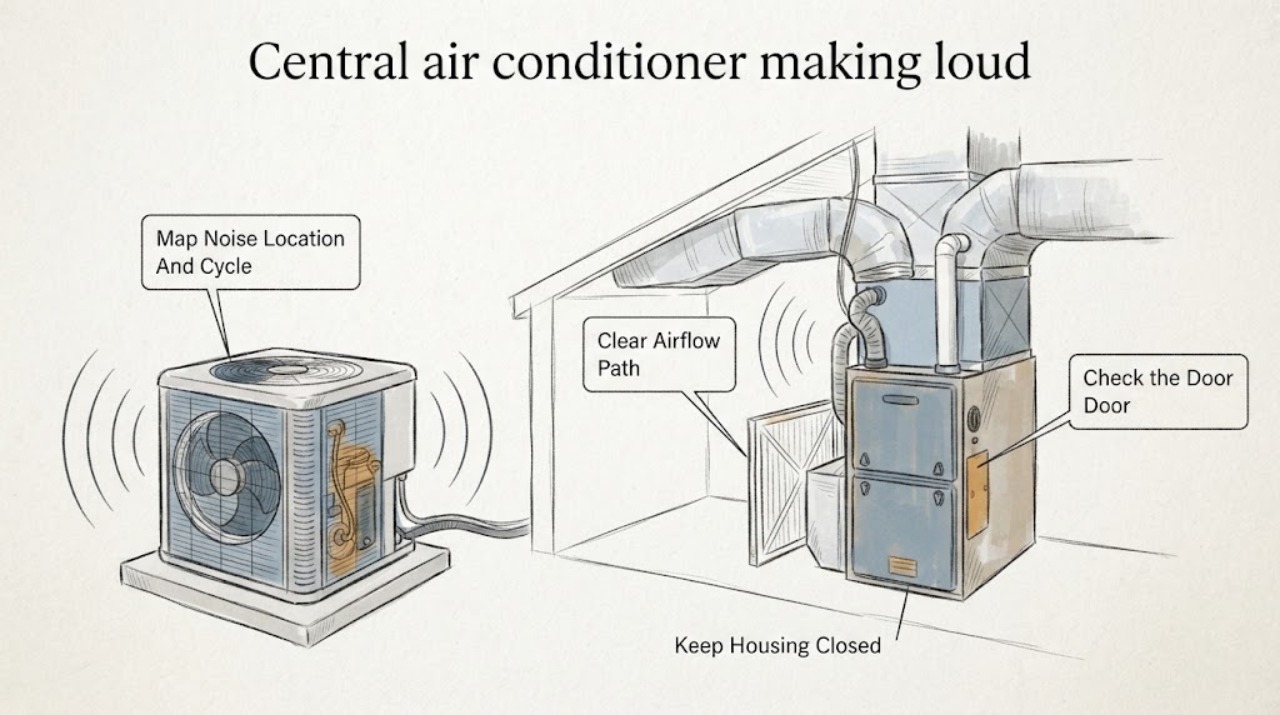
Lennox central air conditioner making loud noise: What to Check and What to Do Next
A Lennox central air conditioner may have a normal startup or operating hum, but a new or significantly louder buzzing, rattling, banging, squealing, grinding, or vibration needs attention. First locate whether the sound comes from the outdoor unit, indoor air handler or furnace, ductwork, or a register, and note whether it changes with the indoor fan, outdoor fan, compressor, or thermostat cycle.
-
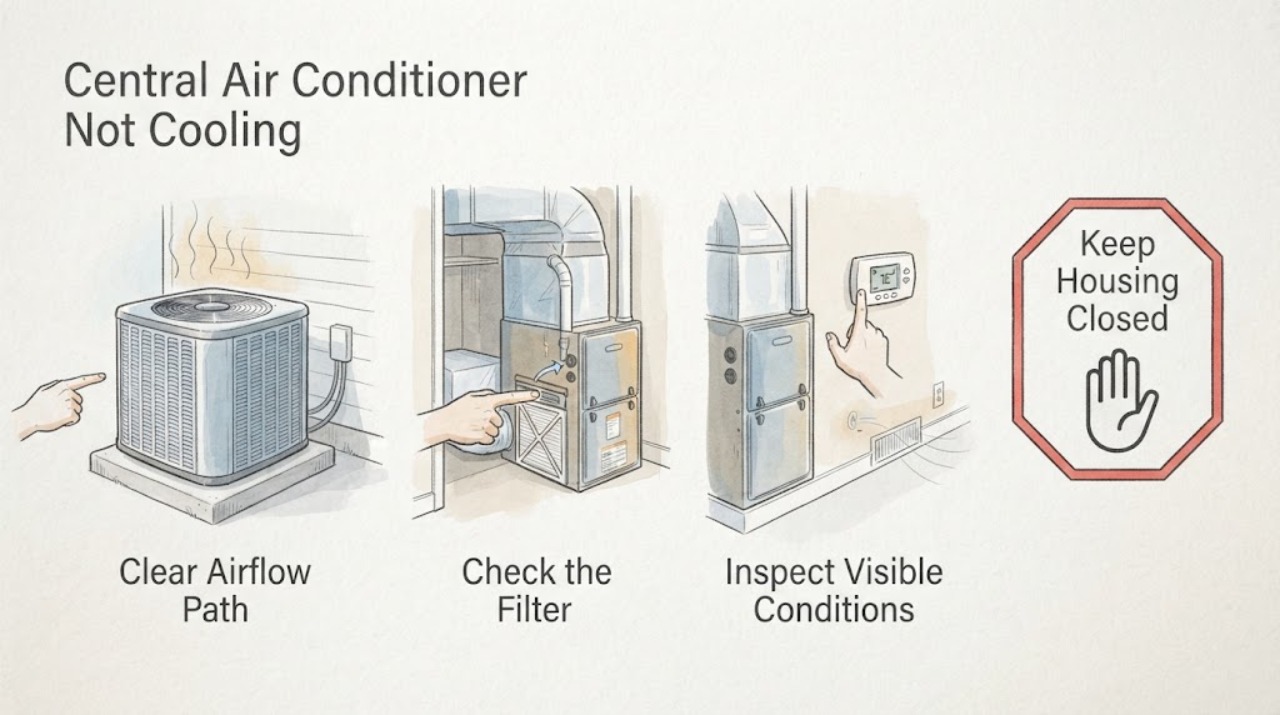
Lennox Central Air Conditioner Not Cooling: What to Check and What to Do Next
When a Lennox central air conditioner is not cooling, first determine whether the indoor air handler runs, whether the outdoor condenser runs, and whether the thermostat is still calling for cooling. Check the thermostat mode and setpoint, the filter and supply airflow, the indoor and outdoor units from a safe exterior position, and any visible ice, condensate overflow, or alert code.
-
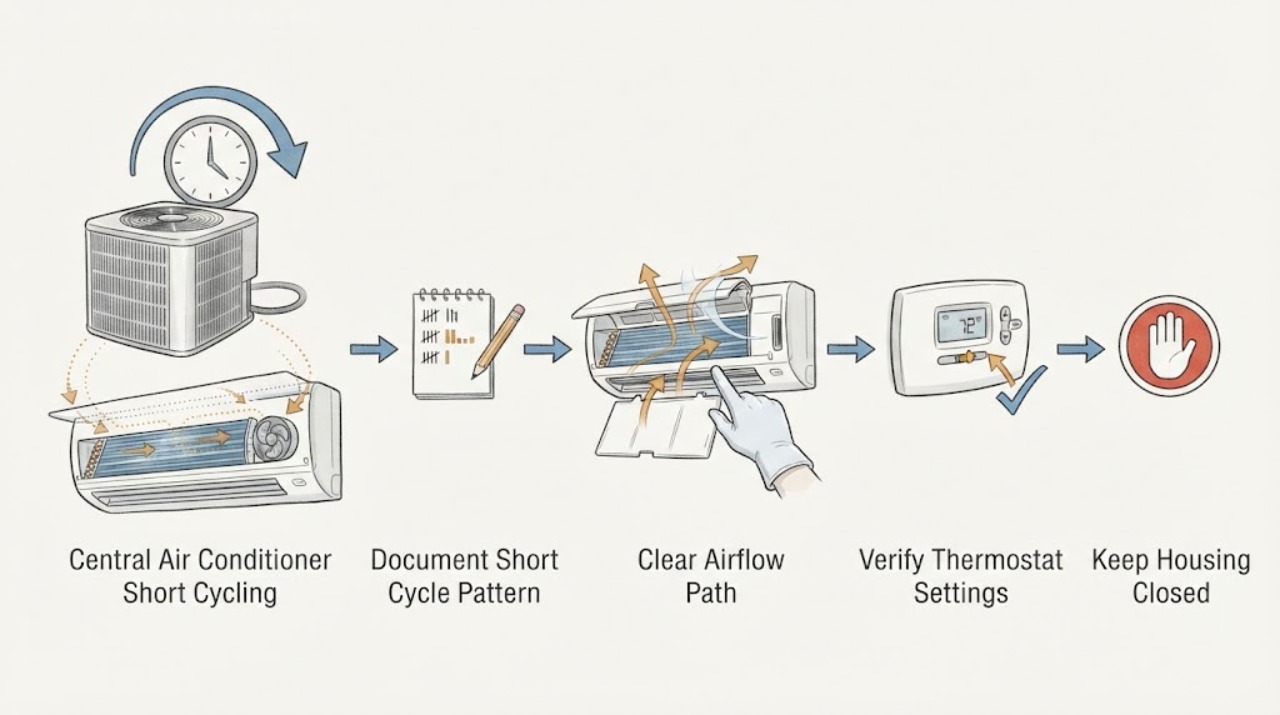
Lennox Central Air Conditioner Short Cycling: What to Check and What to Do Next
A Lennox central air conditioner is short cycling when it starts and stops in rapid repeated bursts before the thermostat is satisfied. Begin with safe external checks: replace a visibly dirty air filter, make sure supply and return vents are not blocked, verify thermostat mode, setpoint, batteries, and location, and look for ice without touching the coil.
-
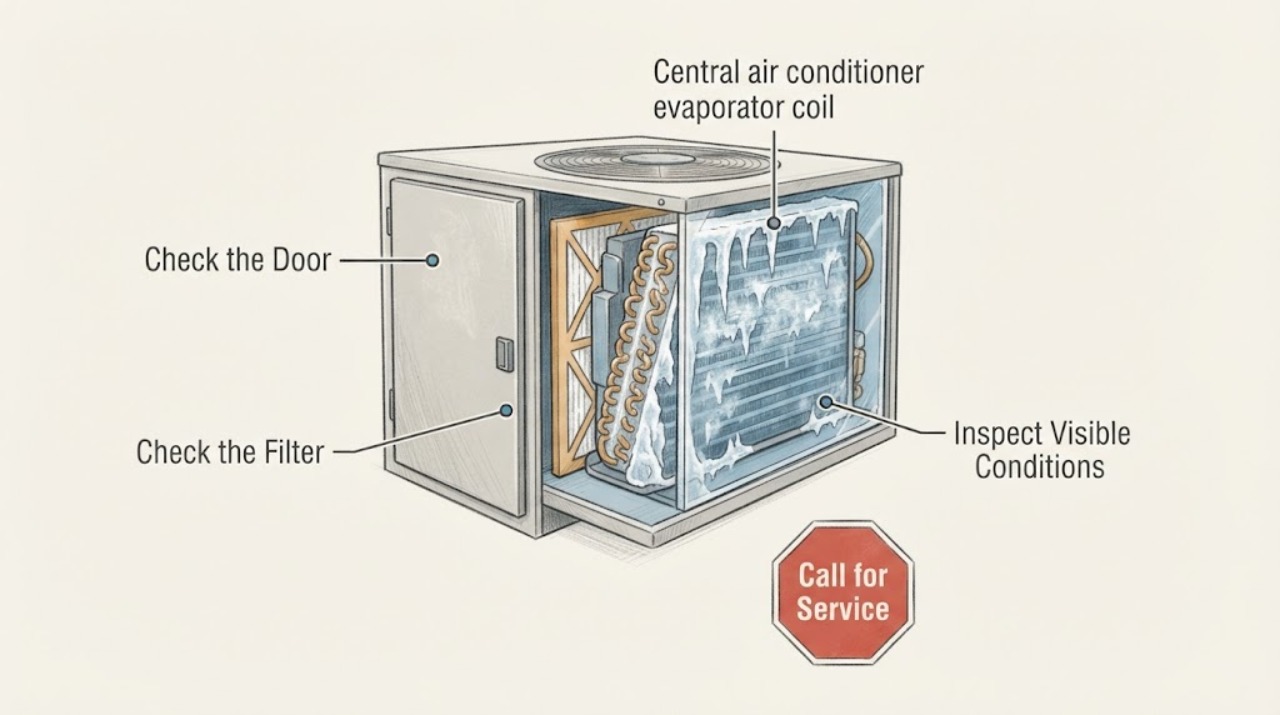
Rheem central air conditioner evaporator coil frozen: What to Check and What to Do Next
A frozen evaporator coil on a Rheem central air conditioner means the coil has become too cold for normal condensate to remain liquid. Rheem's own troubleshooting notes point to low airflow, a dirty filter or indoor coil, closed or blocked registers, blower problems, mismatched components, low refrigerant, and unsuitable outdoor conditions as different possibilities.
-
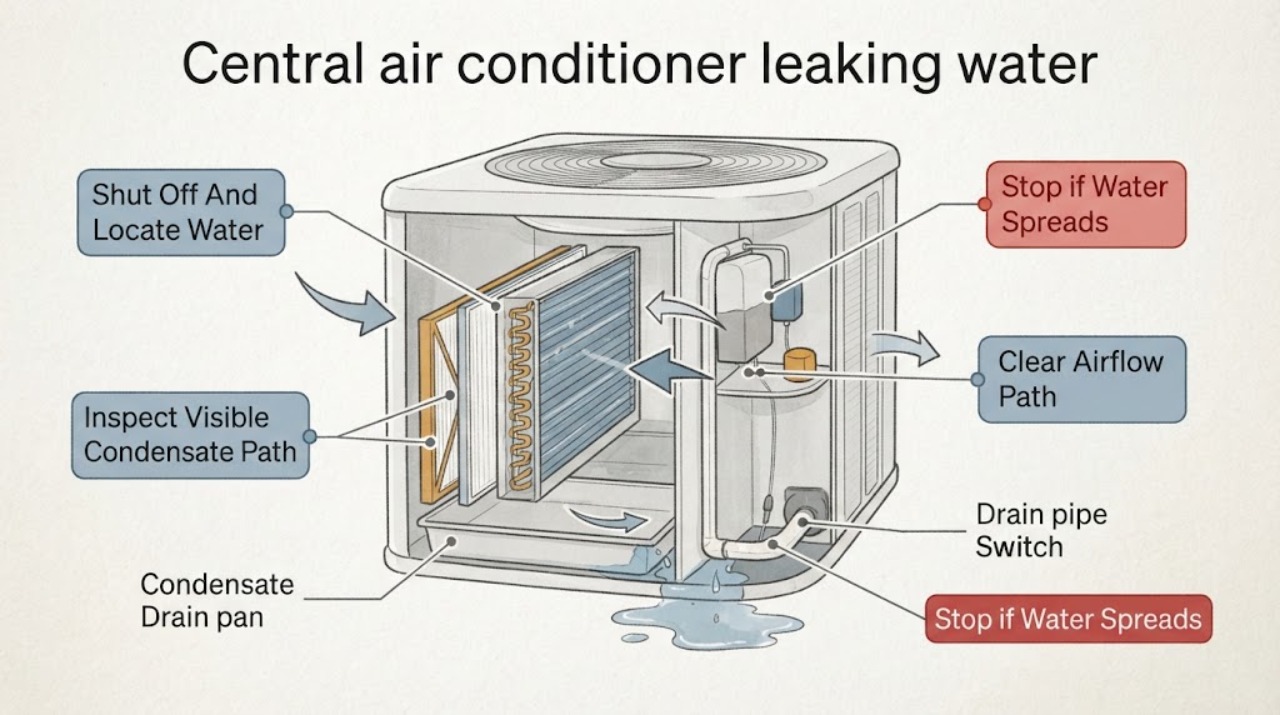
Rheem central air conditioner leaking water: What to Check and What to Do Next
If a Rheem central air conditioner is leaking water, turn cooling off first and find the first wet point: the indoor unit or pan, a visible drain line or outlet, a wet ceiling or wall, or the outdoor unit. Water during cooling can come from a restricted drain, damaged or misconfigured pan, or ice on the indoor coil that is melting; a dirty filter or blocked return can contribute to icing.
-
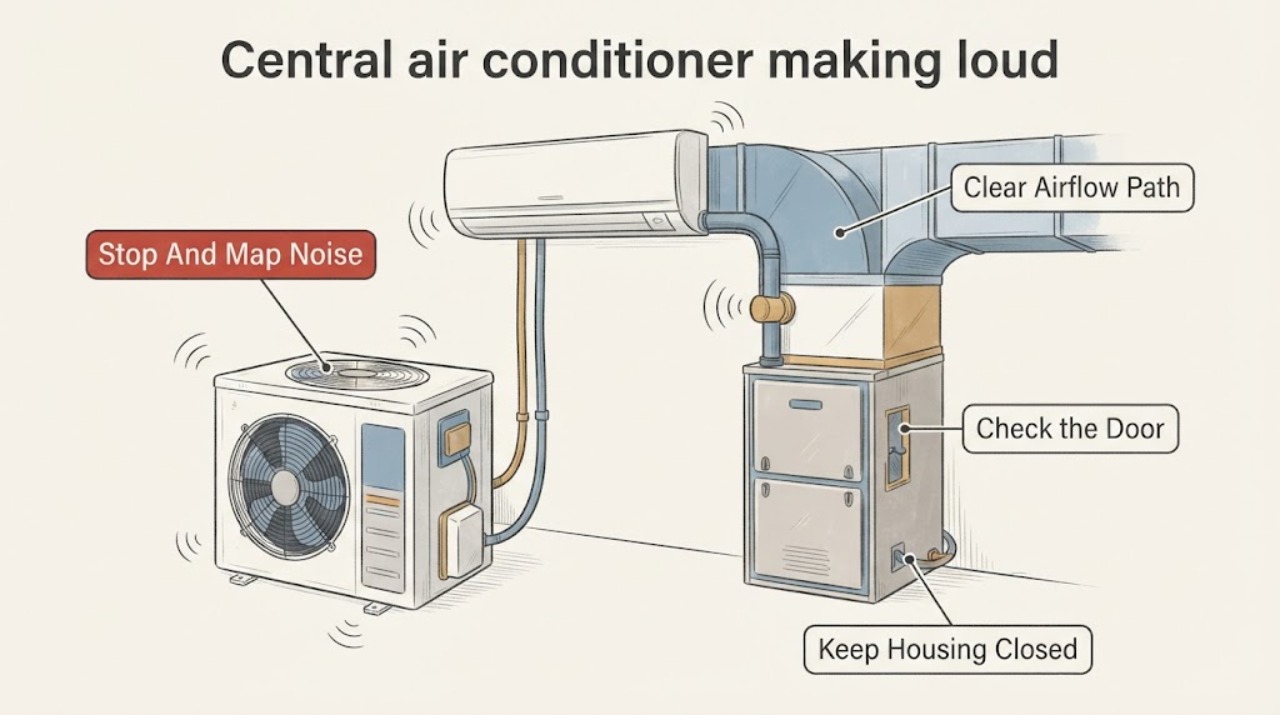
Rheem central air conditioner making loud noise: What to Check and What to Do Next
When a Rheem central air conditioner suddenly makes a loud noise, turn cooling off and identify where and when the sound occurs: indoor air handler, outdoor condenser, duct or register, startup, steady operation, shutdown, or only after rain or debris. A brief normal operating change can differ from rattling, scraping, grinding, buzzing, humming, banging, or a fan that is striking something.
-
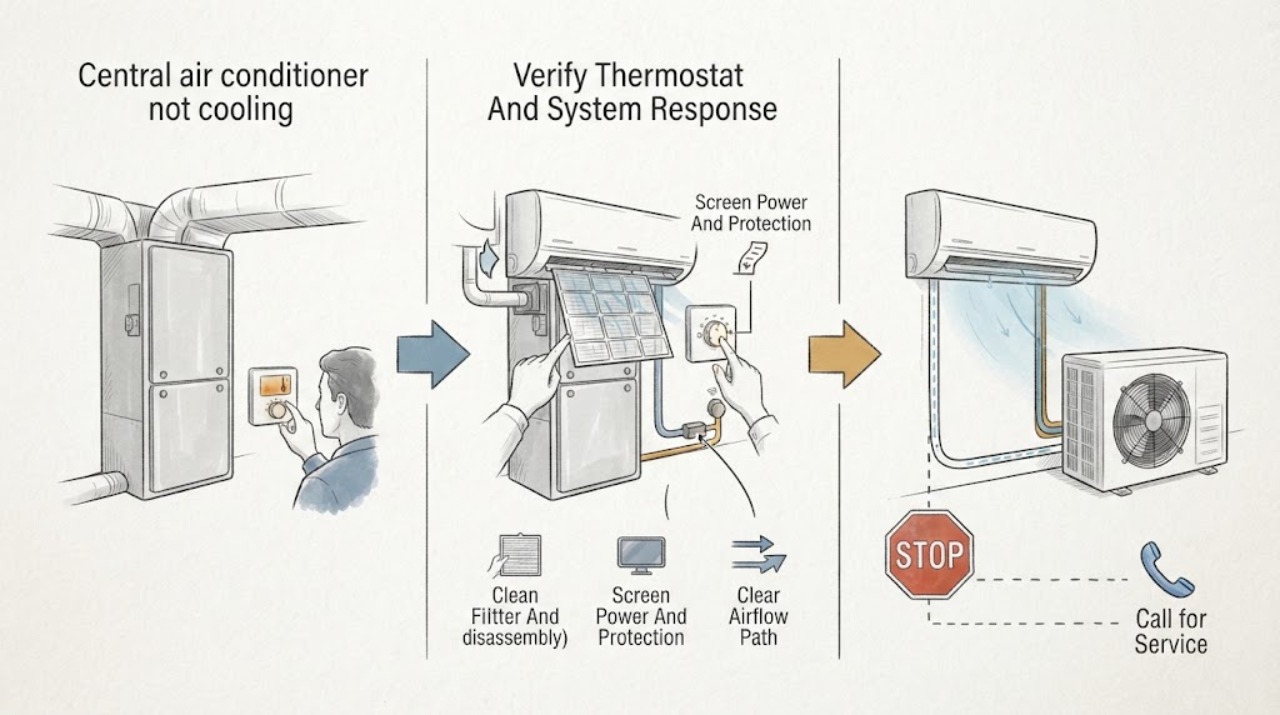
Rheem central air conditioner not cooling: What to Check and What to Do Next
When a Rheem central air conditioner is not cooling, first confirm that the thermostat is calling for cooling and that the indoor blower and outdoor unit respond. Then check the filter, return and supply airflow, and visible debris around the outdoor condenser.
-
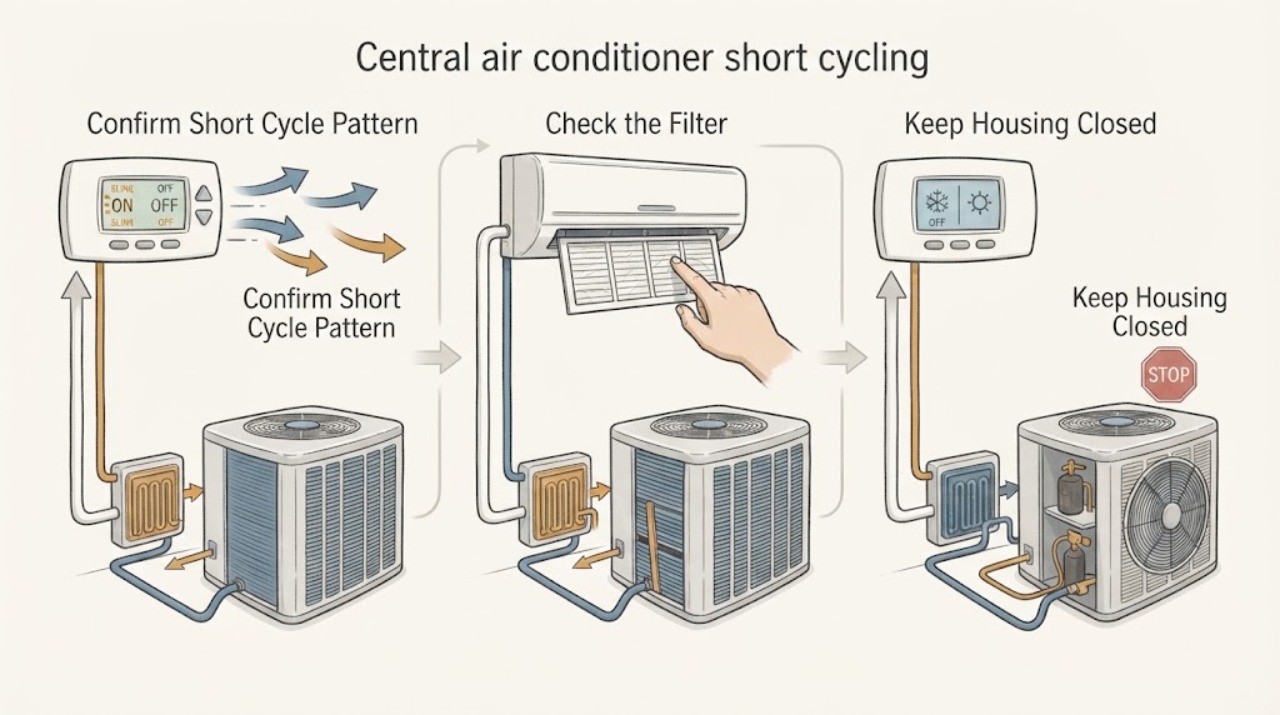
Rheem central air conditioner short cycling: What to Check and What to Do Next
A Rheem central air conditioner is short cycling when cooling starts and stops repeatedly before the home reaches the thermostat setting, especially when the compressor runs only briefly and then tries again. First record whether the thermostat call, indoor blower, and outdoor unit stop together, and check only the thermostat mode, accessible filter, open returns and supply vents, and clear space around the outdoor unit.