
HVAC guides
Air Conditioners Repair Guides – Page 4
Cooling-system guidance for airflow, temperature, drainage, controls, and outdoor-unit problems.
Published air conditioners guides
Choose the guide that best matches the equipment and symptom you are seeing.
-
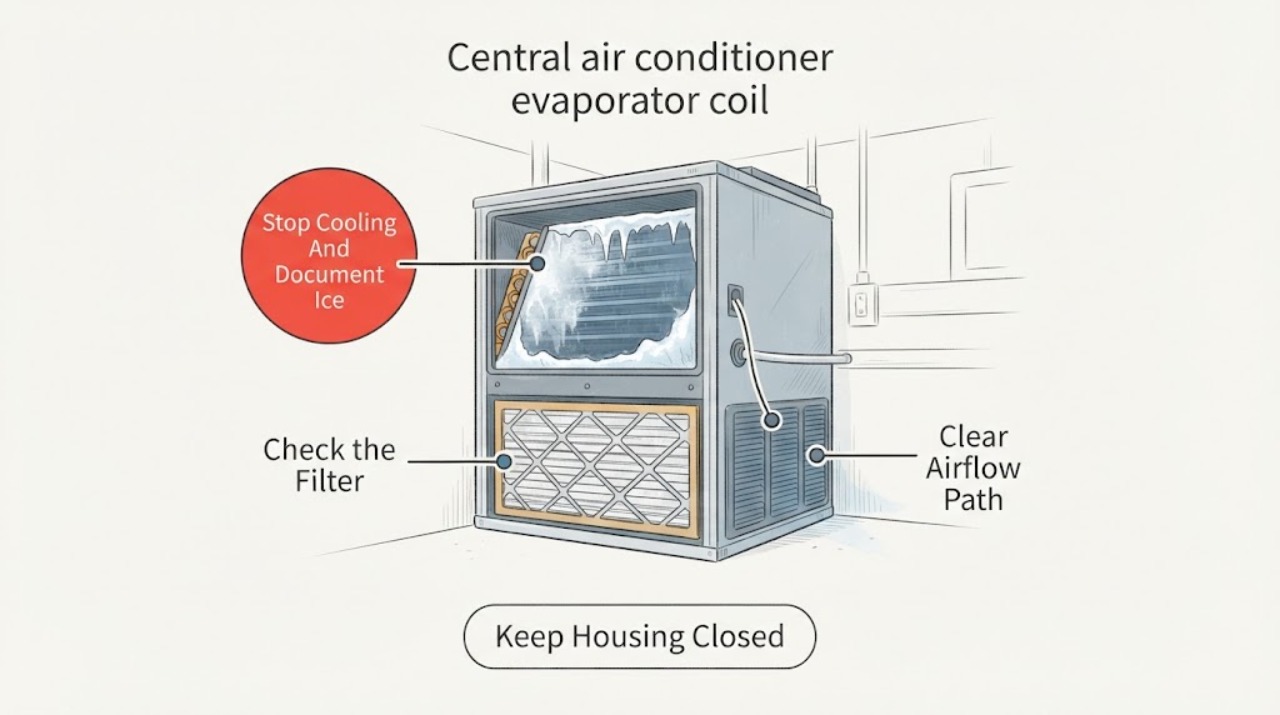
Trane central air conditioner evaporator coil frozen: What to Check and What to Do Next
If a Trane central air conditioner's indoor evaporator coil is frozen, switch the thermostat from COOL to OFF and leave the system off while the ice thaws; do not chip at the ice or keep running the compressor. A dirty filter, blocked return air, a dirty coil, thermostat problem, low refrigerant or a refrigerant leak can all contribute, so a thawed coil does not by itself identify the cause.
-
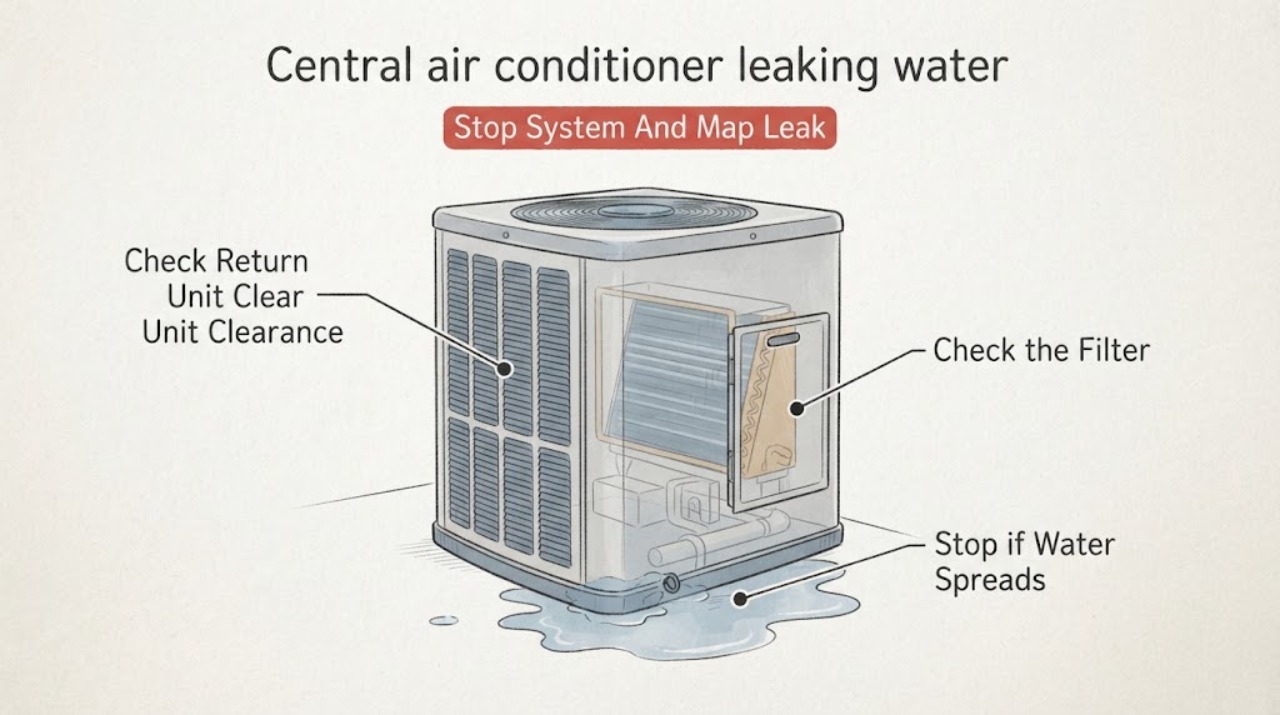
Trane central air conditioner leaking water: What to Check and What to Do Next
A Trane central air conditioner leaking water usually has a cracked, dirty, or overflowing drain pan, a clogged condensate line, or an evaporator coil that froze and is now thawing. Dirty filters, restricted return air, low refrigerant, a condensate pump or float issue, and incorrect installation can contribute.
-
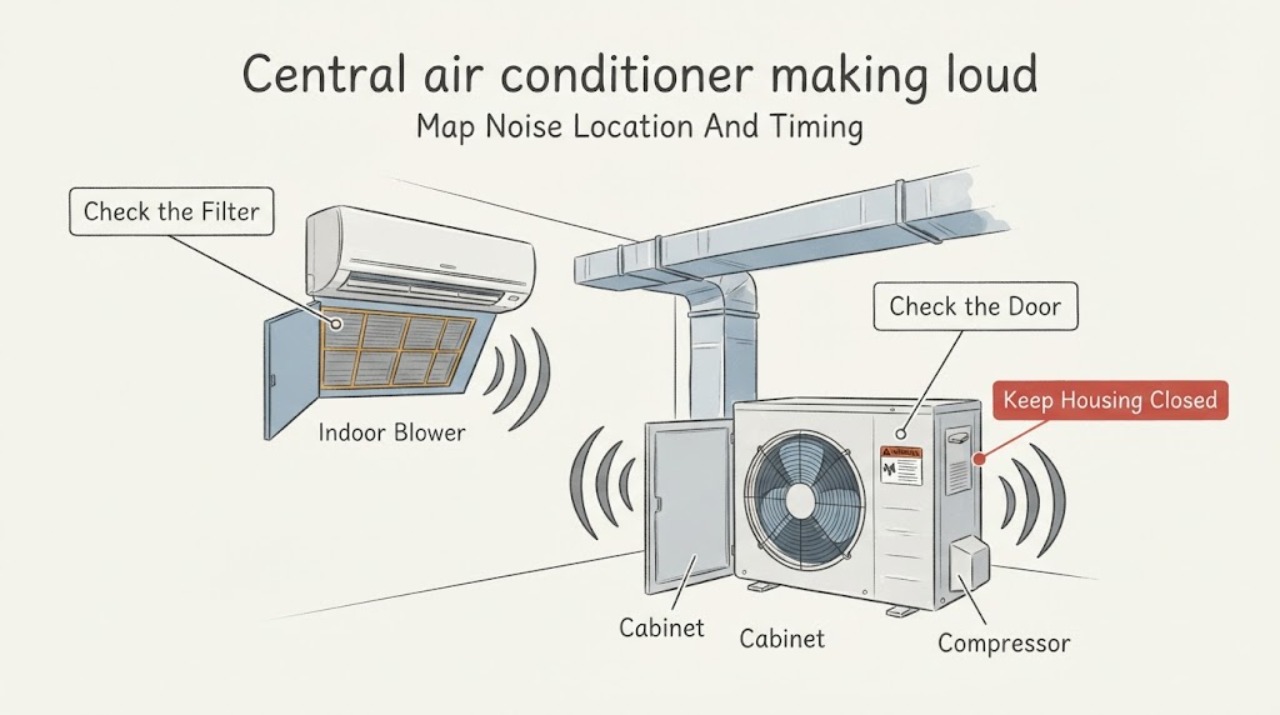
Trane central air conditioner making loud noise: What to Check and What to Do Next
A Trane central air conditioner can make a predictable hum or brief startup, shutdown, or speed-change sound, but a new or noticeably louder rattle, bang, grind, screech, high-pitched sound, or electrical buzz is not a normal noise test. First locate whether the sound is indoors, outdoors, or at a register and note whether it follows the indoor blower, outdoor fan, compressor, startup, or shutdown.
-
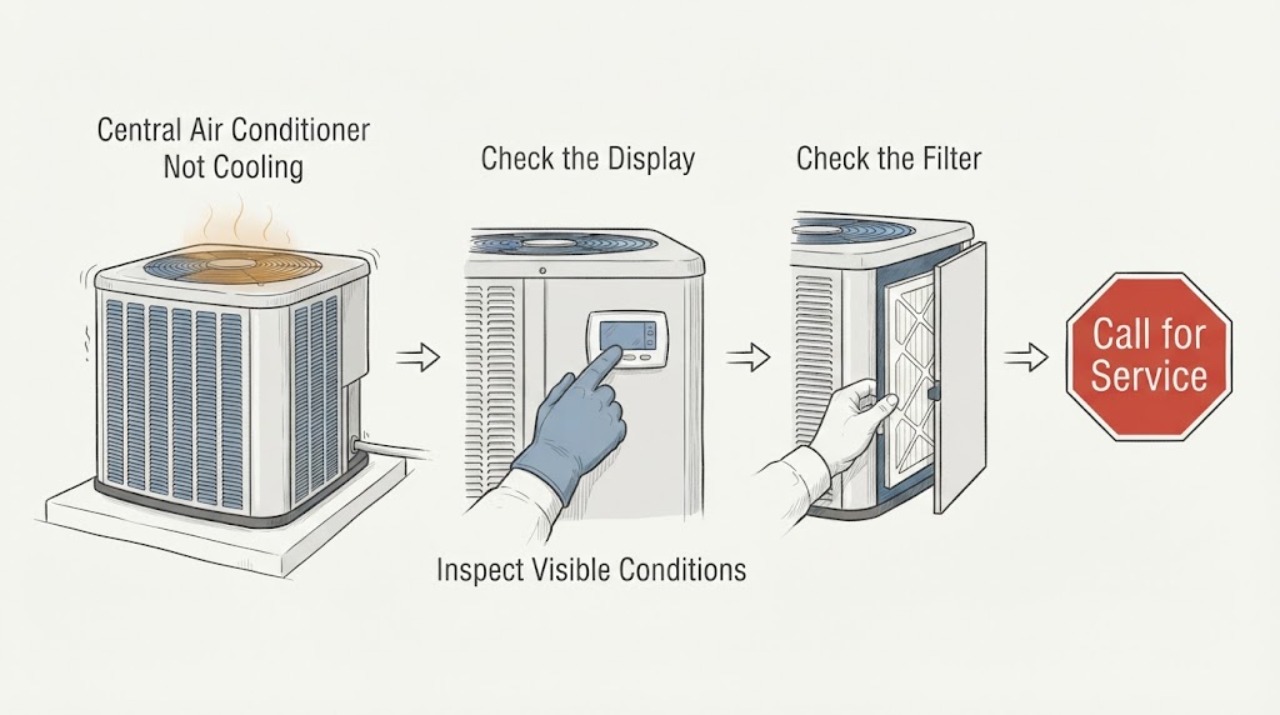
Trane Central Air Conditioner Not Cooling: What to Check and What to Do Next
When a Trane central air conditioner is not cooling, first verify the thermostat is calling for cooling and the indoor fan is set appropriately, then check the accessible air filter, supply and return airflow, visible outdoor-unit debris, and any visible condensate overflow. A tripped breaker, incorrect thermostat mode, dirty filter or coil, blocked outdoor coil, frozen evaporator coil, clogged condensate drain, low refrigerant, or motor fault can produce similar symptoms.
-
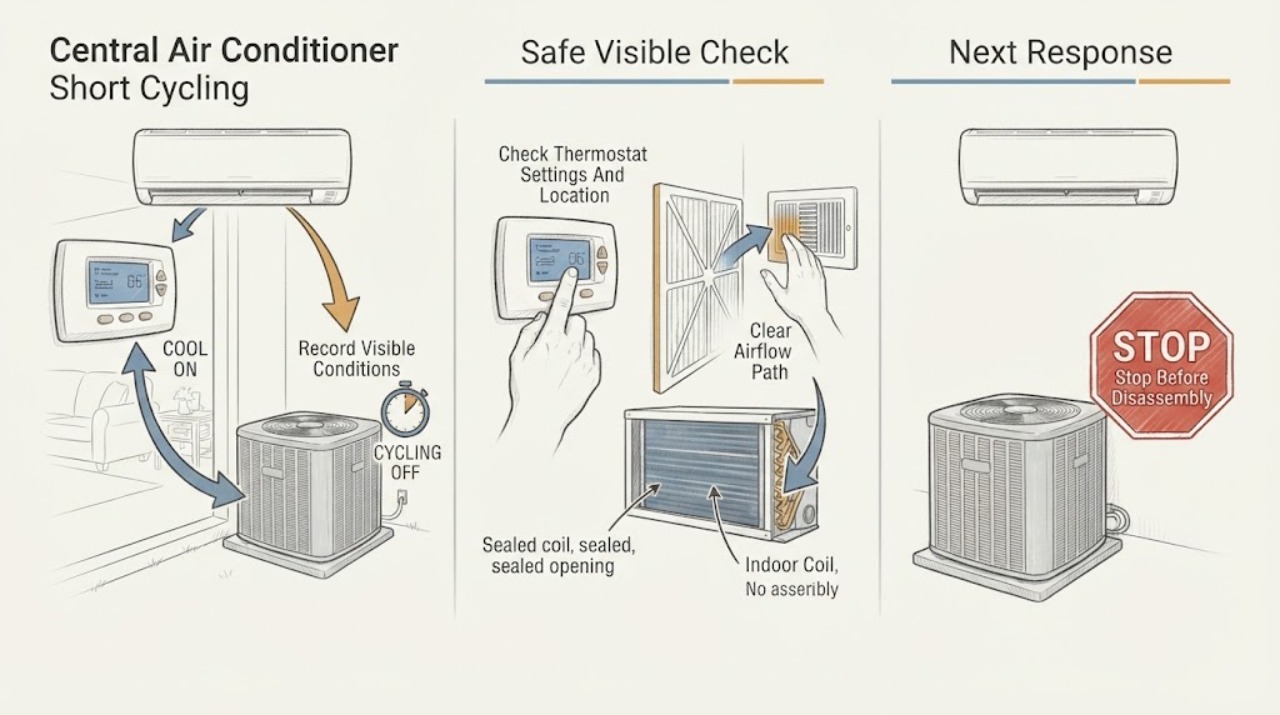
Trane Central Air Conditioner Short Cycling: What to Check and What to Do Next
Short cycling means the Trane central air conditioner starts and stops repeatedly before comfort is reached, rather than completing a normal cooling cycle. First confirm that the behavior is abnormal and note whether the thermostat, indoor airflow, and outdoor unit change with each start.
-
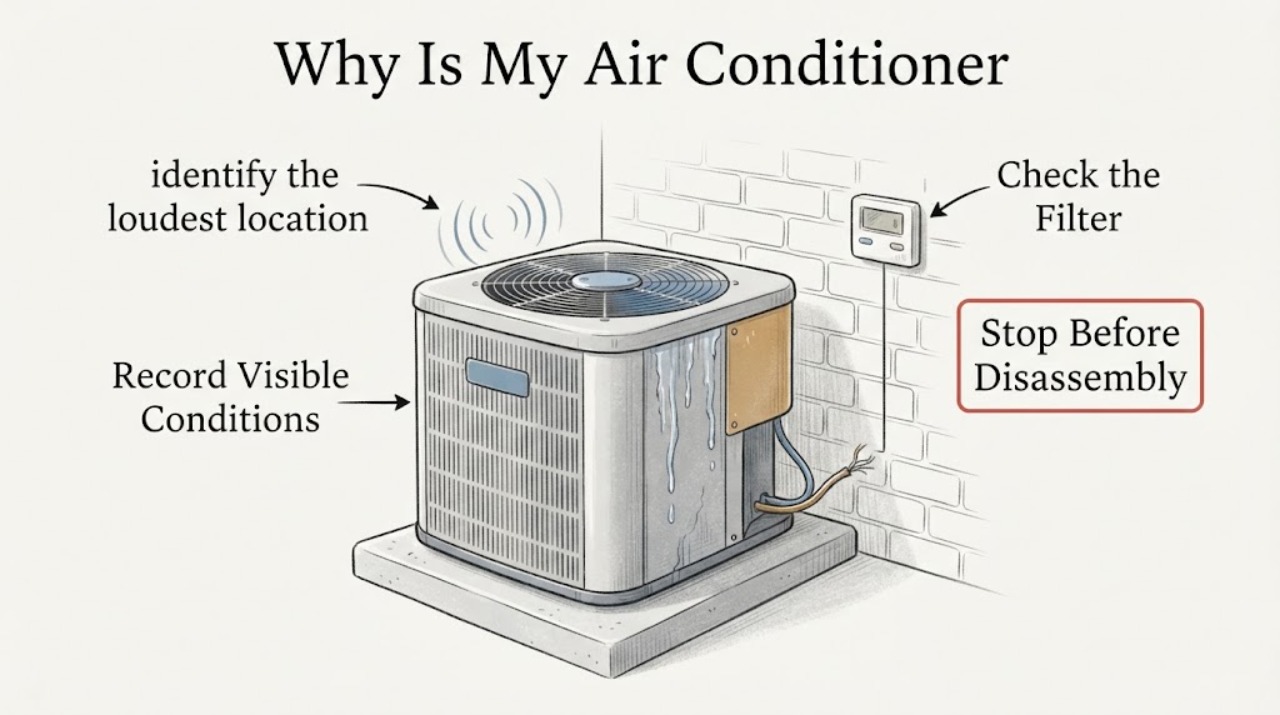
Why Is My Air Conditioner So Loud? Safe Checks for Thermostat and Capacitor Clues
A loud air conditioner is diagnosed first by where the sound occurs and whether it starts at a thermostat cooling call, during steady operation, or at shutdown. Check the thermostat settings, filter, registers, and outdoor clearance from the outside only.
-
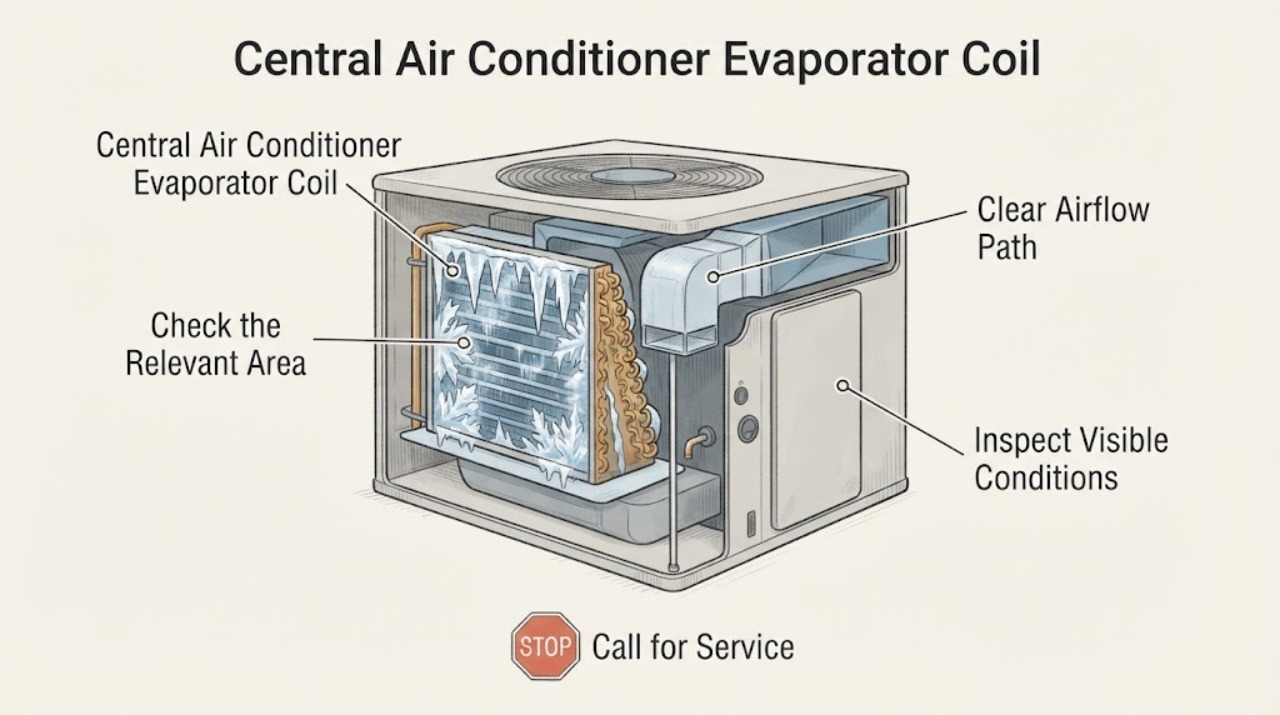
York Central Air Conditioner Evaporator Coil Frozen: What to Check and What to Do Next
If a York central air conditioner's evaporator coil is frozen, switch the thermostat from cooling to off and do not keep running the compressor against the ice. Visible ice on the indoor coil cabinet or refrigerant lines, weak airflow, warm supply air, and meltwater are common signs.
-
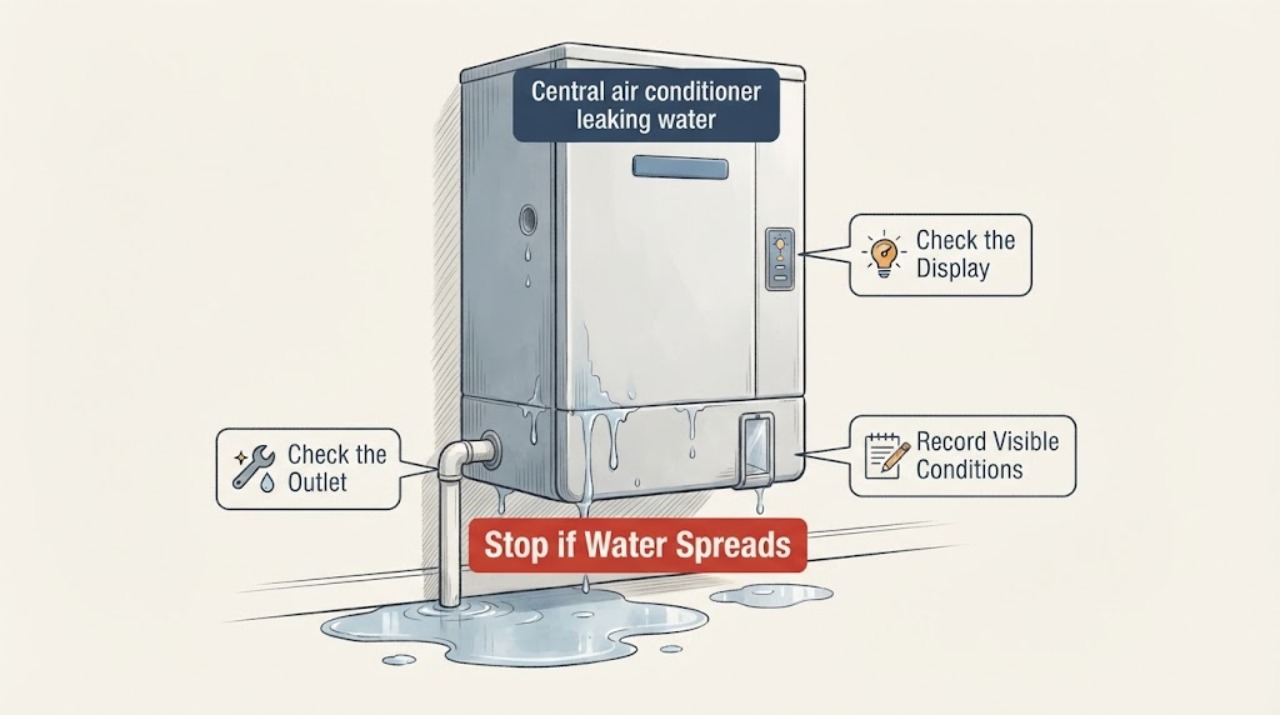
York central air conditioner leaking water: What to Check and What to Do Next
A York central air conditioner that leaks water may have a blocked or poorly draining condensate line, a damaged pan, a condensate pump or overflow-control problem, or a frozen evaporator coil releasing water as it thaws. Turn cooling off when water is pooling, near electrical equipment, or reaching a ceiling or wall.
-
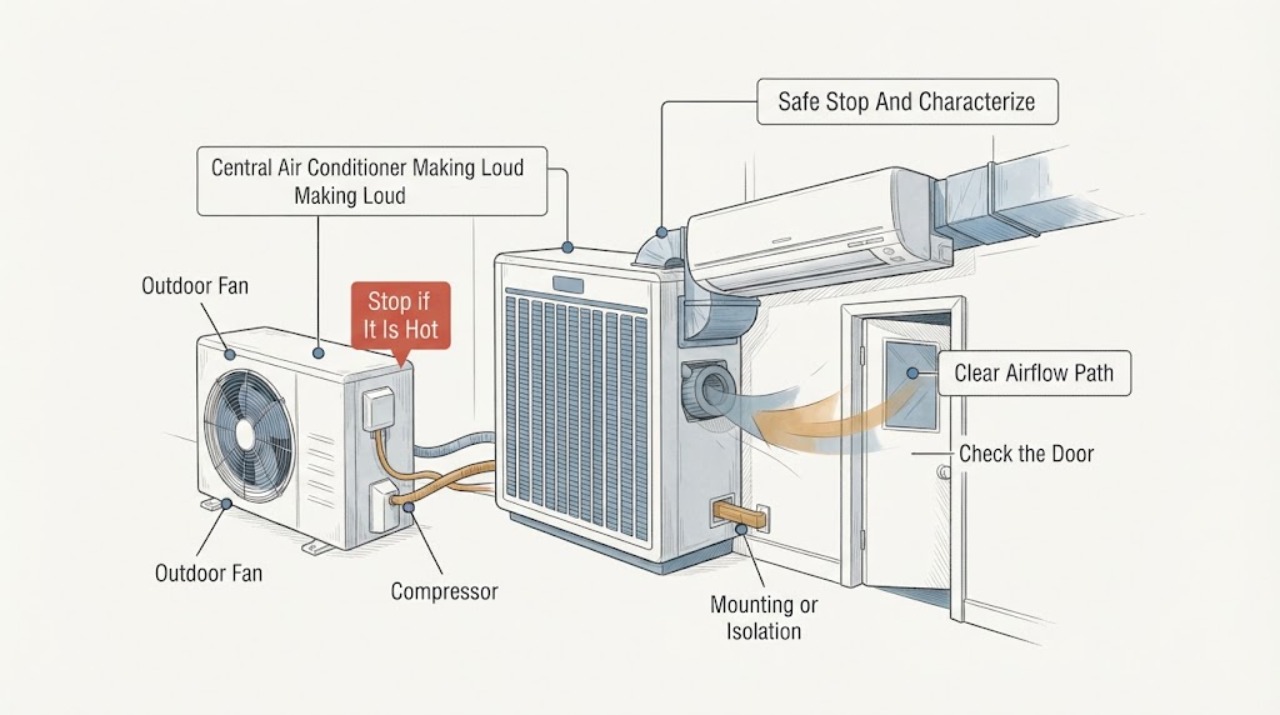
York Central Air Conditioner Making Loud Noise: What to Check and What to Do Next
A York central air conditioner that suddenly becomes loud should not be treated as normal background hum. First switch cooling off for banging, scraping, squealing, clanging, severe vibration, burning odor, smoke, or electrical symptoms, then identify whether the sound is indoors, outdoors, in the ductwork, or at the thermostat and whether it occurs at startup, during operation, or shutdown.
-
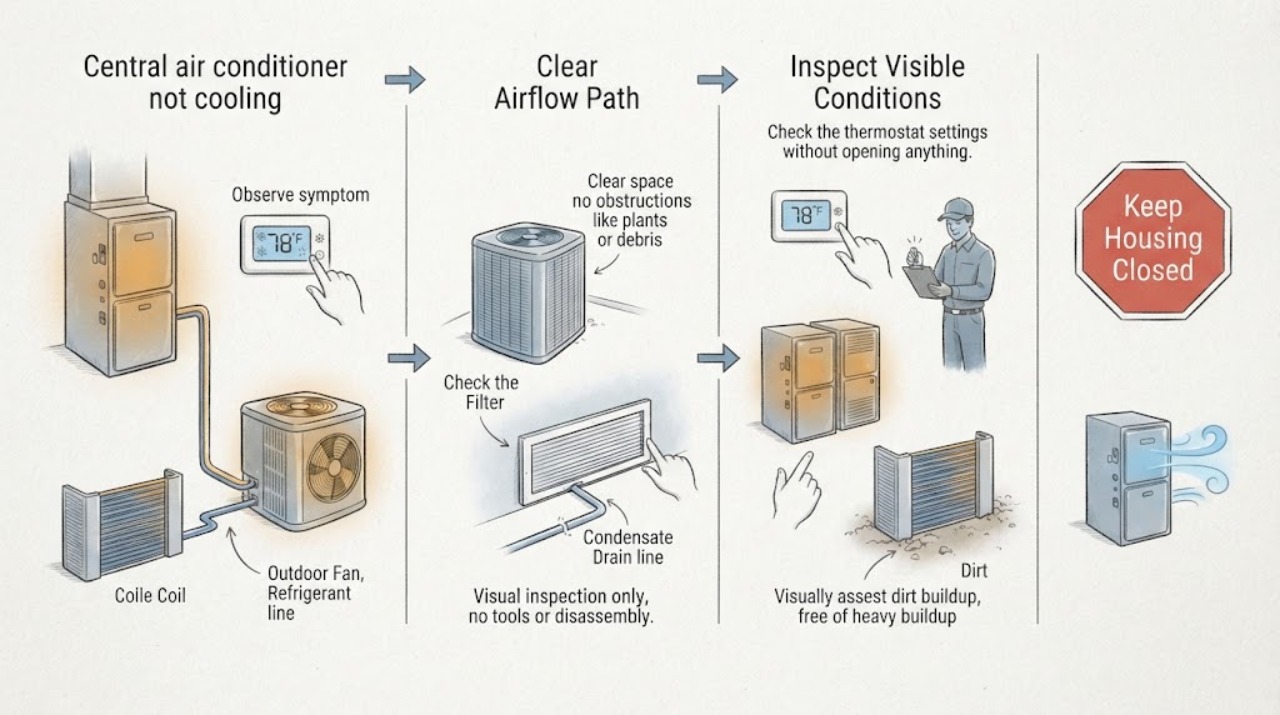
York central air conditioner not cooling: What to Check and What to Do Next
A York thermostat call does not prove that the indoor blower, outdoor condenser, compressor, or refrigerant circuit is producing cooling. Confirm Cool mode, a setpoint below room temperature, and Fan Auto; then note whether air is moving at several registers.
-
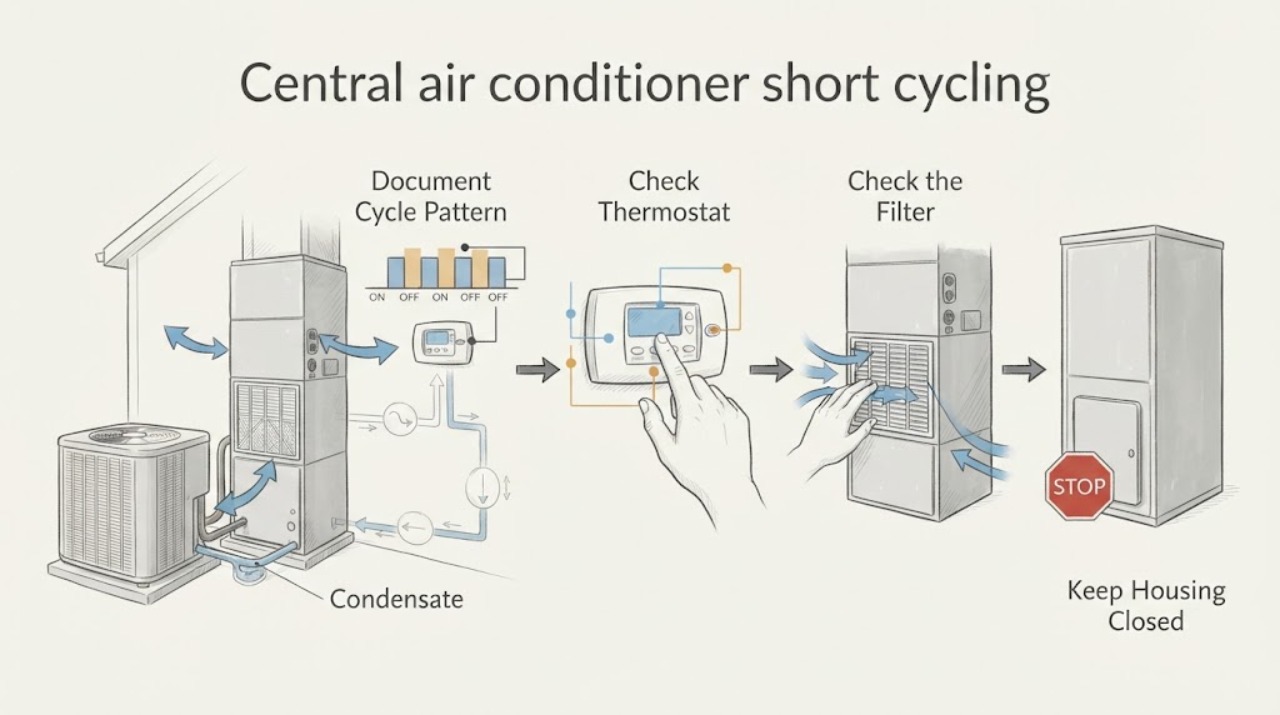
York central air conditioner short cycling: What to Check and What to Do Next
A York central air conditioner that starts and stops before the home is comfortable may have restricted airflow, a thermostat or control problem, a blocked condensate drain or safety response, an outdoor condenser airflow issue, incorrect sizing, or a refrigerant or electrical fault.