
Repair problem
Leaking Water Troubleshooting Guides – Page 2
Published FixGraph guidance for diagnosing and responding to leaking water.
Matching published guides
Choose a guide that matches the service, equipment, and conditions you are seeing.
-
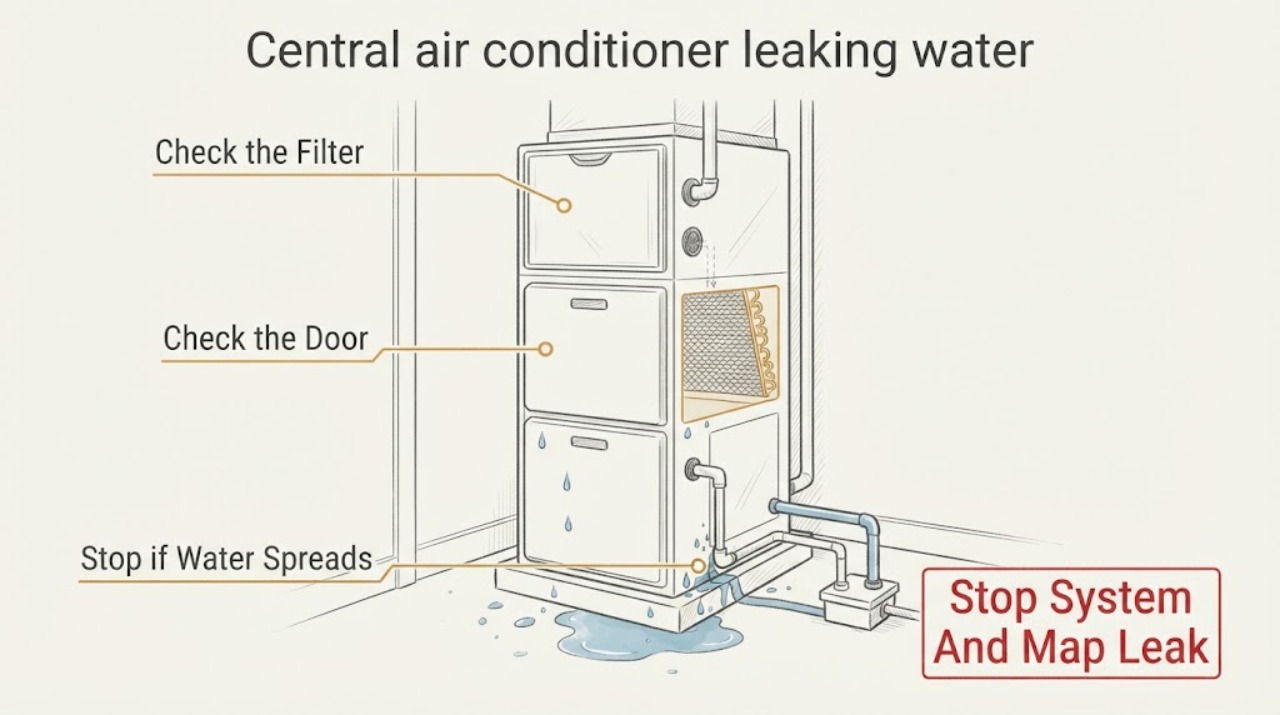
Goodman central air conditioner leaking water: What to Check and What to Do Next
A Goodman central air conditioner leaking water usually has condensate that is not reaching its drain, a drain pan or line problem, or an evaporator coil that froze and is now thawing. A dirty filter, blocked return path, dirty coil, blower issue, refrigerant problem, pump, or installation condition can cause or worsen the symptom.
-
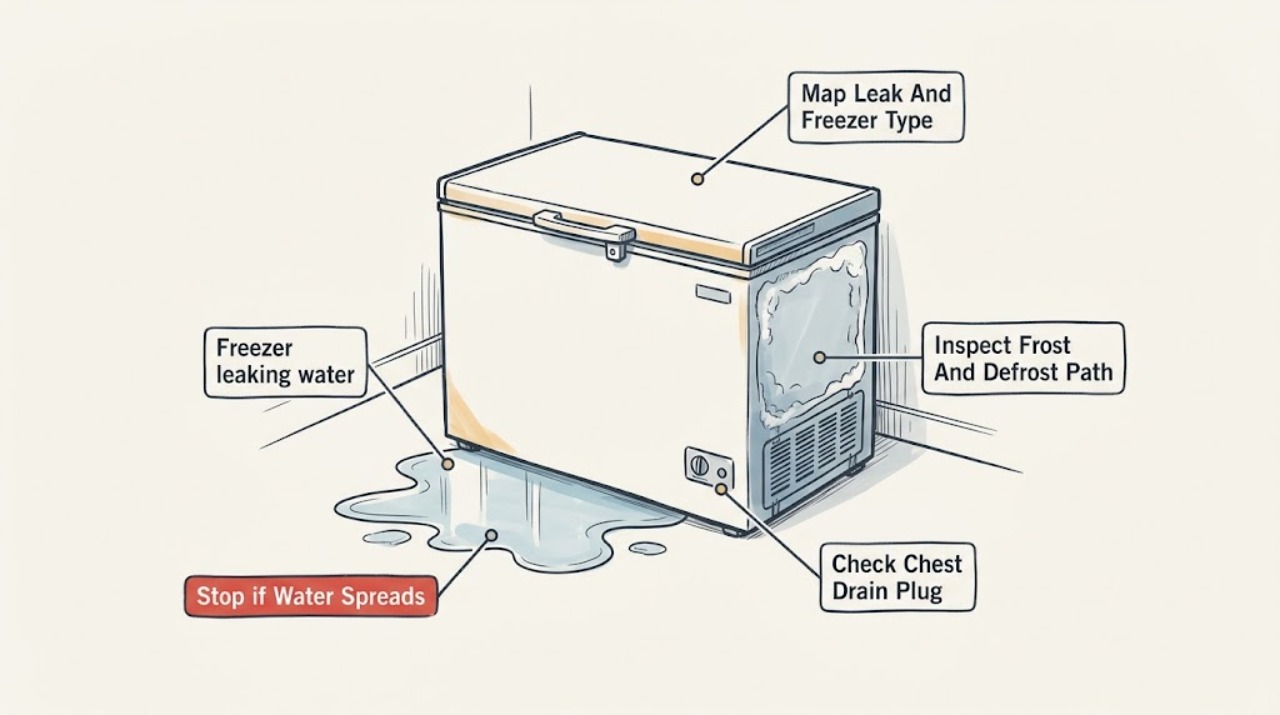
Haier freezer leaking water: What to Check and What to Do Next
Start by locating the water and identifying whether the Haier freezer is a chest, upright, or freezer section with an ice maker. On a Haier chest freezer, melting frost and an outer drain plug that is not seated properly are a documented leak path; place a container under the plug and check it from the outside without opening panels.
-
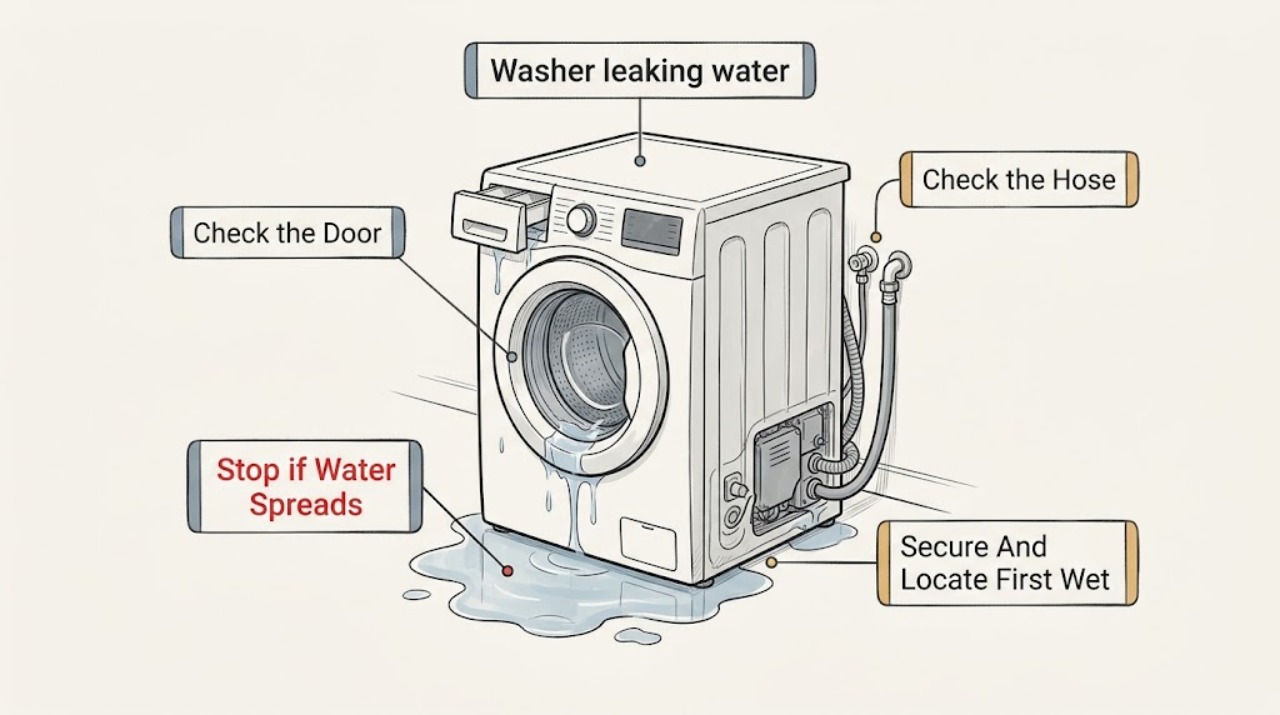
Hotpoint washer leaking water: What to Check and What to Do Next
Find the first wet point and note when the Hotpoint washer leaks: while filling, during washing, during drain or spin, or while idle. A front-load leak at the door points toward debris or a damaged door seal; water from the dispenser points toward product buildup or blocked dispenser ports; a rear leak points toward an inlet or drain hose, installation, or household plumbing; and a leak during agitation may be oversudsing or overflow on a top-loader.
-
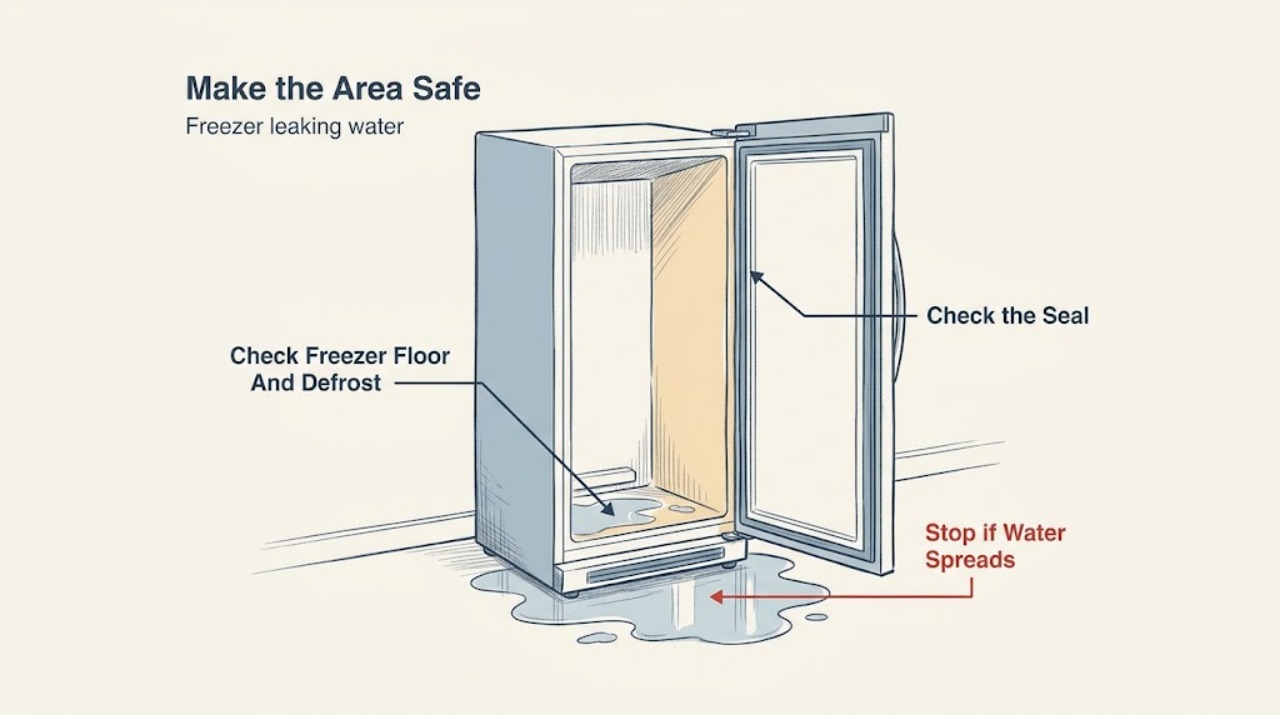
Kenmore freezer leaking water: What to Check and What to Do Next
A Kenmore freezer that leaks water most often has defrost water backing up because the drain is iced or obstructed, but a poor door seal, a shifted or damaged drain pan, an unlevel installation, or an optional ice-maker water connection can produce a similar puddle.
-
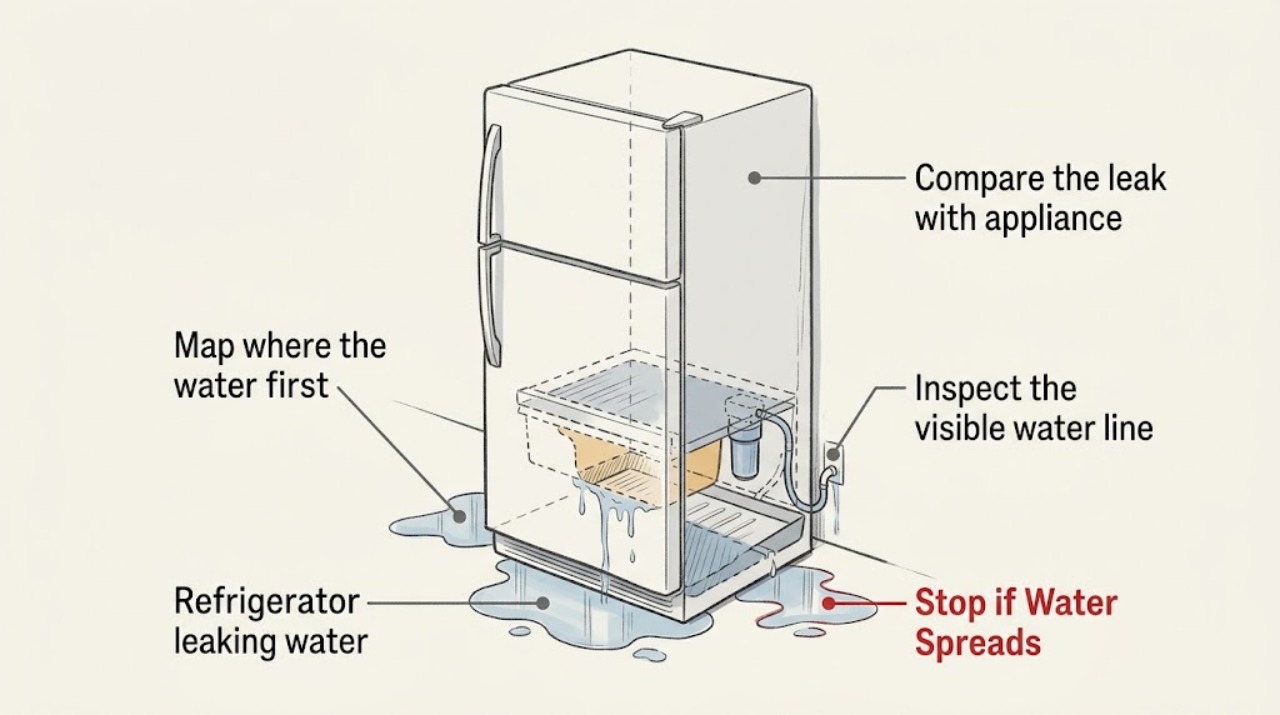
Kenmore refrigerator leaking water: What to Check and What to Do Next
A Kenmore refrigerator leaking water can have an interior defrost or condensation path, a filter or dispenser connection, a drain pan, or a household water line as the source. First dry the area and map whether water is inside the freezer, under the front, behind the refrigerator, near the filter, or only after dispensing or making ice.
-
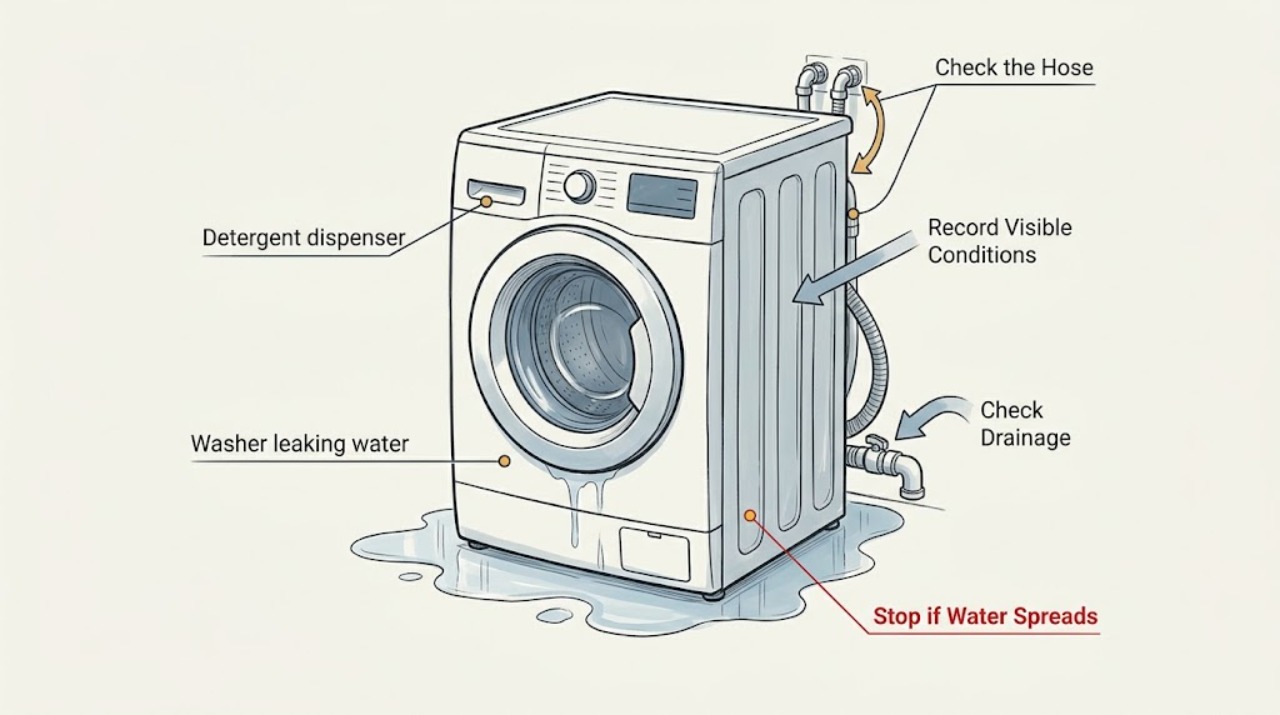
Kenmore washer leaking water: What to Check and What to Do Next
Stop the Kenmore washer and identify where and when water appears before running another cycle. Water at the rear during fill points first to an inlet-hose connection or supply issue; water at the front of a front-load model points to the door seal, trapped clothing, dispenser, excess suds, or overloading; water during pump-out points to the drain hose, household drain, or an internal pump path; water underneath can require service for a tub, hose, pump, or seal.
-
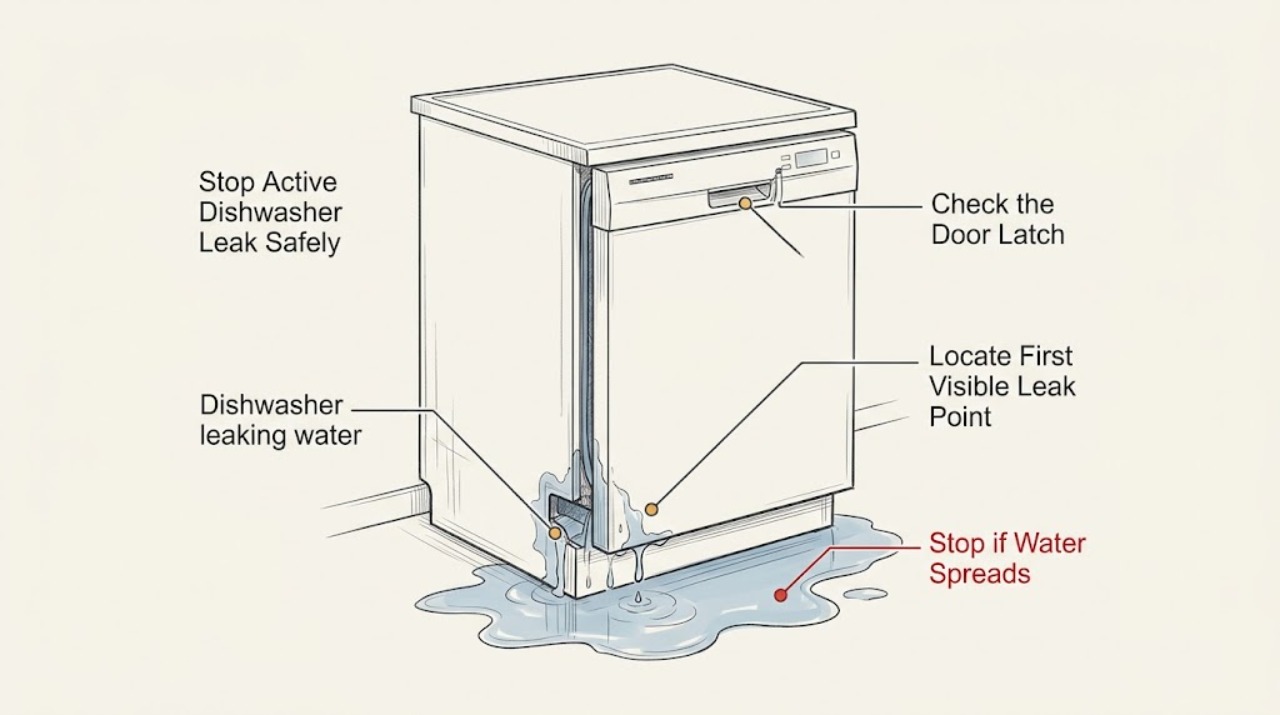
KitchenAid dishwasher leaking water: What to Check and What to Do Next
Stop a KitchenAid dishwasher leak before trying to identify the part. If water is actively escaping, cancel or stop the cycle only if the controls and floor are safe to approach; keep clear of water near electrical connections, and shut off power and the dishwasher water supply from a safe, accessible location if the leak continues.
-
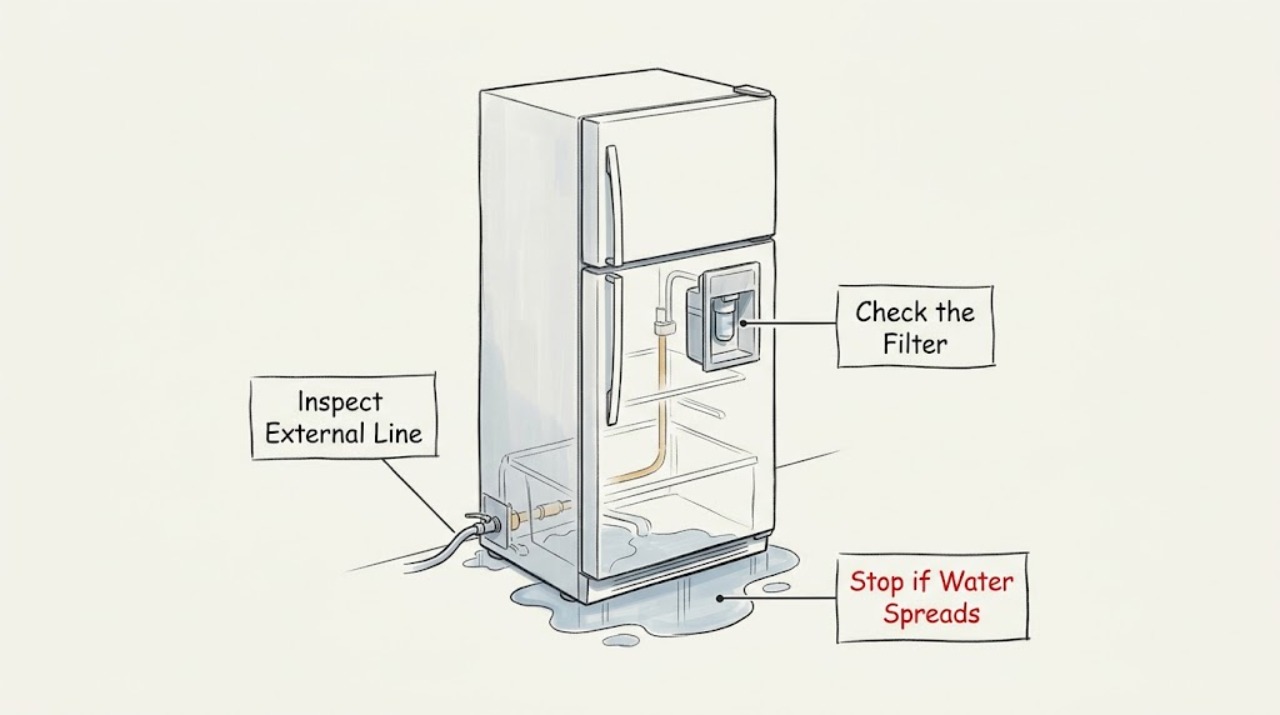
KitchenAid refrigerator leaking water: What to Check and What to Do Next
Start by locating where the water begins: inside the refrigerator, at the dispenser or door hinge, around the filter, or at the rear supply line. KitchenAid identifies damaged or loose water tubing, a leaking shutoff connection, an incorrectly installed or damaged filter and O-rings, dispenser tubing, and condensation as different possibilities.
-
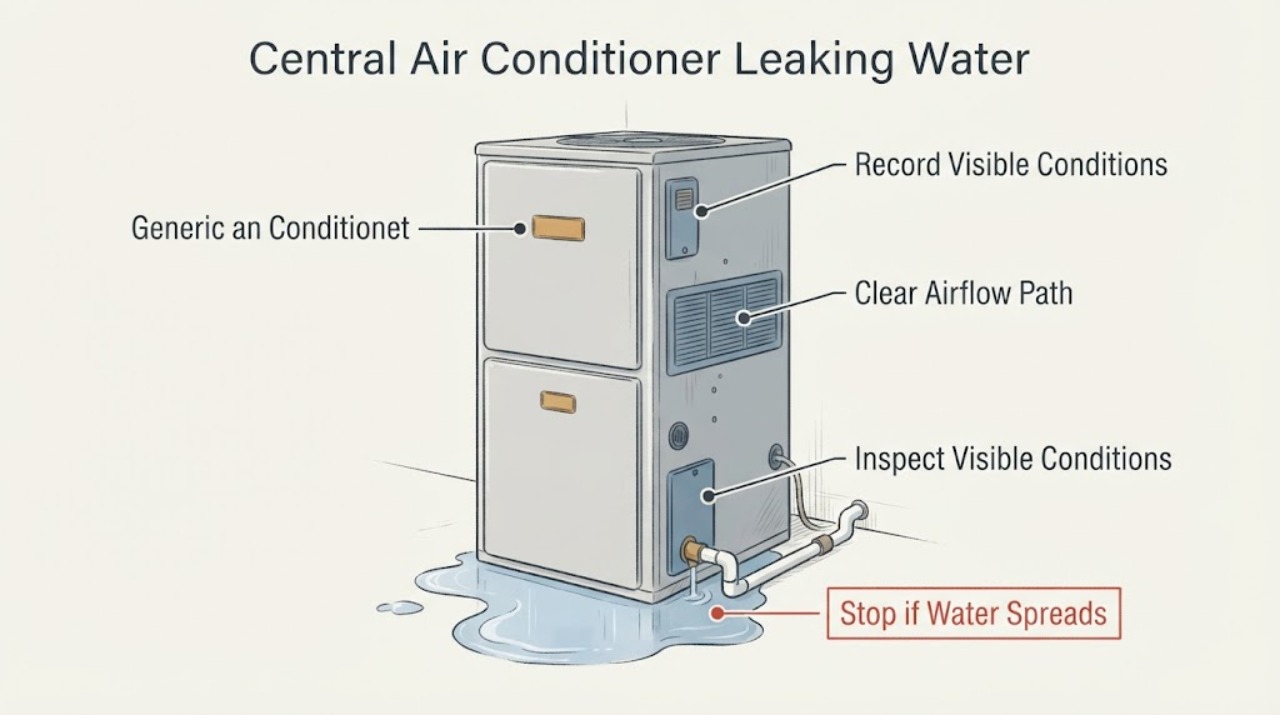
Lennox Central Air Conditioner Leaking Water: What to Check and What to Do Next
A Lennox central air conditioner can produce normal condensation, but water pooling, dripping from the indoor unit or vents, or wet flooring means the drainage path or another part of the system needs attention. Switch cooling off if water is near electrical equipment, a pan is overflowing, or ice is melting, then identify where the water starts.
-
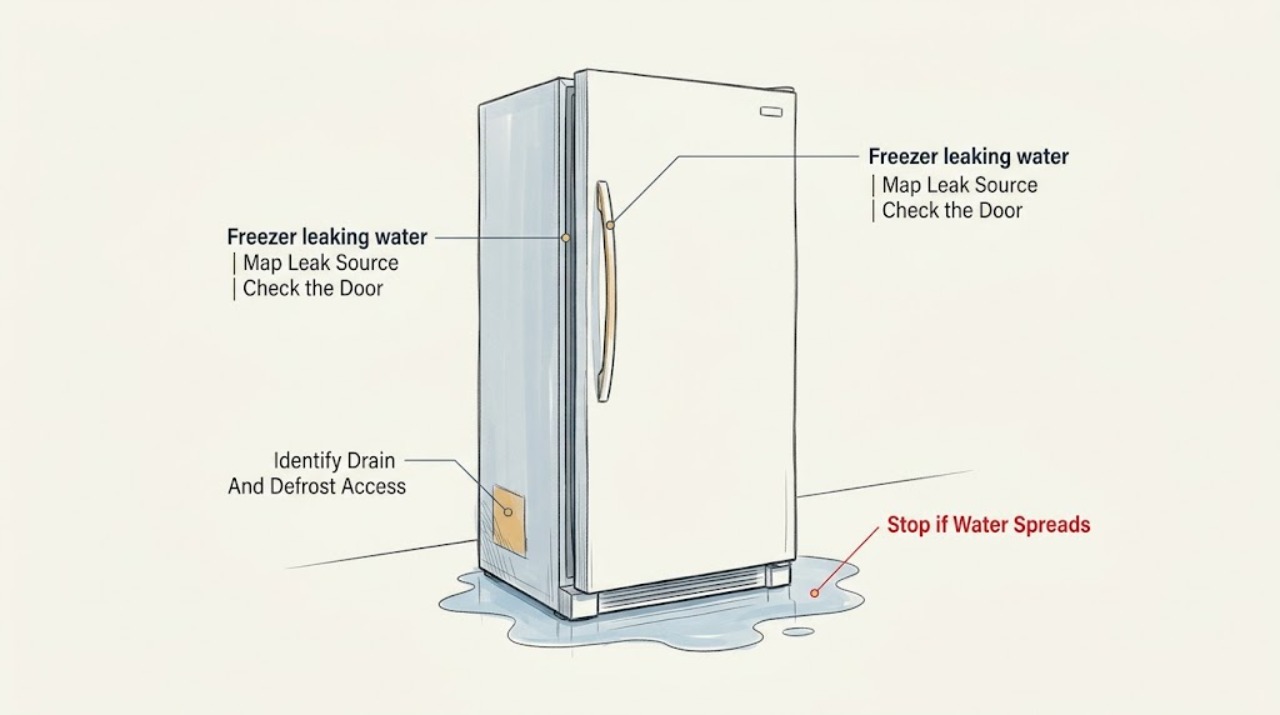
LG freezer leaking water: What to Check and What to Do Next
First locate where and when the LG freezer leaks. Water or ice at the bottom of the freezing compartment after frost points to a blocked or frozen defrost drain; a dispenser, ice-maker, filter, or rear water-line drip is a different path.
-
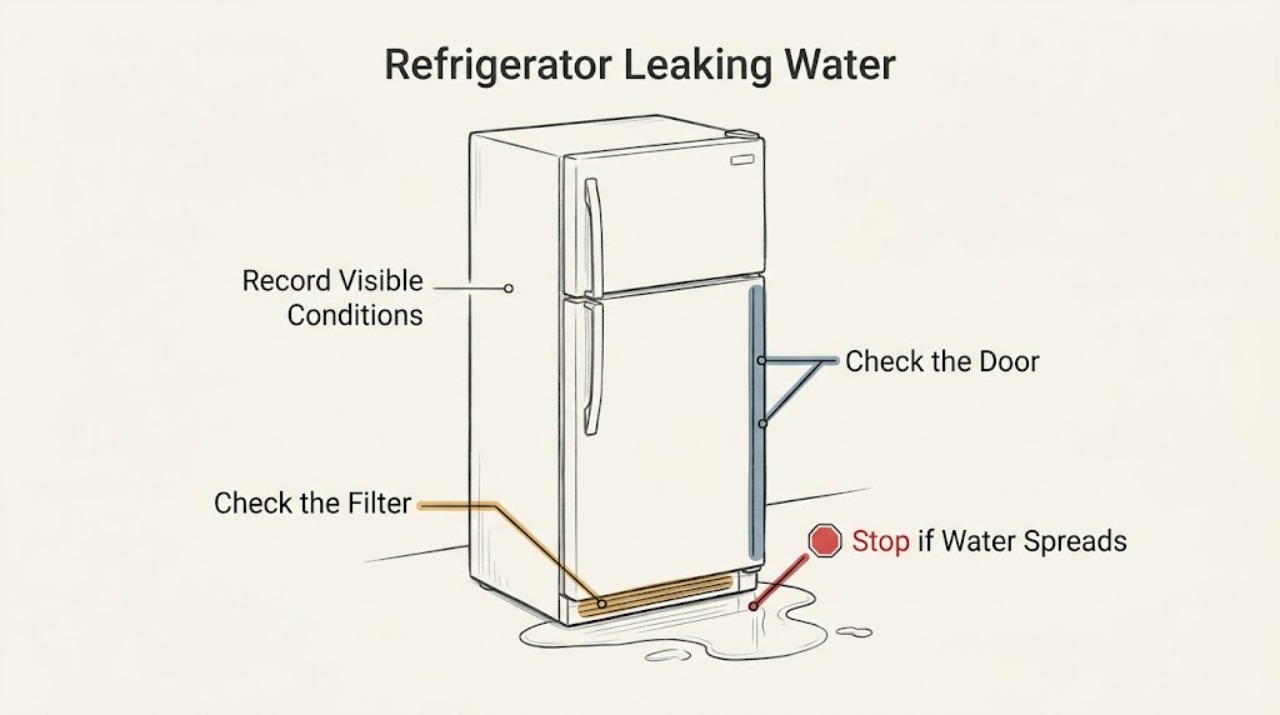
LG Refrigerator Leaking Water: What to Check and What to Do Next
If an LG refrigerator is leaking water, first map where the water begins and whether it appears after dispensing, ice making, or while idle. Check the water filter and its seals, the visible supply line and fittings, the dispenser and ice-maker area, and the door gasket, containers, and drain symptoms using the exact model guidance.
-
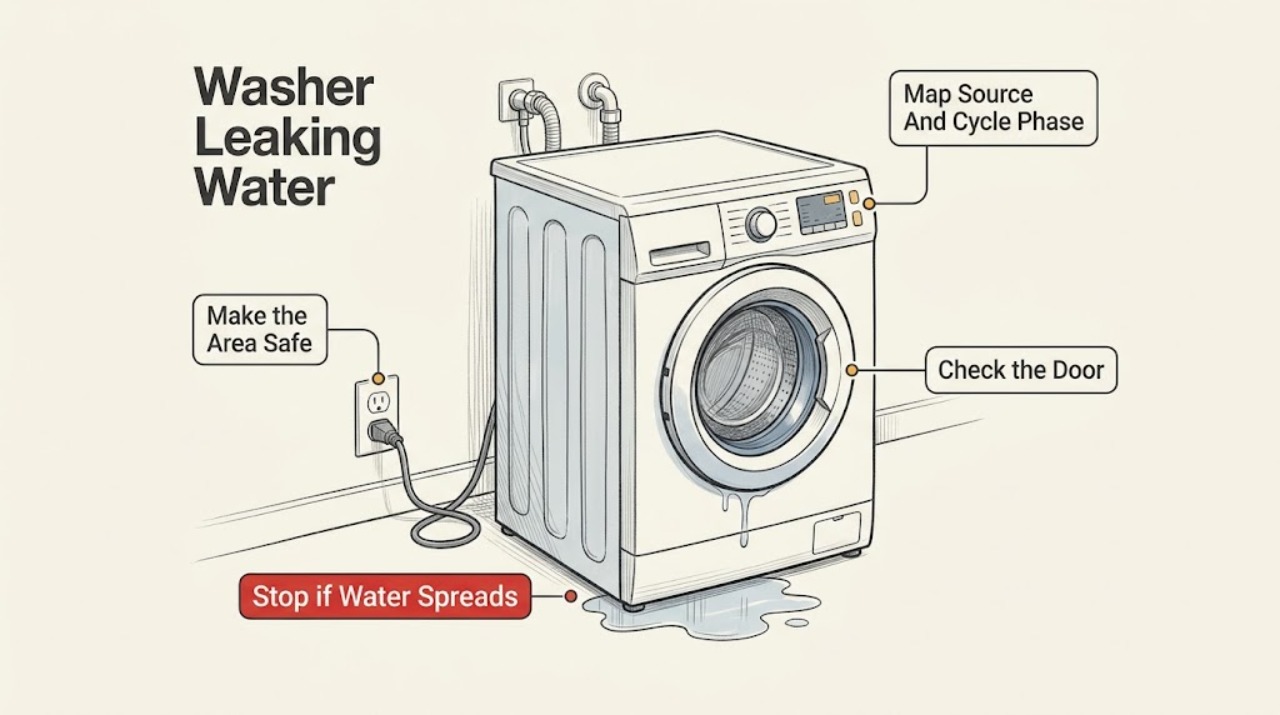
LG Washer Leaking Water: Find the Source Safely and Decide What to Do Next
First identify when and where an LG washer leaks: at the door or lid, dispenser, inlet connections, drain hose or standpipe, pump-filter access area, rear, or underneath. Keep hands and feet away from moving parts and do not touch a plug, outlet, or wiring in a wet area.
-
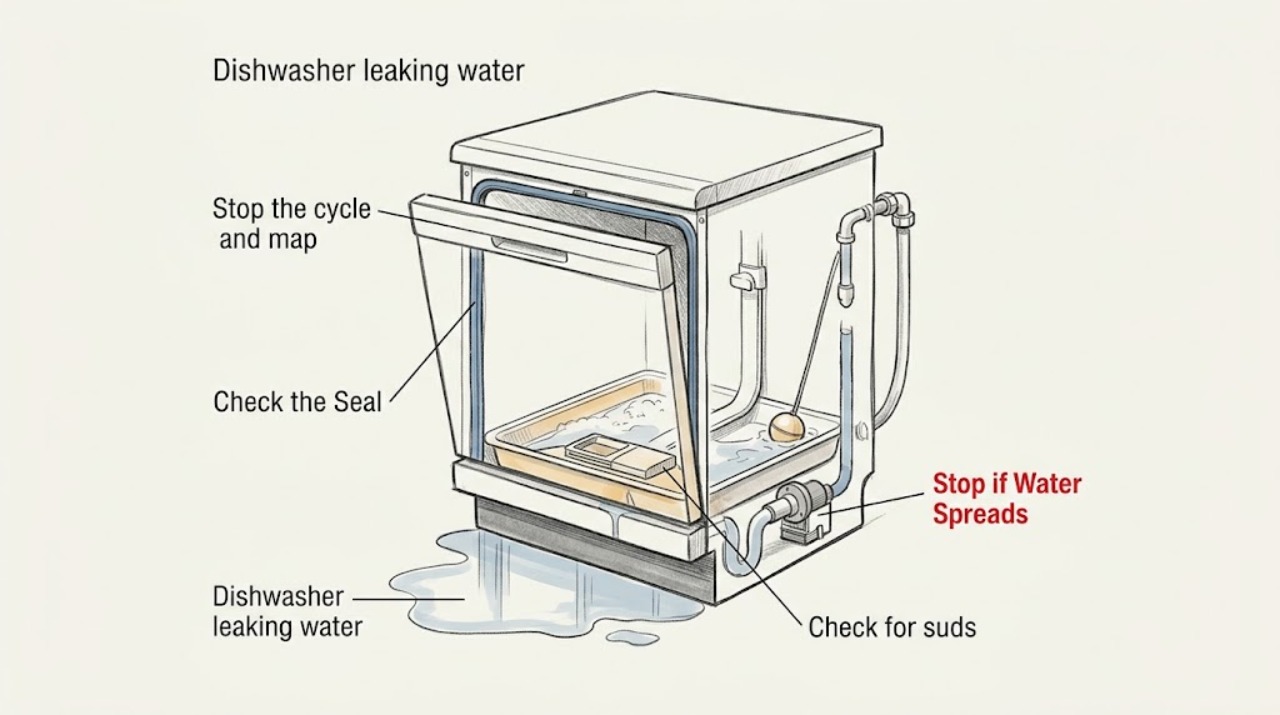
Maytag dishwasher leaking water: What to Check and What to Do Next
First identify where the water starts and stop the dishwasher if the leak is active. Water at the front or door edge makes a blocked or damaged seal, poor leveling, oversudsing, or spray misdirection more likely; water underneath or behind the unit points more toward a supply connection, drain hose, inlet valve, float, sump, or pump seal.
-
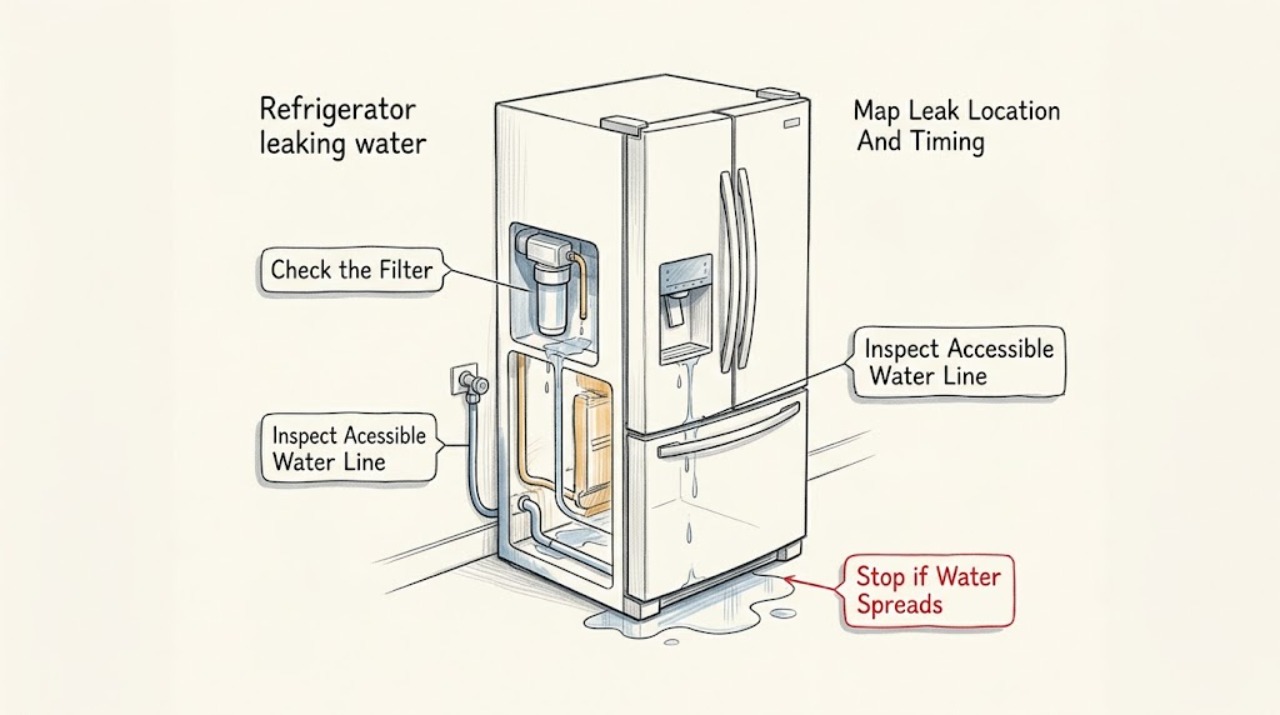
Maytag refrigerator leaking water: What to check and what to do next
First locate where the water starts, because a Maytag refrigerator leak at the filter area, dispenser or door, rear supply connection, shelf, and floor can have different causes. Dry the accessible area and observe whether moisture returns after dispensing water, after the ice maker runs, during a refill, or without using the water system.
-
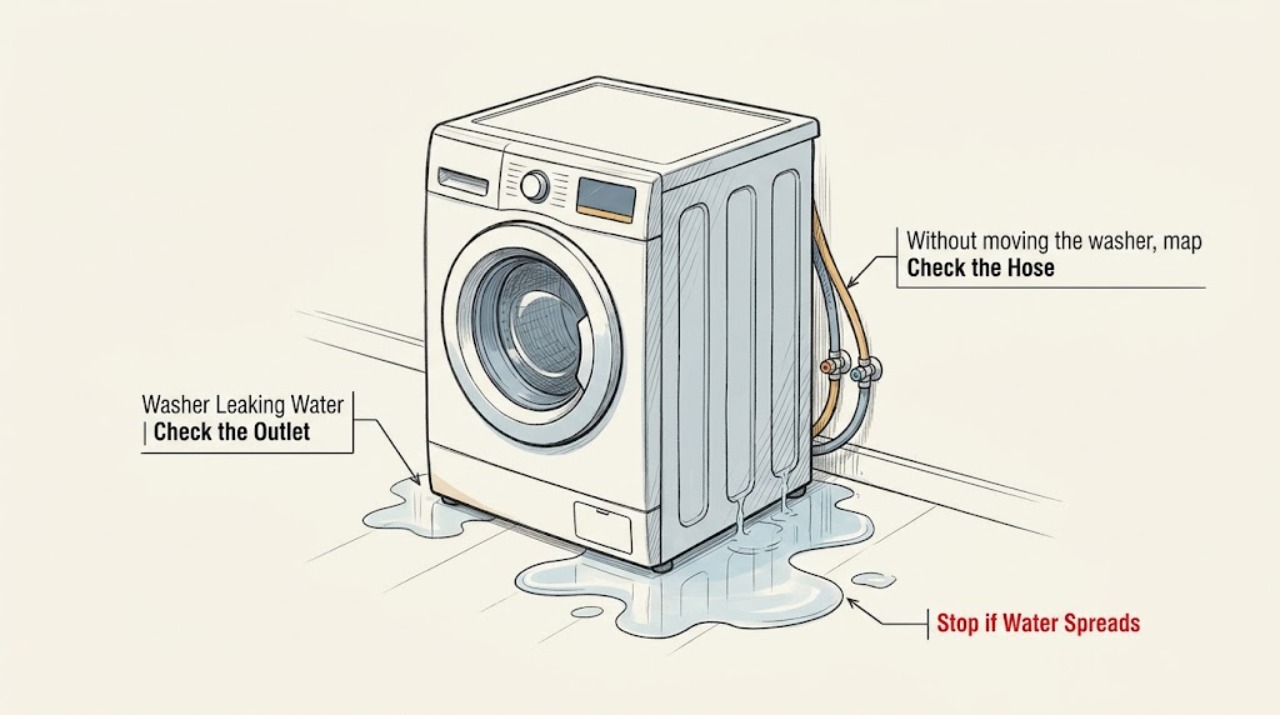
Maytag Washer Leaking Water: What to Check and What to Do Next
First note where and when the water appears: while filling, during washing, while draining or spinning, after the washer is idle, from the front or top, or underneath. Stop the cycle and keep clear of wet electrical parts; from a dry, safe position, close the water faucets if needed.
-
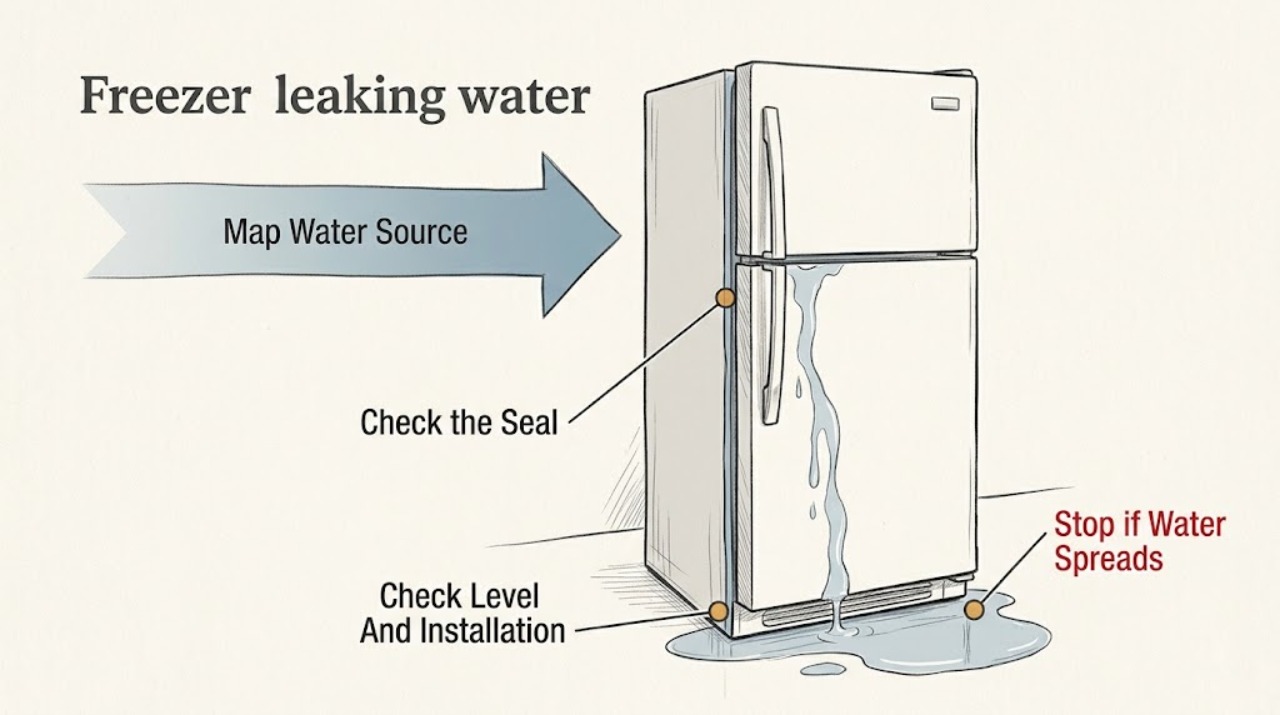
Midea freezer leaking water: What to Check and What to Do Next
Water from a Midea freezer can come from normal defrost water that is not reaching its drain or pan, melting frost caused by a door that was left open or does not seal, a tilted or poorly installed cabinet, or—on models with an ice maker or water connection—a fitting or fill-path leak. First trace the water to the inside floor or rear wall, door edge, underside, drain area, or water connection, and protect food and flooring.
-
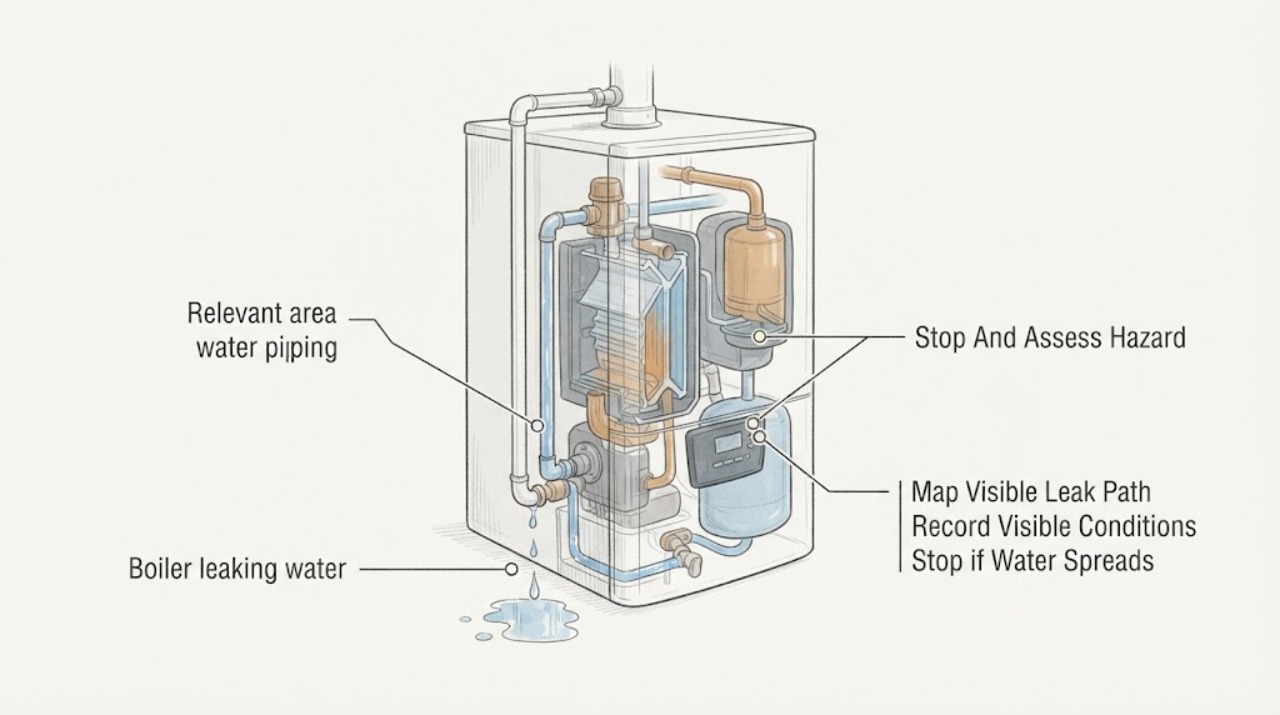
Navien boiler leaking water: What to Check and What to Do Next
Treat water under or around a Navien boiler as a leak until the source is identified. From a dry, safe position, note whether water is actively flowing, where the first wet point appears, whether it is hot, and whether the leak changes when the boiler heats.
-
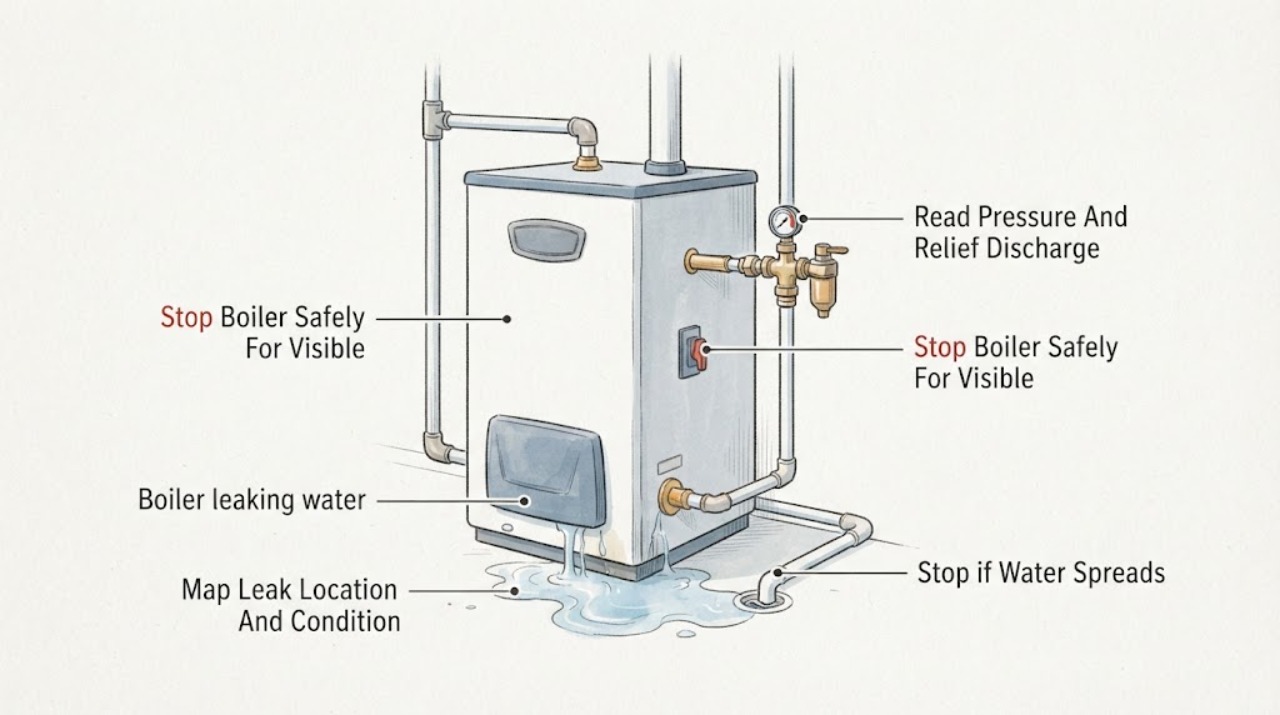
Peerless boiler leaking water: What to Check and What to Do Next
A leaking Peerless boiler may be losing water from a fitting, valve, pump, relief discharge, expansion or pressure problem, condensate drain, or the boiler vessel itself. From a safe position, note exactly where water starts, whether it is cool or near a hot surface, whether the pressure gauge is outside its normal marked range, and whether the leak appears only while the boiler fires or heats.
-
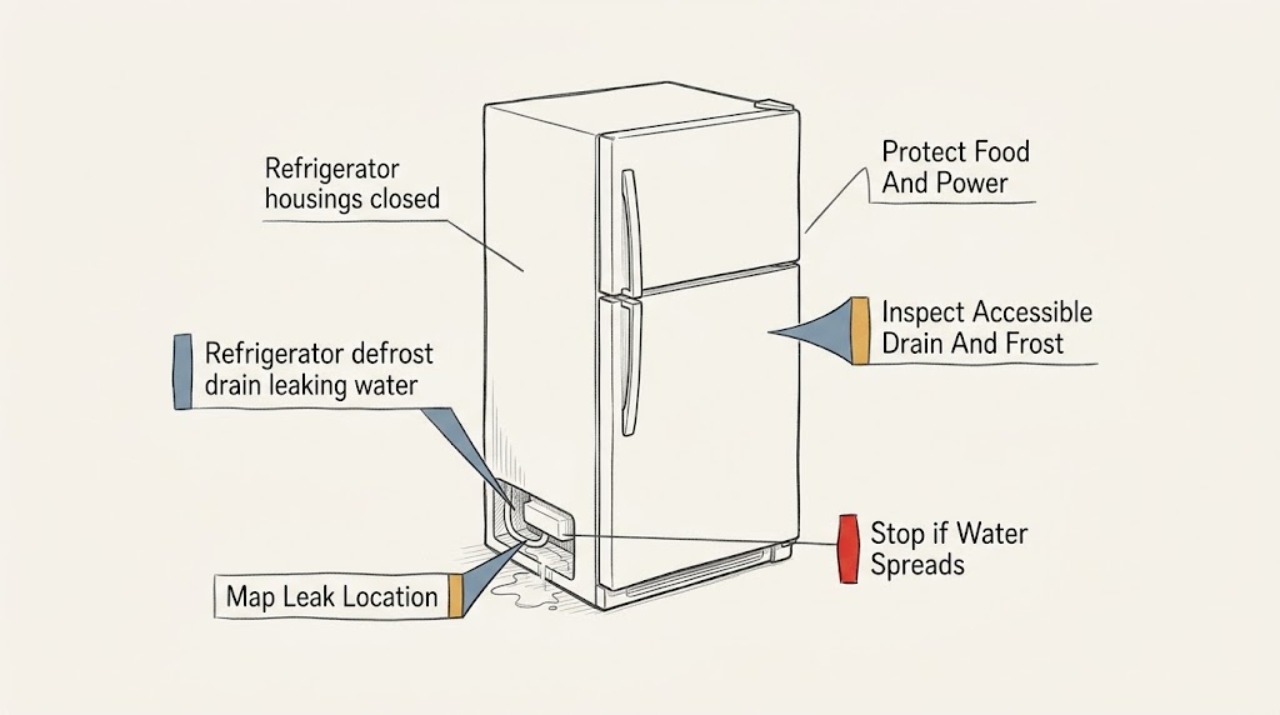
Refrigerator defrost drain leaking water: What to Check and What to Do Next
Water associated with a refrigerator defrost drain usually means melted frost is not reaching the drain pan normally. Ice, frost, or debris can block the drain and make water overflow into the freezer or fresh-food compartment, but a leak from the rear supply line, a door-seal condensation problem, a full or cracked drain pan, or a spill can look similar.
-
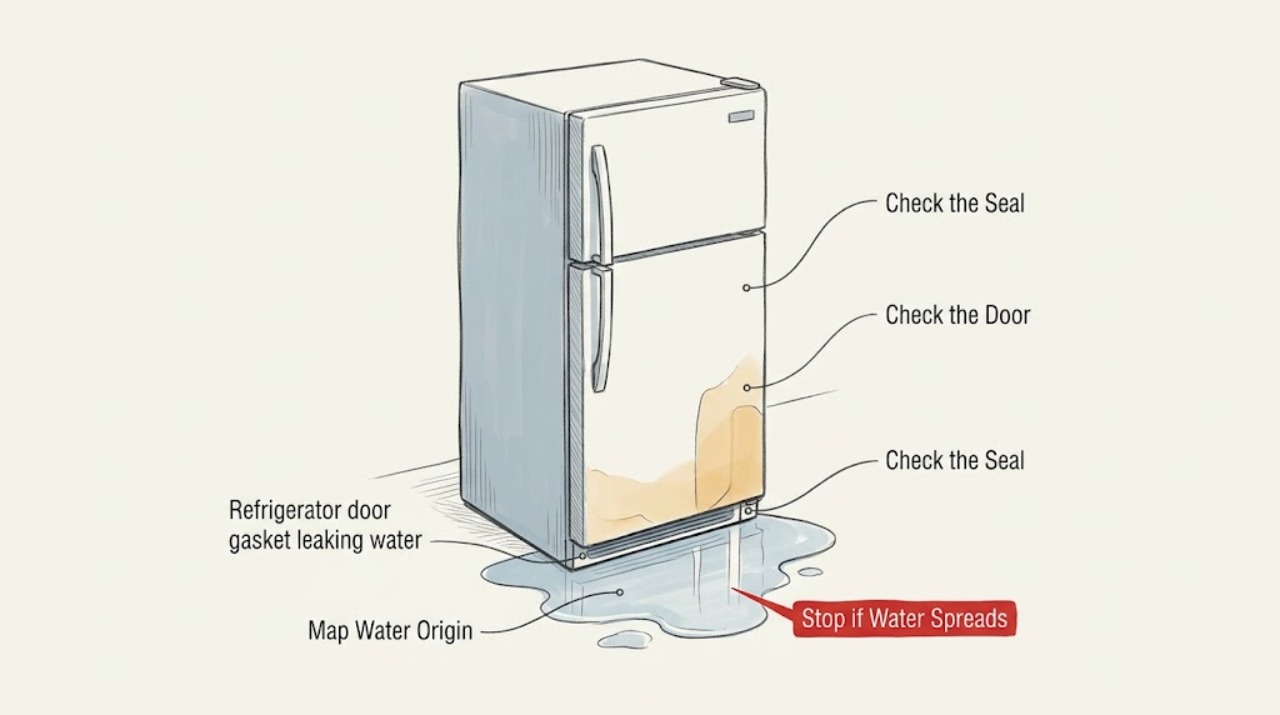
Refrigerator door gasket leaking water: What to Check and What to Do Next
Water around a refrigerator door gasket is often condensation caused by warm humid air entering through a dirty, loose, damaged, or obstructed seal, but a clogged freezer drain, a defrost leak, or a nearby water line can look similar. First locate whether the moisture is on the gasket, inside the compartment, at the front edge, or behind the refrigerator.
-
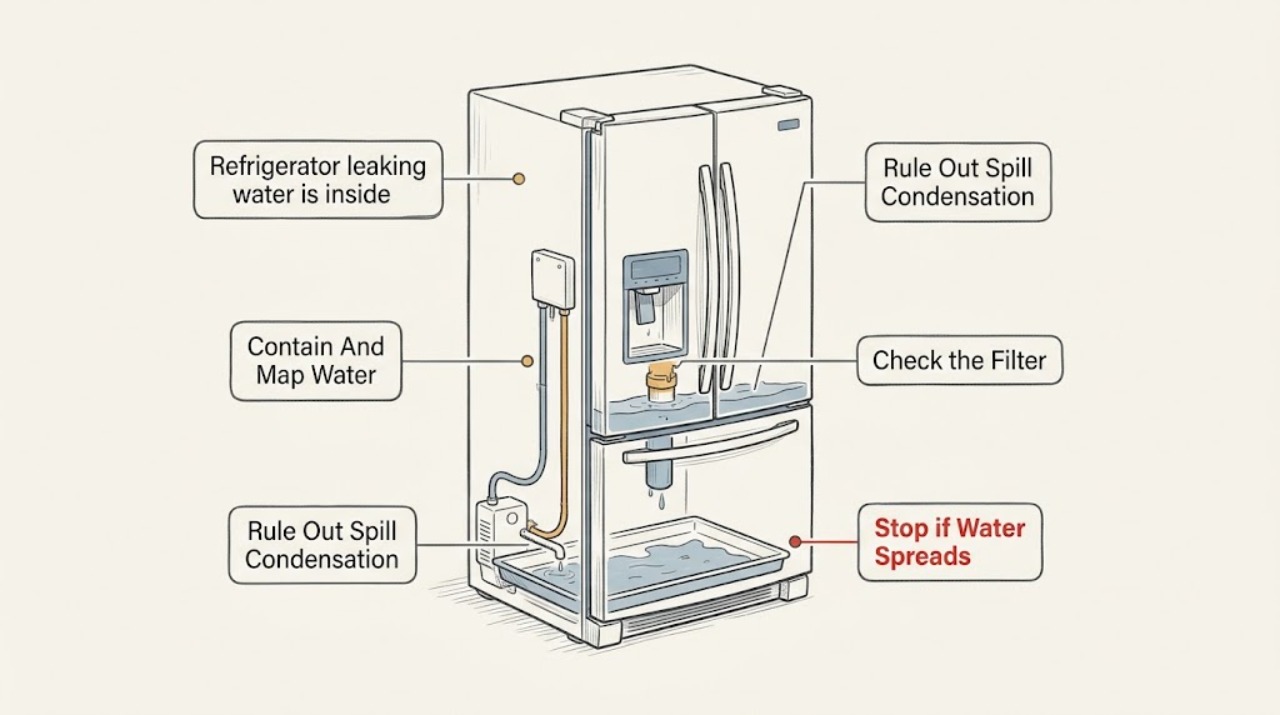
Refrigerator leaking water is inside or beneath fridge: What to Check and What to Do Next
Protect the floor first, then locate the highest wet point rather than assuming the puddle started underneath. If the refrigerator has a dispenser or ice maker, close its household water shutoff when a supply-line leak is suspected; unplug the refrigerator only when water or inspection conditions make that safe and food can be kept cold elsewhere.
-
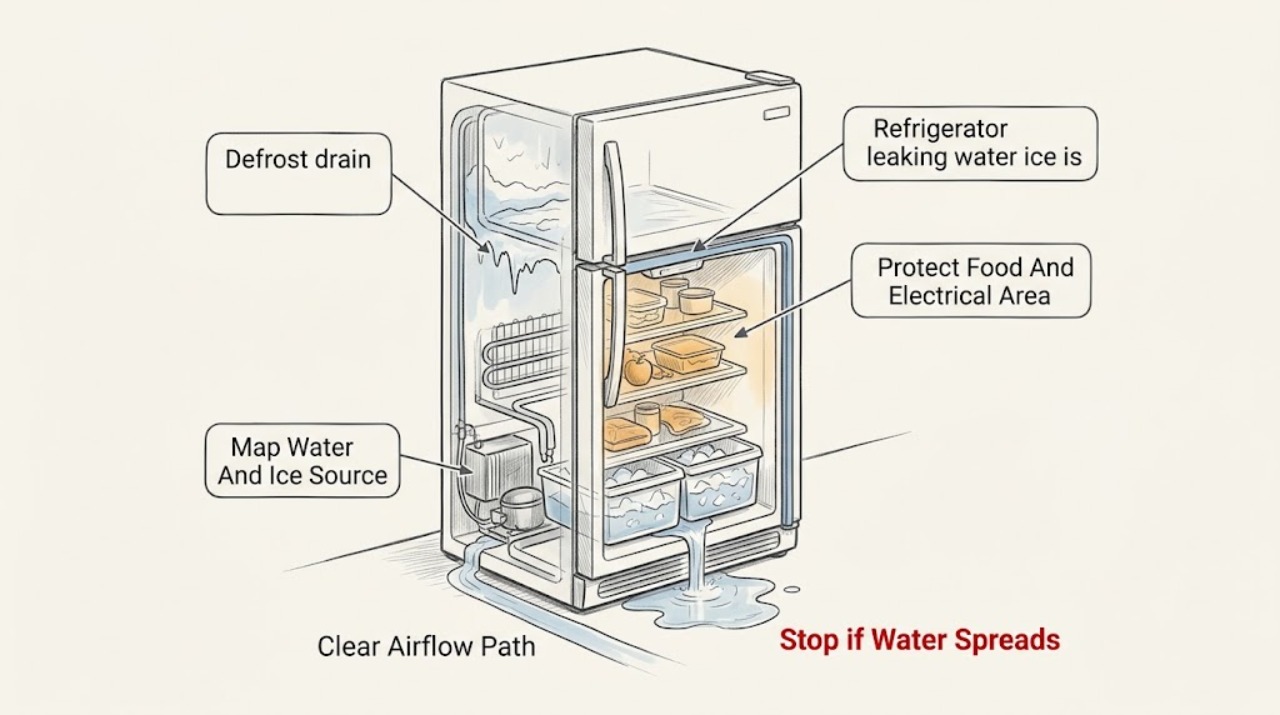
Refrigerator leaking water ice is present: What to Check and What to Do Next
When a refrigerator is leaking and ice is present, the water may be meltwater that cannot reach the drain pan because ice or debris blocks the defrost drain, or it may come from a door seal, ice maker, water connection, or another source. Move perishable food to safe cold storage, contain water from a dry position, and inspect only accessible door, food, vent, and visible tubing areas.
-
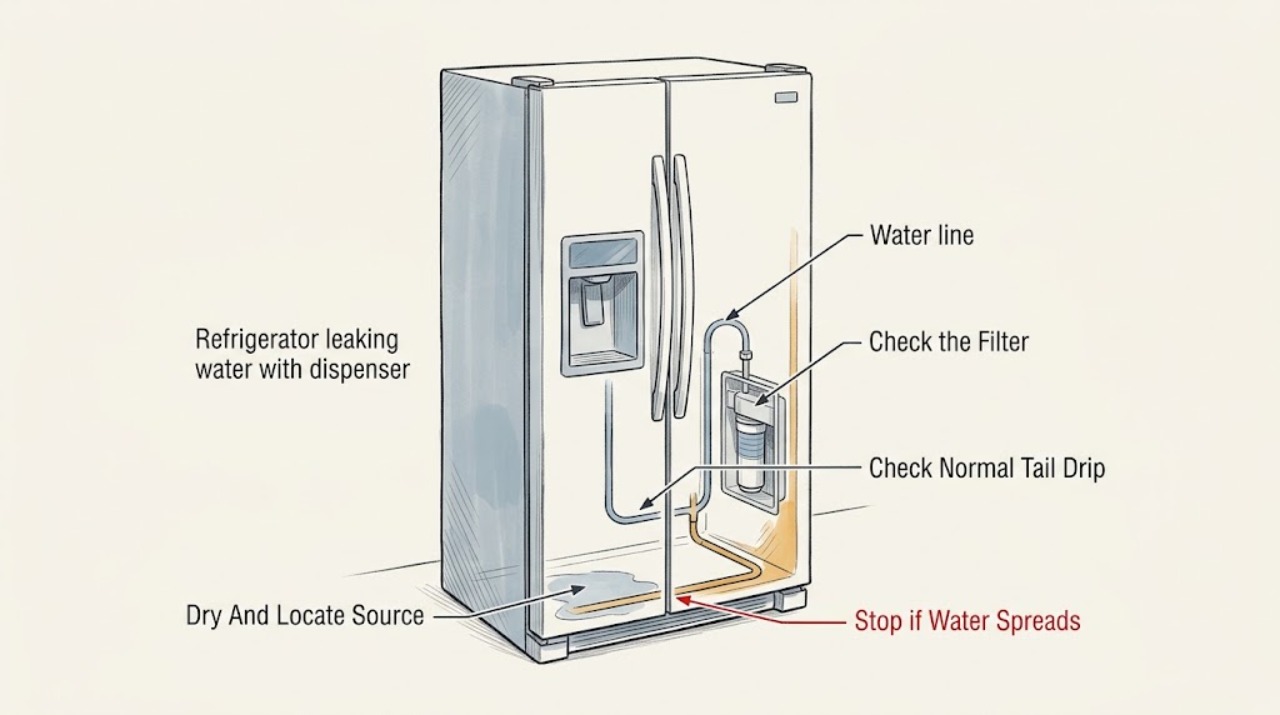
Refrigerator leaking water with dispenser possibly involved: What to Check and What to Do Next
A refrigerator dispenser can leave a few drops immediately after dispensing, but water that continues when the dispenser is idle is a leak to isolate. Dry the area, identify whether water is coming from the dispenser outlet, filter area, door tubing, rear supply line, ice chute, or inside the cabinet, and check whether the leak began after a filter change, installation, door removal, or a stuck dispenser lever.
-
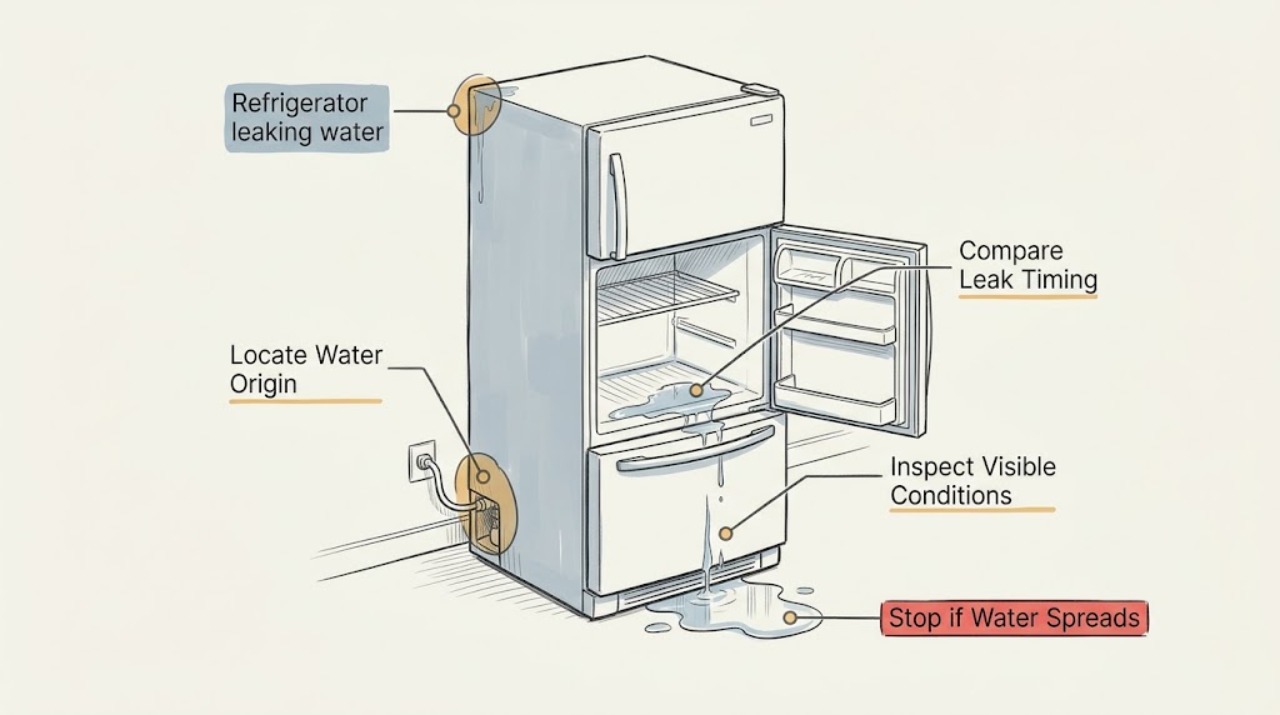
Refrigerator leaking water: What to Check and What to Do Next
First identify where the water appears and whether it follows dispenser or ice-maker use, a defrost cycle, or door opening. From a dry position, look for moisture inside the cabinet, around the door gasket, under the appliance, and at any visible water connection.
-
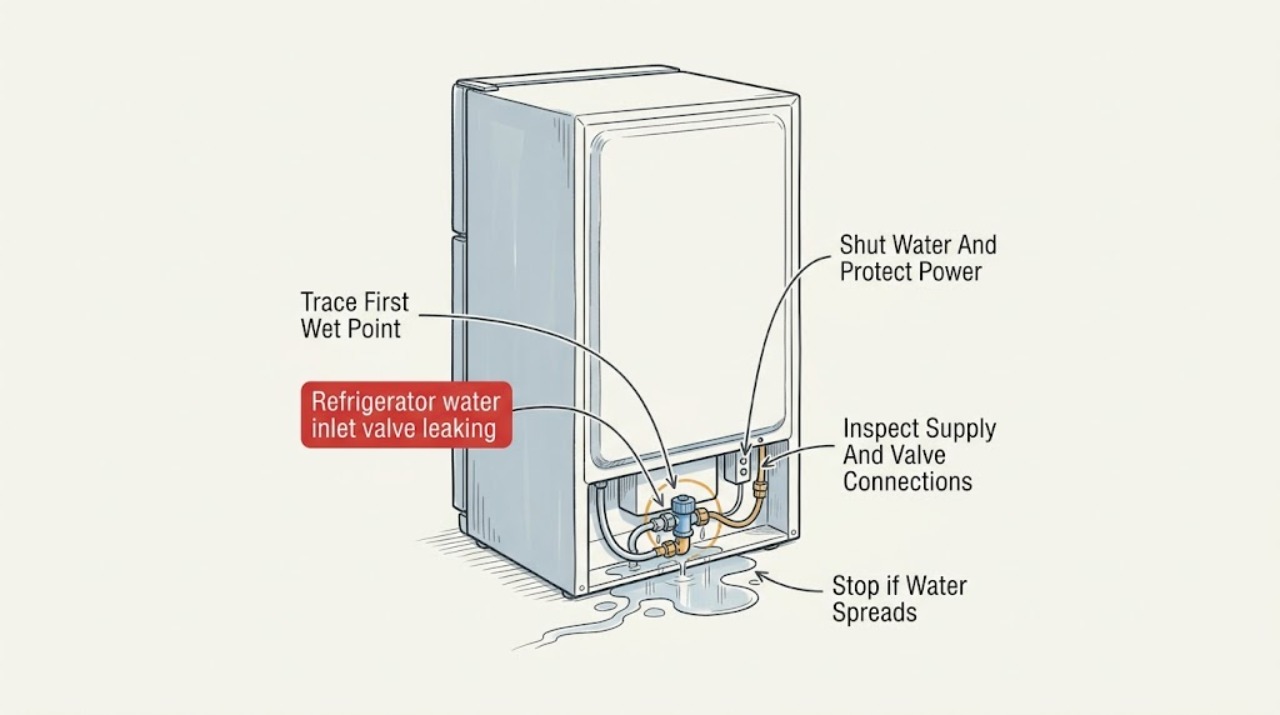
Refrigerator water inlet valve leaking: What to Check and What to Do Next
Turn off the refrigerator water shutoff valve first, then unplug the refrigerator if it is safe to do so and the floor or outlet is dry. Wipe the valve, fittings, and nearby tubing completely dry with a paper towel and trace the first point that becomes wet.
-
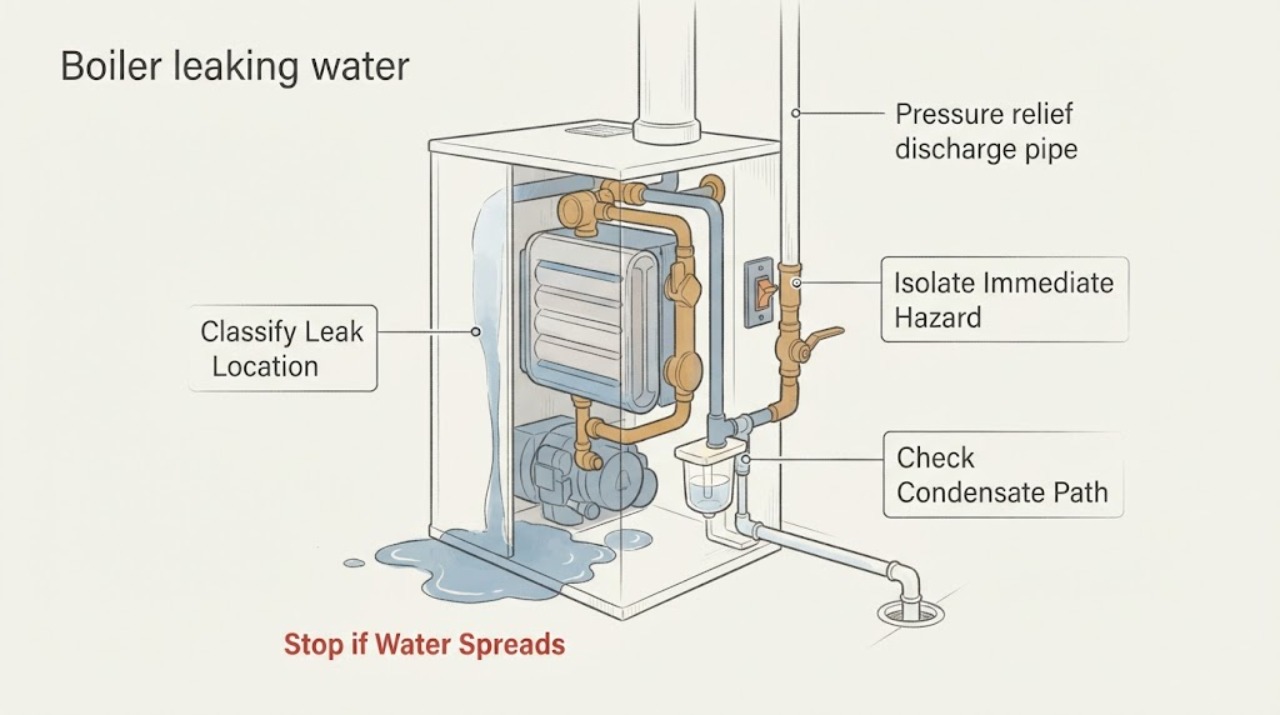
Rheem boiler leaking water: What to Check and What to Do Next
Treat water around a Rheem boiler as a source-identification and safety issue, not as a loose-fitting repair by default. From a dry, safe position, look for the first wet point: a heating-water joint or valve, the pressure-relief discharge, the condensate trap or outlet, or water emerging from the cabinet or heat-exchanger area.
-
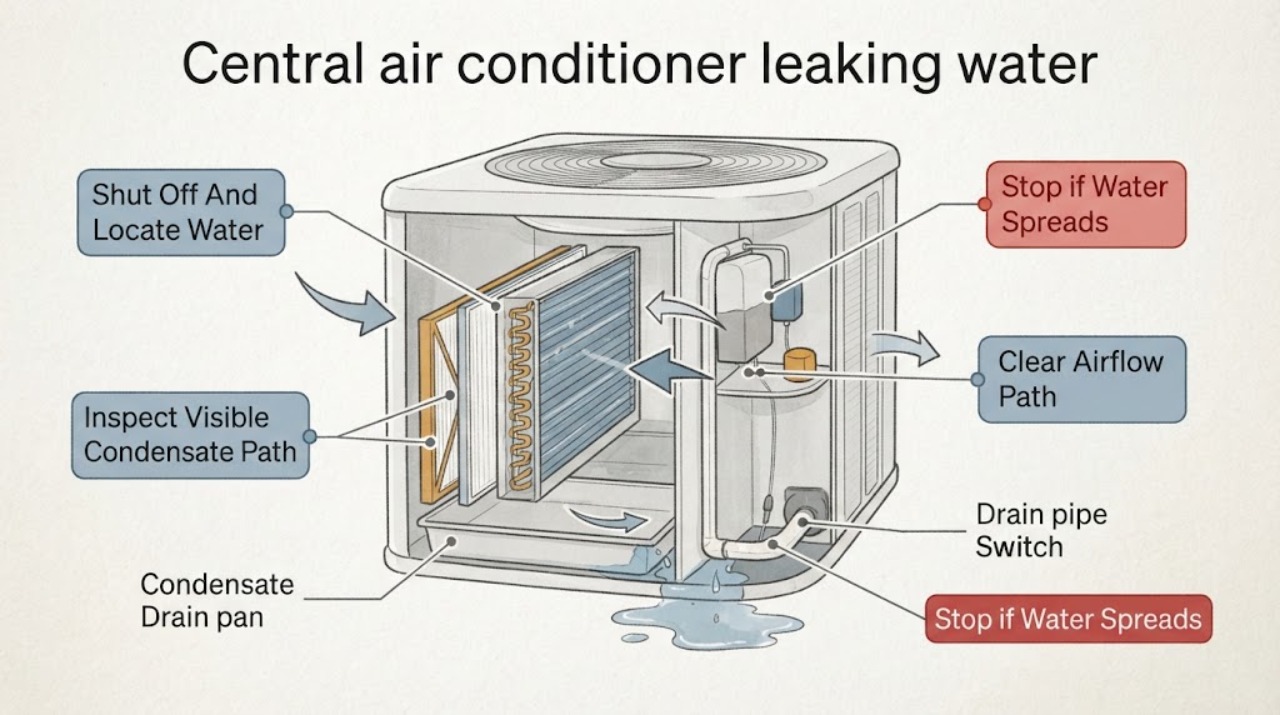
Rheem central air conditioner leaking water: What to Check and What to Do Next
If a Rheem central air conditioner is leaking water, turn cooling off first and find the first wet point: the indoor unit or pan, a visible drain line or outlet, a wet ceiling or wall, or the outdoor unit. Water during cooling can come from a restricted drain, damaged or misconfigured pan, or ice on the indoor coil that is melting; a dirty filter or blocked return can contribute to icing.
-
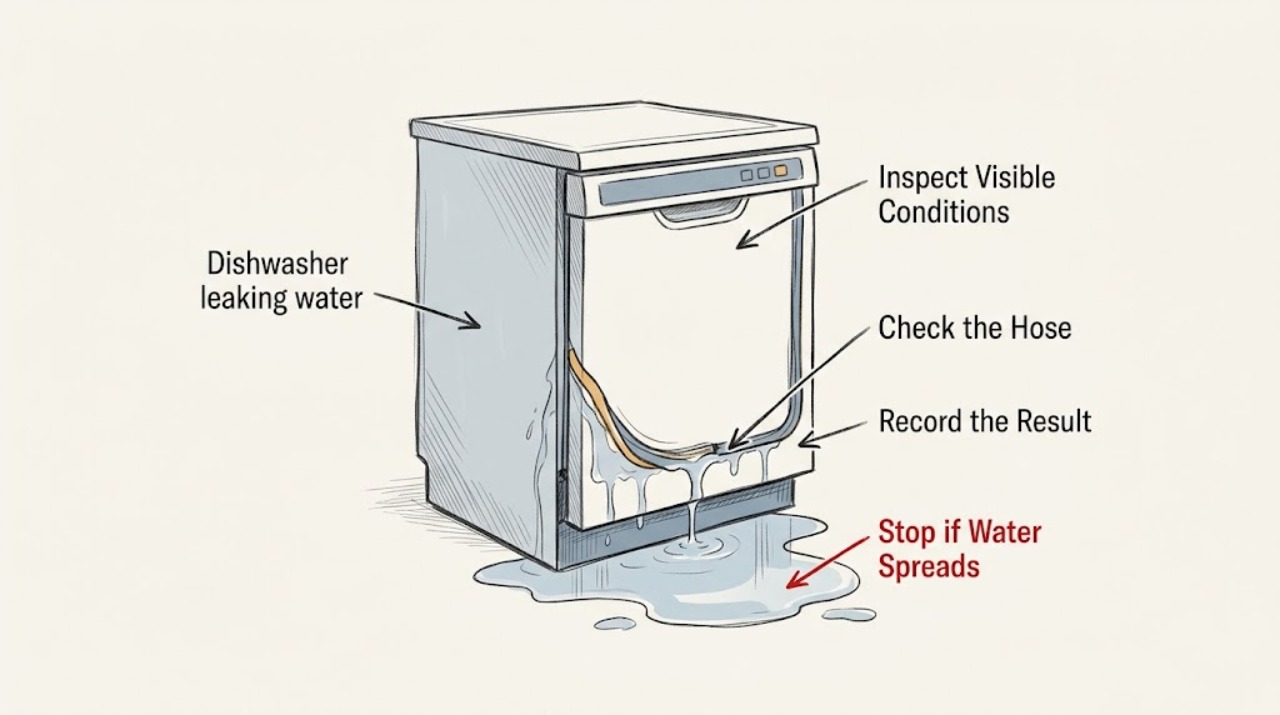
Samsung dishwasher leaking water: What to Check and What to Do Next
First determine whether the water is a spill or returns during operation. If water is actively leaking, a hose is damaged, or the dishwasher shows a leakage warning such as LE or LC, stop the cycle, turn off power at the breaker when safe, and close the water supply.
-
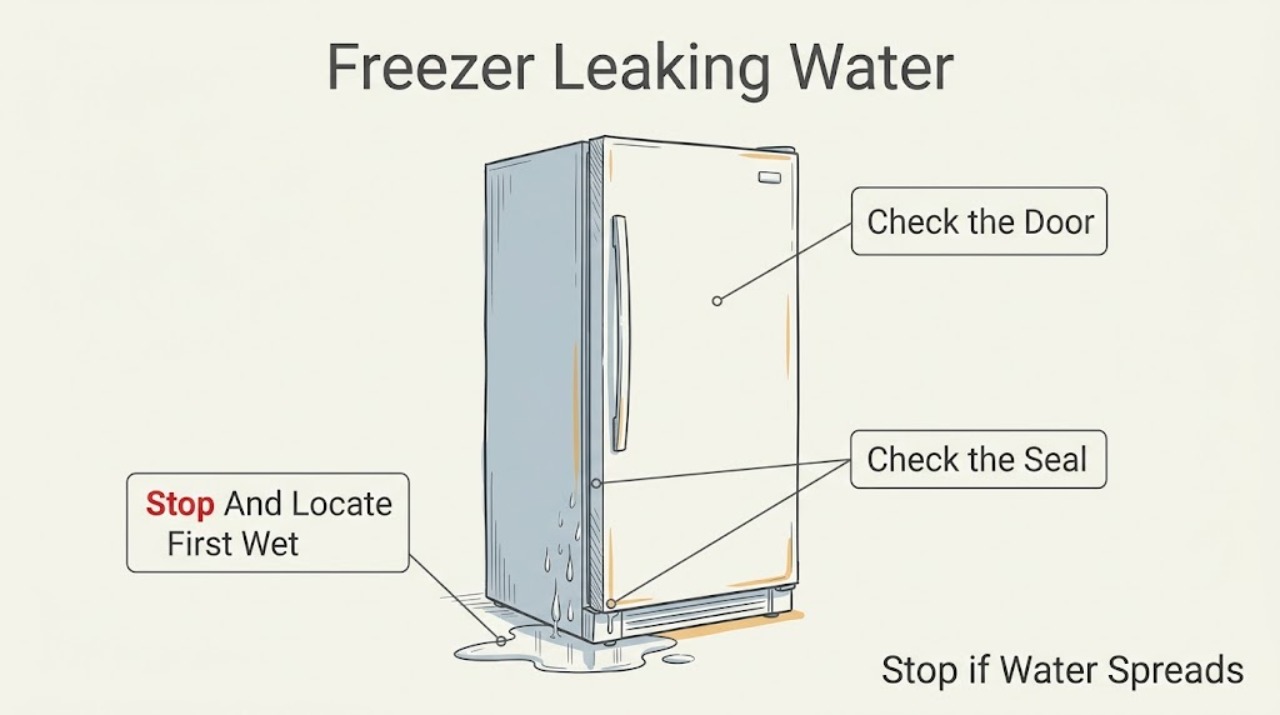
Samsung Freezer Leaking Water: What to Check and What to Do Next
Start by turning off ice making or cooling through the normal controls if water is actively leaking, and identify the first wet point before assuming the freezer itself is the source. Samsung says water under drawers or under the refrigerator can be condensation after a power interruption or a food spill, while water can also follow a blocked drain, melting frost, an ice-maker or water-line issue, or a door that is not sealing.
-
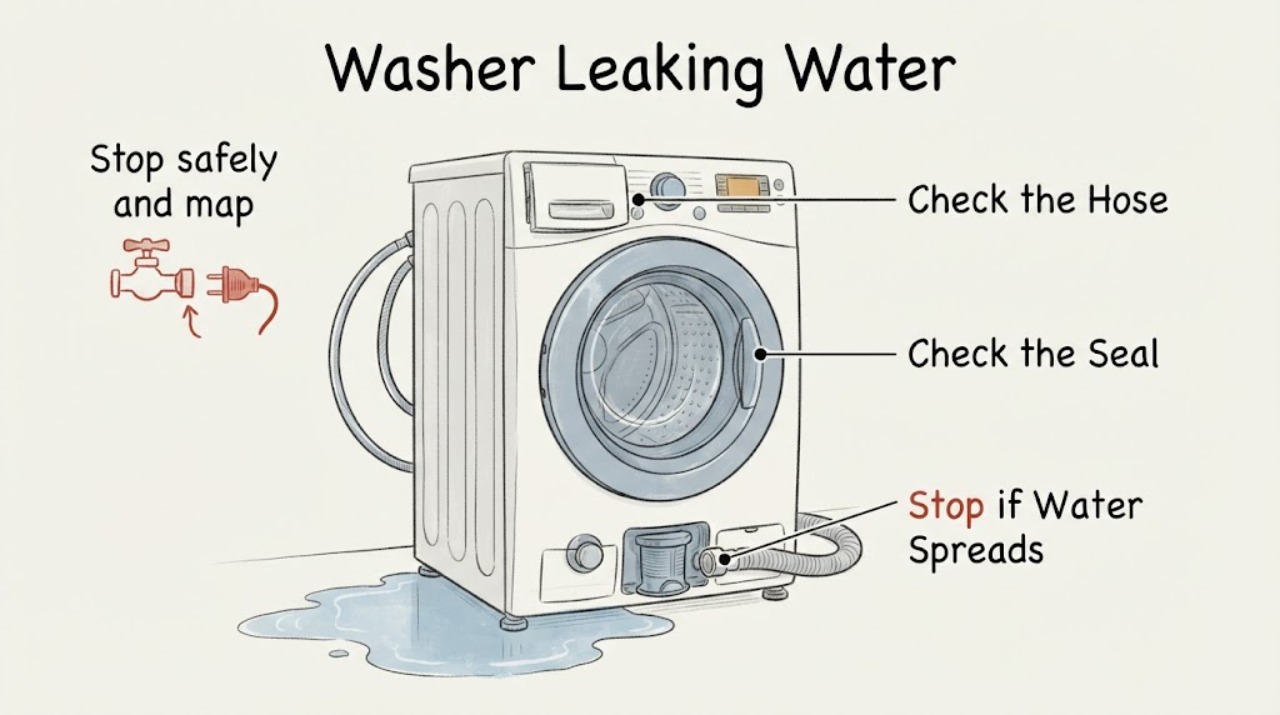
Samsung Washer Leaking Water: What to Check and What to Do Next
Stop the cycle and first determine where and when the water appears: at a supply connection before or during filling, around the front door, from the detergent drawer, from the drain hose while pumping out, or underneath the cabinet. Keep the washer off if water is near the cord, outlet, controls, or other electrical equipment; isolate power only from a safe, dry location.
-
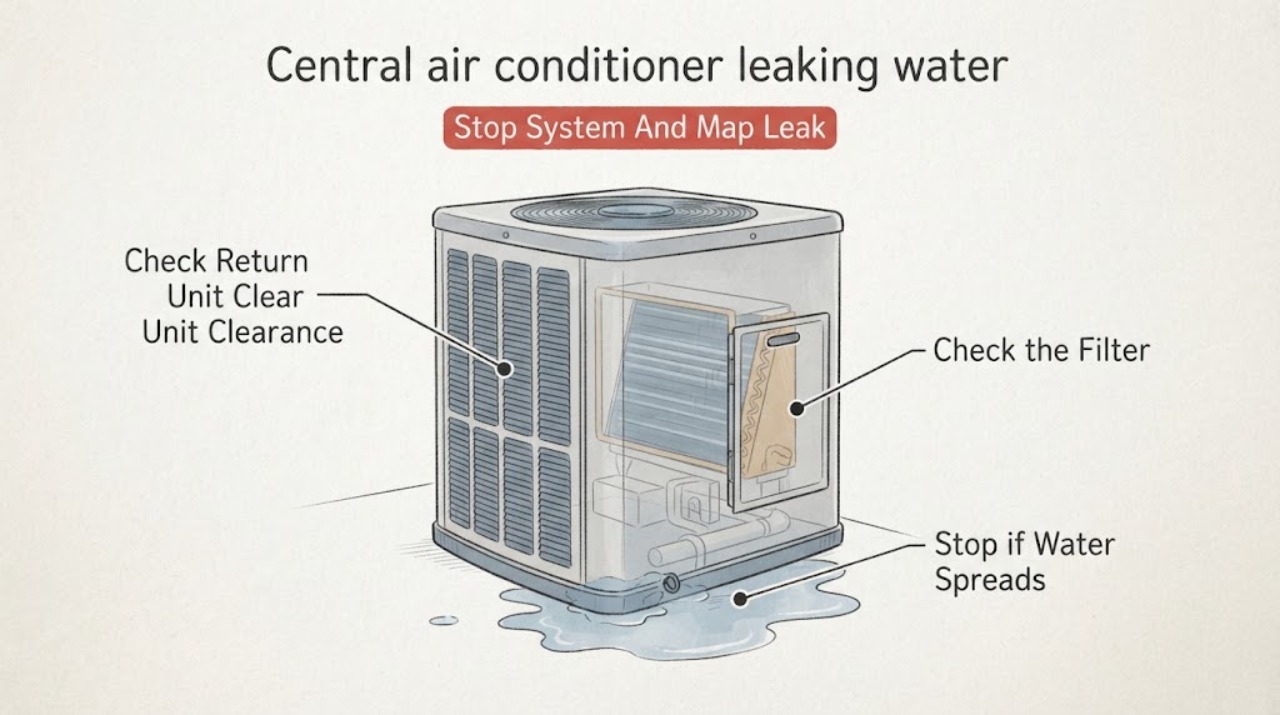
Trane central air conditioner leaking water: What to Check and What to Do Next
A Trane central air conditioner leaking water usually has a cracked, dirty, or overflowing drain pan, a clogged condensate line, or an evaporator coil that froze and is now thawing. Dirty filters, restricted return air, low refrigerant, a condensate pump or float issue, and incorrect installation can contribute.
-
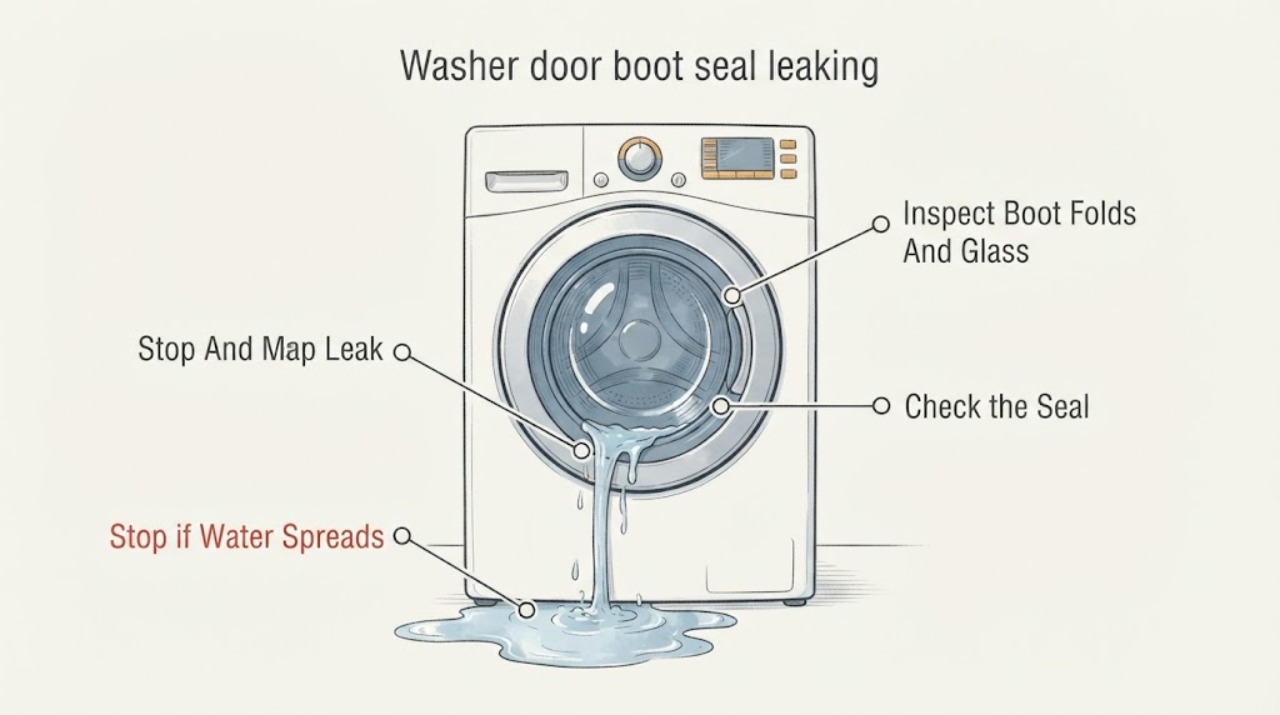
Washer door boot seal leaking water: What to Check and What to Do Next
Stop the cycle and identify whether water is escaping from the door boot seal, the dispenser, the drain-filter area, the rear hoses, or the household drain. With the washer off and the drum safe to access, inspect the rubber boot's folds, inner glass contact area, drain holes, and seal-to-door edge for hair, lint, coins, trapped fabric, detergent residue, cracks, or a section pulled out of position.
-
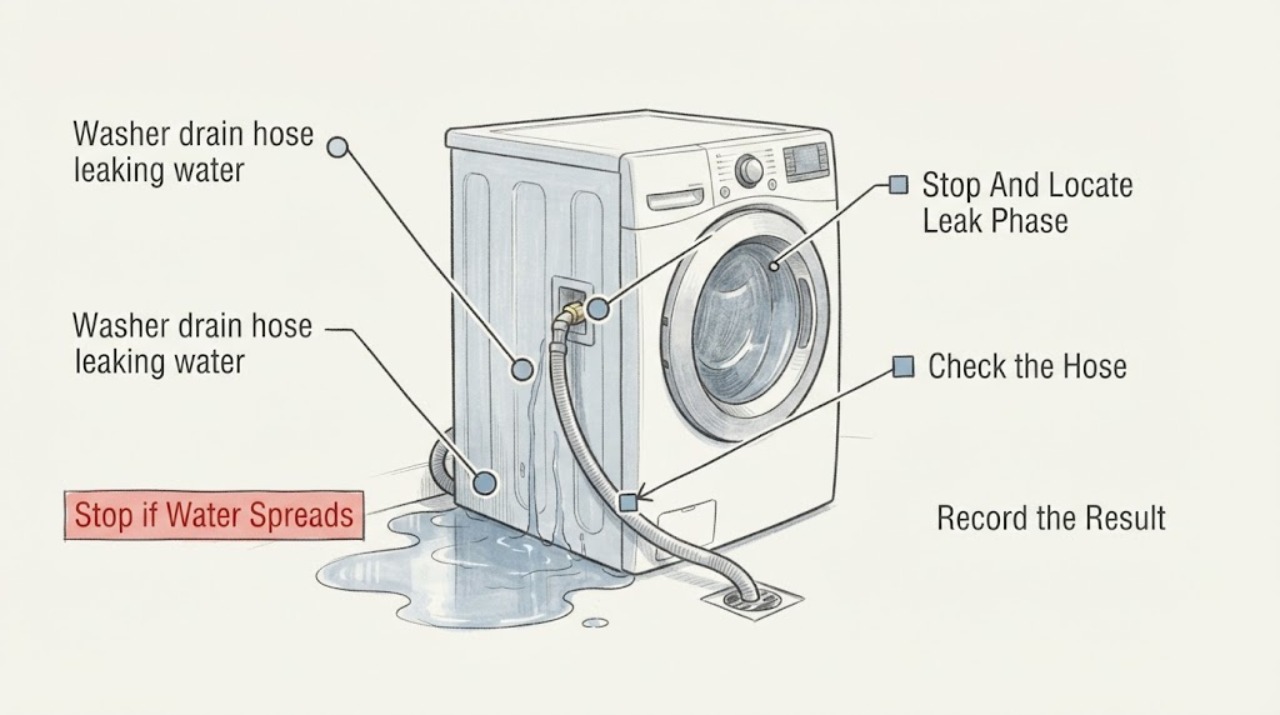
Washer drain hose leaking water: What to Check and What to Do Next
A washer drain hose can leak because the hose is cracked, pinched, or pulled loose; its holder or connection is not securing it; the hose is inserted incorrectly; or the household standpipe is restricted and overflowing. Stop the cycle, keep water away from electrical parts, and identify whether water appears from the hose body, its washer connection, the standpipe, the pump-filter area, or underneath the cabinet.
-
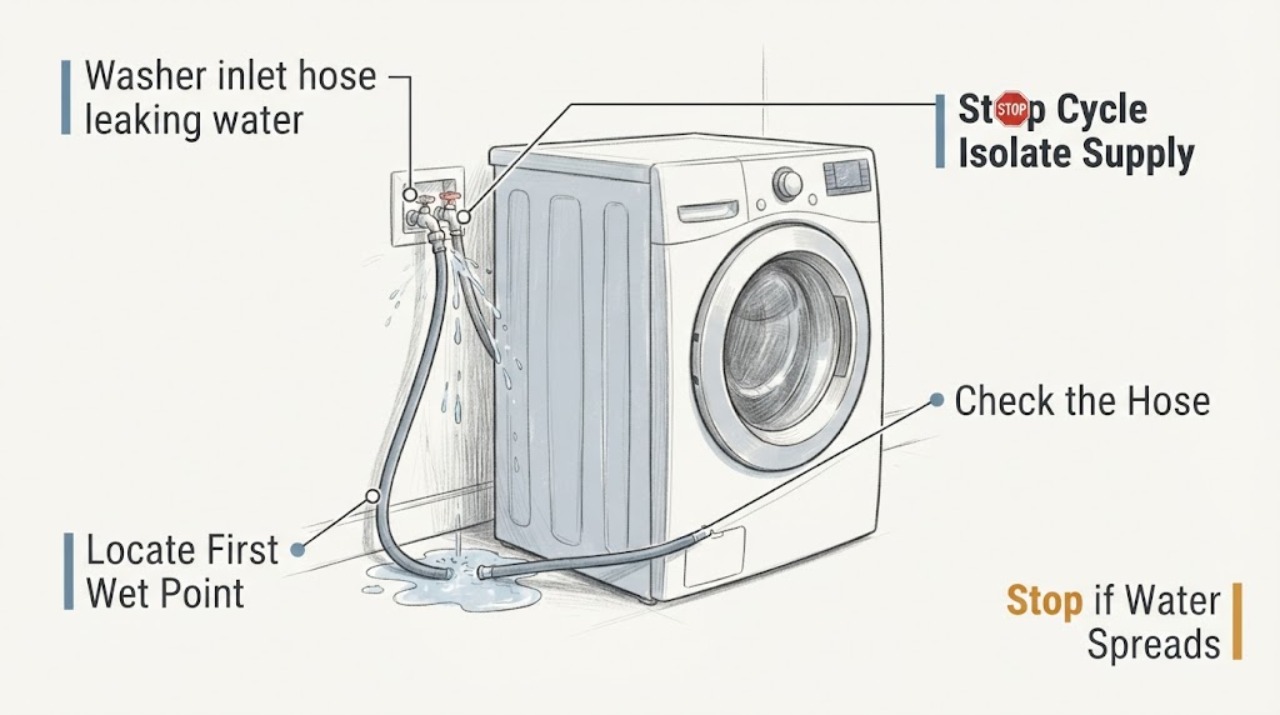
Washer inlet hose leaking water: What to Check and What to Do Next
Stop the washer, close the hot and cold supply faucets, and keep water away from the plug, outlet, and controls. Then use a flashlight to locate the first wet point: the faucet connection, either inlet-hose coupling, the hose body, or the washer's inlet valve.
-
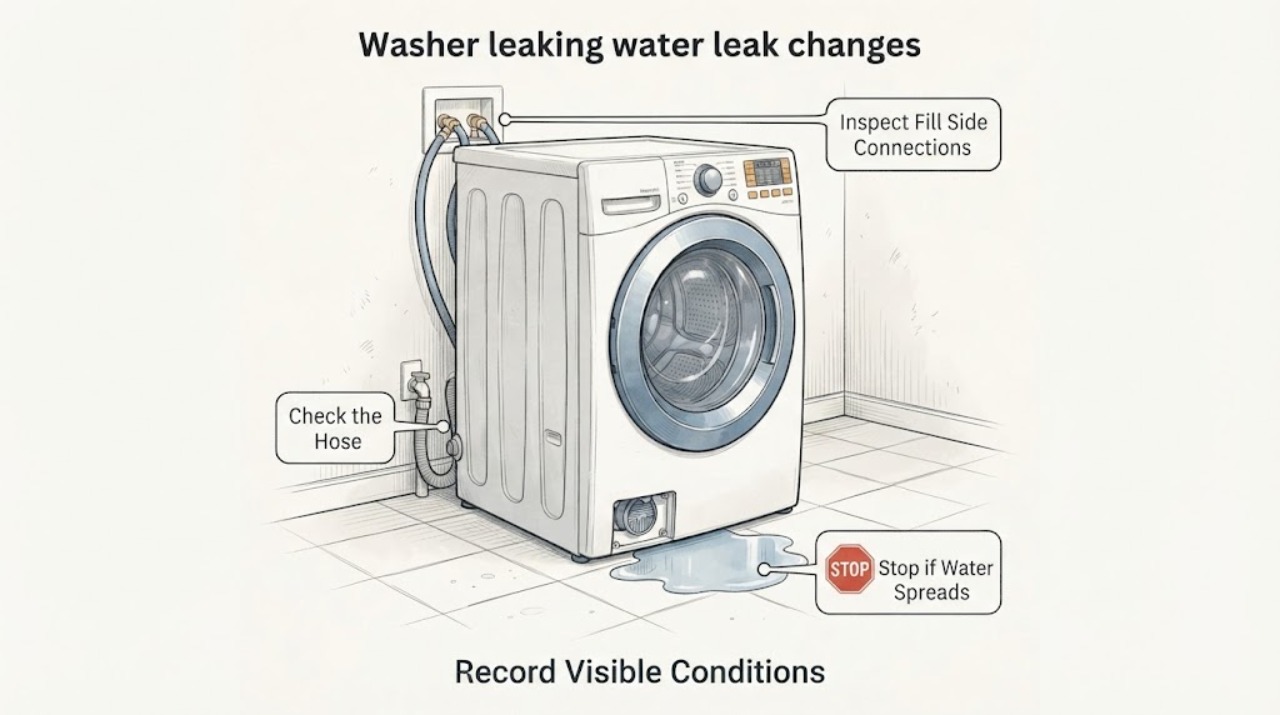
Washer leaking water leak changes with fill or drain: What to Check and What to Do Next
A washer leak that changes with filling or draining is usually tied to the phase in which water is moving. A leak during fill favors an inlet hose, tap, valve, dispenser, door seal, or excess-suds path.
-
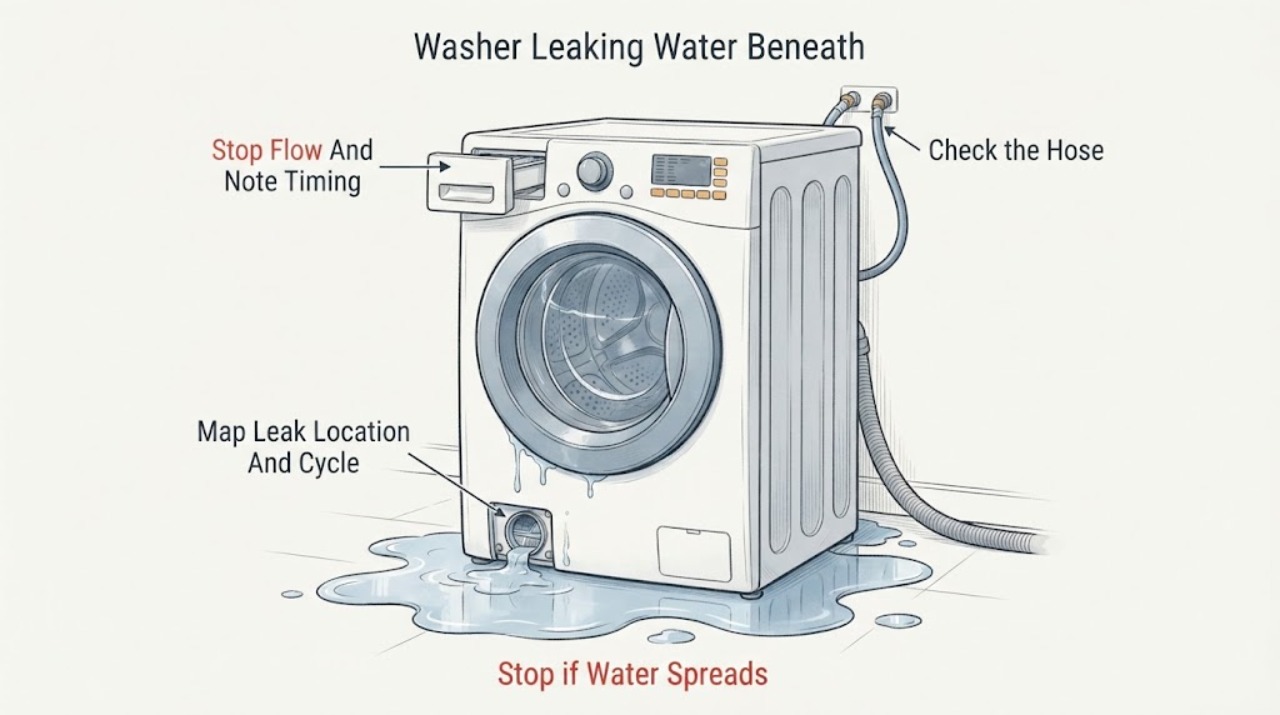
Washer Leaking Water Beneath or Around the Washer: What to Check and What to Do Next
Treat water beneath or around a washer as a source-location problem first. From a safe standing position, stop the cycle, contain the water, and turn off the household washer water valves if water is still entering.
-
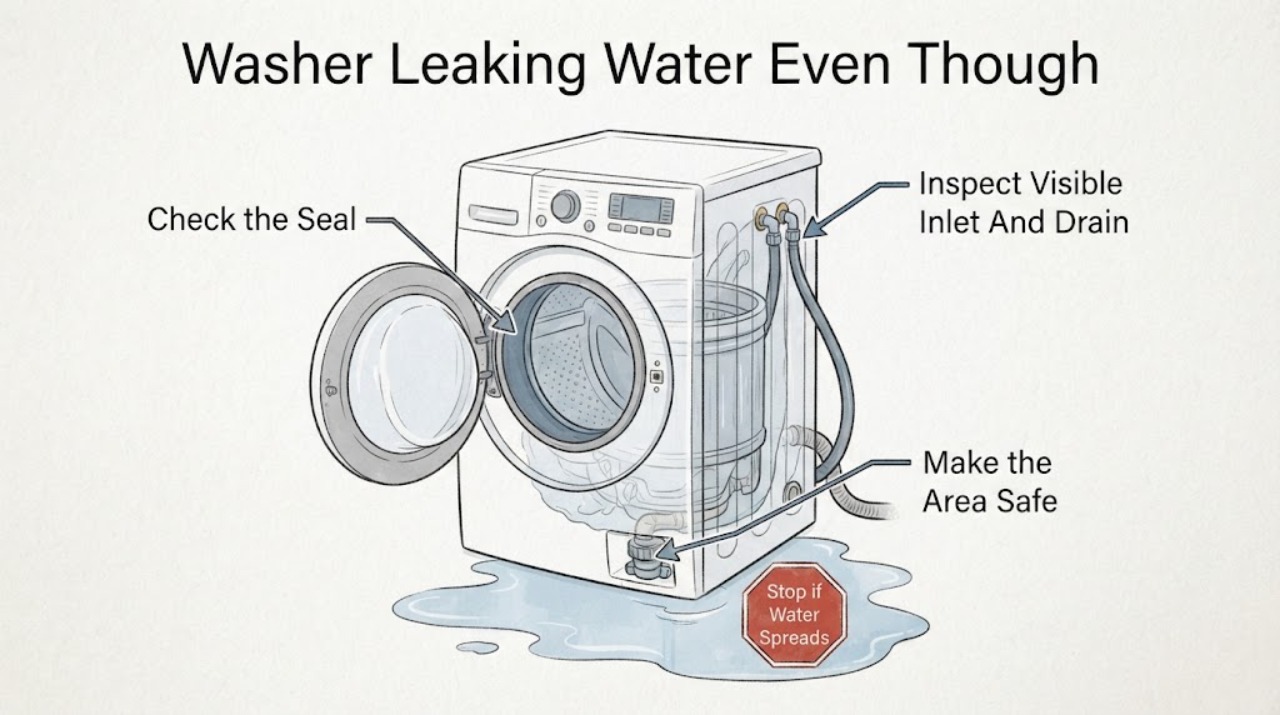
Washer Leaking Water Even Though the Door or Lid Closes
A washer can leak even when its door or lid closes because the latch does not prove that the seal, tub, hoses, or drain path is intact. Stop the cycle, keep away from pooled water, and turn the washer off from a dry position; do not touch a plug or breaker if water is near electrical parts.
-
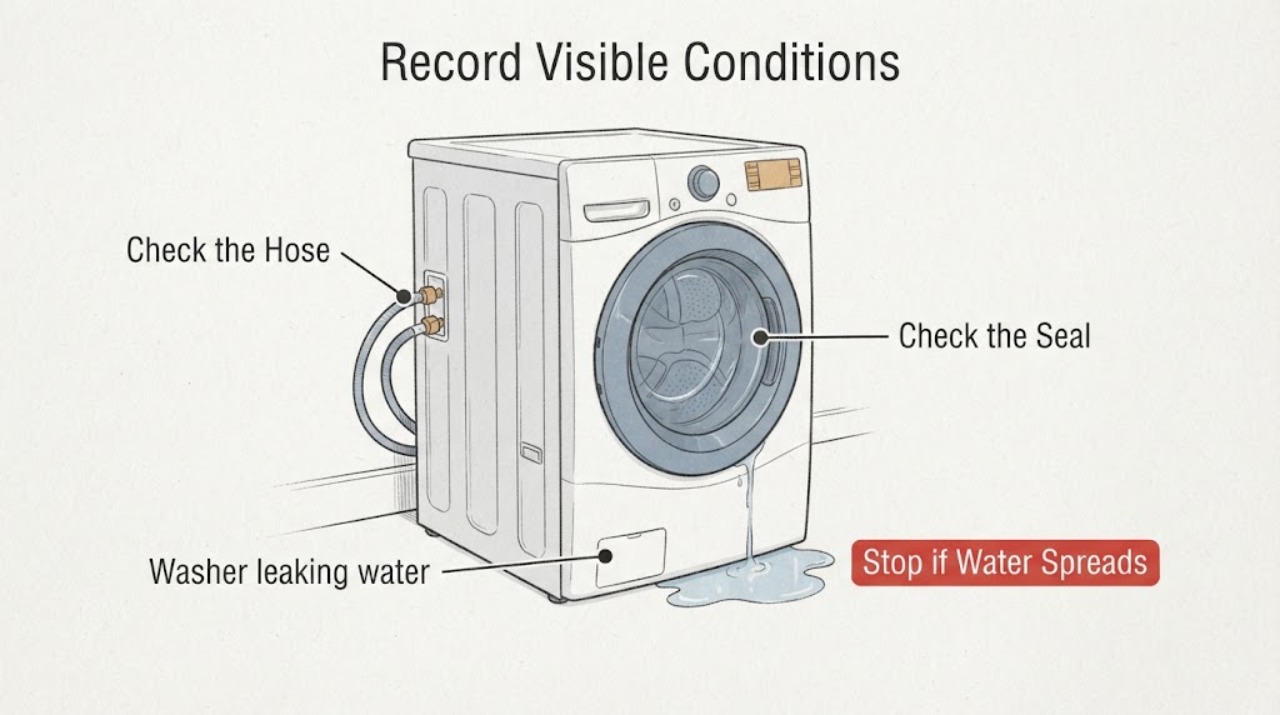
Washer leaking water: What to Check and What to Do Next
Stop the washer when you see active leaking, keep hands and feet dry, and do not unplug it while standing in water. From a dry position, note whether the leak starts during filling, washing, draining, or spinning, and whether water appears at the front, rear, underneath, dispenser, door seal, inlet hoses, drain hose, or household standpipe.
-
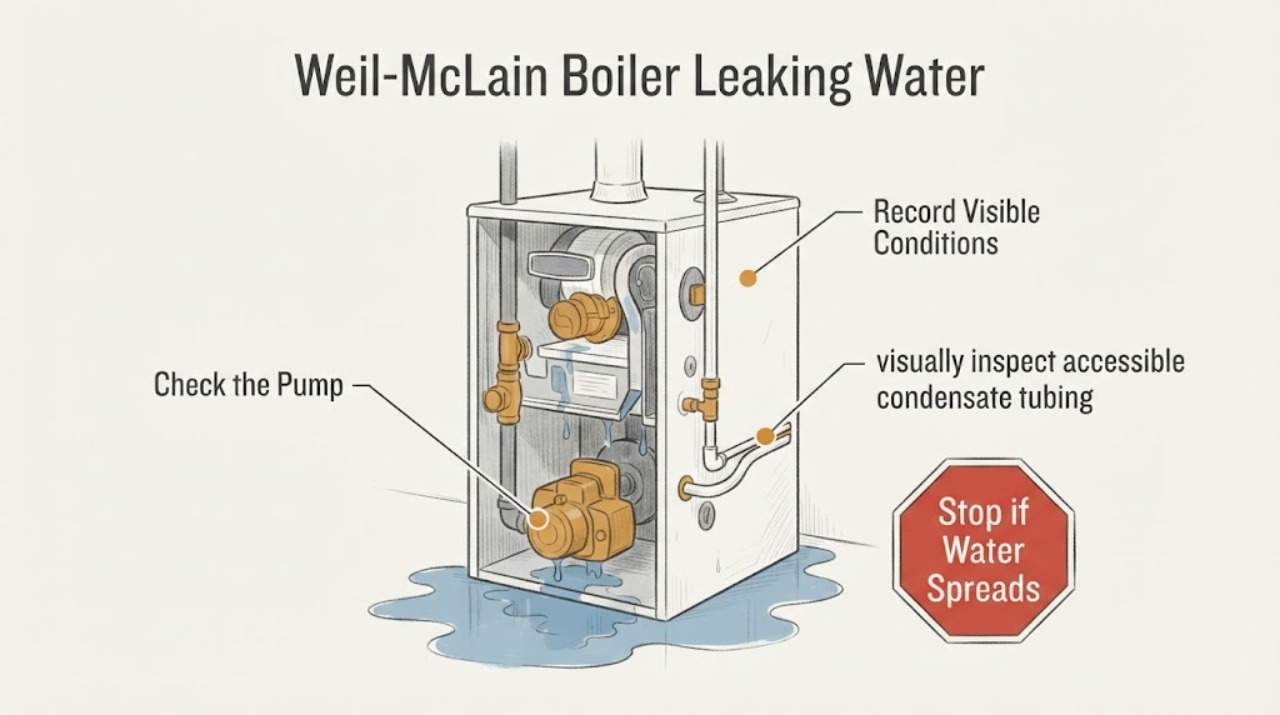
Weil-McLain Boiler Leaking Water: What to Check and What to Do Next
Treat water around a Weil-McLain boiler as a system problem, not as proof that one part needs replacement. If it is safe to do so, photograph the wet area and visually trace the highest accessible point around the boiler, piping, valves, pump, radiators, baseboards, and—on a high-efficiency unit—the condensate drain.
-
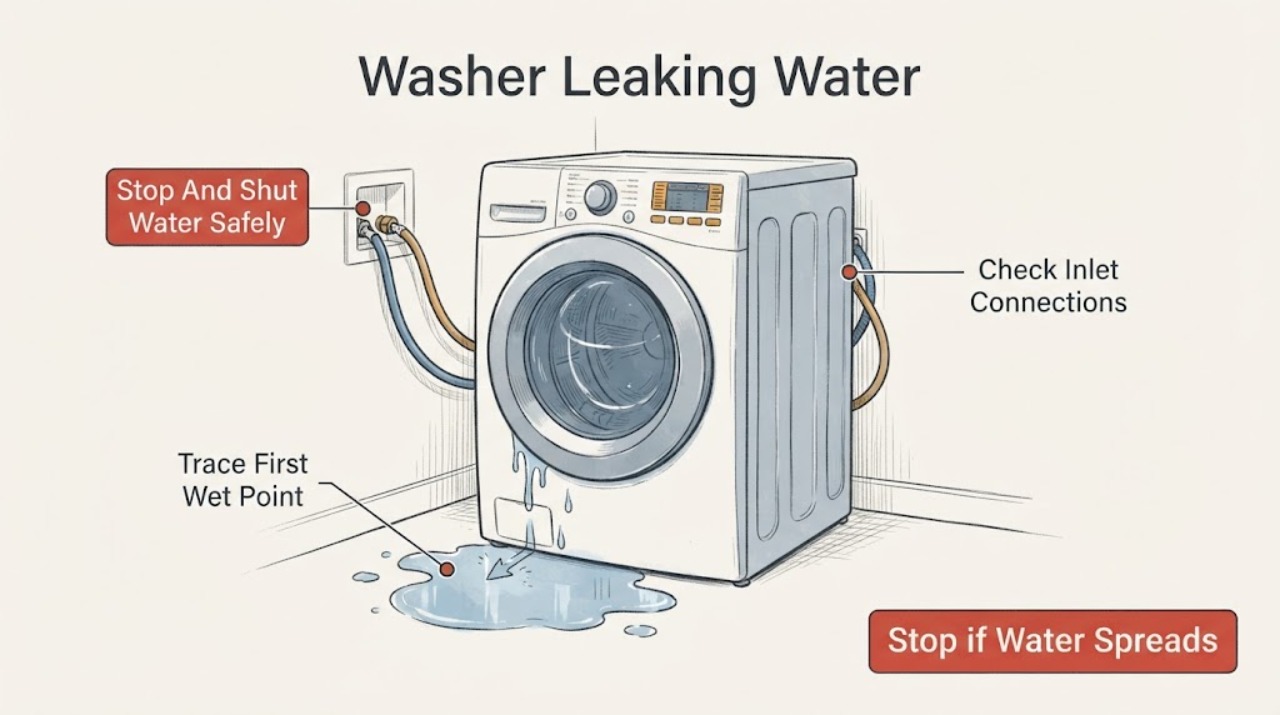
Whirlpool Washer Leaking Water: What to Check and What to Do Next
Stop the Whirlpool washer and keep water away from the cord, outlet, controls, and other electrical connections. From a safe, dry position, close the wall water valves and note the first wet point rather than judging by the largest puddle.
-
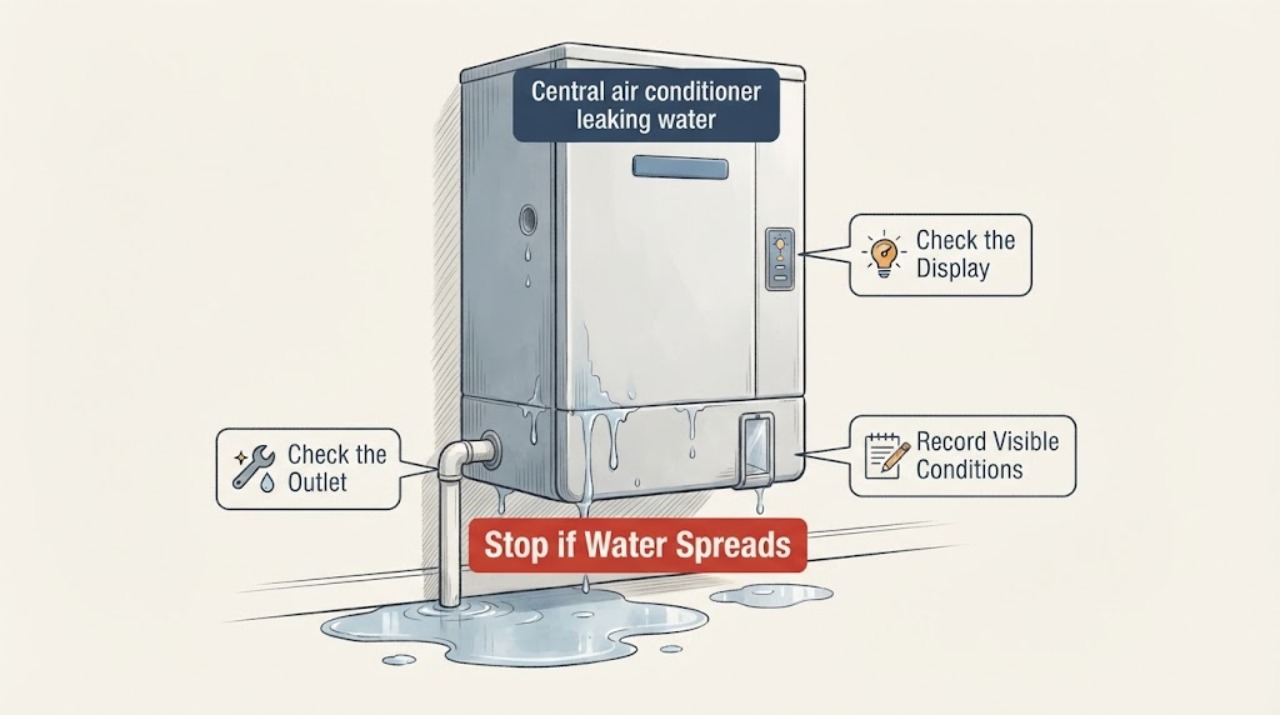
York central air conditioner leaking water: What to Check and What to Do Next
A York central air conditioner that leaks water may have a blocked or poorly draining condensate line, a damaged pan, a condensate pump or overflow-control problem, or a frozen evaporator coil releasing water as it thaws. Turn cooling off when water is pooling, near electrical equipment, or reaching a ceiling or wall.