
On this page
Start here
Quick answer
Do not assume that a Sub-Zero 48-inch refrigerator has a failed freezer-wall insulation layer just because water or frost is present. First switch off the affected unit if water is near electrical parts, protect the floor and food, and record whether the water is inside under drawers, on the freezer floor, at a door gasket, below the cabinet, or at a water connection. Sub-Zero says standing water or ice in a drain trough or tube can cause water to reach a gasket and drip when the door opens, and a frozen freezer drain tube can create ice on the freezer floor. Check only accessible drawers, gasket condition, visible drain or filter areas, and external water connections; persistent leaks, heavy frost, cabinet-wall damage, or an unidentified source require Sub-Zero Factory Certified Service.
Before you begin
Safety first
- Do not remove freezer liners or wall panels, drill or scrape the cabinet, apply spray insulation, disconnect internal water tubing, use live electrical tests, or repeatedly run a leaking unit. Keep water away from electrical parts and use Factory Certified Service for concealed or cabinet-level work.
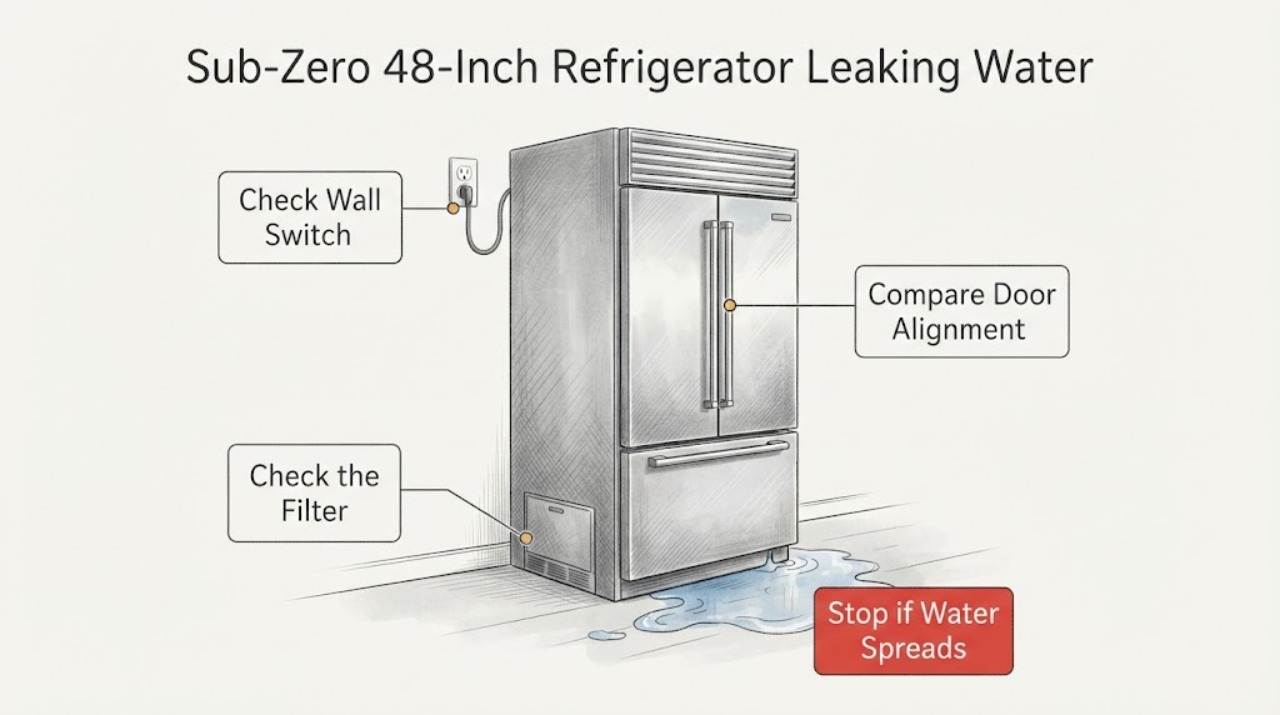
Work through in order
Diagnostic checks
Use only checks that match the exact appliance or system and its official guide.
-
Check 1
From a dry, safe position, switch off the refrigerator or freezer section if the controls allow it and isolate power before water can reach a plug, outlet, wiring, or other electrical part. Protect the floor and move only food that can be removed without disturbing panels or plumbing.
Expected result: Water is near electrical parts, the leak is actively spreading, or the water is contained inside a drawer, trough, or floor pan.
Next step: Keep the unit out of service until the area is dry and the source is controlled. Do not reconnect it to repeat a leak test when water is near electrics.
Why this matters
Why: Water near electrical components is a stop condition. Contained water still needs its source located, but it does not prove an insulation defect.
-
Check 2
Map where the water first appears: inside under the crisper drawers, on the freezer floor, at a door or drawer gasket, below the cabinet, at the water filter/dispenser area, or at an external supply connection. Remove only accessible drawers or shelves needed to see the area; do not remove a wall, liner, drain pan, or water fitting.
Expected result: Water or ice is concentrated along a back-wall drain path, against a gasket, on the freezer floor, below the cabinet, or at a water component; alternatively, the source cannot be seen.
Next step: Photograph the first wet location and note whether frost, ice, or condensation is present. Use the matching series guidance only for accessible checks and provide the location to Factory Certified Service.
Why this matters
Why: Sub-Zero groups leak troubleshooting by source location. A drain or gasket path may explain water without confirming insulation failure, while an unseen source needs a service inspection.
-
Check 3
With the unit safe and the door or drawer closed, inspect the accessible gasket around the leaking section for rips, gaps, dirt, or a section that does not contact the frame. Check whether food or a drawer prevents full closure; do not force the door or adjust hinges.
Expected result: The gasket is torn or visibly open, the door/drawer does not close evenly, or the seal looks intact and the door closes normally.
Next step: Clean only accessible residue as directed by the exact Use and Care Guide. If the gasket is damaged, the cabinet is warped, or the seal remains open, stop and request service rather than fitting a generic gasket.
Why this matters
Why: Sub-Zero treats door/drawer closure and gasket damage as contributors to frost, condensation, and water. A sound seal does not rule in wall insulation or rule out a drain issue.
-
Check 4
If frost or ice is visible on a back wall or freezer floor, record its extent and whether a drain opening or trough is visibly accessible for the exact series. Clear only loose standing water or ice that the matching Sub-Zero guide identifies as user-accessible; do not drill, scrape the liner, inject hot water, use spray insulation, or dismantle the freezer wall.
Expected result: The exact guide identifies an accessible drain path, or ice/frost is heavy, recurring, behind a liner, or unrelated to an accessible drain.
Next step: Use the exact series drain procedure only when it is explicitly applicable. For heavy, recurring, concealed, or cabinet-wall frost and any insulation or panel concern, leave the unit off as needed and contact Factory Certified Service.
Why this matters
Why: A frozen or clogged drain can produce water or floor ice, while recurring or concealed ice may need a series-specific diagnosis. Neither observation proves the insulation has broken down.
Use your observations
Decision map
Find the observation that best matches what you see, then follow the next safe action.
-
PATH 01Next step
What you see
Water first appears under crisper drawers or on the refrigerator floor, with condensation, ice, or standing water near the back-wall drain path.
Do this next
Clear only accessible standing water or ice and use the exact series drain guidance. If the source returns or the drain is not accessible, arrange Factory Certified Service.
Why this path and its safety boundary
Why it matters: Sub-Zero identifies drain trough/tube debris or ice as a possible path for water to reach the door gasket and floor; this pattern is not proof of freezer-wall insulation failure.
-
PATH 02Next step
What you see
Ice or water is on the freezer floor, or the freezer wall has heavy or recurring frost, while the door/gasket condition is uncertain.
Do this next
Check closure and gasket condition without removing panels; keep the unit out of service if water reaches electrical areas and request service for recurring, concealed, or heavy icing.
Why this path and its safety boundary
Why it matters: A frozen freezer drain tube or an air leak around the door/drawer can create floor ice or frost. The title's insulation explanation remains unverified.
-
PATH 03Next step
What you see
Water appears at a filter/dispenser or external water connection, or the leak is below the cabinet rather than inside a drain area.
Do this next
If safe, close the accessible water shutoff, keep the appliance dry and unplugged where needed, and contact service or a plumber for the supply connection. Do not remove water valves or tubing.
Why this path and its safety boundary
Why it matters: This is a water-supply or component-location branch, separate from a claimed freezer-wall insulation failure.
-
PATH 04Next step
What you see
The leak source cannot be located, the cabinet or freezer wall appears damaged, insulation is exposed or saturated, or water returns after an accessible drain/gasket check.
Do this next
Do not apply spray insulation, remove the liner, drill the cabinet, or continue repeated defrost tests. Document the model/serial, first wet location, frost pattern, and photos, then request Factory Certified Service.
Why this path and its safety boundary
Why it matters: The remaining claim is an internal or cabinet-level diagnosis outside safe user inspection; Sub-Zero directs unresolved leaks to Factory Certified Service.
Helpful context
Understand the symptom
A leak does not prove insulation failure
The supplied title describes freezer-wall insulation as though it has already broken down, but that is a hypothesis rather than an externally confirmed diagnosis. Sub-Zero's own leak guide lists several locations and directs the owner to follow a series-specific drain path. Frost on a wall, water on a floor, a gasket drip, thermal mastic, and a cabinet-wall defect are different observations; record the location before choosing a repair route.
Use the exact series guide for drain access
Sub-Zero says a drain trough or tube may be visible on some 200, 300, 500, and 600 Series units, while 700, Classic, Designer, 400, and 648PRO products use different drain guidance. A generic 48-inch label does not identify that series or authorize removing a freezer wall. Clear only standing water or ice that the exact guide identifies as accessible, and stop if the drain or wall requires disassembly.
Inspect the seal and visible water path before service
Sub-Zero's integrated and 700 Series guides ask owners to verify that doors or drawers close properly and that gaskets have no rips or tears. The leak guide also distinguishes water under crisper drawers, water at a gasket, leaks below the unit, and leaks from water-related components. These checks can narrow the service report, but they cannot establish whether insulation inside a freezer wall is saturated or broken down.
When checks do not resolve it
Need a professional?
Contact Factory Certified Service when water returns after accessible checks, the leak source is hidden, frost or ice is heavy or recurring, a gasket or cabinet wall is damaged, or insulation is exposed or suspected. Close an accessible water shutoff when a supply leak is present.
Safety scope: Do not remove freezer liners or wall panels, drill or scrape the cabinet, apply spray insulation, disconnect internal water tubing, use live electrical tests, or repeatedly run a leaking unit. Keep water away from electrical parts and use Factory Certified Service for concealed or cabinet-level work.
Have this ready
- Provide the exact model and serial number, series if known, installation date, first wet location, whether water appears only when a door opens, frost/ice pattern, gasket condition, water-line or filter observations, and photos taken with power safely isolated.
Common questions
FAQ
Does water from a Sub-Zero freezer prove that the wall insulation has failed?
No. Sub-Zero lists drain trough or tube ice, gasket paths, water components, and leaks below the unit among possible locations. Freezer-wall insulation failure requires a model- and technician-specific diagnosis; do not apply foam or open the liner from the symptom alone.
What should I check first when water appears inside the refrigerator?
Record where it first appears, then inspect accessible condensation, frost, standing water, and ice around the back-wall drain path and under drawers. Sub-Zero says a clogged or frozen drain can allow water to reach the gasket and floor; use the exact series guide before attempting any cleaning.
Can I scrape the freezer wall or add insulation myself?
No. Scraping, drilling, spray insulation, or removing a liner can damage refrigeration, wiring, drains, and the cabinet seal. Keep the unit off if water or heavy ice creates a safety concern and use Factory Certified Service for concealed wall or insulation questions.
What if the water seems to come from the door gasket?
Check whether the door or drawer closes fully and whether the gasket has a rip, gap, dirt, or obstruction. Sub-Zero treats closure and gasket condition as relevant frost and condensation checks, but a damaged cabinet or recurring water still requires service rather than a generic gasket or insulation part.
Read the exact guide
Official sources
- Contact Sub-Zero, Wolf, and Cove for 24/7 Customer CareSub-Zero · Opened Sub-Zero's official Product Support page. It directs owners to product information, use-and-care resources, and Factory Certified Service providers. It supports the escalation boundary for hidden leaks, insulation, and cabinet work.
- Integrated Use and Care GuideSub-Zero · Opened the official Sub-Zero integrated refrigeration guide. It supplies a second explicitly scoped family example for closure/gasket checks, heavy icing, and service, and is not used to infer the assigned 48-inch configuration.
- Water Leaking from Sub Zero | How to Guide | Quick AnswersSub-Zero · Opened Sub-Zero's official leak guide. It groups causes by leak location, instructs owners to inspect accessible condensation/frost/water near drawers, identifies drain trough/tube and frozen freezer-drain possibilities, and sends unresolved leaks to Factory Certified Service. It does not diagnose the assigned freezer-wall insulation claim.
- Sub-Zero Thermal Mastic Leaking On Floor | How to GuidesSub-Zero · Opened Sub-Zero's official thermal-mastic guidance. It distinguishes brown grease or yellow insulation-like material leaking from the door/face-frame area from a diagnosis of freezer-wall insulation breakdown. It is used to prevent conflating visible residue with the assigned hypothesis.
- CL4850SID/S Quick Reference Guide - Standard InstallationSub-Zero · Opened Sub-Zero's official 48-inch Classic side-by-side refrigerator/freezer quick-reference PDF. It identifies the 48-inch side-by-side refrigerator/freezer and model CL4850SID/S; it establishes the compiled model family only and does not diagnose the leak or insulation hypothesis.
- Integrated Refrigeration Use & Care GuideSub-Zero · Opened the official Sub-Zero 700 Series use-and-care PDF. It is used as a clearly scoped series example for door/drawer closure, gasket damage, heavy icing, and certified-service limits; it is not treated as proof that the unspecified 48-inch unit is a 700 Series model.
Community feedback
Share a repair observation
Share a plain-text repair observation. Accepted observations are published automatically; this page may take a moment to update.