
On this page
Start here
Quick answer
First distinguish normal warmth at the mullion or frame from cabinet-wide heat with rising food temperature. Check door seals, vents, grille clearance, and permitted condenser cleaning; persistent heat with poor cooling requires refrigeration service.
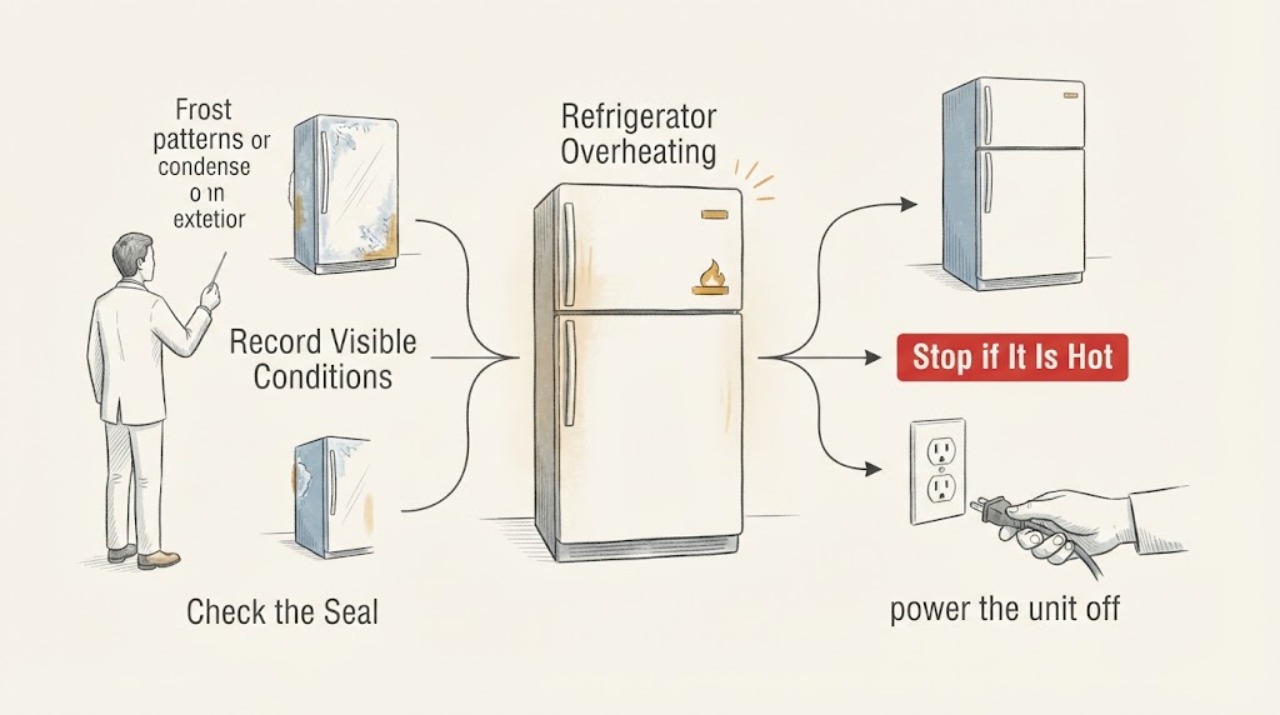
Work through in order
Diagnostic checks
Use only checks that match the exact appliance or system and its official guide.
-
Check 1
Identify where the refrigerator feels hot and whether the cabinet is cooling normally; keep clearance around vents and record any temperature alarm.
Expected result: Warmth is limited to the mullion/frame, the entire cabinet is unusually hot, or the food compartment is also warming.
Next step: Continue with airflow and door checks, protecting food if compartment temperature rises.
Why this matters
Why: A warm mullion can be a normal anti-condensation heat loop; cabinet-wide heat plus cooling loss points to airflow or refrigeration trouble.
-
Check 2
Check that doors close fully, gaskets seal, and no food blocks interior vents or the base grille.
Expected result: The seal is continuous and vents/grille are clear, or a gasket, door, or grille is obstructed.
Next step: Correct only the load or clearance issue and allow time to stabilize; arrange service for a damaged gasket or persistent heat.
Why this matters
Why: Poor sealing or blocked airflow makes the system work harder and can increase exterior heat.
-
Check 3
If the model guide permits user-accessible condenser cleaning, power the unit off and vacuum dust/lint with a soft brush; then monitor for up to 24 hours.
Expected result: Heat and cooling improve, or the compressor continues running and the cabinet remains hot.
Next step: Do not open sealed-system covers; document temperatures and service indicators for a technician.
Why this matters
Why: Blocked condenser airflow can raise heat; failure to recover after cleaning points to fan, sensor, compressor, or sealed-system service.
Use your observations
Decision map
Find the observation that best matches what you see, then follow the next safe action.
-
PATH 01Next step
What you see
Only the center mullion or gasket frame is warm and the refrigerator holds temperature.
Do this next
Keep clearances and seals normal, and monitor rather than disassembling.
Why this path and its safety boundary
Why it matters: The heat loop is likely performing its anti-condensation function.
-
PATH 02Next step
What you see
The entire cabinet is very hot and the food compartment is warming despite clear vents and a good seal.
Do this next
Move perishables to safe storage and arrange qualified refrigeration service.
Why this path and its safety boundary
Why it matters: Cooling-system or airflow failure is more likely than normal mullion warmth.
Helpful context
Understand the symptom
This guide focuses on refrigerator overheating and uses the observed symptom to choose the next safe check.
When checks do not resolve it
Need a professional?
Arrange qualified service if the checks do not restore normal operation or if the appliance shows damaged wiring, burning smell, smoke, gas odor, sparking, or repeated tripping.
Common questions
FAQ
Is a warm refrigerator side always a fault?
No. Whirlpool says a heat loop can make mullion and cabinet-flange areas warm to prevent condensation.
Can I clean the condenser with the refrigerator powered?
Follow the model guide; Sub-Zero’s procedure turns the unit off before removing the kickplate and vacuuming.
How long should cooling take after cleaning?
Sub-Zero says it may take up to 24 hours for temperatures to return to normal after condenser cleaning.
Read the exact guide
Official sources
- Mullion is Warm/Hot - Side by Side RefrigeratorWhirlpool · refrigerator exterior heat and condenser airflow
- Sub Zero 700 Series Condenser Cleaning | How to GuideSub-Zero · refrigerator condenser cleaning and heat
Community feedback
Share a repair observation
Share a plain-text repair observation. Accepted observations are published automatically; this page may take a moment to update.