
On this page
Start here
Quick answer
A Beko refrigerator's sides or front can feel slightly warm because the appliance releases heat through its condenser, especially in humid weather. Treat it as a fault when the inside temperature is rising, the compressor repeatedly clicks off, the cabinet is extremely hot, or the refrigerator runs for unusually long periods. Check the room and door conditions, keep airflow and clearances according to the model manual, and clean accessible condenser coils only after unplugging. Stop and arrange authorized service if cooling remains poor, clicking repeats with rising temperature, or there is a burning smell, smoke, or electrical concern.
Before you begin
Safety first
- Do not remove electrical covers, probe live wiring, open the sealed cooling system, handle refrigerant lines, or move a heavy or built-in refrigerator alone.
Work through in order
Diagnostic checks
Use only checks that match the exact appliance or system and its official guide.
-
Check 1
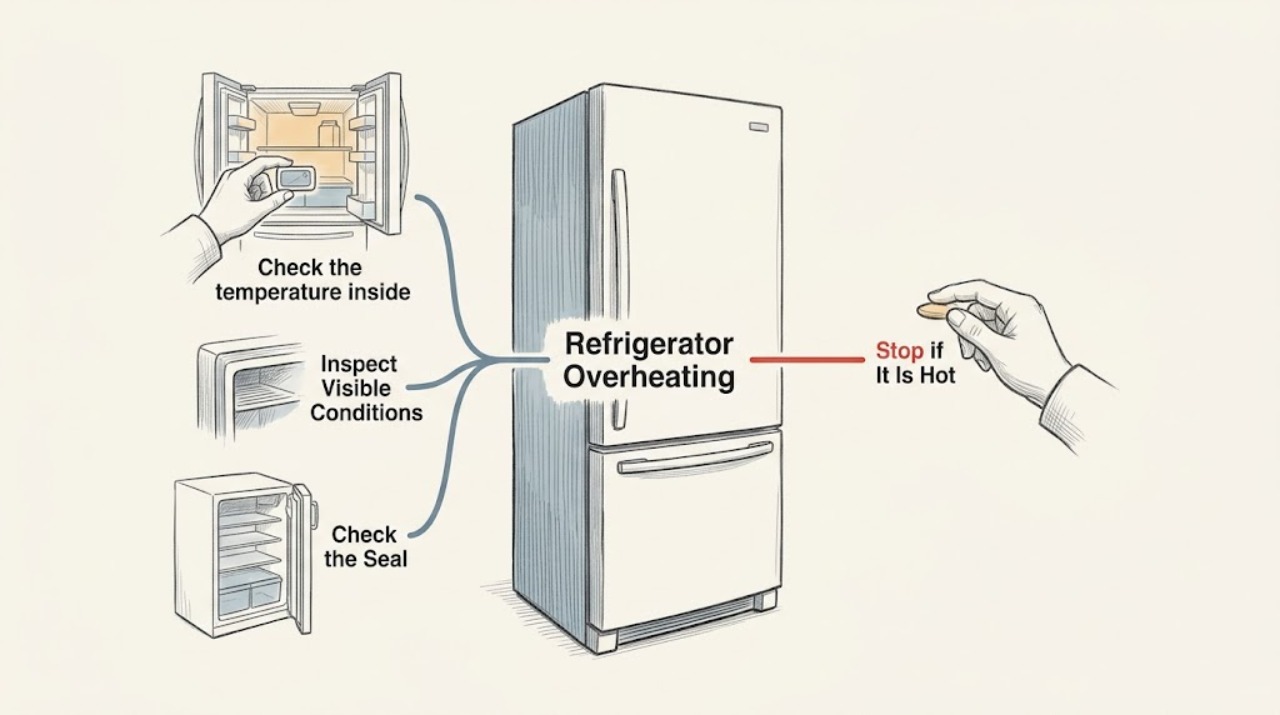
Check the temperature inside the refrigerator with an appliance thermometer placed in a cup of water on the middle shelf, and note whether it stabilizes after the period specified by your Beko guidance.
Expected result: The inside temperature is stable and food is cold, or it is rising while the cabinet feels very hot or the compressor cycles repeatedly.
Next step: If the interior is warming, protect perishable food and continue only with the external environment, seal, frost, and coil checks. Arrange service if the temperature does not recover.
Why this matters
Why: A stable interior with a warm cabinet can be normal heat rejection. Rising interior temperature changes the problem to a cooling or heat-dissipation fault rather than a cosmetic warmth concern.
-
Check 2
Inspect the refrigerator's location from the outside: look for a nearby radiator, oven, direct sun, a hot room, or blocked clearance around the cabinet, and compare the setup with the model manual.
Expected result: A heat source is nearby or airflow space is restricted, or the refrigerator has a reasonable location and clearance.
Next step: Remove the avoidable heat source or restore the manual's clearance without tipping or dragging a heavy appliance. If the unit is built in or cannot be safely repositioned, arrange service to assess ventilation.
Why this matters
Why: External heat makes the compressor work harder and reduces its ability to release heat. If placement is reasonable, the heat is more likely related to loading, seals, coils, or a technical fault.
-
Check 3
Check the door seals all around for gaps, cracks, or tears, and make sure food is not holding the door open; clean a dirty seal gently with a soft cloth and warm water.
Expected result: The seal contacts the cabinet evenly, or there is a persistent gap, damaged section, or food obstruction.
Next step: Remove only the obstruction and clean the seal. If the seal remains loose or cracked, arrange authorized service rather than trying to reshape or replace it without model-specific instructions.
Why this matters
Why: Warm air entering through a poor seal makes the refrigerator run longer and can raise the internal temperature, increasing the heat released outside.
-
Check 4
Look inside the freezer for heavy frost and check whether the refrigerator is overpacked, recently loaded with hot food, or being opened frequently for long periods.
Expected result: Frost blocks interior surfaces or airflow, or the refrigerator has recently had heavy loading or prolonged door openings; otherwise none of these conditions is present.
Next step: Restore airflow, keep doors closed, and let hot food cool before loading. Follow the exact model manual for any manual defrost; if frost or overheating returns, arrange service.
Why this matters
Why: Frost, restricted airflow, hot food, and warm air entering through frequent openings can make the appliance operate longer and feel hotter while it recovers.
-
Check 5
If the model exposes condenser coils at the rear, unplug the refrigerator and inspect them for dust; clean only with a gentle brush or a vacuum brush on low suction, never with a damp cloth.
Expected result: Dust visibly covers the coils, or the coils look clean but the interior remains warm and the cabinet stays unusually hot.
Next step: After safe dry cleaning, restore power and monitor the interior temperature. If the refrigerator remains hot or cooling does not improve, stop and arrange authorized service; do not remove coil guards or electrical covers.
Why this matters
Why: Dust can reduce the condenser's ability to release heat. Clean coils with persistent poor cooling point toward airflow, fan, compressor, or another technical issue that is not a user-cleaning task.
-
Check 6
Listen for the operating pattern while observing the inside temperature: note whether the compressor clicks off repeatedly, whether the refrigerator runs continuously, and whether the cooling fan or other operation seems abnormal.
Expected result: Clicking repeats with a rising internal temperature, or long running occurs while the earlier external checks are normal.
Next step: Stop trying to diagnose the compressor, fan, or refrigerant circuit yourself. Protect food and arrange authorized appliance service, especially if the cabinet is extremely hot or a burning odor is present.
Why this matters
Why: Beko identifies repeated clicking together with increased internal temperature as a possible compressor-overheating pattern; persistent long running after placement, door, frost, and coil checks points to a technical fault.
Use your observations
Decision map
Find the observation that best matches what you see, then follow the next safe action.
-
PATH 01Next step
What you see
The cabinet is mildly warm but the inside temperature is stable and there is no unusual clicking or long-running pattern.
Do this next
Keep the required clearance and monitor the inside temperature. Arrange service only if cooling changes, the cabinet becomes unusually hot, or abnormal operation appears.
Why this path and its safety boundary
Why it matters: The observed warmth is consistent with normal heat rejection through the compressor and condenser rather than an overheating failure.
-
PATH 02Next step
What you see
The refrigerator is near a radiator, oven, direct sun, or restricted ventilation, and the inside is warmer than expected.
Do this next
Remove the avoidable heat source or restore the model's clearance when it can be done safely. If the placement cannot be changed or cooling remains poor, arrange service.
Why this path and its safety boundary
Why it matters: External heat or limited airflow is increasing the compressor's workload and can explain both the hot cabinet and longer running.
-
PATH 03Next step
What you see
The door seal has a gap, heavy frost is present, or food and hot air are repeatedly entering the compartments.
Do this next
Correct visible loading or door-use issues and follow the model manual for defrosting. A damaged seal, recurring frost, or continued warming needs authorized service.
Why this path and its safety boundary
Why it matters: The refrigerator is losing cold air or airflow, so the compressor may run longer and reject more heat while trying to reach temperature.
-
PATH 04Next step
What you see
Dusty condenser coils are found and the refrigerator has no electrical warning signs.
Do this next
Unplug before dry cleaning and use low suction or a gentle brush only. If the interior remains warm after monitoring, arrange service instead of opening the appliance.
Why this path and its safety boundary
Why it matters: Restricted heat release is a plausible contributor, so a careful dry external clean is a reasonable user check.
-
PATH 05Next step
What you see
Clicking repeats with rising internal temperature, the compressor appears to shut down from heat, or there is burning odor, smoke, or an electrical concern.
Do this next
Stop using the refrigerator, keep clear of smoke or hot electrical parts, protect perishable food, and arrange qualified appliance service. Do not probe wiring or refrigerant components.
Why this path and its safety boundary
Why it matters: This is no longer a placement or cleaning decision; a compressor, fan, electrical, or other technical fault may be present.
Helpful context
Understand the symptom
Warm cabinet versus a refrigerator that is overheating
Heat on the outside alone does not prove a failure: a refrigerator has to move heat from the cooled compartments to the surrounding air. The decision changes when warmth is paired with a rising inside temperature, repeated compressor clicking, heavy frost, or a refrigerator that never settles into normal cycling. Use an appliance thermometer and the symptom pattern instead of judging the cabinet by touch alone.
Keep heat and electrical checks safe
Only inspect accessible placement, seals, loading, and external coils. Unplug the refrigerator before any coil cleaning, keep water away from electrical parts, and do not remove covers, probe the compressor circuit, or handle refrigerant lines. Move food to safe cold storage if the refrigerator cannot maintain temperature.
When checks do not resolve it
Need a professional?
Contact authorized Beko service when internal temperature rises, repeated clicking accompanies heat, cooling stays poor after safe placement and dry coil checks, the seal or ventilation path is damaged, or burning odor, smoke, or electrical concern is present.
Safety scope: Do not remove electrical covers, probe live wiring, open the sealed cooling system, handle refrigerant lines, or move a heavy or built-in refrigerator alone.
Have this ready
- Provide the model or article number, measured interior temperature, where the cabinet feels hot, the operating sound pattern, room and placement conditions, frost or seal observations, and the checks already completed.
Common questions
FAQ
Is it normal for the outside of a Beko refrigerator to feel warm?
Slight warmth at the front or sides can be normal because the compressor's heat is expelled through the condenser. It needs attention when the inside temperature rises, the compressor repeatedly clicks off, or the cabinet becomes unusually hot.
Why does my Beko refrigerator click and feel hot?
Beko says repeated clicking together with increased internal temperature may mean the compressor is overheating. Check placement and accessible dry condenser coils only as described, then arrange authorized service if the pattern continues.
Can a nearby oven or radiator make a Beko refrigerator overheat?
Yes. External heat makes the refrigerator work harder and can reduce heat dissipation. Move it away from avoidable heat sources or restore the model's ventilation clearance when safe; do not move a heavy or built-in unit alone.
Should I open the back of my Beko refrigerator to fix overheating?
No. Unplugging for a dry, accessible coil clean is the limit of this check. Do not remove electrical covers, probe wiring, or open the sealed cooling system; contact authorized service for persistent heat or poor cooling.
Read the exact guide
Official sources
- Help Center ResultBeko · Beko refrigerator clicking, possible compressor overheating, and safe dry condenser-coil cleaning guidance
- The outside of my refrigerator cabinet feels warm. Is this normal?Beko · Beko refrigerator exterior warmth, compressor heat, condenser heat, and humid-weather context
- Placement of Fridge Freezers: Can It Go Next to a Radiator?Beko UK · Beko refrigerator placement, external heat, ventilation, and overheating context
- Why is my fridge not cooling?Beko UK · Beko refrigerator warm-interior causes, temperature measurement, seals, loading, airflow, and service boundary
- How to fix a refrigerator that won't stop runningBeko · Beko refrigerator long-running, ambient heat, door use, loading, door seals, temperature settings, frost, and fast-freeze checks
Community feedback
Share a repair observation
Share a plain-text repair observation. Accepted observations are published automatically; this page may take a moment to update.