
On this page
Start here
Quick answer
A refrigerator making noise should be classified by sound, timing and cooling performance. Humming, gurgling, hissing, clicking and brief cracking can be normal compressor, fan, refrigerant or defrost sounds; persistent rattling can come from leveling, clearance or fan frost. If the noise is new, harsh, accompanied by poor cooling, water or a burning smell, stop owner troubleshooting and arrange service.
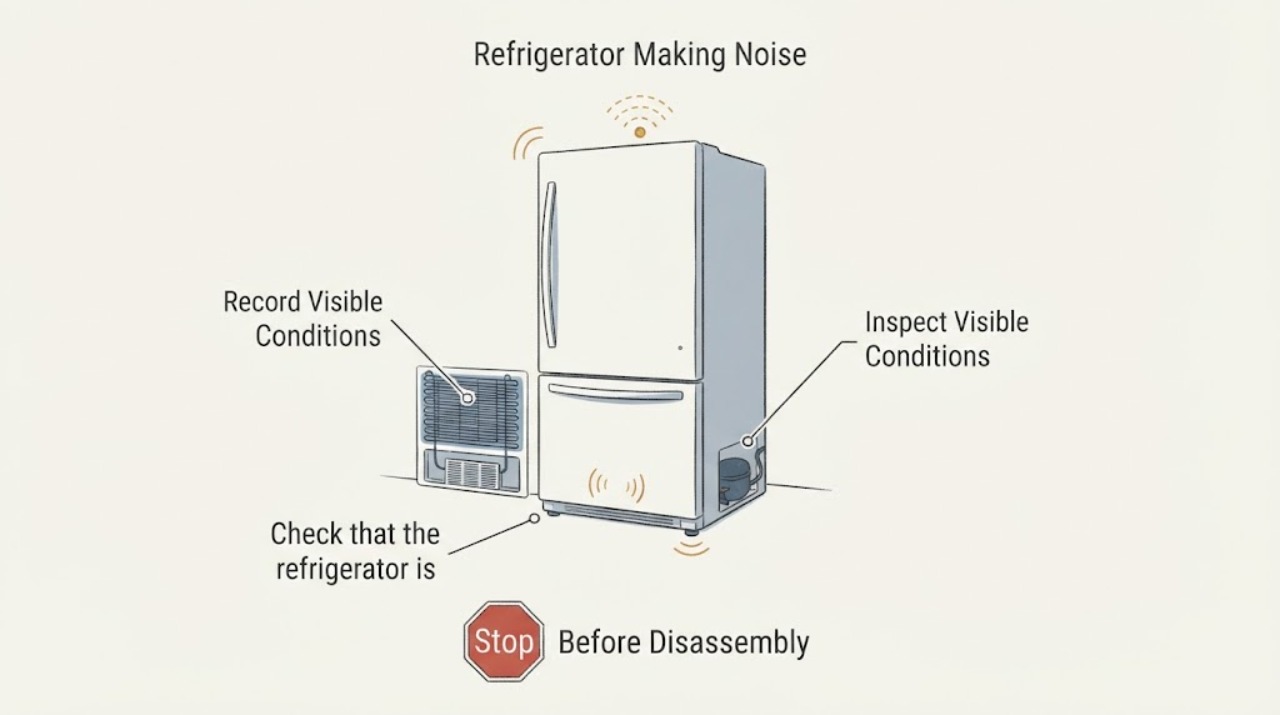
Work through in order
Diagnostic checks
Use only checks that match the exact appliance or system and its official guide.
-
Check 1
Record the sound as humming, buzzing, clicking, gurgling, hissing, rattling, grinding or cracking, and note whether it follows cooling, defrost or door movement.
Expected result: The sound matches a normal cycle or is persistent and new.
Next step: Monitor normal cycle sounds but arrange service for unexplained recurrence.
Why this matters
Why: Manufacturers describe many cycle-linked sounds as normal; a persistent new sound needs a different branch.
-
Check 2
Check that the refrigerator is stable, level, clear of cabinets and not touching items on top or inside.
Expected result: The unit rocks, contacts a wall/cabinet, or items vibrate; or installation is stable.
Next step: Correct visible clearance or item contact safely; use two people for moving or leveling.
Why this matters
Why: Leveling and contact can amplify normal compressor or fan vibration.
-
Check 3
Observe cooling and look for visible frost around fan openings without removing covers.
Expected result: Cooling is normal, frost or obstruction is visible, or cooling is poor.
Next step: Follow the manual for frost care and arrange service if noise or cooling trouble persists.
Why this matters
Why: A fan obstruction or frost can create persistent noise; poor cooling with loud motor noise needs service.
Use your observations
Decision map
Find the observation that best matches what you see, then follow the next safe action.
-
PATH 01Next step
What you see
The sound is brief humming, gurgling, hissing, clicking or cracking tied to normal cooling/defrost.
Do this next
Monitor without opening the appliance.
Why this path and its safety boundary
Why it matters: Normal operating behavior is more likely.
-
PATH 02Next step
What you see
Rattling reduces after stable leveling, clearance or item correction.
Do this next
Keep the unit stable and monitor.
Why this path and its safety boundary
Why it matters: Vibration transfer was likely amplifying normal operation.
-
PATH 03Next step
What you see
Grinding, drilling, persistent loud noise, frost recurrence or poor cooling occurs.
Do this next
Stop owner troubleshooting and arrange qualified service.
Why this path and its safety boundary
Why it matters: A fan, compressor or other component may need service.
Helpful context
Understand the symptom
A refrigerator making noise should be classified by sound, timing and cooling performance. Humming, gurgling, hissing, clicking and brief cracking can be normal compressor, fan, refrigerant or defrost sounds; persistent rattling can come from leveling, clearance or fan frost. If the noise is new, harsh, accompanied by poor cooling, water or a burning smell, stop owner troubleshooting and arrange service.
Use the exact model manual for controls, access, cleaning and any code interpretation. Stop when a check reaches wiring, pressure, microwave high-voltage or another internal service boundary.
When checks do not resolve it
Need a professional?
Provide the exact model, observed symptom, any code or sound, and which safe checks changed it.
Common questions
FAQ
Are refrigerator clicks and gurgles normal?
Whirlpool and LG describe many brief clicks, gurgles and refrigerant sounds as normal operating sounds.
When is refrigerator noise a fault?
Persistent or harsh noise, poor cooling, recurrent frost, water or a safety odor warrants service.
Read the exact guide
Official sources
- Refrigerator Normal Sounds and Noises - Product Help | WhirlpoolWhirlpool · refrigerator normal sound guidance
- How to Troubleshoot Unusual Noises From Your LG RefrigeratorLG · refrigerator noise troubleshooting
Community feedback
Share a repair observation
Share a plain-text repair observation. Accepted observations are published automatically; this page may take a moment to update.