
On this page
Start here
Quick answer
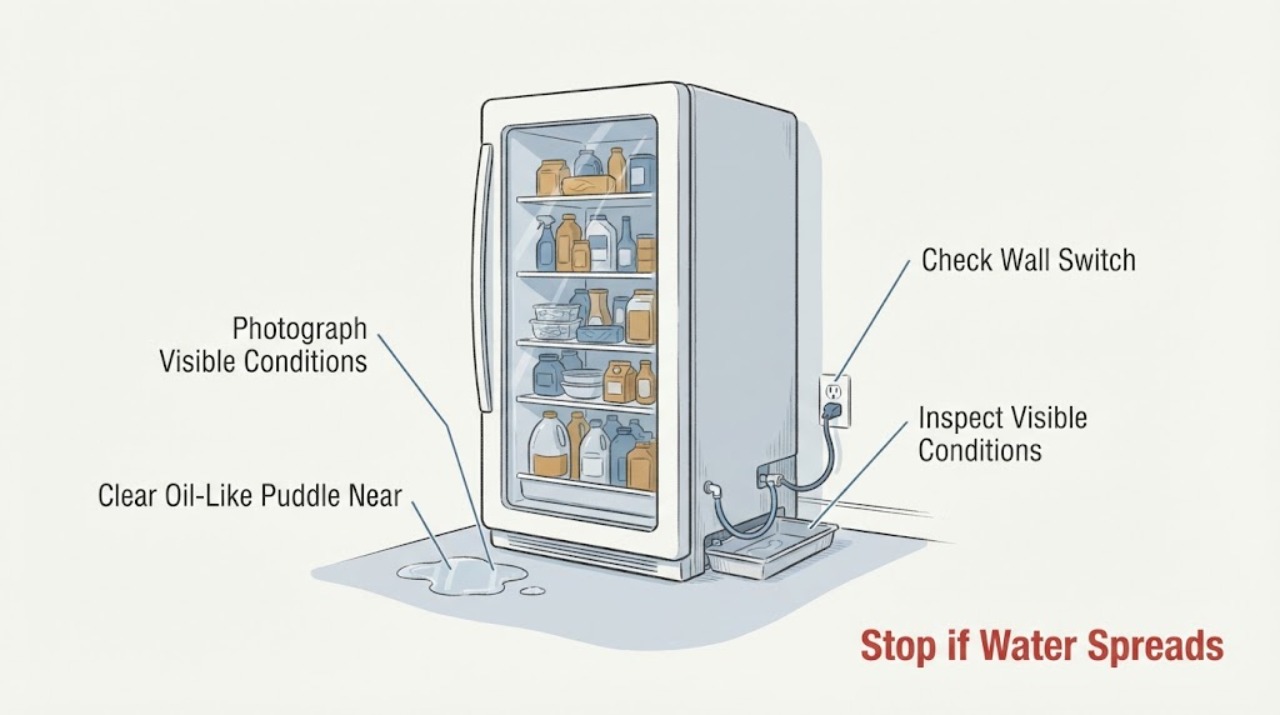
A clear puddle beside a refrigerator that is being used as a cabinet is not enough to call it compressor oil or refrigerant. Treat the liquid as unknown: keep people and pets away, do not taste or wipe it with bare hands, and do not switch the appliance on to see whether it leaks. If the refrigerator is still powered or connected to a water line, disconnect power only from a dry, safe location and close the water shutoff if one is present. First check whether the liquid came from a stored container, a nearby pipe, a defrost/drip-pan path or an external water connection. If it has a chemical odor, causes irritation, is flammable, appears to come from sealed refrigeration tubing, or keeps returning after external sources are ruled out, stop handling it and arrange qualified appliance service. Do not open the sealed system or vent refrigerant.
Work through in order
Diagnostic checks
Use only checks that match the exact appliance or system and its official guide.
-
Check 1
Keep people and pets away from the puddle and do not touch, taste or smell it closely. From a safe distance, photograph the liquid, its location, its edge and any trail without moving the refrigerator or opening panels. Note whether there is a chemical odor, irritation, visible vapor, heat or a flammable warning on a stored product.
Expected result: The liquid is an identifiable spill from a container, an unknown odorless puddle, or an unknown liquid with chemical/flammable/irritating characteristics.
Next step: For unknown hazardous or irritating liquid, leave the area ventilated and contact appropriate local emergency or hazardous-material guidance. For a non-hazardous unidentified puddle, continue only with dry, external source tracing and keep the appliance isolated.
Why this matters
Why: An identified cabinet spill can be handled according to that product's label; an unknown or hazardous liquid cannot be classified as water or compressor oil from appearance alone.
-
Check 2
If the refrigerator is powered, unplug it only from a dry, safe location and close an accessible water shutoff if it has a dispenser or ice-maker line. Dry water around the appliance without touching wet electrical parts. If it is already being used only as a cabinet, confirm that it is disconnected rather than switching it on for a test.
Expected result: The unit is powered, connected to water, wet near electrical parts, or fully decommissioned and dry.
Next step: Keep power and water isolated while tracing the source. If the plug, outlet or wiring is wet, do not handle it; obtain qualified electrical or appliance help.
Why this matters
Why: Samsung identifies water near electrical parts as a shock hazard and recommends safe power isolation before checking; a decommissioned cabinet has fewer active refrigerator leak paths, but its former tubing and drip components can still contain residue.
-
Check 3
Without moving the unit, compare the puddle with nearby cabinet contents, wall or floor plumbing, the visible water-line connections, the appliance front/rear edges and any accessible drain-pan area. Look for a trail that begins outside the refrigerator, a container seam, a water-line connection, or a recurring drip from the appliance.
Expected result: The trail begins at a stored container or nearby building source, at an external water connection, or from beneath/inside the refrigerator with no external source visible.
Next step: Remove or repair only the clearly identified external source when safe. If the liquid recurs from the appliance or comes from an inaccessible area, keep it isolated and arrange service rather than moving panels or tubing.
Why this matters
Why: Whirlpool notes that melted ice, outside spills, loose water connections, defrost-drain blockages and installation or leveling issues can be mistaken for an appliance leak. An unlocated source does not prove a sealed-system oil leak.
-
Check 4
Record whether the appliance is cooling, whether a compressor or fan is operating, whether it has a water dispenser/ice maker, and whether the liquid returns after the unit remains isolated. Do not restore power merely to reproduce an unknown leak.
Expected result: The liquid stops while isolated, returns without power, or returns only during powered cooling/defrost or water use.
Next step: Give the timing, photos, appliance status and any model label to a qualified appliance technician. Do not open the sealed system, recover fluid yourself or vent refrigerant.
Why this matters
Why: A powered timing pattern can guide qualified diagnosis, while a puddle that returns without power points more toward stored contents, a residual drain/pan issue or an external source. None of these observations identifies refrigerant or compressor oil by itself.
Use your observations
Decision map
Find the observation that best matches what you see, then follow the next safe action.
-
PATH 01Next step
What you see
The puddle trail begins at a bottle, cleaning product, stored container, wall pipe or floor source outside the refrigerator.
Do this next
Keep the appliance isolated until the external spill is safely identified and cleaned according to the product label. Recheck later without energizing a decommissioned cabinet.
Why this path and its safety boundary
Why it matters: The refrigerator has not been shown to be the source; the clear or oily appearance may come from the external item or residue.
-
PATH 02Next step
What you see
The refrigerator is powered or water-connected and the puddle recurs from beneath it or a visible water connection.
Do this next
Keep power and water isolated, inspect only accessible connections, and arrange model-specific service if the leak persists. Do not remove panels or run a leak test with wet electrical areas.
Why this path and its safety boundary
Why it matters: An active water, drain, drip-pan or connection problem is plausible, but a generic puddle guide cannot identify a particular valve, pan or sealed-system component.
-
PATH 03Next step
What you see
The unit is used only as a cabinet, is fully disconnected, and the puddle returns without any nearby source being found.
Do this next
Do not restart the appliance to investigate. Have the cabinet and former appliance inspected by a qualified technician, especially if liquid contacts sealed-system tubing or has an unusual odor.
Why this path and its safety boundary
Why it matters: An old drain pan, trapped residue, stored liquid or hidden building leak remains possible; an active refrigerant/oil diagnosis cannot be made from the puddle alone.
-
PATH 04Next step
What you see
The liquid has a chemical or flammable odor, causes irritation, appears at sealed refrigeration tubing, or produces vapor.
Do this next
Leave the area, avoid ignition sources and skin/eye contact, and contact qualified emergency or appliance service. Do not puncture tubing, vent refrigerant or clean the liquid with a flame or solvent.
Why this path and its safety boundary
Why it matters: This may involve a hazardous substance or refrigerant system. EPA identifies toxicity, flammability, asphyxiation and physical hazards associated with refrigerants.
Helpful context
Understand the symptom
An oil-like appearance does not identify the liquid
A clear or slightly tinted puddle may be water carrying dust or residue, a spilled product from the cabinet, a nearby plumbing leak, or a refrigeration-system fluid. Color, clarity and a slick appearance alone cannot distinguish those sources. Because this refrigerator is used as a cabinet, start by inventorying stored containers and the surrounding floor or wall rather than assuming the cooling system is the source.
Use external source tracing only
Manufacturer leak guidance supports checking whether a puddle actually comes from the appliance, inspecting accessible water connections, considering drain and drip-pan paths, and checking level or door conditions on a working refrigerator. It does not support opening a sealed refrigeration circuit or diagnosing compressor oil from a puddle. If the appliance is still connected, use the model manual and keep any water-related inspection dry and external.
A powered refrigerator and a cabinet have different next steps
If the unit is intentionally decommissioned and used only for storage, there may be no active defrost or water-dispensing source; stored contents, old residue, a drain pan or a nearby building leak become more relevant. If it remains powered, cooling, or connected to a water line, recurring liquid may need appliance service. The task provides no make, model or photo, so the exact fluid and component cannot be named.
The safe user boundary is to isolate the area, avoid skin or eye contact, remove only clearly identified external spill sources when safe, disconnect power from a dry location if the refrigerator is powered, close an accessible water shutoff, and photograph the source without moving the appliance. Do not energize the unit to reproduce the leak, remove covers, puncture tubing, handle refrigerant, drain compressor oil, or use a flame or solvent test. EPA identifies refrigerant exposure hazards and prohibits intentional venting; sealed-system work belongs to qualified service.
When checks do not resolve it
Need a professional?
Arrange qualified appliance service when the puddle recurs from the refrigerator, its source cannot be identified externally, the refrigerator is still powered or water-connected, cooling changes, or the liquid may involve sealed-system fluid. For chemical, flammable, irritating or vapor-producing liquid, leave the area and obtain appropriate emergency guidance. Do not open or vent a refrigeration system.
Common questions
FAQ
Is a clear oily puddle definitely compressor oil or refrigerant?
No. Appearance alone cannot identify the fluid. Rule out stored containers, nearby plumbing, defrost/drip-pan water and external spills first. If the liquid recurs from an inaccessible refrigerator area or has a chemical odor, leave sealed-system diagnosis to qualified service.
What should I do if the refrigerator is being used only as a cabinet?
Confirm it is disconnected from power and any water line without touching wet electrical parts. Inventory stored liquids and inspect the floor, wall and accessible cabinet edges for the source. Do not restart the refrigerator solely to reproduce the puddle.
Can I open the back and check for compressor oil?
Do not remove covers or open sealed tubing to identify an unknown liquid. EPA describes refrigerant hazards and prohibits intentional venting during refrigeration service. Photograph the source and have a qualified technician inspect it.
When is a refrigerator puddle an electrical safety issue?
If water or an unknown liquid reaches the plug, outlet or wiring, avoid wet contact and isolate power only from a dry, safe location. Samsung recommends unplugging before inspection, drying water carefully and avoiding wet contact with electrical parts; persistent leakage needs service.
Read the exact guide
Official sources
- Why is my Samsung refrigerator leaking water?Samsung Support · Official Samsung support page used for general water/electrical safety and external checks; its model-specific temperature examples are not transferred to this unknown refrigerator.
- Stationary Refrigeration - Prohibition on Venting RefrigerantsU.S. Environmental Protection Agency · EPA regulatory page used to prohibit puncturing or venting a suspected sealed refrigeration system; no refrigerant identity or household-specific repair claim is inferred.
- Refrigerant SafetyU.S. Environmental Protection Agency · EPA safety information used only to set the sealed-system and unknown-chemical boundary; it does not identify the puddle or diagnose this refrigerator.
- How to fix a refrigerator that is leaking waterWhirlpool · Official Whirlpool symptom guide used only for generic external leak-source distinctions; it does not identify an unknown liquid as oil or transfer Whirlpool parts to an unmodeled refrigerator.
Community feedback
Share a repair observation
Share a plain-text repair observation. Accepted observations are published automatically; this page may take a moment to update.