
On this page
Start here
Quick answer
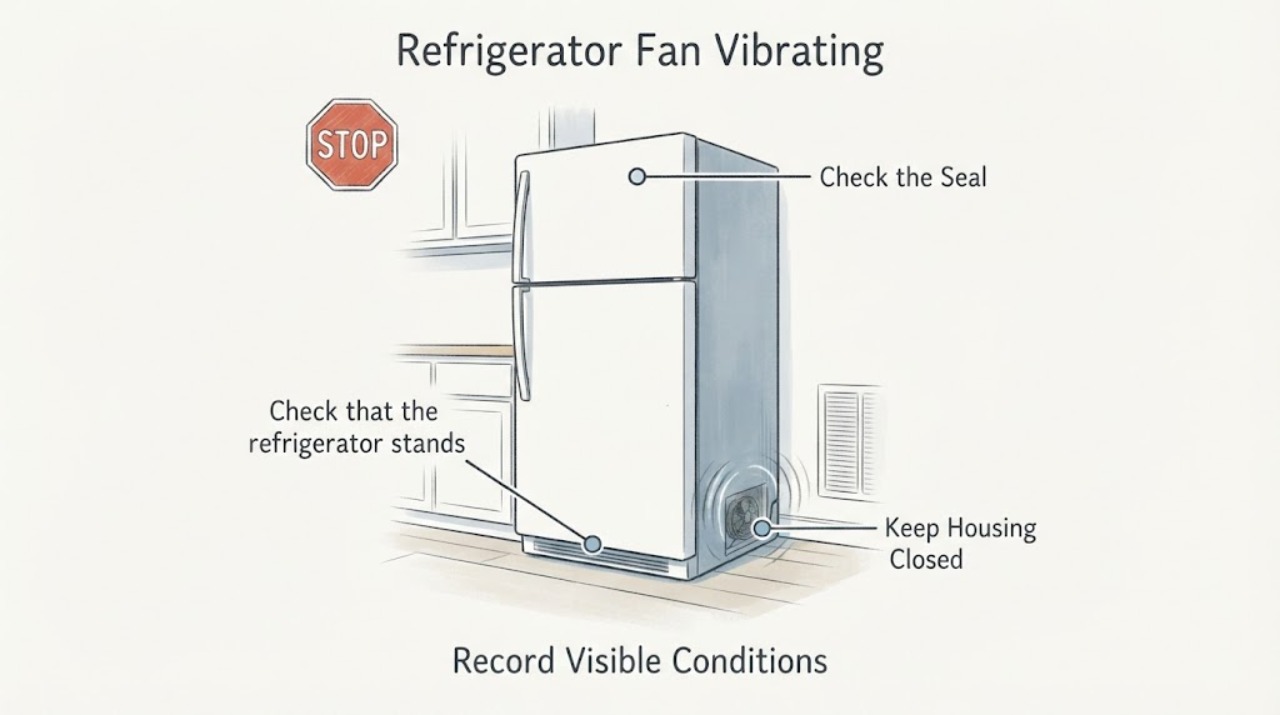
A vibrating refrigerator fan is not automatically a failed motor. First identify when the sound occurs and whether it stops when a door opens, then separate fan noise from cabinet, shelf, water-line, refrigerant, or leveling vibration. Samsung says a noise that stops when the refrigerator door opens can indicate the cooling fan is contacting an obstruction, while Whirlpool lists items on top, an unlevel cabinet, water-line flow, and refrigerant flow as other sources of rattling or vibration. Check the level, clear user-accessible vents and surrounding items, inspect door seals, and record the sound without putting fingers near a fan. Do not remove a fan cover, reach into a moving compartment, or order a motor from the sound alone; persistent grinding, scraping, poor cooling, frost, or a fan that does not move freely needs qualified service.
Work through in order
Diagnostic checks
Use only checks that match the exact appliance or system and its official guide.
-
Check 1
From outside the refrigerator, record the sound for a short period and note whether it is a soft airflow hum, a regular vibration, scraping or grinding, and whether it changes when the refrigerator or freezer door opens. Do not reach through a door opening toward a fan or remove any cover.
Expected result: The noise stops immediately when a door opens, continues unchanged, occurs only during water or ice filling, or is a scraping/grinding sound.
Next step: Use the matching fan, cabinet/level, or water-line check below. If the sound is grinding, scraping, or accompanied by poor cooling or frost, stop probing and arrange service.
Why this matters
Why: A door-open change makes a compartment fan or an obstruction in its airflow path more relevant; a sound during water or ice filling can be a valve or line source. Constant cabinet vibration can instead be transmitted from leveling or surrounding surfaces. A grinding sound is not proof of one specific part, but it needs closer attention.
-
Check 2
Check that the refrigerator stands stable on a solid floor, is not touching cabinets or a wall, and has no loose items on top or nearby that can resonate. Use the appliance's installation instructions for any leveling-foot adjustment; do not tilt a loaded refrigerator or work underneath it.
Expected result: The cabinet rocks, a foot or roller is not seated, the unit touches a surface, or a loose item vibrates; or the cabinet is stable and clear.
Next step: Correct only the external placement or leveling issue allowed by the installation guide and reassess after the refrigerator stabilizes. If the fan-like sound continues with a stable cabinet, continue with airflow and service checks.
Why this matters
Why: Whirlpool says an unlevel refrigerator, floor, or items on top can create rattling and vibration, and its leveling guidance links stability to reduced noise. Correcting the cabinet can remove an amplified sound without proving anything about the fan motor.
-
Check 3
With the doors open and the appliance not running a fan, inspect only the visible interior vents, door seals, and food placement. Keep food from blocking rear vents, check seals for dirt or damage, and do not chip ice or insert tools into a fan opening.
Expected result: A vent is blocked, a seal is dirty or damaged, frost is visible near a vent or fan cover, or the accessible airflow path is clear.
Next step: Rearrange food and clean or replace a seal only as the exact manual permits. Do not remove an evaporator cover or manually chip frost around a fan; persistent frost or noise needs service.
Why this matters
Why: Samsung says blocked vents and poor seals can make the refrigerator work harder and can be associated with fan noise; frost or an obstruction near the fan can cause rubbing or off-center operation. A clear visible area does not rule out an internal obstruction or motor fault.
-
Check 4
If the noise occurs during an ice-maker fill or water dispense, observe from outside whether the water line is kinked, the supply is connected, and the ice maker is enabled only when the appliance has a water supply. Do not disconnect a pressurized line or open the valve housing.
Expected result: The sound is synchronized with filling, the water line is kinked or unsupported, the ice maker is on without a water connection, or the noise occurs during fan operation instead.
Next step: Correct only the visible external supply or ice-maker setting described by the manual. If the sound is not fill-related or continues with the water source correct, return to the fan/cabinet branch and arrange service if mechanical noise persists.
Why this matters
Why: Whirlpool says a water valve or line can buzz or vibrate during ice-maker filling, and a refrigerator without a connected water supply should have its ice maker turned off according to the manual. This is a water-path clue, not evidence of a vibrating fan.
-
Check 5
If the sound remains after the external placement, airflow, seal, and water-line checks, record when it occurs, where it is loudest, whether cooling or frost changed, and whether the blade is visibly obstructed without touching it. Keep the refrigerator operating only if it remains safe and temperatures are stable; do not remove panels or test the motor live.
Expected result: The noise is persistent or worsening, cooling is poor, frost is building, the fan does not move freely, or the refrigerator has a burning smell, leak, or electrical trip.
Next step: Arrange qualified appliance service; switch off and unplug only when safe and according to the manual if there is a burning smell, leak, or electrical fault. Do not bypass a door switch or fan guard, and do not order a motor without model-specific diagnosis.
Why this matters
Why: Bosch says a fan that does not move freely may need replacement and recommends professional help for possible compressor or internal faults. These symptoms support service but do not identify a fan motor, bearing, control, compressor, or refrigerant fault from sound alone.
Use your observations
Decision map
Find the observation that best matches what you see, then follow the next safe action.
-
PATH 01Next step
What you see
The vibration stops when a refrigerator or freezer door opens, and there is no water-fill timing or cabinet contact explanation.
Do this next
Check visible vents, food clearance, seal condition, and frost without reaching into the fan area. If the noise persists or the fan blade cannot move freely, request service.
Why this path and its safety boundary
Why it matters: A compartment cooling fan or an obstruction in its airflow path becomes more likely because the fan turns off when the door opens. This still does not identify the obstructing part or motor fault.
-
PATH 02Next step
What you see
The cabinet rocks, touches nearby surfaces, or has loose items on top, while cooling and fan operation otherwise seem normal.
Do this next
Stabilize and level the refrigerator using the installation guide, clear the surrounding surfaces, and reassess. Escalate if a fan-like or grinding sound remains.
Why this path and its safety boundary
Why it matters: External resonance or leveling is more likely than a confirmed fan defect. Whirlpool lists these conditions as common sources of rattling and vibration.
-
PATH 03Next step
What you see
The noise occurs only while the ice maker fills or water dispenses, especially with a kinked line or an ice maker enabled without a water connection.
Do this next
Correct only the external line or ice-maker setting described by the exact manual. Arrange service for persistent valve noise, leaks, or an unsupported connection.
Why this path and its safety boundary
Why it matters: A water valve or supply line can transmit buzzing or vibration during fill. That timing argues against treating the symptom as a fan diagnosis.
-
PATH 04Next step
What you see
Grinding or scraping persists, the fan does not move freely, frost surrounds the fan area, cooling changes, or the sound is accompanied by a burning smell, leak, or electrical trip.
Do this next
Stop probing and arrange qualified service; isolate power when safe if there is an electrical or burning symptom. Do not remove covers, chip ice around the fan, bypass interlocks, or replace a part by guesswork.
Why this path and its safety boundary
Why it matters: The symptom is outside normal soft airflow or cabinet resonance. An internal fan, compressor, obstruction, or control issue may require diagnosis, but the source cannot be confirmed safely by sound alone.
Helpful context
Understand the symptom
Locate the noise before naming a fan
A refrigerator can transmit vibration through the floor, cabinet, shelves, water line, or nearby furniture, so the loudest point is not always the failed component. Listen from outside with the doors closed, then note whether the sound changes when a door opens, when the ice maker fills, or as cooling starts and stops. Samsung's fan guidance makes the door-open change useful, while Whirlpool describes several non-fan causes of rattling and vibration.
Leveling and airflow are safe first checks
A cabinet that rocks or touches a wall can amplify a normal fan or compressor sound. Whirlpool says leveling reduces vibration and supports cooling, while Samsung asks owners to check leveling, door seals, and blocked vents when fan noise occurs. Check only accessible areas and follow the appliance's installation guide; do not remove an evaporator cover or rear panel just to reach a suspected fan.
Persistent mechanical noise is a service boundary
Grinding, scraping, a blade that will not move freely, frost around the fan area, temperature changes, or noise that remains after external checks are more concerning than a soft, steady airflow sound. Bosch recommends professional help when the fan or compressor may be involved. The sound alone cannot distinguish a fan blade, motor, ice obstruction, bearing, compressor, or control fault.
When checks do not resolve it
Need a professional?
Arrange qualified refrigerator service when grinding or scraping persists, the fan does not move freely, frost or poor cooling accompanies the noise, or the refrigerator has a leak, burning smell, or electrical trip. Do not infer a fan motor or compressor failure from vibration alone or bypass an interlock to observe the fan.
Common questions
FAQ
Why does my refrigerator fan vibration stop when I open the door?
Many refrigerators turn a compartment fan off when a door opens. Samsung says that timing can point toward the cooling fan contacting an obstruction, but it is not a diagnosis by itself. Check visible vents, food clearance, seals, and frost without reaching into the fan area, then arrange service if the sound persists.
Can an unlevel refrigerator sound like a vibrating fan?
Yes. Whirlpool lists an unlevel refrigerator, the floor, and items on top as possible sources of rattling or vibration. Stabilize and level the cabinet according to its installation guide before assuming that a fan motor or compressor is defective.
Should I replace the refrigerator fan when it vibrates?
Not from the sound alone. A water line, cabinet resonance, blocked vent, frost, fan obstruction, compressor, or normal operating sound can produce similar vibration. Bosch says a fan blade that does not move freely may need replacement, but internal diagnosis and model-specific part fit should be handled by qualified service.
Read the exact guide
Official sources
- Refrigerator Noise - BuzzingWhirlpool Product Help · Official Whirlpool family-level guidance used to distinguish water-valve/line timing from fan vibration.
- How to Level the RefrigeratorWhirlpool Product Help · Official Whirlpool family-level installation guidance; use the appliance's own instructions for adjustment details.
- Fan Noises on Samsung FridgesSamsung Australia · Official Samsung Australia guidance used for general symptom interpretation; models and procedures vary by location and model.
- Refrigerator Normal Sounds and NoisesWhirlpool Product Help · Official Whirlpool family-level sound classification; exact sound behavior varies by model.
- Refrigerator Noise - Rattling or VibratingWhirlpool Product Help · Official Whirlpool family-level guidance used for generic non-fan vibration sources.
- Refrigerator Making Loud Noises | TroubleshootingBosch Home Appliances · Official Bosch guidance used only for generic distinction between a fan blade that does not move freely and professional internal diagnosis; it does not define another brand's parts.
Community feedback
Share a repair observation
Share a plain-text repair observation. Accepted observations are published automatically; this page may take a moment to update.