
On this page
Start here
Quick answer
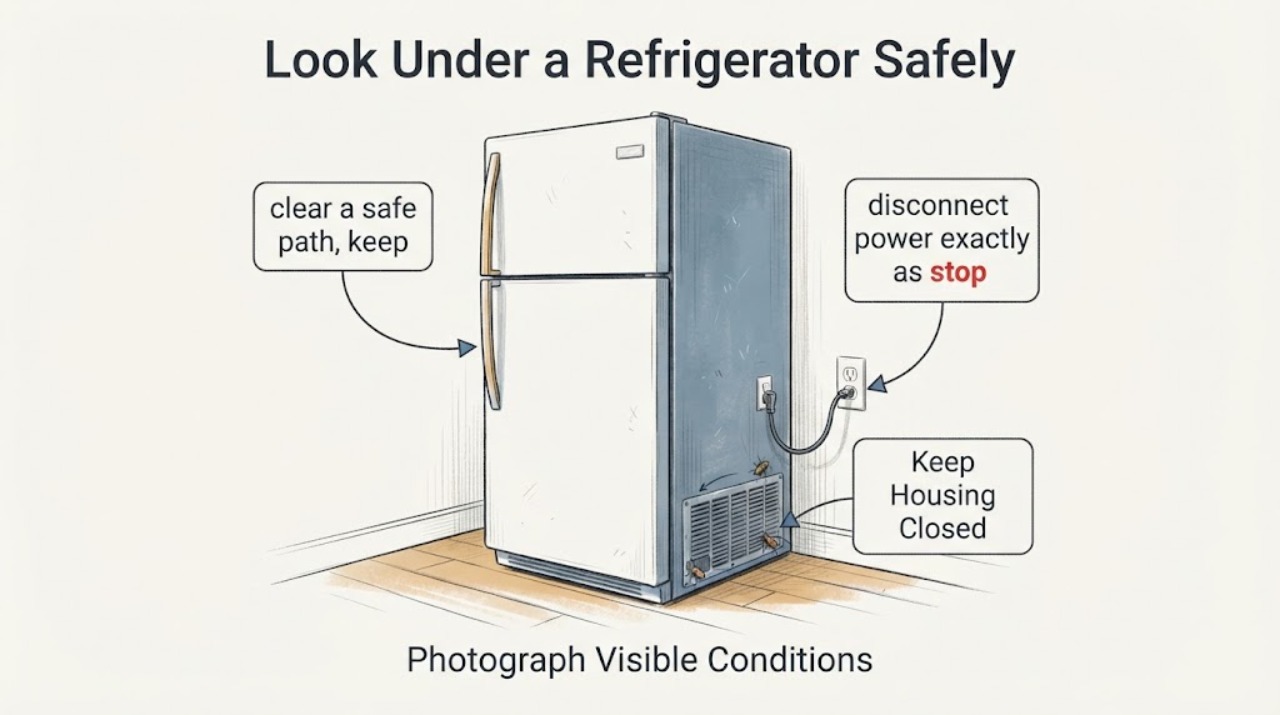
Start with a flashlight or phone camera from the front and sides without moving the refrigerator. Photograph the floor, droppings, gnaw marks, nesting material, leaks and gaps so the apartment manager or pest professional can identify the extent. A refrigerator is heavy; if the view is blocked, a renter should ask building maintenance before it is moved. If it must be moved, use the exact refrigerator manual, protect the floor, get another adult and pull it straight rather than walking or twisting it. Do not sweep or vacuum rodent droppings or nests. CDC says to ventilate, wear gloves, soak the waste with disinfectant, wipe it up and bag it; heavy or inaccessible contamination should go to a qualified cleanup or pest professional.
Before you begin
Safety first
- Do not move a refrigerator alone, walk or twist it, disconnect an ice-maker line without the exact manual, remove rear panels, reach into fans or wiring, or spray pesticide into the appliance. Do not sweep or vacuum untreated rodent waste. Keep food sealed and follow CDC wet-cleaning or professional-cleanup guidance.
Work through in order
Diagnostic checks
Use only checks that match the exact appliance or system and its official guide.
-
Check 1
Photograph the accessible floor and gaps around the refrigerator using a flashlight or phone camera, starting at the toe-kick, both sides and the wall or cabinet line.
Expected result: The images show crumbs or an old spill, rodent droppings/gnaw marks/nesting material, live insects, moisture, or no evidence.
Next step: Save the photos and date, then send them to apartment maintenance or the pest-control contact if any waste, nest, live pest or entry gap is present. Do not reach under the compressor or into wiring.
Why this matters
Why: EPA lists droppings, gnaw marks and insect frass as signs worth monitoring, while CDC identifies behind appliances and pipe penetrations as places to look for rodent access. A sign documents activity but does not identify the species or source alone.
-
Check 2
Before requesting a move, clear a safe path, keep children and pets away, and ask the landlord or building maintenance whether the refrigerator can be pulled out and who must disconnect any water line.
Expected result: The refrigerator is tightly fitted, connected to water, on a fragile floor, or can be moved only by twisting, lifting or working alone; alternatively, it has a clear path and two adults with the correct manual.
Next step: If any constraint exists, leave the appliance in place and have maintenance or a qualified appliance mover inspect behind it. If the manual and building approval permit a move, use floor protection, two adults and a straight pull; stop if a line or cabinet catches.
Why this matters
Why: A refrigerator is heavy and an apartment may have shared plumbing, flooring or wall access. Whirlpool says to protect the floor and pull straight, not wiggle or walk the appliance; a general page cannot authorize a move for an unknown model.
-
Check 3
If the manual provides a removable base grille or accessible coil area, disconnect power exactly as the manual directs before cleaning; use only a soft brush or vacuum for ordinary dust, never for untreated rodent waste.
Expected result: The area contains ordinary dust and debris, or it contains droppings, urine, a nest, damaged wiring, pooled water or a condenser/fan area that is not accessible without a panel.
Next step: Clean ordinary dust only when the exact manual allows it and restore the grille before power. For waste, damaged wiring, water or an inaccessible panel, stop and call maintenance, pest control or appliance service rather than improvising.
Why this matters
Why: Whirlpool says power must be off before coil cleaning and that some models require a certified technician. CDC says untreated rodent waste must not be swept or vacuumed because contaminated particles can become airborne.
-
Check 4
If rodent urine, droppings or nesting material is confirmed, open doors and windows to ventilate when safe, put on rubber or plastic gloves, wet the material with an EPA-registered disinfectant or the CDC bleach solution, and let it soak for the label or CDC time.
Expected result: The contamination is a small reachable patch on a hard floor, or it is widespread, in insulation/vents/wiring, heavily infested, or cannot be reached without moving the refrigerator.
Next step: For a small reachable patch, wipe with paper towels, dispose of them in a covered bin, disinfect the hard surface and wash hands. For heavy or inaccessible contamination, leave it undisturbed and contact the property manager, health department or pest/cleanup professional.
Why this matters
Why: CDC provides a wet-cleaning process for small hard-surface contamination and calls for extra precautions for heavy infestations; inaccessible appliance areas require professional help. EPA says apartment pest control is a coordinated IPM task.
-
Check 5
Remove the food and water incentives around the refrigerator and report recurring evidence: seal food and pet food, clean spills promptly, close garbage, note leaks or condensation, and ask whether neighboring units or shared penetrations have activity.
Expected result: Pests recur after cleaning, food/water or a leak remains, or signs appear in more than one apartment or along shared pipes/walls.
Next step: Keep a dated log and request a coordinated property inspection and licensed pest-control plan. Do not spread consumer pesticide around the refrigerator or seal a shared opening without landlord approval.
Why this matters
Why: CDC says rodents are attracted to food, water and nesting sites; EPA says multifamily IPM requires monitoring, maintenance and cooperation among residents and building staff. A one-time visible cleanup will not solve a building entry route.
Use your observations
Decision map
Find the observation that best matches what you see, then follow the next safe action.
-
PATH 01Next step
What you see
The camera shows only crumbs or a dried spill, with no droppings, nest, gnawing or live pest.
Do this next
Clean the accessible floor, seal food and monitor with dated photos. Ask maintenance to inspect if pests or new signs appear.
Why this path and its safety boundary
Why it matters: The observation supports a local cleaning issue but does not prove a pest infestation.
-
PATH 02Next step
What you see
Droppings, gnaw marks, nesting material or live pests are visible behind or beside the refrigerator.
Do this next
Do not sweep, vacuum or reach into the appliance. Photograph the signs, keep food sealed and notify the landlord or licensed pest professional for coordinated inspection.
Why this path and its safety boundary
Why it matters: These are signs that warrant pest monitoring and a building response; the location does not by itself identify the species or whether the source is inside the appliance.
-
PATH 03Next step
What you see
The refrigerator cannot be moved without solo lifting, twisting, floor damage, water-line disconnection or access to a panel.
Do this next
Leave it in place and request building maintenance or a qualified appliance mover. Inspect only the visible toe-kick and side gaps until they arrive.
Why this path and its safety boundary
Why it matters: The appliance and apartment infrastructure create a mechanical or property risk that a generic inspection article cannot clear.
-
PATH 04Next step
What you see
Rodent waste is heavy, in insulation/vents/wiring, inside the refrigerator cabinet, or someone has respiratory risk or symptoms after exposure.
Do this next
Keep people and pets away, do not disturb it, and contact the property manager, local health department or qualified pest/cleanup professional. Seek medical advice for illness after rodent exposure.
Why this path and its safety boundary
Why it matters: The contamination is beyond a normal resident wipe-down and may spread contaminated particles or affect appliance safety.
Helpful context
Understand the symptom
Inspect the edges before trying to move the appliance
Use a flashlight, mirror or phone camera at the toe-kick, side gaps and wall edge. Look for droppings, gnaw marks, nesting material, dead insects, food residue, moisture or a gap around plumbing and electrical penetrations. These observations document where maintenance or pest control should look; they do not identify the pest species by themselves.
Treat the refrigerator as a heavy apartment fixture
Do not pull a refrigerator out alone, twist it across the floor or disconnect an ice-maker water line without the model manual and building approval. Whirlpool says to protect the floor and pull straight when moving a refrigerator. For a rental, maintenance can coordinate the move, check shared wall penetrations and address a building-wide source without damaging flooring or the appliance.
Separate pest cleanup from refrigerator cleaning
If the visible material is rodent urine, droppings or nesting material, do not sweep or vacuum it. CDC says to ventilate the area, wear gloves, wet the waste with disinfectant, let it soak, wipe it up and wash hands. If the material is only crumbs or a normal spill, clean the floor and seal food; if contamination is inside the appliance, in wiring or too extensive to reach safely, stop and use qualified cleanup or pest service.
When checks do not resolve it
Need a professional?
Contact apartment maintenance for a blocked view, heavy refrigerator move, shared wall or plumbing access, floor damage risk, water connection or damaged wiring. Contact licensed pest control or the local health department for recurring signs, multiple units, heavy infestation or inaccessible contamination. Contact appliance service if pests damaged wiring, insulation, fan/coil areas or the refrigerator no longer cools normally.
Safety scope: Do not move a refrigerator alone, walk or twist it, disconnect an ice-maker line without the exact manual, remove rear panels, reach into fans or wiring, or spray pesticide into the appliance. Do not sweep or vacuum untreated rodent waste. Keep food sealed and follow CDC wet-cleaning or professional-cleanup guidance.
Common questions
FAQ
What is the safest first way to look under a refrigerator?
Use a flashlight, mirror or phone camera from the toe-kick and side gaps without moving the appliance. Photograph signs and notify apartment maintenance if the view is blocked or any droppings, nests, gnaw marks, live pests, moisture or damaged wiring is visible.
Can I pull the refrigerator out by myself?
Do not assume that is safe. Whirlpool says refrigerators are heavy, floors should be protected and the unit should be pulled straight rather than walked or wiggled. In an apartment, ask maintenance to coordinate the move, especially with water lines or tight flooring.
Should I vacuum droppings under the refrigerator?
No. CDC says not to sweep or vacuum untreated rodent urine, droppings or nesting material because contaminated particles can become airborne. Ventilate, wear gloves, wet the material with disinfectant, let it soak, wipe it up and seek professional help for heavy or inaccessible contamination.
Who is responsible in an apartment if pests are behind the refrigerator?
Report the signs to the property manager or landlord rather than treating a shared wall, pipe penetration or neighboring unit yourself. EPA describes multifamily pest management as coordinated IPM involving residents, maintenance and pest professionals; local rules determine responsibility.
Read the exact guide
Official sources
- Hantavirus Prevention | CDCCenters for Disease Control and Prevention · Opened the CDC prevention page. It supports avoiding contact with rodent waste and seeking the cleanup instructions or medical advice after exposure; it does not establish that any pest in this apartment carries hantavirus.
- Pest Control: Resources for Housing Managers | US EPAU.S. Environmental Protection Agency · Opened the EPA housing-manager guidance. It supports coordinated apartment IPM, monitoring signs, reducing food/water and entry routes, and avoiding misuse of pesticides. It does not assign legal responsibility for this rental or identify a pest species.
- How and When to Safely Clean the Condenser Coils - Product Help | WhirlpoolWhirlpool Product Help · Opened the official Whirlpool cleaning page. It supports power-off before coil work, avoiding water lines, soft-brush cleaning of permitted accessible areas and checking the exact manual because some models require certified service. It is not used to infer this refrigerator’s grille or coil layout.
- How to Clean Up After Rodents | CDCCenters for Disease Control and Prevention · Opened the CDC cleanup guidance. It supports ventilation, gloves, wet disinfection, no sweeping/vacuuming of untreated waste, bagging and the heavy-infestation professional boundary. It is not a diagnosis of the material under this refrigerator.
- How to Seal Up to Prevent Rodents | Healthy Pets, Healthy People | CDCCenters for Disease Control and Prevention · Opened the CDC page. It is used for locating gaps behind appliances and pipes, recognizing the need to secure food/water, and contacting pest specialists when rodents reached areas that cannot be cleaned. It does not identify the pest in this apartment or authorize moving the refrigerator.
- Proper All Refrigerator Moving Care - Product Help | WhirlpoolWhirlpool Product Help · Opened the official Whirlpool moving-care page. It supports the general caution that refrigerators are heavy, floors should be protected and the appliance should be pulled straight. It does not authorize moving an unknown refrigerator or disconnecting its water line.
Community feedback
Share a repair observation
Share a plain-text repair observation. Accepted observations are published automatically; this page may take a moment to update.