
On this page
Start here
Quick answer
A light, even film of frost on a refrigerator back wall can occur during normal cooling, especially after warm or humid air enters. Thick ice, blocked rear vents, food freezing near the wall, a door that does not seal, or ice that returns after clearing needs closer attention. First keep food and packages away from the rear vents, confirm the door closes and the gasket is clean, and check the temperature setting against the exact owner's manual. Remove only light frost with a damp cloth; do not chip, puncture, heat, or remove a rear panel. If the buildup is heavy, cooling is uneven, food is spoiling, or frost returns after the safe external checks, stop improvising and arrange model-specific appliance service.
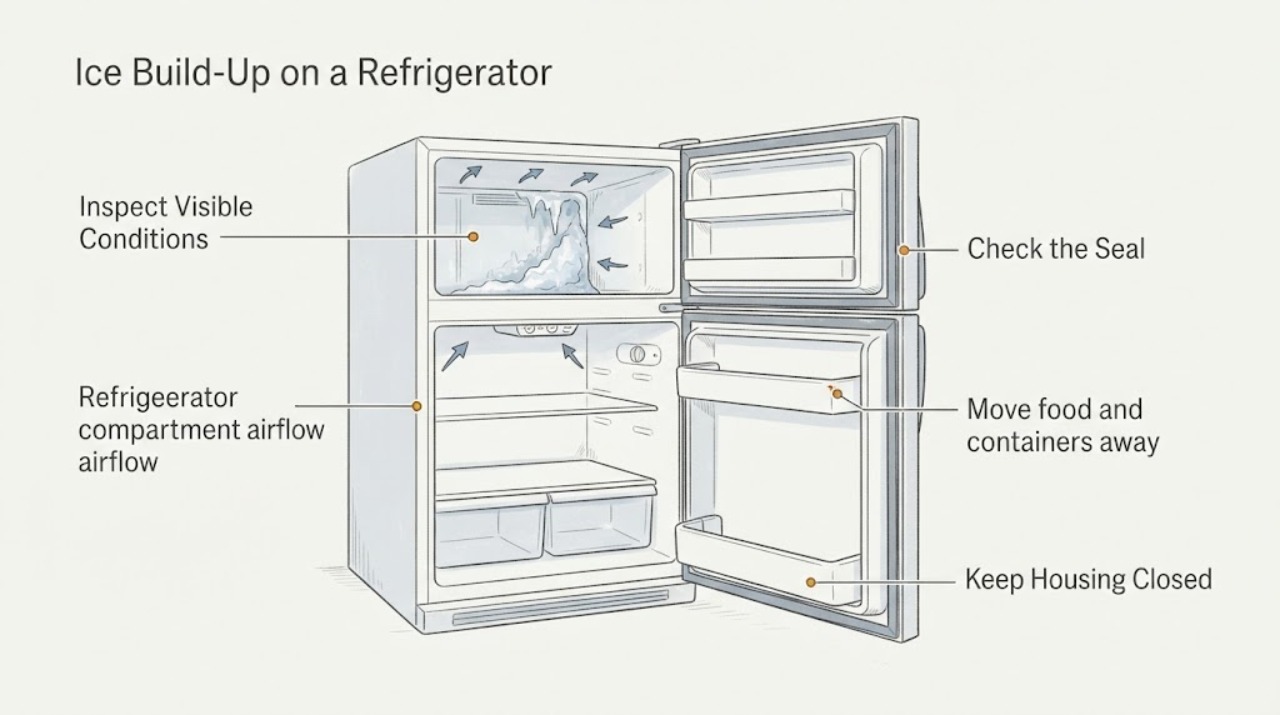
Work through in order
Diagnostic checks
Use only checks that match the exact appliance or system and its official guide.
-
Check 1
Look at the pattern without removing panels: note whether the back wall has a thin even film, a thick slab, ice covering a vent, or frost concentrated around the door edge.
Expected result: The frost is light and temporary, or it is thick, blocks airflow, returns repeatedly, or is accompanied by food freezing or poor cooling.
Next step: Continue with the cool external checks below. If the ice is heavy, do not chip it or probe the wall; use the model manual's defrost procedure or arrange service.
Why this matters
Why: Light frost can be normal moisture; heavy, recurring or airflow-blocking ice is evidence that warm-air entry, restricted circulation, temperature control or another model-specific condition needs further checking.
-
Check 2
Close the refrigerator door on a clean sheet of paper at several points around the gasket, and check from outside that no bin, shelf, package or drawer prevents full closure.
Expected result: The paper has slight resistance all around and the door closes evenly, or it slips out easily / the gasket is dirty, torn, pulled away or obstructed.
Next step: Reposition the obstructing item and clean the gasket with mild soapy water, then dry it. If the seal is damaged or the door remains misaligned, arrange service instead of bending the door or replacing parts without model information.
Why this matters
Why: A closure gap allows warm humid air to enter and can create frost; a clean, undamaged gasket with even closure makes that cause less likely.
-
Check 3
Move food and containers away from the rear vents and back wall, leaving the clearance stated by the exact manual; check that the vents are not covered by ice or packages.
Expected result: A package is against the wall or vents are blocked, or the vents are clear and air can circulate.
Next step: Rearrange only the accessible contents and keep the door closed as much as practical. Do not force ice out of a vent or remove an interior cover; use the exact manual or service if ice still blocks the passage.
Why this matters
Why: Blocked vents can create a cold, overcooled area and prevent frost from thawing; clear airflow makes blockage a less likely explanation.
-
Check 4
Check the displayed temperature and operating mode against the refrigerator's exact owner's manual, and consider whether warm food, frequent openings or a recent power interruption preceded the ice.
Expected result: The setting is colder than the manual recommends, a special cooling mode is active, or the ice began after a temporary humidity, loading or power event; otherwise the pattern persists under normal use.
Next step: Correct only a clearly identified setting or usage issue and allow the appliance to stabilize for the period stated in its manual. If ice returns or food temperatures are unsafe, stop using guesswork and request model-specific service.
Why this matters
Why: Settings and temporary moisture loads can change frost formation, but a persistent pattern under normal settings is not proof of any particular internal component failure.
-
Check 5
If only a light film is present, wipe it with a damp cloth and dry the wall; if the ice is heavy, hard, or covers a vent, stop and use the exact manual's defrost instructions or service route.
Expected result: Light frost clears without force, or the buildup cannot be removed by hand / returns after a proper defrost and the external checks.
Next step: Never use a hair dryer, knife, screwdriver, heat source or sharp scraper, and do not remove a rear panel. Arrange qualified service for heavy or recurring buildup, uneven cooling, food spoilage or a damaged liner.
Why this matters
Why: A wipeable film can be handled as surface moisture, while hard or recurring ice needs a model-specific defrost or repair decision.
Use your observations
Decision map
Find the observation that best matches what you see, then follow the next safe action.
-
PATH 01Next step
What you see
The back wall has only a light, even film after a door opening or humid load, and it does not return as a thick layer.
Do this next
Keep the door closed promptly, cover liquids, allow hot food to cool before storage, and monitor the wall without scraping it.
Why this path and its safety boundary
Why it matters: The pattern is compatible with normal condensation or frost rather than a confirmed appliance failure.
-
PATH 02Next step
What you see
Frost is concentrated at the door edge, a paper slips out around the gasket, or a package prevents the door from closing.
Do this next
Remove the obstruction and clean the gasket. If the seal is torn or the door still will not close evenly, arrange service.
Why this path and its safety boundary
Why it matters: Warm humid air entering through the closure is a more likely first explanation than a failed internal defrost part.
-
PATH 03Next step
What you see
Ice covers rear vents or food is freezing near the back while the rest of the compartment is less affected.
Do this next
Move food away from the vents and follow the model manual's safe defrost guidance. Do not force ice out or remove panels.
Why this path and its safety boundary
Why it matters: Restricted airflow can create overcooling and keep frost from thawing; this does not identify a failed fan, heater or sensor.
-
PATH 04Next step
What you see
The buildup is heavy, returns after the door, airflow and setting checks, or the refrigerator cannot maintain safe food temperatures.
Do this next
Protect perishable food, stop improvised defrosting or disassembly, and provide the full model number and frost pattern to qualified appliance service.
Why this path and its safety boundary
Why it matters: The remaining cause is model-specific and may require defrost, airflow, control or sealed-system diagnosis that cannot be established from the symptom alone.
Helpful context
Understand the symptom
Separate light normal frost from a recurring ice problem
The back wall is one of the coldest surfaces in a refrigerator. A light, short-lived film can appear after a door opening, a humid day or loading warm food. A thick layer that stays in place, covers vents, freezes food, or returns soon after it is cleared is a different pattern. Because no brand or model was supplied, the exact defrost controls and temperature limits must come from the appliance's own manual.
Warm air and blocked airflow are the first safe checks
A door that is held open by a package, a dirty or damaged gasket, or frequent long openings can let humid air in. Food pressed against a rear vent can also restrict circulation and leave a cold spot where frost grows. Correct only what is visible and accessible; do not assume the ice proves a failed defrost heater, sensor or control board.
Use a safe clearing boundary
Light frost can be wiped with a damp cloth and dried. If the ice is heavy or cannot be removed by hand, follow the exact model's defrost instructions or request service. Do not use a hair dryer, knife, screwdriver, or other sharp tool, and do not remove the rear cover: puncturing a liner or contacting concealed electrical or sealed-system parts can turn a cleaning attempt into a hazardous repair.
Common questions
FAQ
Is a little frost on the refrigerator back wall always a failure?
No. A light, temporary film can form when humid air enters or after warm food is loaded. Thick, recurring, vent-blocking ice or food freezing needs the external checks and service boundary described above.
Can I chip the ice off with a knife or speed it up with a hair dryer?
No. Do not puncture the liner or use a hair dryer. Wipe only light frost with a damp cloth; for heavy buildup, follow the exact model manual's defrost procedure or request service.
Does ice on the back wall prove that the defrost heater or sensor is bad?
No. The same symptom can follow warm-air entry, a door-seal gap, blocked vents, settings or temporary humidity. A component diagnosis requires the exact model and qualified testing.
When should I stop troubleshooting and call service?
Call when the ice is heavy or returns after the safe external checks and the manual's defrost procedure, when the liner or gasket is damaged, or when cooling is uneven or food is not staying safely cold. Do not remove rear panels to investigate.
Read the exact guide
Official sources
- What's Normal Condensation or FrostWhirlpool · Official general refrigerator guidance used for the distinction between light normal frost and excess moisture, plus checks for door gaskets, airflow, temperature settings and humid-air entry. It is not used to diagnose an unidentified refrigerator's internal parts.
- Frost forms in the Samsung freezer, refrigerator, or ice bucketSamsung · Used for the explicitly stated refrigerator-back-wall frost path: complete door closure, warm-air entry, vent clearance, light-frost wiping, the warning against hair dryers, and service for heavy or recurring buildup. It is not used to claim Samsung-specific behavior for an unidentified model.
- Cooling issues with Samsung refrigerator or freezerSamsung · Used only for the general decision that blocked rear vents can cause overcooling and prevent frost from thawing, and that persistent cooling problems should go to service. Model-specific settings and repair diagnoses remain out of scope.
Community feedback
Share a repair observation
Share a plain-text repair observation. Accepted observations are published automatically; this page may take a moment to update.