
On this page
Start here
Quick answer
A Samsung refrigerator that is not draining usually shows water under the drawers, inside the cabinet, or on the floor. Dry the water and identify its first location, check that the refrigerator is tilted slightly back as Samsung recommends for draining, and inspect only an accessible drain tray for standing water or damage. A clogged or frozen drain hole can make defrost water leak into the refrigerator, and Samsung says that condition needs service inspection rather than self-repair. If water returns, the tray is damaged, or water reaches electrical parts, stop using the refrigerator and arrange qualified Samsung service.
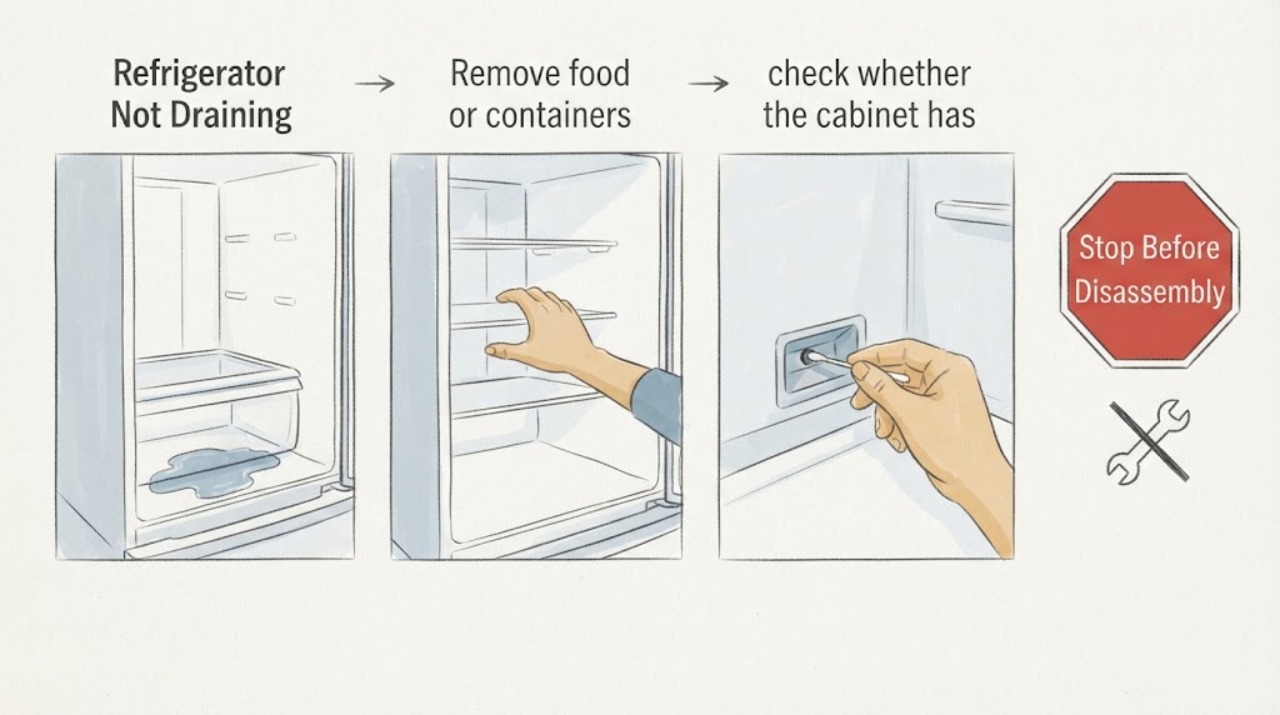
Work through in order
Diagnostic checks
Use only checks that match the exact appliance or system and its official guide.
-
Check 1
Remove food or containers from the wet area, wipe up standing water, and place a dry towel or shallow container where the water first appeared. Note whether the first wet point is below a drawer, inside the freezer or refrigerator compartment, under the cabinet, or at the rear drain-tray area.
Expected result: The water is an isolated spill or condensation event; it returns below a drawer or inside the cabinet; it appears under the refrigerator; or it is visibly collecting in the drain tray.
Next step: Continue with the location-specific checks below. Keep water away from electrical areas, and stop if the source cannot be observed safely.
Why this matters
Why: An isolated spill or condensation event can look like a drainage failure without a blocked drain. Recurrent water below a drawer or inside the cabinet makes a defrost-drain path more likely, while water under the refrigerator points toward the drain tray or another external source.
-
Check 2
From the front of the refrigerator, check whether the cabinet has the slight backward tilt described in the Samsung guidance. Look under the front to see whether the moving wheels are still touching the floor; do not move a loaded refrigerator or force a leveling adjustment.
Expected result: The refrigerator appears to lean forward, the front wheels remain on the floor, or the cabinet is already tilted slightly back and the water still returns.
Next step: Use the exact model's leveling instructions for any adjustment, preferably with help to keep the appliance stable. If the cabinet is already positioned correctly or water returns after the permitted check, continue to the drain-tray and service checks.
Why this matters
Why: Samsung says the refrigerator is designed to tilt back slightly to help the doors close and help with draining. A forward or insufficient tilt can contribute to water remaining where it should drain, but a correctly positioned cabinet does not rule out a clogged drain or damaged tray.
-
Check 3
If the exact model provides an owner-accessible drain tray, turn the refrigerator off according to its instructions before looking for standing water, overflow, or a visible crack in the tray. Do not remove a rear cover or reach into a concealed drain path.
Expected result: The accessible tray is full of water; it is empty but visibly damaged; it is dry and intact; or the tray cannot be reached safely.
Next step: If the tray is safely accessible and full, clean only the tray as the model instructions allow and dry the area. Arrange Samsung service for a damaged, hidden, or inaccessible tray, or when water returns.
Why this matters
Why: Samsung associates a full tray with overflow or failed automatic evaporation and an empty but damaged tray with a tray failure. A tray that is dry and intact, or one that cannot be safely inspected, leaves a hidden drain or another water path possible.
-
Check 4
When water repeatedly collects below a drawer or inside the cabinet, inspect only the visible area for ice, food, or a spill that could block the path; do not chip ice, pour cleaner into the drain, or push a wire or tool into a drain opening.
Expected result: A visible spill or removable obstruction explains the isolated water; no visible source explains recurrent pooling; or the drain opening appears frozen or blocked.
Next step: Clear only the visible spill or food without disturbing the drain opening and monitor once. For a suspected frozen or clogged drain, stop self-repair and arrange Samsung service inspection.
Why this matters
Why: A visible spill can imitate a drainage problem, but recurrent pooling without one makes a defrost-drain restriction more likely. Samsung specifically says a clogged or frozen drain hole can prevent defrost water from reaching the tray and requires service inspection.
-
Check 5
After one permitted external check, dry the area and observe whether water returns during normal refrigerator operation. Record the model number, the first wet location, whether the drain tray was full or damaged, and whether the cabinet was tilted as described by Samsung.
Expected result: The water does not return; it returns in the same location; the tray overflows again; or water reaches wiring or another electrical area.
Next step: Arrange qualified Samsung service for recurring water, an unexplained source, a damaged tray, suspected drain blockage, or any water near electrical parts. Keep the refrigerator off when the area is unsafe.
Why this matters
Why: No recurrence supports a one-time spill or condensation explanation, but it does not prove that a hidden drain is clear. Recurrence, repeated overflow, or water near electricity indicates a continuing drainage or water-path fault.
Use your observations
Decision map
Find the observation that best matches what you see, then follow the next safe action.
-
PATH 01Next step
What you see
The water was an isolated spill or condensation event, the area stays dry after wiping, and no water returns during normal operation.
Do this next
Keep the area dry and monitor. Arrange service if the same water pattern returns or its source becomes unclear.
Why this path and its safety boundary
Why it matters: A one-time spill or condensation event is more likely than a confirmed drain blockage. Samsung lists both as possible explanations for water in or under a refrigerator.
-
PATH 02Next step
What you see
Water repeatedly collects below a drawer or inside the refrigerator, with no visible spill and an apparent frozen or blocked drain opening.
Do this next
Do not probe, chip, or flush the hidden opening. Keep the area safe and arrange Samsung service inspection.
Why this path and its safety boundary
Why it matters: A clogged or frozen defrost-drain path is more likely because defrost water is not reaching the drain tray. Samsung says this condition needs engineer inspection and cannot be self-repaired.
-
PATH 03Next step
What you see
Water is under the refrigerator and the accessible drain tray is full, overflowing, or visibly damaged.
Do this next
Turn the refrigerator off using the model instructions and clean only an accessible full tray. Arrange Samsung service for a damaged tray or water that returns after the permitted check.
Why this path and its safety boundary
Why it matters: A tray overflow or failed evaporation path is more likely when the tray is full; an empty but damaged tray can itself be the source.
-
PATH 04Next step
What you see
The refrigerator is tilted forward, water returns after one external check, the drain tray cannot be reached safely, or water is near wiring or another electrical area.
Do this next
Stop using the refrigerator when water is near electricity, isolate power only from a safe dry location, and arrange qualified Samsung service. Do not remove covers or repeatedly test the appliance.
Why this path and its safety boundary
Why it matters: The drainage fault exceeds a safe visual adjustment. A correct tilt does not identify whether the hidden problem is the drain, tray, or another water path.
Helpful context
Understand the symptom
Start with where the water appears
Not draining is a symptom, not a confirmed failed part. Water below the crisper drawers, water under the cabinet, and water in an accessible drain tray point to different parts of the drainage path. Wipe up the water first and watch for its return so a spill or condensation event is not mistaken for a blocked drain.
Do not probe a hidden drain hole
Samsung states that a clogged or frozen drain hole needs an engineer's service inspection and that self-repair is not possible for that condition. Keep the check to visible water, the cabinet position, and any drain tray that the exact model makes accessible; do not remove panels or force a tool into a concealed opening.
When checks do not resolve it
Need a professional?
Arrange qualified Samsung refrigerator service when a drain hole appears clogged or frozen, water repeatedly returns below a drawer or under the cabinet, the drain tray is damaged or inaccessible, or the source remains unclear after the permitted external checks. Provide the model number, first wet location, tray condition, cabinet position, and any water near electrical parts.
Common questions
FAQ
Why is water collecting under the drawers in my Samsung refrigerator?
Samsung identifies condensation, spills, and a clogged or frozen drain path as possible explanations. Dry the area and watch for recurrence, but do not probe a suspected drain blockage because Samsung directs that condition to service inspection.
Can leveling help a Samsung refrigerator drain?
Samsung says refrigerators are designed to tilt back slightly, which helps the doors close and helps with draining. Check the cabinet position from the front and use the exact model instructions for any adjustment; a correctly positioned refrigerator can still have a hidden drain fault.
Can I unclog the Samsung refrigerator drain hole myself?
Samsung says a clogged or frozen drain hole needs an engineer's service inspection and that self-repair is not possible for that condition. Keep the check to visible water and an accessible tray, and arrange service rather than inserting a tool into the opening.
What should I record before calling Samsung service?
Record the full model number, where the water first appeared, whether it returned after drying, whether the cabinet looked tilted forward, and whether an accessible drain tray was full, empty, or damaged. Mention any water near electrical parts immediately.
Read the exact guide
Official sources
- Water leaks in a Samsung refrigeratorSamsung Electronics America, Inc. · Samsung refrigerators with water under drawers, under the cabinet, or in other visible locations
- How to turn off the ice maker on Samsung refrigeratorSamsung · Samsung refrigerator drain-tray and defrost-drain symptoms; exact access varies by model
Community feedback
Share a repair observation
Share a plain-text repair observation. Accepted observations are published automatically; this page may take a moment to update.