
On this page
Start here
Quick answer
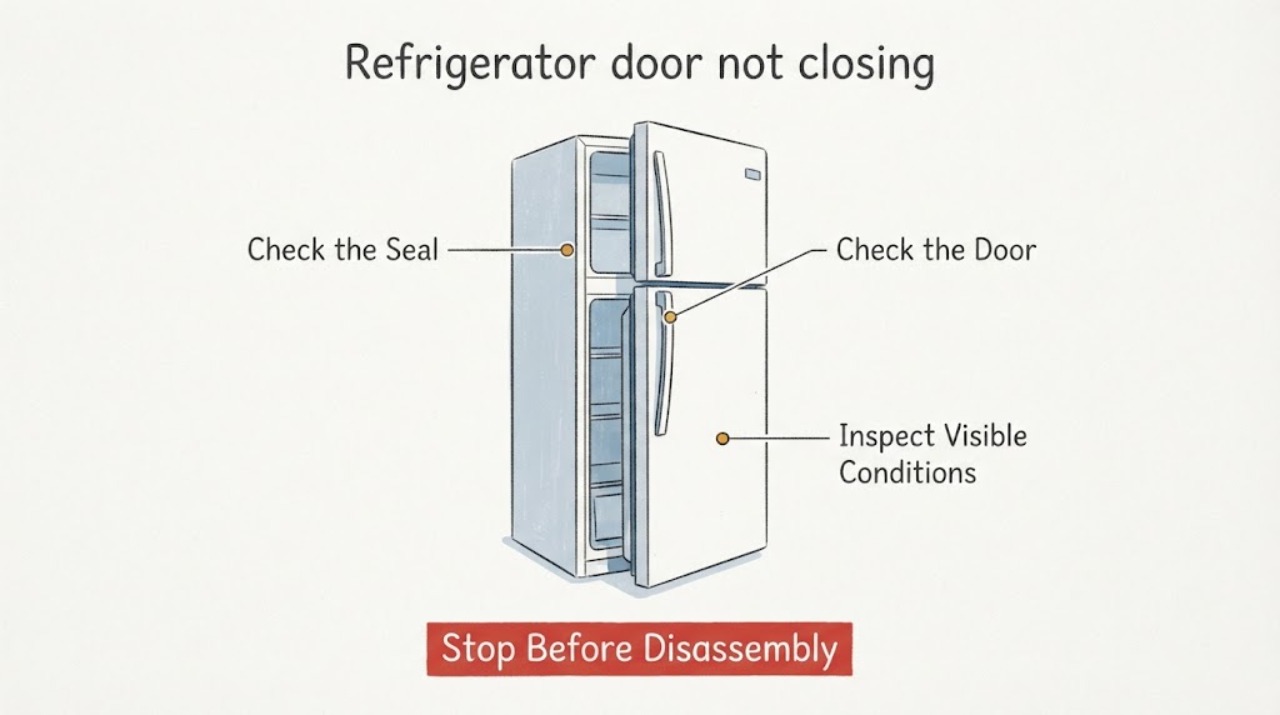
Start by finding the exact point that prevents the Samsung refrigerator door from closing: a food container, shelf, drawer, frost, or a door flap can stop the final seal. Remove only a loose obstruction and make sure shelves and drawers are fully seated. Then inspect the rubber gasket for dirt, warping, or damage and use a paper test where the door can close; a slight resistance suggests the seal is gripping, while an easy slip or visible gap needs cleaning, model-specific alignment, or service. If the cabinet is out of level, the door sits low after installation or reattachment, or frost returns after the gap is corrected, use Samsung's exact model instructions or arrange qualified service. Do not force the door, move the refrigerator without following the leveling procedure, or keep using it with a damaged seal.
Work through in order
Diagnostic checks
Use only checks that match the exact appliance or system and its official guide.
-
Check 1
Open the affected door once and inspect the front edge, door bins, shelves, drawers, and the space behind any pull-out drawer. Look for a tall container, overfilled bin, shelf or drawer that is not fully seated, packaging, ice, or frost touching the door. Remove only loose items and close the drawer or shelf fully.
Expected result: The door stops at one object or drawer, the drawer is not fully on its tracks, or nothing visible touches the door but a gap remains.
Next step: Rearrange the loose item or reseat the shelf or drawer using the exact model manual, then test the door without slamming it. If no obstruction explains the gap, continue to the seal and alignment checks; do not force the door past resistance.
Why this matters
Why: A single contact point makes a storage component or frost obstruction more likely than a failed hinge. A clear interior with a persistent gap shifts attention to the gasket, cabinet level, door alignment, or a hidden hinge or rail condition.
-
Check 2
Inspect the rubber gasket all the way around the door for dirt, a fold pulled out of its channel, warping, tears, or a section that does not touch the cabinet. Where the door can close without force, place a sheet of paper halfway across the gasket, close the door, and pull gently at several points.
Expected result: The paper has slight resistance around the tested edge, slips out easily at one area, or the gasket is visibly dirty, displaced, warped, or damaged.
Next step: Clean a dirty gasket with the model-approved method and dry it; a gasket pulled out of its channel may be pressed back only as Samsung's guide permits. If the gasket is damaged or the paper still slips after cleaning, arrange Samsung service and keep the door closed as much as practical.
Why this matters
Why: Consistent slight resistance supports contact at the tested points. Easy slip or a visible gap makes a weak seal or door alignment problem more likely; a torn or warped gasket is a service condition rather than a reason to keep adjusting shelves.
-
Check 3
From in front of the refrigerator, compare the top edges and side gaps of the doors and check whether the cabinet rocks or the door swings unusually. If the exact manual permits user leveling, use a carpenter's level on the main cabinet and adjust only the accessible front leveling legs as directed; do not pull the appliance out or lift it by the door.
Expected result: The cabinet is out of level, one door sits lower or the side gaps differ, or the main cabinet is level and the door still will not close.
Next step: Follow the exact Samsung manual for leveling and any supported door-height adjustment; Samsung notes that adjustment steps vary by model. If leveling cannot be done safely, the refrigerator is built in, or the door remains misaligned, stop and request qualified service.
Why this matters
Why: An out-of-level cabinet can change door alignment and the way the door settles against the gasket. A level cabinet with a low or shifted door makes model-specific hinge or door-height adjustment more likely, while a level cabinet with a clear obstruction still points back to storage or gasket contact.
-
Check 4
If the door edge has frost or condensation, inspect the gasket contact area and any visible ice or frost that keeps the door from reaching the cabinet. Remove only light, accessible frost with a damp cloth and wipe the area dry; do not use a hair dryer or sharp tool to speed defrosting.
Expected result: Frost or condensation is concentrated at one edge or returns after the door appears closed, versus no frost and a clean, dry perimeter.
Next step: Correct the obstruction or seal contact and monitor whether frost returns. If heavy frost cannot be cleared safely, the gasket is damaged, or frost returns with a clean and aligned door, use Samsung service; do not dismantle the door or use heat to defrost it.
Why this matters
Why: Localized frost or condensation supports warm moist air entering through a gap, often from an obstruction, gasket, or alignment issue. Frost that returns after the gap is corrected suggests an unresolved seal, door, or cooling condition rather than a one-time spill.
-
Check 5
Think back to when the problem began. If the door was removed, reattached, moved, or adjusted recently, compare the hinge, flap between French doors, and drawer or rail position with the exact model manual. Inspect only for a visibly loose or displaced part; do not remove a hinge, door, wiring harness, or roller assembly.
Expected result: The problem began immediately after reattachment or moving, the flap or hinge has unusual looseness, or the door has always failed to close despite correct storage and seal contact.
Next step: Use the exact Samsung manual to verify the permitted reinstallation or flap procedure. If the manual does not cover the observed condition, a hinge or rail is loose, or the door still will not close, request qualified service rather than ordering a part by appearance.
Why this matters
Why: A problem that starts after reattachment can reflect an incorrect model-specific installation or adjustment. A loose hinge, stuck center flap, or persistent failure with a clean gasket and clear interior needs a service diagnosis; the symptom alone cannot identify a hinge, rail, or gasket part.
Use your observations
Decision map
Find the observation that best matches what you see, then follow the next safe action.
-
PATH 01Next step
What you see
The door stops at a bin, shelf, drawer, container, ice, or frost, and the gasket grips normally everywhere after the contact is removed.
Do this next
Remove or rearrange only the obstruction, reseat the shelf or drawer using the model manual, and close the door gently. If the same contact returns with normal storage, inspect the door alignment and level before requesting service.
Why this path and its safety boundary
Why it matters: A localized obstruction is more likely than a failed door seal or hinge. Samsung specifically points to food, shelves, drawers, and frost as things that can prevent a complete close.
-
PATH 02Next step
What you see
The interior is clear but the paper slips at one or more spots, the gasket is dirty, warped, displaced, or damaged, or frost and condensation recur along the same door edge.
Do this next
Clean and dry the accessible gasket and reseat only a gasket section Samsung identifies as user-accessible. If the paper still slips, the gasket is damaged, or frost returns, keep the door closed and arrange qualified Samsung service.
Why this path and its safety boundary
Why it matters: The door is not maintaining even gasket contact. Cleaning or a gasket that has come out of its channel may be user-addressable under Samsung's guidance; a torn, warped, or repeatedly leaking seal needs service and can worsen frost and cooling loss.
-
PATH 03Next step
What you see
The gasket and interior are clear, but the cabinet is out of level, one door sits low, the center flap or hinge is loose, or the fault began after the door was removed or reattached.
Do this next
Use the exact Samsung manual for leveling or an approved door-height adjustment without forcing the door. Request qualified service if the unit is built in, adjustment is inaccessible, a hinge or rail is loose, or the door remains open; do not remove the door or move the refrigerator unaided.
Why this path and its safety boundary
Why it matters: Cabinet leveling or model-specific door installation and height alignment becomes more likely than a food obstruction. Samsung's height and leveling procedures vary by refrigerator design, and a loose hinge or rail cannot be identified safely from the symptom alone.
Helpful context
Understand the symptom
Find the first point of contact
A door that springs back at one corner has a different path from a door that stops against a bin or shelf. Samsung's door guide starts with the seal, visible obstructions, and the alignment of shelves and drawers. Pull-out freezer sections can also be blocked behind the drawer. Use the door's resistance and the location of any visible gap to decide which path to follow instead of pushing harder.
A closed-looking door can still leak air
The gasket must contact the cabinet around the full perimeter. Samsung describes a paper test for the seal: with the paper caught between the gasket and cabinet, slight resistance is expected when the paper is pulled. Dirt, a warped or damaged gasket, poor door alignment, and frost at the edge can leave a gap even when the door appears nearly shut. An unresolved gap lets warm air in and can lead to condensation or more frost.
When checks do not resolve it
Need a professional?
Request qualified Samsung service when the gasket is torn, warped, or still fails the paper test after cleaning; the door remains open after obstructions are removed and the cabinet is leveled; frost returns; a hinge, center flap, drawer rail, or door was recently reattached and is loose; or the refrigerator cannot be safely accessed for model-specific adjustment. Do not order a gasket, hinge, rail, or door part from the symptom alone, and do not remove the door, wiring, hinge, or sealed components.
Common questions
FAQ
Why will my Samsung refrigerator door not close all the way?
Check for food, a shelf, drawer, packaging, ice, or frost touching the door first. If the interior is clear, inspect the gasket and test its contact with paper, then check cabinet leveling and door alignment using the exact model manual.
How do I check the Samsung refrigerator door gasket?
Inspect the full rubber perimeter for dirt, warping, displacement, or damage. Where the door can close normally, place paper halfway across the gasket, close the door, and pull gently. Slight resistance supports a seal at that point; an easy slip or visible gap needs cleaning, alignment, or service.
Can an unlevel Samsung refrigerator keep the door from closing?
Yes. Samsung says the refrigerator should be level on a flat, solid floor and provides model-specific leveling procedures. Check the main cabinet with a carpenter's level and use the exact instructions; do not move or lift the appliance by its door.
What should I do if frost is stopping my Samsung refrigerator door?
Find and correct the gap, obstruction, or seal issue that lets warm moist air in. Samsung says light frost can be removed with a damp cloth and the compartment dried, while heavy frost may require defrosting; do not use a hair dryer. If frost returns, request service.
Should I adjust the Samsung refrigerator door height myself?
Only if the exact model manual documents the adjustment and the hardware is safely accessible. Samsung's procedures differ by three-door, four-door, and side-by-side designs. If the hinge or rail is loose, the unit is built in, or the door remains misaligned, use qualified service.
Read the exact guide
Official sources
- Frost forms in the Samsung freezer, refrigerator, or ice bucketSamsung Support · Samsung refrigerator frost and door-gap troubleshooting, including gasket cleaning, frost removal, and service when frost returns
- Level your refrigeratorSamsung Support · Samsung refrigerator cabinet leveling with leveling legs and a carpenter's level
- Cooling issues with Samsung refrigerator or freezerSamsung Support · Samsung refrigerator door seal cleaning and paper contact test for cooling and door-closing issues
- How to adjust the Bespoke fridge's door heightSamsung Support · Samsung Bespoke refrigerator door-height adjustment and model-specific alignment limitations
- Samsung refrigerator or freezer doors will not closeSamsung Support · Samsung refrigerator and freezer doors that will not close, including seals, obstructions, shelves, drawers, flaps, hinges, and service guidance
- How to level your Samsung refrigeratorSamsung Support · Samsung refrigerator leveling legs, front-to-back leveling, and model-dependent front cover access
Community feedback
Share a repair observation
Share a plain-text repair observation. Accepted observations are published automatically; this page may take a moment to update.