
Samsung appliance guidance
Samsung Refrigerator Repair Guides
Troubleshooting and repair guidance for published Samsung Refrigerator problems, symptoms, and maintenance questions.
Published Samsung Refrigerator guides
Choose the guide whose symptom or condition most closely matches what you are seeing.
-
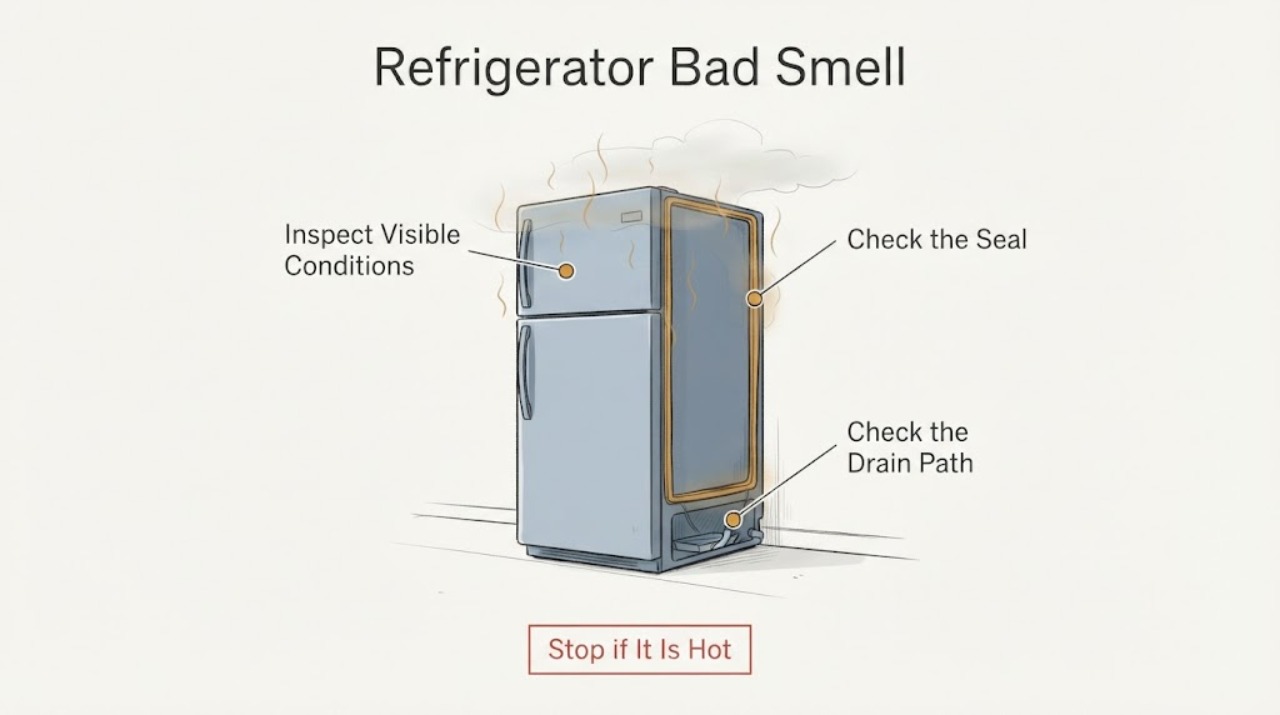
Samsung Refrigerator Bad Smell
A Samsung refrigerator bad smell should be traced to spoiled food, spills, the gasket, drain area, or an odor from a warming compartment. Remove spoiled food and clean accessible surfaces, verify doors close and cooling is normal, and arrange service for persistent odor with warming, standing water, electrical smell, or an inaccessible source.
-
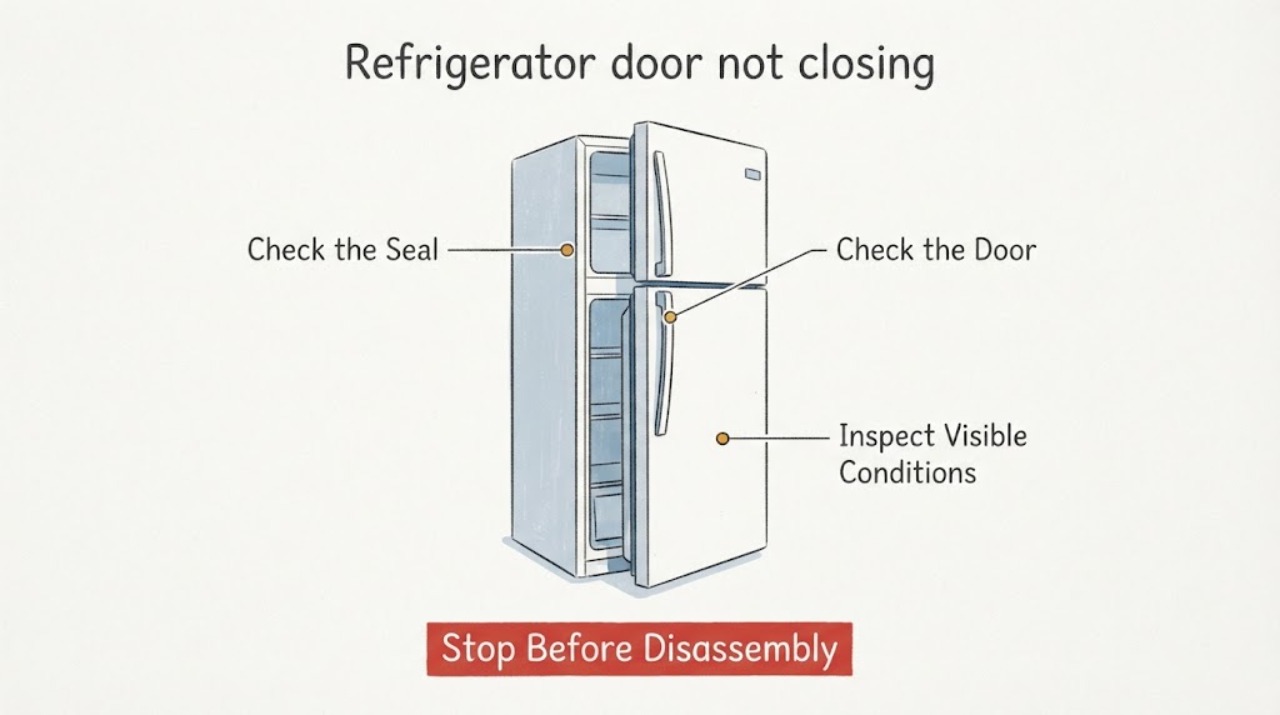
Samsung refrigerator door not closing: check blocks, seal, frost, and alignment
Start by finding the exact point that prevents the Samsung refrigerator door from closing: a food container, shelf, drawer, frost, or a door flap can stop the final seal. Remove only a loose obstruction and make sure shelves and drawers are fully seated.
-
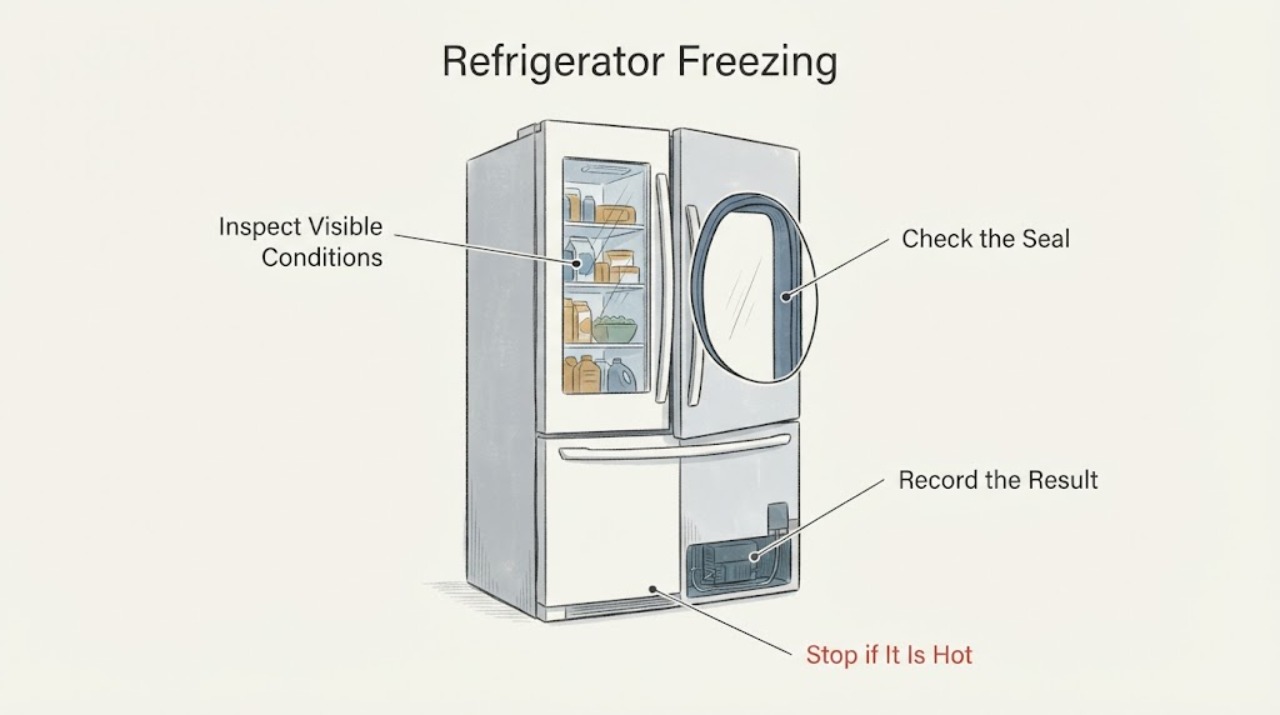
Samsung Refrigerator Freezing
A Samsung refrigerator that is freezing food needs a temperature, airflow, door-seal, and compartment check before a part is named. Confirm the setting and food placement, inspect the gasket and vents, and monitor after a model-correct adjustment; persistent freezing with an error or damaged seal needs service.
-
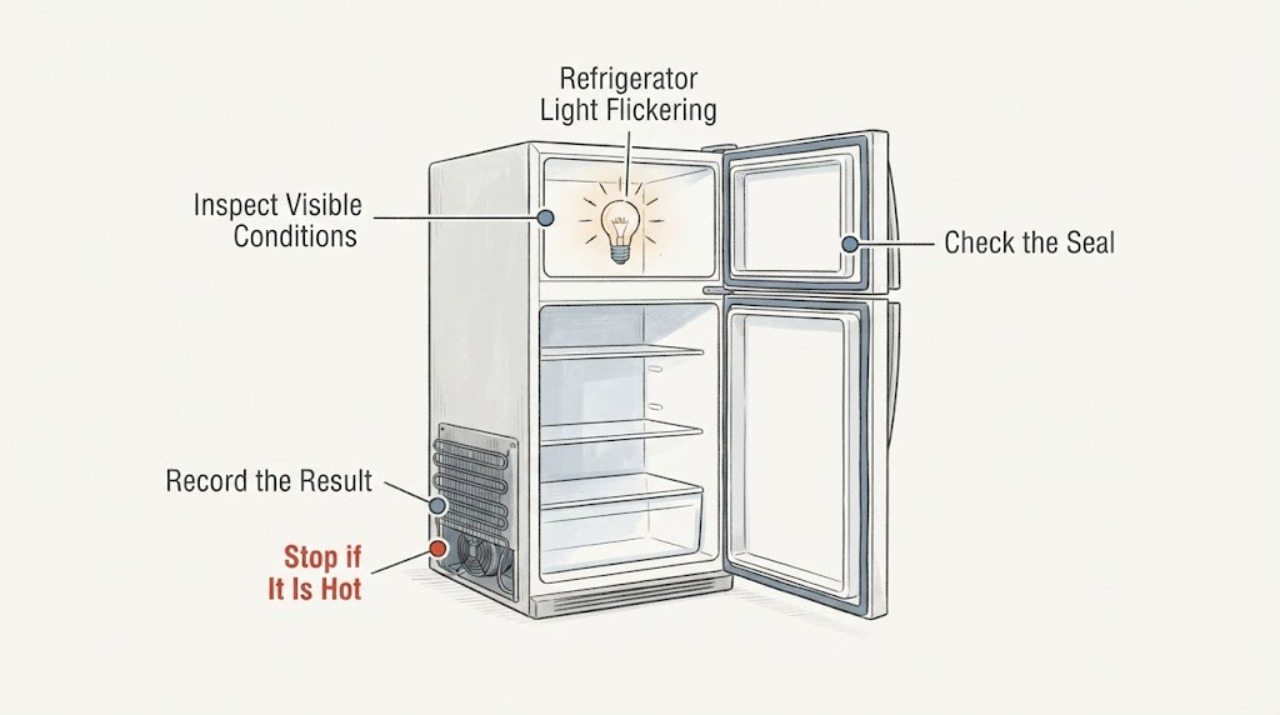
Samsung Refrigerator Light Flickering
A flickering Samsung refrigerator light or display should be separated from a blinking temperature or error display. Check door closure, accessible harness condition, and the panel indication; do not remove door wiring or live covers, and arrange service if flicker persists or accompanies cooling loss.
-
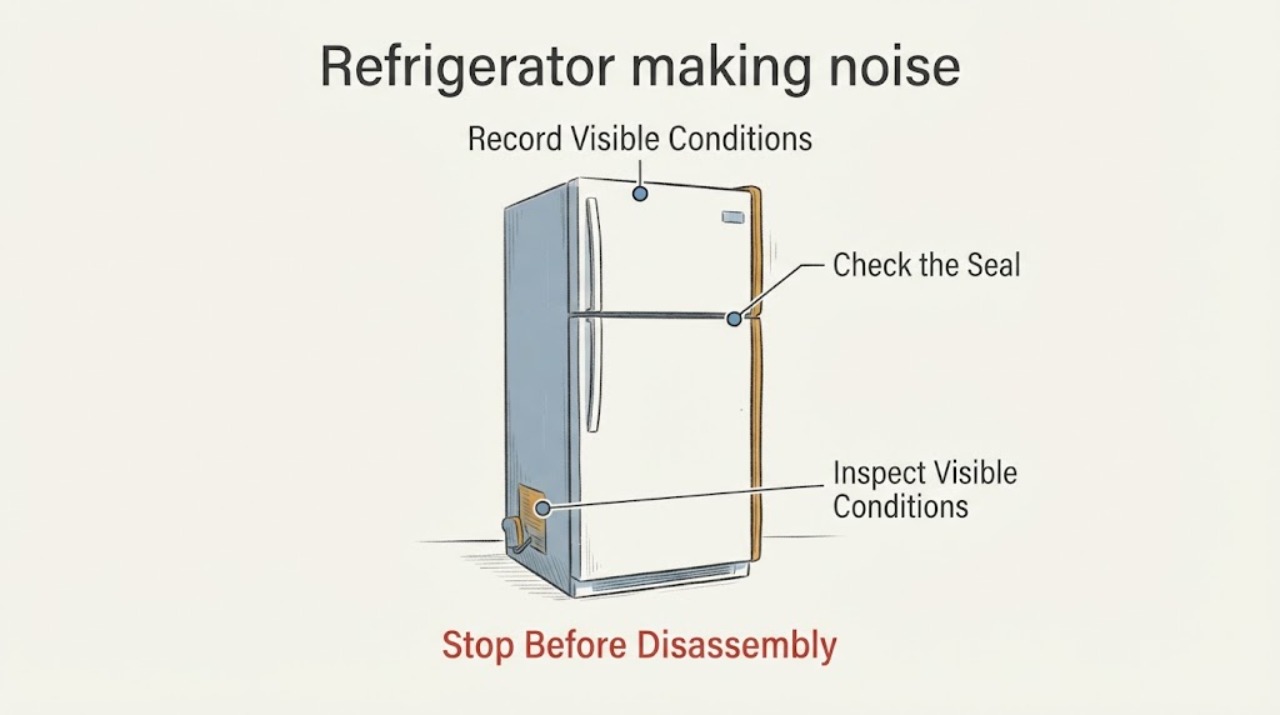
Samsung refrigerator making noise: identify the sound and know when to call service
First identify the sound, where it comes from, and whether it happens during cooling, ice making, dispensing, defrosting, or when a door moves. Quiet, brief cracking, bubbling, hissing, compressor humming, and ice-dropping sounds can be normal.
-
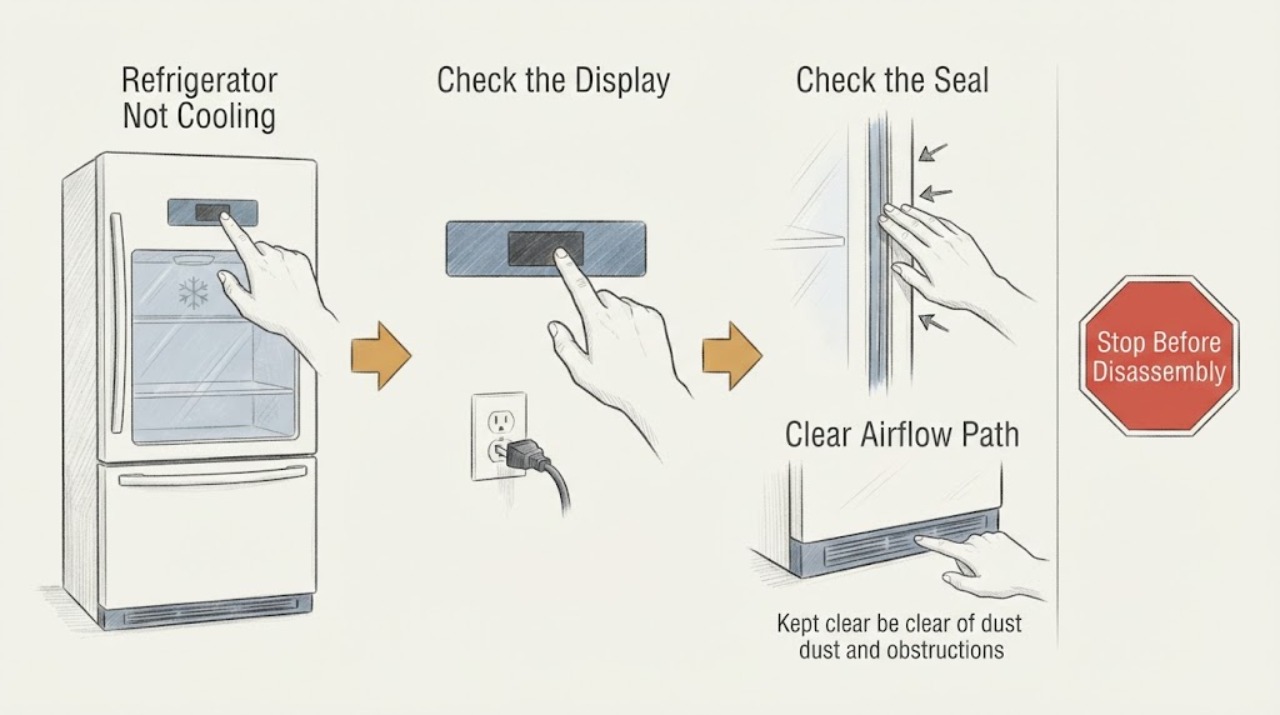
Samsung Refrigerator Not Cooling: Door, Airflow, and Power Checks
A Samsung refrigerator that is not cooling needs a compartment and power split first. Check whether lights/display work, confirm doors seal and visible vents are clear, and keep doors closed while observing. Persistent warmth, abnormal frost/noise, or any electrical hazard requires qualified service.
-
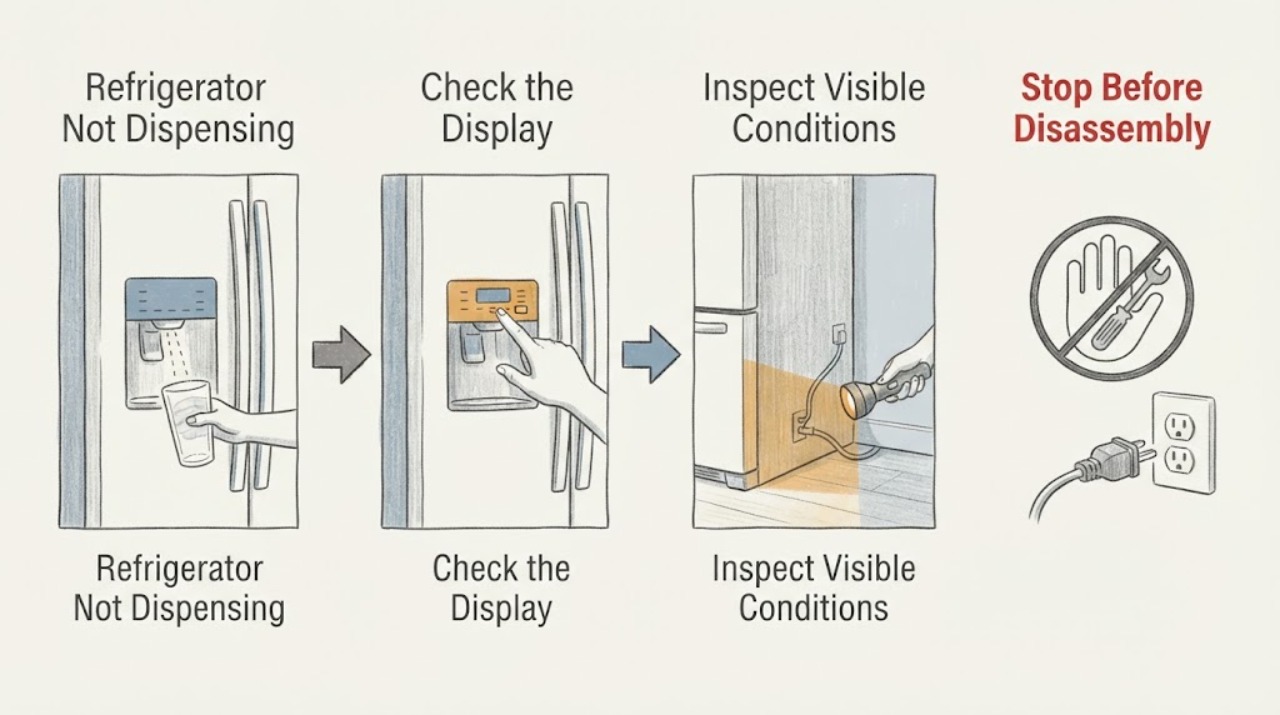
Samsung Refrigerator Not Dispensing: Lock, Water, and Filter Checks
For a Samsung refrigerator that is not dispensing, confirm the control lock is off and Water is selected, then separate silent operation from slow flow. Check only visible supply, tubing, and model-specific filter conditions. Persistent no-flow, leaks, or damaged fittings require qualified service.
-
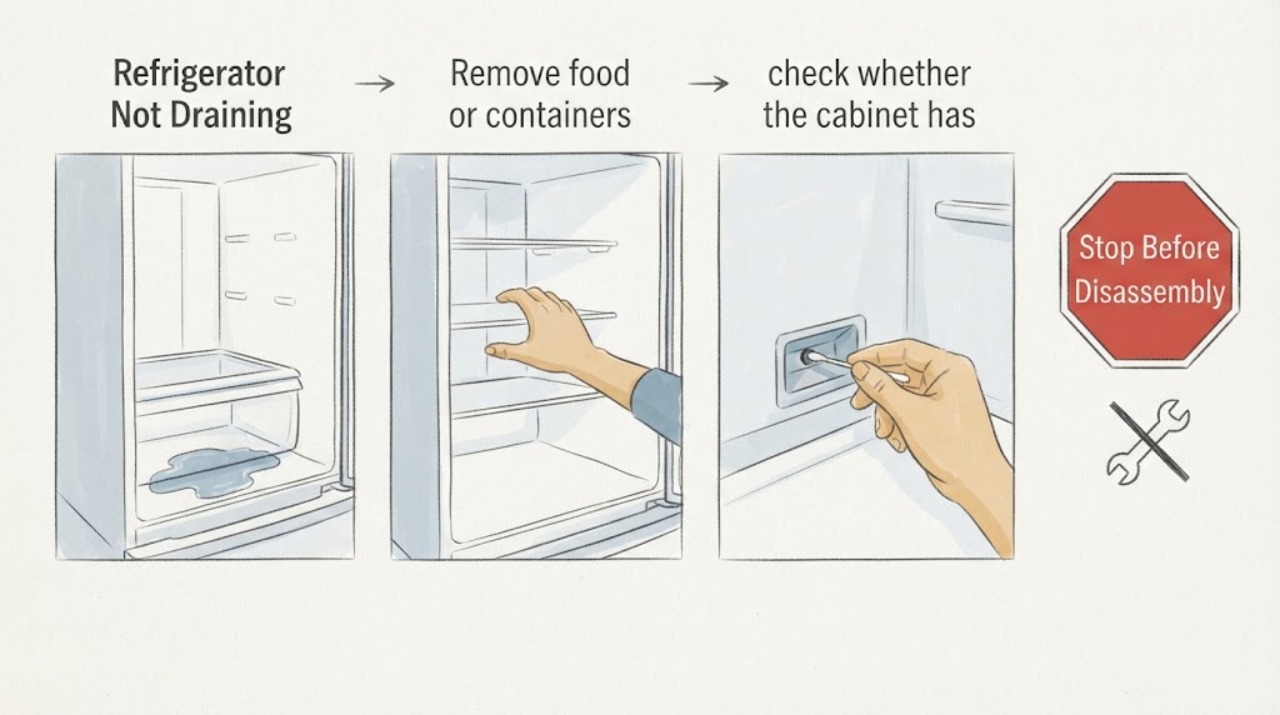
Samsung Refrigerator Not Draining: Trace the Water and Check the Drain Tray
A Samsung refrigerator that is not draining usually shows water under the drawers, inside the cabinet, or on the floor. Dry the water and identify its first location, check that the refrigerator is tilted slightly back as Samsung recommends for draining, and inspect only an accessible drain tray for standing water or damage.
-
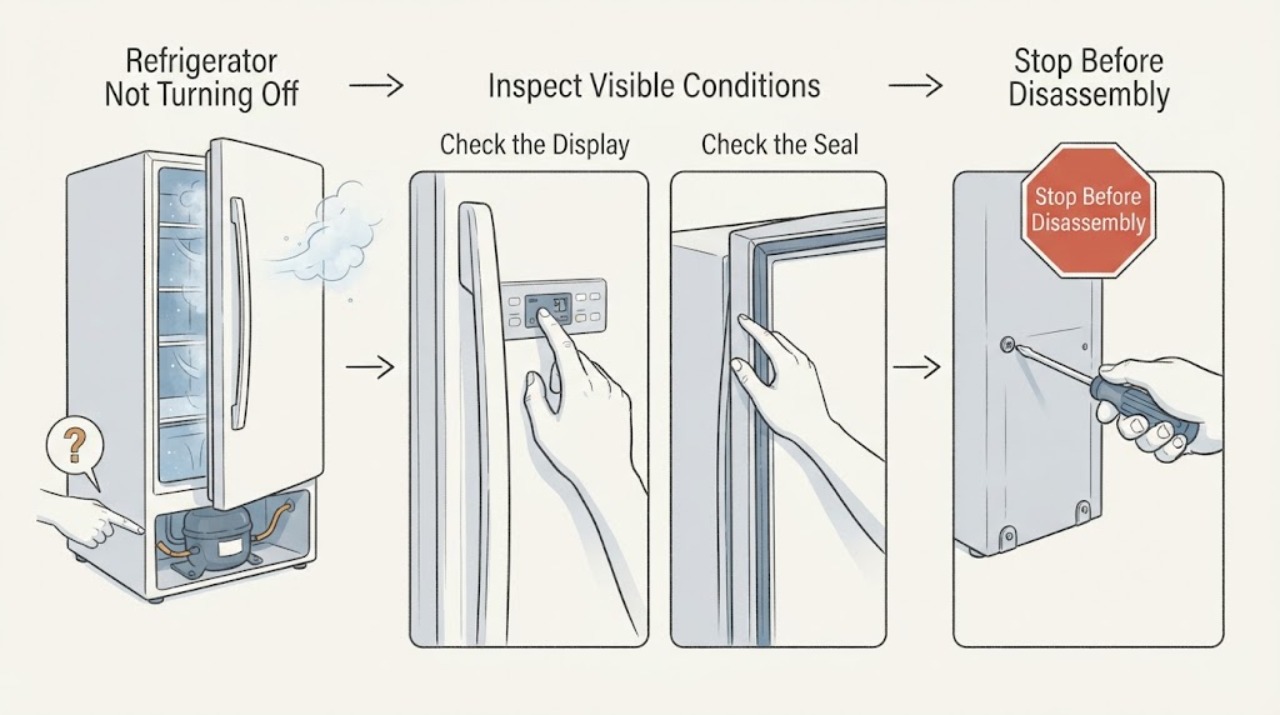
Samsung Refrigerator Not Turning Off: Safe Checks for Continuous Running
A Samsung refrigerator may run for a long time after warm food is loaded, a door is opened often, the room or nearby cooking area is hot, or Power Cool or Power Freeze is active. First identify whether the sound is the compressor or a circulation fan, confirm that the compartments are actually reaching temperature, turn off any temporary high-cooling setting using the model instructions, and check the doors, seals, vents, and clearance.
-
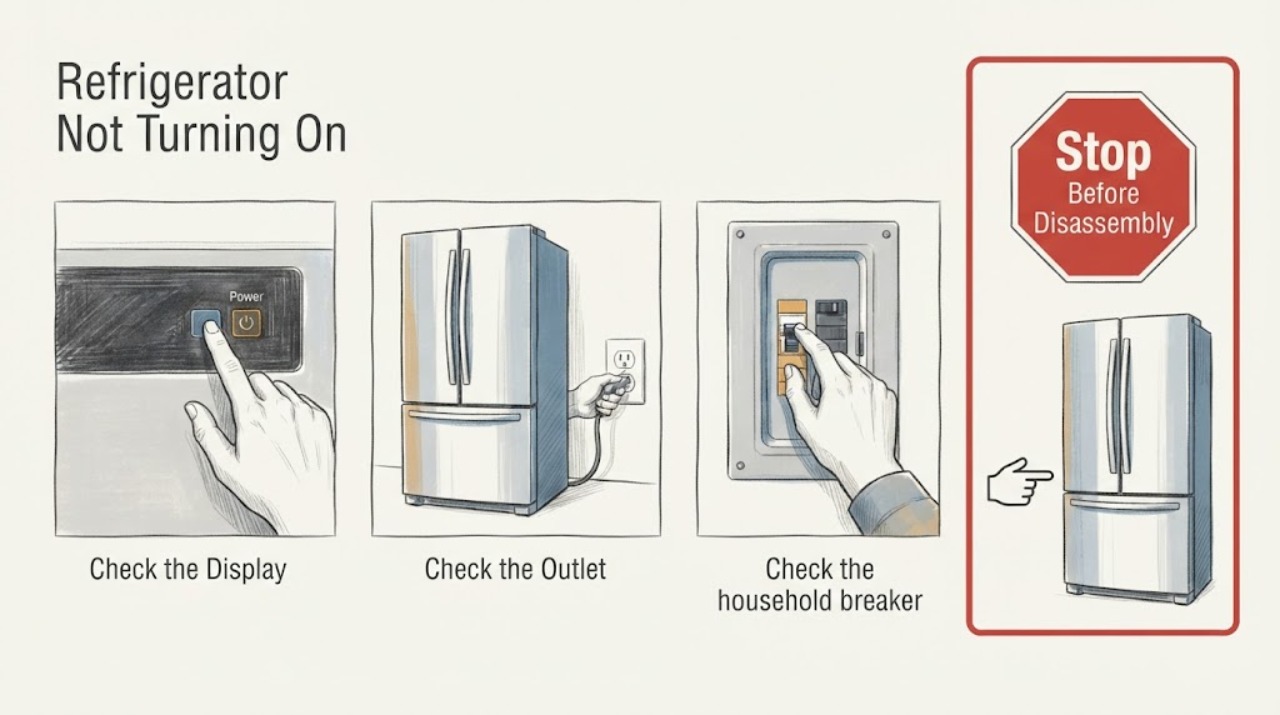
Samsung Refrigerator Not Turning On: Safe Power Checks
If a Samsung refrigerator will not turn on, first determine whether both the interior light and display are dark. Check the accessible plug, outlet, and breaker once when safe; do not repeatedly reset protection. A live outlet with a dark refrigerator, recurring trip, hot plug, smoke, or damaged wiring needs qualified service.
-
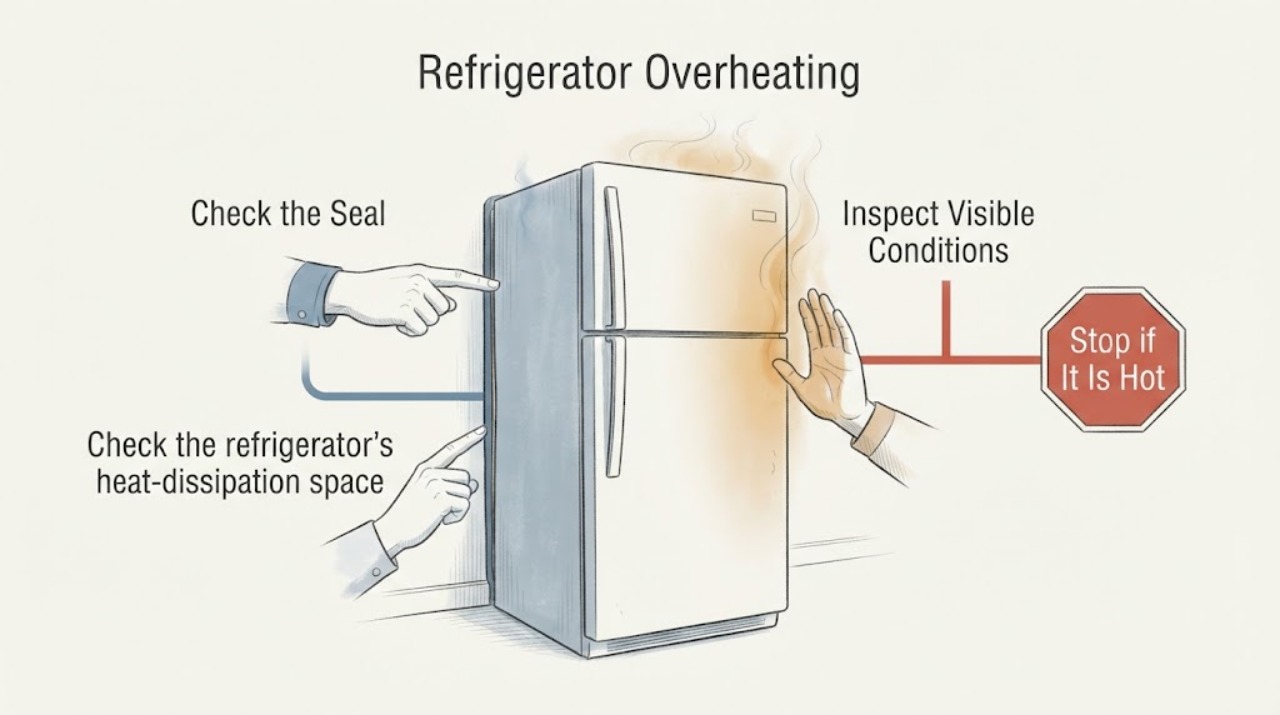
Samsung Refrigerator Overheating: Safe Checks for Hot Sides and Poor Cooling
Warm Samsung refrigerator side walls can be normal because the cooling system releases heat through the cabinet. Treat the refrigerator as overheating when the sides remain extremely hot together with poor cooling, food spoiling, continuous hard running, unusual noise, or an error message.
-
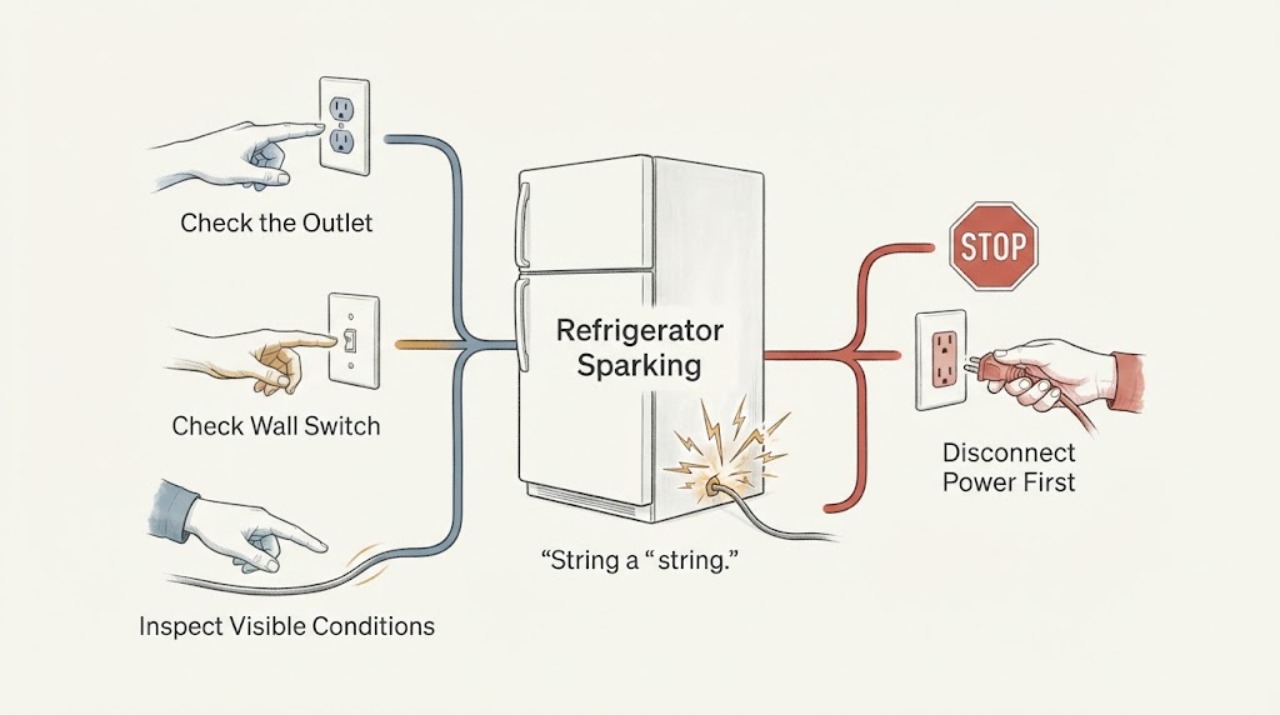
Samsung Refrigerator Sparking: What to Do Before You Use It Again
Visible sparking from a Samsung refrigerator, its plug, cord, or outlet is a stop-use symptom. From a safe position, cut power at the circuit breaker if you can do so without touching a smoking, wet, hot, or actively arcing appliance; otherwise leave it alone and get qualified help.
-
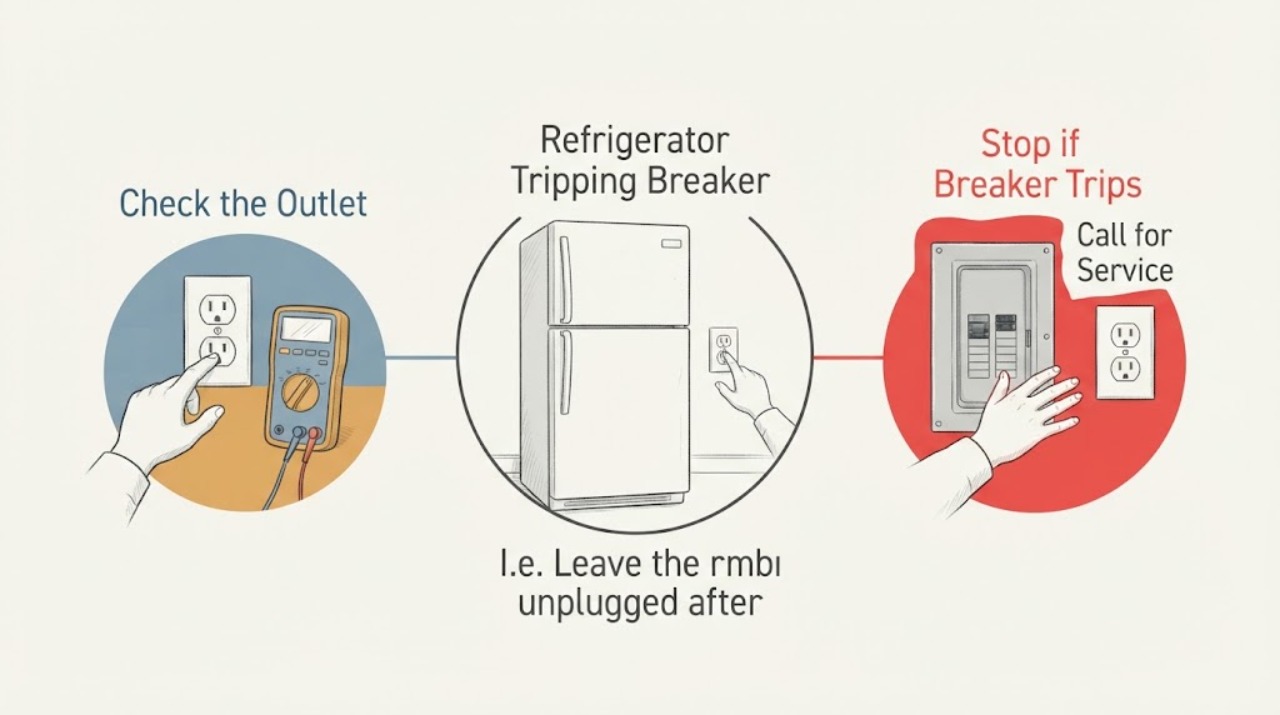
Samsung Refrigerator Tripping Breaker
If a Samsung refrigerator trips the circuit breaker, turn it off and identify whether the problem follows the refrigerator or stays with the outlet or household circuit. Check the outlet and plug for safe, direct power, inspect the cord without using a damaged one, and try one known-good, properly grounded outlet on a separate circuit only when there is no heat, smoke, water, or cord damage.