
On this page
Start here
Quick answer
A Samsung 4-door refrigerator can make a low, changing compressor hum during normal cooling, but Samsung says a compressor or ice-maker sound should not be so loud that it interrupts conversation. Rust is a separate finish or moisture concern; it cannot be diagnosed as a compressor fault from a photograph or sound. Because this refrigerator is less than a year old, record the exact sound, location, timing, cooling performance, and rust area, then contact Samsung or the selling channel for warranty assessment. From outside, check that the refrigerator is stable, has clearance, and is not touching a wall or cabinet. Do not remove the rear cover, puncture tubing, sand or repaint the rust, change refrigerant, or keep operating through a hot electrical connection, leak, loss of cooling, or rapidly spreading corrosion.
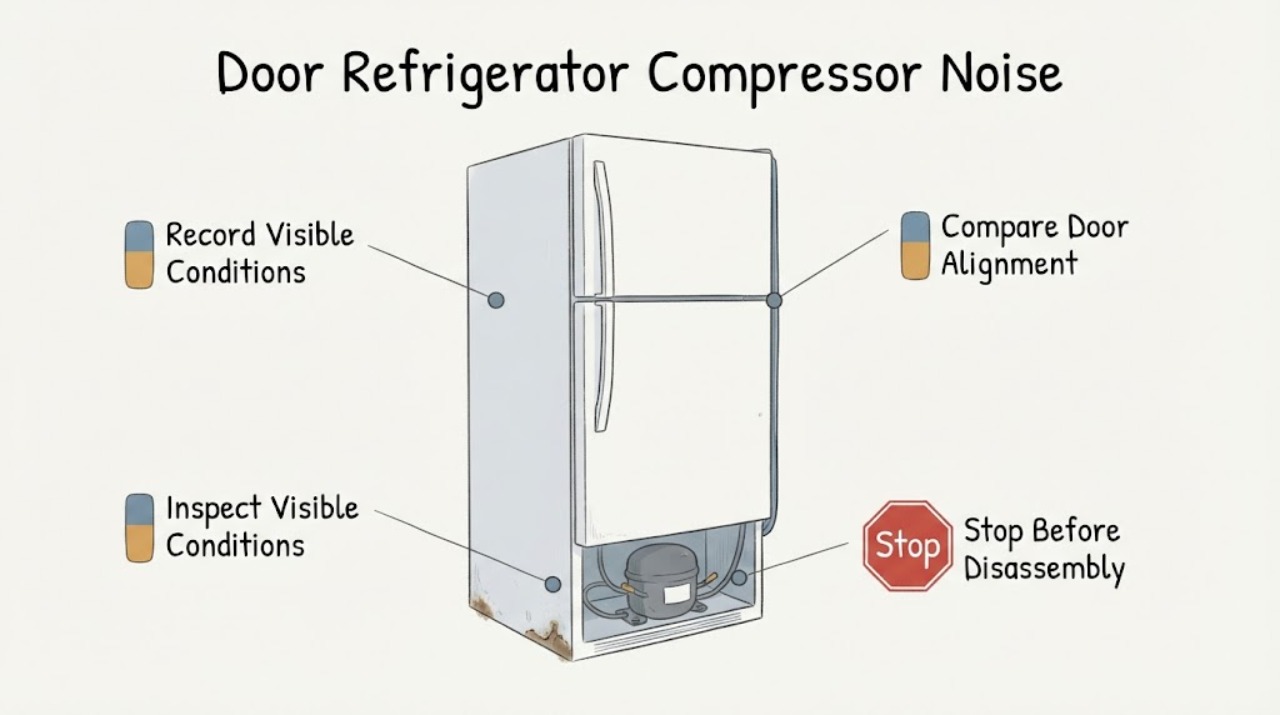
Work through in order
Diagnostic checks
Use only checks that match the exact appliance or system and its official guide.
-
Check 1
From a safe standing position, record the compressor-area sound without removing any cover: note whether it is a low hum, repeated click, rattle, grinding, or vibration; whether it changes with the cooling cycle; and whether it is loud enough to interrupt normal conversation. Do not put hands near the compressor, fan, wiring, or refrigerant tubing.
Expected result: The sound is a quiet, changing engine-like hum; a brief quiet rattle as the compressor stops; or a persistent loud rattle, grinding, or buzzing.
Next step: If the sound is quiet and cooling is normal, document it and monitor. If it is loud, worsening, accompanied by temperature change, or clearly abnormal, stop experimenting and arrange Samsung warranty/service evaluation.
Why this matters
Why: Samsung identifies a quiet engine-like compressor sound and brief low-volume operating changes as possible normal operation. Persistent loud noise, especially noise loud enough to interrupt conversation, is a service condition rather than a confirmed compressor diagnosis.
-
Check 2
Inspect only the accessible installation area: look for the cabinet or rear clearance being blocked, the refrigerator touching a wall or cabinet, an unstable stance, or a loose external object rattling against it. Do not pull a large refrigerator alone, tilt it, or reach behind live wiring; have the installer or service technician correct its position if movement is required.
Expected result: The cabinet is stable with clear space; something external is touching it; or the refrigerator is unstable, crowded, or visibly vibrating against the surroundings.
Next step: Remove only a loose external object that can be reached safely. For a large-appliance placement correction, use qualified installation/service help; if the sound remains loud after the surroundings are clear, use the warranty/service path.
Why this matters
Why: Samsung says external rattling and placement can amplify sound, and its noise guidance gives clearance and repositioning as a possible noise-reduction check. A clear installation does not prove the compressor is defective, and an unstable or blocked installation should not be corrected by unsafe solo movement.
-
Check 3
Photograph the rust before cleaning, including a close view and a wider view showing the door, cabinet, edge, hinge area, or base location. Note whether it is a surface-colored spot, bubbling or lifting finish, exposed metal, a wet trail, or corrosion spreading from a seam; do not sand, scrape, repaint, apply bleach, or use an abrasive pad.
Expected result: The mark wipes away as residue without damaging the finish; the finish is discolored or scratched but stable; paint is bubbling or metal is exposed; or moisture is returning from a seam, dispenser, or water connection.
Next step: Keep the area dry with a soft cloth only and preserve the photographs and purchase record. Do not cosmetically refinish a new appliance before Samsung or the seller evaluates the claim; arrange service promptly for exposed metal, spreading corrosion, or a leak.
Why this matters
Why: A photograph cannot distinguish surface residue, finish damage, and active corrosion with certainty. Bubbling, exposed metal, spreading corrosion, or recurring moisture needs warranty/service assessment. Samsung lists environmental rust or corrosion from improper care or humidity among exclusions, so the cause and maintenance history should be documented rather than assumed.
-
Check 4
Check cooling and electrical safety from the user-accessible interface: note refrigerator/freezer temperatures, food softening, warning indicators, unusual heat at the plug or outlet, burning odor, water on the floor, or a damaged cord. Do not reset repeatedly, open the rear cover, perform electrical diagnosis, or touch refrigerant lines.
Expected result: Cooling remains normal with no warning or hazard; temperatures rise; the plug/outlet is hot or damaged; or water, burning odor, or smoke is present.
Next step: For normal cooling, submit the photos and sound recording through Samsung warranty/service while the appliance is new. For rising temperatures, protect perishable food and request prompt service; for smoke, burning odor, water at electrical parts, or a damaged connection, stop use and isolate power only if safe.
Why this matters
Why: Noise and rust alone do not identify a sealed-system or electrical fault, but loss of cooling, a hot connection, water, smoke, or odor changes the safety and food-protection priority.
-
Check 5
Prepare the warranty request with the purchase date, complete model and serial numbers, a short audio or video recording made from a safe distance, the noise timing, cooling observations, photographs of rust, and any installation or delivery history. Ask Samsung to assess both the sealed-system/compressor symptom and the finish concern; do not order a compressor, fan, panel, or paint based on the symptom alone.
Expected result: The appliance is still within the reported first year; the model/serial and purchase record are available; or the noise/rust has been altered by a third-party repair or cosmetic treatment.
Next step: Submit the unaltered evidence to Samsung or the seller's authorized warranty channel and keep the appliance available for inspection. Do not authorize refrigerant or compressor work before the warranty route is checked.
Why this matters
Why: Samsung's published warranty page describes one-year parts-and-labor refrigerator coverage and additional sealed-system/compressor coverage, but eligibility depends on the actual product, region, cause, and warranty terms. A third-party alteration can complicate the assessment.
Use your observations
Decision map
Find the observation that best matches what you see, then follow the next safe action.
-
PATH 01Next step
What you see
The compressor sound is a quiet, changing hum, cooling is stable, the cabinet is not vibrating against anything, and the rust is a small stable surface mark with no moisture or exposed metal.
Do this next
Keep a dated recording and photos, maintain a clear stable installation, and contact Samsung or the seller if the noise becomes loud, the mark spreads, or cooling changes.
Why this path and its safety boundary
Why it matters: The sound may fall within Samsung's described normal operating range, while the finish mark still needs documented care and warranty context rather than a compressor diagnosis.
-
PATH 02Next step
What you see
Noise is persistent and loud enough to interrupt conversation, is grinding or rapidly worsening, or continues with temperature loss despite a stable unobstructed installation.
Do this next
Stop self-diagnosis and request Samsung warranty/service inspection with the recording, model/serial details, and cooling observations. Do not remove the rear cover or attempt sealed-system work.
Why this path and its safety boundary
Why it matters: Samsung treats very loud compressor, fan, rattling, or grinding sounds as a reason to request service. The sound does not establish which internal component failed.
-
PATH 03Next step
What you see
Rust is spreading, the finish is bubbling or exposing metal, moisture returns from a seam or water connection, or rust appears together with a hot connection, smoke, odor, or loss of cooling.
Do this next
Stop using the affected function and isolate power or water only when safe. Preserve photos and purchase records, protect food if cooling is lost, and request prompt Samsung or qualified appliance service; do not sand, repaint, puncture tubing, or open panels.
Why this path and its safety boundary
Why it matters: This is a warranty and safety escalation. Samsung distinguishes manufacturing defects from cosmetic/environmental corrosion exclusions, and the added moisture, electrical, or cooling symptom cannot be resolved by polishing.
Helpful context
Understand the symptom
The topic identifies a Samsung four-door refrigerator but does not provide a model number. Samsung's noise guide explicitly illustrates four-door French-door refrigerators and applies general refrigerator sound guidance, while its support site directs owners to search by the model code for model-specific manuals. Keep the full model and serial label with the warranty request; do not infer a compressor or finish part from the refrigerator shape alone.
Samsung describes compressor buzzing or humming as a quiet engine or motor sound that can start, change speed, click, or sputter briefly as the fan slows. It separately says very loud buzzing or humming should be serviced. Rust needs its own assessment: Samsung's warranty information distinguishes manufacturer defects from cosmetic damage and environmental rust or corrosion caused by improper care or humidity, so photographs, purchase date, location, and whether the finish is lifting or the metal is exposed matter before any cleaning or claim decision.
When checks do not resolve it
Need a professional?
Use Samsung or the authorized seller warranty route for a new four-door refrigerator with persistent loud compressor-area noise, spreading or bubbling rust, exposed metal, recurring moisture, cooling loss, or electrical symptoms. Provide the complete model and serial numbers, purchase date, photos, sound recording, installation context, and temperature observations. Do not authorize compressor, fan, sealed-system, panel, or finish replacement from symptom-only evidence.
Common questions
FAQ
Is a Samsung refrigerator compressor hum always a failure?
No. Samsung describes a compressor as sounding like a quiet engine or motor and changing speed during operation. It recommends service when buzzing or humming is very loud, especially when it interrupts conversation or occurs with cooling problems.
Can I sand or repaint rust on a Samsung refrigerator that is less than a year old?
Do not alter the finish before the warranty route evaluates it. Photograph the mark, keep it dry with a soft cloth, and record whether the finish is bubbling, metal is exposed, or moisture returns. Samsung's warranty page distinguishes manufacturer defects from cosmetic and environmental rust exclusions, so the cause matters.
What should I send Samsung when requesting service for noise and rust?
Send the complete model and serial information, purchase date, a safe-distance sound recording, the noise timing, cooling temperatures, installation context, and dated close and wide photographs of the rust. Do not remove panels or replace parts before the inspection.
Read the exact guide
Official sources
- Understanding the different noises coming from your Samsung refrigeratorSamsung Support US · Samsung refrigerator noise guidance, including four-door French-door examples, compressor hum, external rattling, fan noise, and service boundaries.
- Samsung's Best Refrigerator WarrantySamsung US · Samsung refrigerator warranty and service guidance for a new four-door Samsung refrigerator, including manufacturer-defect, sealed-system, compressor, cosmetic, and environmental corrosion considerations.
- Refrigerators | Samsung Support USSamsung Support US · Samsung refrigerator model-code lookup, manuals, warranty, and authorized repair routing for four-door refrigerator owners.
Community feedback
Share a repair observation
Share a plain-text repair observation. Accepted observations are published automatically; this page may take a moment to update.