
On this page
Start here
Quick answer
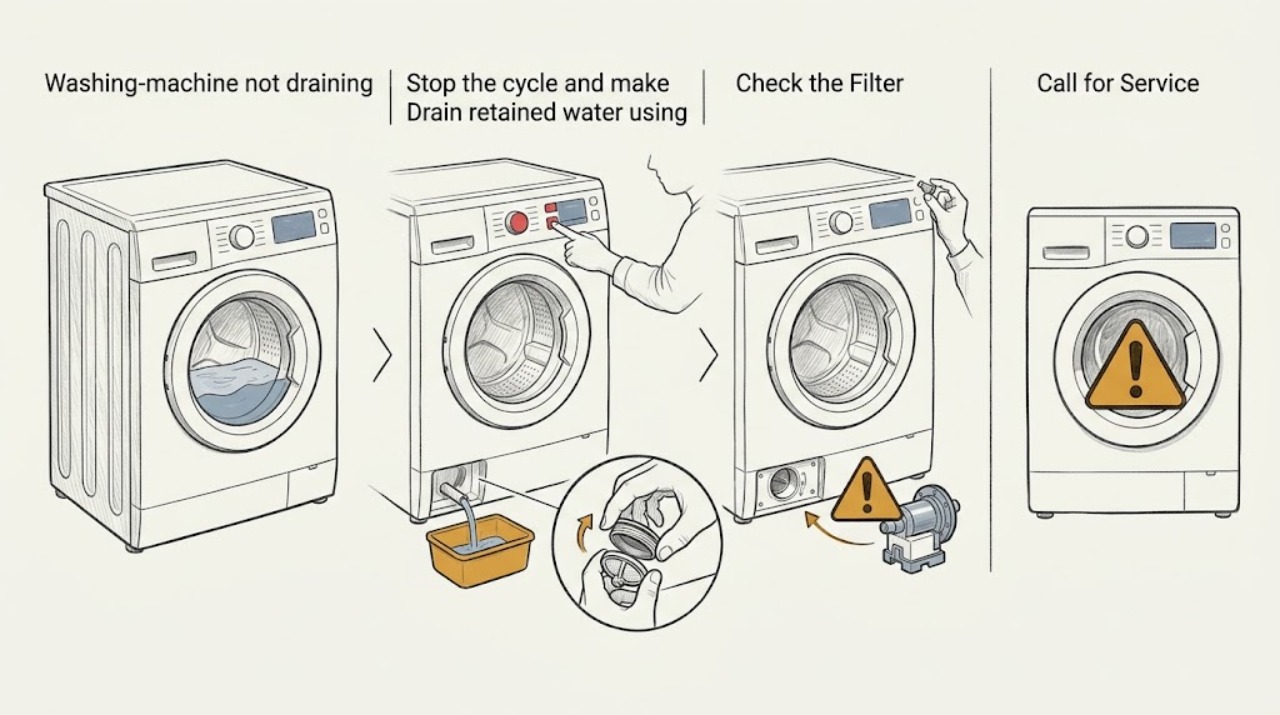
A Fisher & Paykel washing machine that will not drain most often has a blocked pump filter, a kinked or blocked drain hose, or a blocked household drain. Stop the washer and disconnect it from power before removing any part. If water remains in the drum, use the model's drain hose or other approved draining procedure into a shallow container, then clean the pump filter and clear only accessible hose or standpipe obstructions. Refit the filter and hose securely before one controlled drain or spin test. If the filter and drain path are clear but the washer still will not pump out, or if there is leaking, a damaged cord, an electrical trip, a repeated fault, or an unusual noise, leave it disconnected and arrange Fisher & Paykel authorised service.
Work through in order
Diagnostic checks
Use only checks that match the exact appliance or system and its official guide.
-
Stop the cycle and make the washer safe
Press pause or cancel if the controls respond, switch the washer off, and disconnect it from the power supply before removing a hose, opening the pump-filter cover, or reaching near retained water. Do not force the door. Check for an active leak, a damaged cord or plug, smoke, an electrical trip, or a strong burning smell; if any is present, keep the appliance disconnected and do not continue the drain test.
Expected result: The drum may contain standing water, the door may remain locked, the washer may show a fault or filter alert, or water may be escaping onto the floor. There may instead be no water but a failed drain command.
Next step: For any electrical, smoke, burning, or uncontrolled-leak symptom, leave the washer disconnected and arrange qualified service. Otherwise identify the exact model instructions and proceed to controlled residual-water drainage.
Why this matters
Why: Standing water creates a spill and door-safety issue, while electrical damage, smoke, or an active leak changes the problem from routine clearing to immediate service. A dry drum does not rule out a restricted drain path if the washer stopped before filling or after a partial drain.
-
Drain retained water using the model-approved method
With power disconnected, follow the exact Fisher & Paykel guide for the washer's pump-filter access. If the model provides a small drain hose, unhook it, place its plug end over a shallow container, and remove the plug to drain gradually; replace the plug and refit the hose afterward. If your model has a different arrangement, use only that manual's procedure and do not improvise a door release or tip the washer.
Expected result: Water may flow from the auxiliary hose, may be absent, or may stop because the hose or plug is restricted. The amount of water and whether the door can safely unlock after draining are model- and cycle-dependent.
Next step: Once water is controlled and the manual permits access, continue to the pump-filter inspection. If the provided drain route cannot be used safely or the water cannot be controlled, stop and call service.
Why this matters
Why: Controlled draining protects the floor and prevents water from rushing out when the pump filter is opened. Little or no water from the auxiliary hose does not prove the pump is good; water may still be held in the sump or the hose may itself be blocked.
-
Clean the pump filter and inspect the pump cavity
Keep the washer disconnected and place a shallow container and towels below the filter. Remove the filter only as described in the Fisher & Paykel manual, allowing residual water to escape slowly. Clean and rinse the filter, inspect the cavity for lint, coins, or other debris, and check that the impeller behind the filter moves freely only where the manual permits that check. Refit the filter fully in the specified direction and position.
Expected result: A visibly blocked filter or cavity is a direct restriction. A clean filter with a free-moving impeller means the next likely checks are the external drain hose and household drain; a seized impeller, damaged filter, or debris that cannot be removed safely needs service.
Next step: Refit the filter and continue with the drain-hose and standpipe check. Do not run the washer with the filter loose or missing, and do not dismantle the pump housing.
Why this matters
Why: Fisher & Paykel explicitly links a washer that is not draining with cleaning the pump filter and, on applicable models, clearing the cavity and checking impeller movement. This maintenance step cannot confirm the pump motor, wiring, or control operation.
-
Check the drain hose, standpipe, and household drain
With the washer still disconnected, inspect the visible drain hose for a sharp kink, crushing, leak, or loose connection. Confirm it is routed and supported at the height and method specified by the exact installation guide; do not apply a generic height from another model. Check the standpipe, tub, or spigot for lint or other obstruction that can prevent discharge. Do not reach into an inaccessible wall drain or move a heavy washer if that could damage hoses or the floor.
Expected result: A kinked hose, detached connection, blocked standpipe, or visible leak identifies an external drain-path problem. A correctly routed hose and clear accessible drain leave an internal pump, impeller, sensor, wiring, or control issue possible.
Next step: Correct only an accessible hose-routing or connection problem allowed by the manual, clean an accessible standpipe obstruction, and refit all connections. Then perform one controlled drain or spin test; if the path is clear but pumping fails, use service.
Why this matters
Why: Fisher & Paykel manuals list blocked or incorrectly connected hoses and blocked drains as causes of no draining, and installation guidance warns that poor routing can cause siphoning or flooding. Clearing a household drain is not the same as proving the washer's pump works.
-
Run one controlled drain test and stop if it fails
After the filter, drain hose, and any accessible standpipe obstruction have been corrected, reconnect power and select the model-approved drain or spin function with the washer observed from a safe position. Confirm that the hose remains secure, water exits to the intended drain, and the machine does not leak, trip the supply, or make an abnormal sound. Stop the test immediately for smoke, burning smell, a leak, damaged wiring, repeated fault, or loud unusual noise.
Expected result: The washer may pump out and complete the test, may hum without moving water, may remain silent, may drain slowly, or may immediately display the same fault.
Next step: If the test fails or any stop condition occurs, switch off, disconnect the washer if safe, keep the water supply controlled, and arrange Fisher & Paykel authorised service. Do not bypass a door lock, energize an exposed pump, or measure live voltage.
Why this matters
Why: Successful drainage after clearing points to a restriction or connection issue. A clear path with humming, silence, slow discharge, a repeated fault, or a new leak requires model-specific diagnosis; repeated cycles can add water and risk flooding.
Use your observations
Decision map
Find the observation that best matches what you see, then follow the next safe action.
-
PATH 01Next step
What you see
The pump filter or cavity contains lint, coins, or other debris, and the filter can be safely removed using the exact manual procedure.
Do this next
Drain residual water gradually, clean and rinse the filter, clear the permitted cavity area, refit the filter completely, and run one controlled drain or spin test.
-
PATH 02Next step
What you see
The drain hose is kinked, detached, leaking, or the accessible standpipe, tub, or spigot is blocked.
Do this next
With power disconnected, correct the accessible connection or hose routing according to the model installation guide and clear the accessible drain obstruction. Do not move the appliance or open a concealed drain if doing so is unsafe.
-
PATH 03Safety boundary
What you see
The hose and accessible household drain are clear, the pump filter is clean and seated, but the washer hums, remains silent, drains slowly, or repeats the no-drain fault.
Do this next
Stop repeated testing, disconnect the washer if safe, and arrange qualified Fisher & Paykel service to diagnose the pump, impeller, wiring, sensor, or control circuit.
Why this path and its safety boundary
Safety stop: True
-
PATH 04Next step
What you see
The washer is draining during filling or repeatedly siphoning instead of holding water for the cycle.
Do this next
Stop the cycle and check the drain-hose routing and support against the exact installation guide. Correct the accessible installation issue only if safe; otherwise use service or a qualified installer.
-
PATH 05Safety boundary
What you see
There is uncontrolled leakage, smoke, a burning smell, a hot or damaged cord or plug, an electrical trip, a damaged filter or hose, a locked door with unsafe retained water, or an abnormal loud noise.
Do this next
Stop immediately, disconnect the appliance only if safe, keep people away from the water or electrical hazard, and arrange qualified service. Do not force the door, bypass a safety device, or open the cabinet.
Why this path and its safety boundary
Safety stop: True
Helpful context
Understand the symptom
Separate a blocked drain path from a machine fault
A washer can stop with water in the drum when the pump filter, internal pump cavity, drain hose, or household drain is restricted. A hose that is too low or incorrectly positioned can also cause siphoning or installation problems rather than a failed pump. Fisher & Paykel's manuals use model-specific filter access and drain-hose arrangements, so identify the product code before following a procedure that differs from your manual.
Protect against residual water
Do not pull open a locked door or loosen a filter while the drum is full. Disconnect the washer from power first, protect the floor, and use the small drain hose or other method provided by the exact model when available. Water may remain behind the filter even after the emergency hose is drained; open the filter gradually and keep a shallow container ready.
What not draining tells a service technician
Record whether the drum is full, whether the washer hums or is silent during drain, whether the filter contained debris, whether the hose or standpipe was blocked, and whether a fault message appeared. These observations help a technician distinguish an accessible blockage from a pump, wiring, control, or safety fault without asking you to test live electrical parts.
Only after diagnosis
Potential parts
- pump filter
Consider a replacement only when the exact filter is damaged, missing, or cannot be cleaned and seated correctly; a blocked filter should be cleaned before treating it as a failed part.
Confirm the complete Fisher & Paykel product code and the manufacturer's fit information before ordering. - drain pump or drain hose
Consider an internal pump or hose replacement only after the pump filter, cavity, accessible hose, and household drain have been checked and a qualified diagnosis identifies the failed component.
Do not choose a pump or hose from the symptom alone; the exact model and authorised service information must confirm compatibility.
When checks do not resolve it
Need a professional?
Call qualified Fisher & Paykel service when safe external checks do not restore drainage or whenever an electrical, flooding, mechanical, or door-safety stop condition occurs.
Common questions
FAQ
What should I check first when my Fisher & Paykel washer will not drain?
Disconnect the washer from power, control any retained water using the model-approved procedure, and check the pump filter, visible drain hose, and accessible standpipe or drain for blockages. If the path is clear and the washer still will not pump out, stop testing and arrange qualified service.
Can I open the pump filter with water in the drum?
Do not open it without first disconnecting power and following the exact manual's residual-water procedure. Use the supplied small drain hose or other approved method over a shallow container when your model provides one, because water may still escape when the filter is removed.
Why is my Fisher & Paykel washer draining while it fills?
The drain hose may be routed or supported incorrectly, allowing siphoning. Check its installation against the exact Fisher & Paykel guide rather than applying a height from a different model. Correct only an accessible installation issue and arrange qualified help if the routing cannot be made safe.
Do I need a new drain pump if the washer is not draining?
Not necessarily. A blocked pump filter, pump cavity, drain hose, or household drain can produce the same symptom. Clean and refit accessible parts first; if the path is clear but the washer hums, stays silent, drains slowly, or repeats the fault, have a qualified technician identify the failed component and confirm the exact model fit.
Read the exact guide
Official sources
- Help & Support | Book A Service | Repair | Technician | Fisher and Paykel AustraliaFisher & Paykel · Manufacturer support boundary for troubleshooting, manuals, and authorised service partners.
- Fisher & Paykel Front Loading Clothes Washer User Guide (WH1060P1/WH1260P1)Fisher & Paykel · Official installation and troubleshooting examples for hose routing, standpipe or spigot connections, blocked drains, and siphoning; exact model instructions take precedence.
- Fisher & Paykel Front Loader Washer User Guide (WH1260YZB5)Fisher & Paykel · An official model example for the pump-filter drain procedure, cavity check, and no-drain troubleshooting.
- Fisher & Paykel Washer User Guide (WH8060P5–WH1260P5)Fisher & Paykel · Model-family guidance for draining, pump-filter cleaning, drain-hose checks, and troubleshooting; the exact product manual takes precedence.
Community feedback
Share a repair observation
Share a plain-text repair observation. Accepted observations are published automatically; this page may take a moment to update.