
On this page
Start here
Quick answer
Record the program stage and whether the machine is pumping, spinning, or holding water. Whirlpool's official guidance points first to a kinked or incorrectly routed drain hose, a blocked household drain, excess suds, a tightly packed or unbalanced load, a selected hold option, or a model-specific pump filter. Check only the visible hose and drain outlet without moving the appliance. If the exact manual identifies an accessible pump filter, isolate power safely, wait for water to cool, and control the discharge before following that manual; filter access is not universal. Do not open a full or hot filter, force a locked door, tilt the washer, use a generic error-code procedure, or continue operating with a leak, water near electrics, burning odor, smoke, sparks, or a tripped circuit. Persistent no-flow needs qualified appliance or plumbing service.
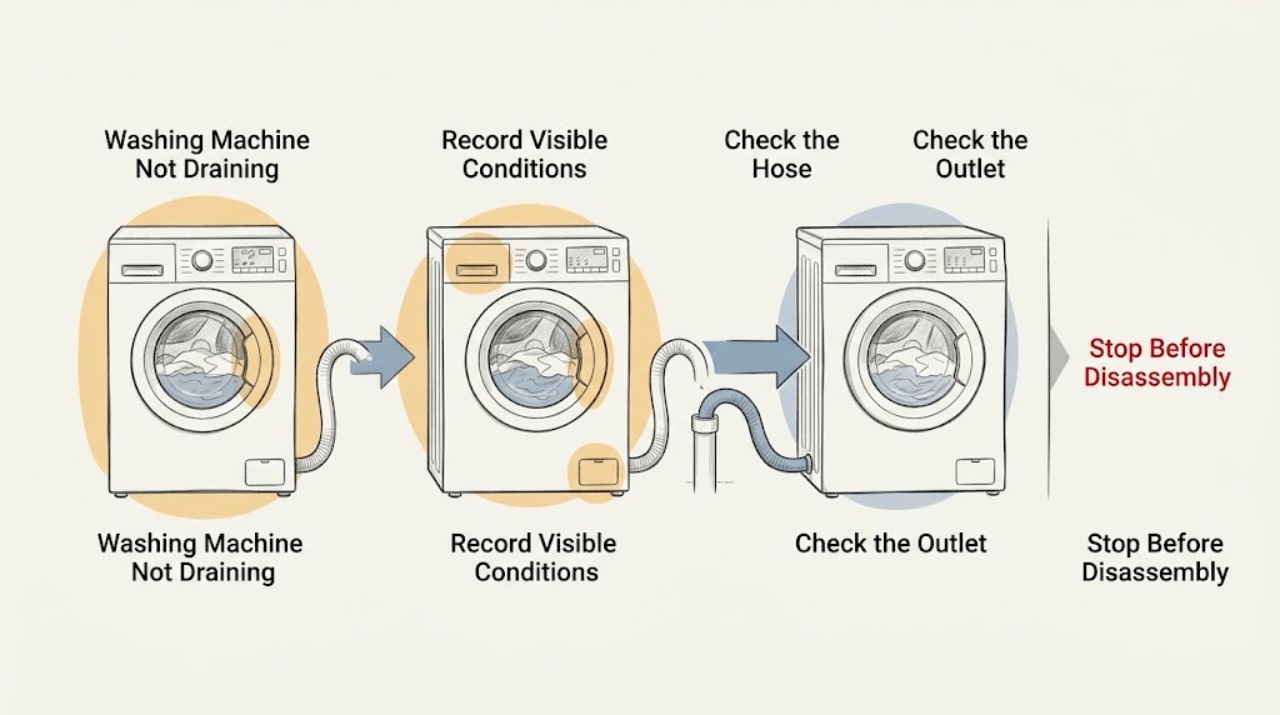
Work through in order
Diagnostic checks
Use only checks that match the exact appliance or system and its official guide.
-
Check 1
Pause the washer with its documented control and record the program stage, water level, door or lid lock, selected hold option, code or light pattern, and whether the pump is silent, humming, or cycling.
Expected result: The machine is still washing or rinsing, is in a drain phase, has stopped with water, or has drained but left the load wet.
Next step: Use the exact manual for a documented Drain, Drain and Spin, or equivalent command. Keep the door or lid closed while water or motion remains and continue only with safe external checks.
Why this matters
Why: The stage distinguishes a normal hold or delayed drain from a restricted path. A wet load can also result from slow spin or excess suds rather than retained water.
-
Check 2
Inspect the visible drain hose and household standpipe or utility sink without pulling the washer forward; look for a kink, crush point, clog, loose end, taped seal, or a slow household outlet.
Expected result: The hose is restricted, the outlet backs up, the hose is inserted or routed contrary to the model installation guide, or the visible path looks clear.
Next step: Correct only a plainly visible hose position in a dry safe area and clear a visible household obstruction without exposing yourself to sewage. Do not disconnect a full hose or move the appliance; request service if the restriction remains.
Why this matters
Why: Whirlpool identifies hose kinks, clogs, incorrect insertion, and unsuitable drain routing as causes of inadequate pumping or backflow. A clear visible path shifts attention to the pump, filter, internal hose, or control.
-
Check 3
Check for water, heat, or electrical exposure before opening any access cover: keep the door closed if water is hot or high, and inspect the plug, cord, outlet, and floor only from a dry position.
Expected result: Water is hot or spreading, the plug or outlet is wet or damaged, the floor is wet, or the area is dry and controlled.
Next step: Stop and obtain qualified appliance, plumbing, or electrical service for a leak, hot water that cannot be controlled, wet electrical equipment, smoke, sparks, burning odor, or a trip. Do not touch wet equipment or reset protection repeatedly.
Why this matters
Why: Hot water can scald and water near electricity can cause shock. A dry, cool, controlled machine is the minimum condition for any manual-authorized drain step.
-
Check 4
If the exact model manual shows an owner-accessible drain-pump filter or emergency drain, disconnect power from a dry safe position, place a suitable container and towels, and follow that manual's cool-water procedure slowly.
Expected result: The filter or emergency hose is confirmed for this model and water drains in a controlled way, or access is not documented, water is uncontrolled, or the cover will not move normally.
Next step: Clean only the debris and refit only what the exact manual permits. Stop for resistance, damage, persistent water, or any electrical warning; do not force the filter or use a generic procedure.
Why this matters
Why: Whirlpool notes that some front-load models have a cleanable pump filter, but the access and procedure are model-dependent. Resistance or uncontrolled water makes it a service task.
-
Check 5
Check the load and detergent history after the drum stops: note an overloaded or tightly packed load, a single bulky item, slow-spin program, rinse hold, or unusually heavy suds.
Expected result: The load is uneven or packed, the cycle intentionally holds water, the selected spin is gentle, or suds remain unusually high.
Next step: Use the model cycle guide, redistribute or reduce the load when safe, and measure the documented detergent type and amount. If water remains after the manual's drain path, stop repeating cycles and request service.
Why this matters
Why: Whirlpool links overload, imbalance, hold options, gentle spin, and excess detergent or suds to wet loads and reduced drain or spin performance.
-
Check 6
Read the complete code or indicator pattern and compare it only with the exact Whirlpool manual; record whether it appeared during fill, wash, drain, or spin.
Expected result: The code or pattern identifies a possible drain condition, excess suds, overload, lid or door state, or a system condition, or no code is shown.
Next step: Follow one documented clearing or restart step when the machine is safe and the manual permits it. If the code returns, keep the washer off and arrange service rather than guessing.
Why this matters
Why: Whirlpool warns that its code lists are not complete for every model. The same-looking display cannot safely establish a pump fault or justify an owner repair.
-
Check 7
Listen from outside during one safe documented drain attempt and observe only whether water moves, the pump hums, clicks, grinds, or stays silent; do not reach into the machine or restrain a moving drum.
Expected result: The pump runs and flow is normal, it hums with little flow, it makes a hard clicking or grinding sound, or it is silent while drain is selected.
Next step: Stop for grinding, leakage, burning odor, smoke, sparks, violent motion, a hot connection, or a tripped circuit. Keep the washer out of service and provide the stage and sound to qualified service.
Why this matters
Why: Flow and sound can separate a clear drain from a possible restriction, foreign object, pump, wiring, or control concern, but they do not identify an owner-replaceable part.
-
Check 8
Prepare a service record with the model and serial label, loading style, cycle and option, code, water level, drain-hose and outlet observations, pump sound, detergent, load, and any door-lock or leak behavior.
Expected result: The washer fails to drain again with a clear visible path, or the cause remains uncertain after the manual-authorized checks.
Next step: Keep the washer out of service when water remains or a stop condition occurred, and provide the record to qualified Whirlpool appliance or plumbing service.
Why this matters
Why: A complete record lets service match the model and distinguish hose, household drain, filter, pump, lock, suds, load, and control conditions without unsafe disassembly.
Use your observations
Decision map
Find the observation that best matches what you see, then follow the next safe action.
-
PATH 01Next step
What you see
Water remains after wash or rinse and the door or lid is locked
Do this next
Keep the opening closed, note whether the drum is moving or the water is hot, and use only the exact manual's documented drain path. Do not force the lock.
-
PATH 02Next step
What you see
Drain hose is kinked, clogged, incorrectly routed, or the household outlet backs up
Do this next
Correct only a plainly visible hose position in a dry area or arrange plumbing help for the outlet. Do not disconnect a water-filled hose or move a full washer.
-
PATH 03Next step
What you see
The exact manual confirms an accessible pump filter
Do this next
Isolate power safely, wait for cool controlled water, and follow only that manual's filter and discharge steps. Stop if access is resistant, damaged, or uncontrolled.
-
PATH 04Next step
What you see
The load is overloaded, unbalanced, on hold, gentle-spin, or surrounded by excess suds
Do this next
Use the model cycle and loading guidance, redistribute or reduce the stopped load, and correct detergent measurement. If water remains, return to the drain-path branch and request service when it persists.
-
PATH 05Next step
What you see
A drain-related code or light pattern returns
Do this next
Record the full display and stage, perform one manual-authorized clearing or restart step, and arrange service if the code returns. Do not use another model's code table.
-
PATH 06Next step
What you see
Leak, hot water, water near electricity, burning odor, smoke, spark, violent movement, hot connection, or repeated trip occurs
Do this next
Stop immediately, keep people away, and isolate power only from a dry safe position if that does not approach the hazard. Do not retry the drain; obtain qualified appliance, plumbing, or electrical service.
Helpful context
Understand the symptom
Read the symptom by stage
Wet clothes do not always mean that the pump has failed. A washer can leave water after a rinse-hold option, an unbalanced load, or a cycle that has not reached its drain stage. Whirlpool also notes that a drain pump may run during a documented drain routine and that the door can stay locked while water remains. Note the stage, water level, pump sound, and lock state before changing anything.
Drain parts vary by model
Whirlpool publishes separate guidance for top-load, front-load, compact, and other washer families. Some front-load models have an accessible drain-pump filter, while other designs require different service access. Use the model number to open the correct manual and do not copy filter location, hose routing, code meaning, or emergency-opening steps from another washer.
Safety boundary
Stop conditions
- Stop for hot or uncontrolled water, a leak, standing water near electrical equipment, a wet or damaged plug or outlet, smoke, sparks, a burning odor, a hot connection, violent movement, or a tripped circuit.
- Do not force a locked door or lid, reach into a moving drum, tilt or move a full washer, or open a pump filter without the exact model procedure and cool controlled water.
- Do not use another model's error-code table, drain-hose requirements, filter location, or emergency-release method.
- Do not keep repeating drain cycles, adding detergent, or resetting electrical protection after a fault.
Only after diagnosis
Potential parts
- drain hose or drain-hose seal
Consider this category only when the exact installation guide or qualified service confirms a damaged or restricted hose after the household outlet and visible routing are checked.
Confirm the full Whirlpool model and approved fit information; do not disconnect a full or leaking hose as a test. - pump filter or drain pump
Consider only when the exact model has the relevant filter or pump and qualified diagnosis links no-flow or abnormal pump sound to that component after the visible path is clear.
Filter access and pump fit vary by model; use the matching manual and qualified service with power isolated and water controlled. - door or lid lock assembly
Consider only when water has been safely addressed and qualified service confirms that a lock signal is preventing the documented drain or unlock sequence.
Confirm the exact model and approved service procedure; never bypass the lock or force the opening.
When checks do not resolve it
Need a professional?
Arrange qualified Whirlpool appliance service when the visible drain hose and household outlet are clear but water remains, a pump is silent or grinding, the exact manual has no safe owner filter procedure, the door or lid remains locked, a code returns, or any leak, hot water, electrical, smoke, spark, movement, or trip stop condition occurs. Use qualified plumbing service for a recurring household drain backup and licensed electrical service for a supply concern.
Common questions
FAQ
Why is my Whirlpool washer not draining but still humming?
A pump hum can occur during a normal drain routine, but hum with little or no flow can also accompany a kinked hose, blocked outlet, model-specific filter, pump restriction, or control problem. Check only the visible path and use the exact manual for filter access.
Can I clean the Whirlpool drain-pump filter?
Only if the exact model manual shows an owner-accessible filter and the water is cool, controlled, and away from electrical equipment. Some models have a filter and some do not; do not copy another model's access method.
Why is the Whirlpool door locked when the washer will not drain?
The lock can remain engaged to help prevent flooding while water is still detected. Keep the door closed, use the model's documented drain path, and never force the lock or use an emergency release without the matching manual and safe water conditions.
Can excess detergent cause a Whirlpool washer to drain poorly?
Yes. Whirlpool says excess suds can reduce pumping or spinning and leave the load wet. Use the detergent type and amount specified for the model and load; persistent retained water still requires a drain-path diagnosis.
Read the exact guide
Official sources
- Washer Not Draining or Spinning? Troubleshooting GuideWhirlpool Corporation · Whirlpool washer drain and spin troubleshooting, hose routing, suds, load, and model-dependent pump-filter guidance
- Not Draining - Washer - Product HelpWhirlpool Corporation · Whirlpool top-load washer drain hose, detergent, load, and wet-clothing guidance
- Latching a Front Load Washer Door - Product HelpWhirlpool Corporation · Whirlpool front-load door lock protection during motion, water, and drain faults
- Electrical appliancesGovernment of Western Australia · Electrical appliance safety near water, damaged cords and plugs, power isolation, and licensed electrical service
- Front Load Washer Installation Checklist - Product HelpWhirlpool Corporation · Whirlpool washer drain-hose routing, model-specific installation, and safe power connection guidance
- Error Codes in Top Load HE Washers - Product HelpWhirlpool Corporation · Whirlpool top-load washer code interpretation, drain, suds, load, lid, and model-manual limits
Community feedback
Share a repair observation
Share a plain-text repair observation. Accepted observations are published automatically; this page may take a moment to update.