
Whirlpool appliance guidance
Whirlpool Washing Machine Repair Guides
Troubleshooting and repair guidance for published Whirlpool Washing Machine problems, symptoms, and maintenance questions.
Published Whirlpool Washing Machine guides
Choose the guide whose symptom or condition most closely matches what you are seeing.
-
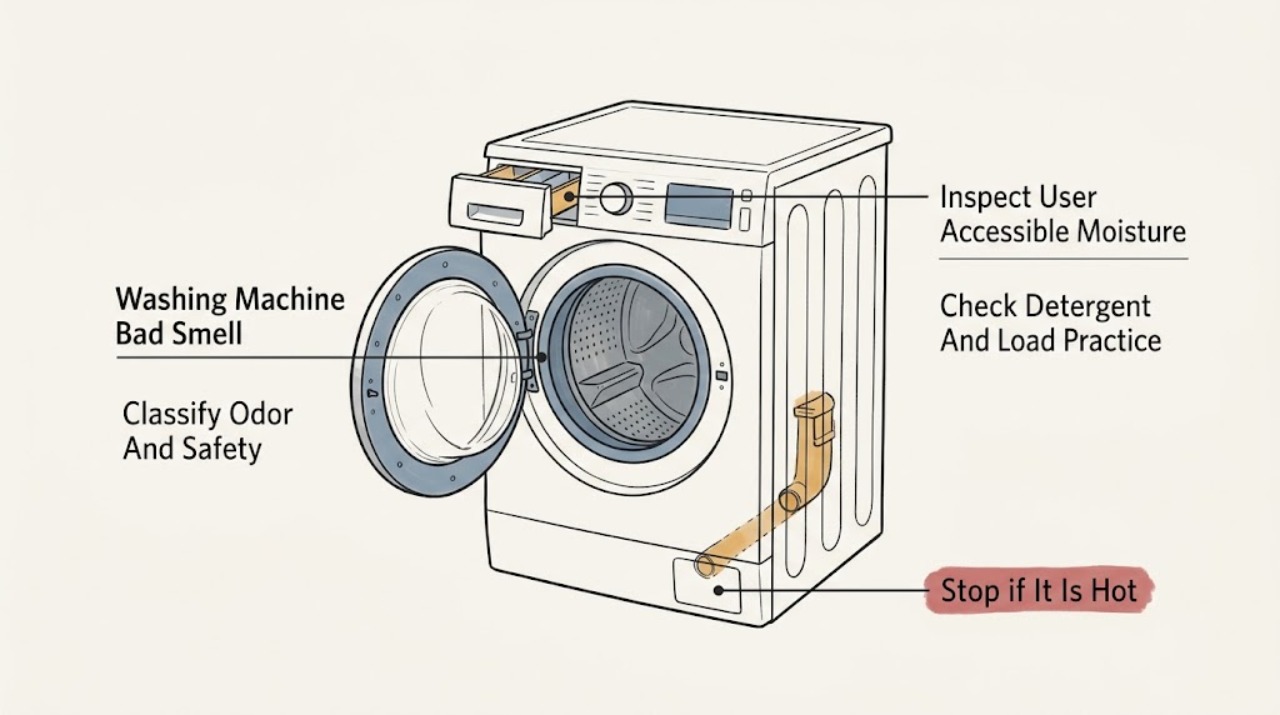
Whirlpool Washing Machine Bad Smell: Find the Odor Source and Clean It Safely
A Whirlpool washing machine smell is often caused by moisture left in the drum, door seal, dispenser, or drain path, detergent or soil residue, or wet clothing left in the washer. First identify whether the odor is musty, detergent or sewage-like, or hot/electrical.
-
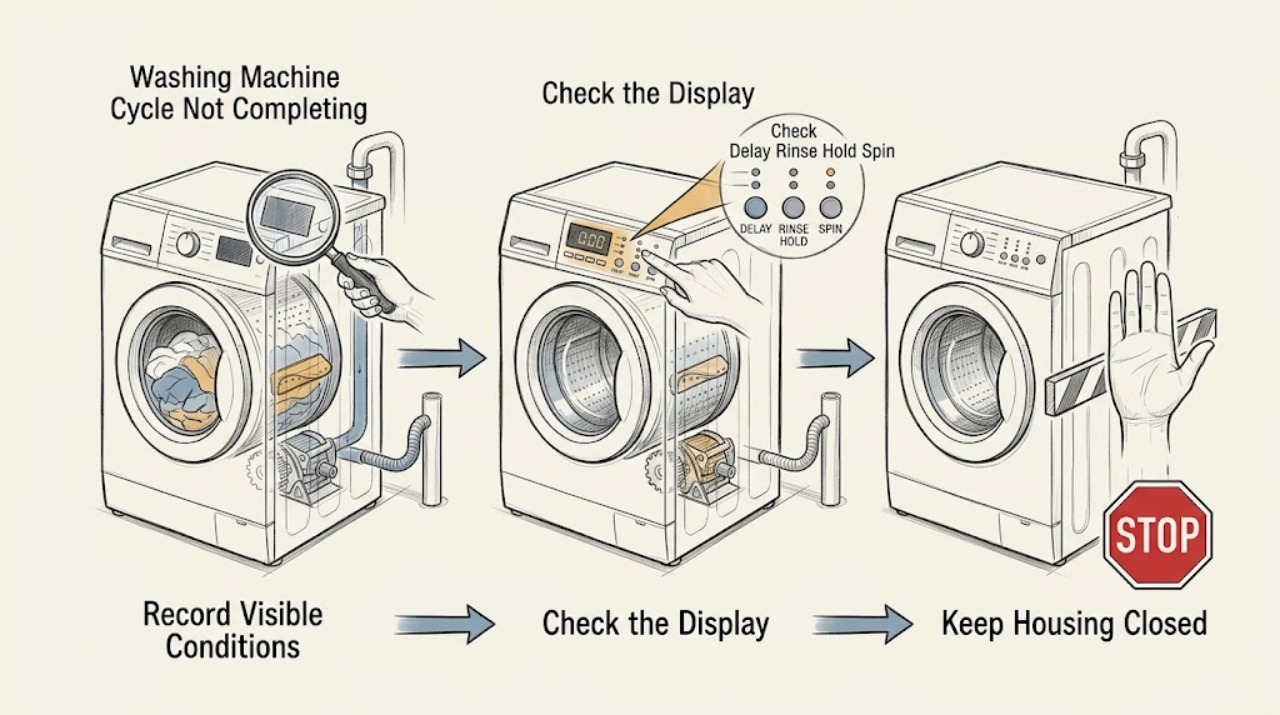
Whirlpool Washing Machine Cycle Not Completing: Find the Stage That Stops
A Whirlpool washer that stops before the cycle ends is easiest to diagnose by the stage shown when it stops: filling, washing, rinsing, draining, or spinning. First note any flashing code, control lock, delay or rinse-hold setting, remaining water, and whether the load is wet.
-
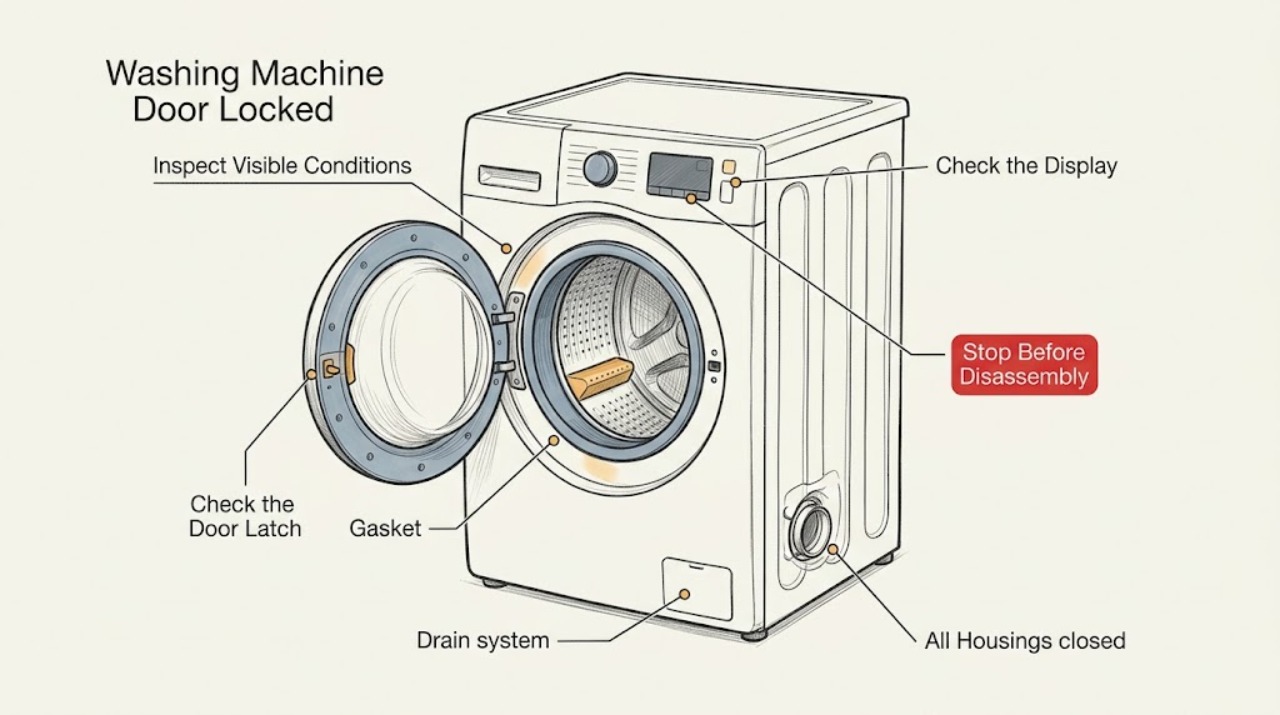
Whirlpool Washing Machine Door Locked: Check Water, Cycle, and Lock Safely
A locked Whirlpool washer door or lid is often protecting against a moving drum, hot water, or water still in the tub. First pause or cancel using the model instructions and confirm whether the drum is moving and whether water remains.
-
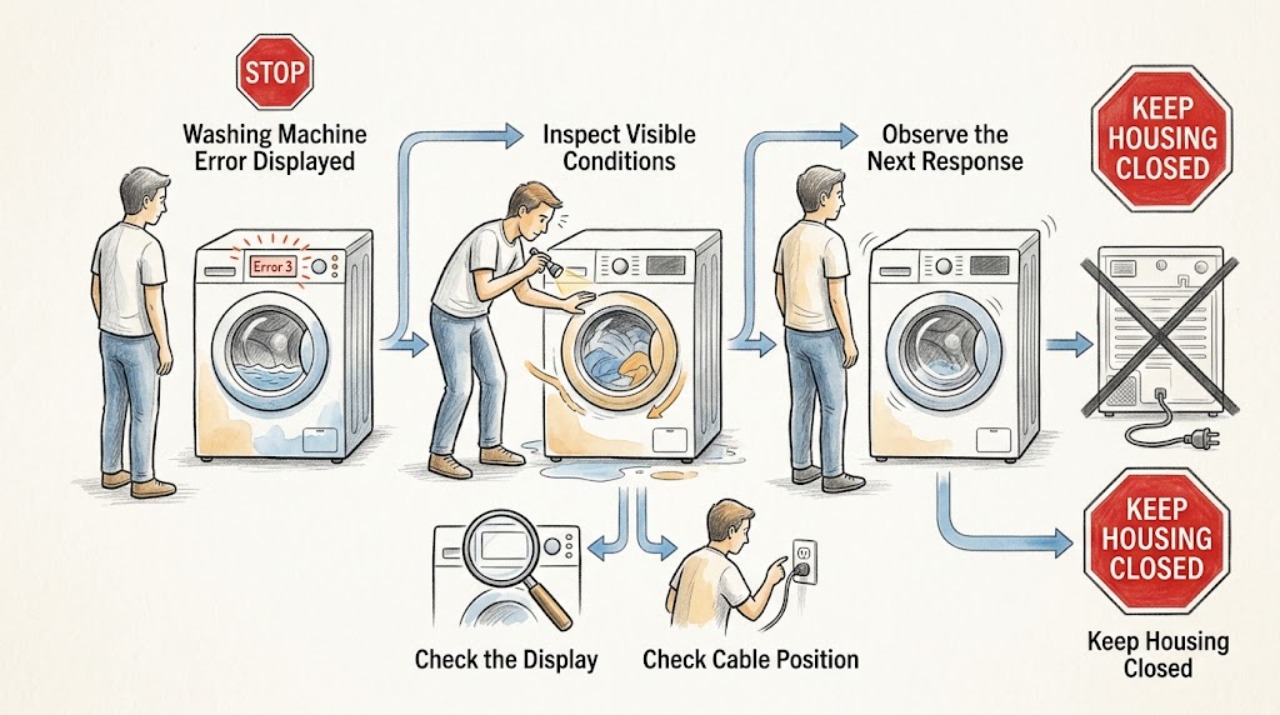
Whirlpool Washing Machine Error Displayed: Identify the Code Before Resetting
Do not interpret a Whirlpool washer code from a partial display or from another model. Photograph or write down the complete code, model number, washer style, cycle stage, water level, and whether the door or lid is locked.
-
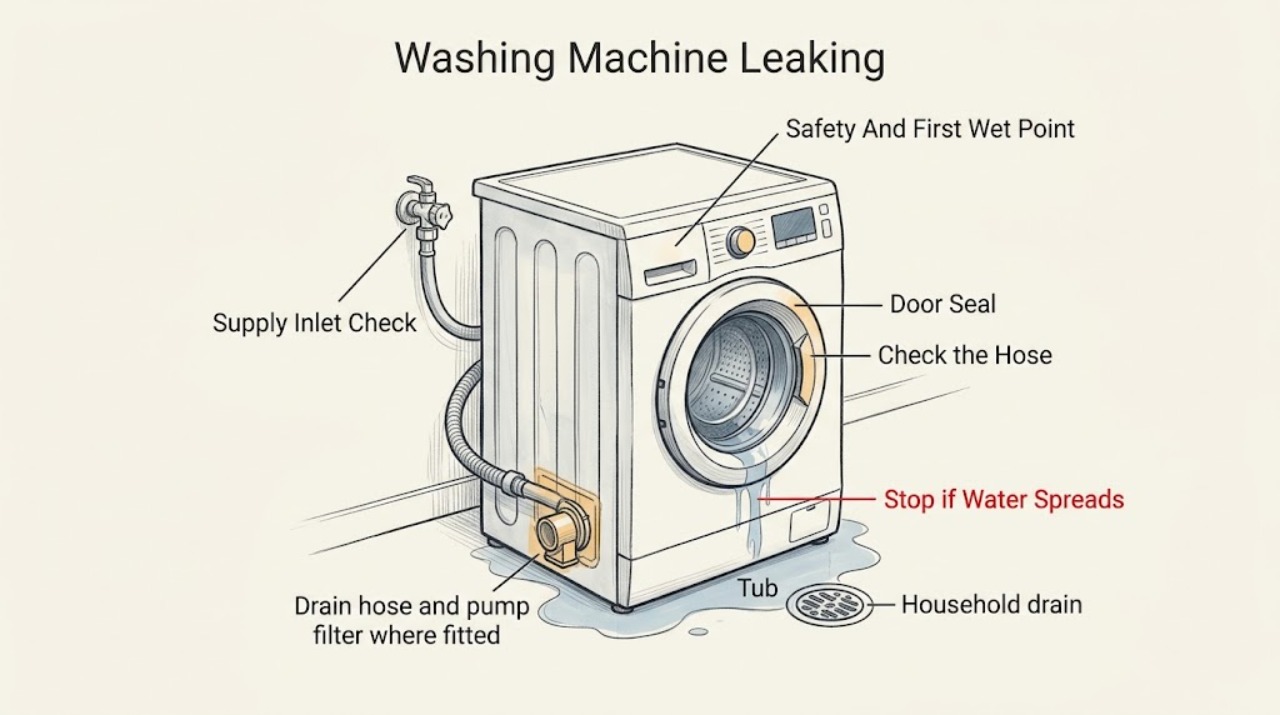
Whirlpool Washing Machine Leaking
Stop the cycle and find the first wet point before moving or opening the Whirlpool washer. Check the supply-hose connections, drain hose and household drain, dispenser, front-load door seal, and the load, suds, and level.
-
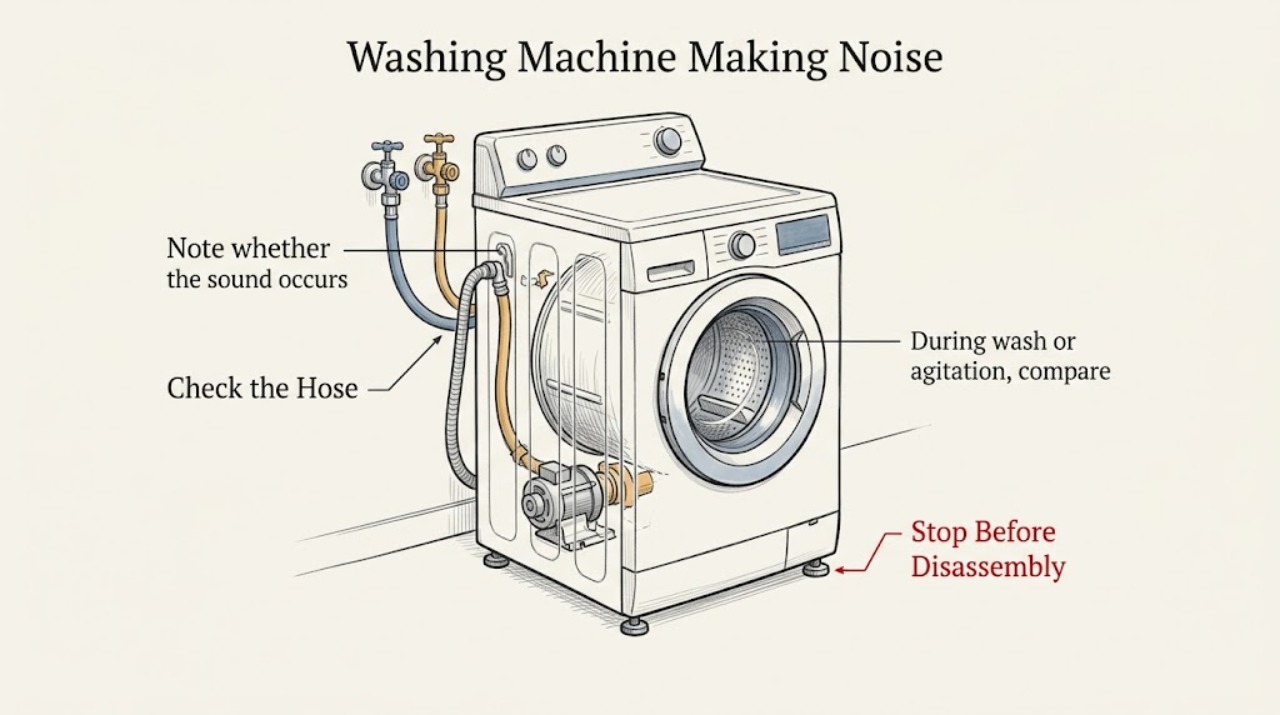
Whirlpool Washing Machine Making Noise: Trace It by Cycle Stage
Identify when the sound occurs before treating it as a failed part. Whirlpool describes a brief valve or hose knock during fill, motor or gear sounds during wash, a humming pump during drain, and some clicking as normal operation on certain models.
-
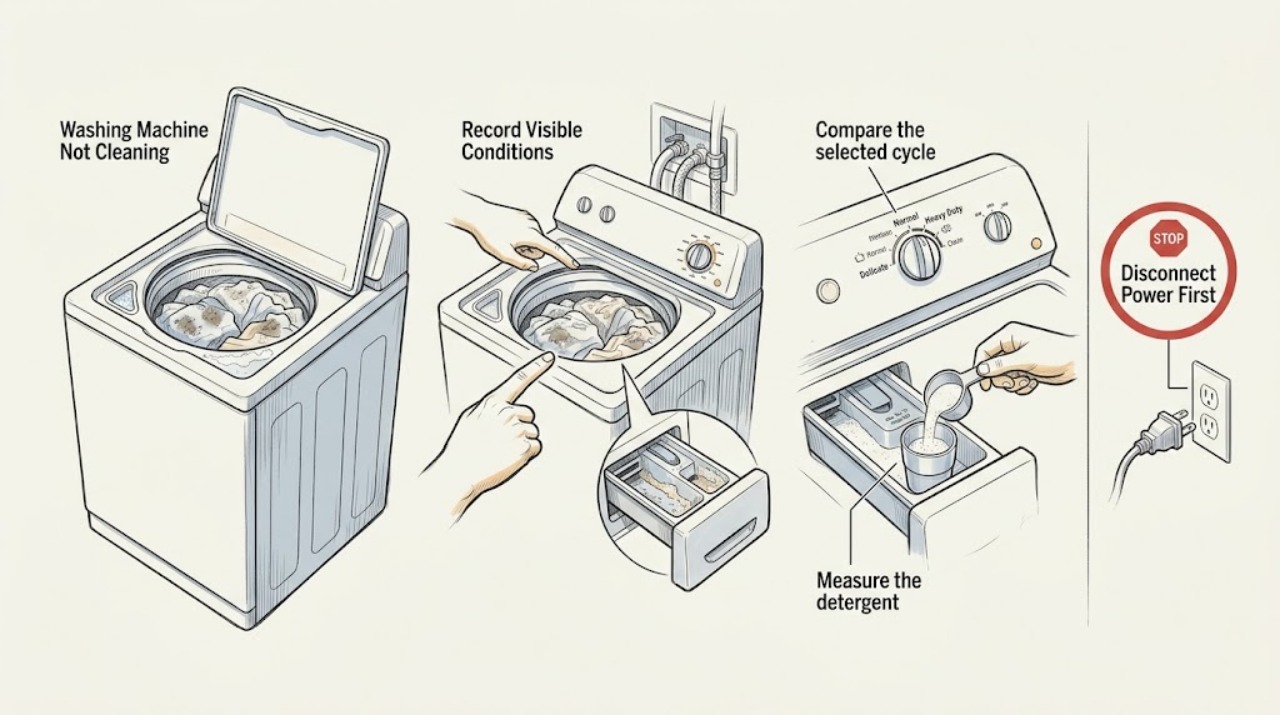
Whirlpool Washing Machine Not Cleaning: A Practical Diagnostic Guide
If a Whirlpool washer leaves soil or residue behind, first reduce and sort the load, choose the cycle and warmest fabric-safe temperature that match the soil, and use the measured amount of HE detergent. Confirm both water supplies are open where the model uses hot and cold inlets, and clean the dispenser only as the model manual allows.
-
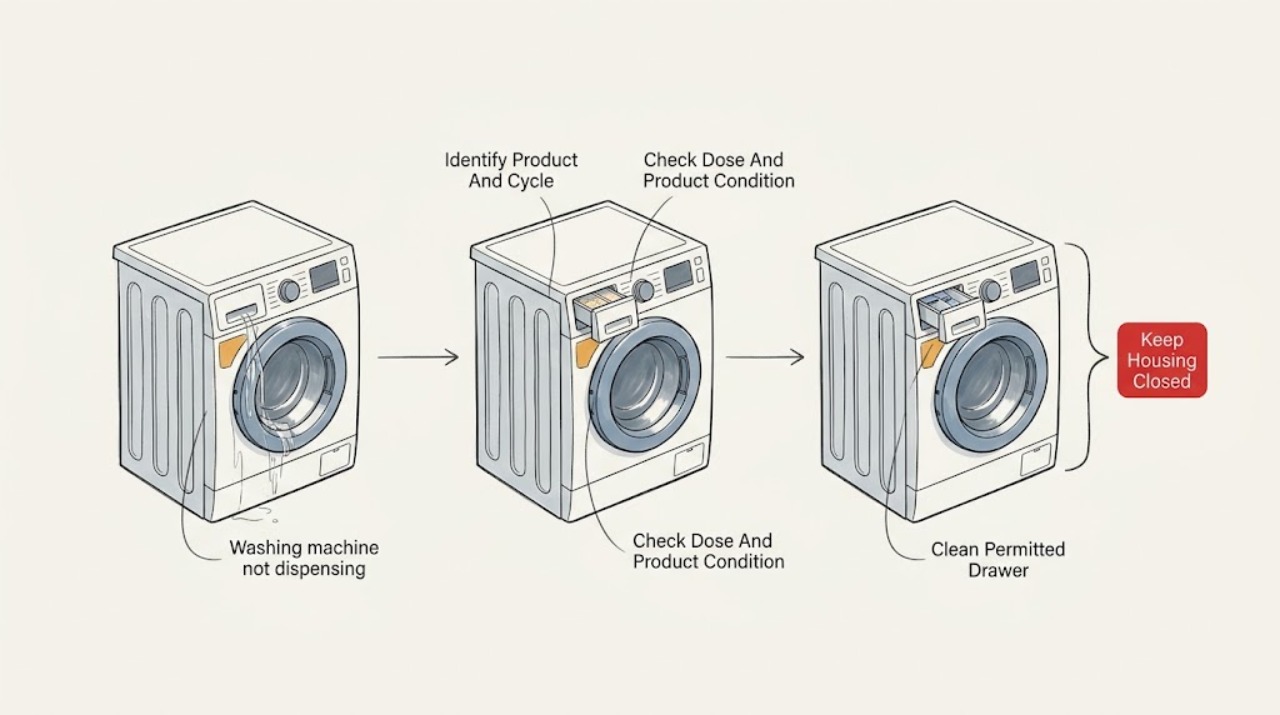
Whirlpool washing machine not dispensing: check the right dispenser path
When a Whirlpool washing machine does not dispense an additive, first identify whether the problem is detergent, liquid fabric softener, liquid chlorine bleach, or a Load & Go bulk dispenser. Confirm that the selected cycle and dispenser option match the exact model, that the product is allowed for that compartment, and that it is not overfilled, too thick, or left as residue.
-
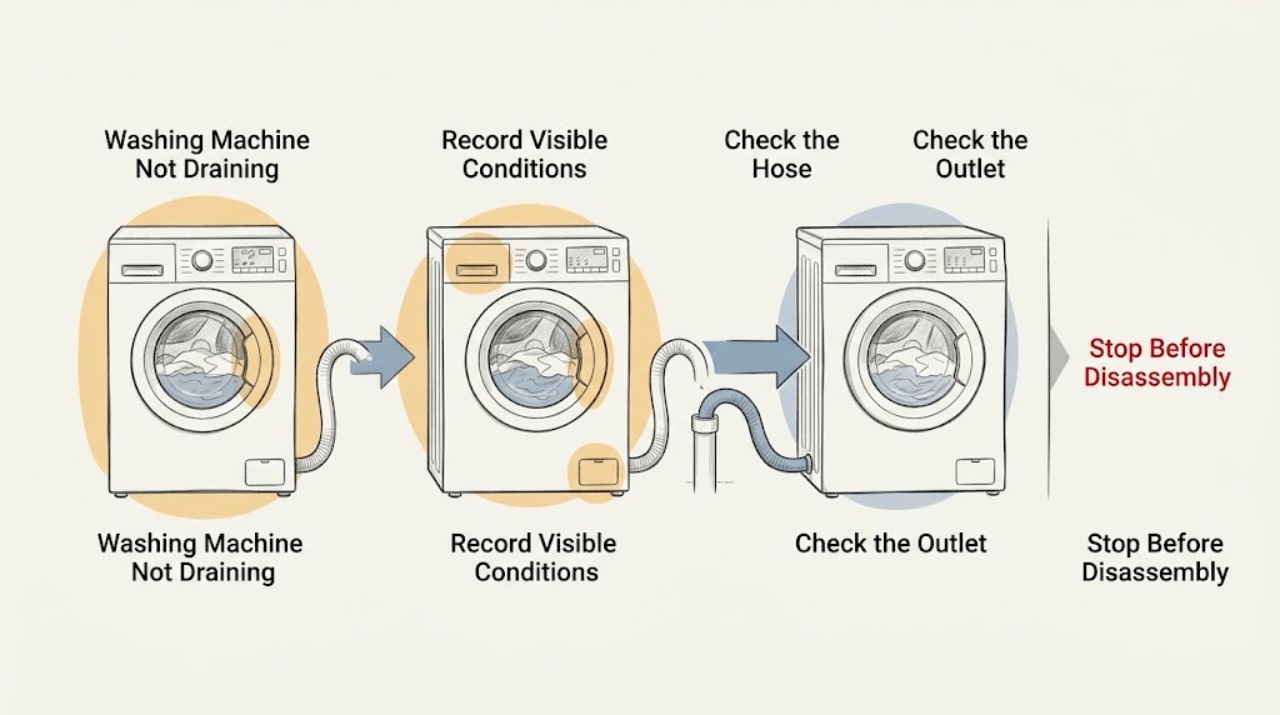
Whirlpool Washing Machine Not Draining: Check the Path Before the Pump
Record the program stage and whether the machine is pumping, spinning, or holding water. Whirlpool's official guidance points first to a kinked or incorrectly routed drain hose, a blocked household drain, excess suds, a tightly packed or unbalanced load, a selected hold option, or a model-specific pump filter.
-
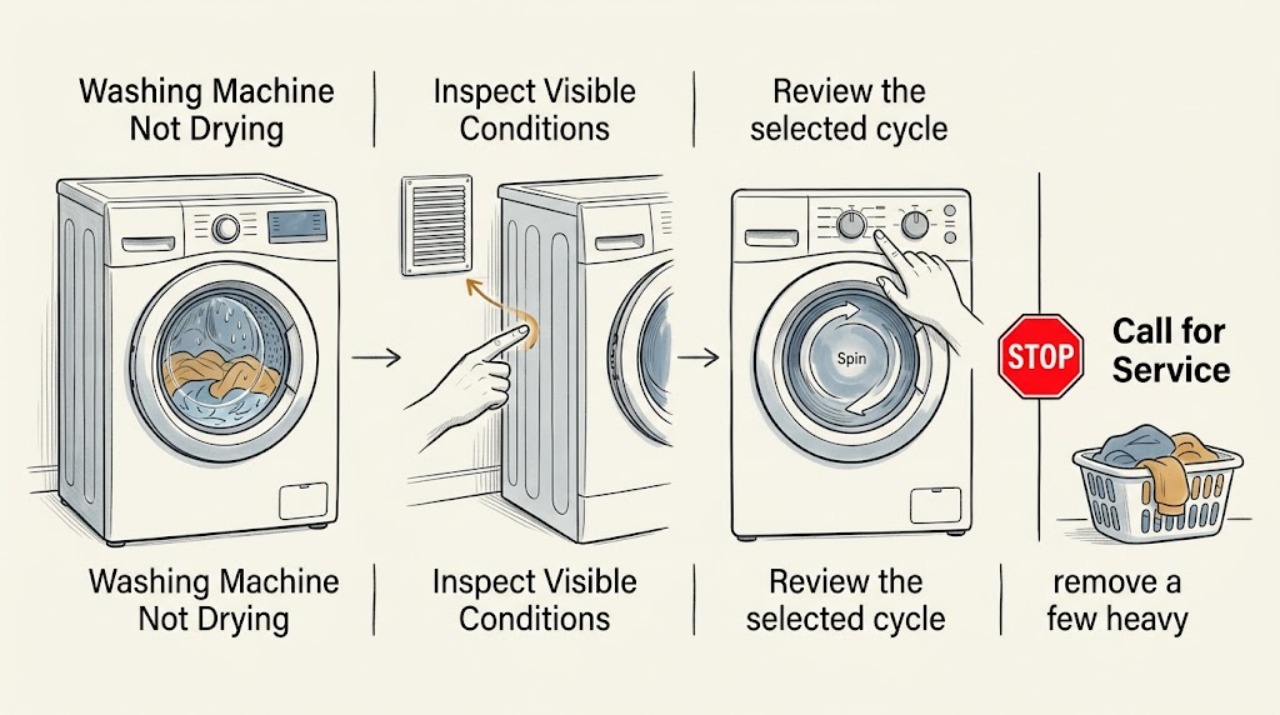
Whirlpool Washing Machine Not Drying: Clothes Still Wet After a Cycle
A Whirlpool washer does not normally dry laundry with heat; it removes moisture during drain and spin. If clothes are wetter than expected at the end, first check whether water remains in the tub, whether the selected cycle used a low or no spin, and whether the load was tightly packed or unbalanced. Then check the visible drain path and excess suds. This guidance is for a washer whose clothes remain wet after washing, not for a washer-dryer combo's heated drying function.
-
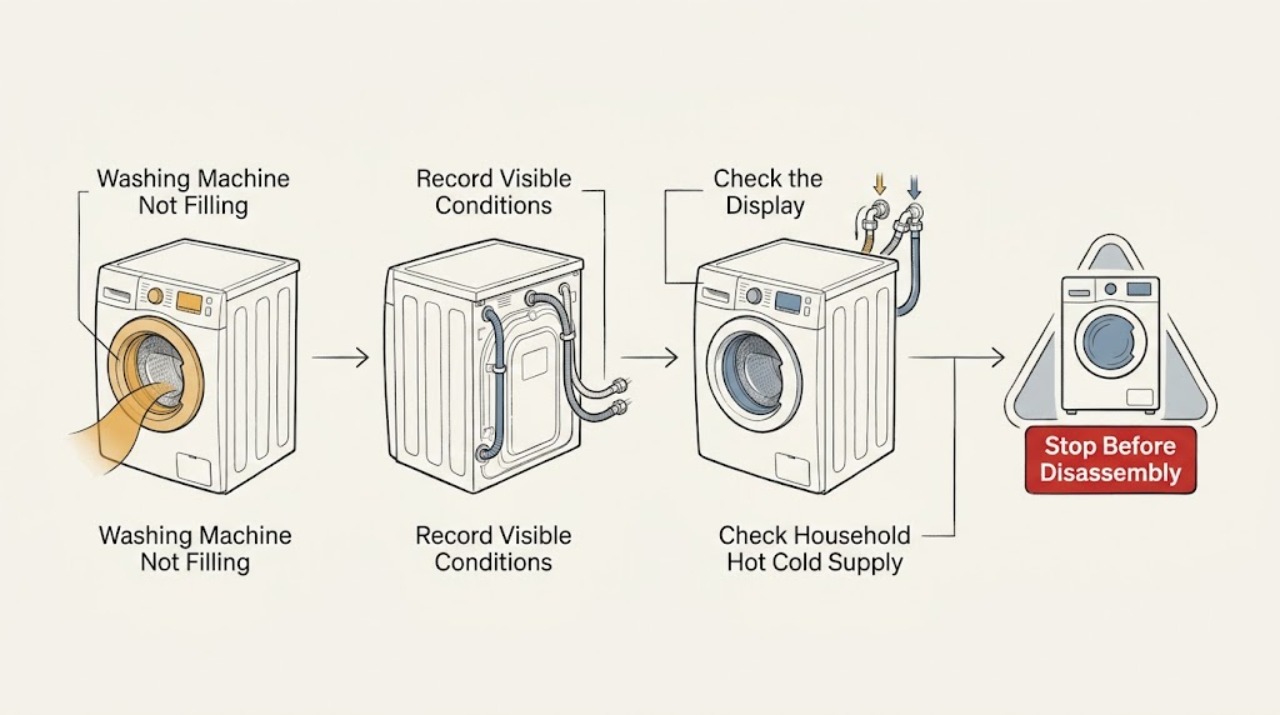
Whirlpool Washing Machine Not Filling: Check Water, Hoses, Lid, and Drain Setup
If a Whirlpool washer is not filling, first distinguish a normal low-water or sensing phase from no water entering at all. With the washer stopped and no leak, confirm the cycle, Start command, lid or door state, and whether the household hot and cold supplies are open.
-
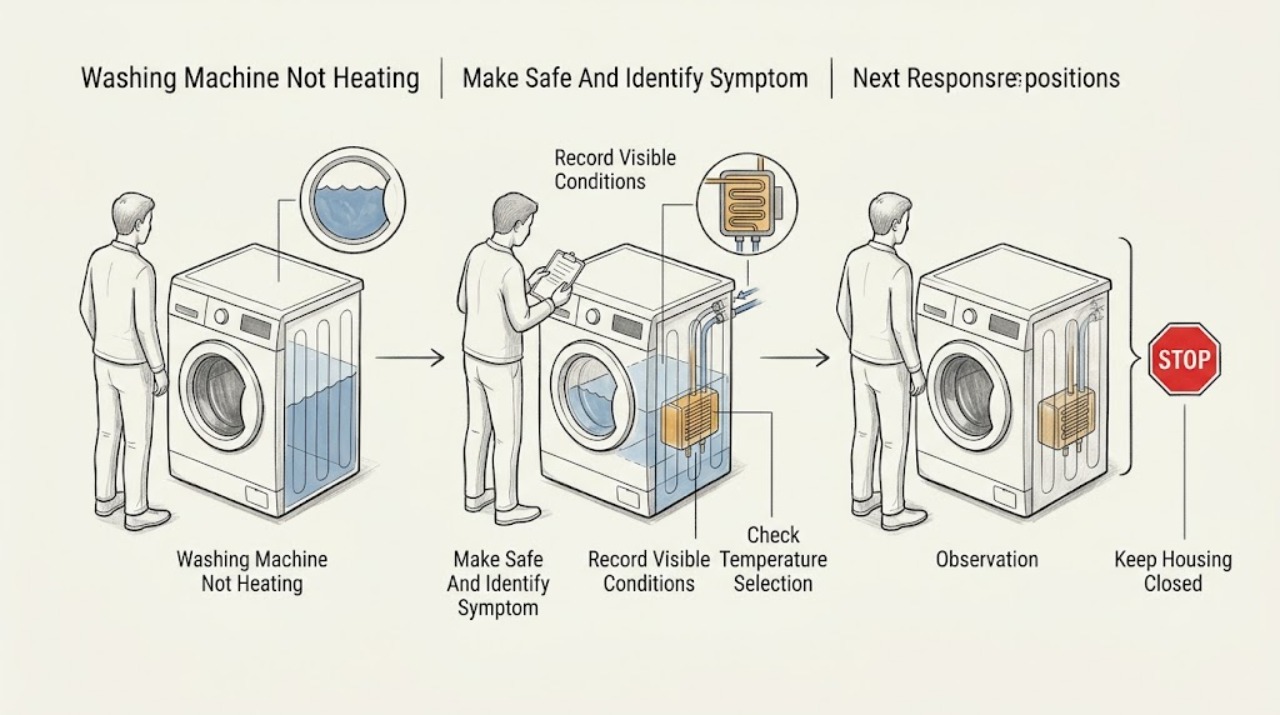
Whirlpool Washing Machine Not Heating: Check Water Supply and Cycle Type
A Whirlpool washer that seems not to heat may be receiving cooler water by design, selecting a cycle with a lower temperature, or waiting for a heated cycle or Steam option on a model that has that feature. Whirlpool says the washer senses temperature in the tub, usually regulates incoming hot and cold water, and can show lower hot or warm temperatures when the water heater is far away or has been used for many loads.
-
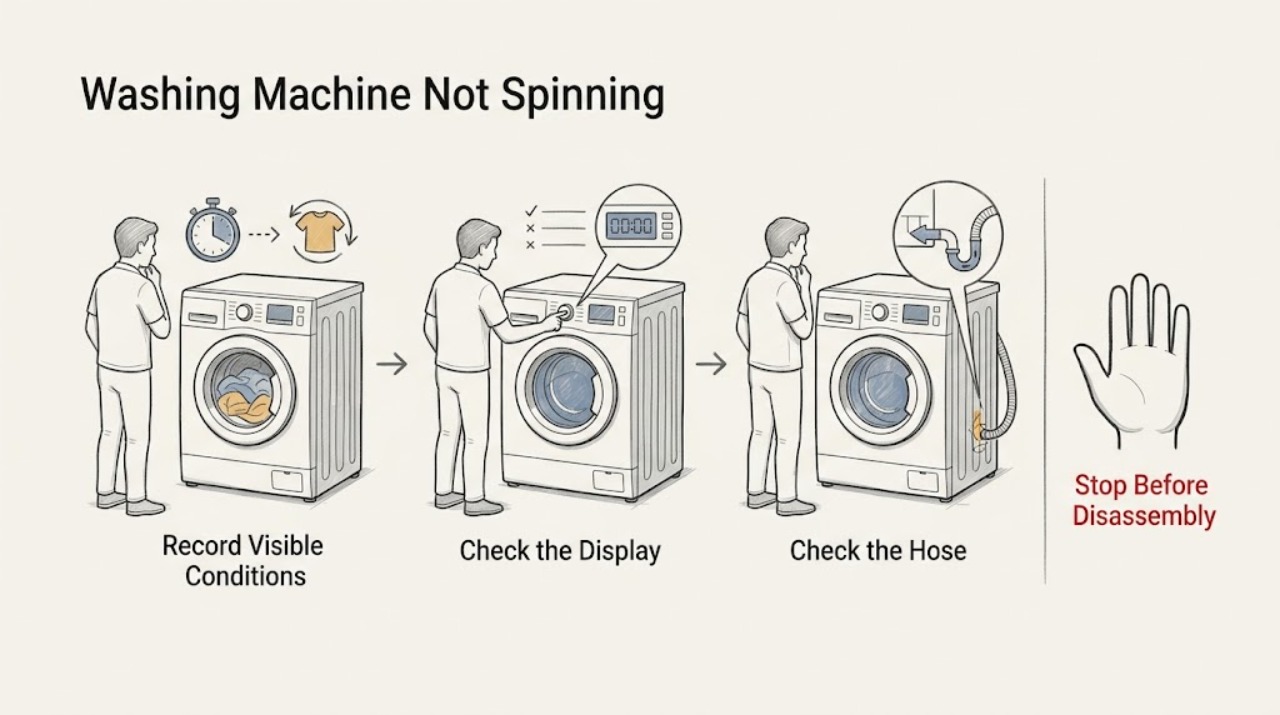
Whirlpool Washing Machine Not Spinning: Check the Cycle, Drain, and Load
A Whirlpool washer may appear not to spin because the selected cycle uses a low or no-spin setting, the washer is waiting to drain, the door or lid is not latched, the load is unbalanced or over-sudsed, or the cabinet is not level. First note when the problem occurs and whether water remains. If there is standing or hot water, a leak, walking, scraping metal, burning smell, smoke, arcing, or a repeated trip, stop and arrange service rather than trying another cycle.
-
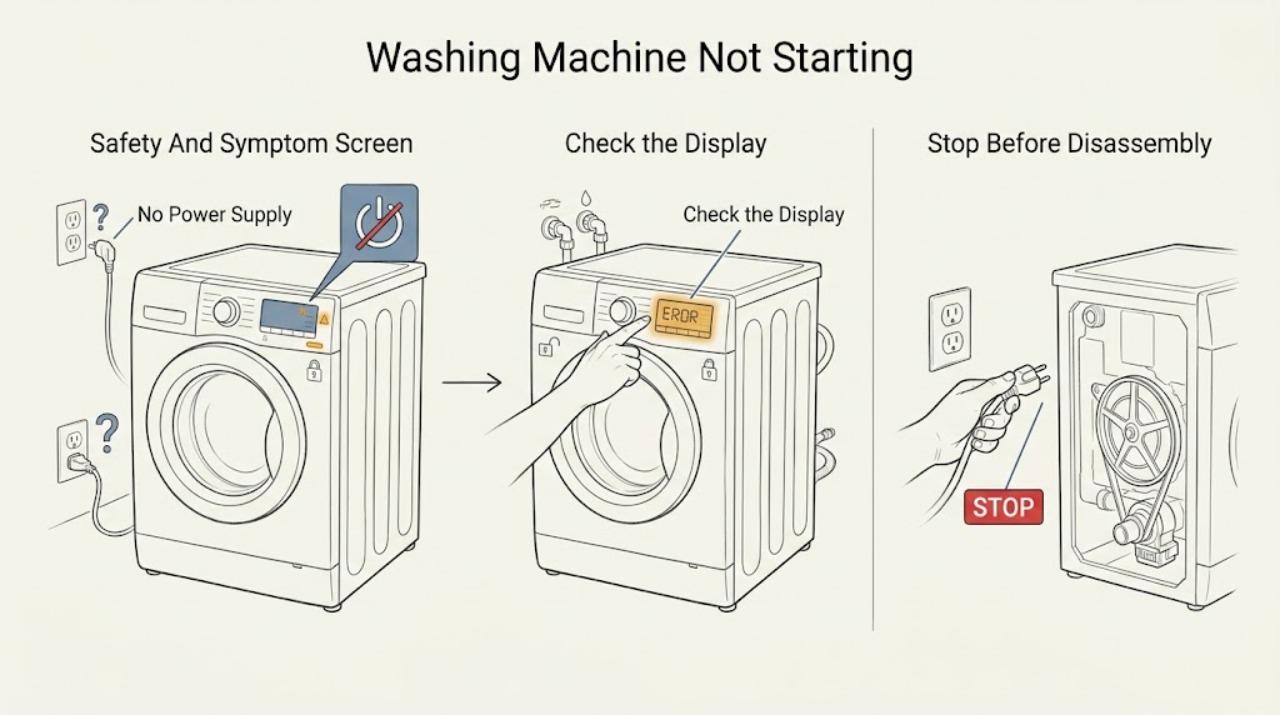
Whirlpool Washing Machine Not Starting
First decide whether your Whirlpool washer has no power at all or has a live display that will not begin a cycle. From a dry, safe position, check the grounded outlet and household protection once, then check Control Lock, the lid or door, the selected cycle, the Start command, and the water valves as your model requires.
-
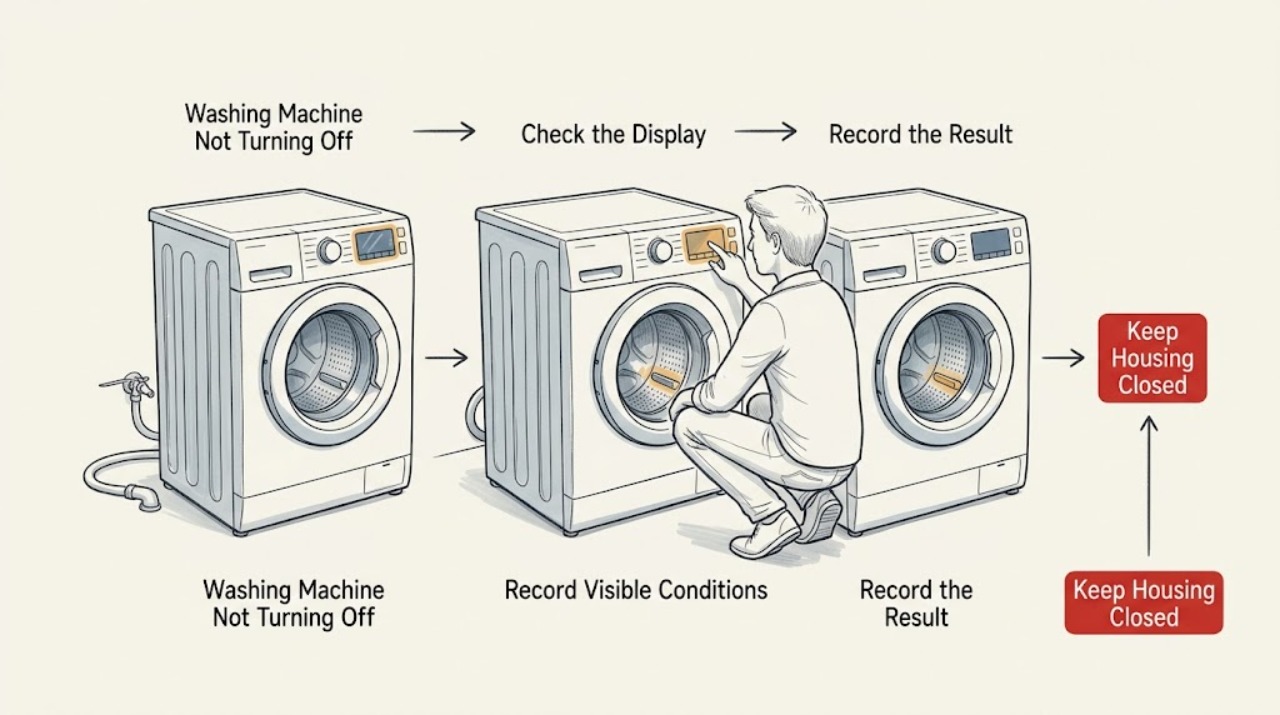
Whirlpool Washing Machine Not Turning Off: Find the Safe Stopping Point
A Whirlpool washer may continue briefly after Cancel or at the end of a cycle while it drains, releases the door lock, or completes a model-specific routine. A rotating drum or agitator, water entering continuously, or a pump that runs without clearing the condition is not a normal reason to keep testing it.
-
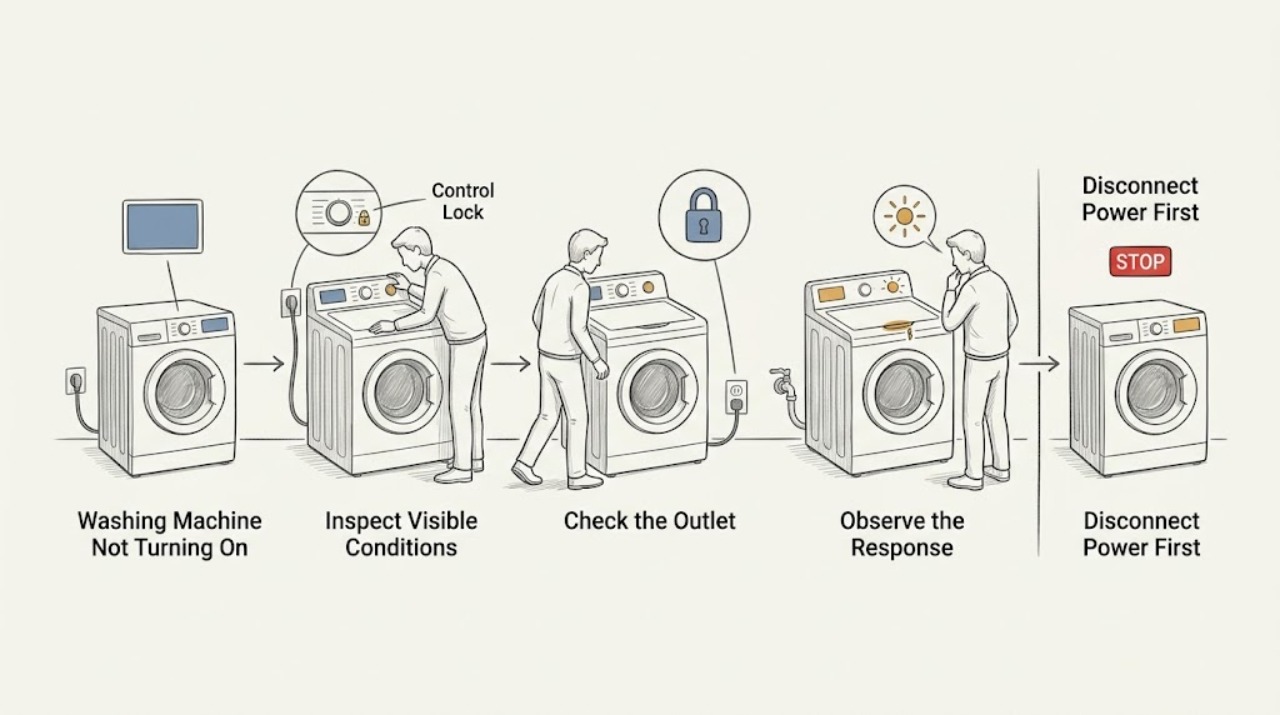
Whirlpool Washing Machine Not Turning On: Power and Start Checks
First separate a Whirlpool washer with no lights from one that has lights but will not start. For no lights, inspect the plug and grounded outlet from a dry position and check for a tripped breaker or GFCI without repeatedly resetting a circuit that trips again.
-
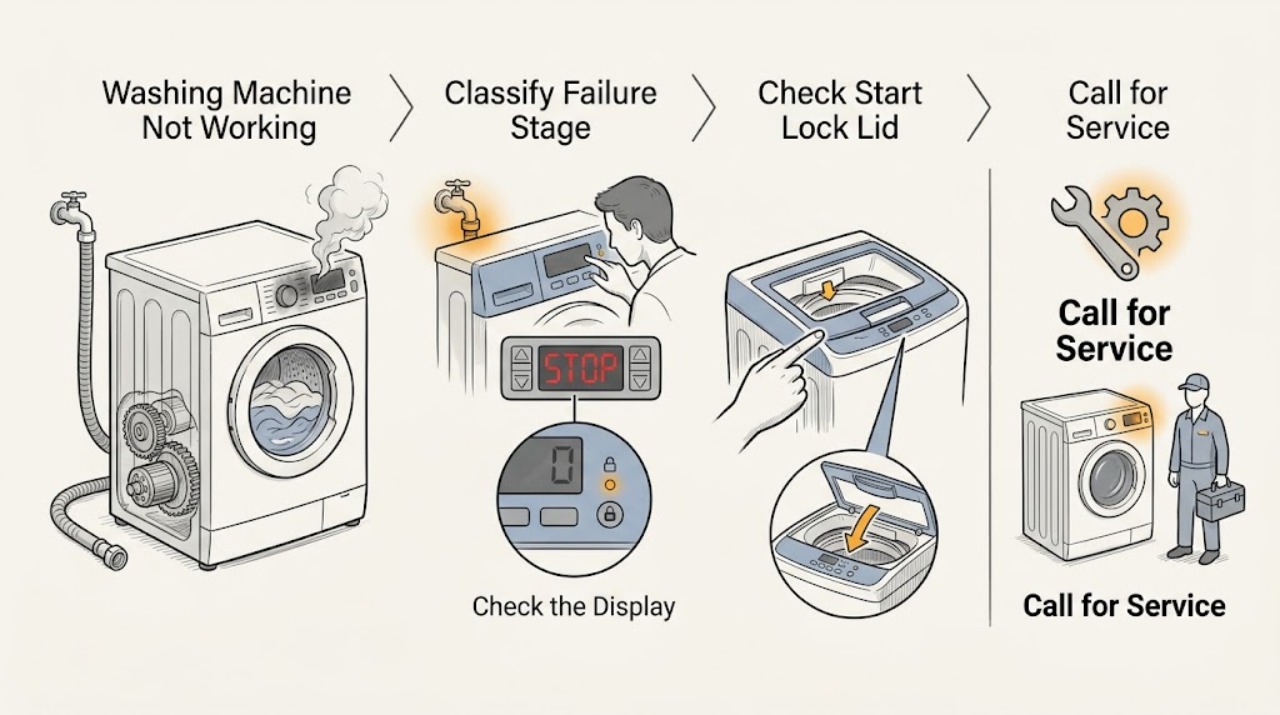
Whirlpool Washing Machine Not Working: Find the Stalled Stage Safely
A Whirlpool washing machine that is not working can be completely without power, refusing to start, waiting for water, stopping with water inside, or reaching wash but not spinning. Record which stage fails before changing anything.
-
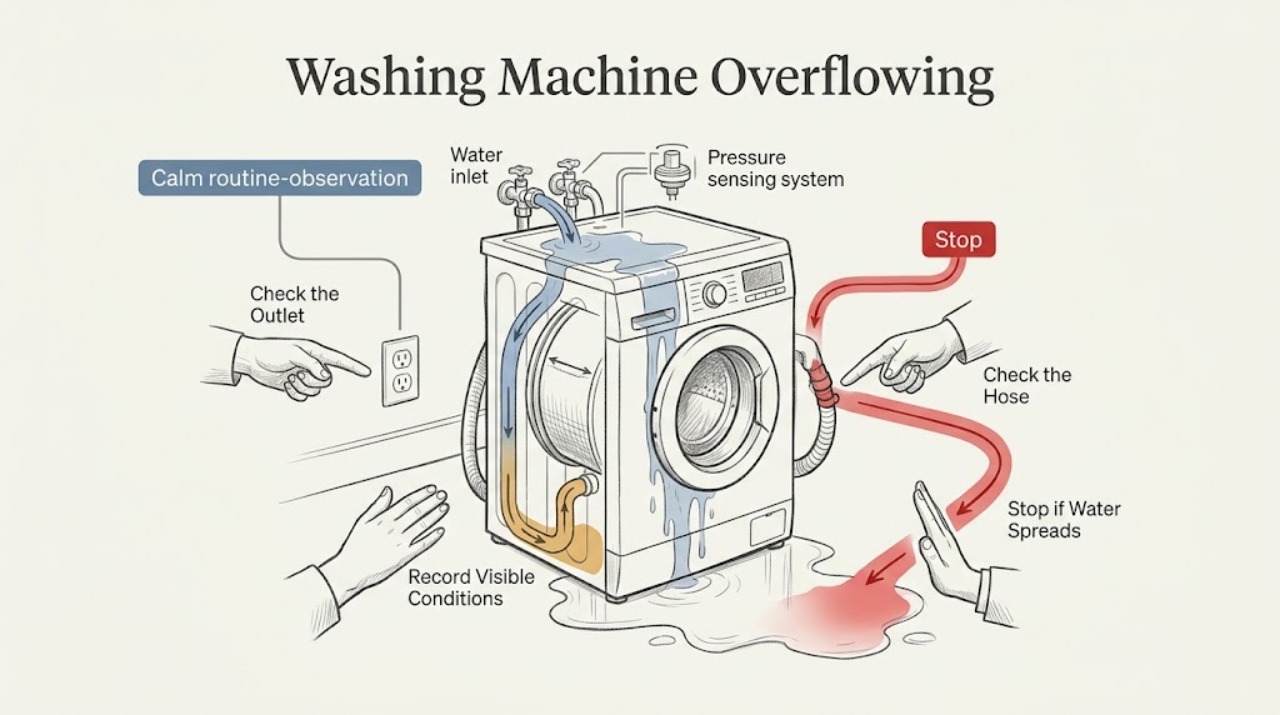
Whirlpool Washing Machine Overflowing: Stop the Water and Find the Cause
Stop the cycle and close both washer water-supply valves immediately; if water is still entering, leave those valves closed. From a dry position, note whether water is entering continuously, leaving through the drain while the washer fills, backing up from the drain, spilling from the dispenser or door, or splashing over the tub.
-
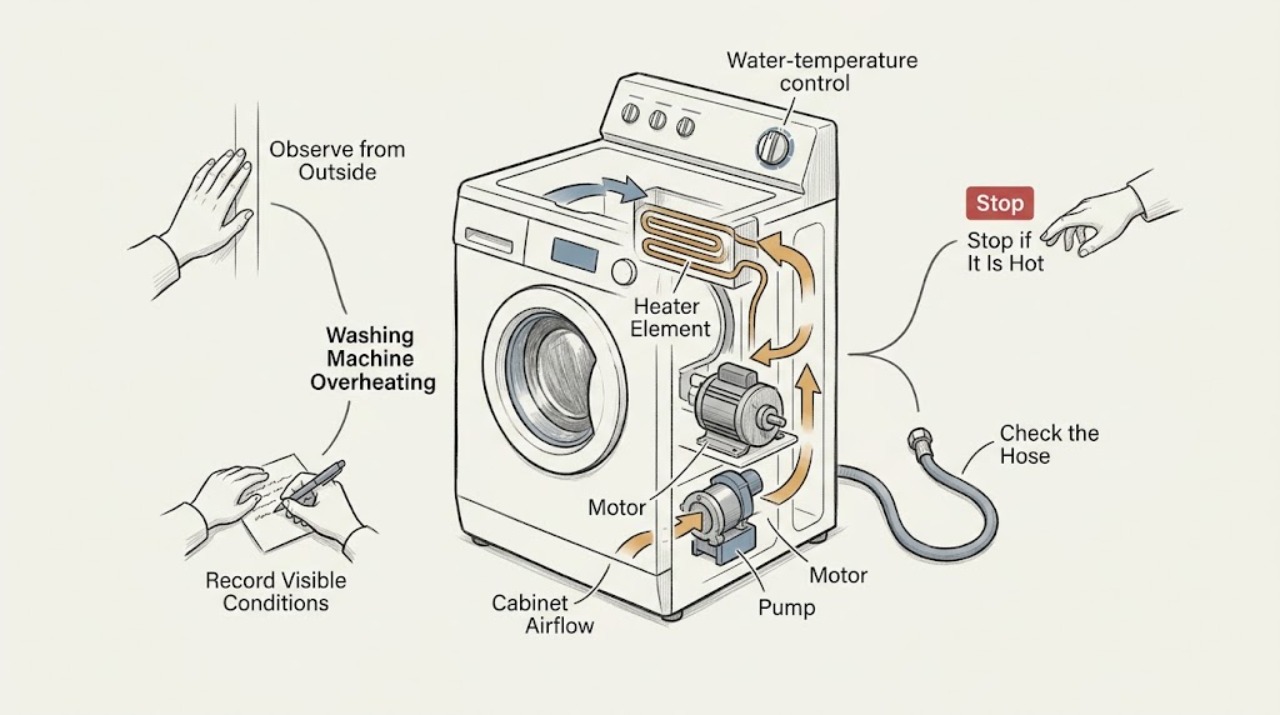
Whirlpool Washing Machine Overheating: Find the Heat Source Safely
First distinguish warm wash water or warm clothing from a hot cabinet, plug, cord, or burning odor. Whirlpool washers intentionally regulate incoming hot and cold water, and some models use a heater for Steam Clean or heated cycles.
-
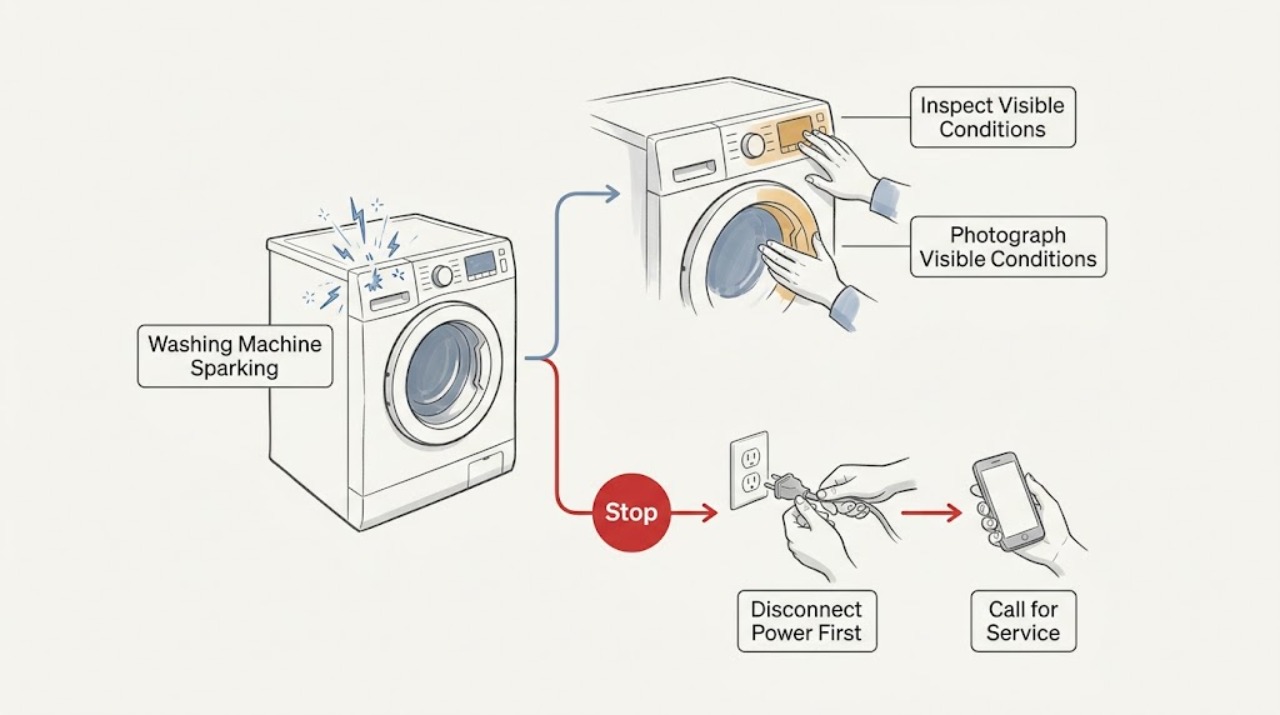
Whirlpool Washing Machine Sparking: Stop, Isolate, and Find the Safe Next Step
Any visible spark or arc from a Whirlpool washing machine, its plug, outlet, cord, control area, or wet cabinet is abnormal. Stop the cycle and keep people away; do not run another load, reset a breaker repeatedly, use an extension cord, or open the washer.