
On this page
Start here
Quick answer
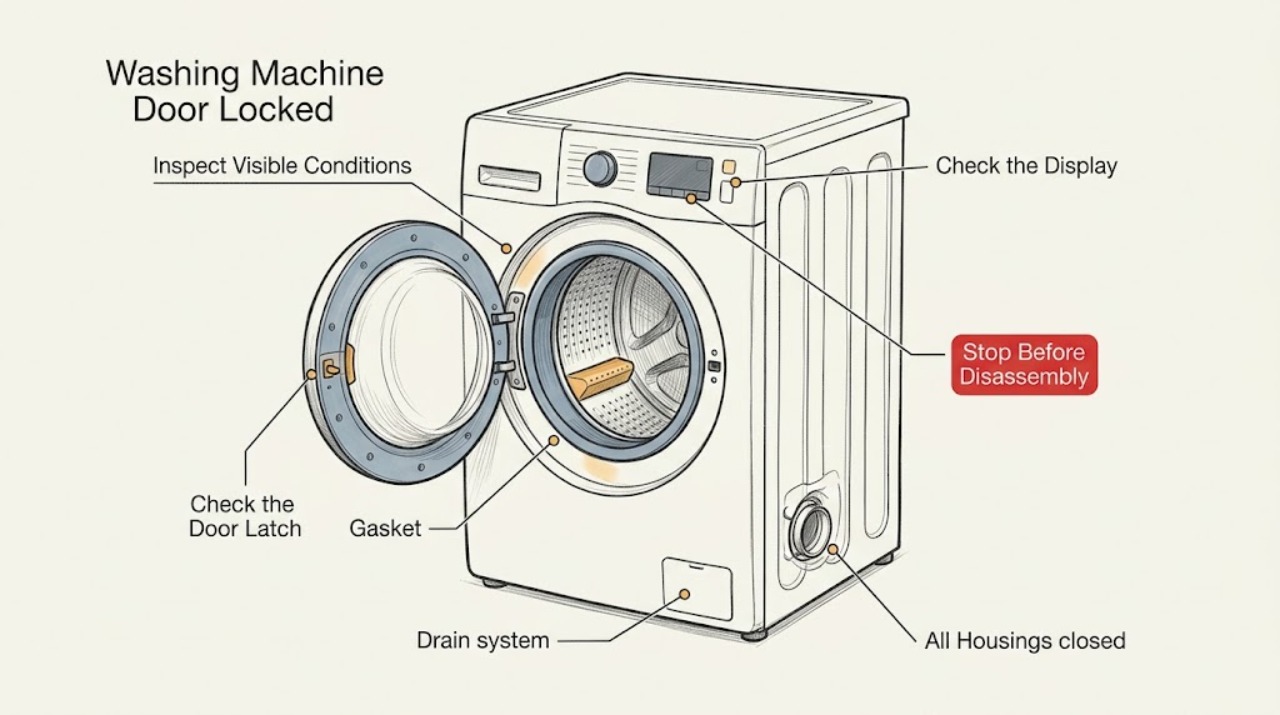
A locked Whirlpool washer door or lid is often protecting against a moving drum, hot water, or water still in the tub. First pause or cancel using the model instructions and confirm whether the drum is moving and whether water remains. Check the visible latch or lid area for clothing, lint, or detergent buildup, then check for Control Lock, a delay, or a returning error. If water is present, use the model's documented Drain or Drain and Spin path; do not force the door. A single manual-authorized power cycle may clear a control state, but repeated resetting is not a repair. Stop for hot water, a leak, wet electrical equipment, burning odor, smoke, sparks, a hot cord or outlet, a damaged door or lid, or a tripped circuit, and arrange qualified service.
Work through in order
Diagnostic checks
Use only checks that match the exact appliance or system and its official guide.
-
Check 1
Pause or cancel the cycle with the documented control and observe the drum or tub, door-lock light, water level, temperature warning, and current program stage from outside the machine.
Expected result: The drum or tub is moving, water is visible, the washer is draining or cooling, or the machine is stopped with no visible water or movement.
Next step: Wait for the documented drain and cool-down state to finish. If the tub is empty and stopped, continue with the visible latch and control checks; never pull on the locked opening.
Why this matters
Why: A lock during motion, hot water, or residual water is a safety state. A stopped, cool, empty tub shifts attention to the latch, options, code, or control.
-
Check 2
Inspect the visible door gasket, latch, strike, or lid contact area for clothing, lint, detergent buildup, or a displaced seal; clean only a cool accessible surface with a soft damp cloth.
Expected result: A loose item or residue blocks closure, or the latch, hinge, glass, lid, gasket, or contact area is bent, cracked, loose, or otherwise damaged.
Next step: Remove only a loose visible obstruction after the drum has stopped. Leave the washer off and arrange service for damage, misalignment, or a lock that still will not engage.
Why this matters
Why: A visible obstruction can prevent the lock from reporting a closed opening. Damage can prevent safe locking and is not a reason to force the door or lid.
-
Check 3
Read the complete display and indicator pattern and check the selected cycle for Control Lock, Child Lock, delay, pause, or a model-specific error; do not guess a code from another Whirlpool model.
Expected result: A lock or delay indicator is active, a code returns, the controls do not respond, or no lock or code is shown.
Next step: Use the matching model manual for the documented unlock, cancel, or code procedure and perform it once. If the state returns, stop repeating button combinations and request service.
Why this matters
Why: A deliberate control state or error can keep the opening locked even when the machine has power. Whirlpool control names and button combinations vary by model.
-
Check 4
If water remains, use the exact manual's documented Drain, Drain and Spin, or equivalent program once while the door or lid stays closed; watch from outside for safe water movement.
Expected result: Water drains and the lock releases after the documented program, the pump runs without lowering the water, or no drain command is available for this model.
Next step: If water does not leave, keep the opening closed and arrange service. Do not use a generic emergency-release procedure or open a filter while water is hot or uncontrolled.
Why this matters
Why: A full tub can keep the lock engaged to reduce flood risk. A pump with no flow or an unavailable documented drain path points to a drain, control, or service issue.
-
Check 5
Look at the visible drain hose and household drain without moving the washer; note a kink, a backed-up outlet, water under the unit, or a drain path that appears normal.
Expected result: The outlet backs up, the hose is visibly restricted, water is leaking, or the visible drain path is clear while the tub remains full.
Next step: Correct only a plainly visible hose position in a dry safe area. For a backup, leak, or clear path with retained water, keep the machine off and obtain qualified plumbing or appliance service.
Why this matters
Why: A drain restriction can leave water in the tub and keep the lock on. A leak or standing water changes the task to flood and electrical safety.
-
Check 6
If the washer is dark or unresponsive, inspect the plug, cord, outlet, and nearby floor visually from a dry position; check the relevant breaker or GFCI and make no more than one safe reset.
Expected result: The supply is interrupted, a cord or outlet is hot or damaged, water is nearby, protection trips again, or the supply appears normal but the lock remains active.
Next step: Do not touch wet electrical equipment, bypass protection, or keep resetting. Leave the washer disconnected when heat, damage, smoke, sparks, or a trip is present and obtain qualified electrical or appliance service.
Why this matters
Why: A power interruption can leave a control state, but heat, damage, water, or another trip indicates an electrical hazard rather than a door adjustment.
-
Check 7
If the exact manual permits a power cycle, isolate power from a dry safe position for the manual's stated interval, restore it once, and observe whether the lock state clears without water, heat, or movement hazards.
Expected result: The lock releases after the documented reset, the washer returns to the same lock or code, or water or a hazard is still present.
Next step: If the fault returns, stop resetting and arrange service. If water, heat, a leak, smoke, sparks, or a damaged opening remains, keep the washer out of service and do not attempt an emergency release.
Why this matters
Why: A reset can clear a temporary control state but cannot repair a blocked drain, failed lock, damaged latch, or unsafe supply.
-
Check 8
Record the model, door or lid type, program and option, full code or indicators, water level and temperature, drum motion, drain sound, visible latch condition, and what happened after one documented reset.
Expected result: The lock problem repeats under the same safe conditions, or the cause remains uncertain after the opening, cycle, water, and supply checks.
Next step: Keep the appliance out of service when the cause is uncertain or any stop condition occurred, and provide the record to qualified Whirlpool appliance service.
Why this matters
Why: A complete record lets a technician match the model manual and distinguish normal protection from a drain, lock, control, or supply fault.
Use your observations
Decision map
Find the observation that best matches what you see, then follow the next safe action.
-
PATH 01Next step
What you see
Drum or tub is moving, water remains, or the water may be hot
Do this next
Keep the door or lid closed and wait for the documented stop, drain, and cool-down state. Do not force the opening or reach inside.
-
PATH 02Next step
What you see
Water remains after the safe documented drain attempt
Do this next
Inspect only the visible drain hose and household outlet. If they are clear, or if a leak or uncontrolled water is present, leave the washer off and arrange service.
-
PATH 03Next step
What you see
Control Lock, Child Lock, delay, pause, or a code is displayed
Do this next
Use the exact model manual for the cancel or unlock sequence and perform it once. Do not apply another model's code table or repeat failed sequences.
-
PATH 04Next step
What you see
A visible item or residue blocks the latch or lid contact
Do this next
Remove only the loose visible obstruction after the tub stops and clean a cool accessible area. A damaged latch, hinge, glass, lid, gasket, or lock needs service.
-
PATH 05Next step
What you see
The washer is dark or a control reset was allowed by the manual
Do this next
Make one dry visual supply check and one manual-authorized reset at most. If protection trips, the cord or outlet is hot or damaged, or the lock returns, obtain qualified service.
-
PATH 06Next step
What you see
Leak, wet electrical area, burning odor, smoke, spark, hot connection, violent movement, or repeated trip
Do this next
Stop immediately and keep people away. Isolate power only from a dry safe position if that does not approach the hazard; do not retry or force the opening. Obtain qualified appliance, plumbing, or electrical service.
Helpful context
Understand the symptom
A lock can be normal protection
Whirlpool explains that a front-load door may stay locked while the washer is tumbling, spinning, draining, or holding water at a high level or temperature. A top-load lid can also remain locked while the tub is moving. A lock that appears after a cycle is not proof that the latch has failed; identify the cycle state and let the documented pause, drain, or cool-down process finish before considering service.
Use the exact model instructions
Whirlpool features and control sequences vary by model. Its support guidance directs owners to use the model number for manuals and literature. A Control Lock, delay, code, emergency release, or drain routine must therefore be interpreted from the matching manual rather than a similar-looking console. Never pull the door, defeat the lid lock, or open a lower panel while water or moving parts may be present.
Safety boundary
Stop conditions
- Stop for hot water or steam, a leak, standing water near electrical equipment, a wet or damaged plug or outlet, smoke, sparks, a burning odor, a hot connection, violent movement, or a tripped circuit.
- Do not force a locked door or lid, pull an emergency strap, tilt the washer, reach into a moving drum, or open a lower panel while water is hot or uncontrolled unless the exact manual and safe conditions explicitly permit it.
- Do not bypass the door or lid lock, use a code or release method from another model, or repeatedly reset a control or circuit after a fault.
- Do not operate the washer with damaged glass, hinge, latch, lid, gasket, cord, or electrical connection.
Only after diagnosis
Potential parts
- door or lid lock assembly
Consider this category only when the exact model is confirmed and qualified service finds that the opening closes normally but the lock does not report a safe state after water and control checks.
Confirm the complete Whirlpool model and approved fit information before any part decision; never bypass the lock. - drain pump or drain hose
Consider only when water remains, the visible outlet is clear, and qualified diagnosis confirms a model-specific hose or pump restriction or failure.
Confirm model, filter access, hose routing, and approved service procedure; do not open a water-filled assembly as a test. - washer control component
Consider only after qualified service rules out water level, drain, latch, lock, and supply conditions and confirms a control fault for the exact model.
Confirm model-specific fit and service procedure; do not open the control enclosure or test live wiring.
When checks do not resolve it
Need a professional?
Arrange qualified Whirlpool appliance service when the door or lid remains locked after the documented drain and cool-down path, water remains with a clear visible outlet, a lock or error returns, the latch or opening is damaged, a safe reset does not help, or any electrical, leak, heat, smoke, spark, or movement stop condition occurs. Use qualified plumbing service for a recurring household drain backup and licensed electrical service for a supply fault.
Common questions
FAQ
Why is my Whirlpool washer door locked after the cycle?
The washer may still detect motion, heat, or water, or a selected cycle may keep the door locked until cancel or drain is complete. Follow the model instructions and do not force the opening.
Can I open the Whirlpool door if water is still inside?
Do not force it. Use the matching manual's documented Drain or Drain and Spin path, and only use an emergency release when that manual permits it after the water is cool, the drum is stopped, and flooding is controlled.
What does a Control Lock or lock light mean?
It can indicate an intentional control lock or a safety lock during a cycle. The button and clearing sequence vary by model, so use the exact manual and do not infer a code or sequence from another Whirlpool console.
When should a locked washer door be serviced?
Request service when the door stays locked after the documented drain and cool-down path, water remains with a clear outlet, a code returns, the latch or glass is damaged, or there is a leak, hot connection, burning odor, smoke, spark, or repeated trip.
Read the exact guide
Official sources
- Not Starting or Not Operating - Front Load Washer - Product HelpWhirlpool Corporation · Whirlpool front-load washer Control Lock, water, door closure, codes, Start control, power cycle, and model manual guidance
- Front Load Washer Door Will Not Open - Product HelpWhirlpool Corporation · Whirlpool front-load door lock behavior during water, heat, tumbling, spinning, and drain conditions
- Electrical appliancesGovernment of Western Australia · Electrical appliance safety near water, damaged cords and plugs, power isolation, and licensed electrical service
- Lid Locking on a Top Load High Efficiency Washer - Product HelpWhirlpool Corporation · Whirlpool top-load washer lid lock safety, visible obstructions, power reset, and model variation
- Door Will Not Lock or Unlock - Front Load Washer - Product HelpWhirlpool Corporation · Whirlpool front-load washer door lock and unlock behavior, visible obstructions, cycle completion, power reset, and service guidance
Community feedback
Share a repair observation
Share a plain-text repair observation. Accepted observations are published automatically; this page may take a moment to update.