
On this page
Start here
Quick answer
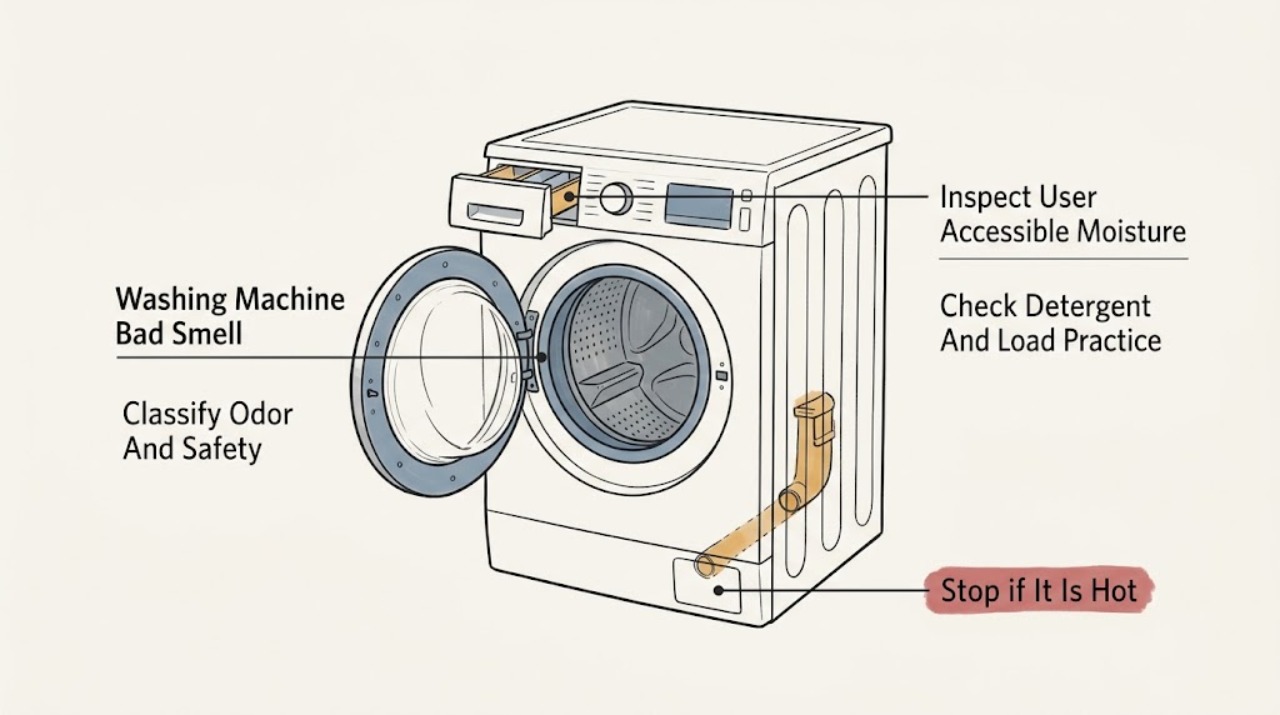
A Whirlpool washing machine smell is often caused by moisture left in the drum, door seal, dispenser, or drain path, detergent or soil residue, or wet clothing left in the washer. First identify whether the odor is musty, detergent or sewage-like, or hot/electrical. A musty smell supports a drying and cleaning branch: remove the load, clean user-accessible surfaces and the dispenser as your model manual allows, then run the model's Clean Washer cycle with the approved cleaner and no laundry. Use only the specified amount of HE detergent and leave the door or lid open afterward. A sewage-like odor that returns, standing water, a leak, slow draining, or residue in an inaccessible area needs service or plumbing diagnosis. Stop immediately for a burning or electrical smell, smoke, sparks, hot wiring, repeated breaker trips, or water near electrical parts; do not mix cleaners or keep running the washer.
Work through in order
Diagnostic checks
Use only checks that match the exact appliance or system and its official guide.
-
Check 1
With the washer stopped, empty, and dry on the outside, identify the odor as musty or mold-like, detergent or sour, sewage-like, or hot/electrical; note whether it appears at the door or lid, dispenser, drain area, or only during operation.
Expected result: Musty or detergent smells support a residue and drying branch. A sewage-like smell that follows draining points toward a drain-path or household-plumbing branch. Burning odor, smoke, sparks, hot wiring, water near electrical parts, or a breaker trip is a hazard.
Next step: For a hazard, stop using the washer and keep clear; isolate power only from a safe, dry location and arrange appropriate emergency, electrical, or appliance help. For a non-hazard odor, continue with the location check.
Stop if: Do not run another cycle to reproduce a burning or electrical smell, touch wet electrical parts, or reset a repeatedly tripping breaker.
Why this matters
Why: The odor category determines whether routine model-authorized care is reasonable or whether continued operation could worsen a water, electrical, or combustion-related risk.
-
Check 2
When there is no electrical or water hazard, remove wet laundry promptly and inspect only user-accessible areas: the door or lid, the front-load seal if fitted, the dispenser, and the visible basket or tub for moisture, lint, detergent film, soil, or foreign objects.
Expected result: Residue or moisture at the seal or dispenser supports a surface-care branch. Water or sludge remaining in the basket after a completed cycle, a recurring drain smell, or a leak supports a drain or service branch. No visible residue does not rule out buildup in hoses or the pump.
Next step: Follow the exact owner's manual for removing and cleaning the dispenser or wiping the seal. If water remains, the machine leaks, or the odor is sewage-like and recurring, stop and arrange appliance or plumbing diagnosis.
Stop if: Do not reach into a moving or powered machine, force a drawer or seal, dismantle the pump, or continue if water has reached electrical components.
Why this matters
Why: Whirlpool identifies retained moisture, wet laundry, excess detergent, and residue as odor contributors, but hidden drain or pump areas are not proven safe to dismantle from a generic article.
-
Check 3
Compare the detergent label and the Whirlpool model manual with your actual product and dose; use the required HE detergent where specified, avoid overfilling, and record whether wet clothing was left inside between cycles.
Expected result: Non-HE detergent or excess detergent can leave film, excess suds, and poor rinsing that feed odor. Prompt unloading and an open door or lid between uses reduce retained moisture. Correct practice with persistent smell points to residue, drain, or service rather than more detergent.
Next step: Use the manual's recommended product and amount on future loads, remove laundry promptly, and leave the door or lid ajar when safe. Do not mix laundry products or cleaners in an attempt to neutralize the smell.
Stop if: Stop if a product reaction, excessive suds, leak, skin or eye irritation, or water near electrical parts occurs; follow the product label and seek appropriate help.
Why this matters
Why: Detergent type and quantity are model- and product-dependent; adding more detergent is not a reliable odor cure and can worsen residue.
-
Check 4
If the washer is empty, there is no leak or electrical hazard, and the exact manual provides a Clean Washer cycle, place the approved washer-cleaner tablet in the basket or drum as directed, add no detergent or other chemical, and start the documented cycle.
Expected result: The cycle completes and the smell lessens when residue was the cause. A tablet not dissolving, an interruption, an error, standing water, or persistent odor changes the branch; some steam models can show condensation or delayed water movement during an initial phase.
Next step: After a successful cycle, leave the door or lid open for ventilation and drying. If it must be interrupted, follow the manual's stop and rinse procedure. For persistent odor, drainage problems, or an error, arrange service.
Stop if: Do not combine affresh-style cleaner with bleach, add detergent, use an unspecified chemical, open a locked door by force, or continue if smoke, burning odor, leak, or electrical symptoms appear.
Why this matters
Why: Whirlpool says the cleaning cycle uses higher water volumes to address residue and should not be run with a load. A failed or incomplete cycle is not a reason to add more chemicals or repeat it indefinitely.
-
Check 5
With power off and the washer cool, clean the dispenser and, on a front-load model, the accessible door-seal surfaces only as the owner's manual directs; use a soft cloth or the specified cleaning wipe and dry the area.
Expected result: Film, lint, or dark residue that is removed supports a local moisture or detergent-residue source. A torn, permanently stained, loose, or foul-smelling seal, a dispenser that will not seat, or buildup beyond accessible surfaces requires service assessment.
Next step: Reassemble only user-removable pieces exactly as the manual shows, let the interior dry, and reassess after the next normal load. Escalate persistent residue, damage, leak, or sewage-like odor.
Stop if: Do not mix bleach with another cleaner, scrub or cut the seal, force the dispenser, use abrasive chemicals, or remove panels to reach hidden hoses.
Why this matters
Why: Whirlpool says dispensers should be cleaned regularly according to the owner's manual and provides model-specific seal-care procedures. The general article cannot establish part fit or authorize dismantling.
-
Check 6
If the smell is sewage-like or returns immediately after draining, observe from a dry, user-accessible position whether the drain hose, standpipe area, or floor is wet and whether water remains in the basket; do not pull the washer out or open hidden drain components.
Expected result: A wet hose connection, slow drain, standing water, or odor localized to the drain path supports an appliance-drain or household-plumbing branch. A dry, freely draining washer with a smell only at the seal supports an interior-care branch.
Next step: Stop the washer if water is leaking or not draining; keep water away from electrical parts and arrange qualified appliance or plumbing service. Use only the model manual for any user-accessible filter procedure.
Stop if: Do not handle contaminated water without suitable protection, detach a pressurized hose, reach into standing water near a plug, or dismantle the pump or cabinet.
Why this matters
Why: The source may be a blocked or incorrectly arranged drain, trapped wastewater, or a washer component, and a generic Whirlpool page cannot diagnose concealed plumbing or pump parts.
-
Check 7
If the odor remains after one complete model-authorized cleaning and correct drying and detergent practice, prepare a service handoff with the model, odor category, when it occurs, water or drain symptoms, visible residue, and any error or electrical event.
Expected result: Persistent odor, an inaccessible source, a damaged seal or dispenser, standing water, recurring leak, slow drain, burning odor, smoke, sparks, hot wiring, or a breaker trip means the problem is not resolved by routine care.
Next step: Keep the washer out of service when a hazard or water fault is present and request qualified appliance or plumbing diagnosis. Follow the model manual's safe storage or water-shutoff directions if the washer will remain unused.
Stop if: Do not run repeated cleaning cycles, use stronger chemicals, bypass a lid or door lock, or open the cabinet for a smell that persists.
Why this matters
Why: A qualified technician or plumber may need to assess hidden residue, drain routing, pump or hose condition, seals, motor, wiring, or other components; the evidence does not support guessing a part.
Use your observations
Decision map
Find the observation that best matches what you see, then follow the next safe action.
-
PATH 01Next step
What you see
Burning or electrical odor, smoke, sparks, hot wiring, water near electrical parts, or repeated breaker trip
Do this next
Stop using the washer, keep clear, isolate power only from a safe dry location, and arrange appropriate emergency, electrical, or qualified appliance help. Do not reproduce the symptom.
-
PATH 02Next step
What you see
Musty or detergent smell with moisture or visible residue and no hazard
Do this next
Clean accessible surfaces and the dispenser per the exact manual, run one approved empty Clean Washer cycle with no mixed chemicals, then leave the door or lid open to dry.
-
PATH 03Next step
What you see
Non-HE detergent, excess dose, heavy suds, or wet laundry left in the machine
Do this next
Correct the product and amount according to the manual and detergent label, unload promptly, and ventilate between uses; persistent odor still needs the cleaning or service branch.
-
PATH 04Next step
What you see
Sewage-like smell, standing water, slow draining, wet drain connection, or recurring leak
Do this next
Stop if water is leaking or near electrical parts and arrange qualified appliance or plumbing diagnosis. Do not detach hidden hoses or dismantle the pump.
-
PATH 05Next step
What you see
Smell remains after one complete model-authorized cleaning and correct drying and detergent practice
Do this next
Keep the washer out of service if any water or electrical symptom is present and provide the model, timing, location, and observations to qualified service.
Helpful context
Understand the symptom
Classify the smell before cleaning
A damp or musty smell commonly follows retained moisture and residue. A detergent-like smell can follow excess or unsuitable detergent. A sewage-like smell that returns after cleaning may involve the drain hose, standpipe, or household drain rather than only the washer. A hot plastic, burning, or electrical smell is a safety stop, not a cleaning problem. Note when the odor is strongest—door open, after washing, during drain, or while the motor runs—and do not sniff inside a running appliance.
Cleaning steps depend on the Whirlpool model
Whirlpool publishes separate care instructions for front-load, top-load, steam, and all-in-one designs. Locate the model-specific manual before removing a dispenser, cleaning under a seal, or selecting a cycle. Where the manual provides a Clean Washer cycle, Whirlpool's general procedure uses an empty washer and an approved washer cleaner or the permitted bleach alternative; do not combine them or add laundry detergent.
Keep water and electrical symptoms separate
A smell with standing water, a leak, slow draining, or sewage-like residue can point beyond routine interior cleaning. Keep hands and plugs away from water, stop the washer, and use qualified appliance or plumbing help when the source is not accessible. Burning odor, smoke, sparks, hot wiring, or a breaker trip requires immediate shutdown and an appropriate electrical or appliance safety response.
Safety boundary
Stop conditions
- Stop the washer for smoke, burning or electrical odor, sparks, hot wiring, water near electrical parts, repeated breaker trips, active leaks, or standing water that cannot be handled safely. Do not mix cleaning chemicals, run repeated cycles to reproduce an odor, bypass a lid or door lock, detach pressurized hoses, dismantle the pump or cabinet, or use abrasive or unspecified cleaners.
When checks do not resolve it
Need a professional?
Arrange qualified appliance or plumbing service for a sewage-like odor that returns, standing water, slow draining, a recurring leak, inaccessible buildup, a damaged seal or dispenser, an error during cleaning, or odor that persists after one complete model-authorized cleaning. Treat burning or electrical odor, smoke, sparks, hot wiring, water near electrical parts, or a repeated breaker trip as an immediate stop; use the appropriate emergency, electrical, or appliance safety path from a safe location.
Common questions
FAQ
Why does my Whirlpool washer smell musty?
Retained moisture, soil or detergent residue, and wet clothing left in the washer can contribute to musty odor. Clean accessible areas as your model manual directs, run one approved empty Clean Washer cycle, and leave the door or lid open to dry.
Can I add bleach and a washer-cleaner tablet together?
No. Whirlpool's cleaning directions say not to add detergent or other chemicals with the washer-cleaner procedure. Use only the single method and amount permitted by the exact model manual; never mix cleaning products.
What if the smell is like sewage?
Check only from a dry, user-accessible position for standing water, slow draining, a wet drain connection, or an odor that appears when the washer drains. A recurring sewage-like smell can involve the drain path or household plumbing, so stop for leaks and arrange qualified appliance or plumbing diagnosis.
Should I leave my Whirlpool washer door open?
Whirlpool recommends leaving the door or lid open between uses when safe so remaining moisture can evaporate. Keep children and pets away, and do not leave it open if that creates a household safety hazard.
When is a washer smell an electrical emergency?
A hot plastic or burning odor, smoke, sparks, hot wiring, water near electrical parts, or a breaker that trips repeatedly is not a routine odor issue. Stop using the washer, do not reproduce the symptom, and seek appropriate electrical or qualified appliance help.
Read the exact guide
Official sources
- Removing Odors from the Interior of a WasherWhirlpool Product Help · Whirlpool washer odor maintenance, Clean Washer cycle, detergent and ventilation guidance
- Removing Odor or Smell - WasherWhirlpool Product Help · Whirlpool top-load washer odor prevention, detergent, and Clean Washer guidance
- Removing Odors or Smells - Front Load WasherWhirlpool Product Help · Whirlpool front-load washer odor prevention, seal and dispenser care, detergent, and service guidance
- Owner's ManualWhirlpool · Whirlpool front-load washer cleaning, door-seal, dispenser, Clean Washer, and model-specific care instructions
Community feedback
Share a repair observation
Share a plain-text repair observation. Accepted observations are published automatically; this page may take a moment to update.