
On this page
Start here
Quick answer
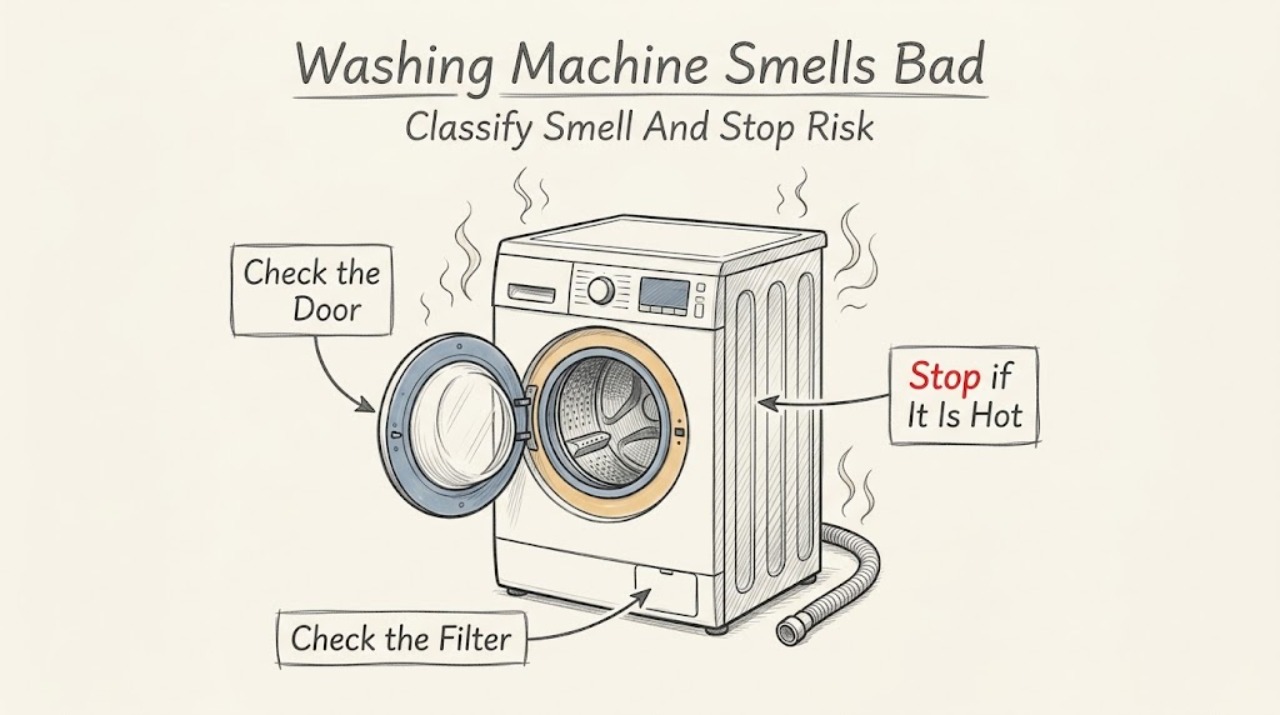
A musty or sour smell from a Bauknecht washing machine is commonly associated with moisture and residue in the drum, door seal, detergent drawer, or drain path. Bauknecht says frequent low-temperature washing with liquid detergent can allow a biofilm of soil and bacteria to build up; use the exact model's approved washing-machine cleaner or self-clean program, and keep the door and detergent drawer open after cycles. First stop for smoke, sparks, a strong electrical or burning smell, leaking water, or a hot cabinet. If the machine is cool and safe, clean only accessible areas, check the filter according to the Owner's Manual, and escalate if the odor returns or the machine does not drain normally.
Work through in order
Diagnostic checks
Use only checks that match the exact appliance or system and its official guide.
-
Check 1
Stop the current cycle, remove laundry if it is safe, and let the washing machine cool. From outside the machine, identify whether the odor is musty/sour, detergent-like, stagnant-water-like, or hot/burning. Check for smoke, sparks, visible scorching, a hot plug or cabinet, or leaking water.
Expected result: The smell is damp or chemical without heat, or there is smoke, sparking, burning odor, unusual heat, or a leak.
Next step: For smoke, sparks, scorching, strong electrical/burning odor, unusual heat, or active leaking, stop using the machine, keep clear, and arrange qualified appliance or electrical service. If none is present and the machine is cool, continue with the accessible checks.
Why this matters
Why: Damp or detergent odors support a residue/moisture investigation. Heat, smoke, electrical symptoms, or active leaking indicate a safety or fault boundary and do not support continued user testing.
-
Check 2
With the machine off and cool, open the door and inspect the visible door seal, drum opening, and detergent drawer for lint, foreign objects, slime, detergent deposits, or trapped damp laundry. Wipe accessible surfaces with a soft cloth and mild cleaner allowed by the Owner's Manual; do not force the drawer or seal.
Expected result: Residue or mold-like buildup is concentrated in the seal, drum opening, drawer, or drawer compartment, or these areas look clean but the odor remains.
Next step: Rinse and dry a removable drawer only as the model manual allows, wipe the compartment, and leave the door and drawer open to dry after use. If the smell persists, continue to the filter and machine-clean cycle checks rather than opening panels.
Why this matters
Why: Concentrated residue supports an accessible cleaning cause. A clean-looking opening does not rule out contamination in the foreign-object filter, pump area, hose, or another concealed component.
-
Check 3
If the Owner's Manual identifies an accessible foreign-object filter, switch the machine off, prepare a shallow collection container and towels for residual water, and follow the manual's filter-access procedure. Remove only loose debris that the manual permits you to remove; do not reach beyond the filter opening or force a cover.
Expected result: Residual water, lint, hair, coins, or other debris is present, or the filter area is dry and clear.
Next step: Rinse and reinstall the filter exactly as directed, check for leaks during the next safe rinse, and stop if the cover, seal, or filter is damaged. If water remains in the drum, drainage is slow, or the odor returns, request qualified service instead of removing the pump or hose.
Why this matters
Why: Residual water and trapped debris can keep the lower machine area damp and contribute to odor or drainage symptoms. A clear filter does not prove that the pump or drain hose is clear.
-
Check 4
After accessible residue is removed and the washer is leak-free, run the exact self-clean, drum-clean, or washing-machine-cleaner procedure specified for the model. If the model has no such program, follow the manual for an empty maintenance cycle; use only the cleaner and dosage it authorizes.
Expected result: The first empty cleaning cycle removes the odor, reduces it temporarily, or does not change it. Note whether residue or unusual drainage appears during the cycle.
Next step: Do not mix bleach, acids, descalers, or other cleaners. If the odor persists after the manual-directed cleaning procedure, stop repeating chemical cycles and arrange qualified service for the seal, drawer path, filter/pump, drain hose, or internal tub areas.
Why this matters
Why: Improvement supports a tub/residue cause. A temporary improvement suggests contamination remains in another path or the maintenance routine is insufficient. No improvement, abnormal noise, a leak, or poor drainage needs service diagnosis.
-
Check 5
Review the recent wash routine: frequency of low-temperature cycles, liquid versus powder detergent, product dose, and whether damp loads or the detergent drawer stayed closed after a cycle. Compare the dose and products with the detergent and Owner's Manual instructions.
Expected result: The smell began after repeated low-temperature/liquid-detergent use, overdosing, or leaving wet laundry and a closed drawer/door in place, or none of these patterns apply.
Next step: Use only the manual-approved amount and product, select the model's appropriate maintenance or higher-temperature cycle when permitted, remove laundry promptly, and leave the door and drawer open to dry. If the smell returns despite that routine, arrange service.
Why this matters
Why: The first pattern matches Bauknecht's biofilm and residue warning and makes maintenance and moisture control the next decision. If the routine does not explain the odor, a concealed residue or component fault becomes more likely.
-
Check 6
Once the machine is cool, drains normally, has no leak or hazardous smell, and has completed the manual-directed cleaning, run one empty rinse or short maintenance test. Stay nearby, then compare the empty drum smell with the smell of a later normal load.
Expected result: The empty machine is odor-free, the smell returns from the empty machine, the smell appears only with laundry, or the machine develops heat, smoke, leak, or drainage symptoms.
Next step: If the odor returns from the empty machine, stop using it and provide the technician with the odor location, cycle, cleaning steps, filter findings, drainage result, and model number. Do not keep rerunning cycles or disassemble the machine to chase the smell.
Why this matters
Why: An odor-free empty test makes the laundry, detergent, or storage environment worth checking, but a returning empty-machine odor indicates unresolved appliance contamination or a fault. Any hazardous or mechanical symptom ends testing.
Use your observations
Decision map
Find the observation that best matches what you see, then follow the next safe action.
-
PATH 01Next step
What you see
Smoke, sparks, scorching, strong electrical/burning odor, unusual heat, or active water leak
Do this next
Stop using the washing machine and keep clear. Do not open panels, restart it, or touch wet electrical areas; arrange qualified appliance or electrical service.
-
PATH 02Next step
What you see
Musty/sour odor with visible dampness or residue at the door seal, drum opening, detergent drawer, or drawer compartment
Do this next
Clean only the accessible area using the model manual, dry it, and leave the door and drawer open after cycles. Continue to the approved cleaning-cycle check if the smell remains.
-
PATH 03Next step
What you see
Odor began after frequent low-temperature cycles with liquid detergent or after overdosing
Do this next
Use the manual-approved detergent and dose, and run the model's approved maintenance cycle or washing-machine cleaner procedure. Do not mix cleaners or use a guessed dosage.
-
PATH 04Next step
What you see
Standing water, slow draining, or debris/residual water at the foreign-object filter
Do this next
Follow the Owner's Manual for safe filter access and water collection. If drainage remains abnormal, stop and request service for the drain path or pump; do not open the pump or remove hoses.
-
PATH 05Next step
What you see
The machine is odor-free empty but laundry smells after a load
Do this next
Check the laundry's damp storage time, detergent dose, and laundry-care instructions. Stop using the appliance if the odor returns during an empty cycle or if any heat, leak, smoke, or drainage symptom appears.
Helpful context
Understand the symptom
Identify the type of smell before cleaning
A damp, sour, or moldy smell that is strongest when the door opens usually points toward moisture or residue in the washer. A detergent-heavy smell suggests excess product or a dirty dispenser. A hot electrical, melting-plastic, or burning smell is a stop condition, not a cleaning task. Do not keep running cycles to see whether a hazardous smell disappears.
Why low-temperature routines can make odor return
Bauknecht's odor guidance explains that frequent low-temperature washing with liquid detergent can leave a soil-and-bacteria biofilm. Its longer cleaning guide also points to detergent deposits, mold in the drawer or filter, and moisture left in the door seal or drum. These are different checkpoints, so a single wipe of the drum may not resolve a smell that is actually coming from the drawer or drain area.
Use the manual for the cycle and chemical
Bauknecht describes a washing-machine cleaner and a hotter cleaning cycle, but the exact program, detergent, and access procedure vary by model. Follow the Owner's Manual for your machine's cleaning program and filter access. Never mix cleaners, force a locked door, or remove a hose or panel simply because the odor persists.
When checks do not resolve it
Need a professional?
Call qualified appliance service when the smell returns after the model-directed cleaning, moisture-control, detergent, and filter checks., Arrange service for standing water, slow draining, a damaged door seal or filter seal, a blocked concealed hose, abnormal noise, or a pump/drum area that requires internal access., Arrange urgent appliance or electrical inspection for smoke, sparks, scorching, a strong burning/electrical odor, unusual heat, or water reaching electrical areas.
Read the exact guide
Official sources
- Waschmaschine reinigen – Schritt für Schritt erklärtBauknecht · Bauknecht washing-machine cleaning, door seal, detergent drawer, foreign-object filter, drum, drain hose, and odor-prevention guidance
- Waschmaschine entkalken - So geht's richtigBauknecht · Bauknecht washing-machine descaling cautions and chemical compatibility boundaries
- Wie behandle ich schlechte Gerüche aus der Waschmaschine?Bauknecht · Bauknecht washing-machine odor causes and manufacturer cleaning guidance
Community feedback
Share a repair observation
Share a plain-text repair observation. Accepted observations are published automatically; this page may take a moment to update.