
On this page
Start here
Quick answer
For an Amana washing machine bad smell, remove wet laundry promptly, leave the lid or door open between loads, use only the detergent type and amount specified for the washer, and run the model's Clean Washer cycle with the approved washer cleaner or bleach procedure. Front-load models also need an accessible door-seal and dispenser check; top-load models can retain residue in the basket or dispenser. Never mix cleaning chemicals. If the smell is burning, electrical, sewage-like, or chemical, or if it comes with a leak, visible damaged seal, or odor that remains after a correct cleaning cycle, stop using the washer and arrange qualified appliance service.
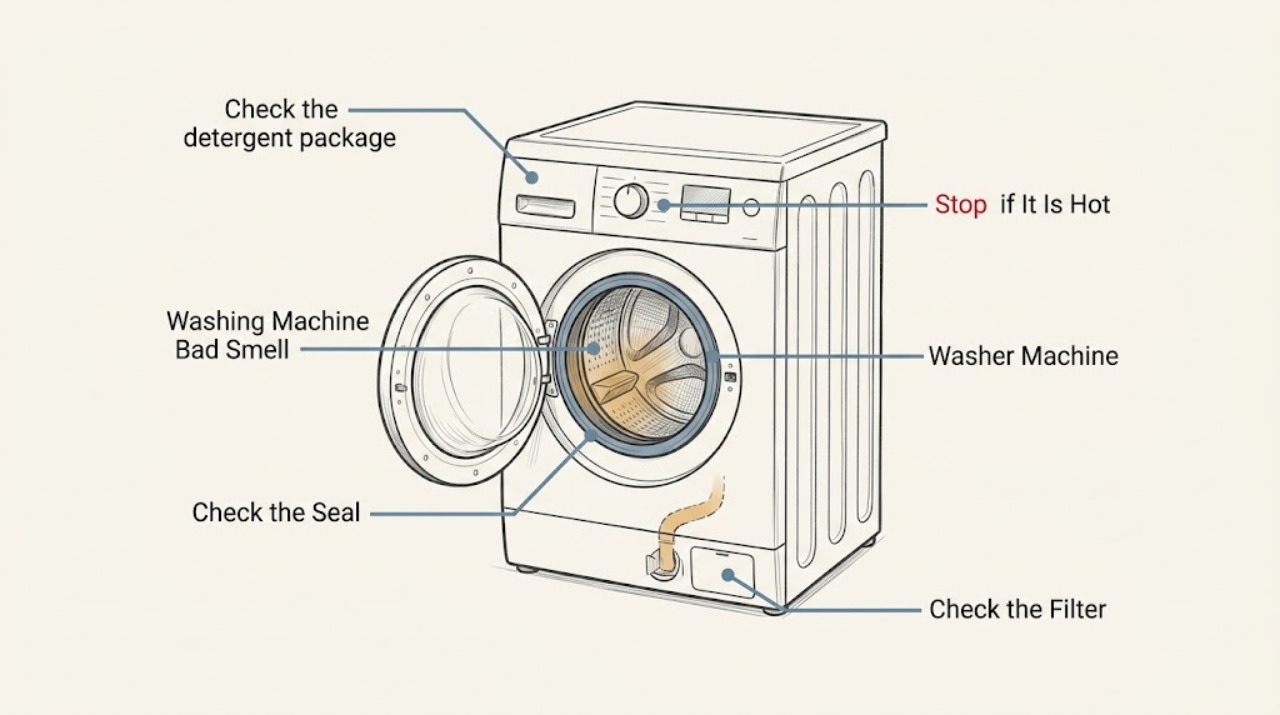
Work through in order
Diagnostic checks
Use only checks that match the exact appliance or system and its official guide.
-
Check 1
Describe the smell and locate its strongest point without opening panels: damp or musty from the basket, sour from wet laundry, residue around a front-load seal or dispenser, or burning, chemical, or sewage-like from outside the washer.
Expected result: Damp, sour, or mildew-like odor supports a moisture or residue-cleaning path. Burning, chemical, or sewage-like odor is not a routine freshness issue, especially if there is smoke, heat, a leak, or a drain backup.
Next step: For a safety-related odor, stop using the washer and arrange appropriate professional help. For a damp or residue odor, continue with the load-removal and drying checks.
Stop if: Stop immediately for burning smell, smoke, sparking, heat at the plug, chemical fumes, sewage backup, or water near electrical equipment.
Why this matters
Why: The odor type and location decide whether a low-risk cleaning step is appropriate or whether use must stop first.
-
Check 2
At the end of each wash, remove the wet load as soon as practical and leave the top-load lid or front-load door open between uses when the location allows it. Wipe away visible moisture from an accessible rim or seal with a soft cloth.
Expected result: If the smell improves after prompt unloading and ventilation, retained moisture was likely contributing. If the odor returns even while the washer dries between uses, residue or an internal drain or tub area may still need cleaning.
Next step: Keep the drying habit and continue to the detergent and dispenser check. Do not leave a front-load door open if it creates a child, pet, or walkway hazard.
Why this matters
Why: Amana links wet clothing left in the basket with mildew and odor, and recommends an open lid or door to improve drying.
-
Check 3
Check the detergent package and washer manual, then use only the required high-efficiency detergent where the model calls for it and the recommended amount. Inspect an accessible dispenser for pooled liquid, crusted residue, or visible mildew and clean it according to the manual.
Expected result: Non-HE detergent or overdosing can leave film and excess suds that contribute to odor. Residue in a dispenser points to a local source that can be cleaned; a clean dispenser with persistent odor points farther inside the washer.
Next step: Correct the detergent practice and clean only removable, user-accessible parts. If the drawer is stuck or residue extends behind it, stop forcing it and arrange service or follow the model manual.
Why this matters
Why: Amana identifies detergent type and quantity as a direct odor contributor and advises regular dispenser cleaning on front-load models.
-
Check 4
Run the washer's Clean Washer cycle empty, using the model manual's approved washer-cleaner or liquid-bleach procedure. Use one method only, add no detergent or other chemical, do not interrupt the cycle unless the manual explains how, and leave the lid or door open afterward to dry.
Expected result: A clear reduction in odor after a complete cleaning cycle supports accumulated soil or detergent residue as the cause. If the smell remains, returns quickly, or the cycle cannot complete because of a drain or control problem, cleaning alone is not enough.
Next step: If the odor improves, repeat the model-recommended maintenance interval and drying habit. If it remains or the washer leaks, fails to drain, or stops during the cycle, stop and arrange qualified service.
Stop if: Stop the cycle for smoke, burning smell, a chemical reaction, active leaking, or unusual electrical behavior.
Why this matters
Why: Amana recommends a recurring Clean Washer cycle because higher water volumes and the approved cleaner procedure address residue inside areas that ordinary laundry may not flush.
-
Check 5
For a front-load washer, inspect the folds of the door seal and the dispenser opening for trapped lint, coins, or visible residue; clean only with a soft cloth or the manual-approved method and dry the folds. For a top-load washer, inspect the accessible basket, lid rim, and dispenser without removing panels or reaching under the basket.
Expected result: Residue or mildew in a front-load seal can cause odor and may also affect sealing. A visible top-load residue source can be cleaned as directed. A torn seal, persistent wetness behind an inaccessible area, or leaking water is a service condition.
Next step: Clean and dry only accessible areas. If the seal is torn, the dispenser cannot be removed safely, or water is escaping, stop use and arrange a qualified appliance inspection.
Why this matters
Why: Washer design changes where moisture and detergent residue collect, so the front-load seal branch should not be applied to every Amana model.
-
Check 6
After one complete model-approved cleaning cycle, run a normal empty rinse or small load and reassess the odor from the washer and the laundry. Record whether the smell is gone, reduced, unchanged, or accompanied by poor draining, standing water, or a leak.
Expected result: Gone or reduced odor supports moisture or residue as the cause. Unchanged or rapidly recurring odor, standing water, poor draining, or a leak suggests a drain, seal, tub, pump, or other condition beyond routine user cleaning.
Next step: Stop adding cleaners and arrange qualified service for persistent odor, a leak, poor drainage, visible mold that cannot be safely removed, or any safety-related smell.
Stop if: Stop using the washer for burning or electrical odor, sewage backup, active leak, smoke, or repeated circuit interruption.
Why this matters
Why: A repeatable result prevents repeated chemical use and gives a technician a useful description of what remains.
Use your observations
Decision map
Find the observation that best matches what you see, then follow the next safe action.
-
PATH 01Safety boundary
What you see
The odor is damp, sour, or mildew-like and is strongest in the basket, door seal, dispenser, or wet laundry.
Do this next
Remove wet laundry promptly, ventilate the washer, correct detergent use, clean accessible residue, and run one approved Clean Washer cycle.
Why this path and its safety boundary
Safety stop: For burning, chemical, sewage-like, or electrical odor, stop use and arrange professional help before cleaning.
-
PATH 02Safety boundary
What you see
The washer uses a front-load design with a door seal or removable dispenser.
Do this next
Inspect and dry the seal folds and dispenser opening using the model manual's safe cleaning method; stop for a torn seal or leak.
Why this path and its safety boundary
Safety stop: Use the top-load basket, lid rim, dispenser, ventilation, and Clean Washer checks without reaching under the basket or opening the cabinet.
-
PATH 03Safety boundary
What you see
The washer-cleaning cycle reduces or removes the smell.
Do this next
Maintain the model-recommended cleaning interval, use the correct detergent amount, unload promptly, and leave the lid or door open to dry when safe.
Why this path and its safety boundary
Safety stop: Stop repeated chemical treatments and arrange qualified service, especially if the odor is accompanied by poor drainage, standing water, or a leak.
-
PATH 04Safety boundary
What you see
The odor is burning, chemical, sewage-like, or accompanied by smoke, water near electrics, a leak, or repeated circuit interruption.
Do this next
Stop using the washer, isolate power only from a safe accessible point if there is no water contact, and arrange qualified appliance, electrical, or plumbing help as appropriate.
Why this path and its safety boundary
Safety stop: Continue with one model-approved cleaning cycle and reassess the result; persistent odor still needs service.
Helpful context
Understand the symptom
Find the source before adding cleaner
A stale or musty smell commonly comes from moisture, mildew, detergent film, or soil residue inside the washer. The odor may be in the laundry, around a front-load door seal, in a dispenser, or in the basket itself. If the smell seems to come from an outlet, cord, drain, or burning component rather than damp residue, treat it as a safety issue and stop using the appliance.
Never combine cleaning chemicals
Use one model-approved washer-cleaning method at a time and follow the washer manual and cleaner label. Do not add detergent or another chemical to a cleaning cycle that calls for a washer cleaner or bleach, and do not improvise mixtures. Ventilate the room normally and keep children and pets away from cleaning products.
Common questions
FAQ
Why does my Amana washing machine smell musty?
Moisture, wet laundry left in the basket, detergent residue, and mildew around the washer interior or front-load seal can create a musty smell. Remove loads promptly, ventilate the washer, correct detergent use, and run the model-approved Clean Washer cycle.
How often should I run the Clean Washer cycle?
Amana recommends running it every month in the referenced guidance. Follow your model manual for the exact procedure, use one approved cleaning method, and do not mix detergent or other chemicals into that cycle.
Should I leave my Amana washer door or lid open?
Yes, when it is safe in your laundry area. Leaving the door or lid open between uses helps the interior dry and reduces moisture-related odor. Remove wet clothing promptly after a cycle.
When is a bad washer smell a service issue?
Stop and arrange service for burning or electrical odor, chemical fumes, sewage-like odor, smoke, a leak, water near electrics, poor drainage, a torn seal, or odor that remains after one correct cleaning cycle.
Read the exact guide
Official sources
- Cleaning a Front Load Washer Door SealAmana · Amana front-load door-seal residue, mildew, leak prevention, and drying guidance
- Removing Odor or Smell - Washer - Product HelpAmana · Amana washer odor causes, prompt unloading, detergent choice, and Clean Washer guidance
- Removing Odors or Smells - Front Load Washer - Product HelpAmana · Amana front-load washer seal, dispenser, ventilation, detergent, and Clean Washer checks
- Removing Odors from the Interior of a WasherAmana · Amana washer interior cleaning, Clean Washer procedure, detergent use, and ventilation
Community feedback
Share a repair observation
Share a plain-text repair observation. Accepted observations are published automatically; this page may take a moment to update.