
On this page
Start here
Quick answer
A bad smell from an Electrolux washing machine is usually retained moisture, detergent buildup, oversudsing, or water that is not draining completely, but a hot electrical, burning-plastic, solvent, or sewage-like smell is a stop condition. Remove wet laundry, check for standing water or a leak, and clean only accessible areas with the machine safely stopped. For a front-loader, wipe the door glass and rubber seal and clean the dispenser; for a top-loader, follow the model guide for the tub-clean or maintenance cycle. Use the correct high-efficiency detergent and amount, never mix cleaning chemicals, and leave the door or lid and dispenser open to dry. If the odor returns after the model-approved clean cycle, the washer leaks, drains poorly, trips a breaker, or smells electrically hot, stop using it and arrange qualified service.
Work through in order
Diagnostic checks
Use only checks that match the exact appliance or system and its official guide.
-
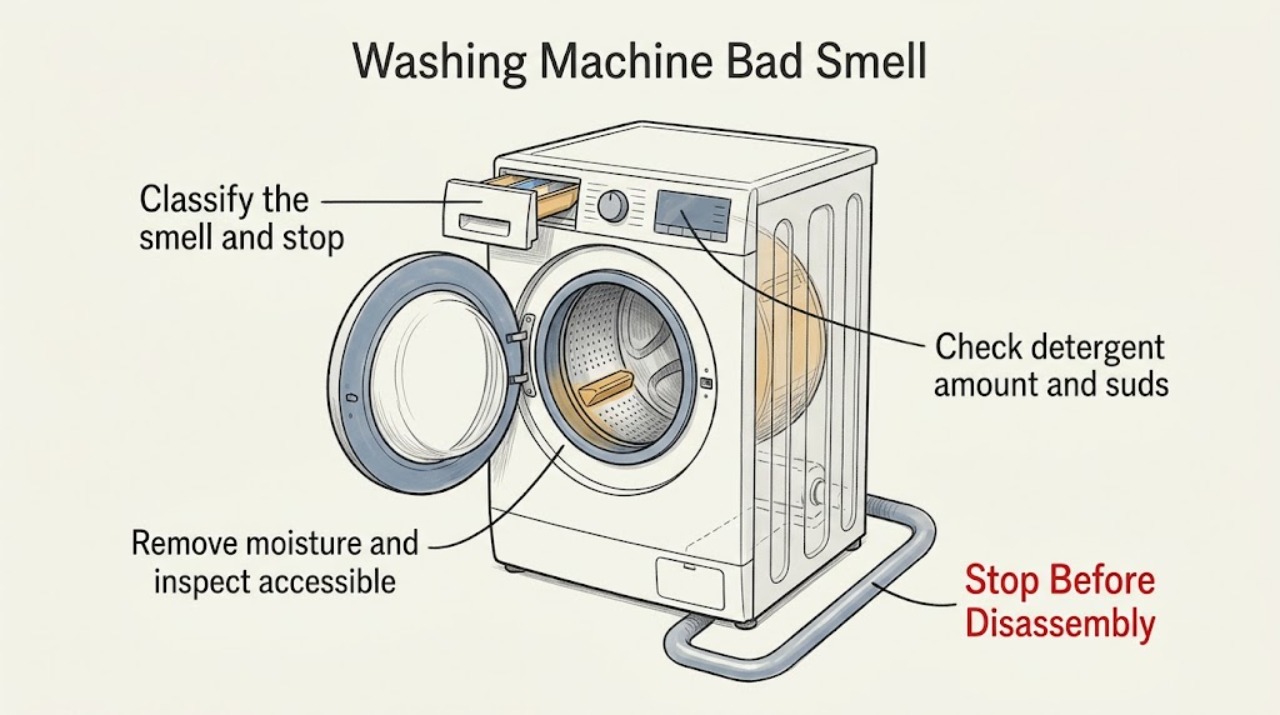
Classify the smell and stop for hazards
Pause the washer if it is running and identify whether the odor is musty, sour, sewage-like, detergent-heavy, hot electrical, burning-plastic, or chemical. Look for smoke, sparking, a hot cord or outlet, and water on the floor without touching wet electrical parts.
Expected result: The smell is a damp or detergent odor with no heat or smoke, or it is hot, burning, chemical, sewage-like, or accompanied by a leak, smoke, sparking, or a tripped breaker.
Next step: For smoke, sparking, a hot electrical smell, or a damaged cord or outlet, stop using the washer, disconnect power only if it is safe to do so, keep clear, and seek qualified electrical or appliance help. For a leak, stop the cycle, close the water supply valves if accessible, contain the water safely, and arrange service if the source is not an obvious loose connection.
Why this matters
Why: A damp or residue odor can be investigated with accessible cleaning and drainage checks. Heat, smoke, electrical symptoms, chemical fumes, or uncontrolled water can make continued operation unsafe and can damage the floor or wiring.
-
Remove moisture and inspect accessible residue
After the drum has stopped and the door or lid can be opened safely, remove wet laundry promptly. On a front-loader, inspect and wipe the visible door glass and rubber seal, including the fold, for lint, hair, or residue; on a top-loader, inspect the tub rim and dispenser area. Do not pull on the seal or remove panels.
Expected result: Wet clothing was left in the washer, the front-load seal or glass has residue, the dispenser has buildup, or accessible surfaces look clean while the odor remains.
Next step: Wipe accessible residue with a soft cloth using only the cleaning method allowed by the model guide, then leave the door or lid open and the dispenser extended enough to dry. If the seal is torn, the door does not close, or water remains inside, stop and arrange service rather than dismantling the washer.
Why this matters
Why: Moisture and residue at accessible surfaces can retain odor between cycles. A clean visible surface does not rule out standing water, a blocked drain path, or an internal fault.
-
Check detergent amount and suds
Review the detergent label and the model guide, then use only the specified high-efficiency detergent and do not exceed the dispenser's fill guidance. Inspect for unusually persistent foam or a suds-related alert; do not add more detergent to mask the smell.
Expected result: The washer has been receiving non-high-efficiency detergent, excess detergent, detergent in the wrong compartment, or persistent suds; or the detergent type and amount already match the guide.
Next step: Correct the detergent type, compartment, and amount for this model. If the model guide permits it, run an empty cleaning or rinse cycle to clear remaining suds; if suds alerts recur with correct dosing, record the alert and arrange service.
Why this matters
Why: Excess or unsuitable detergent can leave residue and trigger oversudsing, which can require additional rinses and leave the washer wet. Correct dosing is a preventive change, not proof that an odor has been eliminated.
-
Run the model-approved washer-cleaning cycle
With the washer empty, select its documented Clean Washer, tub-clean, or equivalent maintenance cycle and follow the owner's guide for any approved cleaner. If the model has no such cycle, use only the care procedure specified for that model. Never combine cleaners or improvise a chemical dose.
Expected result: The cycle completes normally and the odor is reduced, the cycle aborts or displays an alert, or the odor is unchanged or stronger afterward.
Next step: After a normal cycle, wipe away any remaining accessible moisture and keep the door or lid open to dry. If the cycle cannot complete, the washer leaks, smells hot, or the odor returns immediately, stop repeated cycles and arrange qualified service.
Why this matters
Why: An empty maintenance cycle can remove residue when the odor is caused by the wash chamber or detergent buildup. An alert, leak, abnormal noise, or persistent odor points beyond routine cleaning.
-
Check for standing water and drain-side odor
After the washer is safely stopped, look for water left in the drum, a wet floor, a damp drain hose, or odor concentrated at the standpipe. Inspect only visible hose routing and connections; do not reach into a pump, remove a filter full of water, or open cabinet panels unless the model guide explicitly makes that a safe user procedure.
Expected result: Water remains in the drum, the drain hose or standpipe is wet or overflowing, a connection or hose is damaged, or the drain area looks dry while the odor persists.
Next step: If water is escaping, close the accessible water valves, protect the floor, and do not run another load. If the home standpipe backs up, contact a plumber; if the appliance hose, pump area, or internal drain path is involved, arrange qualified appliance service.
Why this matters
Why: Retained water and drain leaks can sustain odor and create a flood risk. A dry, correctly routed visible drain does not exclude an internal pump or hose problem.
-
Retest the odor and set a drying routine
Run one small, appropriate empty rinse or test cycle only after the previous checks are normal, then smell the empty drum and inspect for leaks or alerts. At the end of future cycles, remove laundry promptly, wipe accessible moisture, and leave the door or lid and dispenser open when safe.
Expected result: The empty washer no longer smells and completes without leaks or alerts, or the odor returns even though the washer is correctly dosed, cleaned, and allowed to dry.
Next step: Continue the model's care routine and correct detergent dosing if the smell is gone. If it returns, stop using the washer for normal loads and provide the technician the odor type, location, model, recent cleaning cycle result, water residue, and any alerts.
Why this matters
Why: A clean, dry, leak-free test supports a maintenance-related odor. A recurring odor suggests retained water, a seal or dispenser problem, a drain issue, or an internal condition that routine cleaning cannot resolve.
Use your observations
Decision map
Find the observation that best matches what you see, then follow the next safe action.
-
PATH 01Next step
What you see
The odor is damp or detergent-like, there is no leak or electrical symptom, and it improves after accessible cleaning and the model-approved empty cycle.
Do this next
Keep the door or lid and dispenser open to dry after use, remove wet laundry promptly, and follow the model's maintenance and detergent guidance.
-
PATH 02Next step
What you see
The odor is strongest near a drain, water remains in the drum, the standpipe backs up, or the washer leaks.
Do this next
Stop normal cycles, close accessible water valves, protect the floor, and arrange appliance service or plumbing help according to where the water is coming from.
-
PATH 03Next step
What you see
The odor returns immediately after cleaning, or the seal, dispenser, hose, drain path, or cycle shows damage or an unresolved alert.
Do this next
Do not keep repeating cleaning cycles or guess at a replacement part. Stop use and arrange model-specific qualified appliance service.
-
PATH 04Next step
What you see
There is smoke, sparking, a hot electrical or burning-plastic smell, a damaged cord or outlet, chemical fumes, or a breaker that trips again.
Do this next
Stop immediately, keep people away, disconnect power only if safe, and seek qualified electrical or emergency assistance. Do not open the washer cabinet.
Helpful context
Understand the symptom
The smell location and character narrow the problem. A musty odor at the door or dispenser often follows moisture and residue; a sour or sewer-like odor that is strongest near the drain can involve retained water or the household standpipe. A hot electrical or burning-plastic smell is not a cleaning problem: stop the washer, keep clear, and seek qualified help. Do not mix bleach, vinegar, descaler, or other cleaners, and do not pour an unapproved chemical into the machine.
Cleaning advice varies by Electrolux model and by front-load versus top-load design. Use the cycle and cleaning-product instructions in the owner's guide. A cleaning cycle can remove residue, but it cannot correct a leaking hose, a drain restriction, a damaged seal, or an internal electrical fault. Keep the washer out of service if water is accumulating or the odor returns immediately after cleaning.
When checks do not resolve it
Need a professional?
Arrange qualified appliance service when the bad smell returns after the model-approved cleaning cycle, water remains in the drum, the washer leaks or drains poorly, the door seal or dispenser is damaged, an alert or abnormal cycle persists, or any internal access would be required. Stop immediately for smoke, sparking, a hot electrical or burning-plastic smell, a damaged cord or outlet, chemical fumes, or a breaker that trips again.
Common questions
FAQ
Should I leave an Electrolux washer door open after washing?
When it is safe and the washer is not running, leave a front-load door or top-load lid open enough to dry and leave the dispenser open as the model allows. Remove wet laundry promptly. Do not leave it open where children or pets can access it.
Can I pour bleach and vinegar together to remove washer odor?
No. Never mix bleach, vinegar, descaler, or other cleaning chemicals. Use only the cleaner and method approved in the Electrolux owner's guide for your exact model, and stop if fumes or a chemical smell develops.
Why does the smell return after I clean the washer?
A returning odor can indicate retained water, a drain restriction, a damaged door seal or dispenser, persistent detergent residue, or an internal fault. Check for standing water and leaks without opening the cabinet; if the odor returns or the washer drains poorly, arrange qualified service.
Read the exact guide
Official sources
- How to Clean & Care For Your Front Load WasherElectrolux · Electrolux front-load washer cleaning and care guidance
- What should I do if my washer does not start?Electrolux · Electrolux washer power, outlet, breaker, water, and safe operation checks
- Laundry Washers - Detergent GuideElectrolux · Electrolux washer detergent type, amount, dispenser, and detergent-pack guidance
- Laundry front loading washer displaying Error Code SU dS too many suds.Electrolux · Electrolux front-load oversudsing, high-efficiency detergent, correct dosing, and empty rinse guidance
- Laundry front loading washer is leaking water.Electrolux · Electrolux front-load washer leak, door seal, dispenser, drain hose, and service guidance
Community feedback
Share a repair observation
Share a plain-text repair observation. Accepted observations are published automatically; this page may take a moment to update.