
On this page
Start here
Quick answer
If a Hisense washing machine will not drain, stop the cycle and keep hands and electrical connections out of standing water. From a dry position, note whether the door or lid is locked and whether a drainage fault is displayed. Check the accessible drain hose for a kink, blockage, incorrect height, or siphoning, and check whether the household standpipe or sink drains normally. If the exact model has a pump-filter access, switch off and disconnect power from a dry position, let hot water cool, place towels and a shallow container, and drain the water slowly before cleaning and refitting the filter. Do not force a locked door, reach into moving parts, or open the filter while hot water may spill. If water still remains, the pump only hums, the filter or impeller is damaged, there is a leak near electrics, the machine repeatedly overflows, or an error returns, leave it off and arrange qualified Hisense service.
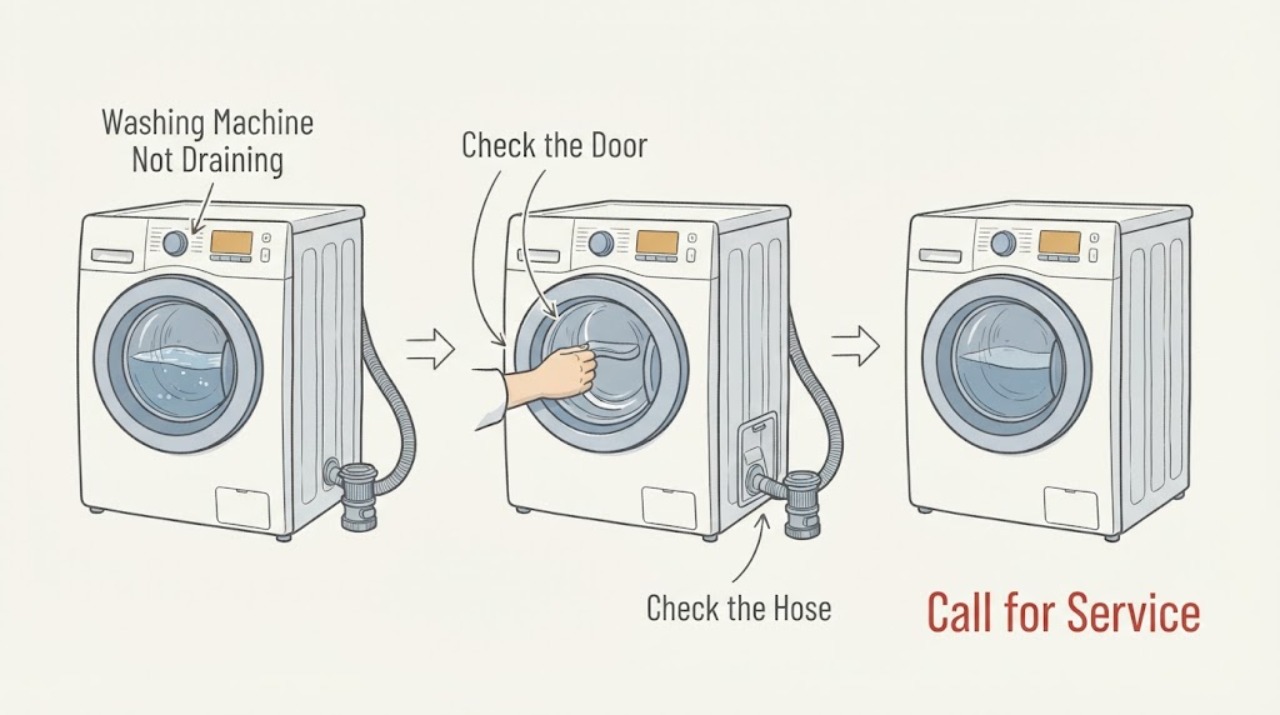
Work through in order
Diagnostic checks
Use only checks that match the exact appliance or system and its official guide.
-
Check 1
Stop the program, keep the door or lid closed, and from a dry position record the water level, any displayed code, whether the machine is still humming or trying to pump, and whether water is near the plug or controls; do not reach into moving water or force the lock.
Expected result: The tub is full or partly full; the door or lid remains locked; a drainage or overflow code is present; the pump hums; or there is a leak near electrical parts.
Next step: If water is near electrical parts, repeated overflow continues, the cabinet is leaking heavily, or the machine smells hot or electrical, isolate the appliance only from a dry safe position and arrange service. Otherwise continue with external hose and household-drain checks.
Why this matters
Why: Standing water changes the task from a normal cycle restart to controlled draining. A drainage code supports checking the hose and filter, while an overflow condition or water near electrics needs an immediate stop. A humming pump does not prove that the pump is clear or safe to access.
-
Check 2
Check from outside that the door or lid is fully closed, that no clothing is caught in the seal or opening, and that the selected program actually includes drain or spin; do not pry a locked door or bypass a door-lock interlock.
Expected result: The door or lid is not closing; an item is caught; the display reports a door-lock fault; the cycle is paused or set to a no-spin/no-drain option; or the lock and program appear normal.
Next step: Remove only an accessible obstruction, close the door or lid normally, and select the model's drain or spin function once if there is no standing-water or electrical hazard. If the lock fault returns or the machine still will not drain, stop and arrange service.
Why this matters
Why: Hisense manuals state that a washer may not start when the door is not closed or the lock is not engaged, and model controls can offer drain without spin. A lock fault can prevent the expected drain sequence even when the hose is clear.
-
Check 3
With the washer off, inspect the accessible drain hose along its visible route for a kink, crush, frozen section, loose connection, or obstruction; confirm its end is secured in the standpipe or basin at the model-specified height and that the household drain accepts water normally without backing up.
Expected result: The hose is kinked, crushed, frozen, loose, too deeply inserted, or installed at the wrong height; the standpipe or sink backs up; or the visible route and household drain are clear.
Next step: Correct only a visible hose position or loose accessible connection without dragging the appliance or opening plumbing under pressure. If the household drain is the restriction, use a qualified plumber. If the path is clear, proceed to the model-specific pump-filter procedure.
Why this matters
Why: Hisense lists a pinched, frozen, or clogged hose as a cause of a drainage fault. Its quick guide warns that hose height and insertion depth affect slow draining and siphoning. A household drain that backs up can imitate a washer fault, while a clear external path moves suspicion toward the filter or pump.
-
Check 4
Only if the exact Hisense manual provides a pump-filter procedure, switch the machine off and disconnect power from a dry position, let the water cool, place an absorbent cloth and shallow container, release any emergency drain tube if fitted, and turn the filter slowly to control the water; do not open it quickly or use force.
Expected result: Water drains through the emergency tube or filter opening; the filter contains coins, buttons, hair, or lint; the filter gasket is dirty or damaged; the filter will not turn; or no water comes out despite a full tub.
Next step: Clean only removable debris, rinse the filter, clean the housing, and refit it firmly in the direction shown by the manual. Stop if the filter is seized, the housing cracks, water leaks after refitting, or the impeller is damaged; arrange service instead of forcing access.
Why this matters
Why: Hisense says debris can block the pump and that the filter should be cleaned under running water, with the gasket surface clean for a good seal. A filter that will not release, a damaged gasket, or a full tub with no controlled flow may indicate a deeper blockage or pump fault.
-
Check 5
After the water path is safe and the filter is refitted, note whether the failure began with a very heavy, very small, highly linting, or unusually sudsy load and whether loose objects could have come from pockets; do not add more detergent or run repeated full cycles to test the theory.
Expected result: The problem followed an unusual load or visible lint and debris; the load was ordinary; or the washer still stops with water after the hose and filter are clear.
Next step: Remove loose objects from pockets in future loads, use the model's recommended detergent amount, and run one appropriate drain or spin check only after the machine is reassembled and dry. If water remains, stop and arrange service.
Why this matters
Why: Hisense manuals associate pump-filter cleaning with fleecy or old laundry and debris such as coins, buttons, hairpins, or clips. Load clues can explain a blocked filter, but they do not prove that the drain pump, sensor, or control is healthy. Persistent water after a clean path is a service symptom.
-
Check 6
After one safe reassembled drain or spin attempt, record whether water exits normally, whether the pump is silent, humming, or making a grinding sound, and whether the same error or an overflow condition returns; do not open the cabinet or test live wiring.
Expected result: The tub drains normally; water drains slowly; the pump hums or grinds without moving water; the error returns; or the machine continues filling or overflowing.
Next step: Leave the appliance off and arrange qualified Hisense service for slow or absent draining, abnormal pump noise, a returning error, or overflow. Give the technician the model, code, water level, hose and filter findings, and the result of the single test.
Why this matters
Why: Normal draining after a cleared hose or filter supports a resolved obstruction. Slow or absent draining after those checks points toward a pump, internal hose, sensor, or control fault. Repeated overflow or a returning electronic error needs professional diagnosis.
Use your observations
Decision map
Find the observation that best matches what you see, then follow the next safe action.
-
PATH 01Next step
What you see
Water is near the plug or controls, the machine leaks heavily, smells electrical, or continues to overflow.
Do this next
Stay dry, do not touch the appliance from standing water, isolate power only from a safe position, close the water supply if safe, and arrange qualified service. Do not restart it.
-
PATH 02Next step
What you see
The door or lid is not closed, clothing is caught, or a lock error is shown.
Do this next
Remove only an accessible obstruction, close it normally, and use the model's documented drain or spin control once. A repeated lock error needs service; never force or bypass the lock.
-
PATH 03Next step
What you see
The visible hose is kinked, frozen, crushed, incorrectly positioned, or the standpipe or sink backs up.
Do this next
Correct only the accessible hose position and keep the connection secure. Have a plumber address a blocked household drain or a technician address a concealed restriction.
-
PATH 04Next step
What you see
The external hose and household drain are clear and the exact model provides a pump-filter access.
Do this next
Disconnect power from a dry position, let water cool, drain slowly into a container, clean and refit the filter as shown in the model manual, and stop if access is seized or leaking.
-
PATH 05Next step
What you see
The filter and hose are clear but water remains, the pump hums or grinds, an error returns, or the washer continues to overflow.
Do this next
Leave the washer off and arrange qualified Hisense service. A pump, internal hose, sensor, or control diagnosis requires model-specific service access.
Helpful context
Understand the symptom
Protect yourself and the floor before opening a drain path
A failed drain leaves a heavy tub of water behind a locked door or lid. Do not force the door, tip the machine, or start removing a filter while the appliance is energized or the water may be hot. If water is close to a plug, outlet, control, or other electrical connection, stay dry, isolate power only from a safe position, and get qualified help. Keep the door closed until the water level is controlled.
A hose or household drain can look like a pump failure
Hisense guidance separates a pinched, frozen, or clogged drain hose from a blocked pump filter and from a pump that remains faulty after those checks. The hose must also be installed at the height and depth specified for the model; an incorrectly positioned hose can drain slowly or siphon. Check the machine connection and the household standpipe or sink without moving a heavy appliance alone.
The filter is a controlled water-release procedure, not a quick twist
Hisense manuals show that model layouts differ: some machines have an emergency drain tube or funnel and others release water through the pump-filter opening. Use the exact manual for the E-Nr/model. Put an absorbent cloth and shallow container in place, let hot water cool, release water slowly, clean the filter and housing, and refit the filter with its gasket clean. If the filter will not turn, leaks after refitting, or the impeller is damaged, stop rather than forcing it.
When checks do not resolve it
Need a professional?
Arrange qualified Hisense service when the washer still will not drain after one safe hose and model-specific filter check, when the filter is seized or leaks, when the pump hums or grinds without moving water, when a lock or electronic fault returns, or when the machine overflows.
Common questions
FAQ
Why is my Hisense washing machine not draining?
Hisense directs owners to check a pinched, frozen, or clogged drain hose and a blocked pump filter, along with the exact hose installation and model procedure. If those paths are clear but water remains, the pump, internal hose, sensor, or control needs service.
Can I open the pump filter with water in the washer?
Only if the exact model manual provides that procedure. Disconnect power from a dry position, let hot water cool, place towels and a shallow container, and release water slowly through the emergency tube or filter opening. Stop if the filter is seized or the water cannot be controlled.
What if the Hisense washer door is locked with water inside?
Do not force or bypass the lock. Stop the cycle, isolate hazards, and use only the model's documented drain procedure. A repeated lock error or a door that will not release after the water is controlled needs service.
Can the household drain cause a Hisense washer not to drain?
Yes. A backed-up standpipe or sink can imitate a washer fault, and Hisense specifies drain-hose height and insertion limits to avoid slow draining or siphoning. Have a blocked household drain addressed separately.
When should I stop troubleshooting a Hisense washer drain problem?
Stop for water near electrics, heavy leakage, a hot or burning smell, smoke, sparking, repeated breaker trips, overflow, a seized or leaking filter, or a pump that still fails after one safe hose and filter check. Arrange qualified service.
Read the exact guide
Official sources
- Simple version of the wave washing machine installation guideHisense · Hisense washing-machine drain-hose routing, siphoning prevention, pocket debris, and drainage error guidance
- Clothes Washing Machine HWFS7514S 7.5kg — User ManualHisense Australia · Hisense washing-machine controls, drainage faults, pump-filter cleaning, door locks, and service boundaries
- Support LaundryHisense UK · Hisense laundry model manuals, filter-care guidance, and model-specific support routing
Community feedback
Share a repair observation
Share a plain-text repair observation. Accepted observations are published automatically; this page may take a moment to update.