
On this page
Start here
Quick answer
If a Hotpoint washer is still filling, stop the cycle and close both water-supply valves from a dry, safe position. Do not step into water to reach a plug or breaker. If the water is near an outlet or the appliance, keep clear and arrange qualified service. A washer that overflows while filling can have a water valve or water-level pressure switch problem; a washer that fills and drains at the same time may instead be siphoning through an incorrectly positioned drain hose. Foam, a hose or door-seal leak, and a blocked drain need different checks.
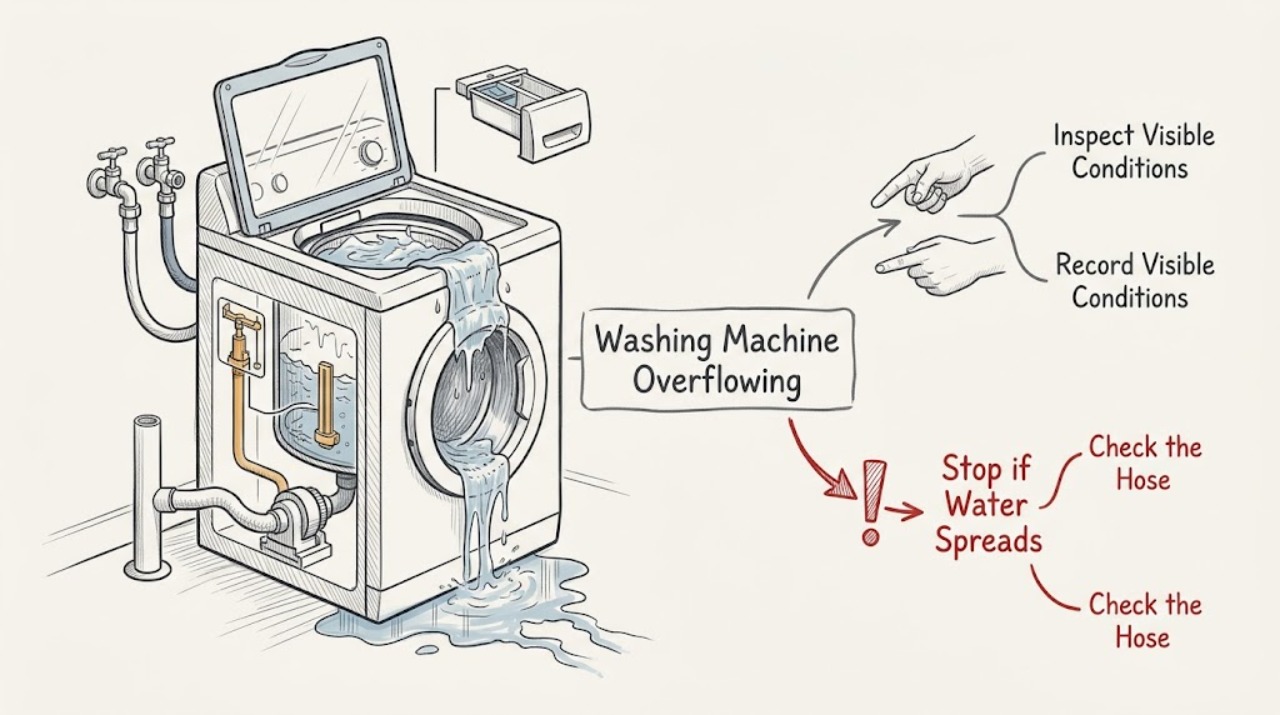
Work through in order
Diagnostic checks
Use only checks that match the exact appliance or system and its official guide.
-
Check 1
Stop the cycle and, from a dry and safely reachable position, close both washer water-supply valves. Look at the floor, tub level, and nearby outlet without stepping into water.
Expected result: Water stops entering when the supply valves are closed, or water is near the outlet, cord, or appliance base.
Next step: Keep clear, dry the area only from a safe position, and arrange qualified appliance or electrical service. If the water cannot be isolated safely, leave the area and contact appropriate emergency help.
Why this matters
Why: The immediate water source is isolated, but an electrical or flood hazard may remain; the washer should not be tested in that condition.
-
Check 2
After the area is safe, record the phase when the overflow starts: initial fill, wash, drain or spin, or while the washer is switched off. Record whether water enters continuously or only rises because the drain is carrying it away.
Expected result: The tub rises during filling and does not stop, or it accumulates water while the washer is off.
Next step: Leave the supply valves closed and have the model-specific valve and water-level control diagnosed; do not open the cabinet or substitute a part based only on the symptom.
Why this matters
Why: A failed water valve or water-level pressure-control path becomes more likely; filling while switched off particularly points toward the inlet valve.
-
Check 3
For a washer that fills and drains together, inspect the visible drain hose and standpipe from outside the machine. Confirm the hose is supported at the installation height in the model instructions, is not pushed too far down, and has an air gap rather than a sealed fit.
Expected result: The hose is low, deeply inserted, or sealed tightly in the drain, or the standpipe is below the manufacturer's required height.
Next step: Correct only the external hose routing using the installation instructions or supplied retaining clip. If the simultaneous fill-and-drain symptom continues, stop and arrange service.
Why this matters
Why: Water can siphon out as fresh water enters, making the washer appear to overfill or never reach its level.
-
Check 4
Check the detergent label and the dispenser for excess suds or undissolved product once the machine is safe and empty of moving water. Compare the product and measured amount with the washer manual; use only the specified high-efficiency detergent when the model requires it.
Expected result: Foam is the material rising out of the tub, and the load is unusually wet after the cycle rather than the tub being filled with clear water.
Next step: Do not mix cleaners or add another chemical. Follow the model manual's recovery or drain-and-spin guidance only when the area is safe; if foam returns with the correct measured detergent, stop and request service.
Why this matters
Why: Too much or unsuitable detergent can create oversudsing and a suds lock, which can slow draining or final spin and make foam appear to overflow.
-
Check 5
If the overflow happens during drain or spin, inspect the external drain hose for a kink and observe whether the household standpipe backs up. On a dry floor, use a pump-filter access point only if the specific model manual says it is user-accessible and explains how to contain residual water.
Expected result: The standpipe backs up, the hose is kinked, or a manual-accessible filter is blocked; alternatively, a full tub only hums.
Next step: Use a plumber for a household drain that will not accept water. Keep the washer out of service if the tub remains full, the pump only hums, or the filter cannot be safely accessed; request qualified washer service.
Why this matters
Why: A household drain restriction, hose restriction, or pump-filter obstruction can prevent discharge. A full tub that only hums may need service rather than further user checks.
-
Check 6
With water isolated and the floor dry, look for the highest visible wet point around the fill hoses, drain hose, dispenser, door boot or seal, and cabinet edges. Do not pull the washer apart or run another cycle just to reproduce a leak.
Expected result: Water begins at a hose connection or standpipe, at the dispenser or door opening, or from beneath the cabinet rather than from the tub level.
Next step: After the supply is off, document the location and cycle phase. Have the hose, seal, dispenser path, pump, or internal leak assessed by a qualified technician; use a plumber when the household drain backs up.
Why this matters
Why: The symptom is a localized leak or plumbing backflow, not necessarily an overfilled tub. Uneven floors can make a rear leak appear at the front.
-
Check 7
Compare the symptom with the model's owner or installation instructions and note the model identifier, cycle, detergent, water temperature selection, and any displayed code before requesting help.
Expected result: The instructions give a model-specific drain-height, filter, dispenser, or recovery procedure that matches the observed branch; otherwise the cause remains uncertain.
Next step: Follow only the matching low-risk instruction. If the symptom is not resolved by that exact procedure, keep the valves closed and arrange Hotpoint/qualified appliance service.
Why this matters
Why: Hotpoint washer layouts and safe user-accessible checks vary by model, so a generic valve, pressure switch, or pump diagnosis is not enough to order a part.
Use your observations
Decision map
Find the observation that best matches what you see, then follow the next safe action.
-
PATH 01Safety boundary
What you see
Is water still entering after the cycle is stopped, or does the tub fill while the washer is switched off?
Do this next
Close both supply valves if safely reachable and leave the washer unused; the inlet valve or water-level control needs model-specific service.
Why this path and its safety boundary
Safety stop: Stop immediately if water is near electrical parts, the supply cannot be isolated safely, or there is smoke, burning odor, or sparking.
-
PATH 02Safety boundary
What you see
Does the washer fill and drain at the same time?
Do this next
Inspect external drain-hose height, insertion depth, support, and air gap against the installation instructions; correct routing only if it can be done safely.
Why this path and its safety boundary
Safety stop: Stop and request service if correct hose routing does not end the simultaneous flow or if the standpipe backs up.
-
PATH 03Safety boundary
What you see
Is the material overflowing mainly suds rather than clear water?
Do this next
Use the specified detergent and measured amount; do not mix chemicals, and follow only the model manual's safe recovery guidance.
Why this path and its safety boundary
Safety stop: Stop if foam returns with correct detergent, the area becomes wet near electrical parts, or the washer will not drain safely.
-
PATH 04Safety boundary
What you see
Does water appear during drain or spin, or does the household drain overflow?
Do this next
Check only visible hose routing and the plumbing path; use a plumber for a blocked household drain and qualified appliance service for a full tub that only hums.
Why this path and its safety boundary
Safety stop: Stop before moving or opening the washer if there is a full tub, heavy leak, unstable appliance, or unsafe floor.
-
PATH 05Safety boundary
What you see
Does the highest wet point trace to a fill hose, drain hose or standpipe, dispenser, door seal, or cabinet underside?
Do this next
Keep the water supply closed, record the location and phase, and arrange the appropriate appliance service or plumbing visit.
Why this path and its safety boundary
Safety stop: Stop all testing if the leak is heavy, reaches electrical components, or returns immediately after a safe external check.
Helpful context
Understand the symptom
Make the area safe first
Stop the cycle. If water is still entering and the supply valves are safely reachable, close the hot and cold valves. Only isolate electrical power from a dry, safe position; never wade through water or touch a plug, outlet, or breaker while standing in water. Keep children and pets away. If water has reached an outlet, cord, or the appliance base, or if you see sparking, smoke, or a burning smell, leave the area and use qualified emergency or appliance service rather than testing the washer again.
First identify what is overflowing
Note whether water rises while the washer is filling, whether the tub fills and drains at the same time, whether suds climb out, or whether water appears only during drain or spin. Also note whether water enters when the washer is switched off. That timing separates an inlet-valve problem from drain siphoning, oversudsing, a drain restriction, or a leak at a hose, dispenser, or door seal.
Do not force a wet or unsafe repair
Do not remove panels, test live wiring, reach into a moving or water-filled tub, defeat a door lock, or replace a valve, pressure control, pump, or seal without the exact model instructions and appropriate qualification. A service visit is the correct next step when the safe external checks do not identify the cause.
Safety boundary
Stop conditions
- Stop using the washer if it continues filling, fills while switched off, or overflows again after a safe external correction.
- Do not enter standing water to reach a cord, outlet, or breaker; keep away when water is near electrical parts.
- Stop for smoke, burning odor, sparking, a tripped breaker, damaged insulation, a cracked door or seal, or an unstable appliance.
- Do not open panels, test live wiring, bypass a door lock, or remove a pump or valve unless the work is being performed by a qualified technician.
- Do not mix detergent, bleach, drain opener, or other cleaners while trying to clear an overflow.
Only after diagnosis
Potential parts
- water inlet valve
Consider only if water enters while the washer is off or continues filling after the external water-level and drain-routing checks, and a technician confirms the valve fault.
Confirm the exact model and the manufacturer's fit information before ordering; do not treat a symptom as proof of fit. - water-level pressure control or sensor
Consider only when the washer overfills during a fill cycle and service diagnosis links the fault to the water-level sensing path.
The control design varies by model; verify the exact model and manufacturer documentation. - drain pump or drain hose
Consider only when the washer cannot drain after safe hose and household-plumbing checks and a technician identifies a pump or appliance hose fault.
Check the model's manual and manufacturer's fit information before ordering any part. - door boot or door seal
Consider only when the highest wet point is the door opening or boot and the exact model diagnosis confirms seal damage or displacement.
Seal shape and mounting vary by model; confirm exact fitment before purchase or repair.
When checks do not resolve it
Need a professional?
Call qualified appliance service when the washer overflows during filling, fills while switched off, or the safe hose and detergent checks do not resolve it., Call a plumber when the household standpipe backs up or will not accept water independently of the washer., Use urgent electrical or emergency help for water near energized equipment, smoke, fire, or sparking.
Have this ready
- Provide the model identifier, country or region, cycle and phase when the overflow starts, whether water enters while off, detergent type and amount, photos of the dry leak location, and any displayed code.
Common questions
FAQ
Why does my Hotpoint washer overflow only while filling?
If the tub rises while filling and does not stop, a water inlet valve or water-level pressure-control problem is possible. Close the supply valves safely and arrange model-specific service; do not open the cabinet to test it.
Why does the washer fill and drain at the same time?
An incorrectly routed drain hose can siphon water from the tub as fresh water enters. Check the external routing, support, insertion depth, and air gap against the installation instructions. If it continues, stop and request service.
Can too much detergent cause an overflow?
Excess or unsuitable detergent can create heavy suds, slow the final spin, and make foam rise out of the washer. Use the specified detergent and measured amount; never mix cleaning chemicals while trying to correct it.
What should I do if water enters while the Hotpoint washer is off?
Close the washer's water-supply valves from a safely dry position and do not run it. A water inlet valve may be allowing water through while the appliance is off, which needs qualified service.
When should I stop troubleshooting a washer overflow?
Stop when water is near electrical parts, you cannot isolate the supply safely, the tub remains full, the pump only hums, or there is smoke, sparking, burning odor, or a repeated overflow. Keep clear and arrange the appropriate appliance, electrical, or plumbing service.
Read the exact guide
Official sources
- Front Load Washer - Will Not Drain or Drains SlowlyGE Appliances · Washer drain-hose, household-plumbing, pump-filter, and full-tub troubleshooting
- Washer - Won't Stop FillingGE Appliances · GE Appliances washer filling, water-level control, and drain-hose siphon guidance
- Washer OverflowingGE Appliances · GE Appliances and Hotpoint washer platform support for overflow while filling
- Washer - Leaking in RearGE Appliances · Washer hose, standpipe, fill-line, installation, and plumbing leak checks
- Appliance Support - HotpointHotpoint · Hotpoint appliance support and service routing; U.S. appliance questions are directed to GE Appliances support
- Washer - Drips or Fills When Not Turned OnGE Appliances · Washer water entering while switched off and water-valve service guidance
- Top Load Washer - Fills and Drains at the Same TimeGE Appliances · Top-load washer drain-hose placement and anti-siphon guidance
- Washer - Clothes Still Wet After Spin Cycle is CompleteGE Appliances · Washer oversudsing, HE detergent, measured detergent, and drain/spin guidance
Community feedback
Share a repair observation
Share a plain-text repair observation. Accepted observations are published automatically; this page may take a moment to update.