
On this page
Start here
Quick answer
Stop adding water immediately, then determine whether one fixture is overflowing or several fixtures are backing up together. A single drain with a visible, reachable blockage may respond to a cautious plunger test, while water in multiple fixtures, a full cleanout, sewage, or an overflow that returns quickly points to a downstream service-line or public-sewer problem. Keep people away from contaminated water and call a qualified plumber or the local wastewater utility when the blockage is not clearly limited to one accessible drain.
Work through in order
Diagnostic checks
Use only checks that match the exact appliance or system and its official guide.
-
Check 1
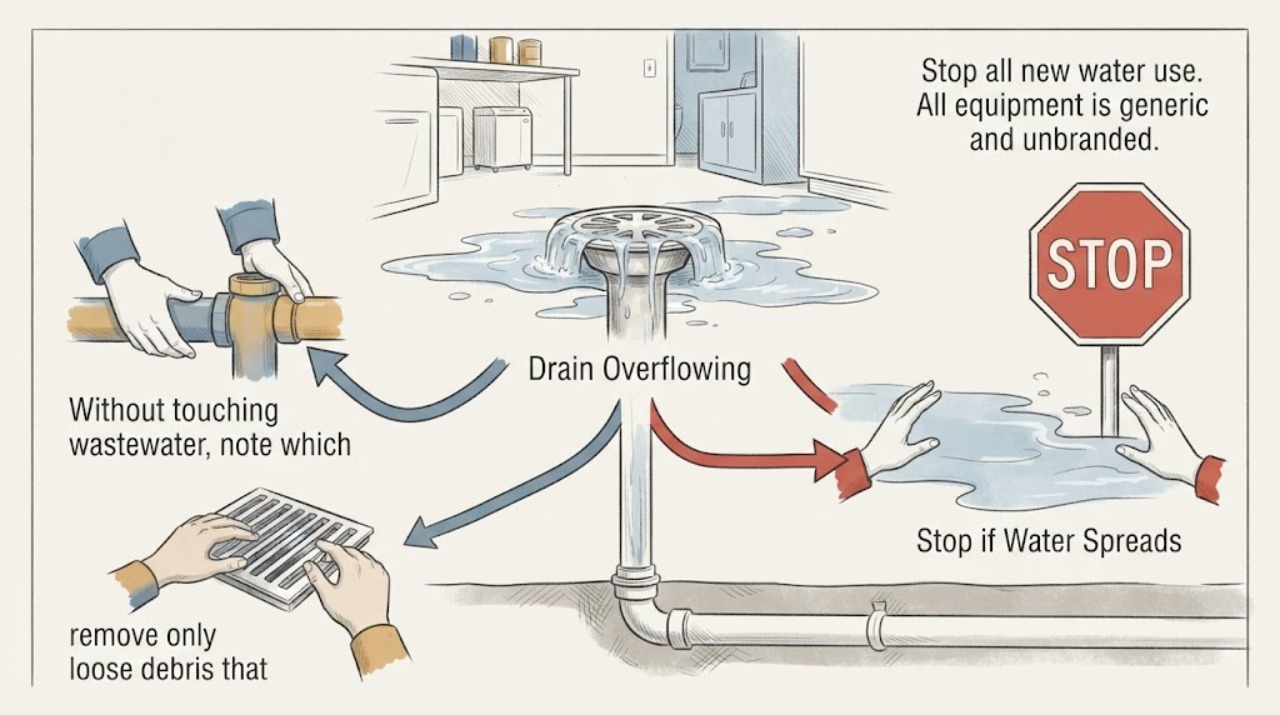
Stop all new water use in the building, including flushing toilets, running faucets, washing clothes, and running water-using appliances; move belongings away from the overflow if it is safe.
Expected result: The water level stops rising when use stops, or it continues rising or returns without anyone adding water.
Next step: Keep the system unused while you identify the affected fixtures; if the level continues rising, leave the area and call the wastewater utility or a plumber urgently.
Why this matters
Why: A level that stops with no new water points toward retained water in a blocked system; water that returns on its own suggests a larger downstream or sewer-side restriction and raises the contamination risk.
-
Check 2
Without touching wastewater, note which fixture is overflowing and check whether other sinks, toilets, tubs, or floor drains are slow, gurgling, or rising at the same time.
Expected result: Only one fixture is affected, or several fixtures in different rooms respond together.
Next step: Limit any plunger test to the single affected fixture only when the water is not contaminated and no chemical product is present; for multiple fixtures, stop using the plumbing and arrange professional or utility investigation.
Why this matters
Why: One fixture is more consistent with a local opening or branch restriction; multiple fixtures indicate a shared drain, private service line, or public sewer restriction farther downstream.
-
Check 3
If the affected opening is a single accessible drain or toilet and the water is clean, remove only loose debris that is reachable at the opening and make a cautious plunger test without dismantling the plumbing.
Expected result: The water level falls and stays down, falls slowly and rises again, or does not move.
Next step: Stop the test if the level rises, splashes, or the water may be sewage or mixed with a chemical; call a plumber when the drain does not remain clear after one careful accessible attempt.
Why this matters
Why: A sustained improvement supports a nearby minor blockage; slow or temporary improvement means the restriction remains or is farther along the line, while no movement suggests the plunger is not reaching the obstruction or the blockage is more substantial.
-
Check 4
If there is an accessible exterior cleanout that can be viewed without opening a pressurized or contaminated fitting, observe whether water is standing in it; do not remove a cap that is difficult to loosen or could release pressure.
Expected result: The cleanout near the building is dry, contains water, or a cleanout near the property line contains water; nearby homes may also be checked from a safe distance for the same backup.
Next step: Report a likely public-sewer backup to the local wastewater utility and use a qualified plumber for private lines; do not attempt to clear an unknown underground line yourself.
Why this matters
Why: A dry building cleanout can point toward a blockage inside the building, while standing water between the building and the main or concurrent neighborhood backups can indicate a service-line or public-sewer problem.
-
Check 5
Document the water level, affected fixtures, time of onset, recent high-water use, visible debris, and any damage with photographs taken from a clean, safe position.
Expected result: The event is isolated and short-lived, repeats after water use, affects several fixtures, or includes sewage and property damage.
Next step: Give the record to the plumber or utility, keep receipts and damage photographs, and do not begin invasive cleanup or dismantling until the source and safe cleanup method are understood.
Why this matters
Why: A repeat or multi-fixture pattern is more useful to a plumber or utility than a one-time surface clog assumption; sewage and property damage require prompt containment and sanitation planning.
Use your observations
Decision map
Find the observation that best matches what you see, then follow the next safe action.
-
PATH 01Next step
What you see
Only one accessible fixture overflows, the water is clean, and one cautious plunger attempt restores normal drainage.
Do this next
Stop adding water if the symptom returns, monitor that fixture and nearby drains, and arrange a plumber if the restriction recurs or becomes slow again.
-
PATH 02Next step
What you see
Several fixtures back up together, a cleanout contains water, or the overflow returns without new water use.
Do this next
Treat the issue as a downstream service-line or sewer restriction, stop using the plumbing, and contact a qualified plumber or local wastewater utility rather than repeating fixture-level plunging.
-
PATH 03Next step
What you see
Nearby homes show the same backup or a property-line cleanout indicates water on the public-sewer side.
Do this next
Report the event to the local wastewater utility and keep the building's water use stopped while responsibility and response are determined; a private plumber may still be needed for the private service line.
-
PATH 04Next step
What you see
The overflow contains sewage, has contacted electrical equipment, threatens the structure, or exposes people or pets to contaminated water.
Do this next
Leave the affected area, keep people and pets away, avoid wet electrical equipment, and obtain urgent qualified plumbing and safe-cleanup help; do not continue DIY clearing.
Helpful context
Understand the symptom
Why a drain overflows
An overflow means incoming water cannot move through the drain path quickly enough. The restriction may be at the fixture opening, farther in the home's branch drain, in the private service line, or in a public sewer. A single affected fixture suggests a more local restriction; several fixtures that rise or gurgle together make a shared downstream blockage more likely.
Protect the room first
Stop flushing, running faucets, washing clothes, or using other water-connected appliances until the overflow is understood. Keep children and pets away from wastewater. If water is near electrical equipment, leave the area and have the hazard handled by a qualified person.
A plunger is only a local test
A plunger may help with a minor blockage close to a drain opening or toilet bowl, but it cannot establish that a deeper line is clear. Do not keep forcing water through a slow or overflowing system. If the overflow returns, affects other fixtures, contains sewage, or does not respond to a careful accessible check, stop and call a professional.
Know when the utility is involved
A cleanout with standing water can suggest the restriction is between the building and the main sewer, while a property-line cleanout or multiple neighboring homes with backups can indicate a public sewer issue. Exact responsibility and response procedures vary by location, so contact the local wastewater utility before authorizing work in a public line.
Only after diagnosis
Potential parts
- manual cup or flange plunger
Consider this only for a single accessible fixture with clean water and a suspected nearby minor blockage; it is not a substitute for service-line or sewer diagnosis.
Use the plunger style suited to the fixture opening and follow its instructions; do not use it when wastewater may be contaminated or a chemical product is present.
When checks do not resolve it
Need a professional?
Call when the overflow is recurrent, multi-fixture, contaminated, beyond an accessible opening, or not clearly resolved after a safe local check; contact the wastewater utility when a public-line problem is possible.
Have this ready
- Provide the affected fixtures, whether neighbors are affected, cleanout observations, time of onset, recent water use, photographs, water type, and any electrical or property damage.
Common questions
FAQ
Should I keep running water when a drain is overflowing?
No. Stop flushing, washing, and running faucets or appliances until the source is identified. Additional water can turn a slow drain into a larger backup and cause more property damage.
How can I tell whether the blockage is in one drain or the sewer line?
A single affected fixture is more consistent with a local restriction. Several fixtures backing up together, water in a cleanout, a return of water without new use, or similar backups at nearby homes points farther downstream and needs a plumber or wastewater utility.
Is it safe to plunge an overflowing drain?
Only consider one cautious attempt for a single accessible fixture when the water is clean and no chemical product is present. Stop if water rises, the overflow is sewage, other fixtures are affected, or the blockage does not remain clear; call a professional instead.
Read the exact guide
Official sources
- Sanitary Sewer Overflows (SSOs)U.S. Environmental Protection Agency · Wastewater and sanitary sewer overflows that can back up into homes
- Preventing Backups and OverflowsFairfax County Public Works and Environmental Services · Residential sanitary sewer backups and overflows
- Prevent Blocked DrainsCity of Tampa Wastewater Department · Residential drains, toilets, cleanouts, and sewer-line backups
Community feedback
Share a repair observation
Share a plain-text repair observation. Accepted observations are published automatically; this page may take a moment to update.