
On this page
Start here
Quick answer
A backed-up drain with a sewage smell means wastewater or sewer gas may be unable to leave normally. Stop adding water until you know whether the problem is limited to one fixture or affects several drains. A single slow or blocked fixture may be local; water or sewage rising at a floor drain, toilet, tub, or several fixtures points to a larger private line or public sewer problem. If sewage is indoors, keep people and pets away, avoid contact, and call a licensed plumber or the relevant sewer authority. A sewage smell without visible backup can also come from a dry floor-drain or fixture trap, but do not pour water into a drain that is actively backing up.
Work through in order
Diagnostic checks
Use only checks that match the exact appliance or system and its official guide.
-
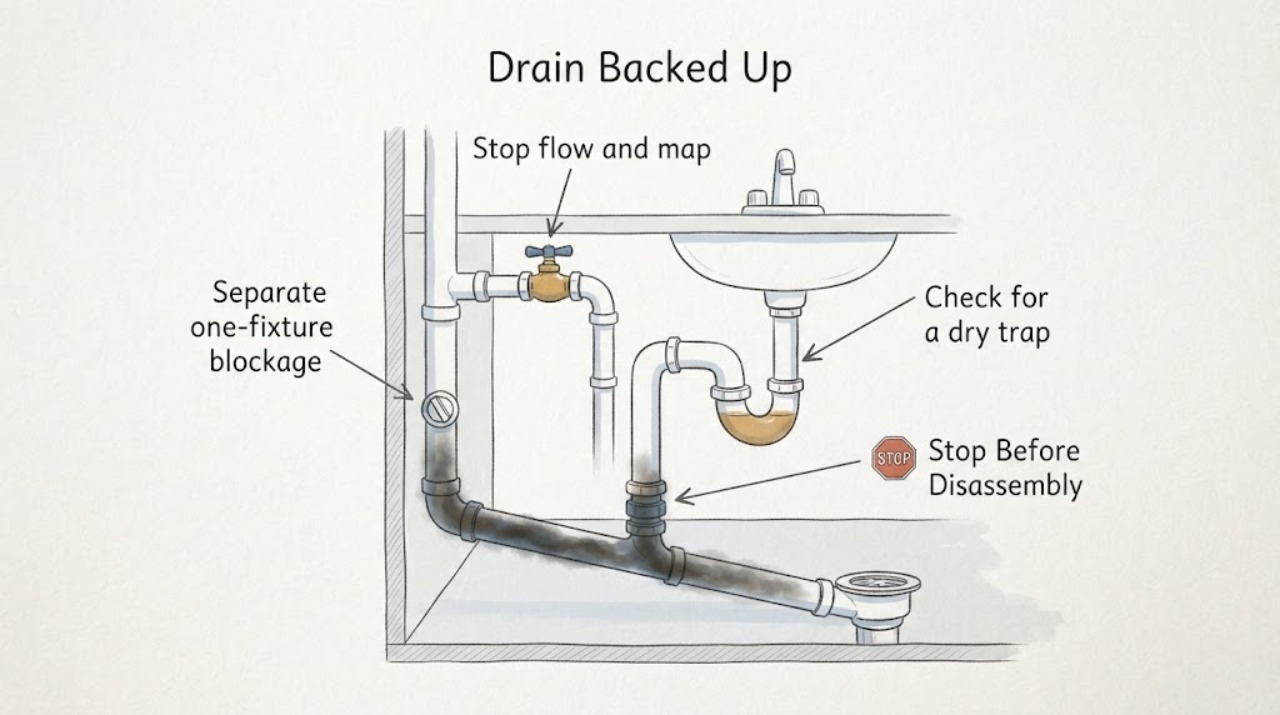
Stop flow and map the symptom
Do not run water or flush while the drain is backing up. Without touching any water, identify the affected fixture or floor drain, note whether the level is rising or receding, and check whether there is visible wastewater, only a smell, or a slow drain.
Expected result: Standing or rising water, sewage solids, or wastewater at a floor drain is an active backup. A smell with a dry, empty drain and no standing water is a different starting point.
Next step: If wastewater is present or rising, keep the area closed and go to the safety and service branches. If there is odor only, continue to identify whether one trap or several fixtures are involved.
Why this matters
Why: Adding water to a blocked line can increase an indoor spill. The presence and location of wastewater determine whether immediate containment and plumbing service take priority over a trap check.
-
Separate one-fixture blockage from a shared-line backup
Do not deliberately run water to test the system. Instead, observe which fixtures already show symptoms and ask whether the toilet, tub, sink, laundry drain, or floor drain in more than one area is affected. Note recent rain, a neighborhood sewer issue, or a recent disposal of grease, wipes, or other non-waste items.
Expected result: One fixture that is slow or blocked suggests a local branch problem. Several fixtures, a basement floor drain, or wastewater that rises when another fixture is used suggests a shared private lateral or public sewer restriction.
Next step: For several affected fixtures or a floor-drain backup, contact the local sewer authority as well as a licensed plumber according to local procedure. For one fixture with no sewage spill, arrange a drain service and avoid chemical treatments.
Why this matters
Why: The location of the symptoms helps a plumber and, where applicable, the local sewer authority decide whether the obstruction is in the home connection or the public system. It does not prove responsibility from symptoms alone.
-
Check for a dry trap only when there is no active backup
If the drain is empty and stable, inspect the nearby floor drain or seldom-used fixture for a missing water seal without removing covers or entering a cleanout. Pour a modest amount of clean water into an unused, non-backing-up floor drain, then close the room and monitor whether the odor decreases.
Expected result: If the odor fades after the trap is refilled and does not return, a dry trap was a plausible source. If the smell remains, returns quickly, or comes with slow drainage, the cause may be a vent, trap, connection, or blockage.
Next step: Do not add water if the level rises, bubbles, or backs up. Stop and call a plumber if the odor is strong, the drain is inaccessible, or the trap check does not change the smell.
Why this matters
Why: A trap's water barrier can limit sewer gas, but adding water is not a remedy for an obstructed line. Odor that persists after a safe trap check needs professional inspection.
-
Contain an indoor sewage backup safely
Keep people and pets out, avoid skin and eye contact, and do not use a household vacuum or touch wet electrical equipment. If the area is safe to enter and there is no electrical hazard, use gloves, boots, and protective clothing; otherwise leave the area and call a cleanup professional and plumber.
Expected result: Visible sewage, contaminated flooring, or water near outlets and appliances means this is a sanitation and possible electrical hazard, not a routine drain-clearing task.
Next step: Arrange plumbing service first. After the flow is controlled, clean and disinfect according to local public-health guidance or hire a sewage cleanup professional; do not pour contaminated water into another drain.
Why this matters
Why: Sewage backup water can contain germs. The backup source must be stopped before cleanup, and contaminated materials may need professional handling.
-
Give the plumber useful evidence without opening the line
Record the affected fixtures, water level, odor timing, recent rain, and whether neighbors report a similar issue. Take photos from a dry, safe location if needed. Locate—but do not open—a building cleanout if you can do so without entering contaminated water or handling a pressurized cap.
Expected result: A pattern across several fixtures or neighboring properties supports escalation to the sewer authority; a single fixture with no outside pattern is more consistent with a private branch or lateral, though only an inspection can locate the blockage.
Next step: Share the notes and photos with the plumber or sewer authority. Do not remove a cleanout cap, use powered equipment, or mix chemical drain products as a substitute for diagnosis.
Why this matters
Why: Clear symptom history helps the professional choose a safe access point and distinguish a local stoppage from a shared sewer event without exposing you to sewage or pressure.
-
Prevent the next blockage after repair
Once the line is flowing and the area is safe, keep grease, wipes, sanitary products, and other trash out of toilets and drains. Use seldom-used fixtures regularly so their traps retain a water barrier, and ask the plumber whether the building needs a camera inspection, root management, or a backflow-prevention assessment.
Expected result: A repeat backup, recurring odor, or symptoms after rain suggests the underlying line, vent, trap, or public sewer condition has not been resolved by clearing a single stoppage.
Next step: Have a licensed plumber or the local sewer authority recommend any prevention device or line repair for the property and local system; do not select a valve or replacement part from a generic description.
Why this matters
Why: A cleared drain does not by itself establish that the pipe is sound or that future sewer flow cannot reverse. Preventive work should be selected after the location and cause are confirmed.
Use your observations
Decision map
Find the observation that best matches what you see, then follow the next safe action.
-
PATH 01Safety boundary
What you see
Sewage or water is standing in or rising into the house.
Do this next
Do not pour chemicals or contaminated water into another drain while the line is backed up.
Why this path and its safety boundary
Safety stop: Continue with the odor-only and fixture-pattern checks.
-
PATH 02Safety boundary
What you see
Backup water is near outlets, appliances, the electrical panel, or damaged wiring.
Do this next
Arrange qualified electrical and plumbing assessment before restoring or using affected equipment.
Why this path and its safety boundary
Safety stop: Keep the area closed and follow the sanitation precautions.
-
PATH 03Safety boundary
What you see
Two or more fixtures, a floor drain, or a toilet and tub show backup or slow drainage.
Do this next
Do not infer that the public line or homeowner line is responsible without an inspection.
Why this path and its safety boundary
Safety stop: A single fixture can still have a local blockage; keep other fixtures unused and arrange drain service.
-
PATH 04Safety boundary
What you see
There is a sewer smell but no standing water, no rising level, and an unused floor drain or fixture has an empty trap.
Do this next
If the odor returns or drainage is slow, arrange professional inspection of the trap, vent, and line.
Why this path and its safety boundary
Safety stop: Do not add water; continue as an active-backup or persistent-odor case.
-
PATH 05Safety boundary
What you see
Neighbors have similar backups, or the problem follows heavy rain and affects several properties.
Do this next
A public pattern is a reason to report, not proof that the private lateral is clear.
Why this path and its safety boundary
Safety stop: Continue with a private plumbing assessment for the affected property.
-
PATH 06Safety boundary
What you see
There is a strong sewage exposure, gas-like odor with physical symptoms, structural damage, or a hazardous electrical condition.
Do this next
Do not enter contaminated water or open a pressurized cleanout to continue troubleshooting.
Why this path and its safety boundary
Safety stop: Continue only with non-invasive observations and keep the affected drain unused.
Safety boundary
Stop conditions
- Stop water use immediately when wastewater rises or backs up into a fixture, floor drain, tub, or basement.
- Do not enter sewage or standing water near electrical equipment, and do not operate a breaker while standing in water.
- Do not open a pressurized cleanout, use powered drain equipment, or mix chemical drain products in a backed-up line.
- Stop DIY cleanup if there is structural damage, a strong hazardous odor, illness symptoms, or no safe way to isolate the area.
Only after diagnosis
Potential parts
Only after a licensed plumber and the local authority assess whether the property and sewer layout support one.
Only when a plumber confirms a recurring dry trap is the odor source and the existing fixture supports the part.
When checks do not resolve it
Need a professional?
Call a licensed plumber for a backed-up drain that does not clear safely, a persistent sewage odor, a recurring or multi-fixture backup, or any suspected private sewer-line problem. Contact the local sewer authority when several properties are affected, raw sewage may be in the public system, or local rules require reporting. Use a sewage cleanup professional when contaminated water has entered the home.
Common questions
FAQ
Why does the house smell like sewage after a drain backs up?
A blockage can keep wastewater from moving away and allow sewage or sewer gas to reach the home. If there is no visible backup, a dry floor-drain or fixture trap can also remove the water barrier that normally limits sewer gas.
Should I run water to see whether the backed-up drain clears?
No. If water is standing or rising, running more water can increase the spill. First determine which fixtures are already affected, then arrange plumbing or sewer-authority help.
Can I pour water into a smelly floor drain?
Only if the drain is empty, stable, and not backing up. Water may restore a dry trap, but do not add water to an obstructed drain or one with a rising level.
When is a backed-up drain a sewer emergency?
Treat it as urgent when raw sewage enters the home, several fixtures back up, water is near electricity, or the odor is accompanied by unsafe conditions. Keep people and pets away and arrange qualified plumbing and cleanup help.
Read the exact guide
Official sources
- Coming HomeU.S. Environmental Protection Agency · Safe entry and electrical precautions after water damage
- What to Do After a Sewer BackupCity of Portland Environmental Services · Sewer backup response, cleanup, and prevention guidance
- Sewer BackupNew York City Department of Environmental Protection · Municipal sewer backup and cleanup guidance
- Sewer Problems in the HomeCity of Minneapolis · Municipal sewer and home drainage guidance
- Sanitary Sewer OverflowsU.S. Environmental Protection Agency · Public-health and sanitary sewer overflow information
Community feedback
Share a repair observation
Share a plain-text repair observation. Accepted observations are published automatically; this page may take a moment to update.