
On this page
Start here
Quick answer
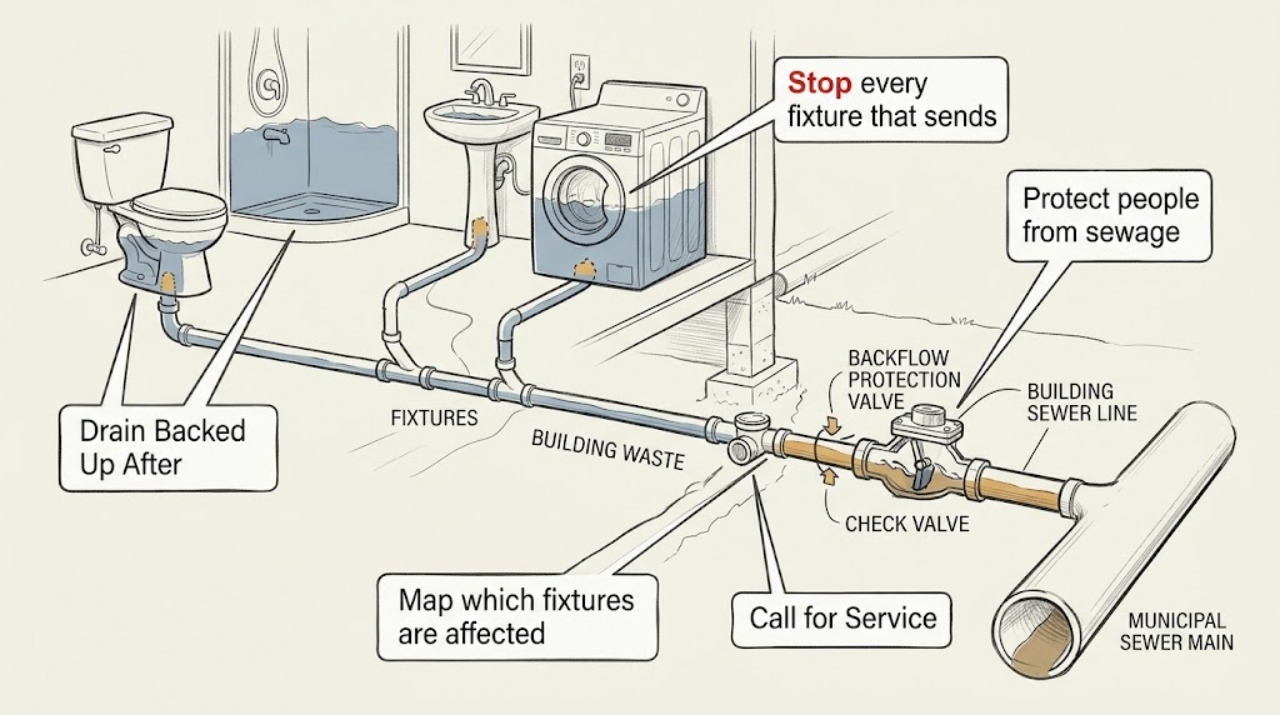
If a drain backs up when a shower and washing machine discharge at the same time, stop all water use immediately, including the shower, washing machine, toilets, sinks, and dishwasher. Keep children and pets away from wastewater, avoid contact with sewage, and switch off power to a wet area only from a dry, safe location. A backup that appears only when several fixtures discharge points toward a restricted building drain or sewer lateral; a backup that continues when no fixture is running may involve the public sewer main or a break. Do not add chemical drain opener, open a pressurized cleanout, or keep testing with more water. Call a licensed plumber for the private line and contact the local sewer utility when the backup continues without household water use or appears in the street. Arrange professional cleanup if sewage entered the home.
Work through in order
Diagnostic checks
Use only checks that match the exact appliance or system and its official guide.
-
Stop every fixture that sends water into the drain
Turn off the shower and stop the washing machine. Tell everyone in the home not to flush, use sinks, run a dishwasher, or start another appliance that discharges water. Close or cover accessible fixture drains only if this can be done without touching wastewater or damaging a fragile fixture.
Expected result: The backup stops rising after household water use stops, or wastewater continues to rise even though no fixture is running.
Next step: Keep all water use stopped. Call a plumber for a private-line diagnosis, and contact the local sewer utility promptly if the backup continues without household water use or appears outdoors or in the street.
Why this matters
Why: A backup triggered by simultaneous discharge is consistent with a restricted private drain or sewer lateral. Continued rise without household discharge raises concern for a public main, break, groundwater or storm inflow, or a severe private-line obstruction.
-
Protect people from sewage and electrical hazards
Keep children and pets out of the affected area. Do not wade through standing water, touch contaminated surfaces with bare hands, or enter a basement or utility area where water may contact outlets, appliances, or wiring. From a dry location, disconnect or isolate power only if it is safe; otherwise leave the area and request qualified help.
Expected result: The water is clear and confined to a fixture, or it is foul-smelling, discolored, contains solids, has reached flooring or electrical equipment, or is entering from a floor drain or outside.
Next step: For sewage, standing water near electricity, or an expanding overflow, keep people out and arrange emergency plumbing and professional cleanup. Do not attempt cleanup or drain testing until the area is declared safe.
Why this matters
Why: Foul or solid-containing water may be sewage and carries biological exposure risk. Water near electricity adds shock risk. A confined, clear fixture overflow still requires stopping water use, but it may not have the same contamination or electrical exposure.
-
Map which fixtures are affected without adding water
From a dry, clean position, note whether the shower, tub, floor drain, toilet, sink, or laundry standpipe is slow or backing up. Do not run a faucet or flush to reproduce the symptom. Record whether the fixtures are on the same level, whether toilets gurgle, whether the backup is at the lowest drain, and whether any outdoor manhole or cleanout is overflowing.
Expected result: Only one fixture is affected, several fixtures on the same branch are affected, several levels or fixtures are affected, or an outdoor manhole or public area is overflowing.
Next step: Keep water use stopped and give this fixture map to the plumber or sewer utility. Do not open a cleanout cap under pressure or insert a tool into a contaminated drain as a first response.
Why this matters
Why: A single fixture can have a local trap or branch restriction. Multiple fixtures, especially a low shower or floor drain after laundry discharge, suggest a downstream building drain or sewer lateral restriction. Outdoor or public overflow may indicate a municipal sewer problem.
-
Check only visible, accessible causes
Without dismantling plumbing or entering contaminated water, look for a visible drain cover obstruction, a displaced cleanout cap, a hose or object blocking a fixture opening, or a recent disposal of grease, wipes, paper towels, or other non-degradable material. Do not pour chemical opener into a backed-up system, force a cleanout, or push a blockage farther downstream.
Expected result: A visible obstruction is safely removable, the cleanout or fixture is damaged, or nothing visible explains the backup.
Next step: Remove only a loose, visible obstruction without contact with sewage and keep all water off. For a damaged fitting, hidden blockage, or unexplained multi-fixture backup, call a licensed plumber for a line inspection and appropriate clearing method.
Why this matters
Why: A superficial obstruction may explain one fixture, but a simultaneous shower-and-laundry backup usually indicates a restriction farther downstream. Grease, wipes, and other debris can create or worsen sewer blockages; a hidden root, collapsed, or damaged line cannot be confirmed by looking at a fixture.
-
Escalate to the correct professional and document the event
Photograph the water level, affected fixtures, outdoor signs, and property damage from a safe position. Record when the shower and washing machine were running, when the backup started, whether it continued after all water use stopped, and whether a plumber or utility has inspected the line. Do not resume normal water use until the blockage is cleared and the professional says it is safe.
Expected result: A plumber finds a private drain or lateral restriction, the utility finds a public main issue, or neither has confirmed the cause yet.
Next step: Follow the plumber's or utility's instructions, keep receipts and photos, and arrange sanitized cleanup for sewage contact. Ask about backflow protection only after the active blockage and line condition are diagnosed; do not install a valve as a substitute for clearing the cause.
Why this matters
Why: The location of the obstruction determines who must clear or repair it. Official wastewater agencies distinguish private service lines from public sewer mains; the visible timing and fixture pattern helps the first responder choose the next inspection.
Use your observations
Decision map
Find the observation that best matches what you see, then follow the next safe action.
-
PATH 01Safety boundary
What you see
The shower and washing machine are stopped, but wastewater continues to rise or sewage is backing up without any household water use.
Do this next
Keep all fixtures off, keep people and pets away, and contact the local sewer utility immediately to check the public main. Arrange a plumber and professional cleanup as needed.
Why this path and its safety boundary
Safety stop: True
-
PATH 02Safety boundary
What you see
The backup occurs only when the shower, washing machine, or another high-flow fixture discharges, and it stops when water use stops.
Do this next
Do not run another load or shower. Call a licensed plumber to investigate the private building drain or sewer lateral and clear the restriction safely.
Why this path and its safety boundary
Safety stop: True
-
PATH 03Next step
What you see
Only one fixture is slow or blocked, there is no sewage, and no other fixture responds to the event.
Do this next
Keep water use minimal and ask a plumber to assess the local trap or branch. Do not add chemical opener to a backed-up line or force a tool into an unknown obstruction.
-
PATH 04Safety boundary
What you see
Standing water has reached outlets, appliances, an electrical panel, or a basement area where power cannot be isolated from a dry location.
Do this next
Leave the wet area, keep people and pets out, and request qualified electrical and plumbing help. Do not step into the water to reach a breaker or continue cleanup.
Why this path and its safety boundary
Safety stop: True
-
PATH 05Safety boundary
What you see
Sewage entered the home or contaminated flooring, walls, furnishings, or porous materials.
Do this next
Avoid contact, ventilate only if this is safe, photograph damage, and arrange professional sewage cleanup and disinfection. Keep the plumbing unused until the line is cleared.
Why this path and its safety boundary
Safety stop: True
Helpful context
Understand the symptom
Stop the inflow before looking for the blockage
Turn off the shower and stop the washing machine. Do not flush toilets, run faucets, start a dishwasher, or test the drain with another load. Keep people and pets away from wastewater. If standing water could reach outlets or appliances, switch off the affected circuit only from a dry, safe location; never step into contaminated water to reach an electrical panel.
Why the shower reveals a laundry drain problem
A washing machine discharges a large volume quickly. If that flow meets a restriction farther downstream, wastewater can rise through a shower, tub, floor drain, or other low fixture. When the backup happens only during household water use, a private building drain or sewer lateral is more likely; when it continues while the home is using no water, a public main or line break must also be considered.
Treat sewage as a health and property hazard
Do not touch sewage with bare skin, track it through the home, or mix cleaning chemicals. Photograph the affected area from a safe position, keep valuables away without entering contaminated water, and contact a plumber or utility. Porous materials and contaminated surfaces may need professional sanitation rather than ordinary household cleaning.
Only after diagnosis
Potential parts
- building sewer backwater prevention valve
Consider this only after a licensed plumber and the local sewer authority evaluate the line, grade, and recurring backup pattern; it is prevention and not a substitute for clearing the active blockage.
A backwater device must be selected, located, installed, and maintained for the specific building drain and local requirements by a qualified professional. - sewer cleanout cap or access fitting
Consider this only when a plumber finds a damaged or missing access fitting during diagnosis; never remove or replace a cleanout under pressure yourself.
Confirm pipe size, material, location, and local code with the plumber before replacement.
When checks do not resolve it
Need a professional?
Professional plumbing and, when indicated, municipal sewer response are required for simultaneous shower-and-laundry backups, multi-fixture backups, recurring slow drainage, sewage entering the home, an outdoor overflow, or any blockage that cannot be safely localized from a dry position.
Common questions
FAQ
Why does my shower back up when the washing machine drains?
The washing machine can discharge a large volume into a drain that has a downstream restriction, causing water to rise through a shower or other low fixture. Stop all water use and have a licensed plumber investigate the private drain or sewer lateral.
What should I do first when a drain backs up?
Stop the shower, washing machine, toilet flushing, sinks, and dishwasher. Keep children and pets away, avoid sewage contact, and isolate power only from a dry, safe location if water reaches electrical equipment. Then call the appropriate plumber or sewer utility.
How can I tell whether the blockage is mine or the city's?
If the backup occurs only when household fixtures discharge, a private building drain or sewer lateral may be restricted. If it continues while no household water is running or appears in a public area, contact the local sewer utility to check the main as well as arranging plumbing help.
Can I pour chemical drain opener into a sewer backup?
Do not add chemical opener to a backed-up system. Stop water use and call a licensed plumber, especially when several fixtures are affected or sewage is present. Chemical handling and improvised clearing can worsen exposure, damage, or a downstream blockage.
Read the exact guide
Official sources
- Side Sewer BackupsSeattle Public Utilities · Sewer backup definition, keeping people away from wastewater, electrical hazard response, plumber and utility escalation, and documenting damage
- What to Do After a Sewer BackupCity of Portland Environmental Services · Calling a plumber, sewage health hazard, protective clothing, cleanup, grease and debris blockages, and conditional backflow prevention
- Sewer BackupsNew York City Department of Environmental Protection · Wastewater blockage or break, raw sewage backup, reporting a public sewer backup, health exposure, and disinfection
- Sewer FAQsGreen Area Water & Sanitary Authority · Shower or bathtub backup after washing-machine or dishwasher discharge, private lateral versus public sewer, professional inspection, and sewage cleanup
- Wastewater FAQFairfax County Department of Public Works and Environmental Services · Backup only when toilet, tub, washer, or sink is used versus backup with no household water use, drain closure, no-water instruction, sewage exposure, and private lateral versus county main
Community feedback
Share a repair observation
Share a plain-text repair observation. Accepted observations are published automatically; this page may take a moment to update.