
On this page
Start here
Quick answer
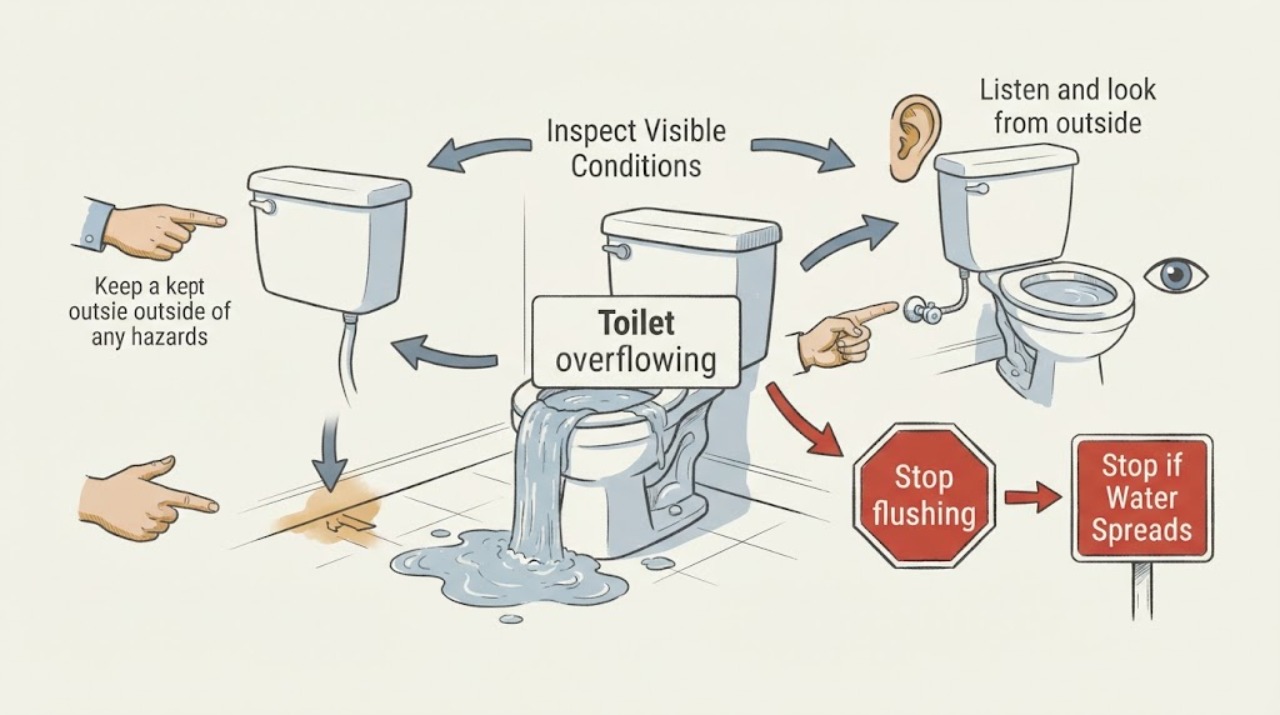
Stop flushing immediately. From a dry, safe position, turn the toilet’s local supply shutoff clockwise if it turns normally, then keep the toilet out of service. If water is still rising, the bowl has overflowed, sewage is present, the valve will not close, or the shutoff is missing or unsafe to reach, leave the area and call an urgent plumber or appropriate emergency service. Do not keep flushing, add drain chemicals, disassemble the toilet, handle sewage, or run a prolonged test. Document the water level, source, nearby fixtures, and any floor or electrical exposure for the professional.
Work through in order
Diagnostic checks
Use only checks that match the exact appliance or system and its official guide.
-
Check 1
Stop flushing and, from a dry stable position, turn the toilet’s local water-supply shutoff clockwise only if it is visible and turns normally without force.
Expected result: Observe whether the water entering the tank or bowl stops and whether the shutoff itself drips, spins, breaks, or cannot be reached safely.
Next step: Leave the toilet unused, keep the shutoff in the closed position, and arrange urgent plumbing service if the water does not stop or the valve is unreliable.
Stop if: Stop immediately if the valve requires force, the floor is wet or contaminated, the valve is near wet electrical equipment, or water is rising faster than it can be contained.
Why this matters
Why: If flow stops, the immediate supply source is contained; if water continues, the valve may not be closing or the water may be coming from the drain or another fixture.
-
Check 2
Without flushing again or touching the water, observe the bowl level and the visible floor area from a dry position.
Expected result: Record whether the bowl is still rising, holding steady, draining slowly, or already overflowing; note the spread, odor, color, and whether wastewater has reached a wall, cabinet, or electrical fitting.
Next step: Keep the area isolated, do not add chemicals or use repeated flushes, and give the plumber the water-level and contamination details.
Stop if: Stop observation and leave the area if sewage is present, the spill is spreading, anyone feels unwell, or the water reaches electrical equipment.
Why this matters
Why: A rising or slow-draining bowl suggests a restricted drain path; an overflow or sewage-like material is a sanitation emergency rather than a routine adjustment.
-
Check 3
Listen and look from outside the wet area for continued filling or running after the supply shutoff is closed, without removing the tank lid or operating the handle.
Expected result: Note whether the sound stops, whether water is visibly entering from the tank side, or whether the bowl changes without any new flush command.
Next step: Keep the toilet isolated and record the sound and timing; do not open the tank or attempt a component replacement while the fixture or floor is contaminated.
Stop if: Stop if water remains uncontrolled, the tank or supply connection leaks, the floor becomes slippery, or reaching the fixture would require stepping into contaminated water.
Why this matters
Why: Continued tank-side flow after a closed shutoff can indicate a valve or residual-pressure issue; a bowl that changes without new supply may indicate a drain or shared-line problem. The exact cause needs professional assessment.
-
Check 4
From a dry location, check whether another nearby toilet, sink, tub, or floor drain is also slow, gurgling, backing up, or overflowing without operating any fixture.
Expected result: Record the other fixture locations and whether the symptoms appeared together, after weather, or after a recent plumbing event.
Next step: Tell the plumber whether the problem is isolated or widespread and keep all affected fixtures out of service until the drain path is assessed.
Stop if: Stop and seek urgent service if multiple fixtures back up, wastewater reaches living areas, or the property may have a sewer overflow.
Why this matters
Why: Multiple affected fixtures raise concern for a shared branch or sewer restriction rather than one toilet part. A single fixture symptom is more localized but still unsafe to test by flushing.
-
Check 5
Document the event without touching the spill: note the last normal flush, any object or paper concern, prior slow drainage, water source, shutoff response, and visible damage.
Expected result: Record whether the overflow followed one flush, began without a flush, recurs after the valve is closed, or coincides with another fixture or sewer symptom.
Next step: Provide the notes and photos to the urgent plumber, landlord, building manager, or utility as applicable; do not reopen the toilet for a test.
Stop if: Stop documentation if you would need to enter contaminated water, move the toilet, remove a cover, use a chemical, or contact a spill.
Why this matters
Why: This timeline helps separate a likely bowl restriction from a supply or shared-drain event and helps the plumber choose the appropriate inspection.
Use your observations
Decision map
Find the observation that best matches what you see, then follow the next safe action.
-
PATH 01Next step
What you see
The supply shutoff closes normally, water stops, the bowl is not rising, and no wastewater reached the floor.
Do this next
Leave the toilet unused and request plumbing service to identify the cause before any further flush or repair test.
-
PATH 02Next step
What you see
The bowl continues rising, the shutoff will not close, or water continues entering from the tank or supply.
Do this next
Treat the event as urgent, keep clear of the wet area, and call a plumber; do not keep flushing or force the valve.
-
PATH 03Next step
What you see
The bowl or floor has overflowed with suspected wastewater, sewage, or contaminated material.
Do this next
Isolate the area, avoid contact and chemical mixing, and arrange professional plumbing and appropriate sanitation or water-damage response.
-
PATH 04Next step
What you see
Multiple fixtures are slow, gurgling, backing up, or overflowing.
Do this next
Stop using the affected plumbing and request urgent shared-drain or sewer assessment; notify the building manager or utility when applicable.
-
PATH 05Next step
What you see
Water reaches an outlet, appliance, wiring, or other electrical equipment, or someone is exposed or injured.
Do this next
Keep away from the area and contact appropriate emergency or utility services; do not touch wet electrical equipment.
Helpful context
Understand the symptom
Contain the overflow first
An overflowing toilet can be a bowl blockage, a fill-valve or flush-valve problem, or part of a larger drain or sewer backup. The immediate priority is to stop new water entering and stop all flushing. Keep people and pets away from the wet area and do not trade a small spill for contact with wastewater or an electrical hazard.
What the visible water pattern can tell you
Water that rises in the bowl after a flush points toward restricted drainage, while water that keeps entering from the tank or supply after the bowl is not being flushed points toward a fill or flush-control problem. These are observations, not a license to open the tank or repeatedly operate the fixture while it is overflowing.
Protect health and property
Treat any bowl or floor overflow as potentially contaminated. Avoid touching wastewater, mixing cleaners, using a wet electrical device, or walking through a wet area to reach another fixture. A plumber can assess the toilet and drain path and tell you what cleanup or water-damage response is needed.
Only after diagnosis
Potential parts
- toilet auger
Consider this category only after a plumber confirms a localized bowl or trapway obstruction and selects a tool and method that will not damage the fixture or spread contamination.
Confirm the toilet design, obstruction location, access, and sanitation requirements before any professional use; do not use it as a repeated homeowner test during an overflow. - toilet fill valve
Consider this category only when observation shows uncontrolled tank filling and a qualified professional confirms the fill valve is the cause.
Match the toilet model and valve design; shutoff reliability, tank condition, and manufacturer instructions must be checked before replacement. - toilet flapper
Consider this category only when a professional confirms a flush-valve seal is allowing tank water to enter the bowl and the bowl and floor are safe and dry.
Confirm the flush-valve style and toilet model; a flapper cannot correct a blocked drain or shared sewer backup.
When checks do not resolve it
Need a professional?
Call urgently when the bowl is rising, the shutoff will not stop flow, the floor has overflowed, wastewater is present, multiple fixtures are affected, or water is near electrical equipment.
Have this ready
- Provide the last normal flush, bowl and floor water level, whether the local shutoff closed, continued running sounds, other affected fixtures, possible object or paper history, photos from a dry position, and any visible property damage.
Common questions
FAQ
What should I do first when a toilet is overflowing?
Stop flushing and close the local supply shutoff from a dry, safe position if it turns normally. Keep the toilet out of service and call urgently if water continues, the bowl is rising, the valve fails, or wastewater has reached the floor.
Should I flush again to see whether the clog clears?
No. Continued flushing can turn a restricted drain into a floor overflow. Leave the supply closed and have a plumber assess the toilet or shared drain.
Can I pour drain cleaner into an overflowing toilet?
Do not add drain chemicals or mix cleaners. They can create a chemical exposure and complicate professional service, especially when bowl water or sewage is already on the floor.
When is an overflowing toilet a sewer emergency?
Treat it as urgent when multiple fixtures back up, sewage is present, the spill is spreading, water enters living areas, the shutoff fails, or an electrical hazard is nearby. Isolate the area and contact the appropriate plumber, utility, building manager, or emergency service.
Read the exact guide
Official sources
- WaterSense at Work Section 3.1: Toilets (Water Closets)U.S. Environmental Protection Agency WaterSense · Commercial facility guidance that illustrates tank-toilet observations; residential fixtures and emergency conditions may differ.
- Toilet Constantly Leaking or RunningKohler Assist · Kohler one- or two-piece toilet guidance; other models can differ, and active overflow should be handled as an urgent containment issue.
- Sanitary Sewer Overflows (SSOs)U.S. Environmental Protection Agency · General U.S. wastewater guidance; local utilities and public-health authorities may provide additional response requirements.
Community feedback
Share a repair observation
Share a plain-text repair observation. Accepted observations are published automatically; this page may take a moment to update.