
On this page
Start here
Quick answer
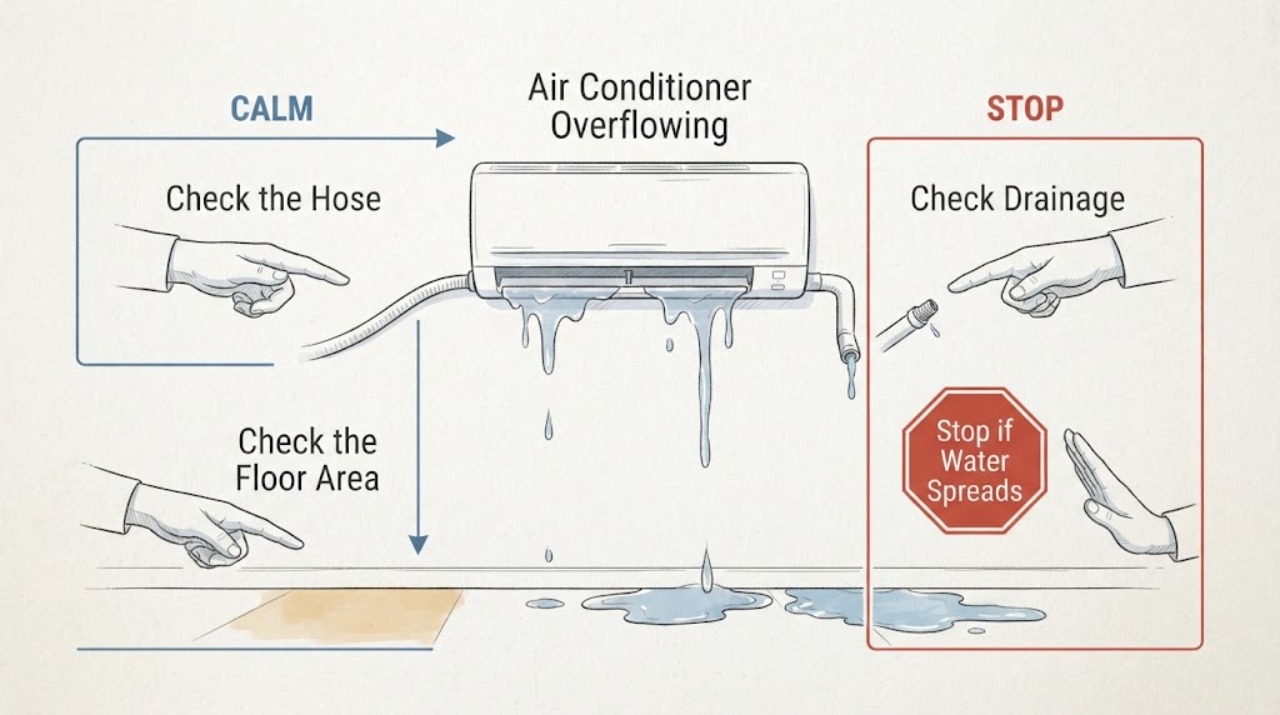
An overflowing air conditioner is usually a condensate-drain or airflow problem, but water near electrical equipment is a safety issue. Stop cooling, collect water, and isolate power if safe. Check the accessible filter and drain hose for dirt, kinks, poor slope, or blockage; do not open the sealed refrigerant system. Persistent overflow, a split drain pan, or a concealed line requires qualified HVAC service.
Work through in order
Diagnostic checks
Use only checks that match the exact appliance or system and its official guide.
-
Check 1
Stop the cooling cycle and locate the water source: indoor wall unit, hose connection, drain outlet, portable/window pan, or nearby pipe. Keep water away from sockets and controls and collect it in a safe container.
Expected result: Water from an indoor unit or electrical area is an active leak; water only at the drain outlet may be normal condensate unless it is backing up.
Next step: If water is near electrical parts, isolate the unit at its plug/breaker only if safe and do not restart until dry and assessed.
Why this matters
Why: This observation narrows the likely cause but does not identify an internal part by itself.
-
Check 2
With power isolated when safe, inspect the accessible air filter and drain hose/outlet for heavy dust, ice, kinks, loose connection, blockage, or an upward section that prevents drainage. Do not push tools into the drain pan or open covers.
Expected result: A dirty filter or blocked/kinked hose makes condensate backup more likely; a split pan, concealed blockage, or ice coil cannot be confirmed from outside.
Next step: Clean or straighten only an owner-accessible filter/hose step supported by the exact model. Call service for concealed, frozen, split, or recurring problems.
Why this matters
Why: This observation narrows the likely cause but does not identify an internal part by itself.
-
Check 3
Observe whether water drains freely at the intended outlet while the unit is off and whether the hose has the correct downward route for its installation. Never pour large amounts of water into an unknown drain path.
Expected result: Free drainage after correcting an obvious kink supports a routing problem; no flow or immediate backup supports blockage, pump, pan, or installation issues.
Next step: Leave the system off and arrange HVAC service if drainage is not restored or water returns.
Why this matters
Why: This observation narrows the likely cause but does not identify an internal part by itself.
-
Check 4
Check whether cooling performance changed, the filter is iced, or airflow is weak. Do not scrape ice or continue running an icing unit to force drainage.
Expected result: Ice and weak airflow can increase condensate or indicate an airflow/refrigeration fault; the overflow symptom alone cannot identify which.
Next step: Turn the unit off, allow safe thawing without heat tools, and arrange service if ice recurs or cooling is abnormal.
Why this matters
Why: This observation narrows the likely cause but does not identify an internal part by itself.
-
Check 5
Record unit type, leak location, amount/timing, filter condition, drain-hose route, cooling/ice symptoms, and any electrical event.
Expected result: These observations help a technician distinguish drain blockage, installation slope, pan, pump, airflow, and refrigeration causes.
Next step: Provide the record to qualified HVAC service instead of replacing a pump or pan based only on the symptom.
Why this matters
Why: This observation narrows the likely cause but does not identify an internal part by itself.
Use your observations
Decision map
Find the observation that best matches what you see, then follow the next safe action.
-
PATH 01Next step
What you see
Water is coming from an indoor split unit, the drain hose is kinked/blocked, and there is no electrical damage.
Do this next
Keep the unit off, correct only an obvious accessible hose route, and monitor for renewed flow; service persistent backup.
Why this path and its safety boundary
Why it matters: Condensate drainage is more likely than a confirmed refrigerant fault.
-
PATH 02Next step
What you see
The filter is heavily dirty or airflow is weak/iced while water backs up.
Do this next
Power off, clean the owner-accessible filter, allow safe thawing, and arrange service if icing or overflow returns.
Why this path and its safety boundary
Why it matters: Airflow/condensate imbalance may be contributing, but ice or internal pan issues remain possible.
-
PATH 03Next step
What you see
Water is near sockets, electrical controls, a damaged pan, or the leak continues after the accessible drain check.
Do this next
Isolate power only if safe, protect the area, and call qualified HVAC/electrical service.
Why this path and its safety boundary
Why it matters: The leak has crossed the safe user-check boundary.
-
PATH 04Next step
What you see
Only a normal outdoor drain discharge is observed and there is no indoor backup or damage.
Do this next
Keep the outlet clear and monitor; service if water changes location or backs up indoors.
Why this path and its safety boundary
Why it matters: Condensate production may be normal rather than an overflow.
Helpful context
Understand the symptom
“Overflowing” can mean water from an indoor split unit, a portable/window unit pan, or a drain connection. Location and whether the unit is cooling change the safe check; the symptom does not identify a pump, pan, or refrigerant part.
Drainage must slope and remain unobstructed, while a dirty filter can reduce airflow and contribute to condensate. Never open refrigerant tubing or energized electrical covers to prove the cause.
When checks do not resolve it
Need a professional?
Call qualified HVAC service for recurring overflow, no drain flow, concealed blockage, ice, a split pan, a failed condensate pump, water near electrical parts, or abnormal cooling. Provide unit type and leak observations.
Common questions
FAQ
Can I keep running an AC that is overflowing?
No. Stop cooling, collect water, and isolate power if safe. Running it can spread water and conceal an electrical or pan/drain fault.
Does a dirty filter cause an AC to overflow?
It can contribute to airflow and condensate problems, but overflow also comes from blocked routing, slope, pan, pump, or ice. Clean only the accessible filter and call service for recurrence.
Should I flush the drain line myself?
Only follow the exact model/installation guidance for an owner-accessible drain. Do not push tools into the unit or open refrigerant/electrical compartments; persistent backup needs HVAC service.
Read the exact guide
Official sources
- What to do if there is water leakage on the Samsung AC indoor unit?Samsung · Samsung air-conditioner indoor leakage causes and safe checks: clogged drain, pipe slope, dirty filter, collect water, and disconnect plug/breaker when needed.
- Troubleshooting | DaikinDaikin · Daikin air-conditioner indoor water-leak safety: stop use, collect water, inspect the outdoor drain hose for obstruction/bends, and service persistent leaks.
Community feedback
Share a repair observation
Share a plain-text repair observation. Accepted observations are published automatically; this page may take a moment to update.