
On this page
Start here
Quick answer
If a GE room air conditioner is icing up, turn it off and let the ice melt in room-temperature air before checking anything behind a panel. A dirty filter, restricted room-side airflow, low fan speed, or cool outdoor conditions can reduce airflow or coil temperature enough to freeze moisture. After the ice is gone, clean the filter as the exact manual allows, keep curtains and furniture away from the inlet and outlet, and use the model's permitted fan and temperature settings. Window, portable, and GE Profile dual-hose units have different venting and temperature rules. If ice returns after those external checks, water or ice is entering the room, the fan is not moving air, or the unit has an electrical or sealed-system symptom, stop using it and arrange qualified service.
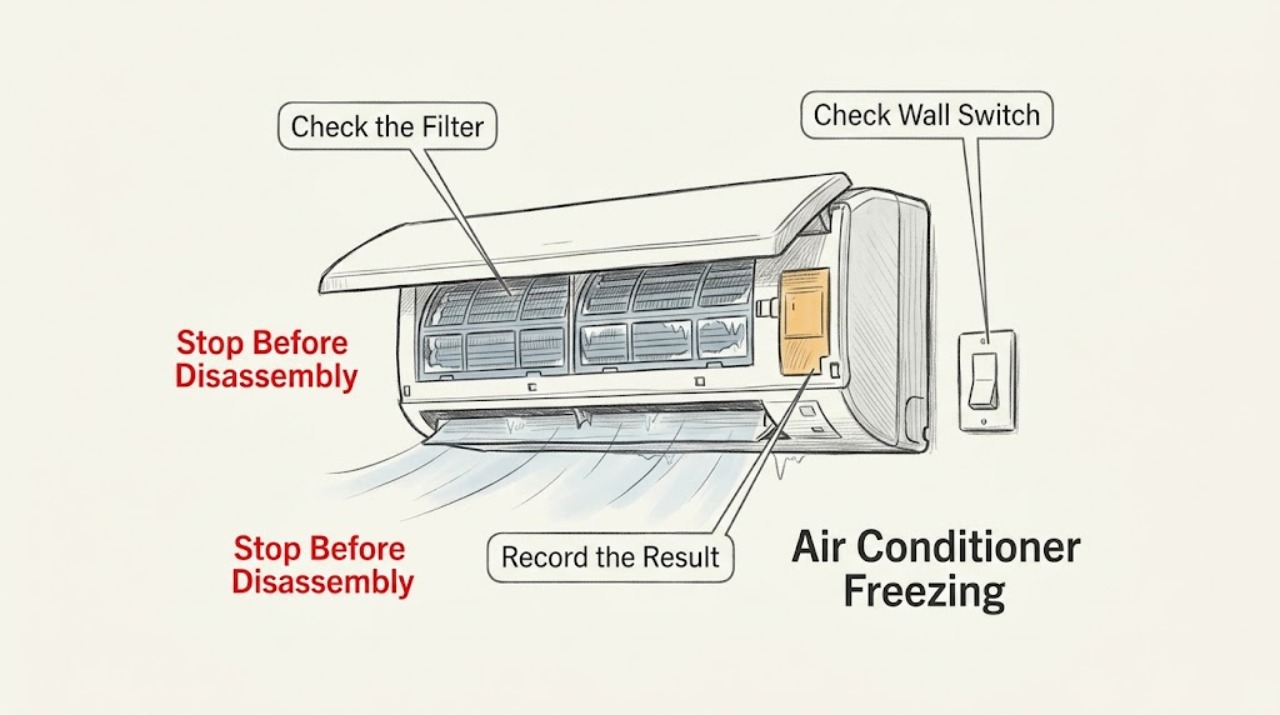
Work through in order
Diagnostic checks
Use only checks that match the exact appliance or system and its official guide.
-
Check 1
Turn the GE air conditioner off and identify where the ice is visible from the user-accessible grille or filter area. Do not remove a cabinet or evaporator cover. If water or ice is already spilling toward the room, place a safe container or towel away from electrical connections and keep the unit off.
Expected result: Record whether there is frost on the room-side coil, reduced airflow, ice at the front, or only normal condensation. Note whether the appliance is a window unit, a single-hose portable, or a dual-hose portable.
Next step: Continue only with external, model-appropriate checks after the coil is fully thawed. If the cabinet is damaged, water reaches electrical parts, or the plug or cord is hot or damaged, disconnect power only if safe and keep the unit out of use.
Why this matters
Why: Ice on the indoor coil can block airflow and stop effective cooling. The architecture determines which filter, hose, outdoor-temperature, and control checks apply; a portable venting issue should not be diagnosed with a window-unit assumption.
-
Check 2
Defrost completely. Use OFF and room-temperature air as GE recommends; only use a Fan or warmer, higher-temperature setting if the exact model guide allows it. Do not scrape, puncture, or apply direct heat to the coil, and do not switch back to cooling while ice remains.
Expected result: The ice should disappear and airflow should return without forced intervention. If meltwater is blown into the room while using a fan-assisted method, stop that method and let the appliance thaw with the power off.
Next step: Once thawed, dry any accessible water, restore the filter only as the manual directs, and proceed to the airflow, temperature, and setup checks. If the unit cannot be safely dried or continues leaking, arrange service.
Why this matters
Why: A fully thawed coil is needed before a later cooling test can distinguish a temporary airflow or temperature condition from a recurring fault. Ice that remains hidden behind the grille means the diagnosis is not complete.
-
Check 3
After thawing, inspect and clean the room-side air filter exactly as the owner manual specifies. Check that curtains, blinds, furniture, or stored items do not block the front inlet or discharge, and select a fan speed that the model permits for cooling.
Expected result: Look for a visibly clogged filter, weak airflow before versus after cleaning, or an obstruction directly in front of the appliance. Do not operate without a required filter or with the grille removed.
Next step: Reinstall the clean, dry filter and retest only with the cabinet assembled. If airflow remains weak, stop before opening the unit and arrange qualified service.
Why this matters
Why: A dirty filter or restricted airflow can keep moisture on the cold coil until it freezes. Improved airflow and no repeat ice after a permitted cleaning make an external airflow cause more likely; unchanged weak airflow shifts concern toward a fan or internal problem.
-
Check 4
Match the temperature and installation check to the appliance type. For a window unit, do not run cooling in outdoor conditions that the GE guidance says can frost the coil; for a portable unit, keep every required exhaust or intake hose connected and vented outdoors as the exact manual specifies.
Expected result: For window models, note whether the outdoor temperature is near or below the GE support thresholds and whether the room is already unusually cool. For portable models, check for a detached, sharply bent, extended, or indoor-vented hose. GE Profile dual-hose models have their own software and hose requirements.
Next step: Stop cooling until conditions are suitable, raise the setting or use a permitted high fan where the model guidance allows, and correct only accessible hose routing. Do not modify a window installation, open the refrigeration circuit, or bypass a model control.
Why this matters
Why: Cool outdoor or room conditions can make the compressor cycle differently or allow the indoor coil to ice. A portable hose restriction or missing hose can disturb heat and humidity removal; Profile dual-hose behavior must not be inferred from a GE single-hose manual.
-
Check 5
Run one controlled cooling test after the ice is gone, the filter is installed, the airflow is clear, and the architecture-specific conditions are correct. Observe whether the fan moves air, whether the compressor cycles normally, and whether ice returns rather than judging from room temperature alone.
Expected result: Record normal airflow with no ice, immediate refreezing, a fan that does not run, repeated electrical clicking, unusual odor, water entering the room, or a breaker/LCDI interruption.
Next step: Stop using the unit and arrange qualified GE service for recurring ice, poor airflow, persistent water, or internal component diagnosis. Do not perform live electrical tests, remove the cabinet, add refrigerant, or work on the sealed system.
Why this matters
Why: No recurrence after the external correction supports a temporary airflow or operating-condition cause. Rapid recurrence or an absent fan points beyond safe user checks; electrical, refrigerant, compressor, and sealed-system causes cannot be confirmed from sound or frost pattern alone.
Use your observations
Decision map
Find the observation that best matches what you see, then follow the next safe action.
-
PATH 01Next step
What you see
Ice appears after a cool evening or when the room/outdoor conditions are already cool.
Do this next
Stop cooling until the conditions are suitable and follow the exact model's temperature and fan guidance; do not force operation below the manual's limits.
Why this path and its safety boundary
Why it matters: Low ambient temperature is more likely than a dirty filter or blocked grille; GE warns that cool-only room air conditioners can frost or stop the compressor under cold conditions.
-
PATH 02Next step
What you see
Ice follows weak airflow or a visibly dirty filter.
Do this next
Retest with the dry filter installed and unobstructed airflow. If the airflow remains weak or ice returns, arrange service rather than opening the cabinet.
Why this path and its safety boundary
Why it matters: Restricted airflow is more likely to have allowed moisture to freeze on the indoor coil.
-
PATH 03Next step
What you see
A portable GE unit freezes or cools poorly while the exhaust setup is abnormal.
Do this next
Turn the unit off and restore only the hose arrangement shown in the exact manual. Do not substitute a different model's hose rule.
Why this path and its safety boundary
Why it matters: Heat and humidity may not be leaving the room correctly, and the model's condenser-air path may be disturbed.
-
PATH 04Next step
What you see
Ice returns quickly after complete defrost, clean filter, clear airflow, and suitable conditions.
Do this next
Stop using the appliance and arrange qualified service. Disconnect power only for an immediate electrical hazard and only when safe; do not perform live tests or sealed-system work.
Why this path and its safety boundary
Why it matters: An internal fan, control, sensor, compressor, or sealed-system problem is more likely; the generic GE guidance does not justify identifying a part or refrigerant condition.
Helpful context
Understand the symptom
Confirm that the ice is on the indoor coil
Freezing usually appears as frost or a solid ice layer behind the room-side grille, with weaker airflow or water and ice at the front. The appropriate checks depend on whether the GE appliance is a window unit, portable unit, or a GE Profile dual-hose portable design. Do not apply a window-unit temperature rule to a different architecture without reading its owner manual.
Defrost before diagnosing
GE's support guidance says the quickest way to remove coil ice is to turn the air conditioner off and allow room-temperature air to melt it. A fan or warmer setting may be allowed by some models to help defrost, but a low fan can blow meltwater back into the room. Do not chip the ice, use a heat gun, or restart cooling while the coil is still blocked.
Treat recurrence as a decision change
One freeze after a cool evening, a dirty filter, or blocked airflow can improve after the external cause is corrected. Ice that returns with a clean filter, clear airflow, correct hose installation, and suitable outdoor conditions is not a reason to keep lowering the setpoint. Recurrence may need model-specific service for the fan, sensor, control, or refrigeration circuit.
When checks do not resolve it
Need a professional?
Arrange qualified GE service if the coil refreezes after a complete thaw, clean model-approved filter, unobstructed airflow, correct hose setup, and suitable ambient conditions; if the fan does not run; or if water enters the room, the unit trips power, or the cord smells hot or burnt. Unplug before any user-permitted cleaning. Never chip ice, apply direct heat, remove the cabinet, perform live electrical tests, bypass a safety device, or open the refrigerant/sealed system.
Common questions
FAQ
How do I safely thaw a frozen GE air conditioner?
Turn the air conditioner off and allow room-temperature air to melt the ice. GE says some models may be helped by Fan or a warmer, higher-temperature setting, but use that only when the exact manual permits it and stop if meltwater is blown into the room. Do not scrape or heat the coil directly.
Can cold weather make a GE air conditioner freeze?
Yes. GE says cool outdoor conditions can limit room-air-conditioner cooling and allow the indoor coil to frost; its general cold-temperature guidance says not to use a room air conditioner below the stated operating conditions. Use the exact model guide for the applicable limits and do not force cooling in freezing outdoor conditions.
Why does my GE portable air conditioner freeze even after I clean the filter?
Check the portable model's exhaust arrangement as well as the filter. GE says a portable unit must be vented outdoors and that GE Profile dual-hose models require both mechanically linked hoses during normal cooling. If the setup is correct and ice returns, stop using the unit and arrange service.
Read the exact guide
Official sources
- Air Conditioner - Ice On Indoor CoilsGE Appliances · GE room/window air conditioner coil-freezing causes and defrost guidance
- Air Conditioner - How To Remove Ice On CoilsGE Appliances · GE air conditioner indoor-coil ice removal guidance
- Portable Air Conditioner - Exhaust Vent HoseGE Appliances · GE and GE Profile portable air conditioner exhaust and dual-hose requirements
- If Something Goes Wrong - GE Room Air Conditioner Owner ManualGE Appliances · GE room/window air conditioner owner safety and troubleshooting guidance
- Air Conditioner Usage During Cold TemperaturesGE Appliances · GE room air conditioner operation in cold outdoor conditions
- Air Conditioner - Not Cooling Well / Running ConstantlyGE Appliances · GE air conditioner airflow, filter, installation, temperature, and cooling troubleshooting
Community feedback
Share a repair observation
Share a plain-text repair observation. Accepted observations are published automatically; this page may take a moment to update.