
Repair problem
Freezing Troubleshooting Guides
Published FixGraph guidance for diagnosing and responding to freezing.
Matching published guides
Choose a guide that matches the service, equipment, and conditions you are seeing.
-
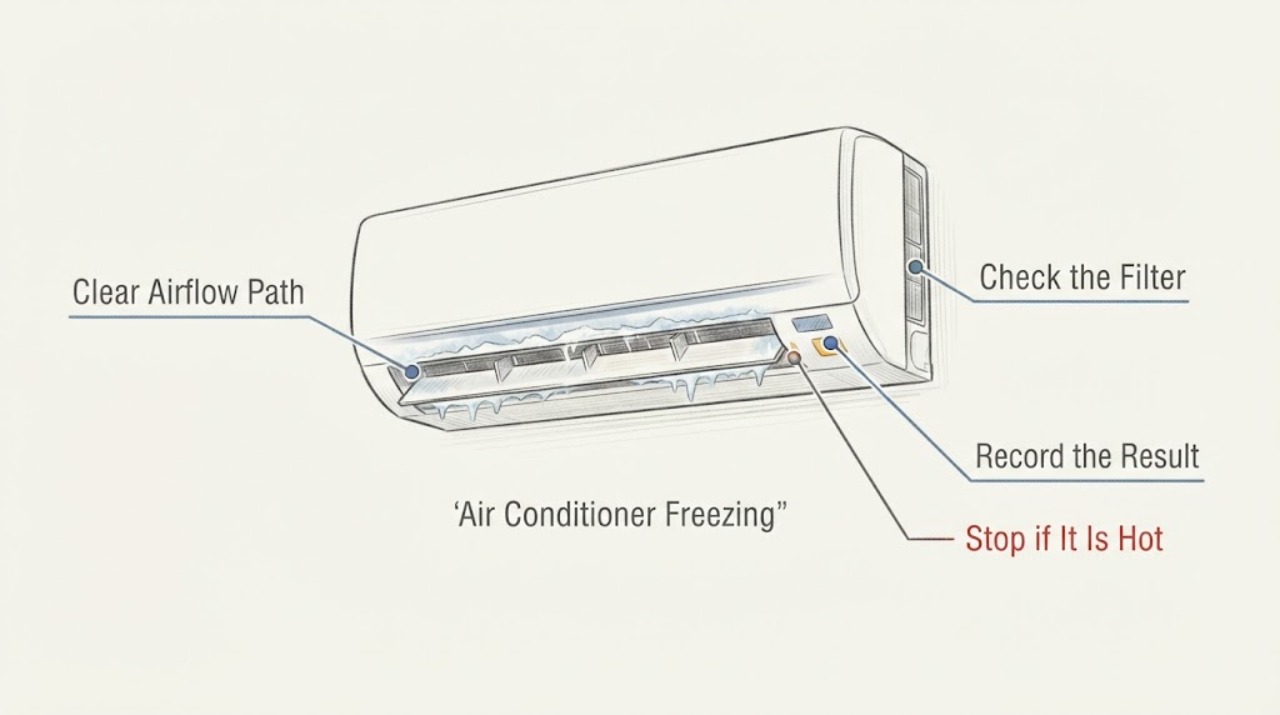
Air Conditioner Freezing
Turn off cooling when an air conditioner is frozen and let the ice thaw naturally. Check the accessible filter, open vents, and outdoor coil for dirt after power is isolated. Ice that returns or weak airflow needs qualified HVAC service; do not run with a frozen coil or handle refrigerant.
-
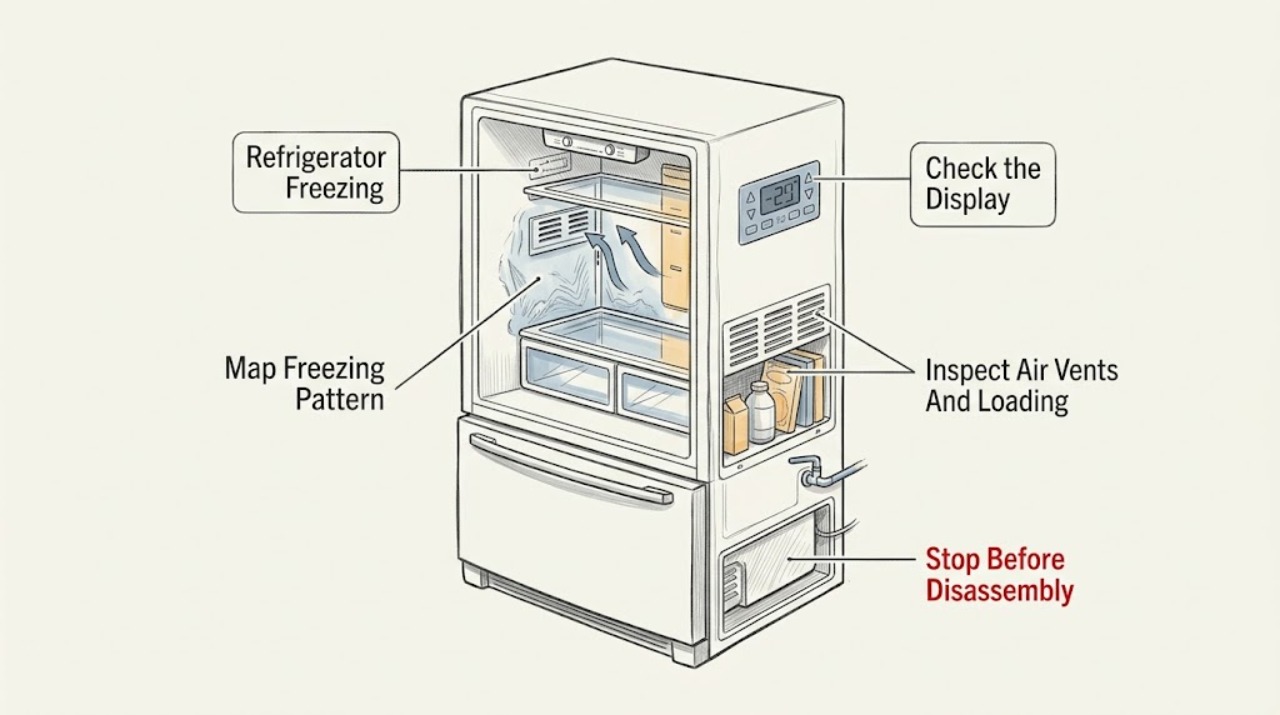
Amana Refrigerator Freezing
First identify whether only food near a vent or back wall is freezing, the entire fresh-food section is too cold, or both compartments are colder than intended. Amana's guidance points first to temperature settings, blocked vents, an ice maker left on without a water supply, and unusually cold surroundings.
-
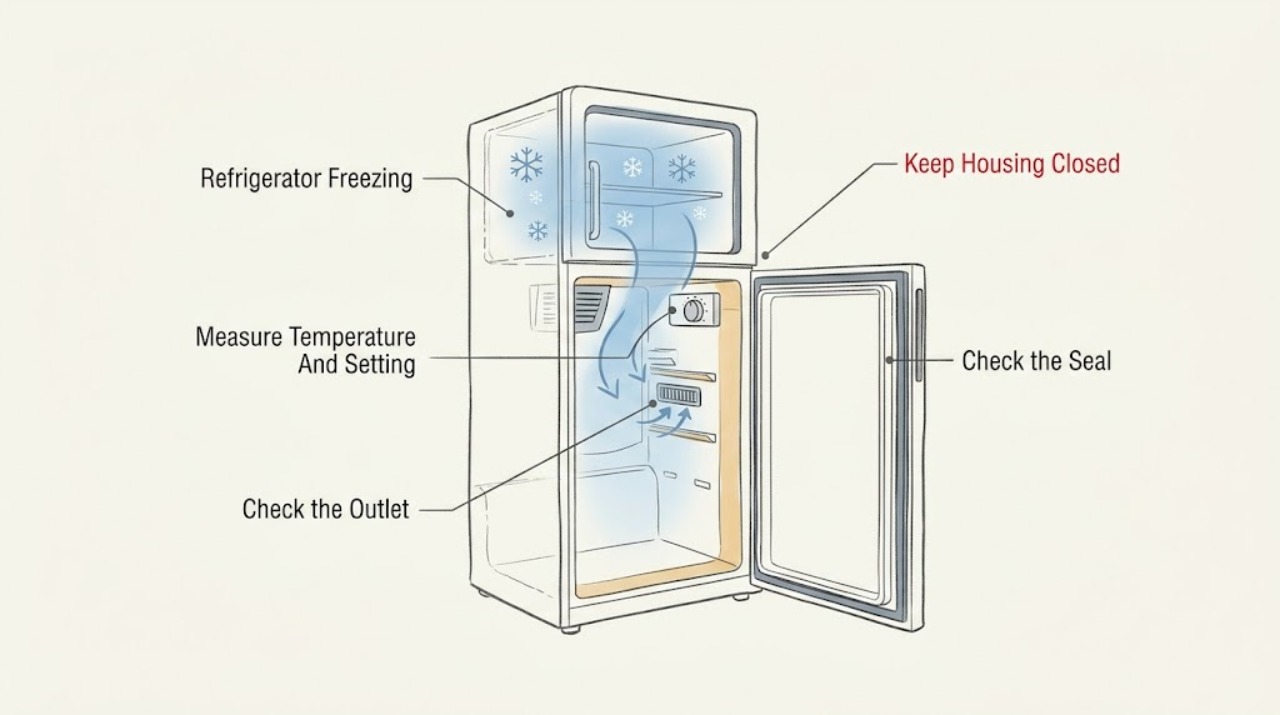
Beko Refrigerator Freezing
If food is freezing in the refrigerator compartment of a Beko refrigerator or fridge-freezer, first check the temperature setting and measure the actual compartment temperature with a thermometer rather than relying only on the display. Move sensitive food away from top-shelf air outlets and the rear wall, check that the door seal is clean and undamaged, and inspect for unusual frost or an active Fast Freeze setting.
-
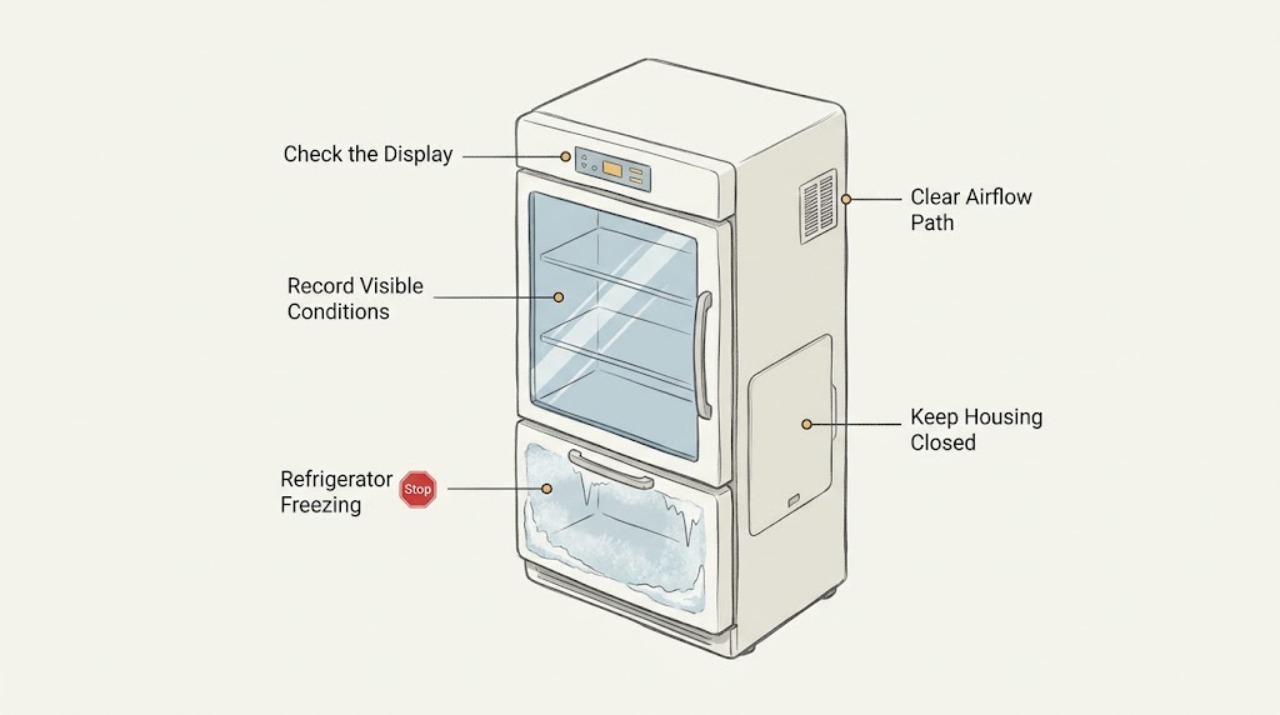
Blomberg Refrigerator Freezing
Confirm the actual refrigerator temperature before changing several settings: place a thermometer in a glass of water on the middle shelf for 12 hours. If the reading is below the intended range, raise the temperature setting and allow the refrigerator to stabilise.
-
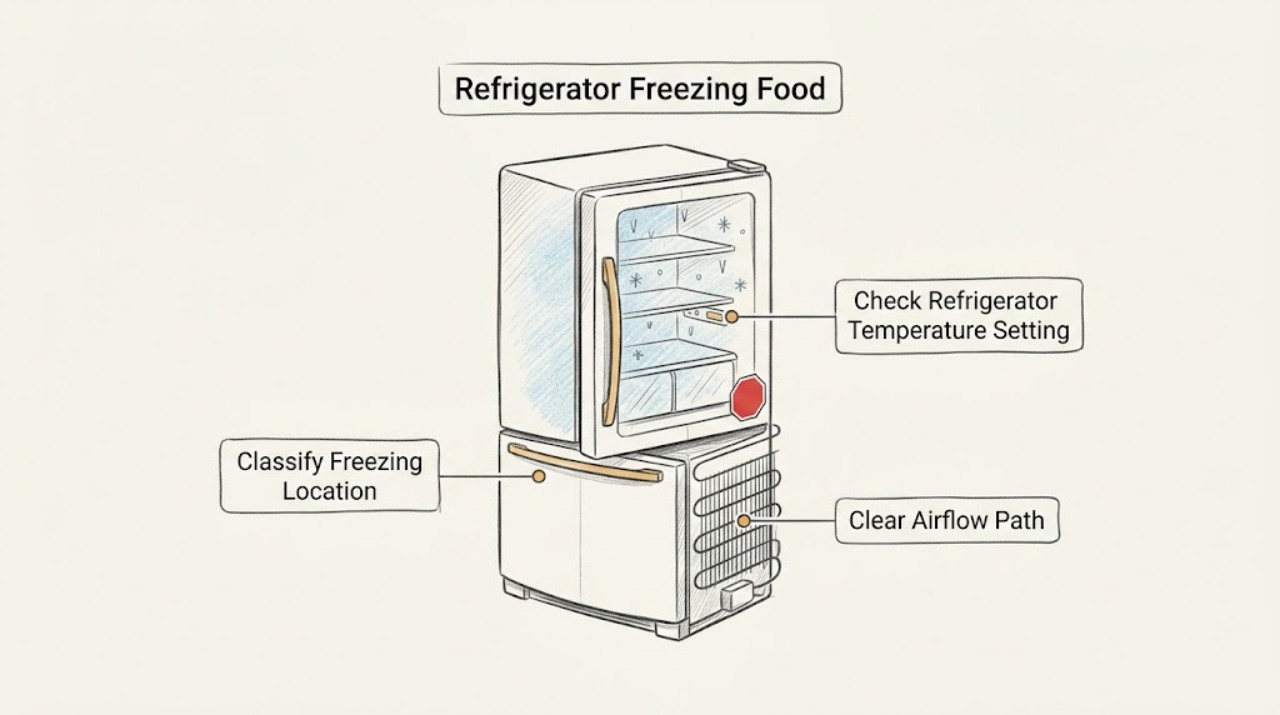
Bosch Refrigerator Freezing Food: What to Check and When to Call
If a Bosch refrigerator is freezing food, first separate a cold spot or package touching the rear wall from a whole refrigerator compartment that is below its normal setting. Check the exact model's refrigerator temperature control for an accidental high-cooling setting, keep food and containers clear of the rear wall and interior vents, and make sure the door closes fully.
-
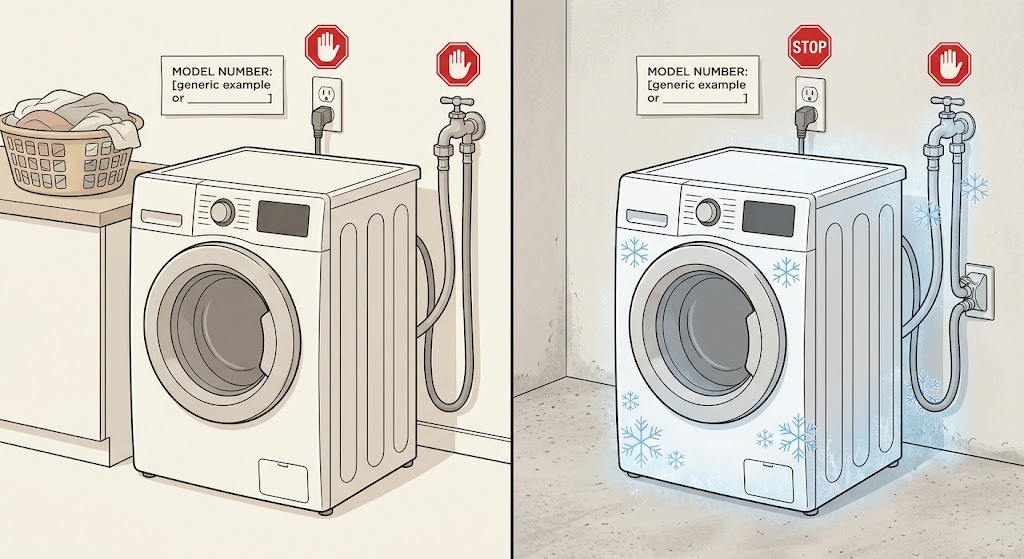
Bosch washing machine freezing: separate a frozen control from freeze damage
“Freezing” on a Bosch washing machine can mean two different problems: the display or program is frozen and not responding, or water inside the inlet hose, pump, or drain path has actually frozen after exposure to below-freezing conditions. Separate those paths before resetting or opening anything.
-
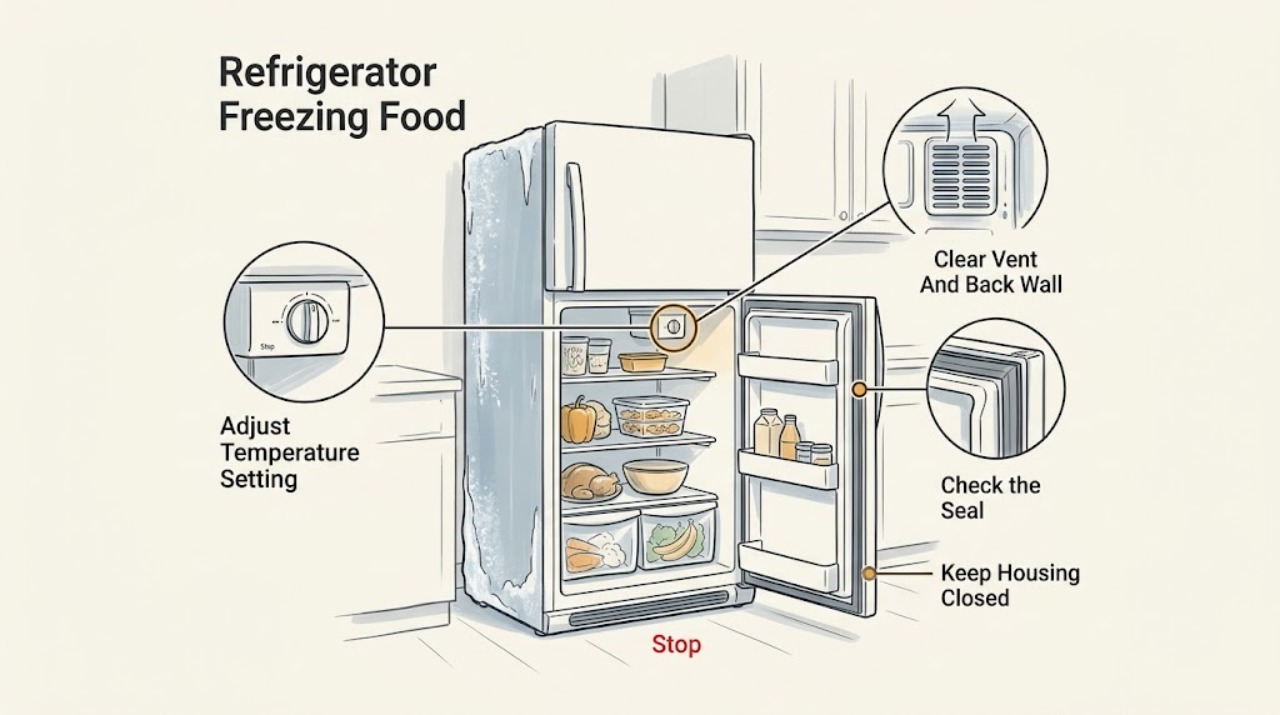
Danby Refrigerator Freezing Food: Temperature, Airflow, and Door Checks
If food is freezing in the refrigerator compartment, first make a small adjustment toward a warmer temperature using the exact Danby model's control. Move food away from the interior air outlet and back wall, and do not pack items against vents.
-
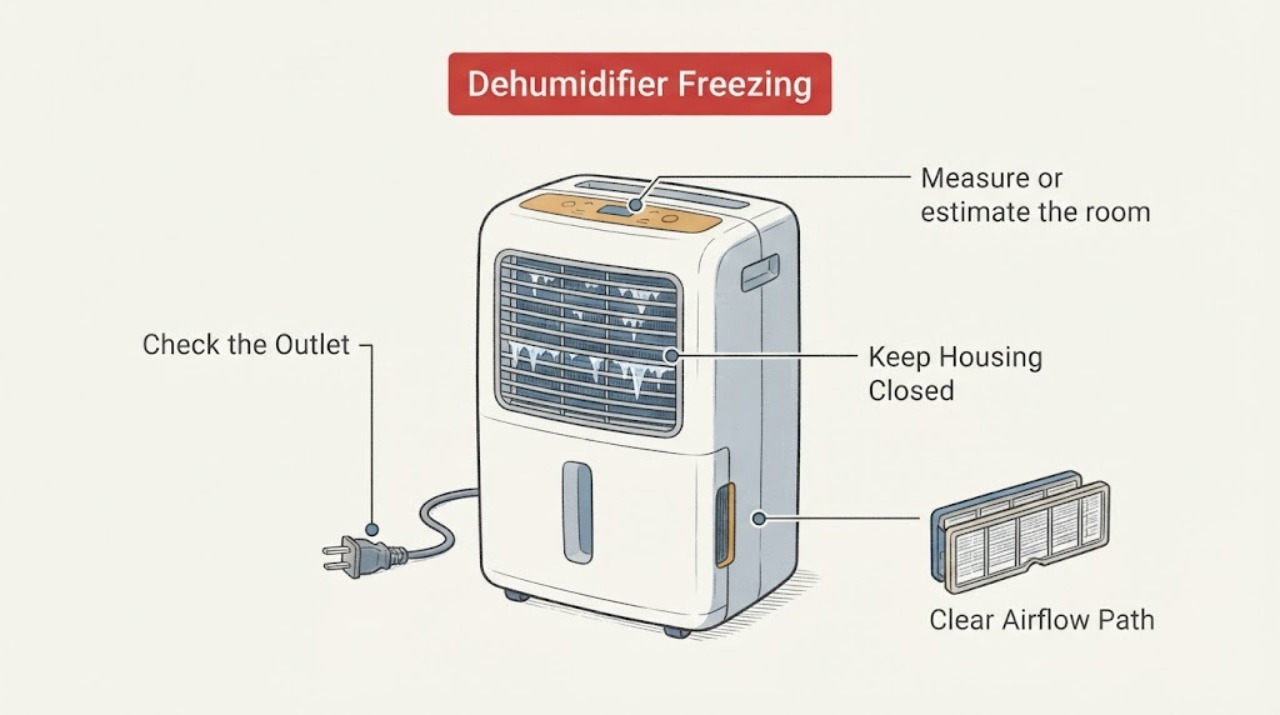
Dehumidifier Freezing
Ice on a dehumidifier usually means the coil is colder than the room conditions allow, especially in a cold room or with restricted airflow. Turn the unit off and let the ice melt naturally; do not chip at the coil. Check the room temperature, filter, and clear airflow, then use the exact model manual because Wood’s says low-temperature performance depends on the dehumidifier technology and its MRD22 manual warns that ice can build below +5°C.
-
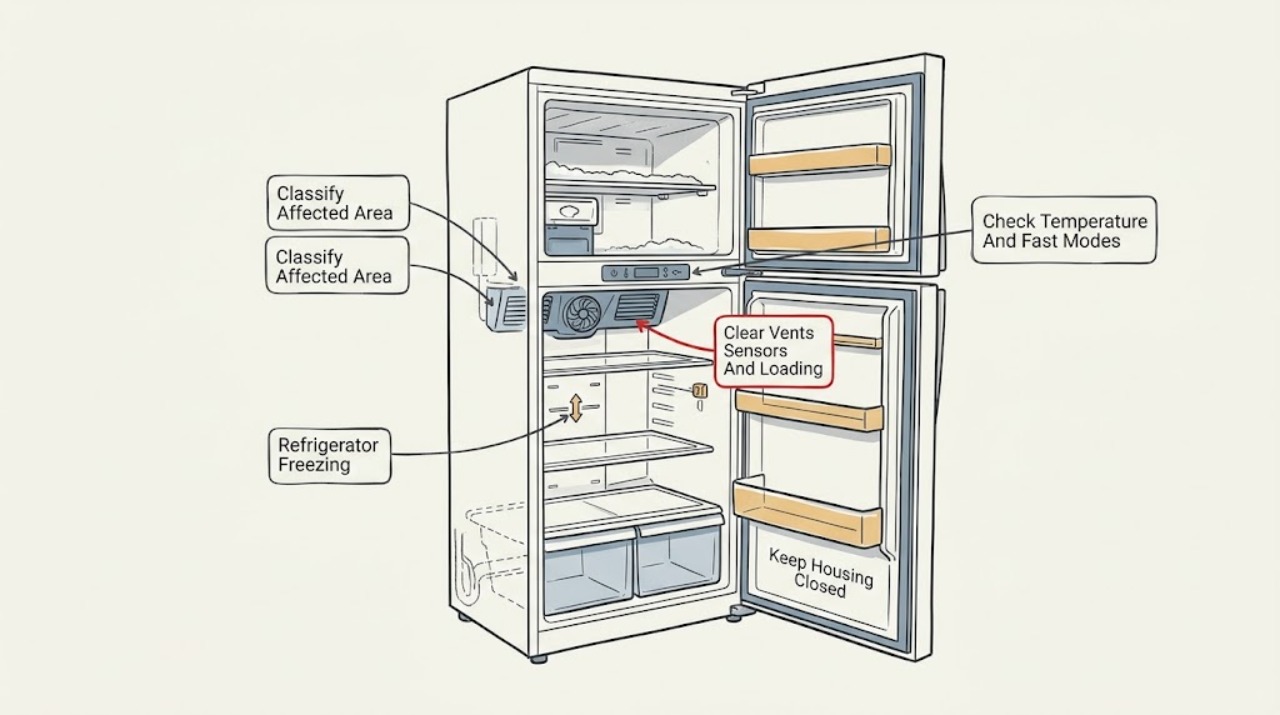
Electrolux Refrigerator Freezing: Safe Checks for Food or Compartments That Are Too Cold
First identify whether food is freezing in the fresh-food compartment, the refrigerator and freezer are both too cold, or only the freezer is colder than expected. Electrolux says food can freeze when it is against a vent or rear wall, when airflow is blocked, or when a temperature or fast-cooling/freezing setting is too cold.
-
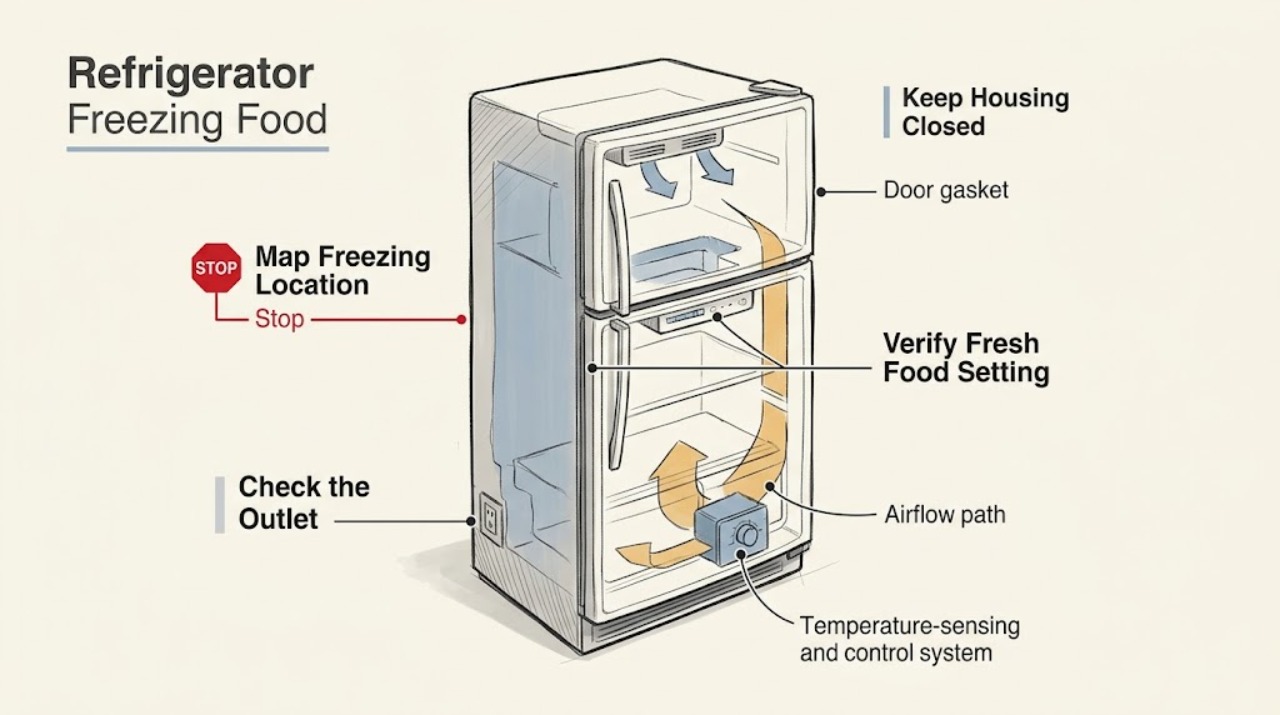
Fisher & Paykel Refrigerator Freezing Food: Check Zones, Settings, and Airflow
First confirm that the ice is on food in the fresh-food compartment, not only in the freezer. On Fisher & Paykel ActiveSmart models, check the fresh-food temperature setting rather than changing the freezer setting, and make sure chill-sensitive food is not directly in front of a cold-air outlet or pressed against the centre back of a shelf.
-
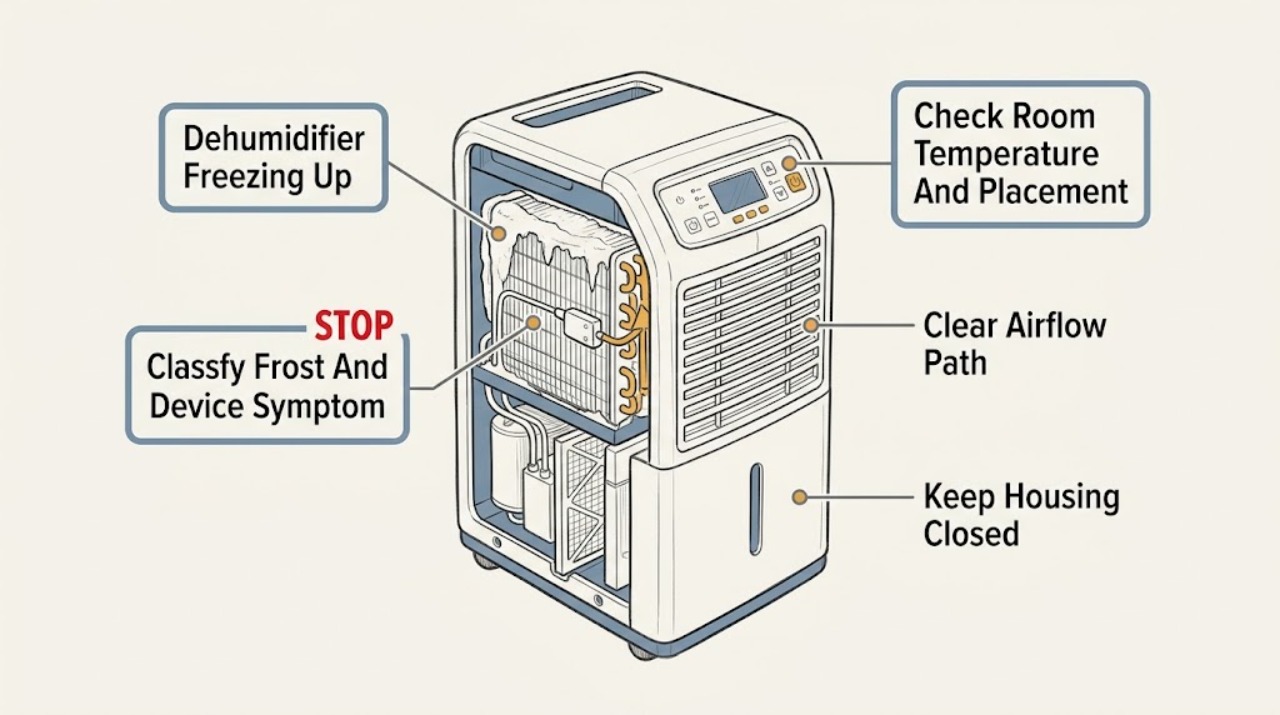
Frigidaire Dehumidifier Freezing Up: Check Room Temperature, Airflow, and Frost Pattern
If a Frigidaire dehumidifier has frost or ice on its coil, turn it off and let the coil thaw naturally before inspecting it. Light frost can occur because the evaporator operates close to freezing, but Frigidaire lists low ambient temperature, restricted airflow, a dirty filter, and a continuous-mode/setpoint issue as checks; its frost guidance lists 41°F as the low limit.
-
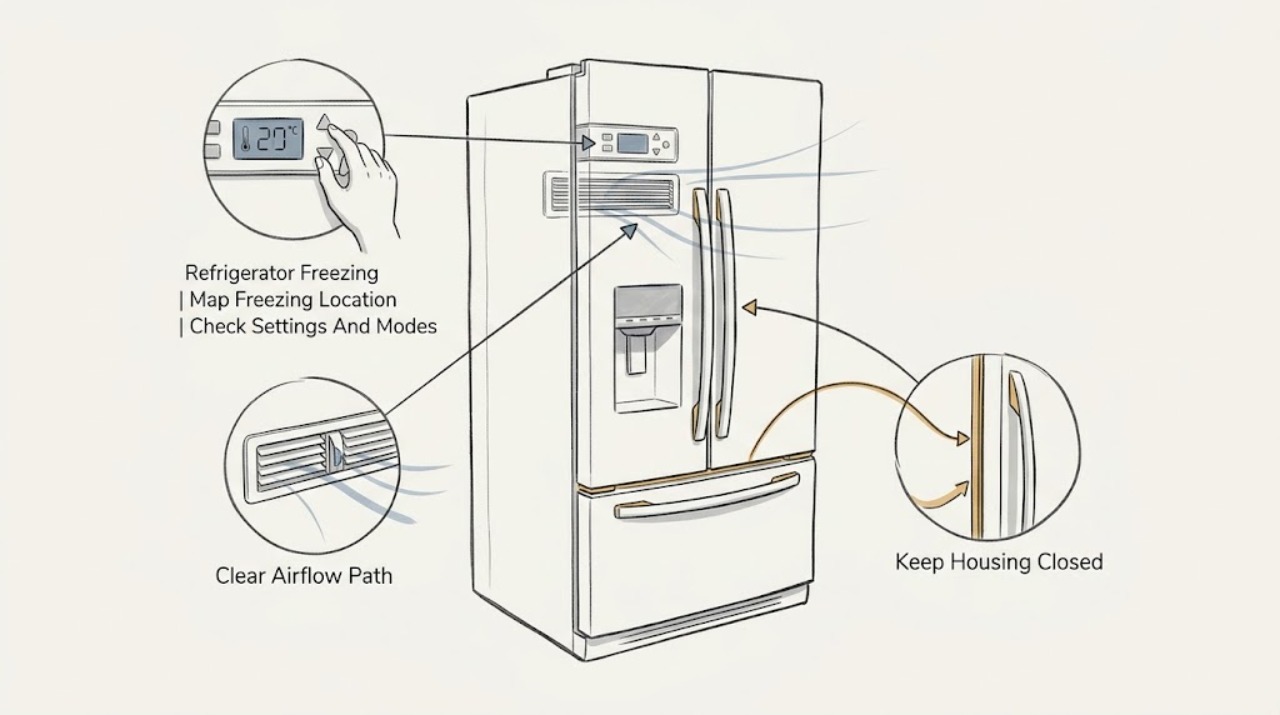
Frigidaire Refrigerator Freezing
First locate what is freezing: food or water in the fresh-food compartment, a crisper drawer, items directly in front of a vent, or the freezer itself. For a Frigidaire refrigerator, check the temperature setting and any extra-cold or temporary mode against the exact manual, then move food away from vents and direct cold-air paths.
-
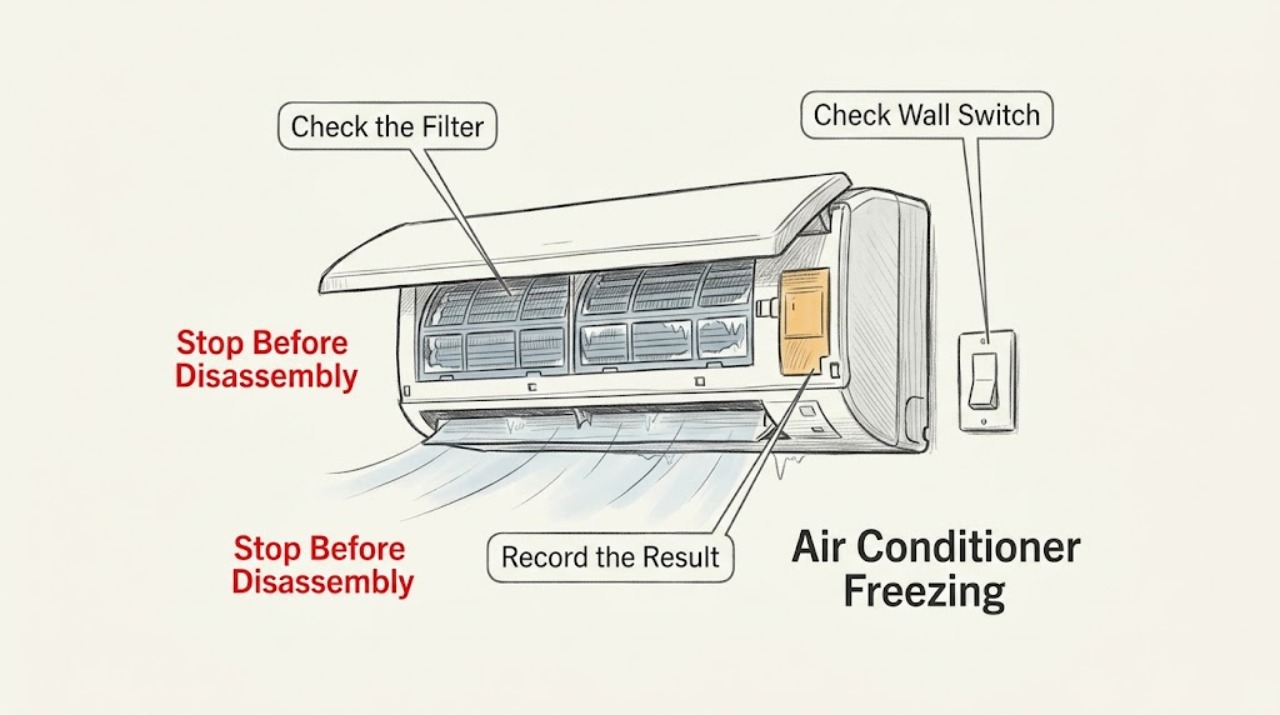
GE Air Conditioner Freezing
If a GE room air conditioner is icing up, turn it off and let the ice melt in room-temperature air before checking anything behind a panel. A dirty filter, restricted room-side airflow, low fan speed, or cool outdoor conditions can reduce airflow or coil temperature enough to freeze moisture.
-
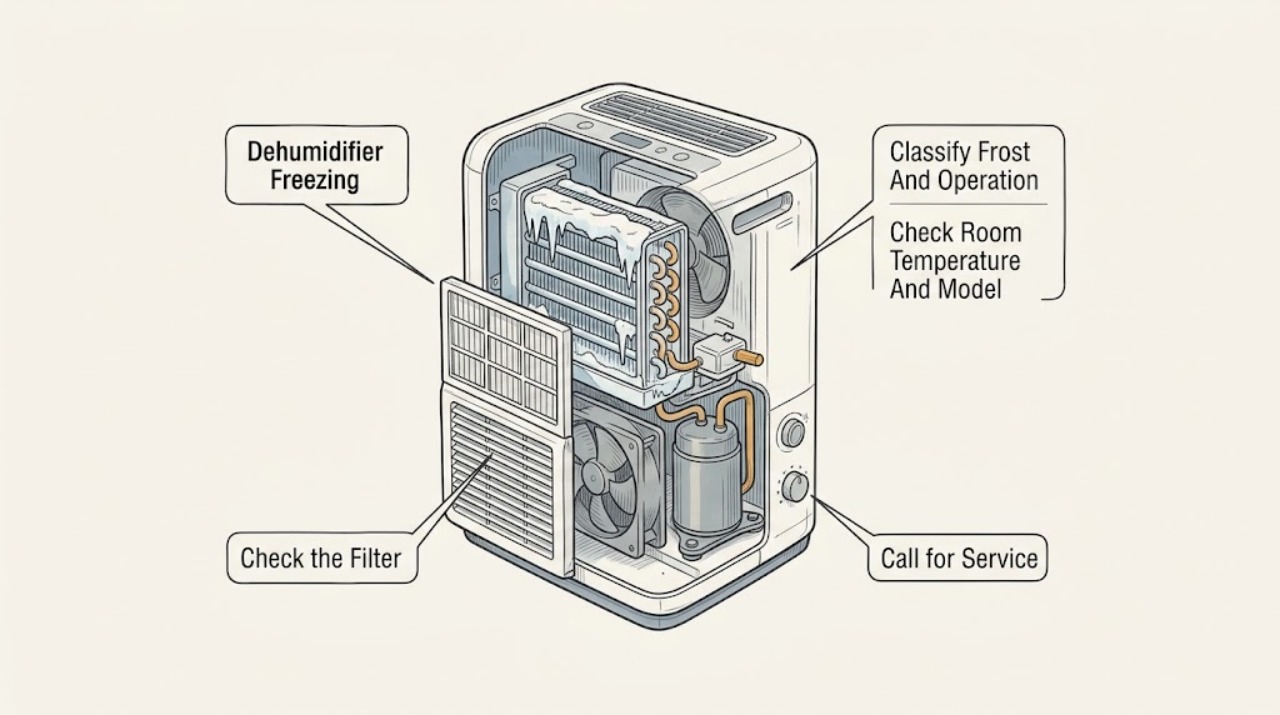
GE Dehumidifier Freezing: Check Temperature, Airflow, and Defrost Safely
A GE dehumidifier can show a light coating of frost when first turned on, but GE says it should normally disappear within about 30–60 minutes. Persistent or recurring ice usually starts with operating conditions and airflow: room temperatures below 41°F can freeze the evaporator coil, some models have a documented low-temperature mode, a dirty filter can restrict airflow, and blocked grilles or too little clearance can worsen the condition.
-
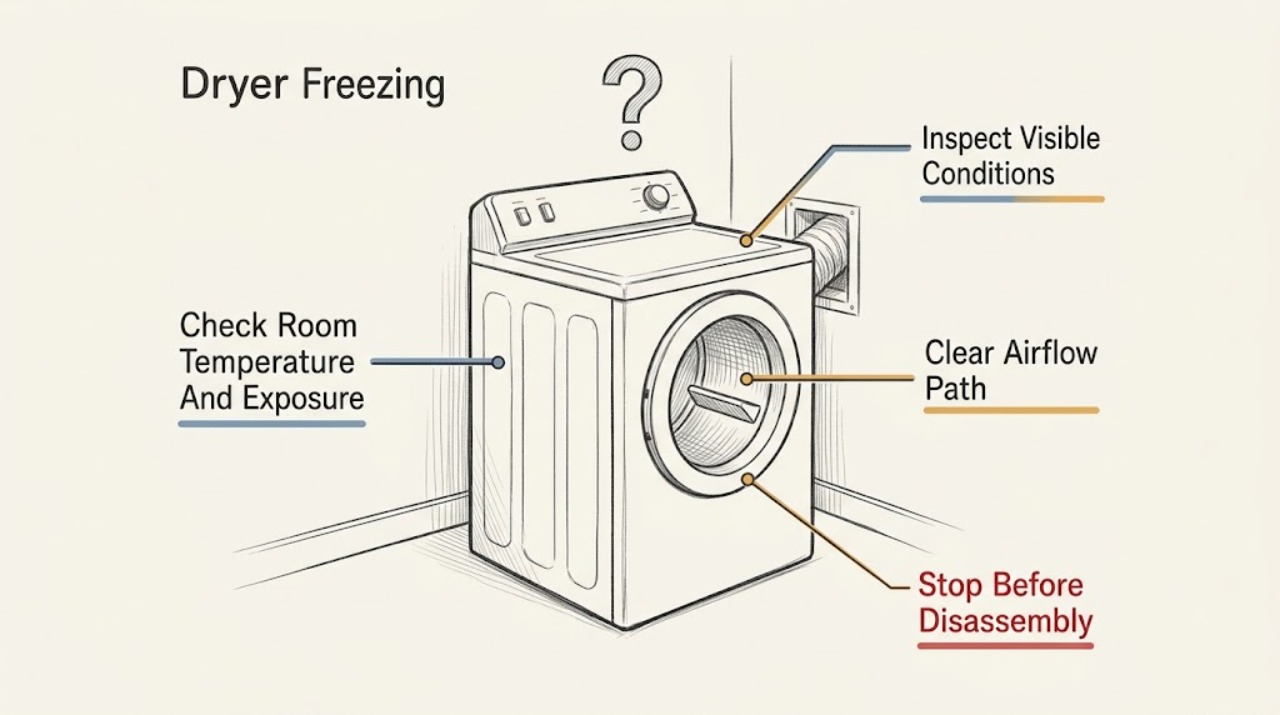
GE Dryer Freezing
If ‘freezing’ means a GE dryer is installed or stored in freezing weather, do not run it there. GE says a dryer should not be exposed to temperatures below freezing and recommends a location above 50°F for satisfactory control-system operation; below 50°F, the thermostat may not operate correctly and drying times can increase.
-
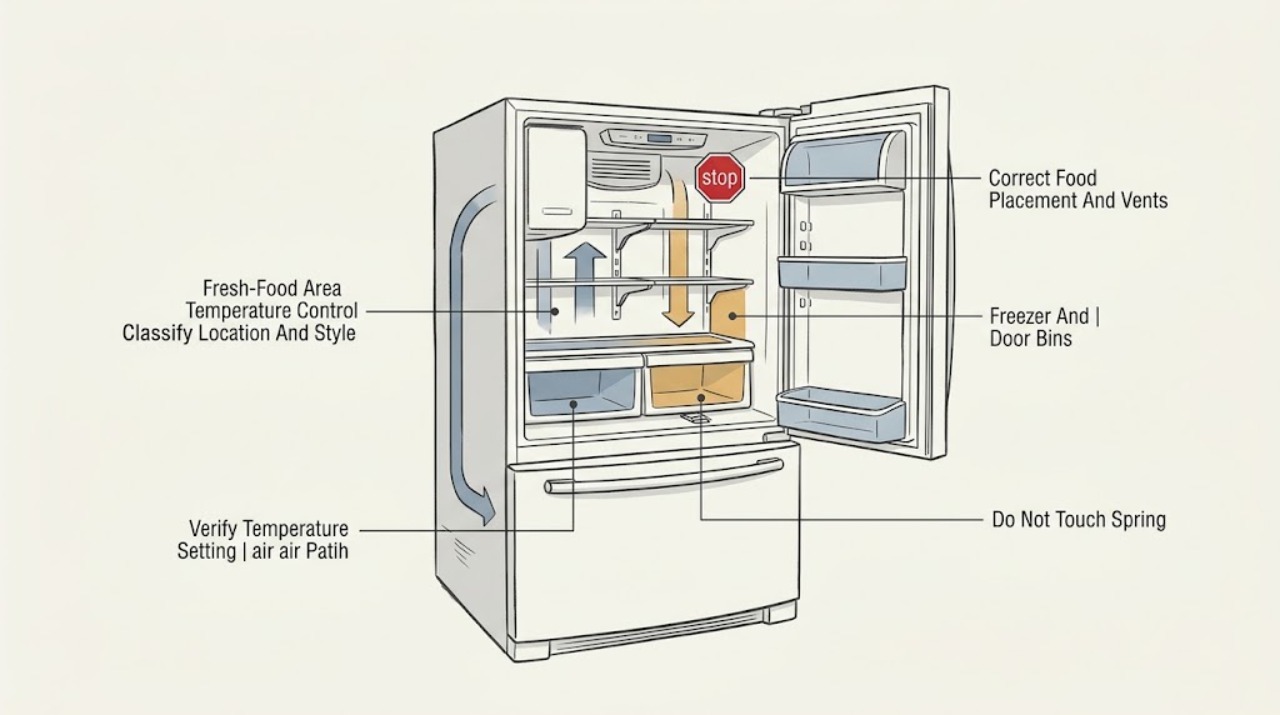
GE Profile Refrigerator Freezing Food: Check Settings, Cold Spots, and Airflow
First determine whether food is freezing in the fresh-food compartment, a drawer, a door bin, or only in the freezer, and record the complete GE Profile model and refrigerator style. GE's official guidance says freezing-food causes differ by side-by-side, bottom-freezer, and top-freezer design.
-
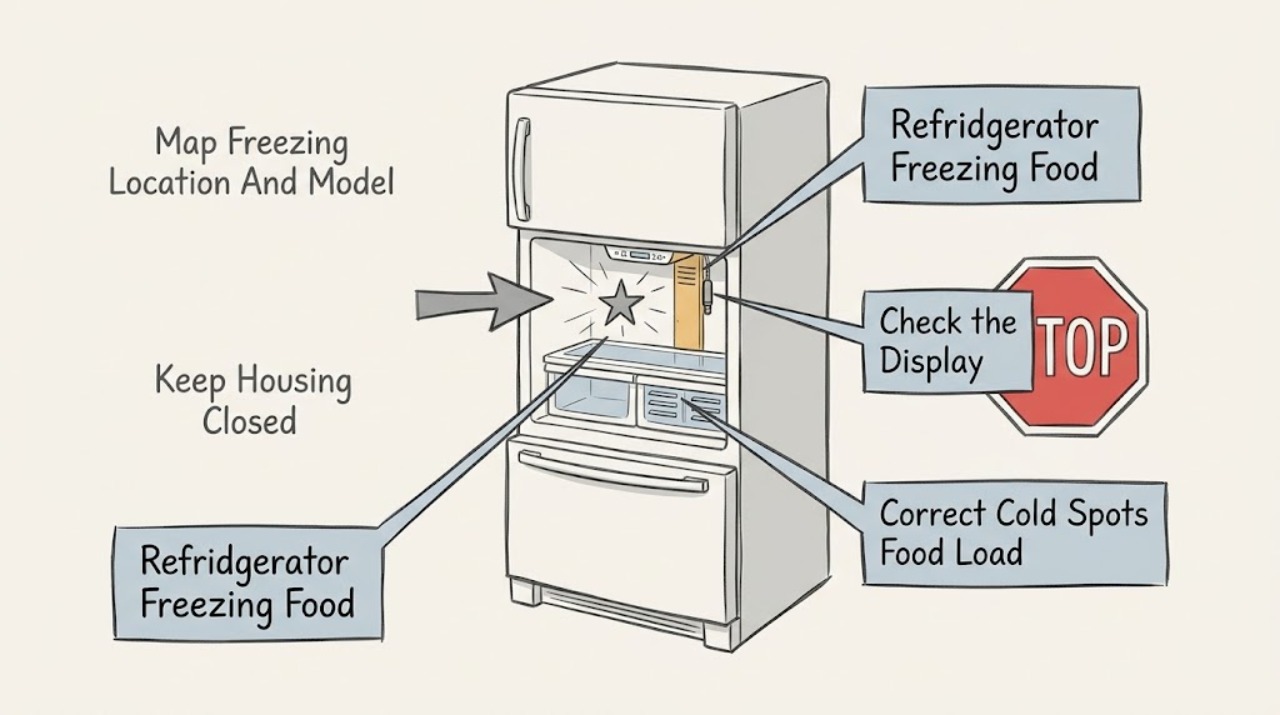
GE Refrigerator Freezing Food: Check Temperature, Airflow, and Cold Spots
First identify where the food freezes and record the GE model and refrigerator style. For a fresh-food compartment, GE's style-specific guidance generally targets about 37–42°F in the fresh-food section and 0–8°F in the freezer, but the exact owner's manual controls.
-
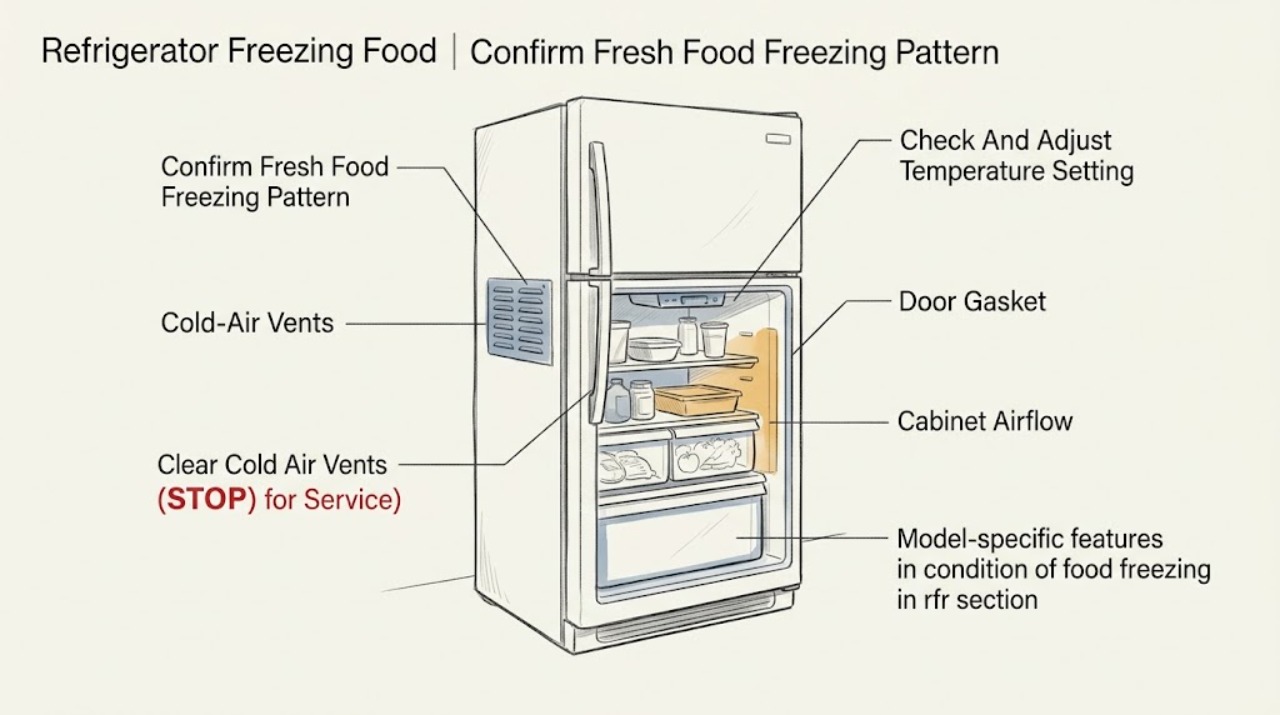
Haier Refrigerator Freezing Food: Check Fresh-Food Settings and Airflow
If food is freezing in the fresh-food section—not simply in the freezer—Haier's first checks are a temperature setting that is too cold and food blocking the cold-air outlet or return vent. Move food away from the vents, set the refrigerator slightly warmer using the exact model controls, and allow the unit to stabilize before judging the result; Haier gives 35–40°F as a general fresh-food target but notes that ranges vary by product.
-
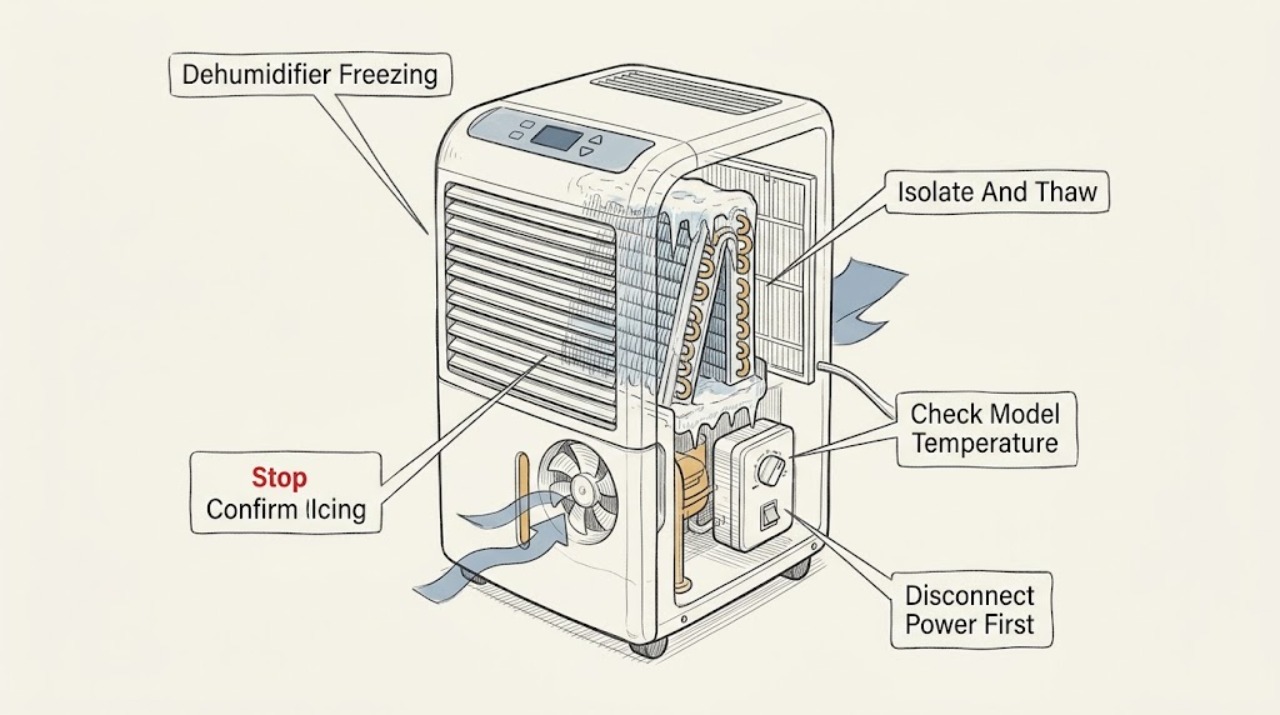
Hisense Dehumidifier Freezing: Defrost the Coil Safely and Find the Cause
Turn the Hisense dehumidifier off, unplug it, and let coil ice melt naturally before inspecting it. Do not chip ice, use a heat gun, or open the cabinet.
-
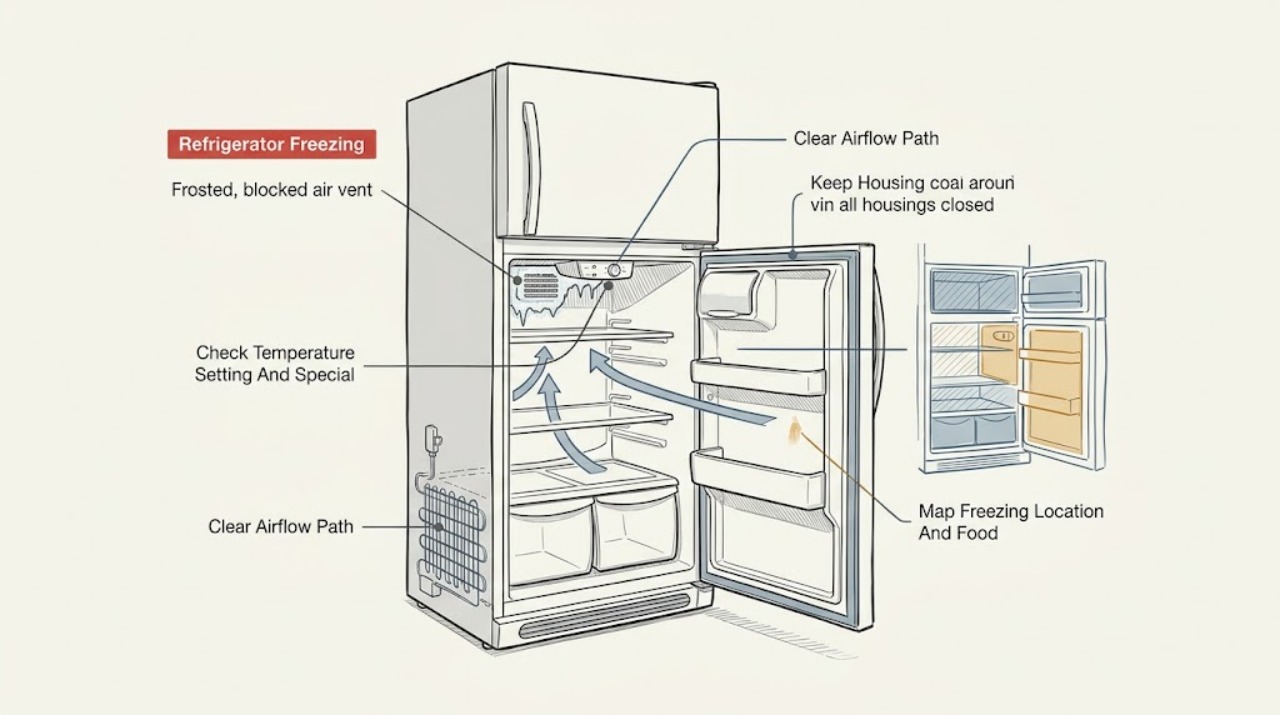
Hisense Refrigerator Freezing
This page is for food freezing in the fresh-food refrigerator compartment, not ordinary freezer operation or freezer frost. Hisense's opened HQD20 manual gives two direct checks for this symptom: move food away from the refrigerator air vent and adjust the temperature control to a less-cold setting.
-
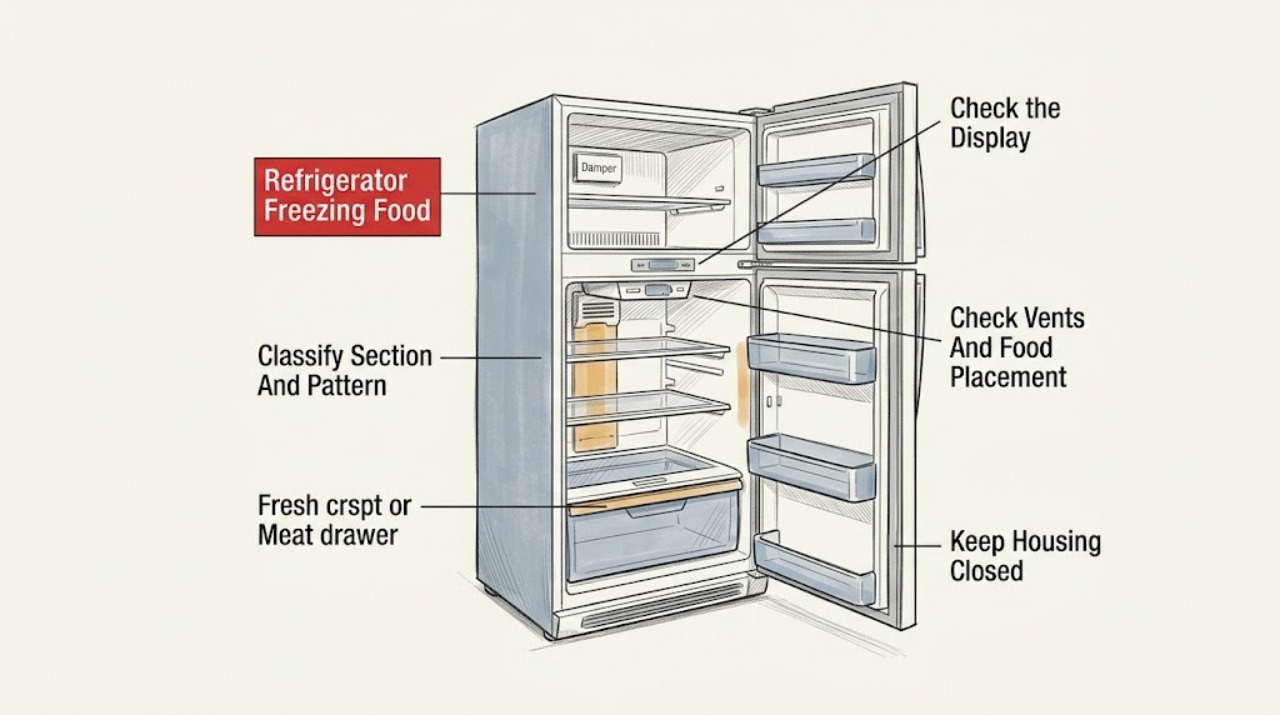
Hotpoint Refrigerator Freezing Food: Separate Cold Spots From a Cooling Fault
This guide is for food freezing in the fresh-food compartment, not for the freezer doing its normal job. First record the Hotpoint model and refrigerator style—top-freezer, bottom-freezer, or side-by-side—because the cold-air path and controls differ.
-
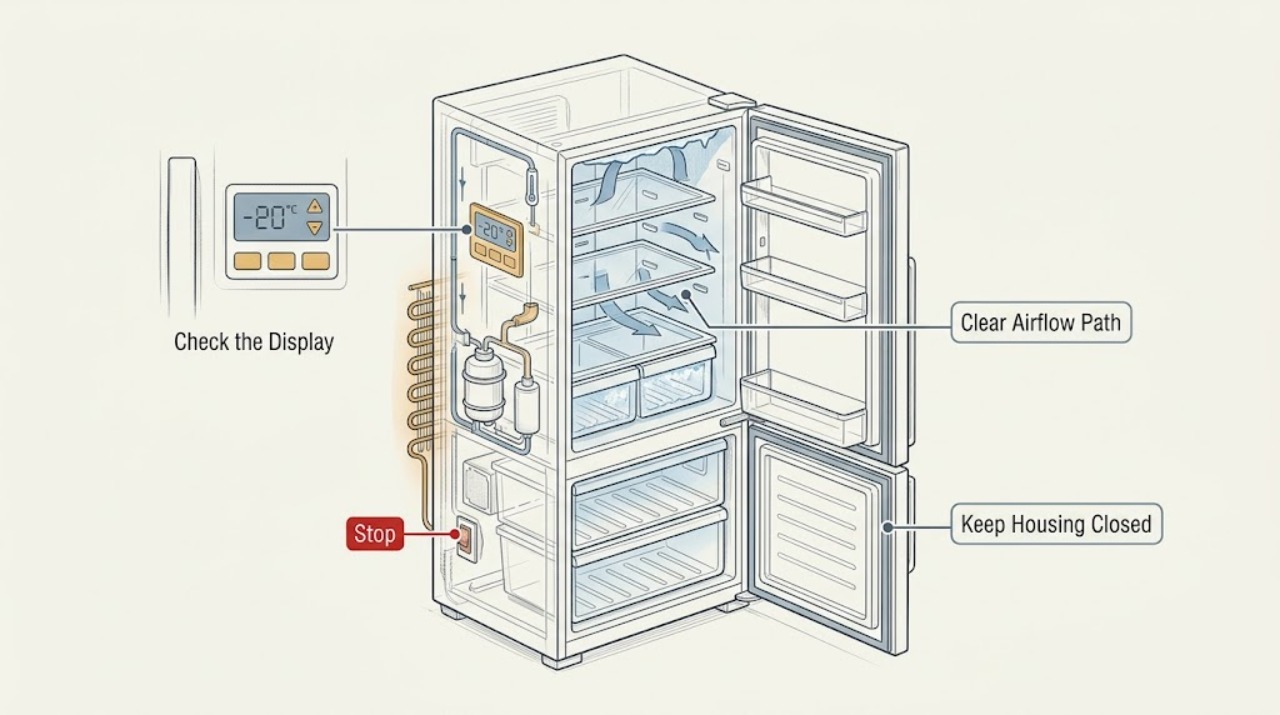
Kenmore Refrigerator Freezing Food: Start With the Location and Cooling Mode
First separate fresh-food freezing from a freezer that is simply running a rapid-freeze mode. Record the full Kenmore model number, the compartment affected, where the item froze, the displayed settings, and whether a rapid-freeze or rapid-chill feature is active.
-
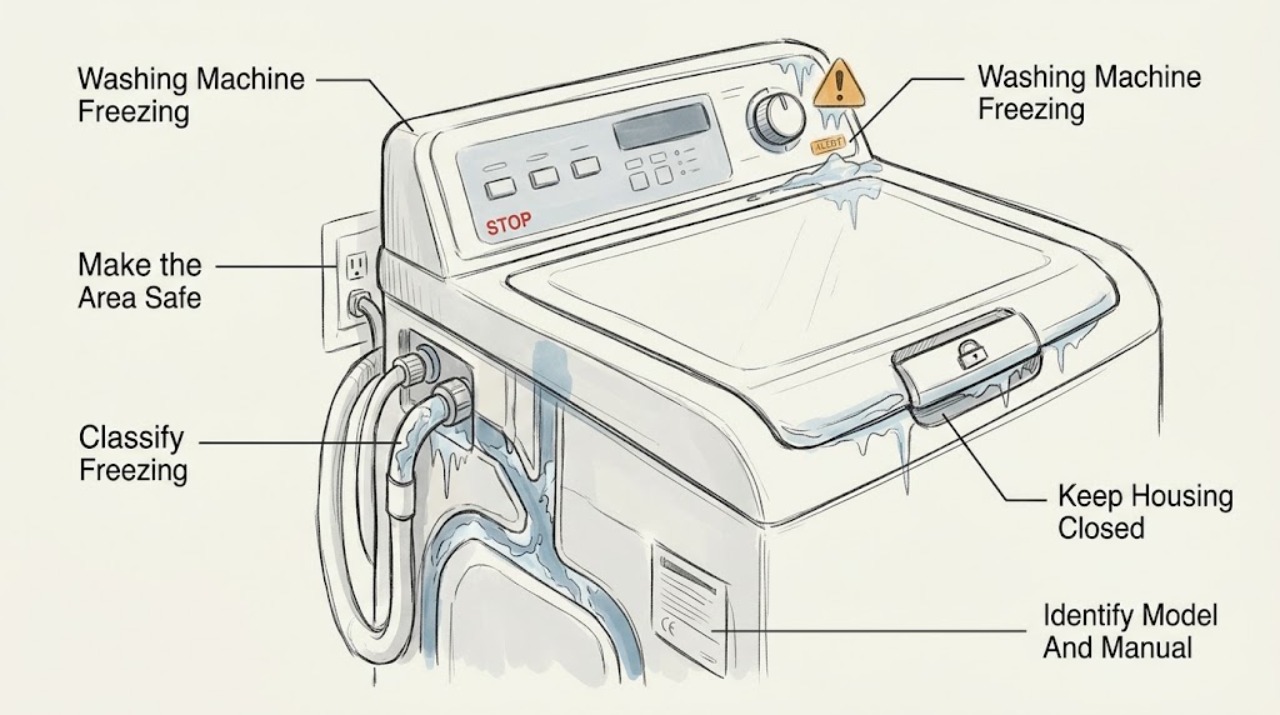
Kenmore Washing Machine Freezing: Control or Water Path?
“Freezing” on a Kenmore washing machine can mean an unresponsive display or buttons, actual ice in a cold laundry space or water path, or a cycle that is stuck with water and a locked door or lid. These are different problems.
-
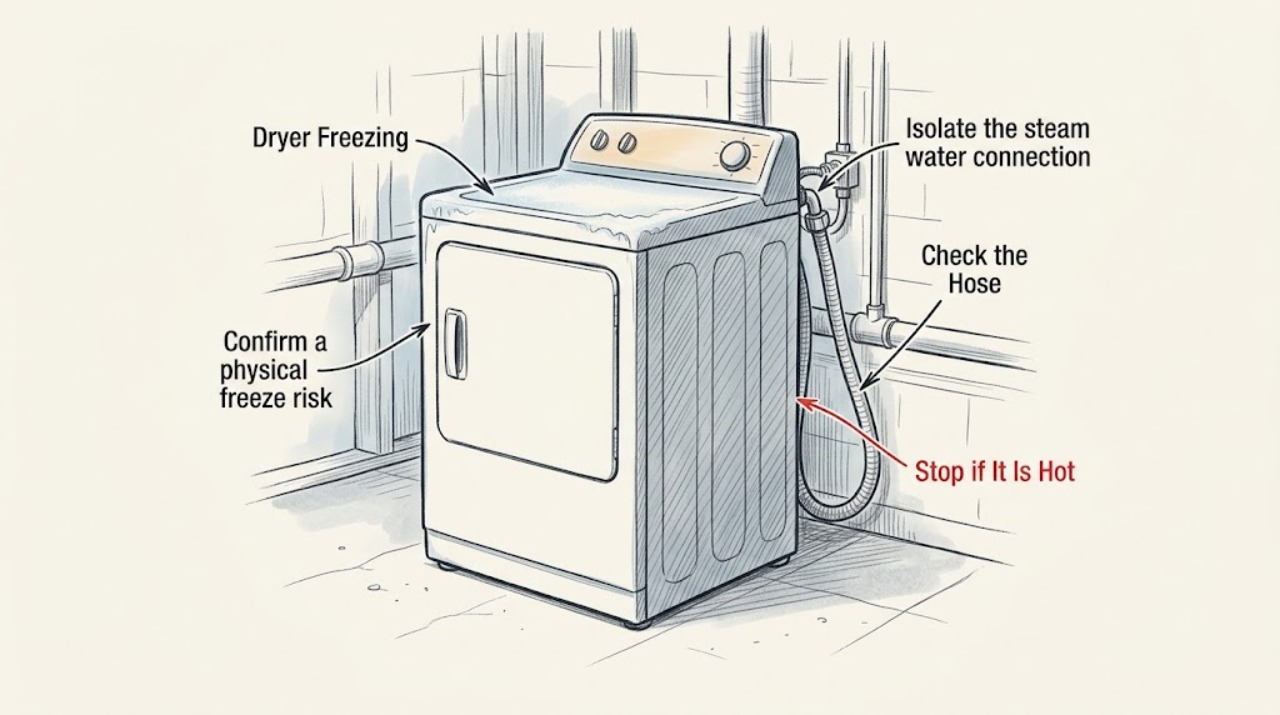
KitchenAid Dryer Freezing: Protect the Steam Water Line
KitchenAid's opened gas-dryer manual treats freezing as a water-line risk specifically for Steam Models: residual water in the inlet hose can freeze and damage the dryer. If your KitchenAid dryer has a steam water hose and has been exposed to freezing weather, unplug it, close the water faucet, and do not force an iced connection or power the dryer while it is wet.
-
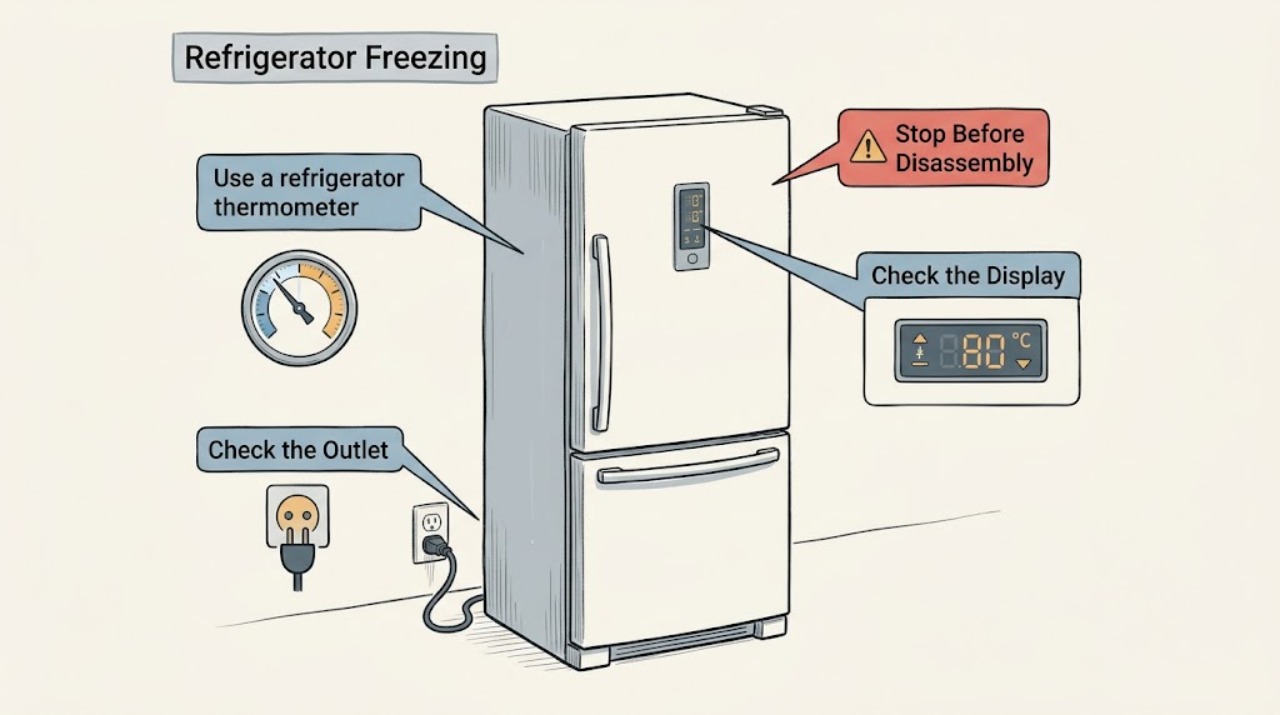
KitchenAid Refrigerator Freezing
Determine whether the whole compartment is freezing or only the meat pan/crisper. Check blocked vents, food against cold surfaces, and model-specific control settings. If the main compartment remains below the intended range after these checks, protect food and request service.
-
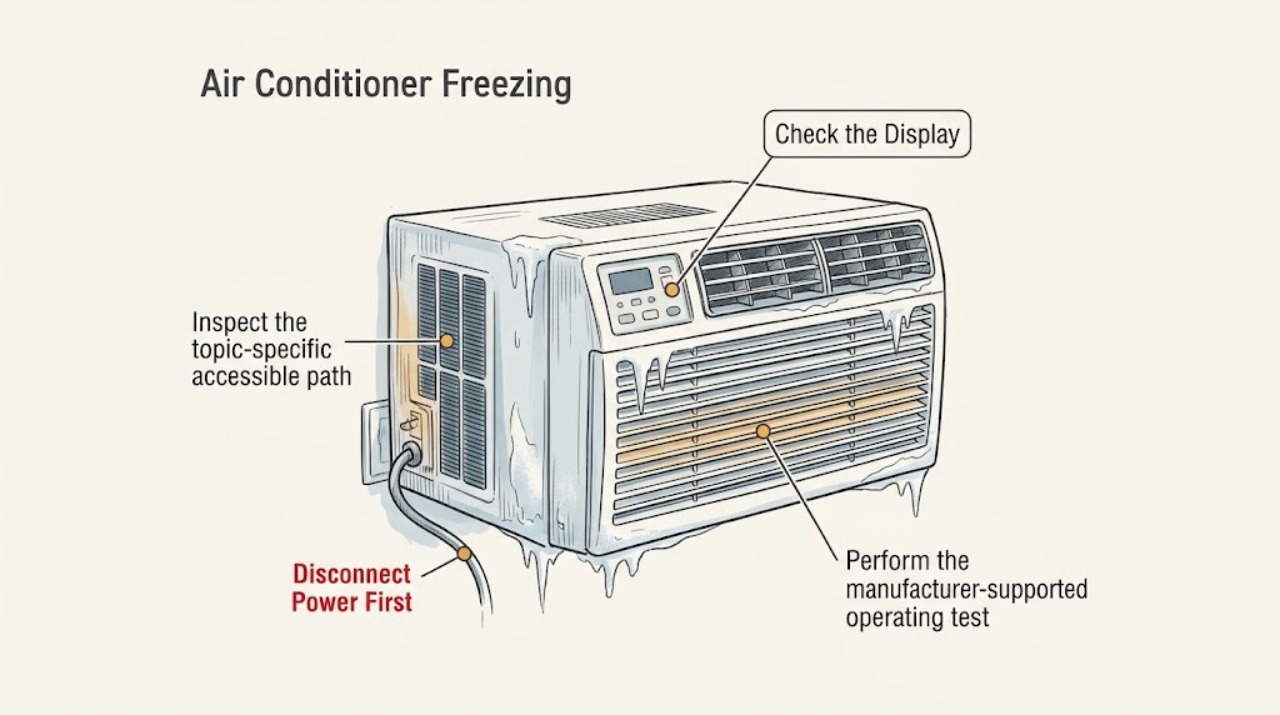
LG Air Conditioner Freezing: Find the Ice Location Before Resetting
First identify where the ice is and which mode is running. Ice or frost behind the indoor front grille during cooling usually means airflow across the coil is restricted, so turn the unit off, let the ice melt, and clean only the model-approved filter before testing again.
-
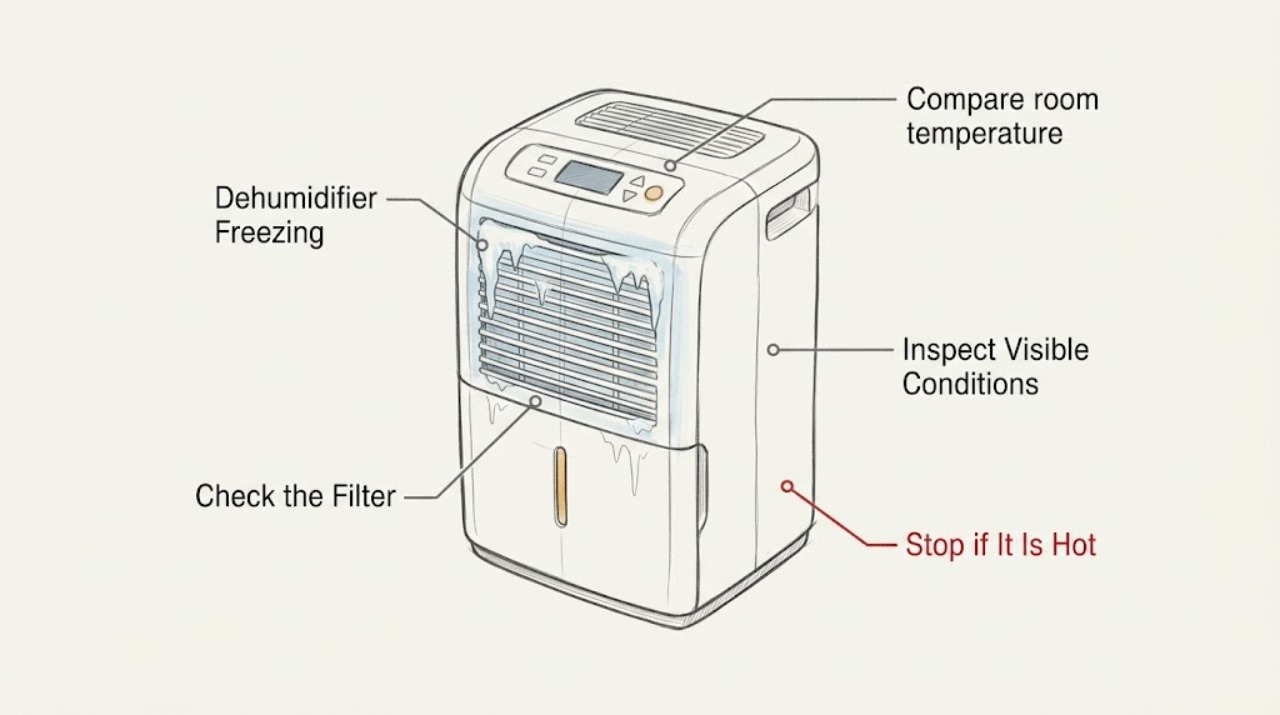
LG Dehumidifier Freezing: Safe Checks
An LG dehumidifier can frost when the room is too cold or airflow is restricted. Turn it off and unplug it before handling the bucket or filter, check the model's operating range, and let frost thaw naturally. Repeated freezing in suitable conditions needs service.
-
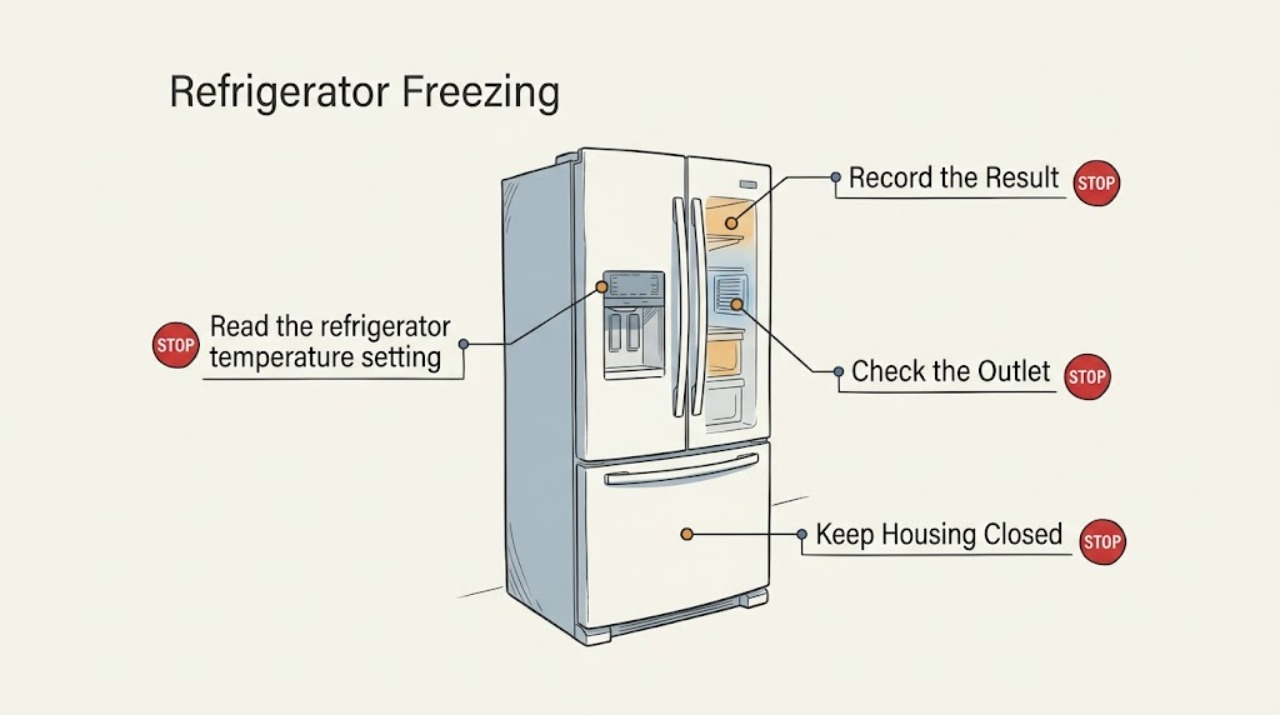
LG Refrigerator Freezing: Move Food from the Cold-Air Path
First identify whether food is freezing in the refrigerator compartment or only in a special drawer. Raise an overly cold refrigerator setting within the model's allowed range, move moisture-rich food away from the cold-air outlet, and clear the upper sensor area so airflow and temperature sensing are not blocked. Persistent freezing with a correct setup needs model-specific service.
-
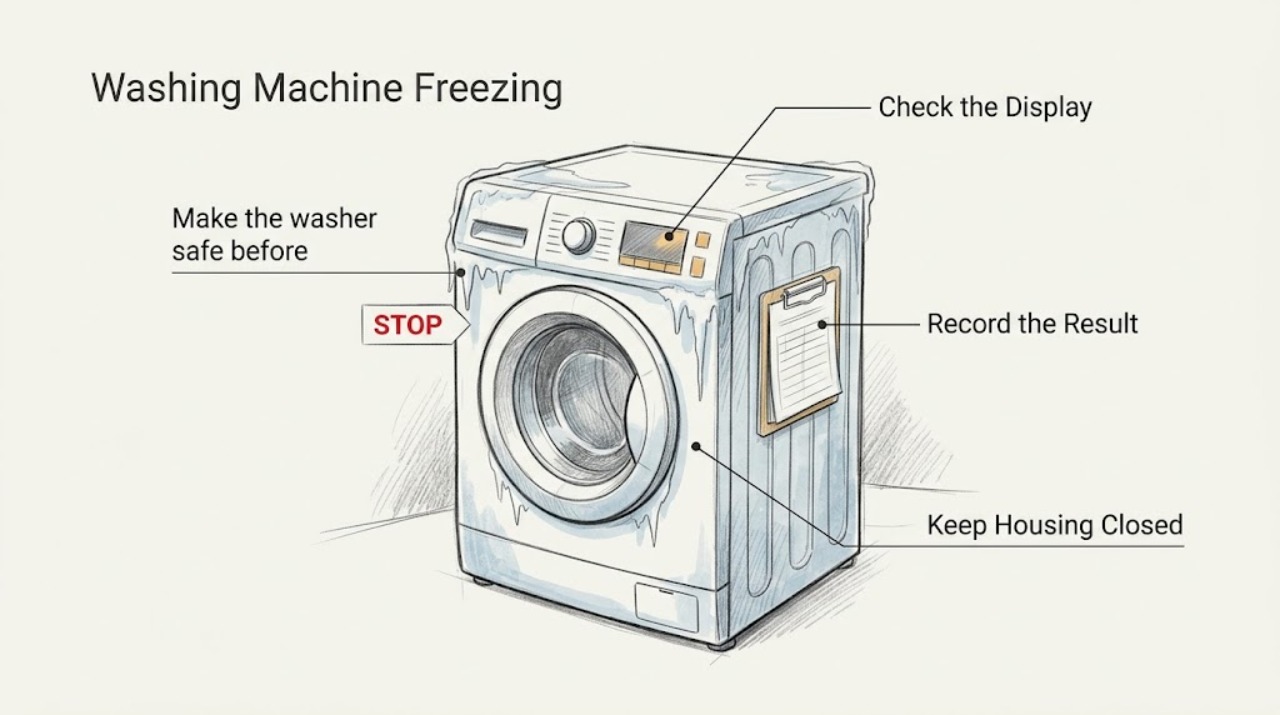
LG Washing Machine Freezing: Frozen Controls vs. Frozen Water Lines
“Freezing” on an LG washing machine can mean a frozen or unresponsive display, a control lock or paused cycle, or actual ice in the water-supply or drain path after exposure to below-freezing temperatures. First record what the display shows and whether the tub is failing to fill or drain.
-
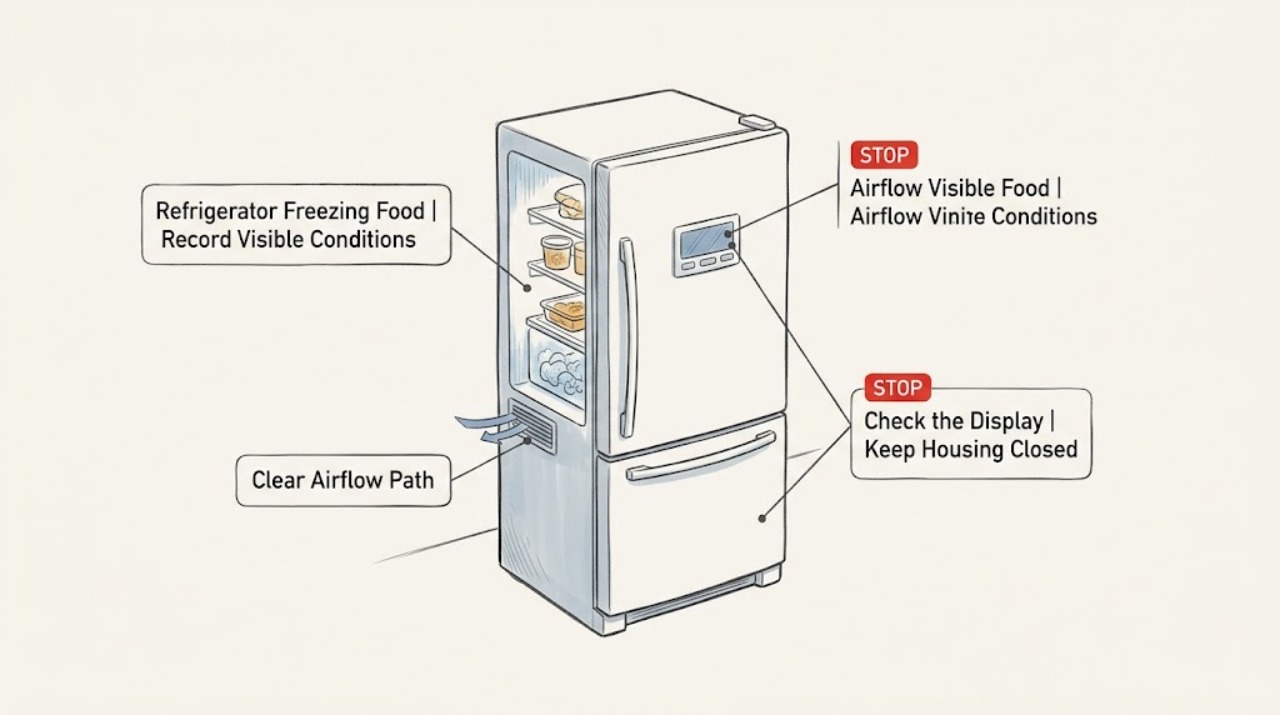
Liebherr Refrigerator Freezing Food: Check Settings and Airflow
If a Liebherr refrigerator is freezing food, first check the refrigerator temperature setting and whether SuperCool or another special function was activated. Then move food away from the rear wall and vents, and note whether the problem is limited to a BioFresh drawer or affects the whole compartment. If the setting is normal and food still freezes, contact Liebherr service with the model and location of the cold spots.
-
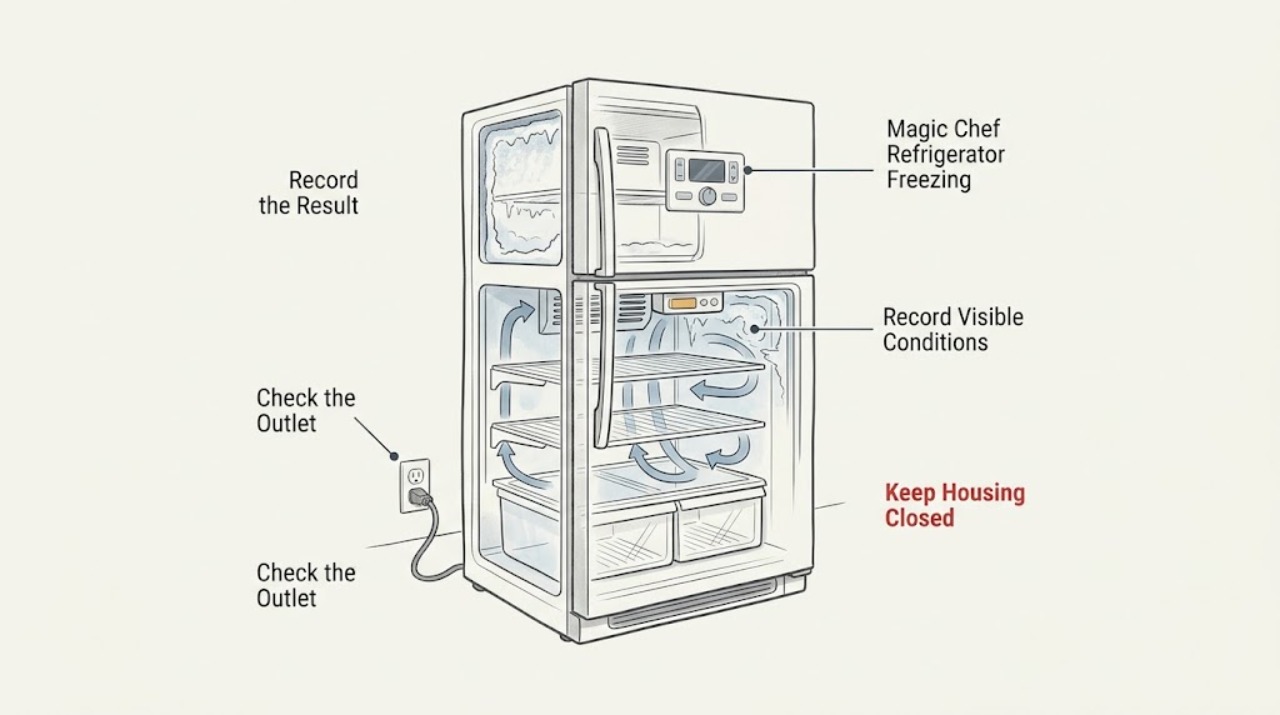
Magic Chef Refrigerator Freezing: Locate the Cold Spot Before Changing Parts
Measure where the Magic Chef refrigerator is freezing and compare that reading with the control setting before replacing anything. Move food away from vents and cold walls, check that the door seals, and observe whether the problem is one shelf or the whole compartment. If temperatures remain abnormal, frost covers the air path, or food safety is uncertain, protect the food and arrange qualified service.
-
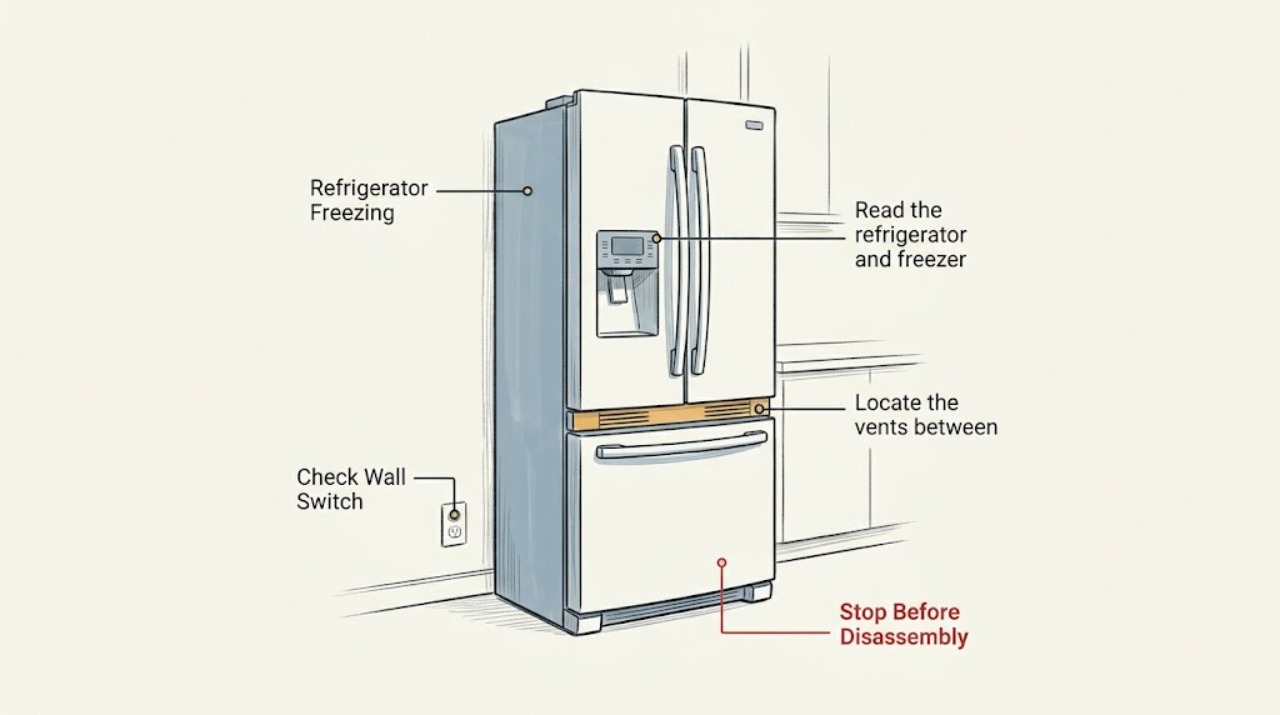
Maytag Refrigerator Freezing: Check Airflow and Temperature Settings
If food in a Maytag refrigerator is freezing, first confirm the refrigerator and freezer settings, then move food away from the cold-air vents. Maytag recommends about 37°F for the refrigerator and 0°F for the freezer, but the exact controls vary by model. If the ice maker is switched on without a water supply, turn it off according to the Owner's Manual. Make one change at a time and allow the temperature to stabilize; recurring freezing after these checks needs service.
-
Miele Refrigerator Freezing Food
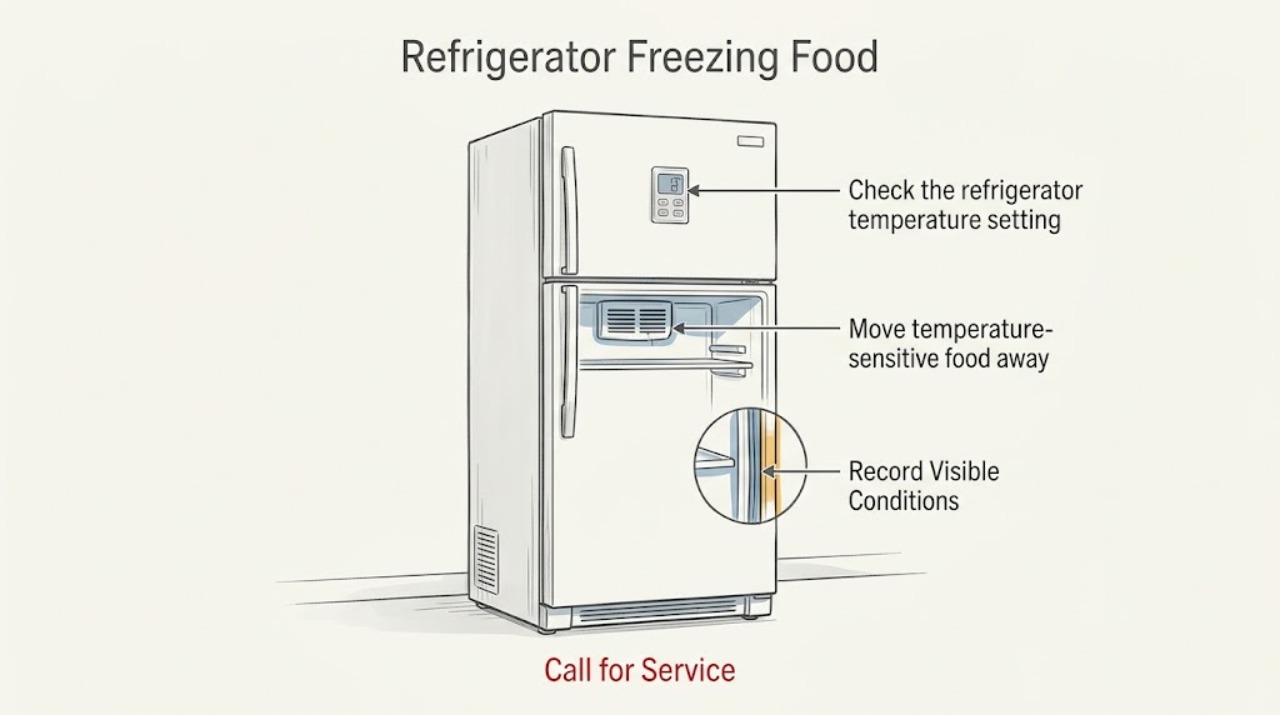
If food is freezing in a Miele refrigerator, first identify whether it is only in a PerfectFresh drawer or throughout the fridge zone. Check the temperature setting, storage position, blocked vents, and door seal before assuming a control fault. If food freezes again with correct settings and a sound seal, protect food and arrange Miele Service.
-
Monogram Refrigerator Freezing Food: Check the Fresh-Food Setting and Airflow
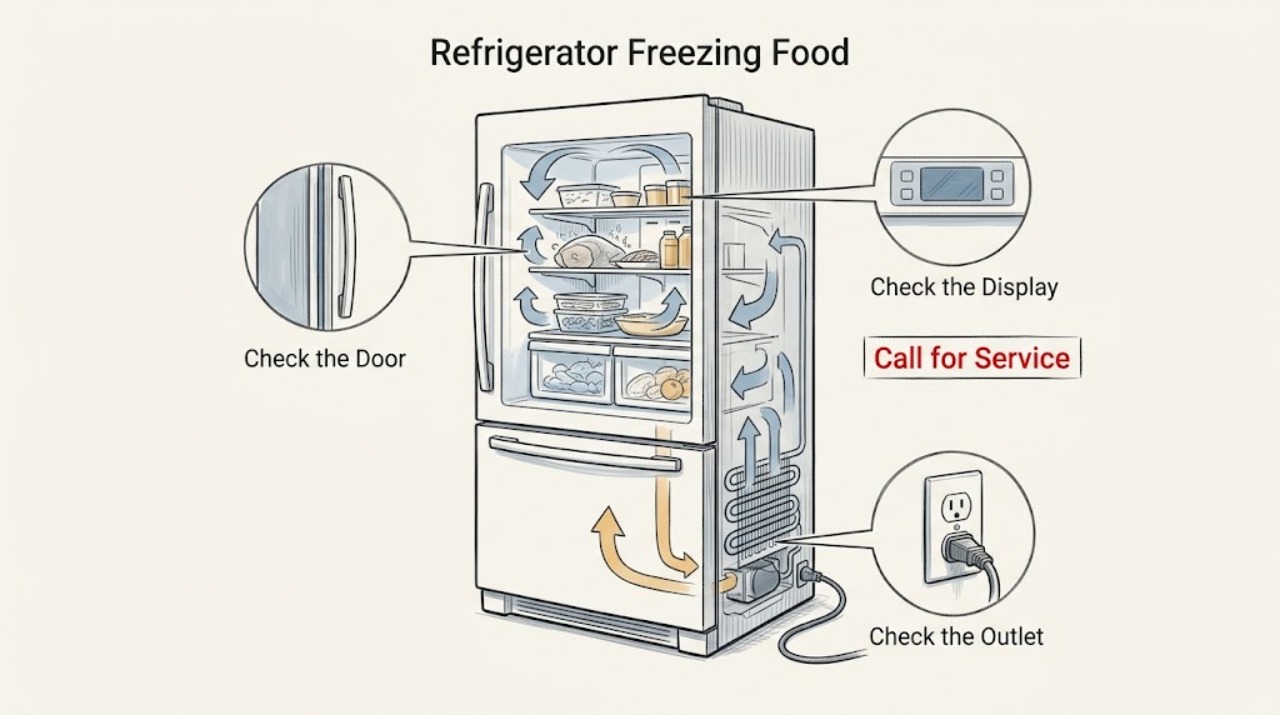
First identify which compartment and foods are freezing. Monogram's support says the fresh-food control may need to be checked and gives 37°F as a reference in its support guidance, but controls and cooling layouts vary by model. Confirm the setting, keep food away from direct cold-air outlets, and use the exact manual; persistent freezing after those checks needs service.
-
Refrigerator Freezing
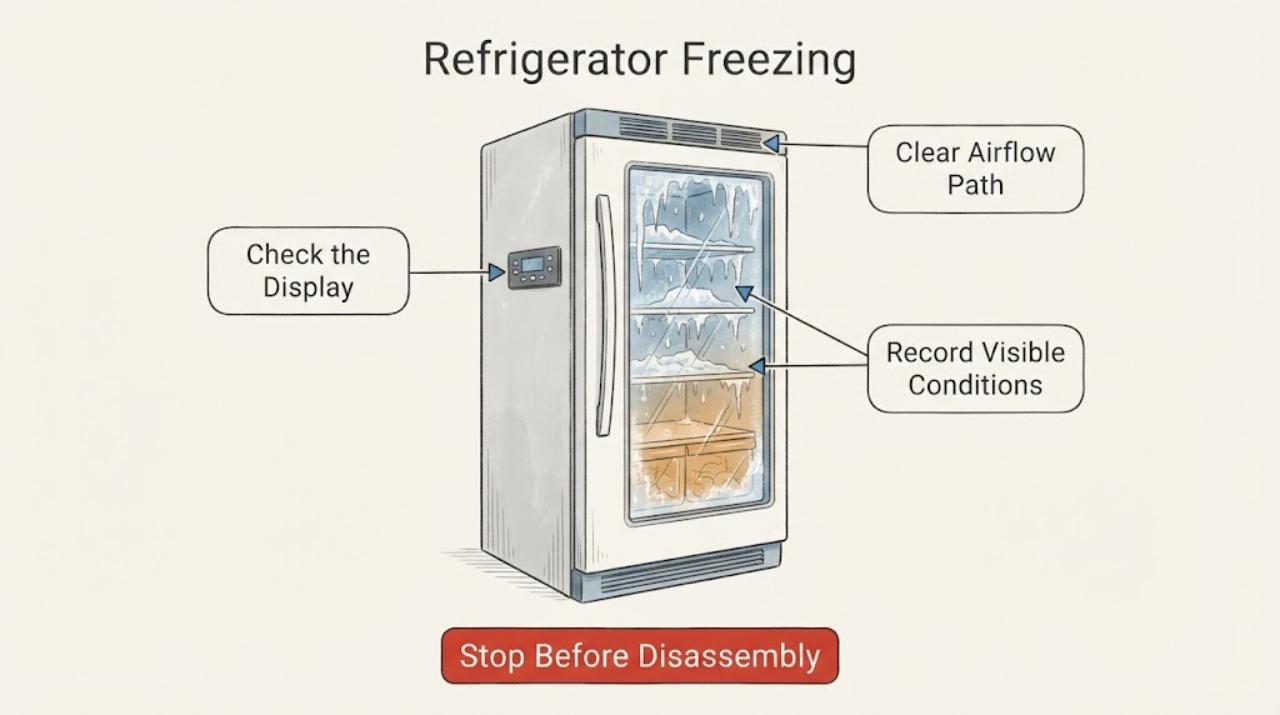
If food freezes in a refrigerator’s fresh-food section, check temperature settings and food placement before assuming a sealed-system fault. GE says cold air enters from the freezer, vent/damper areas can be coldest, and food load affects freezing. Move sensitive food away from vents and adjust only as the manual allows; persistent widespread freezing needs service.
-
Roper Refrigerator Freezing
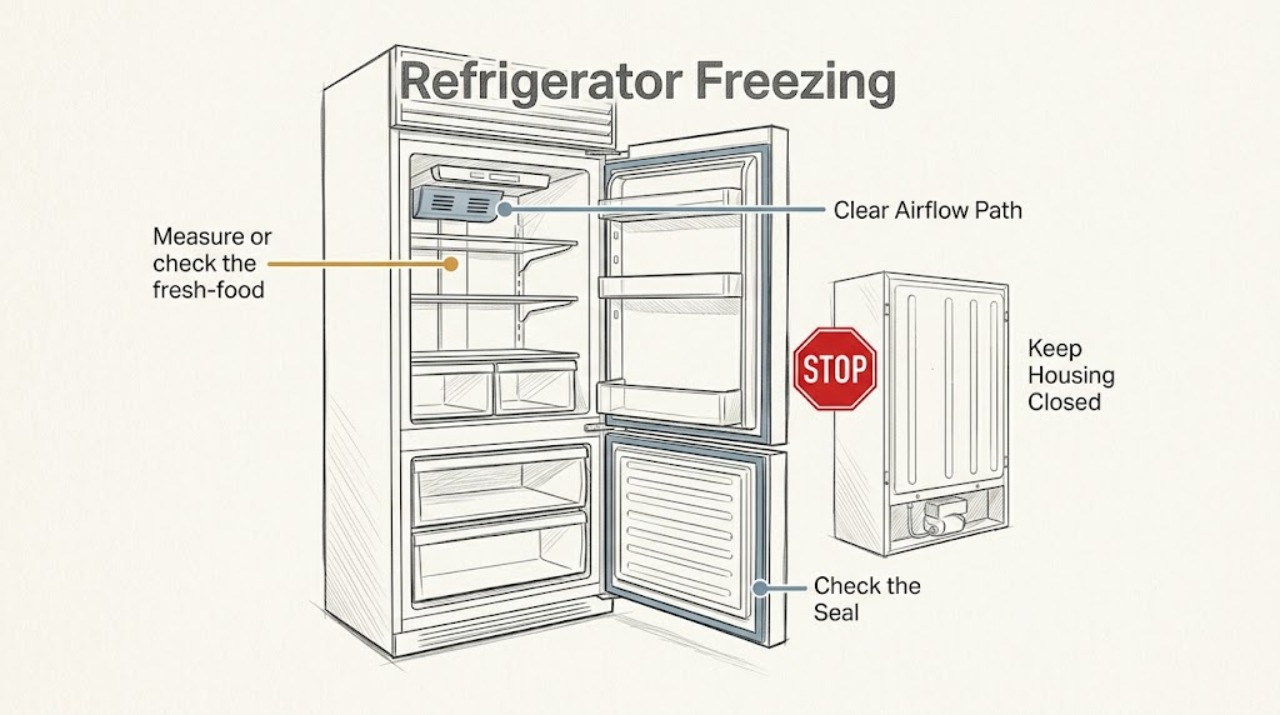
First confirm that the fresh-food control is not set too cold, then move food away from air vents and verify the door seals. A fresh-food target around 37–40°F is typical manufacturer guidance; wait at least 24 hours after an adjustment. Persistent freezing, heavy frost, or a control that does not respond needs service.
-
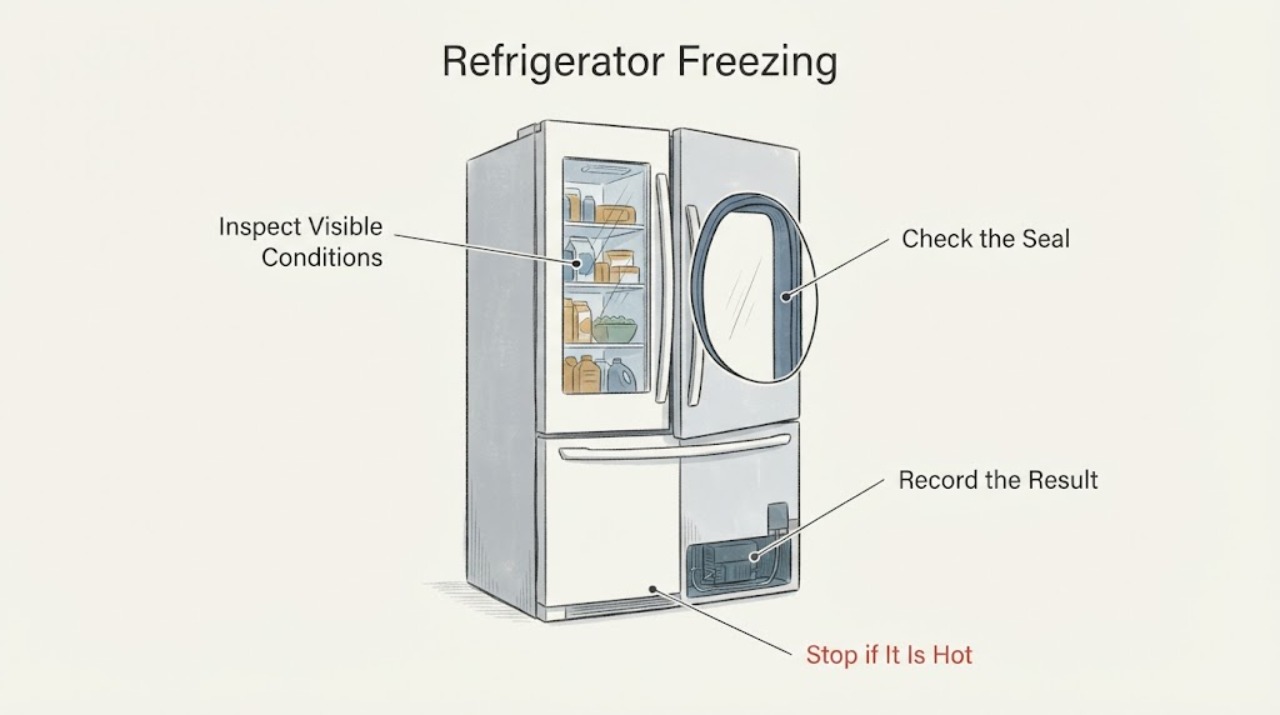
Samsung Refrigerator Freezing
A Samsung refrigerator that is freezing food needs a temperature, airflow, door-seal, and compartment check before a part is named. Confirm the setting and food placement, inspect the gasket and vents, and monitor after a model-correct adjustment; persistent freezing with an error or damaged seal needs service.
-
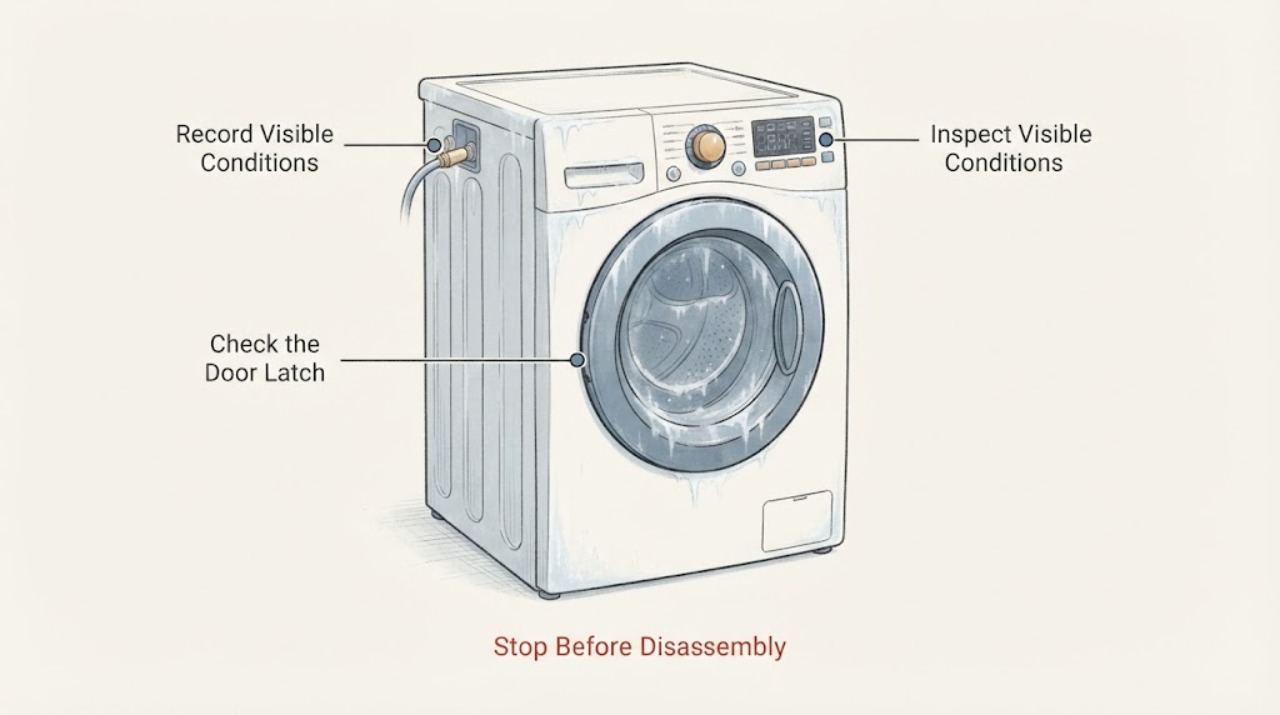
Samsung Washing Machine Freezing: Safe Checks Before Service
“Freezing” can mean a Samsung washer is literally iced up in a cold room, or that its display or cycle has stopped responding. First note whether the display is dark, whether the Child Lock icon is lit, whether water remains, and whether a code or blinking light is shown.
-
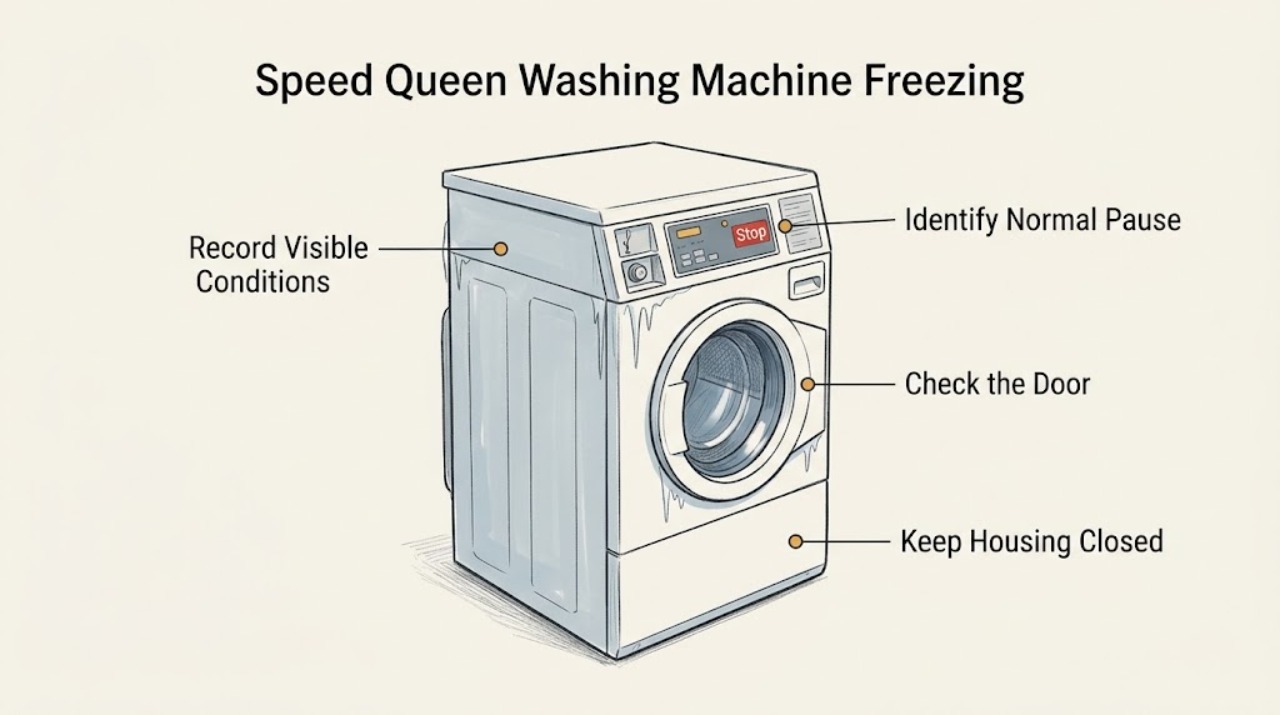
Speed Queen Washing Machine Freezing Mid-Cycle: Safe Checks Before Service
If a Speed Queen washing machine seems to freeze, first decide whether it is in a normal pause or has stopped making progress. Speed Queen guides describe brief pauses during tumbling and before spin as normal, while an unbalanced load can stop a spin and then restart it.
-
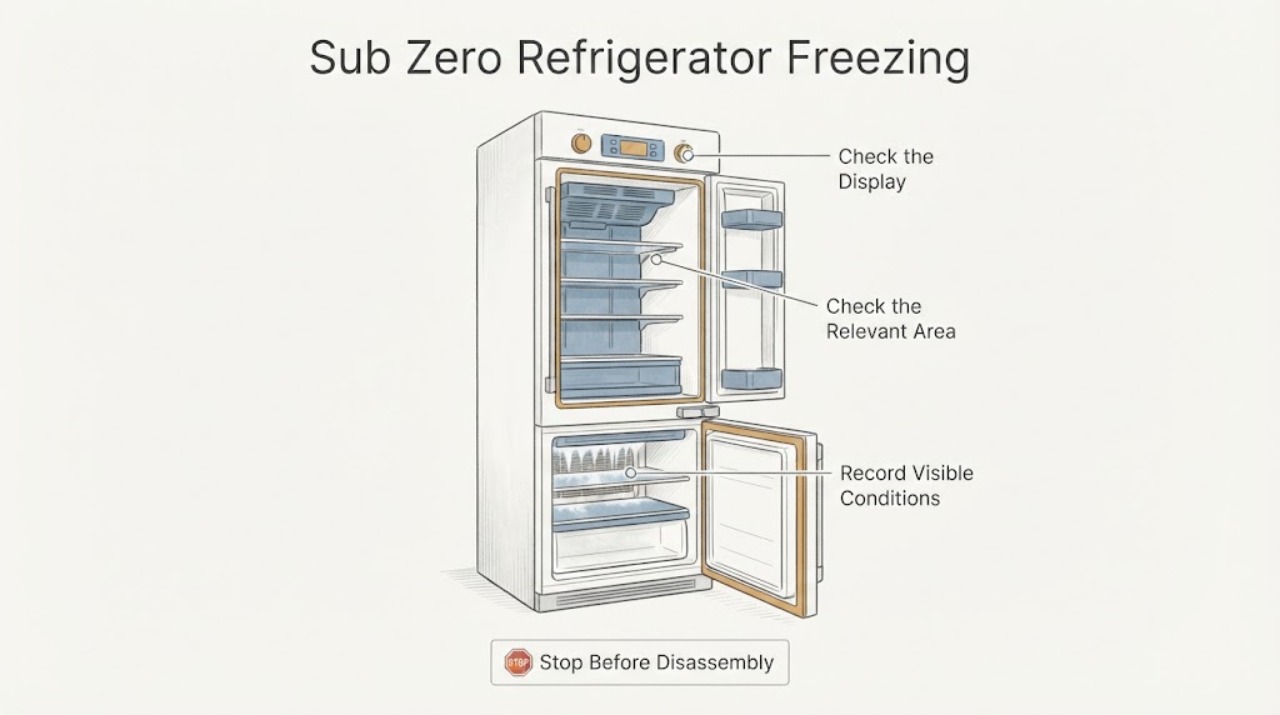
Sub Zero Refrigerator Freezing
First identify whether all refrigerator food is freezing, only the crisper drawer is affected, or there is ice or frost on the back wall. Sub-Zero's general guidance is to check error messages and the temperature setting, use the model-appropriate control range, clean the condenser if it is overdue, and verify the light diffuser is installed.
-
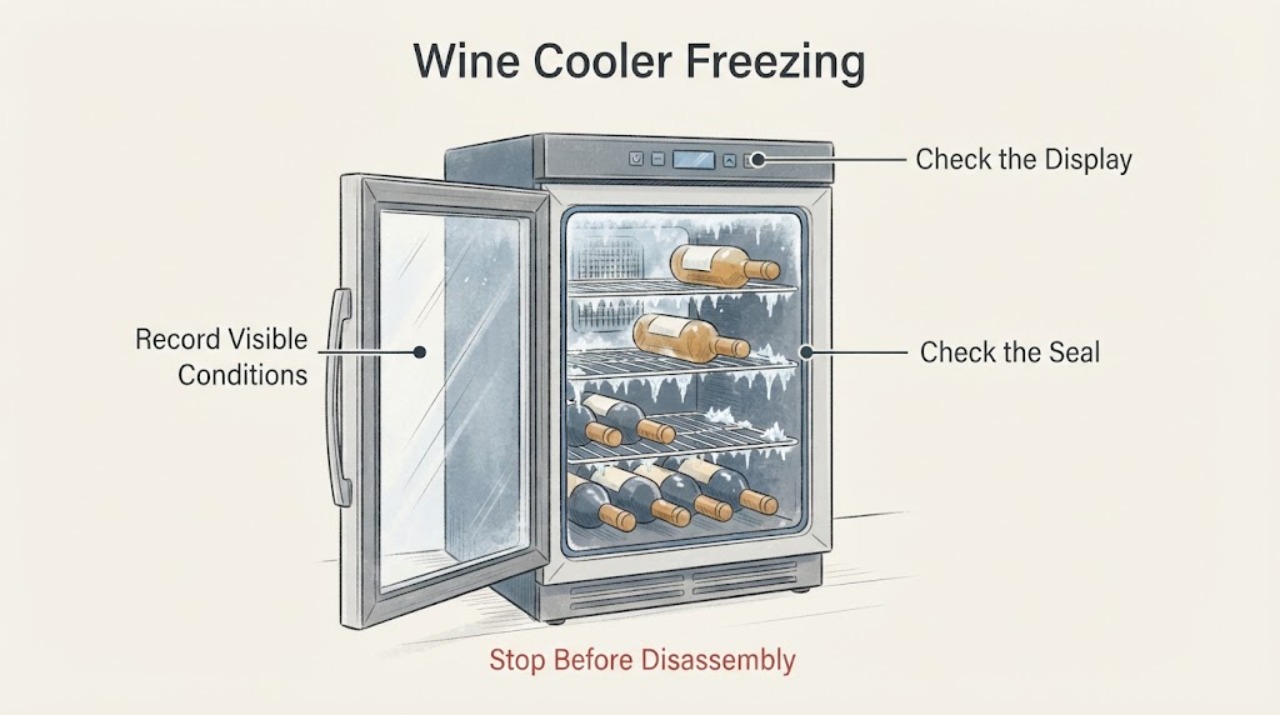
Sub-Zero Wine Cooler Freezing: Safe Checks and Service Boundaries
For a Sub-Zero wine cooler that is freezing or has frost buildup, record the model, serial number, zone, setting, and temperature. Sub-Zero says wine-storage ranges vary by series, model, serial number, and age; persistent symptoms need service.
-
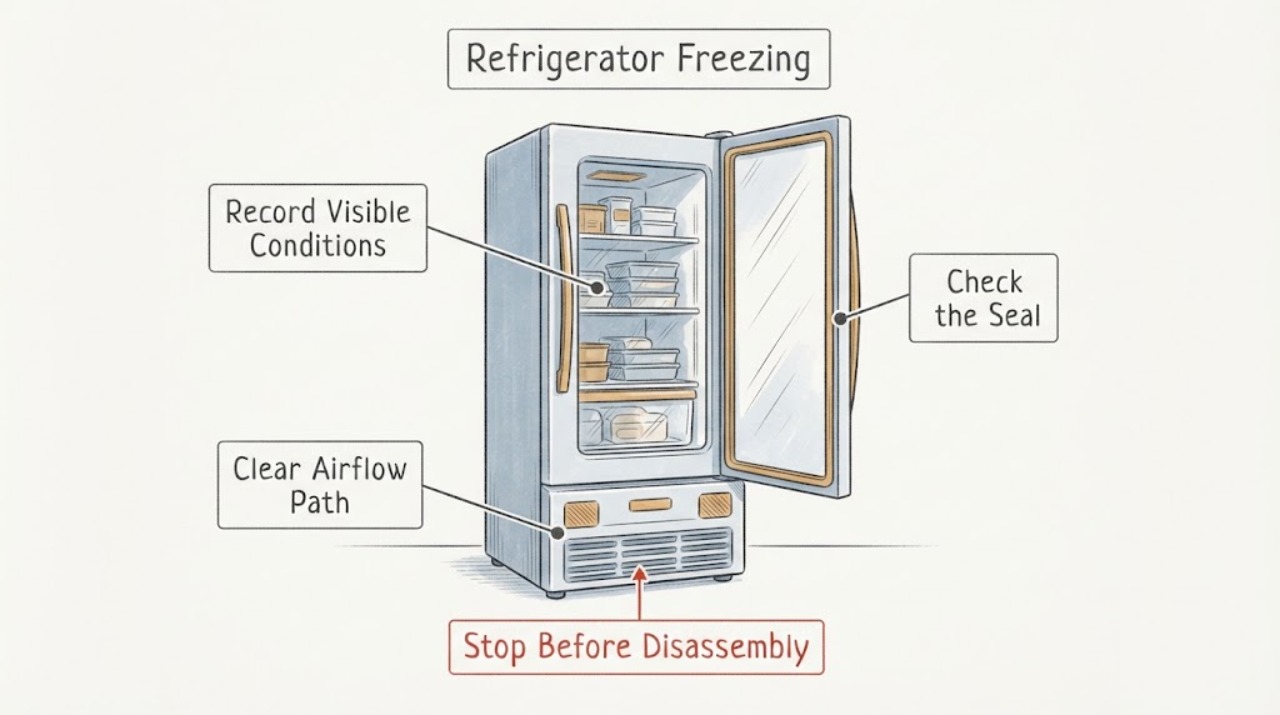
Thermador Refrigerator Freezing
For a Thermador refrigerator that is freezing food, record which compartment and location are affected, check the displayed setting and airflow obstruction, and use the exact model manual before changing controls. If freezing continues with a normal setting or food is unsafe, arrange qualified service.
-
Viking Refrigerator Freezing Food: Adjust the Correct Compartment and Airflow
If a Viking refrigerator is freezing food, first identify whether the refrigerator compartment, a drawer, or the freezer is affected. Check that compartment's control, clear the rear air grille and food from vents, inspect the door gasket, and clean accessible condenser coils as the model manual directs.
-
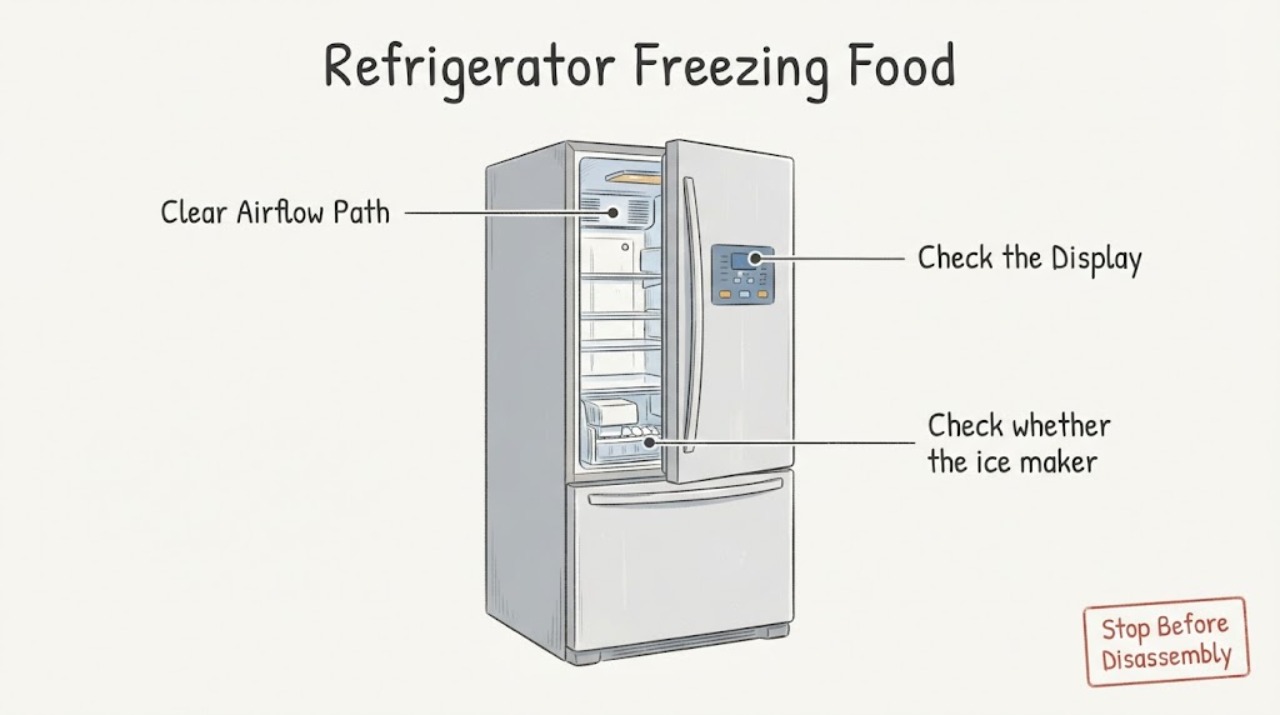
Whirlpool Refrigerator Freezing Food: Check Controls and Airflow
If the Whirlpool refrigerator compartment is freezing food, record the shelf and temperature, then adjust the freezer or refrigerator controls one step using the model manual and wait for stabilization. Clear packages from vents, check that the cabinet is level, and verify an unused ice maker is not left on without a water supply. If freezing persists on the warmest setting or affects the whole cabinet, arrange service for sensor or damper diagnosis.
-
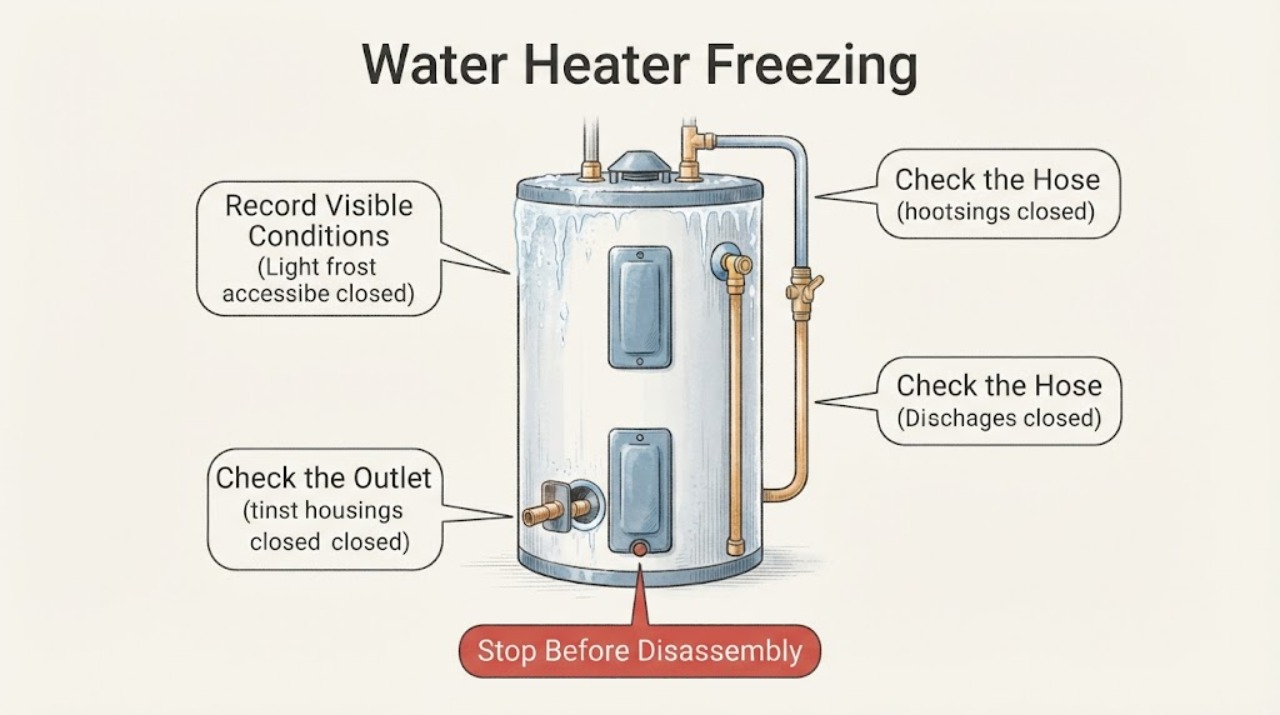
Whirlpool Water Heater Freezing: Protect the Tank and Pipes Safely
A Whirlpool water heater normally stores water in a tank, so “freezing” usually means the tank or connected pipes are exposed to freezing conditions while the heater is shut down or unprotected. Identify whether the unit is electric or gas and whether only a supply pipe is frozen. If the heater was drained, do not restore power until it is completely full and air has been purged; use the exact model manual or a qualified technician for draining and restart.
-
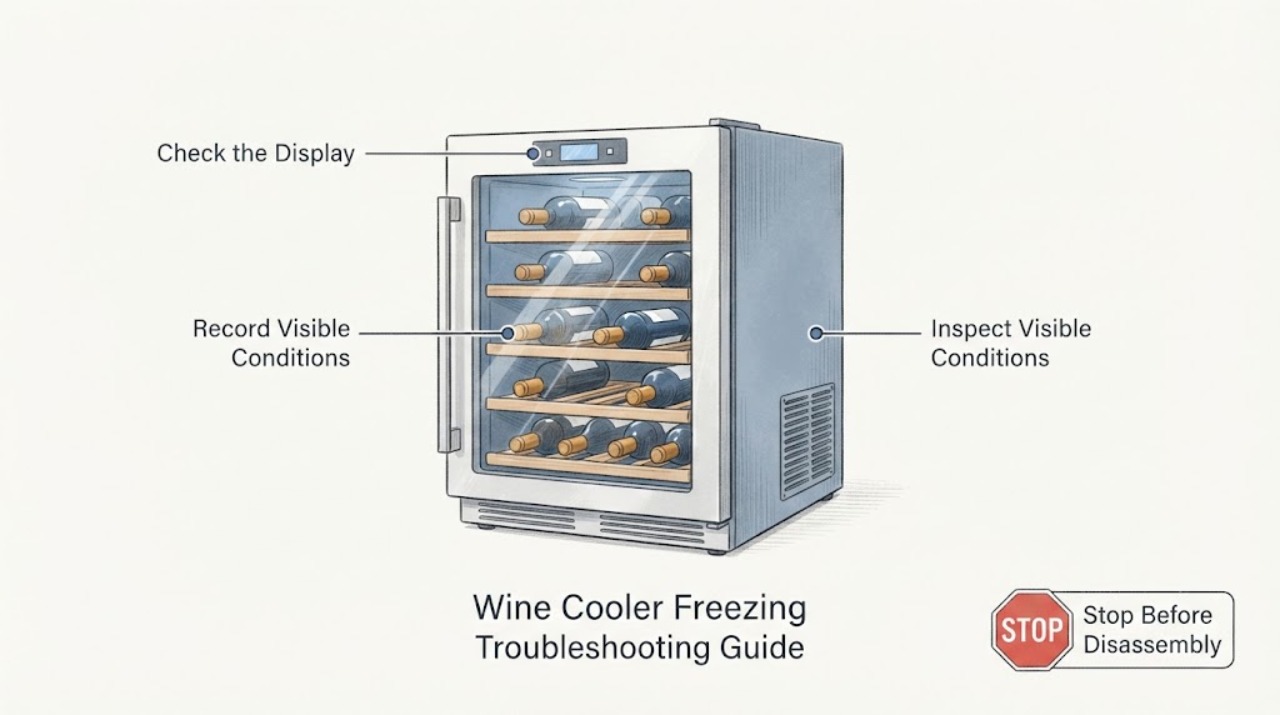
Wine Cooler Freezing Troubleshooting Guide
If a wine cooler is freezing, first measure the cabinet temperature and identify whether only bottles beside the evaporator or the whole cabinet is too cold. Check the documented temperature setting, door seal, and bottle spacing; if frost is present, use the model's safe defrost procedure and never chip the evaporator. A setting that will not hold, a display mismatch, or rapidly returning ice needs qualified refrigeration service.
-
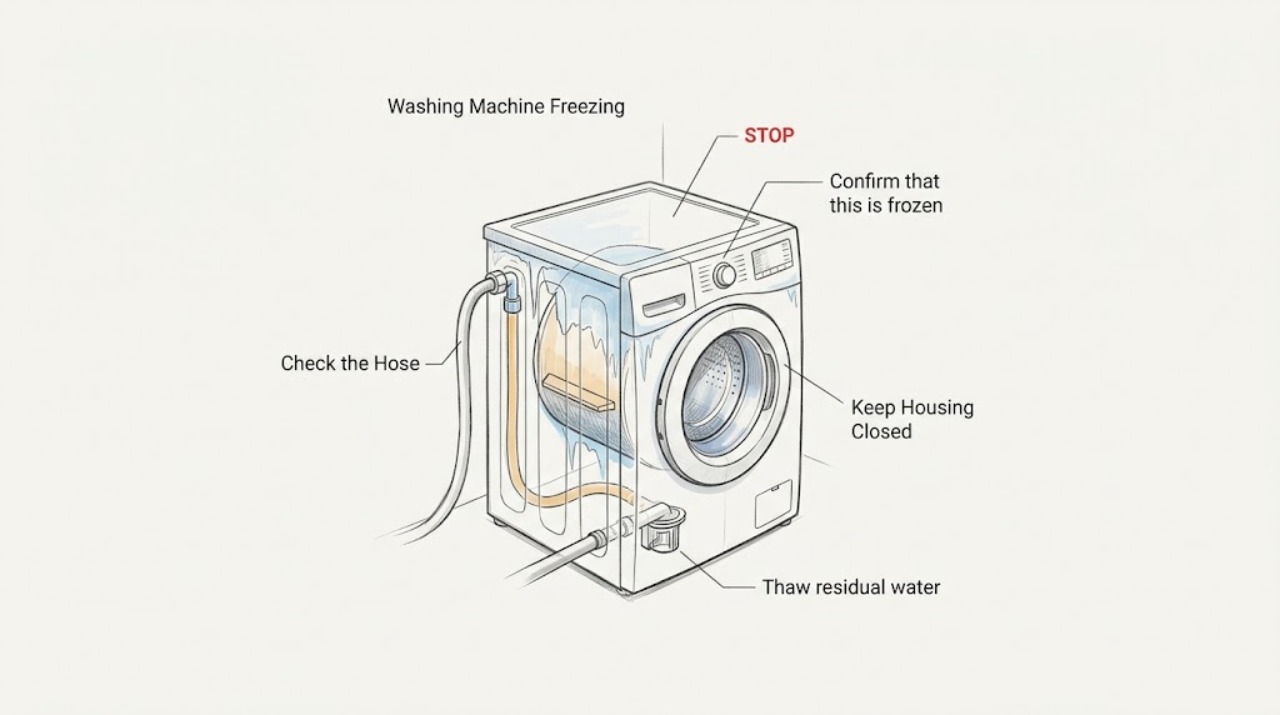
Zanussi Washing Machine Freezing: Safe Thawing and Prevention
If a Zanussi washing machine has actually frozen after being left in a below-zero area, stop the programme, disconnect power, close the water tap, and do not force a hose or use sharp tools.