
On this page
Start here
Quick answer
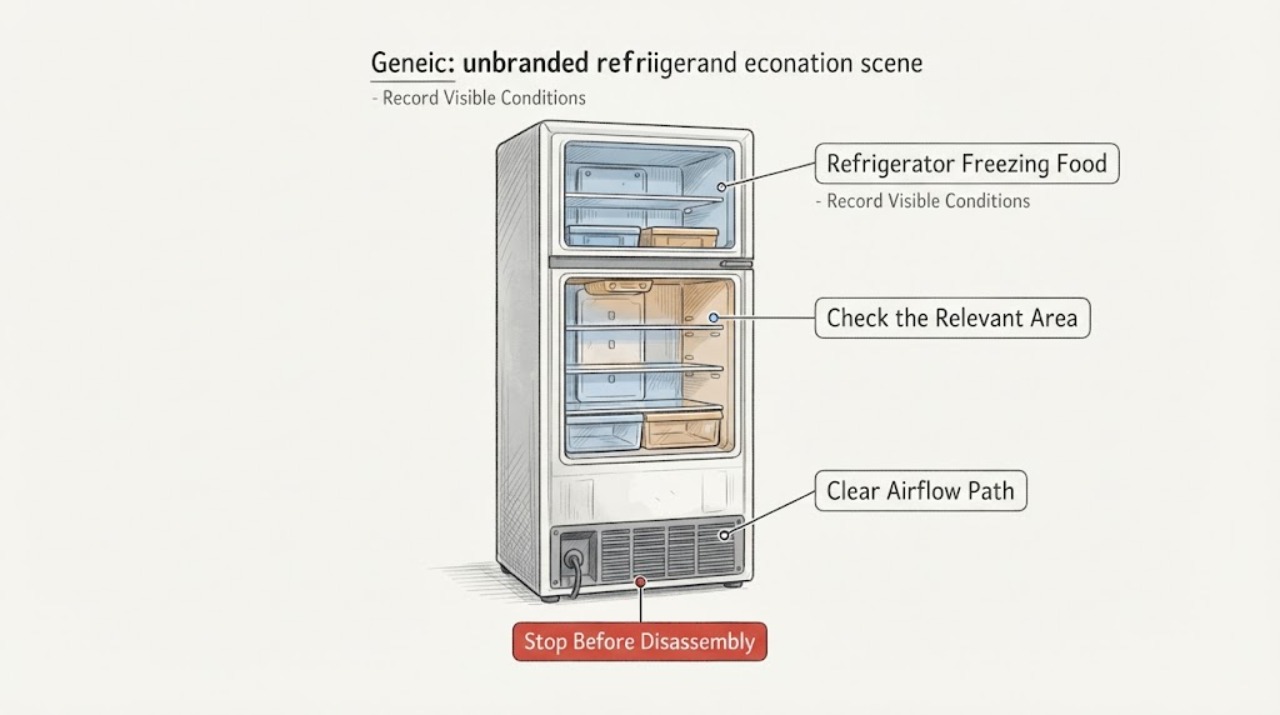
If a Viking refrigerator is freezing food, first identify whether the refrigerator compartment, a drawer, or the freezer is affected. Check that compartment's control, clear the rear air grille and food from vents, inspect the door gasket, and clean accessible condenser coils as the model manual directs. A compressor that is quiet during a documented defrost period can be normal; food that freezes after the correct control and airflow checks points to a sensor, damper, or control diagnosis. Move vulnerable food and arrange service if temperatures remain unsafe or the cabinet cannot regulate.
Work through in order
Diagnostic checks
Use only checks that match the exact appliance or system and its official guide.
-
Check 1
Record the affected compartment, shelf, setpoint, and food pattern. Move produce, medicines, or other temperature-sensitive items away from the cold spot.
Expected result: Only one vent/shelf freezes, the whole refrigerator section freezes, or the freezer is also abnormal.
Next step: Continue with the matching compartment control and airflow checks.
Why this matters
Why: A local pattern favors airflow or damper placement; whole-compartment freezing favors a control or sensor issue; both compartments abnormal suggests broader regulation.
-
Check 2
Select the refrigerator compartment control—not the freezer control—and adjust it only in the direction and increments specified by the exact Viking manual. Record the original setting.
Expected result: Freezing stops after stabilization, the wrong control had been changed, or the control will not respond.
Next step: Allow the cabinet to stabilize per the manual; request service if the control is unresponsive or freezing persists.
Why this matters
Why: A setpoint set too cold can freeze refrigerator food. A nonresponsive control shifts attention to the user interface or control system.
-
Check 3
Inspect rear air grilles and internal vents under or behind drawers. Move food packages that block airflow and avoid pressing food against the rear wall; do not remove an internal panel.
Expected result: A grille/vent was blocked, or airflow is clear while freezing continues.
Next step: Monitor one normal cooling period after rearranging; stop repeated adjustments if the pattern returns.
Why this matters
Why: Blocked air distribution can create a local cold spot. Clear airflow with recurrent freezing points toward a damper, sensor, or controller.
-
Check 4
Inspect the door gasket and closure for an obstruction or gap, then clean accessible condenser coils only as the manual directs and with power disconnected safely.
Expected result: The door does not seal or coils are visibly dirty, or both are clean and sealed.
Next step: Correct the accessible seal/coil condition and monitor; do not pry the gasket or access sealed refrigeration parts.
Why this matters
Why: A poor seal or restricted condenser can upset temperature regulation. A clean, sealed cabinet with freezing remains needs diagnosis.
-
Check 5
If the freezer control and lights are on but the compressor is quiet, note the time and compare with the manual's documented defrost interval rather than forcing a restart.
Expected result: The compressor resumes after the documented interval, or the refrigerator section continues freezing while no regulation returns.
Next step: Move food to safe storage and contact Viking service with compartment temperatures and timing.
Why this matters
Why: A temporary defrost pause can be normal. Persistent refrigerator freezing after that interval is a separate temperature-control symptom.
Use your observations
Decision map
Find the observation that best matches what you see, then follow the next safe action.
-
PATH 01Next step
What you see
Only one refrigerator shelf freezes and a vent or package was blocking airflow; the pattern improves after rearranging.
Do this next
Keep vents and rear grilles clear and monitor the shelf.
Why this path and its safety boundary
Why it matters: Local air distribution was more likely than a whole-cabinet control failure.
-
PATH 02Next step
What you see
The refrigerator control was set too cold and food stabilizes after the documented adjustment.
Do this next
Keep the original setting record and confirm stable temperatures before restocking.
Why this path and its safety boundary
Why it matters: Control setting was the leading cause.
-
PATH 03Next step
What you see
The correct control, clear airflow, clean coils, and door seal do not stop refrigerator-compartment freezing.
Do this next
Arrange Viking diagnosis; do not order a sensor by symptom alone.
Why this path and its safety boundary
Why it matters: A damper, thermistor, controller, or related refrigeration fault is more likely.
-
PATH 04Next step
What you see
The freezer compressor is quiet only during the manual's defrost interval and then restarts.
Do this next
Continue the compartment-specific checks and monitor food temperature.
Why this path and its safety boundary
Why it matters: That pause can be normal and does not explain persistent refrigerator freezing by itself.
Helpful context
Understand the symptom
Freezing in the refrigerator compartment is different from a freezer compressor pause. Record which compartment and shelf are affected, the displayed setpoint, and whether the freezer remains normal before changing anything.
Viking's refrigeration line includes built-in, integrated, freestanding, and undercounter products. Use the model manual for grille locations and control procedures; do not assume a bottom-freezer layout.
Only after diagnosis
Potential parts
- temperature sensor or damper component
Consider only after correct control, airflow, seal, and coil checks and a technician confirms the component.
Viking refrigeration architecture varies by model; freezing alone does not establish fit. - door gasket
Consider only when the exact model gasket has a confirmed gap or damage.
Measure and verify the complete model before ordering.
When checks do not resolve it
Need a professional?
Contact Viking service when refrigerator-compartment freezing continues after the compartment control, airflow, coil, and seal checks; when controls do not respond; when both compartments behave abnormally; or when food cannot be kept safely. Provide model, compartment, setpoint, shelf pattern, and temperature readings.
Common questions
FAQ
Should I turn down the freezer to stop refrigerator food freezing?
Start with the refrigerator compartment control identified in the exact manual. Changing the freezer control can miss a refrigerator-compartment control or airflow problem.
Is a quiet Viking compressor always a failure?
No. Viking's troubleshooting notes a defrost period during which the compressor may not run. Persistent temperature problems after it should be serviced.
Can I replace the thermostat first?
No. Verify compartment, control, vents, gasket, and condenser first; freezing does not identify a compatible thermostat or sensor.
Read the exact guide
Official sources
- Support CenterViking Range · Official Viking support center; service availability varies by region.
- Viking Use & Care ManualViking Range · Official Viking refrigerator manual; exact layout and control ranges vary by model.
- Refrigeration DocumentationViking Range · Official Viking documentation archive covering built-in, integrated, and freestanding refrigeration.
Community feedback
Share a repair observation
Share a plain-text repair observation. Accepted observations are published automatically; this page may take a moment to update.