
On this page
Start here
Quick answer
KitchenAid's opened gas-dryer manual treats freezing as a water-line risk specifically for Steam Models: residual water in the inlet hose can freeze and damage the dryer. If your KitchenAid dryer has a steam water hose and has been exposed to freezing weather, unplug it, close the water faucet, and do not force an iced connection or power the dryer while it is wet. Winterize by disconnecting and draining the inlet hose, then inspect it for a bulge, kink, cut, wear, or leak before reconnecting it. Keep the dryer in the temperature range specified by the exact manual; the reviewed manual warns not to operate it below 45°F (7°C). If the hose or dryer is damaged, leaks after reconnection, or the symptom returns, leave it disconnected and arrange qualified service. If there is no steam water hose and no physical ice, this source does not establish that the dryer itself is freezing; use the exact model's guidance for the actual symptom instead.
Work through in order
Diagnostic checks
Use only checks that match the exact appliance or system and its official guide.
-
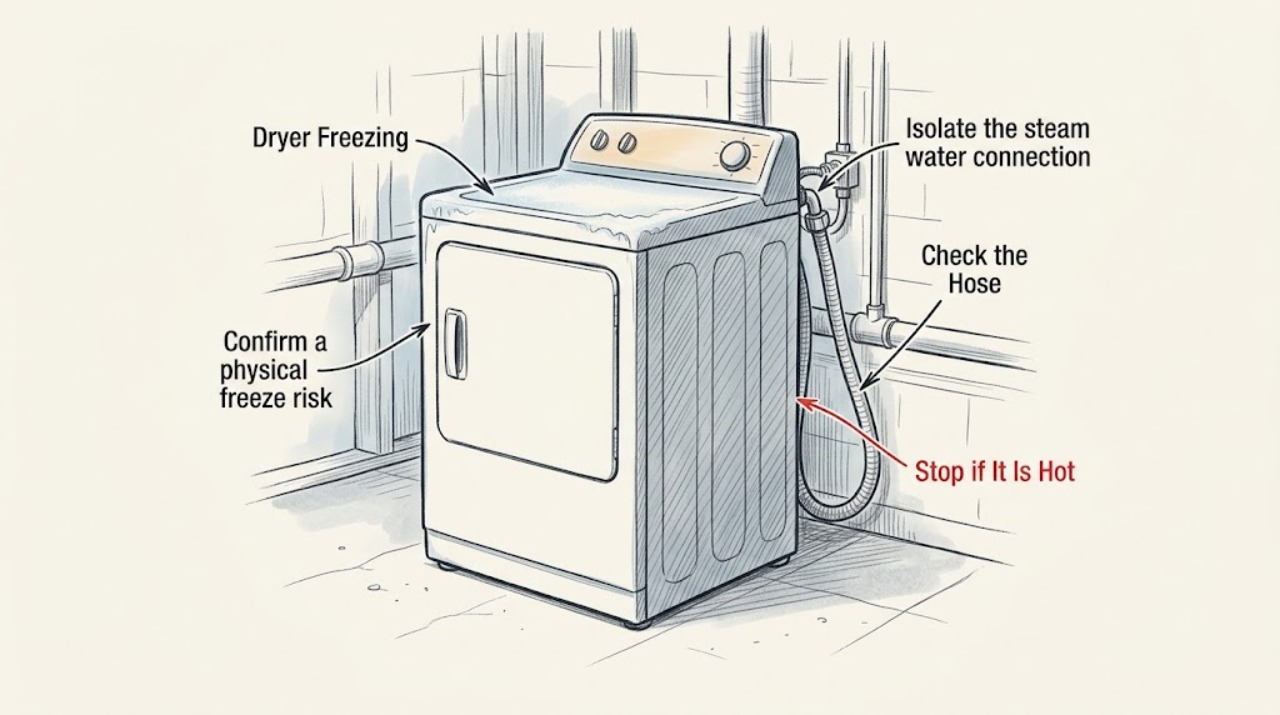
Confirm a physical freeze risk
From a dry, stable position, identify whether the KitchenAid dryer is a Steam Model with a water inlet hose, note whether it was in an unheated or freezing area, and inspect only the visible hose, faucet connection, floor, plug, and cabinet. Keep the dryer unplugged if ice, water, or dampness is present.
Expected result: A steam water hose is present and the area was exposed to freezing weather, with a rigid or iced connection; or there is no steam hose and no visible ice.
Next step: If a steam hose is present and the exterior is dry and intact, continue to the isolation and winterization check. If there is no steam hose or the symptom is only a stopped cycle, do not improvise a freeze repair; use the exact model manual for that symptom.
Stop if: Stop for water near the plug or controls, a cracked cabinet or hose, smoke, a burning odor, or any fitting that would require force.
Why this matters
Why: A steam hose plus freezing exposure supports the manual's freeze mechanism. No steam hose or no physical ice means this source does not establish a frozen dryer, so a stuck cycle or another symptom needs separate model-specific guidance.
-
Isolate the steam water connection
With the dryer unplugged, close the water faucet supplying the steam function. Do not turn the dryer on to test an iced or wet line, and do not use a flame, heat gun, boiling water, or sharp tool to free the connection.
Expected result: The faucet is closed and the visible connection is dry and undamaged; water is still present, the connection remains frozen, or the fitting will not move without force.
Next step: If the faucet is closed and the connection is safe to handle, continue by disconnecting and draining the inlet hose only as the exact model manual permits. If ice persists or force is needed, keep the faucet closed and request service.
Stop if: Keep the dryer disconnected and stop for a leak, damaged cord, wet controls, or a connection that cannot be separated without force.
Why this matters
Why: Power and water isolation limit the risk while residual water is being removed. Persistent ice, forced fittings, or uncontrolled water can conceal freeze damage and are not routine user checks.
-
Drain residual water from the inlet hose
For a Steam Model being stored or moved during freezing weather, disconnect the water inlet hose from the faucet and drain it, following the exact model instructions and keeping the hose ends contained. Do not open the dryer cabinet or dismantle an internal water circuit.
Expected result: Water drains and the hose becomes flexible and empty; or the hose remains blocked, will not drain, or shows a split, bulge, cut, worn area, or leak.
Next step: If the hose is empty and intact, leave the dryer unplugged while the area reaches a safe temperature and proceed to the inspection check. If it is damaged or remains blocked, keep the faucet closed and arrange qualified service before reconnecting water.
Stop if: Do not pressure-test a damaged hose, chip ice, or continue if water reaches electrical parts.
Why this matters
Why: An empty, intact hose removes the residual-water source identified by KitchenAid. A blocked or damaged hose may have freeze damage and cannot be cleared safely by forcing it.
-
Inspect before gradual reconnection
Once the dryer and its connection area are warm, dry, and safe to handle, inspect the visible inlet hose and fittings for bulges, kinks, cuts, wear, or leaks. Reconnect only according to the exact manual, open the faucet gradually, and observe the first steam-related test from a dry, attended position.
Expected result: The hose remains flexible and intact with no leak, and the dryer completes the model-approved test; or a leak, distortion, unusual smell, electrical trip, or failure returns.
Next step: If the test is normal, keep the dryer in a non-freezing environment and complete the prevention check. If any failure or leak appears, close the faucet, unplug the dryer, and arrange qualified service.
Stop if: Stop immediately for a leak, repeated breaker trip, smoke, burning odor, wet controls, or a need to remove panels or test live wiring.
Why this matters
Why: Normal reconnection with no leak supports a cleared, undamaged water path. A damaged hose or failure after thaw can indicate freeze damage or another model-specific fault; it does not identify a universal replacement part.
-
Prevent another freeze
Store and operate the dryer only within the temperature limits in the exact model manual. For the reviewed KitchenAid manual, do not operate below 45°F (7°C); before a freezing spell, unplug a Steam Model, close its water faucet, disconnect and drain the inlet hose, and keep the appliance protected from weather.
Expected result: The dryer remains in a protected, non-freezing location and the steam hose is drained before storage; or the appliance will remain exposed to freezing temperatures or the hose cannot be emptied safely.
Next step: Move the appliance to a suitable location when possible, or arrange model-specific winterization/service before the next freeze. Do not substitute a generic temperature or hose procedure for the exact manual.
Stop if: Stop and arrange service if prevention requires cabinet access, forced hose removal, or handling a damaged or leaking connection.
Why this matters
Why: A protected location and drained inlet remove the freeze exposure described by KitchenAid. Continued exposure or an undrainable line leaves the same damage risk in place.
Use your observations
Decision map
Find the observation that best matches what you see, then follow the next safe action.
-
PATH 01Next step
What you see
A Steam Model has a water inlet hose and was left in a freezing or unheated location; the visible hose or fitting is rigid or iced, but the plug, cabinet, and floor are dry and intact.
Do this next
Keep power unplugged and the faucet closed, drain the inlet hose using the exact manual's winterization sequence, and inspect for damage before reconnecting.
Why this path and its safety boundary
Why it matters: A frozen steam water line is more likely than an internal dryer fault.
-
PATH 02Next step
What you see
The dryer has no steam water hose, or there is no visible ice after a normal-temperature installation; the complaint is a stopped cycle, poor drying, or another non-freeze symptom.
Do this next
Do not add water or attempt a freeze thaw. Record the exact model and displayed symptom, then follow that model's troubleshooting guidance or arrange service if it persists.
Why this path and its safety boundary
Why it matters: The reviewed KitchenAid freezing guidance does not establish physical freezing for this configuration or symptom.
-
PATH 03Next step
What you see
After the area warms, the hose is split, bulged, kinked, cut, worn, or leaking, or the dryer trips power or behaves abnormally when water is restored.
Do this next
Close the faucet, unplug the dryer, keep it out of service, and arrange qualified KitchenAid or appliance service. Provide the model, exposure conditions, and photos or description of the damage.
Why this path and its safety boundary
Why it matters: Freeze-related hose or appliance damage is possible; the visible symptom does not identify a safe part replacement or internal cause.
-
PATH 04Next step
What you see
The Steam Model was winterized, the hose is flexible and undamaged, the connection remains dry during gradual restoration, and the model-approved test completes normally.
Do this next
Keep the dryer protected from freezing weather and repeat the exact manual's drain-and-storage steps before future cold exposure.
Why this path and its safety boundary
Why it matters: The visible steam water path is consistent with a safe return after prevention, although model-specific operating limits still apply.
Helpful context
Understand the symptom
First confirm that the dryer has a freeze-exposed steam water line
The KitchenAid manual reviewed here places its freezing warning under Special Instructions for Steam Models. That means the relevant mechanism is residual water in the steam inlet hose, not a generic claim that every gas or electric dryer can freeze. Check from a dry standing position for a water hose at the rear, a cold or unheated installation area, rigid or iced hose hardware, and any visible leak or crack. If the dryer has no steam water connection and no physical ice, do not treat a stopped cycle or a temperature complaint as proof of freezing; follow the exact model manual for that different symptom.
Keep power and water isolated until the line is safe
For a Steam Model exposed to freezing weather, unplug the dryer and close the water faucet before handling the inlet hose. Do not force a fitting, chip ice, use an open flame or heat gun, or energize an appliance that is wet around its controls or connections. The manual's winterization sequence is preventive and model-specific; if a connection will not release without force, allow qualified service to assess it.
Check the hose before returning the dryer to service
After the installation area is safely warm and dry, inspect the visible inlet hose and connections for bulges, kinks, cuts, wear, or leaks. Reconnect only according to the exact model instructions, restore the faucet gradually, and remain present for the first check. A dry, flexible, undamaged hose supports a normal return to service; a leak, crack, or repeated freezing exposure is a service condition rather than a reason to guess at an internal part.
Only after diagnosis
Potential parts
- steam water-inlet hose
Consider this category only if inspection after freezing exposure finds a bulge, kink, cut, wear, or leak; the symptom alone does not prove that the hose needs replacement.
Confirm the complete dryer model and the manufacturer's fit information before ordering; the reviewed manual does not establish a universal hose fit.
When checks do not resolve it
Need a professional?
Arrange qualified KitchenAid or appliance service when the inlet hose or connection is cracked, distorted, or leaking; when water reaches electrical parts; when the dryer trips power, smells burned, or behaves abnormally after the area warms; or when the steam line remains frozen or cannot be disconnected without force. Keep the faucet closed and the dryer unplugged, and provide the exact model, cold-exposure conditions, where ice or damage was seen, and what happened during the first safe reconnection attempt.
Common questions
FAQ
Can a KitchenAid dryer really freeze?
The opened KitchenAid manual specifically warns that residual water can freeze and damage Steam Models with a water inlet hose. It does not establish the same mechanism for every non-steam dryer, so confirm the water connection and physical ice before using freeze-specific steps.
What should I do before handling a frozen steam hose?
Unplug the dryer and close the water faucet. Do not force the fitting, chip ice, use an open flame or heat gun, or power a wet appliance. If the connection remains stuck or damaged, keep it isolated and arrange service.
How do I prevent a KitchenAid Steam Model from freezing in storage?
Follow the exact model manual: protect the dryer from freezing conditions, unplug it, shut off the water faucet, disconnect and drain the water inlet hose, and inspect the hose before putting the appliance back into service.
What if my KitchenAid dryer has no steam hose?
Do not assume a stopped cycle or poor drying is a freeze fault. With no steam water connection and no physical ice, the reviewed freezing guidance does not apply; use the exact model manual for the displayed symptom or arrange service if it continues.
Read the exact guide
Official sources
- GAS DRYER OWNER’S MANUALKitchenAid · Directly supports the reviewed manual's Special Instructions for Steam Models, water-inlet hose winterization, hose-damage inspection, weather exposure warning, and minimum operating-temperature guidance. Apply model-specific steps only after checking the reader's exact manual.
Community feedback
Share a repair observation
Share a plain-text repair observation. Accepted observations are published automatically; this page may take a moment to update.