
On this page
Start here
Quick answer
Measure where the Magic Chef refrigerator is freezing and compare that reading with the control setting before replacing anything. Move food away from vents and cold walls, check that the door seals, and observe whether the problem is one shelf or the whole compartment. If temperatures remain abnormal, frost covers the air path, or food safety is uncertain, protect the food and arrange qualified service.
Before you begin
Safety first
- Do not remove sealed-system covers, pierce ice, or alter controls beyond the exact owner manual.
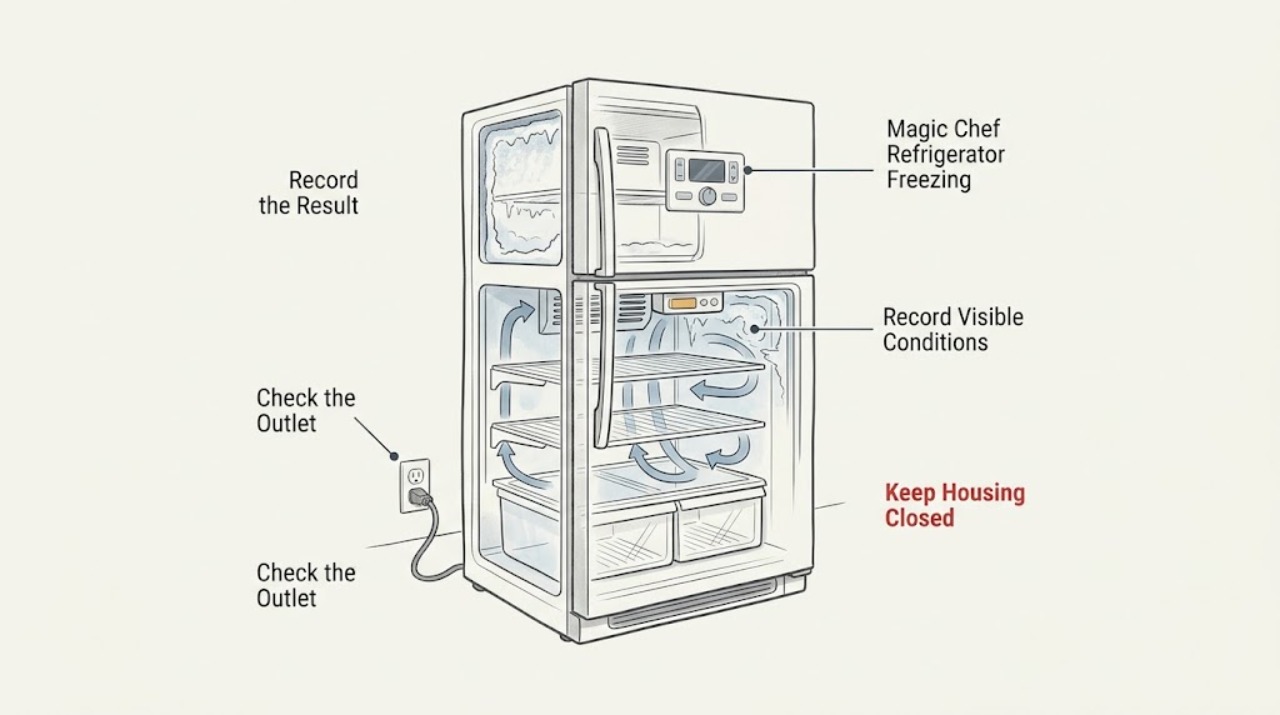
Work through in order
Diagnostic checks
Use only checks that match the exact appliance or system and its official guide.
-
Check 1
Place an appliance thermometer in the main refrigerator compartment, away from the wall and vents, and record the reading after the door has stayed closed; also note which shelf or drawer is freezing.
Expected result: Only food near one outlet or wall freezes, or the general compartment is at or below the safe target with multiple areas freezing.
Next step: Keep the thermometer in place and continue with the airflow and setting checks rather than guessing a part.
Why this matters
Why: A localized cold spot favors airflow or placement; a broad low reading indicates a control, sensor, or cooling-distribution issue.
-
Check 2
Identify visible cold-air outlets and rearrange food so packages do not touch the rear wall, cover an outlet, or block circulation around the shelves and drawers.
Expected result: Freezing is concentrated against a wall or outlet, or it continues across open shelf space after the load is rearranged.
Next step: Allow the load to stabilize and recheck the thermometer. Do not block an outlet with towels or remove internal panels.
Why this matters
Why: Contact with a very cold surface or direct outlet stream can freeze one item; persistent broad freezing is not explained by placement alone.
-
Check 3
Check the temperature control and any visible mode indicator against the exact Magic Chef manual, making only the documented small adjustment and recording the starting setting.
Expected result: The control was set unusually cold or a special mode was active, or normal settings are already selected and food still freezes.
Next step: Wait for the compartment to stabilize before judging the result. If the reading remains abnormally low, request service.
Why this matters
Why: A setting or mode can cause low temperatures; a normal setting with continued freezing points toward sensing or distribution rather than a user selection.
-
Check 4
Inspect the door gasket and closure for a gap, fold, or obstruction, and note whether frost or condensation appears near the perimeter while the cabinet is freezing food.
Expected result: The gasket seals evenly, or a gap and localized frost are present.
Next step: Clean and reposition an intact gasket as the manual allows. Do not bend a damaged door; request service if the gap persists.
Why this matters
Why: A poor seal usually lets warm air in, but it can also create uneven airflow and frost near the door; a good seal keeps the control/air path more likely.
Use your observations
Decision map
Find the observation that best matches what you see, then follow the next safe action.
-
PATH 01Next step
What you see
Only food touching a rear wall or outlet freezes and the general temperature is stable
Do this next
Reposition the food and keep outlets clear, then recheck after stabilization.
Why this path and its safety boundary
Why it matters: Placement or direct cold airflow is more likely than a cabinet-wide control fault.
-
PATH 02Next step
What you see
Several shelves freeze despite a normal setting and clear airflow
Do this next
Protect perishable food and arrange qualified refrigerator service.
Why this path and its safety boundary
Why it matters: A sensor, control, or cooling-distribution fault remains possible and cannot be identified safely from the temperature alone.
-
PATH 03Next step
What you see
Frost gathers near a door gap or the gasket will not seal
Do this next
Keep the door closed, clean only an intact gasket, and request service for a damaged seal or persistent gap.
Why this path and its safety boundary
Why it matters: Air leakage is affecting the compartment and may explain uneven temperature and frost.
Helpful context
Understand the symptom
Location separates airflow from whole-cabinet cooling
A single package against a cold-air outlet is a different problem from every shelf freezing. The thermometer location, frost pattern, and door seal are more useful than the setting number alone.
When checks do not resolve it
Need a professional?
Provide the thermometer reading and location, control setting, shelf pattern, frost location, and gasket result.
Safety scope: Do not remove sealed-system covers, pierce ice, or alter controls beyond the exact owner manual.
Common questions
FAQ
Why does only one area of my Magic Chef refrigerator freeze food?
Check whether packages touch the rear wall or a cold-air outlet. Move them into open shelf space, keep vents clear, and use an appliance thermometer to see whether the whole compartment is too cold.
What refrigerator temperature is safe while I troubleshoot freezing?
USDA says the refrigerator should be maintained at 40°F or below. Use an appliance thermometer rather than relying on the control dial or the feel of one package.
Should I replace the thermostat when a Magic Chef refrigerator freezes?
No. First record the temperature, placement pattern, setting, airflow, and seal result. Broad freezing that persists at the documented normal setting needs model-specific diagnosis rather than a guessed part.
Read the exact guide
Official sources
- Manual DownloadsMagic Chef · Magic Chef model-specific temperature-control and airflow instructions
- Refrigeration & Food SafetyUSDA Food Safety and Inspection Service · Refrigerator temperature target, door closure, and safe food placement
Community feedback
Share a repair observation
Share a plain-text repair observation. Accepted observations are published automatically; this page may take a moment to update.